
Foiling a robbery. Enjoy.
Monthly Archives: December 2007
City, Elkhorn, Police
Cat Has Your Tongue?
by JOHN ADAMS •
Last week, I criticized a policy of confidentiality in municipal litigation. I offered seven reasons that a city should not seek or receive confidentiality as a condition of settlement. Confidentiality in municipal litigation is a bad idea, principally, because it deprives citizens of information about the conduct of public officials, on the public payroll, in the conduct of their public duties.
In this matter, the City of Whitewater, federal civil defendant Larry Meyer, and any number of leaders in Whitewater and Elkhorn would likely wish that expert witness reports, depositions, settlement details, and the suit itself be concealed from public view. I oppose that approach.
I also see the self-serving contradiction of city officials in an agreement that imposes confidentiality in municipal litigation. I am an advocate of free speech, and of assembly. I favor it generally, not merely when it suits me. The same is not true of so many officials in this town and their friends in Elkhorn.
The same men who loudly boast of every accomplishment when it serves them want to hide this matter now.
Our police department will tout any self-serving statement it wishes, no matter how small or trivial. Chief Coan will tell anyone who’ll listen how his officers are the finest, noblest, best-trained men and women on earth. He just doesn’t want anyone else to be able to tell you anything to the contrary.
The City of Whitewater website is littered with any number of laughable documents dedicated to Coan’s self-promotion.
Newsletters. Coan’s department produces a quarterly newsletter singing the praises of, well, Coan’s department. It’s a seasonal exercise in smug, self-satisfaction. Recent editions are available on the city website, and each is a like tiny romance novel from Chief Coan to Chief Coan.
Travelogues. Coan offers readers a four-page account of his ride along with the New Orleans police department after Hurricane Katrina. That community suffered greatly from the storm, and Coan’s humanitarian instincts led him to there as a passenger in a local police vehicle. It’s not Travels with Charley, but it is revealing reading. Coan’s account acknowledges that policing in New Orleans has limited resemblance to policing Whitewater. One might have guessed as much, but still Coan made the trip. The New Orleans account is part 4 (yes, part 4) in Coan’s Parallels in Policing series. He’s also been to New York, Los Angeles, and Chicago. Perhaps one might also remind Coan that in Euclidean geometry, parallel lines do not intersect, and the cities he’s chosen are about as far removed from ours as one could expect in America.
If Coan likes traveling in a car so much, perhaps he would like a bus even better. Greyhound offers reasonably priced, one-way tickets to Arizona, and it’s beautiful there this time of year. Why wait?
A mature man or woman would be embarrassed by these narcissistic reports and newsletters. Coan must be proud of them, or he wouldn’t write and post them.
Our city manager’s weekly report offers quotations from figures great and small, sometimes interesting, but otherwise inapt and puzzling. I would be more inclined to these small nuggets of purported wisdom if they came from an administration that advocated openness more comprehensively. Confucius, whatever his value, is of slight use in a city that would audaciously favor a confidentiality agreement in a federal lawsuit against its employees in their public actions. Instead of printing t-shirts for city workers sporting a quotation from deceased hamburger magnate Ray Kroc, perhaps something more apt: “We Have Nothing to Hide. Really.”
The promotional videos that the city places on its website would be more credible if they came from a town that did not rush to shove legitimate public information from the public view.
Our city finance director gave an interview at which he declared a settlement that may amount to tens of thousands will cost the city nothing. He justified his statement by telling a local paper that our city is insured, and that the policy has a zero deductible. I will, for the moment, accept that statement at face value. (Even though I know that there cannot be a resolution to the case without cost to the city, as Larry Meyer has cost us too much already.) Let’s assume that Saubert’s right that the carrier will cover the cost, and future premiums will be unaffected.
Yet it’s clear that Saubert admits in that same interview that he was not familiar with the terms of the settlement. Saubert’s statement about zero-cost served to lessen the disgrace that Larry Meyer’s caused this town. Not long after, Jim Coan turned the budget on which Saubert worked upside down in two weeks’ time. Saubert’s comments in the interview served Coan’s interest, by minimizing the impact of the lawsuit against Coan’s investigator, but Coan didn’t return the favor.
Our neighbors, beyond our city in Elkhorn, have their interests in this, too. I am sure that an affidavit from a former member of the prosecutor’s office pointing out the ways Larry Meyer disregarded prosecutorial direction must be embarrassing. Embarrassing, twice over: (1) it bolsters the contention that Meyer acted contrary to direction, and (2) it raises questions about the circumstances under which the affidavit’s author – then an assistant district attorney, now with the Wisconsin attorney general’s office – left his position in Elkhorn.
These different people are not the only ones who have, or who should have, the right to discuss. They want to talk when it favors them, but they want to silence others when the discussion turns to subjects they find unfavorable. more >>
City, Development, Economy, Free Markets, Press
On Nosek on Student Housing, Part 3 (McCann’s Story in the GazetteXtra)
by JOHN ADAMS •
In this third post, I’ll address the quality of the GazetteXtra story from Carla McCann entitled, “Neighborhoods Oppose Housing for UW-W students.” It’s one of the worst stories on Whitewater I have read in months, and is the same league as the biased and misleading stories from the Whitewater Register. The Register cuts short the lives of too many trees, and McCann’s story needlessly sacrifices countless electrons.

I am not sure how long McCann has been writing about Whitewater, but I have not noticed her work before.
First, I’ll offer a quick explanation of the GazetteXtra. It’s a web-based publication from Bliss Communications, publishers of the Janesville Gazette. Some of its stories may also appear in print, but not, I think, McCann’s story on Nosek’s crusade against student housing, and the students he so evidently despises. That makes McCann’s story truly ‘extra’ as superfluous and unworthy of print. I am an independent publisher and author, and it disappoints me that Bliss uses the web to run second-tier stories that are unworthy of its print efforts. Our medium deserves better than McCann’s feeble, second-rate copy.
I’ll list some of the reasons that the story’s a poor effort.
The Headline. McCann’s story is entitled, “Neighborhoods Oppose Housing for UW-W Students.”
In many large newspapers, reporters do not write the headlines to their stories. I am not sure if that’s true for the Gazette or the online GazetteXtra. It does not matter; the headline’s biased for vagueness and generality. Which neighborhoods oppose student housing? Does the headline mean all neighborhoods, some of them, and with what intensity and consensus is this true? It’s like writing a post-election headline that said, “States Oppose Kerry,” or “States Oppose Bush.” Some did, some didn’t. Even within states, many people were divided. The headline of McCann’s story obscures – to the point of the laughable – the nature of opinion.
When did Roy Nosek become a universally acclaimed champion of all people in all neighborhoods? I must have missed that development. Last I knew, he was a dentist-politician who barely won a single council district by a mere – ready? – two votes. Two. In the GazetteXtra headline, one would think that Nosek was leader of a city-wide majority. He’s not.
(Note to all the stodgy members of the town clique: you need to get yourself a champion who can win city-wide while keeping his cool. You may be able to find someone like that, but it’s not Dr. Roy Nosek.)
Inadequate Sourcing. McCann offers only three sources: Nosek as the leading opponent of student housing, a council member who shares some of his views (if not manner), and a university official. Where are the students, landlords, homeowners who have renters, homeowners who have good relationships with students, etc? They’re nowhere in her poorly sourced copy. (They exist, to be sure, but she couldn’t trouble herself to the true reporter’s task of interviewing them.)
Opinion as Fact. Worse than inadequate sourcing is the way that McCann passes off Nosek’s statements, or other odd conclusions, as fact.
McCann writes, gullibly, that
The city has two ordinances, however, that could help eliminate the student-housing problem.
One of the ordinances prohibits more than three unrelated people from living together in a house zoned for a single family, while the other ordinance prohibits more than two vehicles from being parked regularly in the driveways or in front of those homes.
McCann accepts, implicitly, Nosek’s assessment of the ‘problem.’ There’s not even a suggestion that he might be wrong about the ‘problem.’
Even more egregious is her full support – more editorial than news story – that Nosek’s enforcement scheme will solve the supposed problem. His proposed solutions will solve nothing, as his enforcement schemes will exacerbate the tension between residents and worsen the lack of student housing. As I noted in Part 1 of this series, Nosek grasps imperfectly the close relationship between supply and demand. His restrictions on use and sale of property create shortages, as they leave existing homeowners without the same number of potential buyers, and will ultimately lead to a decline in property values and housing options that will impoverish the community.
These ordinances will also exacerbate tensions between people in the community, and foster a climate of tale-bearers and informants, whining to the police or city authorities at every turn. It’s a character-destroying way for a mature man or woman to live.
McCann presents no alternative side to this story, no proponent of an alternative plan. It’s just Nosek’s way, after an overly-credulous acceptance of all Nosek’s contentions. It takes a biased reporter to offer as undisputed views such gems as “It’s an old problem that has spread beyond the central university area into all districts within the community” and “They are parking illegally across sidewalks, hosting loud parties and failing to keep their lawns free of litter and trash.” Can’t you almost hear Nosek grumbling, “those vulgar, shiftless, no good punks?” It’s a one-sided story, of the sort that one reads about in high school newspapers, slanted press releases, and the Whitewater Register.
Poor Writing. What’s aesthetic beauty, by the way? Beauty would be more than enough. If it looks beautiful, then it’s a thing of beauty, and aesthetic beauty is unnecessary.
McCann’s story’s exaggerates Nosek’s importance, is biased, poorly sourced, and poorly written.
City, Development, Economy, Free Markets
On Nosek on Student Housing, Part 2 (Culture)
by JOHN ADAMS •
In this post, I will consider the cultural aspects of Roy Nosek’s opposition to student housing. I am convinced that’s really where his opposition rests; he has no coherent economic theory that describes and addresses student housing demand in Whitewater. He does, however, have a clear cultural opposition, and that’s what I will consider here.
What is his cultural opposition to student housing, and students themselves? GazetteXtra reporter Carla McCann relates them, and Nosek himself has related them in the past. (I’ll have more about the quality of McCann’s journalism in my third post in this series.) Nosek dislikes the supposed noise, disruption, and damage to the beauty of the neighborhoods that he believes students create. He also claims to champion the cause of young families seeking to buy homes.
As for noise and disruption, Nosek’s definition of those nuisances is surely more expansive than others’ definitions. At the council meeting during which he played his slide show of supposed housing ordinance infractions, Nosek spared no additional car in the front yard, no stray trash-can. At that meeting, he reminded listeners that checking for violations is part of his Sunday, before church activities. If, on a Sunday morning as you prepare for church, you notice a cranky dentist skulking about with a camera, then you’ll know that your neighborhood is under his vigilant defense. (A man with more self-awareness would not have made this sort of announcement – more of an admission, really – in public.) That’s wouldn’t be Roy Nosek, D.D.S., though; he’s a true crusader against the depredations of shiftless, marauding students. To paraphrase a headline from the Register, “What Would We Ever Do Without Him?”
This community should expect more tolerance than that of a fussy, overly sensitive dentist-politician. (No one questions the wrong of a few, shameful incidents of property damage. I have written against that damage in the past. The problem is Nosek’s grossly expansive definition of a problem.)
As for his aesthetic objections, I find Nosek’s complaints unconvincing, in the same way that I would find the complaints of a glutton about others’ overeating unconvincing. Has anyone seen the professional office of Roy Nosek, D.D.S.? Anyone? It’s one of the least aesthetic buildings in Whitewater. That’s least aesthetic buildings, which translates for you and me as one of the ugliest buildings. It’s dull and drab, with overly large letters displaying his name and occupation. The letters are in a style unsuitable to a professional building, but commonly found carved in wood in children’s nurseries and kindergarten classrooms.
I was sorry to hear that the fraternity house next door to Nosek’s office caught fire. It’s fortunate that no one was more seriously injured. The owners and occupants of that fraternity house do have, however, one consolation. Even in its fire-damaged condition, the fraternity still looks better and more interesting than Nosek’s office. Much better.
I have decided not to offer a picture of Dr. Nosek’s office, as I am concerned that my camera lens might break.
What of Nosek’s contention that he seeks to help families with young children buy homes, and thereafter add their children as students to our school district’s enrollment? I advocate home ownership, too. I am convinced that the best way to give young families the chance for a home is through a vibrant, free market in real estate.
I would not target a certain group for preference as home buyers, however. I advocate home ownership not merely for families with children, but for single adults, married couples without children, and unmarried couples without children, too. I am not about to say, in advance, that some would make better neighbors than others. Each should be free to enter the market without an advantage beyond strength as buyers. (Only in that way will the market grow large enough to satisfy demand of all sorts of potential buyers.)
In fact, adult couples without children often make the best of opportunities to rehabilitate a home. They have available more time and disposable income to devote to a home, and through their efforts the entire community may be made stronger. They’re not Nosek’s apparently favored buyers, so to speak, but the law does not allow that they be excluded. Even the ordinances that he seeks to enforce recognize that they cannot lawfully be excluded from any residential district in the city (‘no more than three unrelated persons’).
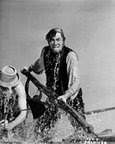
Ultimately, the oddest part of Nosek’s crusade is his undisguised antipathy toward students, and his encouragement that citizens tattle on each other to municipal authorities at every opportunity. I have satirized Nosek as a small town Ahab after students, and as a Carrie Nation, complaining about alcohol and boozing and partying college kids.
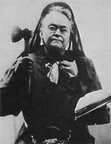
Feel free to dislike what you want, but I cannot help but think that these dislikes are petty and beneath a serious man. That’s why I have also described Nosek as a modern day Mrs. Kravitz, worried too much about his neighbors’ minor misconduct.

Nosek’s not the worst character in town, but he is one of the most visibly irritable and angry. There’s not a bit of poise, subtlety, or charm evident in him. He frequently violates most of my Tips for Meetings suggestions with his cranky rants and lack of grace. Worse still, he’s not especially articulate, and the angrier he gets, the less articulate he is. His halting, stammering frustration only makes him seem angrier, crankier, and less reasonable. A poised and calm opponent could gently provoke Nosek and watch him fall apart in reaction.
It’s not his concerns, it’s his recourse that’s worst of all. He encourages his fellow citizens to report infractions wherever they see them, turning this small town into a petty, intrusive place. (I note that there’s a difference — at least in public presentation – between Nosek and Marilyn Kienbaum. Nosek wants ordinances enforced, and violators caught and fined. Kienbaum, as the GazetteXtra quotes her, recounts only her own efforts to talk to her noisy neighbors. Kienbaum might often side with him, but her actions as she recounts them are preferable to his. An elderly woman who deals with her neighbors face-to-face is more admirable than a man who asks his neighbors to tattle on each other at every occasion.)
Our municipal enforcement culture is broken, inefficient, and biased. The perception of selective enforcement is so rampant that it’s even a topic at council meetings. (So obvious is the problem that recently, no less than Miss Kienbaum – herself favored by many of the town clique – mentioned it during a discussion of enforcing signage restrictions).
It’s that broken enforcement culture, with too many small people trying to act big, on which Nosek bases his plan for community preservation. The consequence of his plans is community stagnation, ossification, and a town of finger-pointers. He wants to freeze life as he wants it, the wants of others notwithstanding.
What’s Roy Nosek’s idea of a beautiful Whitewater? It’s the entire city under a giant snow globe, forever frozen. Perhaps someone might remind him that ordinary people cannot live and thrive that way, and neither can our city.
City, Economy, Free Markets
On Nosek on Student Housing, Part 1 (Economics)
by JOHN ADAMS •
Last week, a reader emailed me about a post over at the GazetteXtra.com, entitled, “Neighborhood Oppose Housing for UW-W Students.” The story highlights the views of Whitewater dentist-councilman Roy Nosek, on student housing, the housing market, aesthetics, and neighborhood quiet. I’ll address the GazetteXtra.com post with three of my own: Part 1 addresses the economic aspects of Nosek’s views, Part 2 will address the cultural aspects of his views, and Part 3 will address the quality of the GazetteXtra.com post from Carla McCann.
In this post, I’ll focus on the economic aspects of Nosek’s views on student housing. It’s not an easy subject, as Nosek betrays not the slightest real understanding of markets, supply and demand, or growth.
Nosek sees a problem with students living in his district, and other districts, their presence being to him (as he has said publicly) a death-knell for a district. For Nosek, student housing represents, in summary, three problems: (1) disruption to peace and quiet, (2) impairment of the beauty of a neighborhood, and (3) demand for student housing drives up home prices.
To solve these problems, Nosek proposes greater code enforcement of (1) ordinances against unrelated persons living together, and (2) ordinances against too many cars in a front driveway of a home.
What’s wrong with his economic approach and understanding?
Disqualifying Demand. Nosek dislikes student housing, so he asks the community to enforce ordinances that would limit student off-campus apartments in homes. He knows that there is a demand for student housing; he just doesn’t like it. His approach effectively ignores this demand by making it unlawful to fulfill it with the existing supply of real estate. Nosek would prevent the satisfaction of that demand — that is, student need for housing plus ability to rent — from being satisfied. And yet, these students are there, they have the ability to rent, and homeowners will rent to them or sell to landlords who will. It doesn’t matter; he does not recognize student housing needs as legitimate market demands. They’re not his kind of buyer (or renter), so to speak.
Nosek’s like a man who thinks that he’s eliminated unemployment because he’s made it illegal for the unemployed to look for work.
These students are not going away, and Nosek offers no alternative to where they should go. I joked once that Nosek wanted these students out of the city, or inside the campus behind a high wall. I was unfair when I said that about his dislike of student housing: I was too generous to him. Those two outcomes would be infeasible and wrong, but they would constitute a plan. Nosek offers no plan of his own half as credible as those two ridiculous ideas.
Assumption of Alternative Demand.More than once, Nosek has said that his goal is home ownership for young couples with families. That’s a goal for young couples with families, too. He complains that home prices are higher because of demand for student housing, and so young families cannot afford buy homes. His solution: disqualify, so to speak, student or landlord buyers, leaving young families better representing among remaining potential buyers.
How many of the homes then up for sale would go to young couples with children? Nosek cannot tell you, because no one knows. Currently, there are three scenarios for young home-buying couples: (1) none are bidding now, (2) some bid and sometimes win, (3) all those bidding lose. (Since Nosek complains about too many student dwellings, we know that young home-buying couples cannot be bidding and always winning.)
If landlords and students would not bid on homes (assuming it would be pointless to do so if enforcement were 100% effective, as Nosek wishes), then does that mean that all the homes for sale would go to young families with children, etc? No, of course not.
If I tell you that you cannot sell a home to a brunette, it doesn’t mean that you’ll sell your home to a blonde. Without brunettes who want to buy a home in the bidding, you may not have any good buyers at all.
Restricting Buyers Only Impoverishes Sellers. This brings us to Nosek’s inability to understand fully the implications of restricting the pool of buyers. He understands it in part, however. When he tells us that homes are too expensive now, and that he wants to make homes affordable for his preferred buyers by disqualifying other buyers, he implicitly — and correctly — assumes that a reduction in the number of available buyers will likely stagnate or depress home prices.
If this were not his assumption, then there would be no point in his complaining that home prices were presently too high for young families. When he reduces the number of available buyers, then he will almost certainly reduce the price that existing homeowners would otherwise be able to command as sellers.
Existing homeowners will be able to command less for their property for sale, or refinancing for remodeling, etc.
Misunderstanding Demand and Supply. I cannot tell if Nosek understands that demand and supply are wholly interdependent. When he speaks, he seems to be someone who thinks about altering the number of buyers (demand), but only with a partial understanding of how that would affect sellers (supply). Tinkering with one affects the other in ways that Nosek does not acknowledge.
Reduction in demand would depress supply, as fewer homes would be offered on the market, and fewer would be renovated or preserved where they would command less in the marketplace. With fewer homes sold, there would be fewer opportunities to create demand and for newer and larger homes (those trading up, or moving into different properties, like condominiums).
In fact, when I write ‘disqualifying buyers,’ I could as easily say ‘restricting sellers.’ A supply of one thing is merely satisfaction of another’s demand. They are neither separate from each other nor easily modified without — often — unintended consequences.
Stagnation as a Way of Life. The consequence of disqualifying purchasers through municipal ordinance is fewer buyers, stagnant or depressed prices for existing homes, and reduced investment in student housing or new single family homes. Lifting restrictions on sale would change the community, in positive, voluntary ways: there would be more student and single family housing, and an end the present shortage. It is a shortage that zoning regulations have only made worse, and that unfettered transactions would only make better.
Beautiful Whitewater
Beautiful Whitewater: The Campus Before Exams
by JOHN ADAMS •
Here are some photos of the snow-covered UWW campus, Thanksgiving having passed, and exams standing between students and Christmas. It may seem dark and forbidding, but that is appearance only. Inside the university’s library, and in dorms and apartments throughout the city, students are studying to fulfill part of the American promise, freely to read, study, and make one’s way in the world.
I was not educated at UWW; I mentioned once before that I went to college elsewhere. My family have always looked with fondness on the promise of the American college experience, whether it takes place in Whitewater, Madison, Chicago, or beyond.
Best wishes to all for successful exams and a happy vacation thereafter.


