

Anderson, Cartoons & Comics
Too Far
by JOHN ADAMS •
Good morning, Whitewater.
Midweek in Whitewater will be sunny with a high of thirty-two. Sunrise is 7:08 AM and sunset 4:21 PM for 9h 12m 35s of daytime. The moon is a waxing gibbous with ninety percent of its visible disk illuminated.
On this day in 1776, Gen. Washington reaches the banks of the Delaware River, directing his army to cross into Pennsylvania. He arrives at a time, just half a year beyond the Declaration, when Patriot fortunes seem at their lowest:
In a letter dated December 3, 1776, General George Washington writes to Congress from his headquarters in Trenton, New Jersey, to report that he had transported much of the Continental Army’s stores and baggage across the Delaware River to Pennsylvania.
In his letter Washington wrote, ‘Immediately on my arrival here, I ordered the removal of all the military and other stores and baggage over the Delaware, a great quantity are already got over, and as soon as the boats come up from Philadelphia, we shall load them, by which means I hope to have every thing secured this night and tomorrow if we are not disturbed.’
Washington then made the critical strategic move of confiscating and burning all the boats along the Delaware to prevent British troops from pursuing his beleaguered forces across the river. The British strategy of chasing Washington across New Jersey, rather than capturing his entire army in Manhattan, seemed to be a stroke of genius. As New Jersey was devastated at the hands of British forces and Washington’s men cowered in Pennsylvania, even staunch Patriots, including Thomas Jefferson, considered surrender to the crown.
Also on this day, General Washington received a letter dated November 30 from his second-in-command, General Charles Lee, reporting that he was about to cross into New York near Peekskill on this day in 1776. In an apt reflection of the state of the American fortunes, the British captured General Lee nine days later in New Jersey. Richard Stockton, a leading New Jersey patriot and signer of the Declaration of Independence, was also in British custody and was forced to swear an oath of allegiance to the British king along with thousands of his New Jersey neighbors.
On this day in 1947, Wisconsin gets a new medium:
1947 – First TV Station in Wisconsin Established
On this date the first TV station in Wisconsin, WTMJ-TV in Milwaukee, was established. The seventeenth television station in the country, WTMJ-TV was the first in the Midwest. [Source: University of Wisconsin, Milwaukee Libraries]
Google-a-Day asks a sports question:
What British Queen watched and promoted a lacrosse game in 1867?
In places big and small, one of the many questions for residents is this: is holding government office, whether elected or appointed, a more virtuous way of life than private activity?
If it should prove more virtuous, then one can reasonably contend that long-tenured government officials are, themselves, more virtuous than private citizens.
One could think of this as the theory of the noble Romans, as tribunes of the people, as selfless defenders of all.
This idea of government office as an especially noble calling is false: human nature does not change when a man or woman enters public office. People are self-interested by nature, and this nature does not change when one sits behind a government desk.
Of public and private, one is neither better nor worse than the other. It’s the insistence that public life is a better way that presents countless problems for society. There’s as much virtue in being a baker as there is in being governor.
It’s impossible, truly, to read early (and foundational) American political theory without seeing that the Founders understood that self-interest afflicts all, including government officials.
Needless to say, ceaselessly insisting that government work is noble work, as though government officials were contemplative monks in a monastery, gives government officials two false (but useful) claims to make against critics:
1. That they should necessarily be given particular deference in society over private citizens, and
2. That their ideas and plans should necessarily be given particular deference over private citizens’ ideas or assessments.
Neither claim is true, but they work a certain magic on the impressionable or insecure, rendering men and women who should live well and reasonably into mere subjects who live poorly and under a false impression.
Public choice theory cures people of the false impression that a few government men are better than others, teaching correctly that human nature is the same among those in public or private life.
(This is, of course, a simplification of that theory, yet an accurate description of one of its key tenets.)
In the same way, the strength of human reasoning, and tools of analysis, are equally available to all, whether publicly or privately situated. That a public man proposes a plan does not render the plan immune to the principles of reasoning available to private criticism.
The surest policies, to the extent anything is sure, come from officials who present simply and plainly, without grand claims or giddy anticipation, recognizing that useful assessments and critiques may come from any corner, including the many private residents within a community.
For more about Public Choice Theory, see Key Insights of Public Choice Thinking @ the Cato Institute.
Posted at Daily Adams and FREE WHITEWATER.
Good morning, Whitewater.
Tuesday in town will be partly cloudy with a high of thirty-two. Sunrise is 7:07 AM and sunset 4:21 PM, for 9h 13m 51s of daytime. The moon is a waxing gibbous with 82.2% of its visible disk illuminated.
We’ve a series of public meetings in the city today. At 6 PM, the Planning Commission will meet, at 6:10 PM the Alcohol and Licensing Commission meets, and at 6:30 PM Common Council meets in joint session with the Planning Commission.
On this day in 1804, France gets what no one needs, an emperor:
The coronation of Napoleon as Emperor of the French, which took place on Sunday December 2, 1804 (11 Frimaire, Year XIII according to the French Republican Calendar), at Notre Dame Cathedral in Paris, has been said to mark “the instantiation of modern empire”, representing a “transparently masterminded piece of modern propaganda”.[1] On May 18, 1804, the Sénat conservateur vested the Republican government in an Emperor, and preparations for a coronation followed. Napoleon’s elevation to Emperor was overwhelmingly approved by the French citizens in a referendum. Among Napoleon’s motivations for being crowned were to gain prestige in international royalist and Catholic milieux and to lay the foundation for a future dynasty.[2]:243
In the classical French tradition, kings underwent a ceremony of consecration (sacre) rather than a coronation; in consecration, anointment was conferred by the archbishop of Reims in Notre-Dame de Reims.[2] Napoleon blended Roman imperial pageantry with the purported memory of Charlemagne. The coronation was held in Paris in the presence of Pope Pius VII. According to government tallies, the entire cost was over 8.5 million francs…..
In Wisconsin history, a Wisconsin’s U.S. Senator Joseph McCarthy is disgraced:
After two months of hearings and deliberations, the Watkins Committee recommended that McCarthy be censured on two of the 46 counts: his contempt of the Subcommittee on Rules and Administration, which had called him to testify in 1951 and 1952, and his abuse of General Zwicker in 1954. The Zwicker count was dropped by the full Senate on the grounds that McCarthy’s conduct was arguably “induced” by Zwicker’s own behavior. In place of this count, a new one was drafted regarding McCarthy’s statements about the Watkins Committee itself.[110]
The two counts on which the Senate ultimately voted were:
That McCarthy had “failed to cooperate with the Subcommittee on Rules and Administration”, and “repeatedly abused the members who were trying to carry out assigned duties …” That McCarthy had charged “three members of the [Watkins] Select Committee with ‘deliberate deception’ and ‘fraud’ … that the special Senate session … was a ‘lynch party'”, and had characterized the committee “as the ‘unwitting handmaiden’, ‘involuntary agent’ and ‘attorneys in fact’ of the Communist Party”, and had “acted contrary to senatorial ethics and tended to bring the Senate into dishonor and disrepute, to obstruct the constitutional processes of the Senate, and to impair its dignity”.[111] On December 2, 1954, the Senate voted to “condemn” McCarthy on both counts by a vote of 67 to 22.[112] The Democrats present unanimously favored condemnation and the Republicans were split evenly. The only senator not on record was John F. Kennedy, who was hospitalized for back surgery; Kennedy never indicated how he would have voted.[113] Immediately after the vote, Senator H. Styles Bridges, a McCarthy supporter, argued that the resolution was “not a censure resolution” because the word “condemn” rather than “censure” was used in the final draft. The word “censure” was then removed from the title of the resolution, though it is generally regarded and referred to as a censure of McCarthy, both by historians[114] and in Senate documents.[115] McCarthy himself said, “I wouldn’t exactly call it a vote of confidence.” He added, “I don’t feel I’ve been lynched.”[116]
Google-a-Day poses a sports question:
The longest tennis match in history was played over three days and included how many strokes by the American born player?
Here’s an explanation accompanying the YouTube video of how these bats came to be ‘baby bat burritos’ —
Published on Nov 27, 2014
These little flying foxes are new arrivals to the Australian Bat Clinic after an extreme heat event separated them from their mothers.Learn more about the bat clinic here:
www.australianbatclinic.com.au
https://www.facebook.com/pages/Australian-Bat-Clinic-Wildlife-Trauma-Centre/242483795809816MEDIA: Images available for download on dropbox https://www.dropbox.com/sh/2nrjsxpkkmwe438/AACCufyrXexAFzgnCocgDlUqa?dl=0
Subscribe to Wakaleo: http://www.youtube.com/channel/UCmqLYV9TlG4L-F4bVWJQyDw?sub_confirmation=1
Flying fox colonies are under pressure in Australia due to loss of habitat, a negative public perception and extreme heat events that have wiped out entire colonies. The Australian Bat Clinic and many other wildlife groups in eastern Australia are currently inundated with baby bats that have been rescued following the latest tragedy which saw thousands of bats lose their lives due to the heat.
When a bat mother dies, often their young are still attached and will not survive without the right care. Bat carers play a vital role in not only retrieving suffering bats, but rehabilitating them until they can be released back into the wild.
When baby bats first enter rehabilitation it can be traumatising for them as they have just been separated from their mothers to which they have formed strong bonds. Bat carers have to ensure that the baby bats not only are well fed, but that they are nurtured and feel safe in their temporary new home. Providing affection to the bats is a necessity.The teats represent their mother’s nipple, and this makes them feel more comfortable, as does the security of the blankets which they are often snugly wrapped in.
The bats will remain at the Australian Bat Clinic until they are old enough to be released.
If you love bats, consider donating! The Australian Bat Clinic spends a small fortune on food, laundry and medical equipment to keep these animals alive. Can you help? http://australianbatclinic.com.au/?page_id=188
Remember, only registered bat carers should ever touch bats. If you see a bat in trouble, call an expert or dial 1800 ANIMAL (Australia)
Wakaleo is on Facebook & Twitter! Come and say hello!
https://www.facebook.com/WakaleoAnimalChannel?ref=hl
https://twitter.com/Wakaleo_ChannelWant more vids from WAKALEO? Support us on Patreon!
http://www.patreon.com/wakaleoMusic: ‘warm summer’ by pinkzebra
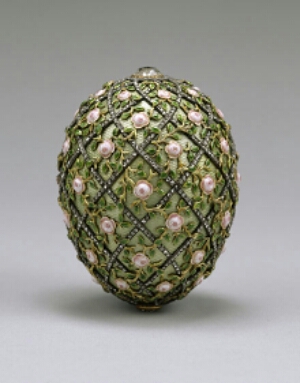
A peddler visits a local town, and announces that he has a Fabergé egg to sell. Townspeople gather near his freshly-painted cart to see the shiny jewel. The seller contends his merchandise is the Rose Trellis Fabergé egg.
He extols the beauty of the object, tells listeners that he recently purchased it from a museum, and that he’s willing to sell it to the highest local bidder.
“How much is this egg?” they ask.
“Why, it’s a bargain at twenty-five million,” the peddler replies. He tells the crowd, accurately, that Fabergé eggs have gone for even more than his asking price.
“Let’s see it,” says the crowd.
The peddler reaches into his cart, and grabs a silk bag, in which there’s a velvet box. He opens the box, and briefly lifts up a small, glistening object.
“Behold,” he exclaims, “a world-renowned jewel that – for the right price – can be yours!”
He holds it in his hand for just a few seconds, and hurriedly returns the egg to the velvet box, inside the silk bag.
Someone asks if she can see it again, for a longer time, and closely enough to hold it in her hand.
The peddler laughs at her request.
He loudly tells the assembly that “a real connoisseur wouldn’t need to hold a jewel of this quality, or inspect it. Genuine experts know true value from a distance, after a quick glance of no more than three seconds.”
“It’s too bad that you have people around here who are so troublesome that they think they should hold a multi-million-dollar object in their hands, or look at it closely, before buying,” declares the peddler.
The seller’s declaration silences some, lest they appear unsophisticated in the peddler’s eyes. The same statement emboldens others, causing them concern that three seconds from a distance is not a proper opportunity for inspection of an expensive object.
One is left with this question: Should a sober-minded person purchase that object, for anything like that asking price, under those conditions?
There’s a reasonable answer: Knowing nothing else of art, still one should know that a legitimate seller of genuine goods would not offer so precious a creation with so little time and such limited conditions for inspection.
It would be better to reject entirely a peddler who’d make that sort of offer. Better, even, as he whines and wails on his way out of town.
Good morning, Whitewater.
The twelfth month of the year begins in our town on a partly cloudy day with a high of sixteen degrees. Sunrise today is 7:06 AM and sunset 4:21 PM, for 9h 15m 10s of daytime. The moon is a waxing gibbous with 73.2% of its visible disk illuminated.
On this day in 1990, workers connected both sides of Europe’s Channel Tunnel:
The Channel Tunnel (French: Le tunnel sous la Manche; also referred to as the Chunnel)[2][3] is a 50.5-kilometre (31.4 mi) rail tunnel linking Folkestone, Kent, in the United Kingdom, with Coquelles, Pas-de-Calais, near Calais in northern France, beneath the English Channel at the Strait of Dover. At its lowest point, it is 75 m (250 ft) deep.[4][5][6] At 37.9 kilometres (23.5 mi), the tunnel has the longest undersea portion of any tunnel in the world, although the Seikan Tunnel in Japan is both longer overall at 53.85 kilometres (33.46 mi) and deeper at 240 metres (790 ft) below sea level. The speed limit in the tunnel is 160 kilometres per hour (99 mph).[7]
The tunnel carries high-speed Eurostar passenger trains, the Eurotunnel Shuttle for automobiles and other road vehicles—the largest[8] such transport in the world—and international rail freight trains.[9] The tunnel connects end-to-end with the LGV Nord and High Speed 1 high-speed railway lines….
Construction
Working from both the English side and the French side of the Channel, eleven tunnel boring machines or TBMs cut through chalk marl to construct two rail tunnels and a service tunnel. The vehicle shuttle terminals are at Cheriton (part of Folkestone) and Coquelles, and are connected to the English M20 and French A16 motorways respectively.
Tunnelling commenced in 1988, and the tunnel began operating in 1994.[32] In 1985 prices, the total construction cost was £4.650 billion (equivalent to £12 billion today), an 80% cost overrun. At the peak of construction 15,000 people were employed with daily expenditure over £3 million.[8] Ten workers, eight of them British, were killed during construction between 1987 and 1993, most in the first few months of boring.[33][34][35]
Completion
Class 319 EMUs ran excursions trips into the tunnel from Sandling railway station on 7 May 1994, the first passenger trains to do so
A two-inch (50-mm) diameter pilot hole allowed the service tunnel to break through without ceremony on 30 October 1990.[36] On 1 December 1990, Englishman Graham Fagg and Frenchman Phillippe Cozette broke through the service tunnel with the media watching.[37] Eurotunnel completed the tunnel on time,[30] and it was officially opened, one year later than originally planned, by Queen Elizabeth II and the French president, François Mitterrand, in a ceremony held in Calais on 6 May 1994. The Queen travelled through the tunnel to Calais on a Eurostar train, which stopped nose to nose with the train that carried President Mitterrand from Paris.[38] Following the ceremony President Mitterrand and the Queen travelled on Le Shuttle to a similar ceremony in Folkestone.[38] A full public service did not start for several months….
On this day in 1906, a Wisconsinite briefly holds the world boxing title:
1906 – Fred Beell Crowned Heavyweight Champ
On this date Fred Beell, of Marshfield, Wisconsin, won the American heavyweight wrestling championship in New Orleans, taking two of three falls from Frank Gotch. Beell’s reign was brief. Sixteen days later, he lost a rematch to Gotch. Beell’s victory was the only match that Gotch lost from 1904 until his death in 1918. [Source: Milwaukee Journal Sentinel]
Google-a-Day asks a question about literature:
What is the last line of the poem in which the famous line about “Mistah Kurtz” is used as an epigraph?