
FREE WHITEWATER

Monthly Archives: August 2008

Municipal Exaggeration: Dream Towns.

UPDATE: A clever reader writes with insight into the data —

Regarding your post about the ridiculous nature of calling the 101,000 population in the micropolitan area “Whitewater,” I just wanted to clear up that the census designates metropolitan and micropolitan areas based on counties, meaning that this micropolitan area is most likely all of Walworth County. (Looking at the data, that makes more sense) You’ll also notice that the 25th-ranked dream town is the twin cities of Watertown-Fort Atkinson (i.e. all of Jefferson County). Only separated by 30 miles or so. There are reasons for the Census to break down data in this manner, and they must call it something, so they pick the largest cities in that area. Unfortunately, this is just another example of non-planners misusing or misunderstanding data in a way that trained planners would hopefully not.

I live in Whitewater, Wisconsin, a town of 14,000 (that’s fourteen thousand) in south central Wisconsin. I’m a blogger in town, and I have been a critic of municipal policy and local culture here.

As you can guess, I am not popular with everyone.

Still, no one would love to wake up and learn that Whitewater’s a dream town more than I would. If we were a dream town, then by definition people would dream about living here, and we’d be a happy destination with few problems.

Imagine how thrilled I was, then, when I saw in our City Manager’s weekly report that we had been named a dream town in a study from an online business journal. That’s right – little Whitewater, Wisconsin was one of America’s dream towns. (We’re Number 22 on the list, actually).

Here’s what City Manager Kevin Brunner’s report for August 1st had to say:

Earlier this week, Whitewater was named one of the top “dream towns” in the United Sates by the on-line biz journals (see http://cll.bizjournals.com/edit_special/68.html). Whitewater was ranked 22nd among the studied 140 “micropolitan” areas in the U.S. that are defined as small
towns that offer the best quality of life without metropolitan hassles.

Bizjournals compared the 140 micropolitan areas in 20 statistical categories, using data from the U.S. Census Bureau. A micropolitan area consists of a central community with 10,000 to 50,000 residents, along with the surrounding countryside. It is, in effect, a small-scale version of a metropolitan area.

Like clockwork, this story was picked up, verbatim, on a local website. It’s likely to become a splashy headline in our local, weekly newspaper.

There’s just one problem – When the survey says Whitewater, Wisconsin, it’s not talking about just Whitewater, Wisconsin, population 14,296

No – the ‘micropolitan’ area that the study uses for Whitewater is an area of 101,000.

That’s right – what the survey calls Whitewater is actually an area 7 (that’s seven) times larger than the real town. The City of Whitewater is only about 14% (that’s fourteen) percent of the area surveyed.

Where are all these other people of the total 100,000? Presumably in nearby towns, over which our local government has no authority, has done no work, and deserves no credit.

It’s similar to saying that Milwaukee is in good health, when you surveyed an area as big as all Wisconsin, and called that area the “Milwaukee metropolitan” zone.

The survey does not describe Whitewater, Wisconsin at all – it describes an area far different.

An official should be able to tell the difference between big and small, without conflating the two. Even a private citizen should be able to do as much. For example, I am able to tell — even without advanced government training and years of taxpayer-paid municipal experience — the difference between the following pictures —

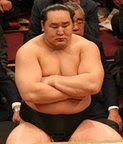
I am confident that they’re different, and that the one on the left represents a person who weighs less than the one on the right.

It’s risky, but I am willing to venture that assertion.

What’s worse – and if one reads the underlying data one will see – Whitewater, Wisconsin is actually below the average of almost every measure of the data in the 100,000 person area.

Here is the link with the data for the 100,000 person area that the study identified as “Whitewater, Wisconsin” : http://www.bizjournals.com/specials/pages/182.html

Those are not our statistics, for homeownership, or median income, not at all.

Those results from the larger area are far better than ours.

Consider these comparisons, using Whitewater-specific data from CLR and Dataplace.org, and the far larger Micropolitian area date from the BizJournal study:

Whitewater Median Household Income: $39,041
Micropolitan Area Median Household Income: $51,836

Whitewater Homeownership Rate: 36.2%
Micropolitan Area Homeownership Rate: 72.6%

(On the matter of homeownership, it was our City Manager himself, only as recently as May, at a Common Council meeting, who observed we had one of the lowest homeownership rates in the entire state.)

If we are part of a dream town, then Whitewater is the poor neighborhood of that 100,000 person town.

The BizJournal survey is a rebuke to us, that we are not doing as well as our neighbors.

Seeing it differently isn’t just cheerleading — it’s blind exaggeration. A person believing these results might feel good, but at the expense of acknowledging what we must do.

We could continue as we are, or we might (1) significantly reduce the size of city government, so that we could reduce the tax burden on residents, (2) eliminate fees for business permits and applications, (3) end a municipal reliance on ticketing students to balance our budget, (4) dismantle a costly and futile code-enforcement regime, (5) encourage true rather than sham community outreach, and (6) represent our current situation honestly even if it hurts the pride of a few.

Municipal Exaggeration: Police Statistics.

In our small town, our city manager publishes a weekly report that he calls, helpfully, the City Manager’s “Weekly Report.” (He includes the quotation marks, presumably so that we know that “Weekly Report” is just a term of art for a weekly report.)

I read it each week, and if I stopped, I wonder if readership would plunge by one-third.

We are a town where there is great emphasis on producing good news, especially from and about a small local clique. Whitewater’s city manager, Kevin Bruner, gave a published interview recently in which he declared that the role of the city manager was to be a “cheerleader’ for the city.

Someone else might aspired to the model of impartial executive, or fair administrator, but I suppose some town in America was destined to find itself with cheerleading as its chief executive’s desired role.

Unfortunately, it’s the chief executive of my town.

Since being a cheerleader requires a positive message, you can guess that unfavorable news – no matter how true – might be discussed less frequently here.

We might try a motto to this effect: “Whitewater: Where the Only News is Good News.”

What happens, though, when the desire for good news is so strong that even suspect studies, reports, and events are presented as municipal triumphs?

That’s what happened when the June 27th weekly report had a proud announcement about the per capita cost of our local police force. The Wisconsin Taxpayer’s Alliance completed a study of the cost of municipal police forces across Wisconsin.

Here’s some of the Whitewater city manager said about the study:

Also, from a report issued recently by the Wisconsin Taxpayers Alliance, the Whitewater Police Department ranks below the state-wide average for cities over 11,400 population in police expenditures per capita and slightly higher than the average number of officers per capita…

The average number of officers per capita was 1.33 per 1,000 people whereas Whitewater’s number per capita was 1.65. The highest number of officers in the State is in Milwaukee with 3.30 with Glendale a close second at 3.25 officers per 1,000 residents.

Unfortunately, our city manager provided no link to the study’s underlying data. No matter – blogger’s were made for Web surfing, and I found the study quickly.

Here’s the webpage link: http://www.wistax.org/facts/

Here’s the link to the Excel sheet with the statewide results:

http://www.wistax.org/facts/2006%20Municipal%20Police.xls

There are just three problems:

(1) The data are from 2006. Since then we have added a sworn officer, so our force is larger than the Wisconsin Taxpayer’s Alliance’s information.

(2) The data include only sworn officers (minus one addition), but we also have a staff of community service officers, who perform many tasks of officers, but do not have arrest powers. Some communities may not have these officers, but for Whitewater, they are part of the payroll, and play a role that covers much of what an officer might otherwise do in a day.

(3) We are a campus town, and although that means we have students among our total numbers, it also means the support of an additional campus police force that the study does not take into account. That force is not present in non-campus communities, and does not add to overall police numbers the way ours does.

If you received this study, knowing – as you must – these three things, what would you do?

You might (1) ignore the study, (2) you might publish its results with fair commentary about the limitations of the data, or (3) run it straight, with no link to the data for easy citizen review.

If you’re a politician in Whitewater, Wisconsin, it’s number (3), no doubt at all.

Daily Bread: August 7, 2008

Good morning, Whitewater

Our small municipality has no public meetings scheduled.

The National Weather Service, predicts a high of 80 degrees and patchy fog. The Farmers’ Almanac, predicts “becoming wet Great Lakes, followed by clearing.” It’s the final day of the Farmers’ Almanac’s multi-day series. They’ll start a new one, probably just as inaccurate, tomorrow.

Today is a day for the left in Wisconsin History, according to the Wisconsin Historical Society. In our history today, on this date in 1849, socialist Frank J. Weber was born near Milwaukee. The Wisconsin Historical Society has the details:

“A pioneer member of the Socialist party, Weber organized the Federated Trades Council in 1887 and served as its secretary until he retired in 1934. He also founded the Wisconsin State Federation of Labor in June 1893. Weber organized lumber handlers into the American Federation of Labor Longshoreman’s unions. He organized seamen’s unions for the Knights of Labor and the brewery workers in Milwaukee in 1891. Weber served eight years in the legislature and was a leading figure in the fight for the Workingmen’s Compensation Act, old age pensions, and other progressive legislation.”

Defending Third Party (Libertarian) Ballot Access in Massachusetts

In Massachusetts, the ACLU has filed suit against the Secretary of State’s office for their refusal to place Libertarian Party presidential candidate Bob Barr on the November ballot.

From Boston.com‘s Political Intelligence column, here are the details:

The central issue in this case is the restriction of ballot access for third parties, which has been and continues to be a problem in Massachusetts,” John Reinstein, the state ACLU’s legal director, said in a statement. “The right of political parties or candidates to a place on the ballot bears directly on the right of citizens to vote. If parties or candidates are kept off the ballot, their adherents are compelled to vote for representatives other that those of their choice.

The two-party system has ill-served America, and less in these last few years than previously.

Hello, New Libertarian Readers

I have gained libertarian readers since I started publishing FREE WHITEWATER in May 2007. That’s a guess based on email, and on the sites from which I receive visitors, from Wisconsin and beyond.

You are always welcome. I’m from a movement family, too. I know what it’s like to read what you’ve read, follow politics as you have, and be part of a proud, American tradition.

I will try to do a better job of explaining life here so that it will make sense to you, even if you do not know the names of our local politicians and officials. Whitewater is a small town of 14,000, but some of the challenges here are ones you may face in your own cities, small or big.

The narrow government bureaucrat, the smug town aristocrat, the self-interested incumbent politician: you have them where you are, too. I’m sorry that you do, but you do.

When some people hear you, they may think that all you represent is an anti-government attitude. That’s a simplification of what you and I believe. We lawfully oppose state power and influence because of the terrible risks they represent to human liberty. State power tends to corrupt, both inwardly and outwardly.

Do they despise you for your belief in free markets, individual liberty, and peaceful commerce with friendly nations? You know that for a free person, and a free people, much is possible.

Do they feel justified in regulating economic life, restricting adult behavior, and replacing private international exchange with government initiatives, plans, and missions? You know that an intrusive, bullying state leads to misery and poverty.

We represent a political tradition running from our time, through the earliest colonists on this continent, farther back to philosophers in the old world. You have, as I do, Locke, Smith, Jefferson, Paine, Garrison, Douglass, Hayek, Rand, Friedman, and Nozick to call upon. Goldwater and Reagan, whatever their compromises, carried a major-party message against stifling government at home and the despotic state abroad.

Our message is a good, fundamentally American one.

Inbox: Reader Mail

It’s been a while since I have posted relies to reader mail, although I have replied to messages privately.

Here is a sample of email messages and questions, sometimes verbatim, sometimes paraphrased, along with my answers. The messages are in black, and my replies in blue.

What’s a good reference for blogging?

I would suggest the EFF, where there’s solid information for bloggers. Here’s the link:

http://w2.eff.org/bloggers/lg/questions.php

I am a member, and I would strongly encourage other bloggers to join.

What’s the farthest place from which you’ve received email?

Singapore.

What’s your goal for blogging and/or do you have a final outcome you’d like?

I write from a libertarian perspective, and I have no particular outcome in mind.

When one writes on a topic, that’s all one does. I have no plan to produce a given outcome – blogging is a lawful right, and it’s the exercise of the right that matters. Bloggers – just modern-day pamphleteers — over-think their role if they worry about producing a result.

It’s some of the critics of blogging – that is, critics of lawful, constitutional American speech — who typically want an outcome: they want to silence those who write, or intimidate them into writing differently.

I have committed to my second year of blogging, through my second anniversary next May. I will keep blogging past that, surely, but I am not concerned with a long-range plan.

I have no idea what kinds of posts will present themselves.

Do you care/know if some people in Whitewater read your blog? Do you want certain readers?

I am fortunate that people stop by, and that readership is strong and growing. Candidly, I was happy and contented even when readership was much smaller.

I am not writing for any one person. I never expect any given person to visit the site.

Sometimes, people will ask me if I know whether person X or Y might have read a particular post. I have no idea. Bloggers should not expect readers, especially among critics. It’s enough to write lawfully what one believes.

There are lots of clever people in Whitewater, Wisconsin, but there are also quite a few officials who have listened to their own voices for so long that those sounds are all they hear and know.

Will conditions ever change / can libertarians / can bloggers bring about change?

Yes, but changes happen over a long period, and in unexpected ways. Look at the amazing work of Radley Balko, at Reason, against the slipshod and disgraceful practices of Mississippi medical examiner Dr. Steven Hayne. Hayne was more than a fool – his aberrant professional practices led to innocent people being convicted of serious crimes.

Hayne disgraced himself, his office, his state, and his profession: he is an example of persistent and unrepentant failure. People all around Hayne looked the other way, rationalized his conduct, and lied in his defense. We mock other countries for people like him, yet he was a stain on Mississippi and America for years.

Balko wrote over and again about Hayne, but that disgusting official persisted in office for years, until being shoved out only recently.

Balko’s triumph, along with that of the Innocence Project, came about only though an indefatigable commitment, and dogged determination.

A man or woman committed to the truth should be willing to stay the course – it’s a small price compared to the hardship ordinary people experience from self-interested, dishonest, rationalizing officials.

Any changes in readership?

Yes, I have more libertarian readers than when I started. A statistics package cannot always tell that, however. It’s a solid guess based on email, and sites from which I receive visitors.

I’ll add a post on this topic soon.

There’s a tendency to read too much into stats, and to overstate readership, by many web publishers. I only report unique, human readers, when I comment on overall readership.

I have no idea why one post is more popular than another. It’s enough to keep writing, and be happy that readership is growing.

Begging Libertarians to Quit, Part 2

On Sunday, I posted a story about a former GOP office holder in Texas who tried to persuade Libertarian candidates to quit so that the Republican party might win libertarian votes.

There is a subsequent story in the Houston Chronicle reporting that the GOP house speaker, Tom Craddick, had similar conversations with LP candidates.

Naturally, Texas Democrats jumped in to contend that this is Republican intimidation of a small third party.

Republicans do best when their candidates genuinely embrace libertarian principles.

When the GOP tends libertarian, there’s no need for them to worry about vote-siphoning, or what the Democrats think, either.

The story is available at

http://www.chron.com/disp/story.mpl/ap/tx/5926757.html

The Failure of Municipal Public Relations

In almost every community with financial or political challenges, local officials will feel the temptation to respond to trouble with a feel-good public relations campaign.

It’s a foolish idea.

In a town like my town of Whitewater, Wisconsin, that favors local orthodoxy, the temptation is nearly irresistible.

There are three problems with officials’ use of a PR strategy: (1) it wastes time that should go into reform, (2) it distracts people from uncomfortable truths of local life, and (3) public relations is done so poorly in Whitewater that officials media efforts only undermine the diversionary case that they want to make.

Despite all the arrogant self-confidence from officials in Whitewater, this is a group that presents a poor case, and fails – startlingly and often – to understand the obvious, embarrassing implications of their own messages.

Daily Bread: August 6, 2008

Good morning, Whitewater

There are no public meetings scheduled in the city today.

In our history today, there are two crime-related events. The first is from 1911, involving the tragic kidnapping and murder of a small child. Here is the Wisconsin Historical Society account:

n this date 7-year-old Annie Lemberger was kidnapped from her bedroom. Despite an intensive search by police and volunteers, she was not recovered. Three days later, cement worker George Younger found her body floating in Lake Monona. Police arrested Lemberger neighbor John A. “Dogskin” Johnson for the crime. Johnson confessed to the murder and was sentenced to life in prison. Johnson later claimed he was coerced into confession and continually proclaimed his innocence. Members of the Lemberger family were also accused of the crime. Johnson was eventually freed based on additional evidence offered during a pardon hearing. The story was sensationalized in local media for years.

There is a national crime-related moment from history on this date, too. On this date in 1890, New York native William Kemmler, a confessed killer, was the first person executed in the electric chair.

The National Weather Service, predicts a high of 82 degrees and a slight chance of thunderstorms. The Farmers’ Almanac, predicts “becoming wet Great Lakes, followed by clearing.”

A Libertarian Tribute to Solzhenitsyn

David Boaz offers fitting remarks in tribute to Alexander Solzhenitsyn.

Solzhenitsyn waged a lifelong struggle against Soviet communism, a tyranny that killed tens of millions, oppressed hundreds of millions, and destroyed lives across every continent it touched.

Solzhenitsyn did not embrace the conventional libertarian vision as we have, but shouldered a noble burden, rare and forbidding: to stand against a continental tyranny, implacable and resolute.

Boaz’s remarks in appreciation may be found here:

http://www.cato-at-liberty.org/2008/08/04/

alexander-solzhenitsyn-rip/

Register Watch™: Walking the Beat

Here’s the latest issue of Register Watch™, where I cover stories in our local, weekly newspaper.

This week has a story that reveals how officials can mask prior lapses by contending that their action has been justified only by recent events.

Whitewater is a small town of about fourteen thousand people, with a campus of the University of Wisconsin system. It’s a small Midwestern town. We’re exactly the sort of place where people assume true community policing is the norm.

That’s why the story in our local paper, the Whitewater Register, about an officer starting to walk the beat because of recent high gas prices, entitled, ” Walking the Beat,” is so odd.

If not here, then where? If not always, then why not?

A few points, in no particular order:

First, I’ll readily assume the good intentions and conduct of the patrol officer highlighted in the story. I don’t know him, but I have no reason to doubt him. My remarks are not about the conduct of those in the field — but about the leadership of our department.

Second, does anyone believe that it takes high gas prices to have an officer walk the beat? Whoever wrote this story must not understand that it reads like a parody. Let’s be clear: community policing should be a technique on its own merits.

Our community could, and should, have done as much when prices were low. Consider other absurd outcomes:

PILOTS TIRE OF HIGHER WHISKEY PRICES –
DECIDE TO FLY SOBER

CLASSROOM TELEVISION BREAKS –
TEACHER DECIDES TO TEACH ALGEBRA

Someone, somewhere might have thought one could make lemons into lemonade by showing that our police department could respond to higher gas prices. Unfortunately, it’s a response that should have been the norm here even when prices were low.

Third, Who wrote this story? The Register does not include a byline, and it’s published a submitted photo.

So be it. Maybe it’s a timesaving measure to turn half the front page over to someone unidentified. Yet, for a paper whose editor recently fretted about the risks of anonymity, it’s hardly consistent to run unattributed stories now.

Fourth, the nearby Janesville Gazette captures far more of the story than the Whitewater Register. The Gazette story is available here, and gives detail on how much time officers spend, and the uncertainty over whether the program will even continue.

Fifth, in a town of our size, every leader in the department should be walking though a part of the city each day, visiting with residents. Our chief doesn’t need a pricey uniform allowance, or wasteful trips to big cities as part of his work.

This should not be work for patrol officers alone — every leader should commit time each week to accompany patrol officers on a foot patrol.

Daily Bread: August 5, 2008

Good morning, Whitewater

In our history today, from the Wisconsin Historical Society, on this day in 1825, a council was held to resolve differences between Native Americans and settlers:

“On this date a great council of Native Americans and white settlers was held at Prairie du Chien. For days prior to the event, canoe-loads of attendees converged from all directions and included members of the Sioux, Ho-Chunk, Menominee, Chippewa, Ottawa, Potawatomi, Iowa, Sauk, and Fox tribes. The purpose of this gathering was to promote peace among the tribes and to establish boundaries for their territorial claims.”

The National Weather Service, predicts a high of 87 degrees and a patchy fog. The Farmers’ Almanac, predicts “becoming wet Great Lakes, followed by clearing.” Farmers’ Almanac predictions span a few days, so unless one thinks that the weather will be the same for a few days, they’re not even trying to describe each day’s weather.

There will be a Common Council meeting in Whitewater tonight, at 6:30 p.m. in our municipal building.