FREE WHITEWATER

Monthly Archives: September 2008

The Orange Salamander for 9/30/08

The sound of waves crashing against the beach repeats every 42 seconds. Less than a minute and a seagull squawks again.

I could measure time easily if the pattern repeated every 60 seconds. Instead: 42, 84, 126. Two minutes gone. Forever.

I reach up, turn off the machine. Without ocean sounds, I can’t sleep. Is my conscience heavy? No, I’m just masking the sounds of town.

No ocean nearby. No seagulls. Just students, dogs, drunks. I like the first two, tolerate the third. It’s my sensitive side.

Millhaven: rural college town, miles from the big city. Locals, immigrants, newcomers, students. Four towns: unshaken, unstirred.

The Ever-Expanding Security State

The current federal administration is in its last months, but its efforts to expand powers of surveillance is unslaked. The ACLU reports on the latest federal power grab:

Under far-reaching new guidelines proposed by Attorney General Michael Mukasey…[a]ll the FBI has to do to put you or any American under prolonged physical surveillance is assert an “authorized purpose” such as detecting or preventing crime or protecting “national security.”

….In fact, we have good reason to suspect that the FBI has been violating its own internal guidelines all along and is now pushing these new guidelines to cover up past wrongdoing.

That’s why we need to demand an investigation now, before these outrageous guidelines are implemented. The Inspector General’s office at the Department of Justice has proven to be an unbiased, internal watchdog that has consistently exposed wrongdoing. We need to urge the IG to do it again….

These new guidelines would allow the FBI to interview you, your friends and your family under a false pretext. The FBI could recruit secret informants and have them infiltrate peaceful protest groups. And the FBI could initiate investigations based on little more than race, ethnicity or religion.

The FBI could also search commercial databases for personal details about your life with no real reason.

And all of this would be allowed without an ounce of evidence that you or anyone else has done anything wrong.

The Orange Salamander

The Orange Salamander describes a small-town mystery, but ‘small-town mystery’ is as conventional as the story’s description gets. If you mixed a hard-boiled crime story with a cyberpunk novel, and asked a non-writer to write it, The Orange Salamander is what you might get.


The story is a twiller, a thriller told in small bits, through posts on Twitter.com. Posts on Twitter may be no more than 140 characters, and a single post is called a tweet. I certainly did not invent this constrained form; it has both American and Japanese inspirations.

I thought that I’d play around with the format, though. Play, not experiment: I take none of this seriously, and have no pretensions to literature: it’s all fun, and silly, and nothing more. It’s meant to be ridiculous and a parody, confined within a small space.

At least one person will wonder what all of this means. Since I’ve been posting at this website, two things have surprised me: the number of times that people erroneously speculate on the meaning of something I’ve posted, and the risible excuses that municipal officials often make for their actions and policies. (I see more clearly now how people get caught up with fortune tellers after considering the stodgy minority’s depth of reasoning.)

Any resemblance to actual persons or serious matters, in Whitewater, Wisconsin or environs is unintentional and coincidental. If you see yourself in any of these characters you are mistaken; if you’re convinced of it, you’re mistaken and deluded.

I will collect and post each day’s, and week’s, twiller tweets on this website. Tweets will also appear, individually, on the right sidebar of the website.

Daily Bread: September 30, 2008

Good morning, Whitewater

The National Weather Service predicts today will be mostly cloudy with a high of 59 degrees. The Farmers’ Almanac predicts today will be “wet, especially over the Great Lakes.”

Yesterday’s better prediction: NWS — greater detail trumps a vague long-range forecast written a year ago.

A Canned Food Drive continues in our school district today.

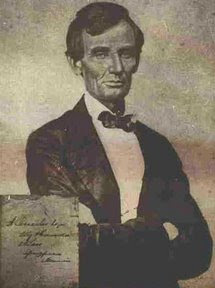
In Wisconsin history on this date, in 1859, as reported at the website of the Wisconsin Historical Society, the Abraham Lincoln visited and spoke in Wisconsin:

On this date Abraham Lincoln delivered an address at the Wisconsin State Fair. In his speech, he connected agriculture to education: “Every blade of grass is a study; and to produce two, where there was but one, is both a profit and a pleasure.” The rising political star (who was elected the following year), also stressed the importance of free labor. This was Lincoln’s last visit to Wisconsin. In 1861, after winning the presidential election, Lincoln signed the bill establishing the U.S. Department of Agriculture.

The final lines of Lincoln’s address in Wisconsin are cautionary yet hopeful:

It is said an Eastern monarch once charged his wise men to invent him a sentence, to be ever in view, and which should be true and appropriate in all times and situations. They presented him the words: “And this, too, shall pass away.”

How much it expresses! How chastening in the hour of pride! — how consoling in the depths of affliction! “And this, too, shall pass away.”

And yet let us hope it is not quite true. Let us hope, rather, that by the best cultivation of the physical world, beneath and around us; and the intellectual and moral world within us, we shall secure an individual, social, and political prosperity and happiness, whose course shall be onward and upward, and which, while the earth endures, shall not pass away.

Chicago Tribune: “Scapegoating Markets”

The Chicago Tribune offers a solid editorial against the scapegoating of markets during the current financial crisis.

Although capitalism has shown its superiority to other systems, it has always had plenty of detractors. The meltdown in the financial sector is their latest excuse to assert the dangers of greed, the need for greater government regulation and the folly of unfettered commerce….

Markets, of course, consist of interactions among human beings, and any institution featuring people is bound to suffer from human fallibility. No one ever said markets were perfect at the tasks required for a functioning economy—only that they are generally superior to the alternative….

Focusing on greed is a mistake. As economist Lawrence White of the University of Missouri-St. Louis puts it, blaming greed for economic dislocations is like blaming gravity for airplane crashes: Greed and gravity are both ever-present. Wall Street traders are not more or less avaricious today than they were 10, 20 or 50 years ago.

Nor is lack of regulation the root of the problem. Among the alleged lapses is the 1999 repeal of the Depression-era Glass-Steagall Act, which forbade the mixing of commercial and investment banking. Removing that barrier, we are told, spurred commercial banks to get into such risky investments as subprime mortgages….

The demise of Glass-Steagall turns out to be a boon. Were it still around, Bank of America would not have been allowed to buy Merrill Lynch..
..

Then there was the big role played by mortgage giants Fannie Mae and Freddie Mac, government-sponsored entities whose failure is a testament to the dangers of mixing public and private enterprise. Conservatives had long warned that the government’s implicit backing of these companies would someday mean a big bill for taxpayers. Guess what? They were right.

When this crisis has settled down, Congress and the president are welcome to consider if the experience indicates the need for some precise and prudent changes in the law governing financial institutions. But it’s more likely a careful examination will prove that the biggest failures were ones of too much government, not too little.

Locally, there’s already too much demonization of markets, and an unwillingness to admit that unrealistic regulations and impractical zoning restrictions have made life here worse. We are poorer, more backward, and less free because of failed local government policies.

Neighboring cities have less poverty; we are exceptional for a town of our resources in how much poverty we have.

Draconian enforcement is a bad idea and false promise.

It’s also a example of ignorance that some confuse specific businesses with markets. Government tries to pick winners by excluding presumed losers. Taxpayers are the true losers – subsidizing special-pleading companies is not a winning game for anyone except the companies.

Expect to hear some argue that national events justify greater regulation locally.

Calls for increased government intrusion into commerce do, in a way, unite national and local policy: it’s a bad idea in both cases.

Banned Books Week

Over at the Janesville Gazette, there’s a blog entry entitled, “Blacklisted” on Stacy Vogel’s Cover to Cover blog.

Vogel ably lists some of the books that have been the target of book banners, including, impossibly, a book by Shel Silverstein, as she recounts:

And if you’re worried the works will be dirty or violent, fear not. Readings will include selections from Shel Silverstein’s “A Light in the Attic,” which was challenged at the Cunningham Elementary School in Beloit in 1985 because the book “encourages children to break dishes so they won’t have to dry them,” according to the UW-Rock news release.

A few parents may find nothing wonderful and charming in Silverstein, and here I would disagree. A smaller number might petition their schools and public libraries to remove the book, and here I would be compelled to resist and defend.

There are two solutions to all this — (1) the right of parents to opt out for their children without banning the book for all, and (2) private school alternatives where book banners would, alternatively, have either great influence or none.

A public institution, however, should not have its reading list comprehensively censored to the restriction of all.

Daily Bread: September 29, 2008

Good morning, Whitewater

There will be a 7 p.m. meeting of the Cable TV Committee today in Whitewater. The agenda is available online, and the meeting will be held at 402 West Main Street.

The National Weather Service forecasts likely thunderstorms with a high of 65 degrees. The Farmers’ Almanac predicts today will be “wet, especially over the Great Lakes.”

Last week’s better predictions: NWS.

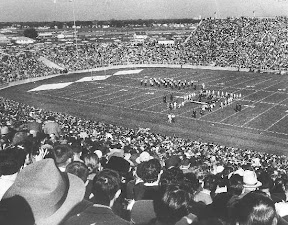
In Wisconsin history on this date, in 1957, from the Wisconsin Historical Society, the Packers dedicated a new stadium:

On this date the Green Bay Packers dedicated City Stadium, now known as Lambeau Field, and defeated the Chicago Bears, 21-17. In the capacity crowd of 32,132 was Vice President Richard Nixon.

Here’s a link to a Milwaukee Journal story covering the game and dedication.

Flaming Lips Film Comes to Whitewater!

Christmas on Mars, a film from The Flaming Lips, one of America’s finest psychedelic alternative rock bands, will soon be in Whitewater.

Yes, Whitewater, Wisconsin.

I received a helpful heads up from Ray Privett of Cinema Purgatorio announcing upcoming dates for the film. Here are the dates for our area —

Wisconsin:
Whitewater, Wisconsin: Theatres of Whitewater, October 17
Lake Geneva, Wisconsin: Geneva 4, October 18
West Bend, Wisconsin: Paradise Theatre, October 19
Madison, Wisconsin: The Orpheum, October 21-24

Iowa, Illinois, Minnesota:
Des Moines, Iowa: Nova 10 Cinemas, October 1
Moline, Illinois: Nova 6 Cinemas, October 5
Peoria, Illinois: Reynold’s Cinemas at Landmark, October 10
Naperville, Illinois: Nova 8 Cinemas, October 11
Minneapolis, Minnesota: Landmark Uptown Theatre, November 22

Ticket information is available from the Cinema Purgatorio website.

Christmas on Mars isn’t really just Christmas on Mars — it’s much more, as the subtitle to the film reveals: Christmas on Mars: A Fantastical Film Freakout Featuring the Flaming Lips.


Here’s a link to a trailer that will give you a taste of the film: http://www.youtube.com/watch?v=T8-5wiJ64bo

Fans will want to get tickets, and get in line, early, as members of City Council, our municipal administration, and leading local figures may otherwise grab all the best seats for themselves.

I Am a Constitution Voter

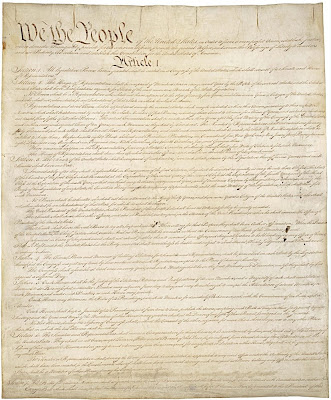
The American Civil Liberties Union has an election season initiative called, I Am a Constitution Voter.

It’s a fine campaign, and just the antidote to a season of partisan campaigning. Here are the principles of the I Am a Constitution Voter pledge:

  • I believe that no one — including the President — is above the law.
  • I oppose all forms of torture, and I support both closing the Guantánamo Bay prison and ending indefinite detention.
  • I oppose warrantless spying.
  • I believe that government officials, no matter how high-ranking, should be held accountable for breaking the law and violating the Constitution.
  • I believe that the Constitution protects every person’s rights equally — no matter what they believe, how they live, where or if they worship, and whom they love.
  • I reject the notion that we have to tolerate violations of our most fundamental rights in the name of fighting terrorism.
  • I am deeply committed to the Constitution and expect our country’s leaders to share and act on that commitment — every day, without fail.

The ACLU website has a link where one can take the pledge. Those who do so have the option of receiving a free bumper sticker.

There’s much more at the website, though — a visit offers many ways to preserve American liberties. These efforts have one goal in mind — the preservation of America as a free republic.


Register Watch™ for the September 25th Issue of the Paper  

It’s easy to see that Register, Whitewater’s local paper for 152 years, is in a period of transition.   In all of this, there’s a different type of newsprint, less likely to leave ink on a reader’s hands.  So much has been said about lipstick on pigs, that there’s nothing left to say on the newsprint for the paper. 
 
Inside.  There’s information about the October 3rd Make a Difference Day in Whitewater.  It’s a fine effort, and registration may be completed at http://www.uww.edu/involve/forms/mad.php  .  The registration deadline is Monday, September 29th.  There will be charitable projects taking place throughout the city.    
 
Front Page.  There are four front page stories in the Register this week: A donation to the local food pantry, the retirement of local physician Dr. Anne Griffiths, a story on disaster aid provided to Walworth County residents, and a story of the increase in Walworth County’s population.
 
(One sees that Walworth County has a population of over 101,000 – just enough for a dream town, I’d guess.  Congratulations.  Just don’t let La Grange take all the credit.)
 
Two of the stories are serious, and two are local human interest stories particular to Whitewater.
 
The four stories represent legitimate coverage options for the Register: local human interest, stories on county government without a transparent political angle, or serious scrutiny of local government, corporations, and organizations. 
 
The Register has mixed local human interest stories and straightforward county government coverage with local political bias.       
 
Cover human interests stories, especially from a benign but ironic angle, and the Register would have something interesting, and a paper that might appeal to a more upscale reader.  There might be initial subscriber loss, but the paper would develop a devoted readership and a reputation for wit. 
 
Cover local government in a straightforward way, and the paper would collect another group of devoted readers who would feel that they were offered insightful analysis.  Again, some readers would walk away, but those who remained would be worth having.  The paper would develop a reputation for serious analysis.
 
The paper has a third option, one that it will – here I am sure – never take: a serious muckraking paper, confronting political incumbents and their career appointees.  The paper would have a rich field of targets: flimsy excuses, mediocre work, parochial views, and the laughable conviction that a few and their friends represent a special class whose needs and views trump those of others.
 
The Register can continue along its present course, so long as a publishing chain pays for that course.  I think it’s probably the worst course the paper could take, as journalism or prudence.  It’s easily maintained, though, as long as out-of-town advertisers think ads in the Register are valuable to them.    

Daily Bread: September 26, 2008

Good morning, Whitewater

There are no public meetings scheduled for today in Whitewater.

The National Weather Service forecasts patchy fog with a high of 80 degrees. The Farmers’ Almanac predicts, continuing its multi-day series, “fair and cold weather.” It hasn’t been cold all week.

Yesterday’s better prediction: NWS.

In Wisconsin history on this date, in 1833, from the Wisconsin Historical Society, there is an account of how several tribes living in Wisconsin ceded land to the government:

Indian tribes including the Ojibwe, Menominee, Potawatomi, Ho-Chunk, Ottawa, and Sauk ceded land to the government, including areas around Milwaukee, especially to the south and east of the city. The ceded land included much of what is today John Michael Kohler and Terry Andrae State Parks. The Potawatomi continued to live along the Black River until the 1870’s, despite the treaty.

On this date in American history, in 1960, the first Kennedy-Nixon debate took place.

Here’s a short video clip describing background on the Kennedy-Nixon debates.


more >>

Register Watch™ for the September 18, 2008 Issue

Here’s my (mostly) weekly post, Register Watch™, on our local weekly newspaper, the Whitewater Register
 
Frontpage.  There are three front page stories. 
 
Taste of Whitewater.  The first is a recap of the September 12 and 13th events at the Cravath Lakefront.  The three accompanying color photographs ably depict the variety of events at the Taste.      
 
Two other stories are more serious. 
 
Lakeland School.  There’s a below-the-fold discussion of an amendment to a Walworth County ordinance to allow non-resident students (outside the district of the Children with Disabilities Education Board) to enroll in Lakeland School.  Walworth County’s Board of Supervisors voted unanimously to permit the enrollment of non-residents. 
 
Lakeland School serves special-needs students. 
 
The story’s author notes that the new school can accommodate up to 370 students.  The program has about 100 fewer students now.  I do not know how many students the new Lakeland School can optimally accommodate – that might be 370, or it might be a lower number. 
 
(I understand it’s possible to say that there’s no fixed optimal number, but the cost of the building and its maintenance would require some estimate of how many students those expenses were meant to cover.)
 
It’s fair to infer from the story that there are fewer students than the building can handle, but are there fewer students than the building was meant to handle now
 
More important, of course, is how the thousands of special needs students in Walworth County and its environs should best be educated.  The cost of the facility, and its unused capacity, hardly drive a school choice.  Lakeland School is merely one choice out of several possible settings. 
 
It would be better to let Lakeland sit with unused capacity than to fill merely to fill it, however tempting that option may be, with those unsuited to schooling there.     
 
Bilking the Elderly.  The third story involves a crime against an elderly woman, who was tricked into wiring money to someone she thought was a relative.  It was a phone scam, but there are similar scams, targeted more to other age groups, through email, too.  We are a small town far from other nations, but both phone calls and email messages are easy ways to trick someone across long distances. 
 
Inside.  I would ordinarily be reluctant to call attention to out-of-town merchants, as we are too insular in Whitewater as it is.  It’s an irony of our situation, though, that the closest that our local publication comes to a cosmopolitan outlook is in the print advertisements that it publishes for Burlington, Lake Geneva, Elkhorn, and Delavan businesses.     
 
There could be a travelogue for the Register in all this, if anyone at the paper had a sense of humor:
 
Elkhorn: Land of Mystery and Surprises

Predictive Political Markets

I posted previously about the Iowa Electronic Political Markets, where traders can purchase political futures contracts.  I have visited the Iowa Markets over the last few elections. 
 
Recently, I’ve followed the political market at Intrade.  Here’s a graph of 2008 Presidential Election Winner (Individual), for Barack Obama to win 2008 US Presidential Election —   


I’ve picked Obama because he’s currently commanding a higher price than McCain.  I’ll stick with Obama, even if his price falls.  The chart shows closing prices over the election campaign. 
 
There’s no magic in this, and traders might foolishly react to rumors, stubborn conventional wisdom, etc.  The Iowa Markets claim a strong predictive record in presidential races; Intrade seems more popular with traders this election.    
 
Chart courtesy of Intrade.com

Daily Bead: September 25, 2008

Good morning, Whitewater

At 8:30 a.m. this morning, there will be a meeting of the Ad Hoc Whitewater Technology Park Planning Committee at the municipal building.

The National Weather Service forecasts dense fog with a high of 78 degrees. The Farmers’ Almanac predicts, continuing its multi-day series, “fair and cold weather.”

Yesterday’s better prediction: NWS.

In Wisconsin history on this date, in 1961, Wisconsin established a requirement that new cars, beginning with the 1962 model year, have seat belts.

On this date in American history, in 1957, Central High School of Little Rock Arkansas was integrated with escort from the members of the 101st Airborne Division.