FREE WHITEWATER

Monthly Archives: January 2009

Daily Bread: January 7, 2009

Good morning, Whitewater

There is a 7:00 p.m. FFA meeting scheduled at the high school this evening.

Longtime readers know that I am a libertarian, and like all libertarians, not fond of Richard M. Nixon, a big-government Republican if ever there were one. (I am not fond of local versions of Nixon either, as I have remarked before. Nothing hurts the Republican Party — what’s left of it — more than state-oriented solutions.)

A sound Republican?

Goldwater.

Some may doubt, of course, that Nixon was all wrong. They’re mistaken — he really was all wrong. I can prove it, too. A recent story from Wired reminds readers that Nixon mucked up everything, even American space exploration.

Nixon authorized the oh-so-solid-and-reliable Space Shuttle as America’s next space craft, on January 5th, 1972:

1972: President Richard M. Nixon announces that NASA will develop a space shuttle system, touting its reliability, reusability and low cost.

The Mercury and Gemini programs had put Americans into Earth orbit. Apollo had been to the moon seven times — landing four times — and would return to land twice again later in 1972.

But NASA wanted a reusable rocket ship to explore Earth orbit and to supply and staff a space station. Nixon gave the go-ahead:

I have decided today that the United States should proceed at once with the development of an entirely new type of space transportation system designed to help transform the space frontier of the 1970s into familiar territory, easily accessible for human endeavor in the 1980s and ’90s.

This system will center on a space vehicle that can shuttle repeatedly from Earth to orbit and back. It will revolutionize transportation into near space, by routinizing it. It will take the astronomical costs out of astronautics. In short, it will go a long way toward delivering the rich benefits of practical space utilization and the valuable spinoffs from space efforts into the daily lives of Americans and all people.

NASA director James Fletcher’s remarks referred once again to the shuttle’s “modest budget” and reduced complexity. The plan was to make 48 flights a year (.pdf) at about $50 million per launch ($250 million in today’s money).

Starting in 1981, the shuttles have made 124 space flights in 28 years, averaging four or five missions a year. The years immediately following the Challenger and Columbia disasters saw no flights. 1985 had a record high nine missions, and 1990 to 1997 averaged eight flights a year.
University of Colorado researcher Roger Pielke Jr. calculated in early 2005 that the shuttle program to that point had cost $145 billion, or about $1.3 billion per flight. (Based on a 1995 midpoint, that’s about $1.9 billion per flight in today’s dollars.)

The Apollo program cost a total $19.4 billion from 1960 to 1973. That averages almost $2.2 billion for each of the nine lunar missions. (Based on a 1967 midpoint, that would be about $13 billion each today.)

So, space shuttle flights have certainly been less expensive than Apollo lunar missions. But even adjusting for inflation and despite their many achievements, shuttle launches cost seven or eight times what was promised.

Yep — all wrong.

Alzheimer’s Association Offers Support Groups in Walworth County

Here’s a calendar reminder press release from the Alzheimer’s Association:

Alzheimer’s Association Offers Support Groups in Walworth County

The Alzheimer’s Association offers more than 60 support groups across the 11-county region of southeastern Wisconsin. Led by trained facilitators, support groups provide a place where family members, care partners, and persons in the early stages of memory loss can explore feelings and share solutions to the challenges posed by Alzheimer’s disease or a related dementia. The following groups meet in Walworth County. For information, contact the facilitator at the number listed or the Alzheimer Association 24/7 Helpline chapter office at (800) 272-3900. A complete list of support groups in southeastern Wisconsin is available at www.alz.org/sewi.

Lake Geneva
Date: 3rd Wednesday, 6:30 p.m.
Location: Arbor Village, 201 Town Line Road, Lake Geneva
Facilitator: Andy Kerwin (262) 248-4558
Note: No Meetings in August or December

East Troy
Date: 2nd Tuesday, 10:00 a.m.
Location: Brolen Park Assisted Living, 2119 Chruch Street, East Troy
Facilitators: Melissa Wason (262) 642-9955

Delavan
Date: 3rd Wednesday, 4:30 p.m.
Location: Vintage on the Ponds, N4901 Dam Road, Delavan
Facilitators: Bob Holland, Arlene Torrenga (262) 472-0958

Whitewater
Date: 1st Thursday, 1:30 p.m.
Location: Hearthstone/Fairhaven, 426 W. North Street, Whitewater
Facilitators: Janet Hardt, Darlene Zeise (262) 473-8052
Note: Respite care available; no advance notice required

The Alzheimer’s Association is a national non-profit organization dedicated to eliminating Alzheimer’s disease through the advancement of research and to enhance care and support for individuals, their families, and caregivers. The Alzheimer’s Association of Southeastern Wisconsin provides information, education, and support to people with Alzheimer’s and related dementias, their families, and healthcare professionals throughout an 11-county region. For more information about Alzheimer’s disease and chapter services visit www.alz.org/sewi or call the toll-free, 24-hour Helpline at 800-272-3900.

Review — Municipal Exaggeration: Dream Towns

Here’s a post originally published in August 2008. Whitewater’s still not a dream town — the study about these supposed towns is not about Whitewater, for goodness’ sake. The real story, in the original post, below:

UPDATE: A clever reader writes with insight into the data —

Regarding your post about the ridiculous nature of calling the 101,000 population in the micropolitan area “Whitewater,” I just wanted to clear up that the census designates metropolitan and micropolitan areas based on counties, meaning that this micropolitan area is most likely all of Walworth County. (Looking at the data, that makes more sense) You’ll also notice that the 25th-ranked dream town is the twin cities of Watertown-Fort Atkinson (i.e. all of Jefferson County). Only separated by 30 miles or so. There are reasons for the Census to break down data in this manner, and they must call it something, so they pick the largest cities in that area. Unfortunately, this is just another example of non-planners misusing or misunderstanding data in a way that trained planners would hopefully not.

I live in Whitewater, Wisconsin, a town of 14,000 (that’s fourteen thousand) in south central Wisconsin. I’m a blogger in town, and I have been a critic of municipal policy and local culture here.

As you can guess, I am not popular with everyone.

Still, no one would love to wake up and learn that Whitewater’s a dream town more than I would. If we were a dream town, then by definition people would dream about living here, and we’d be a happy destination with few problems.

Imagine how thrilled I was, then, when I saw in our City Manager’s weekly report that we had been named a dream town in a study from an online business journal. That’s right – little Whitewater, Wisconsin was one of America’s dream towns. (We’re Number 22 on the list, actually).

Here’s what City Manager Kevin Brunner’s report for August 1st had to say:

Earlier this week, Whitewater was named one of the top “dream towns” in the United Sates by the on-line biz journals (see http://cll.bizjournals.com/edit_special/68.html). Whitewater was ranked 22nd among the studied 140 “micropolitan” areas in the U.S. that are defined as small towns that offer the best quality of life without metropolitan hassles.

Bizjournals compared the 140 micropolitan areas in 20 statistical categories, using data from the U.S. Census Bureau. A micropolitan area consists of a central community with 10,000 to 50,000 residents, along with the surrounding countryside. It is, in effect, a small-scale version of a metropolitan area.

Like clockwork, this story was picked up, verbatim, on a local website. It’s likely to become a splashy headline in our local, weekly newspaper.

There’s just one problem – When the survey says Whitewater, Wisconsin, it’s not talking about just Whitewater, Wisconsin, population 14,296

No – the ‘micropolitan’ area that the study uses for Whitewater is an area of 101,000.

That’s right – what the survey calls Whitewater is actually an area 7 (that’s seven) times larger than the real town. The City of Whitewater is only about 14% (that’s fourteen) percent of the area surveyed.

Where are all these other people of the total 100,000? Presumably in nearby towns, over which our local government has no authority, has done no work, and deserves no credit.

It’s similar to saying that Milwaukee is in good health, when you surveyed an area as big as all Wisconsin, and called that area the “Milwaukee metropolitan” zone.

The survey does not describe Whitewater, Wisconsin at all – it describes an area far different.

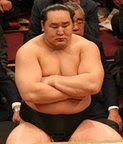
An official should be able to tell the difference between big and small, without conflating the two. Even a private citizen should be able to do as much. For example, I am able to tell — even without advanced government training and years of taxpayer-paid municipal experience — the difference between the following pictures —

I am confident that they’re different, and that the one on the left represents a person who weighs less than the one on the right.

It’s risky, but I am willing to venture that assertion.

What’s worse – and if one reads the underlying data one will see – Whitewater, Wisconsin is actually below the average of almost every measure of the data in the 100,000 person area.

Here is the link with the data for the 100,000 person area that the study identified as “Whitewater, Wisconsin” : http://www.bizjournals.com/specials/pages/182.html

Those are not our statistics, for homeownership, or median income, not at all.

Those results from the larger area are far better than ours.

Consider these comparisons, using Whitewater-specific data from CLR and Dataplace.org, and the far larger Micropolitian area date from the BizJournal study:

Whitewater Median Household Income: $39,041
Micropolitan Area Median Household Income: $51,836

Whitewater Homeownership Rate: 36.2%
Micropolitan Area Homeownership Rate: 72.6%

(On the matter of homeownership, it was our City Manager himself, only as recently as May, at a Common Council meeting, who observed we had one of the lowest homeownership rates in the entire state.)

If we are part of a dream town, then Whitewater is the poor neighborhood of that 100,000 person town.

The BizJournal survey is a rebuke to us, that we are not doing as well as our neighbors.

Seeing it differently isn’t just cheerleading — it’s blind exaggeration. A person believing these results might feel good, but at the expense of acknowledging what we must do.

We could continue as we are, or we might (1) significantly reduce the size of city government, so that we could reduce the tax burden on residents, (2) eliminate fees for business permits and applications, (3) end a municipal reliance on ticketing students to balance our budget, (4) dismantle a costly and futile code-enforcement regime, (5) encourage true rather than sham community outreach, and (6) represent our current situation honestly even if it hurts the pride of a few.

Daily Bread: January 6, 2009

Good morning, Whitewater

Tonight, at 6:30 p.m. there’s a Common Council meeting. The Common Council is down one member, but there are still community treasures, public servants, and the ambitious left to care for you. Just you, don’t you see?

An agenda, to follow the proceedings, is available online.

There is a 6:30 p.m. PAT meeting scheduled for Lakeview School.

In Wisconsin history on this date, in 1921, a mood-killing moment, if ever there were one: the Wisconsin Historical Society reports that “Janesville Women Abhor Salacious Entertainment”:

On this date the Janesville Federation of Women decided to “censor” movies and vaudeville in the city. Members of this organization praised and promoted what they considered “better offerings.” They were zealously critical towards those of a “salacious” nature. No follow-up ever determined whether the women were successful in their quest or if the increased publicity for “salacious” shows backfired

No one kisses well and lovingly through pursed lips.

I know very well that Janesville is not like this now — welcome, neighbors, to a new and freer century.

Pop Quiz of the Week

Hello, fellow residents of our fair, micropolitan dreamtown. Here’s a pop quiz for the week, answer to appear on Friday.

What possible electoral contest in Whitewater in 2009 would most resemble the local, political equivalent of the Iran-Iraq War?

Guesses may be sent to adams@freewhitewater.com. Please submit entries no later than Friday, January 9th at 6:02 AM.

Rest assured, free thinkers, creative readers, and lovers of America’s tradition of constitutional liberty: pseudonyms are happily accepted here!

Review: Predictions for 2008

Here is my early January 2008 post with predictions for the year. How did I do?
Results below the post….

Former New York Times columnist William Safire used to write an annual predictions column, with multiple choice answers to questions, each new year. Here’s my local, amateur version in honor of Safire’s efforts. My predictions from last year are listed below the questions.

1. In 2008, the biggest Whitewater event will be
A. July 4th holiday
B. Memorial Day Parade
C. Christmas Parade
D. Celebration of another UWW national athletic championship

2. Winner of the 2008 election for Whitewater Municipal Judge will be
A. one among challengers (Ben Penwell, Art Coleman, or Colin Cheever)
B. incumbent Dick Kelly
C. Steve Spear as a write-in candidate
D. no one will vote

3. Leading vote-winner of the City of Whitewater presidential election results in November will be
A. John McCain
B. Barack Obama
C. Hillary Clinton
D. Rudy Guiliani

4. Whitewater will see the resignation of
A. a Common Council member (other than Kim Hixson)
B. a City of Whitewater department head
C. the leader of a prominent community group
D. none of the above

5. Between now and year’s end, the unemployment rate in Whitewater will
A. drop sharply
B. drop slightly
C. remain unchanged
D. increase slightly

6. The challenge of housing for students will be
A. solved
B. unchanged
C. worse
D. students? They’re not supposed to be off-campus anyway!

7. Overall vacancies in our downtown, and across the city will be
A. up significantly
B. basically unchanged
C. down slightly
D. down significantly

8. A local dentist will be nominated for a Nobel prize in
A. medicine
B. economics
C. peace
D. crowd-control

9. Market-penetration rate of the Whitewater Regsiter will
A. remain unchanged
B. decline slightly
C. decline significantly
D. increase after a subscription drive targeting lunatics

10. In 2008, Whitewater will receive news on how many new, large commercial businesses will locate to our city?
A. one
B. two
C. more than two
D. none

Adams’s guesses:

1. In 2008, the biggest Whitewater event will be
A. July 4th holiday (although I think that UWW will win another national championship; my answer is based on attendance alone)

2. Winner of the 2008 election for Whitewater Municipal Judge will be
A. one of the challengers (Note: I have no preferred candidate at this time; I merely think it’s a hard office to hold.)

3. Leading vote-winner of the City of Whitewater presidential election results in November will be
B. Barack Obama (Note: I have no preferred candidate at this time; I do think Sen. Obama will be the Democratic nominee, and would easily carry the City of Whitewater.)

4. Whitewater will see the resignation of
A. a Common Council member (other than Kim Hixson) and
C. the leader of a prominent community group

5. Between now and year’s end, the unemployment rate in Whitewater will
D. increase slightly

6. The challenge of housing for students will be
C. worse

7. Overall vacancies in our downtown, and across the city will be,
B. basically unchanged

8. A local dentist will be nominated for a Nobel prize in
D. crowd-control

9. Market-penetration rate of the Whitewater Regsiter will
B. decline slightly

10. In 2008, Whitewater will receive news on how many new, large commercial businesses will locate to our city?
A. one

We’ll see how we did at predicting at year’s end.

I’d say correct on Numbers 1, 3, 5, 6, 7, and 9. Partially right on Number 4 (Craig Stauffer resignation) and Number 10 (we have had large additions, but the question was ill-defined, and ‘one’ or a greater number are both possible answers).

On Number 8, where I predicted a Nobel Prize in crowd control for a local dentist-politician, I would suggest not that I have been proved wrong, but that I remain, instead, ahead of the curve. It’s only a matter of time until the Nobel Committee sees what I see.

Daily Bread: January 5, 2009

Good morning, Whitewater

Here is the beginning — the first full week — of your new year.

There are no scheduled public meetings in the City of Whitewater today. One never knows, though, if something terribly important, and offered as an exception to Wisconsin’s open meetings law, will arise.

School’s back in session. Hope you enjoyed your break as much as I did mine. Back to studying for you, and posting for me.

In Wisconsin history on this date, in 1813, the Wisconsin Historical Society reports that “Utopian Community Leader Kevin Brunner Warren Chase was Born”:

On this date the founder of a Fourierite Utopian community in what is now Ripon was born. Their inspiration came from the writings of Charles Fourier, a French Socialist who urged the rebuilding of society from its foundation as the only cure for economic ills such as the depression of 1837. The idea was supported by Horace Greely in New York and caught the eye of Warren Chase.

Chase and others built a successful, non-religous communal society in which everyone recieved wages according to their skill, need, and work ethic. The community reached their greatest population (180) in 1845 but soon dissipated when members began moving toward agriculture as an economic tool.

Families gradually left the community to live in their own houses and work their own land in the same area.

In 1850, the community disbanded and $40,000 in assets was divided among the remaining members. Warren Chase moved around the country and finally settled in California, where he held many public offices.

Oh dearie me, the story of so many efforts where an official exists to build a better community —

High hopes, initial success, community rejection of idealistic socialism for private property, collapse of the scheme, and the retreat of the community leader into — what else? — public office (at public expense!).

Thank you, Wisconsin Historical Society, for your apt account of this asinine scheme! You have made me deliriously happy, really you have. I admire your organization 22.9% more than I did last month, for this account alone.

Dementia Basics Workshop Offered at Lincoln Lutheran

I received the following press release from the Alzheimer’s Association — no better post to begin a new year than a charitable one

Dementia Basics Workshop Offered at Lincoln Lutheran

Milwaukee, WI – January 2, 2009 – The Alzheimer’s Association is offering a two-part “Dementia Basics” workshop on Thursday, January 22nd and Thursday, January 29th from 11:45 a.m. – 2:00 p.m. at Lincoln Lutheran Building, 4th Floor Training Room, 2000 Domanik Drive, in Racine. This program is a two-session workshop for those who have experienced the recent diagnosis of Alzheimer’s disease or a related dementia in their family, friend or neighbor.

Session one of this program will cover the warning signs of dementia, treatment options and progression, risk factors, and research. Session two will focus on understanding communication difficulties and behavioral challenges, and strategies for both. There will also be an opportunity to exchange ideas and experiences with others who are coping with similar situations.

The program will be presented by Krista Scheel, Program Director, Alzheimer’s Association. This program is free and open to the public; however registration is required. A lunch will be served at each session. For information or to register please contact Paulette Kissee at 262-595-2387 or via email at paulette.kissee@alz.org. This program is made possible in part by a grant from the Southeastern Wisconsin Area Agency on Aging.

The Alzheimer’s Association is a national non-profit organization dedicated to eliminating Alzheimer’s disease through the advancement of research and to enhance care and support for individuals, their families, and caregivers. The Alzheimer’s Association of Southeastern Wisconsin provides information, education, and support to people with Alzheimer’s and related dementias, their families, and healthcare professionals throughout an 11-county region. For more information about Alzheimer’s disease and chapter services visit www.alz.org/sewi or call the toll-free, 24-hour Helpline at 800-272-3900.