FREE WHITEWATER

Monthly Archives: February 2009

Daily Bread: February 27, 2009

Good morning, Whitewater

No municipal public meetings today, but the book fair at Washington School continues. The best, probably, one could hope in these troubled times.

On this date in 1904, according to the Wisconsin Historical Society, Wisconsin’s second state capitol burned down (we’re now on our fourth, and one hopes we’ll never need a fifth):

On this date fire destroyed the second State Capitol building in Madison. On the evening of the 26th, the generator was turned off for the night. The only lights visible were two gas jets serving the night watchman. At approximately 2 a.m., night watchman Nat Crampton smelled smoke and followed the odor to a recently varnished ceiling, already in flames. A second watchman arrived to assist, but there was no water pressure with which to operate a hose. The fire department encountered a similar situation upon arrival. Governor Robert M. La Follette telegraphed fire departments in Janesville and Milwaukee for assistance. La Follette was at the capitol, directing efforts to douse the fire and entering the burning building to retrieve valuable papers. The fire was completely extinguished by 10 p.m. the next day. Losses were estimated to be close to $1 million.

The Society has a page dedicated to the fire, entitled, “Up in Smoke: The Story of the Capitol Fire of 1904,” to commemorate the event.

Daily Bread: February 26, 2009

Good morning, Whitewater

There are no scheduled public meetings for the City of Whitewater, today.

In our schools, over at Washington School, there will be a book fair today.

The Wisconsin Historical Society notes that February 26th marks the anniversary of the day in 1912 when “local women met at the library and formed the Rock County Women’s Suffrage League. The group elected Mrs. A.P. Lovejoy as their president.” (Note: Mrs. A.P. Lovejoy — so very British and proper.)

The 19th Amendment, adopted in eight years after the Rock County meeting, gave the local group what it wanted: “The right of citizens of the United States to vote shall not be denied or abridged by the United States or by any state on account of sex.”

Daily Bread: February 25, 2009

Good morning, Whitewater

There is a Lakes Management meeting at 3 p.m., and a Waste Treatment meeting a 4 p.m. Those two meetings should never be scheduled back-to-back.

On this day in history, in 1919, Wired reports on a first — but not last — step along the path of government regulation and taxation, “Oregon Taxes Gas by the Gallon“:

It’s only a penny, and it’s only one state, but you know where things go from here.

New York City started collecting registration fees on those new-fangled motor vehicles in 1901, and the state of Missouri took that road two years later. By 1914, every state collected registration fees (.pdf), and approximately 90 percent of the dough was going to road construction and maintenance.

Still, horseless carriages had a greater need for pavement than horses hauling carriages, and the long-distance capabilities of automobiles and trucks suggested a network of well-built intercity highways to rival the railroads. In Oregon, the state highway commission (created in 1913) started a “Get Oregon Out of the Mud” campaign for better roads in 1917.

Republican state legislator Loyal Graham (.pdf) sponsored the measure that made Oregon the first state in the nation to make road users pay at the pump to build and maintain those roads. Early projects included the Pacific Highway from the Washington state line to California and the Columbia River Highway along that mighty river.

The first gasoline tax was one cent a gallon (12 cents in today’s money). Gasoline in those days sold for about 25 cents a gallon, which would be a bit more than $3 these days.
Colorado and New Mexico followed Oregon within six weeks to initiate per-gallon taxes. North Dakota followed later in the year. When New York finally joined the procession 10 years later, all 48 states had imposed taxes of 1, 2 or 3 cents per gallon. The federal government levied its first gasoline tax in 1932: a penny a gallon (15 cents today).

Ninety years after its inception, the Oregon gasoline tax is 25 cents imposed by the state, with up to 8 cents more in city and county taxes, and 18.4 cents for the feds. That could add up to 51.4 cents, depending on where you buy. The U.S. average is 45 cents a gallon, including the federal levy…

All this, from a penny, and (presumably) a progressive Republican.

Whitewater Publication Requests

Good afternoon, my fellow residents. I have two quick requests that someone might be able to fulfill, short of an open records request.

First, I am looking for the issue of the Whitewater Police Department’s quarterly newsletter in which Chief Coan writes about the police officer as warrior. The issue is probably several years old, and it features, I recall, a column in which Chief Coan holds out that old and discredited theory as though it were an evergreen insight.

I am also looking for a photograph, published online during Whitewater’s police department’s re-accreditation process. In the photograph, taken while the re-accreditation team was still in town, and before any evaluation could be finished, a member of the PFC stares into the camera, grinning like nothing so much as the Cheshire Cat. (There’s not much subtlety in Whitewater.)

At the respective times, both the column and the photograph were offered without apparent irony. I wouldn’t wonder that those who offered them were proud of both, and likely are just as proud of them now.

So be it – the confidence in both should produce only a proud offer now. How could it be otherwise? Offered initially with seeming self-confidence, a more modest view could hardly be expected now.

Surely someone in the city saved these treasures.

I may be reached, as always, at adams@freewhitewater.com .

Family Caregiver Conference Offered in Racine

The Alzheimer’s Association has issued the following press release:
          
The Alzheimer’s Association is offering a Family Caregiver Conference on Friday, April 3, 2009 from 9:00 a.m. to 3:45 p.m. at the Racine Marriott, 7111 Washington Avenue (Highway 20) in Racine. The conference is open to anyone who assists in the care of a loved one with Alzheimer’s disease or a related dementia. Registration is $25 which includes lunch and all materials. Free onsite care services may be available.
 
The conference is designed to provide helpful resources to empower caregivers in their everyday life. Features of the conference include presentations on communication and adaptive strategies for assisting with activities of daily living with a partnership approach. In addition, caregiver attendees will learn about developing schedules and routines to assist in daily planning, changes in eating habits and abilities, and ways to take care of themselves.
 
For registration and information, contact Paulette Kissee, Regional Services Manager, Alzheimer’s Association at 262-595-2387 or via email at paulette.kissee@alz.org. Registration is $25; a limited number of complimentary registrations are available; call for details. This event is made possible by the support of Aurora Senior Health and Wellness Center, Home Instead Senior Care, Lincoln Lutheran and Homewatch Caregivers.
 
The Alzheimer’s Association is a national non-profit organization dedicated to eliminating Alzheimer’s disease through the advancement of research, to enhance care and support for all affected and to reduce the risk of dementia through the promotion of brain health. The Alzheimer’s Association provides information, education, and support to people with Alzheimer’s and related dementias, their families, and healthcare professionals throughout an 11-county region. For more information about Alzheimer’s disease and local chapter services visit www.alz.org/sewi or call the toll-free, 24-hour Helpline at 800-272-3900.

Alzheimer’s Association Introduces Six Week Educational Series for Family Caregivers

The Alzheimer’s Association has issued the following press release:
 
Alzheimer’s Association Introduces In-Depth Training for Family Caregivers
 
-Six Week Series to Provide Full Spectrum of Education for Family Caregivers-
 
The Alzheimer’s Association introduces “The Savvy Caregiver” a new program which will provide clinical level training for family caregivers. This six week series will run from Wednesday, March 18th through Wednesday April 22nd from 8:00 a.m. to 10:00 a.m. at the Jefferson County Workforce Development Center, 874 Collins Road in Jefferson.
 
The Savvy Caregiver program is a unique approach to family caregiver education. The central concept is the notion of strategy; throughout the program caregivers are urged to learn, develop and modify strategies to accomplish the goal for their particular caregiving situation. Participants will come away with increased personal knowledge, skills and caregiving outlook, skills to access abilities of a loved one with dementia, confidence to set and alter caregiving goals, strategies to manage activities of daily living, and perspective on the course of Alzheimer’s and related disorders.
 
The program will be presented by Jennifer Sterling, Regional Services Coordinator, Alzheimer’s Association. The cost for the six week course is $15; registration is required. To register, please contact Jennifer Sterling at 920.728.4088.
 
The Alzheimer’s Association is a national non-profit organization dedicated to eliminating Alzheimer’s disease through the advancement of research and to enhance care and support for individuals, their families, and caregivers. The Alzheimer’s Association of Southeastern Wisconsin provides information, education, and support to people with Alzheimer’s and related dementias, their families, and healthcare professionals throughout an 11-county region. For more information about Alzheimer’s disease and chapter services visit www.alz.org/sewi or call the toll-free, 24-hour Helpline at 800-272-3900

Daily Bread: February 24, 2009

Good morning, Whitewater

There’s a Chapter 2 Review committee meeting today, in Whitewater, from 2 to 3 p.m. Interesting, but not as interesting as an entire fictional program in which No. 2 didn’t stay the same for long:

So, is Whitewater like an episode of 1967’s The Prisoner, as someone once suggested to me? I’m not sure — it’s certainly not as stylish as the show, that’s for sure.

The full episodes of the 1967 series, one-minute clips, and information on the 2009 remake of the series are available at AMC online. more >>

Daily Bread: February 23, 2009

Good morning, Whitewater

You’re in luck — two municipal meetings today. At 4:30 p.m., the CDA Board of Directors meets. There are minimal requirements for a community development authority, and organizational structure is among them. A board directs the activity of the CDA; whether — in these or other times the CDA truly directs much of anything in Whitewater, itself, I leave to others to decide.

If one might claim that so much of what we have in Whitewater is the result of direction, I’m not sure what to say about those who might proudly advance the claim.

Later, there’s a Planning Commission meeting. The Planning Commission will meet at 7 p.m. tonight. There is scheduled time for reports from various municipal representatives, a conditional use permit application, and — of course — time for citizen comments.

There’s also a School Board meeting tonight, at 7 p.m.

It’s a truly historic day in Wisconsin — in 1846, the Wisconsin Historical Society reports that William Horlick was born. Although he was born on a small, dank, wretched island, he went on to fame in America:

On this date William Horlick was born in Ruardean, Gloucestershire, England. A noted food manufacturer and philanthropist, Horlick arrived in the U.S. in 1869 and settled in Racine. In 1872 he moved to Chicago with his brother and began to manufacture food products. In 1876 his company moved to Racine where he began to experiment with creating a dried milk product. In 1887 he trademarked Malted Milk. In 1889 he opened a company branch in New York City and another in England the following year. He constructed additional plants in Racine in 1902 and 1905. The company name was changed to Horlick’s Malted Milk Co. in 1906. This success enabled Horlick to achieve a widespread reputation as a philanthropist in Racine. He also helped fund the first Byrd expedition to the South Pole and the Amundsen expedition to the North Pole. After his death in 1936, control of the company passed to his son, Ander James Horlick.

Daily Bread: February 20, 2009

Good Morning, Whitewater

There are no public meetings scheduled for the City of Whitewater today.

At Washington School today, there is a scheduled Souper Bowl event from 4:30 p.m. to 6:30 p.m. (“Come enjoy 4 different kinds of soup. Benefits will go towards the Whitewater Food Pantry”) and a 6:30 p.m. to 7:30 p.m. Sock Hop (“Come enjoy a evening of fun and dance. Sponsored by P.A.T.T.”).

At the High School, tonight, at 7:30 p.m., it’s Inspecting Carol, the spring play (“Spring play Inspecting Carol performed tonight! Reserve tickets online via the Drama club web page or stop at the auditorium box office. Call 262-472-8178 for box office hours.”)

In Wisconsin history on this date, according to the Wisconsin Historical Society, in 1950 “in a six-hour speech delivered before the U.S. Senate, Wisconsin Senator Joseph McCarthy claimed he had the names of 81 U.S. government officials actively engaged in Communist activities, including “one of our foreign ministers.”

A six hour speech — so far removed from American custom that it speaks, itself, to something aberrant in the speaker.

Yet, for all that, I can think, for example, of at least one politician in our small city capable of speaking longer still…

Register Watch™ for the February 5th Issue: Tree City, USA

You may not have heard, because shockingly Register Editor Matt Schwenke didn’t put the story on the front page, but Whitewater, Wisconsin has been named a Tree City USA designee. 
 
Not just for the current year, but for the last fifteen.  One might suspect that an honor bestowed fifteen consecutive times isn’t much of an honor, and if you think so, I’d say you’re right. 
 
In fact, I can prove it. 
 
Consider, first, what goes into being a tree city in the first place.  Schwenke ably sets out the four criteria that Whitewater has reputedly assuredly met: (1) maintain a tree board or commission, (2) maintain a tree care ordinance, (3) maintain an annual community forestry budget of at least $2 per capita, and (4) hold an arbor day observance, proclamation, whatever.   
 
We have a tree commission, and we do have ordinances about trees, so we have met the first two.  Lest anyone – anyone – in this micropolitan paradise believe that I doubt the quality of the tree commission, I can assure him or her otherwise.  Actually, as far as I know, the Whitewater Tree Commission is likely far more thorough than the Whitewater Police and [sic] Fire Commission.  The agendas of the TC seem as good, for example, as the agendas of the PFC.  Better, really, when one considers the commensurately greater effort that should go into the PFC’s work.     
 
Sadly although we do have ordinances concerning trees, we don’t need any.  Not ordinances, not regulations, not even suggested guidelines.  There have been trees in North America long before the first human inhabitants arrived on this continent, and they grew without either commissions or ordinances.  They grew all over the place.  There were so many, and still are so many trees, that large clusters of them are even called forests.  So common are these clusters, that there’s a word in the English language devoted to the idea (and fact) that one finds lots of trees in dense, dank clusters. 
 
As for Arbor Day, well, that’s a farcical requirement of the Tree City USA program, I’d guess.  No one really knows when Arbor Day is commemorated, and – amazingly – a number even smaller than no one actually cares. 
 
Other than by beavers, perhaps, these trees were naturally unthreatened.  They grew without human oversight, ordinances, vision statements, or task force recommendations.  If we leave them alone, they’ll probably grow like that again.  Bigger, even. 
 
That we pay over $2 per capita for a forestry budget is unsound and unnecessary.  Many times – over a dozen, I wouldn’t wonder – I have seen squirrels carry acorns around, assuring the propagation of oaks without any human action.  These small rodents require no remuneration, and even if they did, they’re too small to reach a teller’s counter to cash whatever checks our municipality might improvidently issue for their efforts.   
 
There are at least 14,296 people living in Whitewater, and that means at least $28,592 in required Tree City USA funding that the trees do not need.  I’d say our trees, but why be so possessive.  They’re not really ours, are they?  No! 
 
The trees belong only to themselves.  Set aside your controlling inclinations, people of Whitewater, the Center of Opportunity, and your need of ordinances. 
 
Let the trees live free, as they once did.

Downtown Whitewater Annual Breakfast Update, Friday, February 20th

Downtown Whitewater Inc. will present its Annual Breakfast Update on February 20, 2009 from 7:00 am to 8:30 am, at the Whitewater Municipal Building, in the Common Council Chambers. 

Additional information, from a flyer Downtown Whitewater prepared, follows —
 

Downtown Whitewater, Inc. will be giving highlights on their annual report with the final report due in March.  They will also be going over accomplishments and goals.
 
You will have a chance to see the work plans for all 4 committees for this year.  Executive Director Tami Brodnicki and Board John Patterson will go over the North Street parking lot renovation along with First Street, and the Whitewater Street Project.
 
You can take a look around at the different projects done and also check the ones on the rise.  You can even sign up for a committee because we are always looking for more volunteers.  
 
Please do not miss this opportunity to find out what is going on in the downtown.  We promise you will enjoy the event and find it very informative. 
 
Breakfast is being served by The Sweet Spot Coffee Shop, we will have quiche, muffins, scones, juice, coffee and water.  Yummy!!
 
Please call the Downtown Whitewater, Inc. office at 473-2200 to RSVP.  We look forward to hearing from you.


Results of the Primary for the Wisconsin DPl Superintendent’s Office

The AP reports on the primary for Superintendent of the Wisconsin Department of Public Instruction.  AP Writer Scott Bauer’s lede is “Evers, Fernandez easily advance in school race.”  Well, yes, Arch-Bureaucrat Tony Evers and Home School advocate Rose Fernandez easily outpaced three other minor candidates (Van Mobely, Price, and Holtz). 

(See, http://www.madison.com/tct/news/439144)
 
What’s surprising is that Evers – with the backing the 98,000 member (!) teachers’ union – and the advantage of being the only candidate to run television ads – out-paced Fernandez only about 35% to 31%. 
 
Evers will probably pick up enough support from the lower-tier candidates to win, but how can he not be disappointed?   He had the support of one of the strongest unions since the Soviet Union, and still only finished four points or so ahead of someone who championed virtual (that is, home) schoolers?  To someone with twelve or thirteen degrees in education (but not one in mathematics, physics, art history, or political philosophy), Fernandez probably seems like someone who believes that the earth is flat.   
 
(Note to the Whitewater City Manager: Just in case we don’t have enough task forces going in Whitewater, you might want to establish a Flat Earth Investigatory Task Force.  I’ll bet there aren’t many towns in America that have a task force like that.)    
 
Related links — as collected from the AP —

Department of Public Instruction: http://www.dpi.state.wi.us

Wisconsin Education Association Council: http://www.weac.org

Tony Evers: http://tonyevers.com

Rose Fernandez: http://changedpi.com

Daily Bread: February 19, 2009

Good morning, Whitewater

There is a Common Council meeting at 6:30 p.m. tonight. The agenda for the meeting is available online.

The session tonight includes a State of the City presentation. Later, the meeting will go into closed session regarding the extension of the South Whitewater multi-use trail.

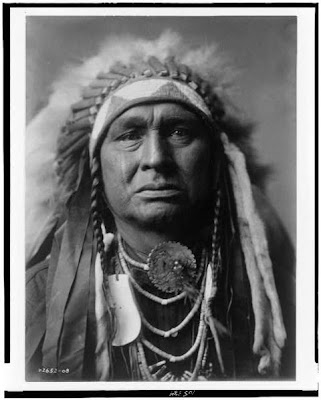
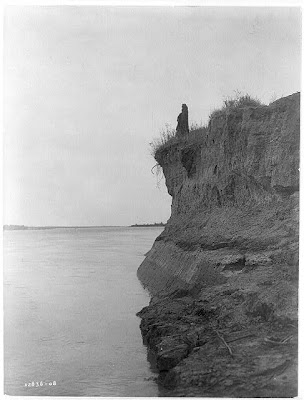
On this day in 1868, from the Wisconsin Historical Society, photographer Edward S. Curtis was born near Whitewater:

On this date Edward Sheriff Curtis was born near Whitewater. As a young boy, he taught himself photography. His family eventually moved to the Puget Sound area of Washington state. He settled in Seattle and opened a photography studio in 1897. A chance meeting on Mount Rainier resulted in Curtis being appointed official photographer on railroad magnate E.H. Harriman’s expedition to Alaska.

Curtis also accompanied George Bird Grinnell, editor of Field and Stream magazine, to Montana in 1900 to observe the Blackfoot Sun Dance. After this, Curtis strove to comprehensively document American Indians through photography, a project that continued for over 30 years. Working primarily with 6 x 8-inch reflex camera, he created over 40,000 sepia-toned images. His work attracted national attention, most notably from Theodore Roosevelt and J. Pierpont Morgan, whose family contributed generously to his project.

His monumental work, The North American Indian, was eventually printed in 20 volumes with associated portfolios. Curtis’ work included portraits, scenes of daily life, ceremonies, architecture and artifacts, and landscapes. His photographs have recently been put online by the Library of Congress. [Source: Dictionary of Wisconsin Biography, SHSW 1960, pg. 892]

The Library of Congress has an online exhibit, one of many online, entitled Edward S. Curtis in Context. Curtis’s photographs are often haunting, despite the now-stilted original commentary that sometimes accompanied them.

Two of Curtis’s public domain photographs appear below — White Man Runs Him and Mandan Man Overlooking the Missouri River (c. 1908).

Daily Bread: February 18, 2009

Good morning, Whitewater

The Tree Commission meets from 4-5 tonight, and there’s a Police and Fire Commission meeting at 7 p.m. Here’s the amended agenda for the Tree Commission:

(AMENDED) Agenda
1. Call To Order
2. Roll call
3. 2009 Spring Planting
Planting location Review
Tree variety’s ordered
4. Discussion of McDonald’s removed Trees
5. Review of Changes from Tree commission Ordinance
6. Explanation of Tree Survey
7. Updating forestry guidelines to include tree boots and 2 years of watering
8. Parks Department turf management and how it relates to trees
9. Present tree pruning on Main Street
10. Arts project related to tree boots (report by Ehrenberg)
11. Adjournment

Here’s the agenda for the Police and Fire Commission meeting tonight at 7 p.m.:

 
I. Call to Order, Roll Call 
II. Approval of minutes of November 19, 2008 
III. Citizen Comments 
IV. Old Business ? None 
V. New Business 
A. Oath of Office 
B. Drug Investigation 
C. Chief’s Report 
1. 2009 Management Plan 
2. Citizen Academy Update 
3. Finalization of the Public Safety Report 
4. Personnel 
a) Officer Adam’s Resignation 
b) Hiring Process — PFC Interviews
VI. Adjournment 

Overall, about as much detail and apparent preparation from the Tree Commission as the Police and Fire Commission. Why Fire, by the way? Shorten the title, for goodness’ sake — you’re wasting valuable electrons every time you type a commission title that, by your own practice, requires no conjunction.

On Thursday and Friday, I’ll post on Whitewater’s drug enforcement efforts, and the Citizen Police Academy.