
Cats – truly remarkable and resilient.
Monthly Archives: April 2010
Laws/Regulations, Liberty
Reason’s Nanny of the Month: Flag Banning at the North Carolina State Capitol Building
by JOHN ADAMS •
Here’s an example of a ludicrous restriction: an attempt to ban protestors’ conventional, parade-style flags at the North Carolina State Capitol. Scott Hunter, of the state’s capitol police, wins the Nanny of the Month award for a restriction both excessive and ridiculous.
Daily Bread
Daily Bread for Whitewater, Wisconsin: 4-30-10
by JOHN ADAMS •
Good morning,
Whitewater’s forecast calls for a slight chance of thunderstorms today, but a probability of storms tonight.
At Lakeview School, it’s Coffee with the Principal from 8:30 to 9:30 this morning. It’s Spirit Day at the Middle School.
The Wisconsin HIstorical Society recalls an accomplishment of engineering skill in defense of the Union from this day in 1864:
1864 – Joseph Bailey Saves Union Fleet
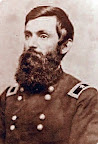
On this date Joseph Bailey began to direct the men of six regiments, including the 23rd Wisconsin, in a dramatic attempt to save the heart of the Union fleet during the Civil War. Bailey, who was from Wisconsin Dells and an experienced lumberjack, served as an engineer in the 4th Wisconsin Cavalry.
In a doomed campaign against the Confederates on the Red River in Louisiana, Union warships found themselves trapped by low water and the rocky river bed. As Confederate soldiers approached, Bailey employed water control techniques used by loggers to construct a series of dams that successfully narrowed the river, raised the water level by six feet, and provided enough surge to free the trapped fleet of gunboats. For his role in this rescue, Bailey was promoted to the rank of brigadier general. He also received a Tiffany punch bowl from his fellow officers. [Wisconsin Lore and Legend, pg. 18.]
Free Markets, Law, Laws/Regulations, Liberty
CNN: Rights Groups Say They Will Challenge New Arizona Immigration Law
by JOHN ADAMS •
A legal challenge is right and inevitable: Arizona’s law will lead to abuse of citizens and non-citizens, and will inhibit a free market in labor, making Arizonans poorer and life there harsher.
The law is destined for failure and obloquy, as were the restrictive efforts in California under Gov. Pete Wilson years ago. (That’s something former Bush official Michael Gerson noted in the Washington Post yesterday. The California Republican party is only now recovering.)
See, Rights Groups Say They Will Challenge New Arizona Immigration Law.
Free Markets, Laws/Regulations
Private Space Exploration – Absence of Regulation Helped Early Aviation, Would Help Now
by JOHN ADAMS •
Reason.tv offers a video in which the chairman of the X Prize Foundation discusses private travel in space, for tourism, commerce, and exploration.
To the extent that President Obama’s space agenda sets out a private course, he’s placing America on the most auspicious path.
City, Government Spending, Innovation Center/Tech Park, Planning
Whitewater’s Innovation Center Groundbreaking
by JOHN ADAMS •
I’ve written before about Whitewater’s tech park and Innovation Center, and some of the coverage it’s received. The groundbreaking ceremony for the Innovation Center, held this Tuesday, is another opportunity to review officials’ flimsy claims. Statements at the event were sadly, but predictably, empty.
Prior Posts. I’ve written about the Tech Park and Innovation Center before. See, On Whitewater’s “Advancing” Tech Park, Part 1, On Whitewater’s “Advancing Tech Park, Part 2, On the Innovation Center’s Anchor Tenant, and On the Innovation Center’s Anchor Tenant, Part 2.
Press Release and Story. There’s both a press release and a story, Ground broken for Whitewater Innovation Center.
A 125-Acre Park. One learns that the Innovation Center will be the first building in a “125-Acre Whitewater University Technology Park.” It certainly sounds impressive, until one realizes that the 125 acres are empty, and that the large size of the field is no assurance, or even probability, that the rest of the space will fill up.
Of course it’s the “first building,” but similarly, the presence of one does not show — no matter how much the use of the word “first” is meant to imply — that there will be others.
There should be other buildings — millions of dollars in taxpayers’ stimulus money and public debt went into financing this project. That kind of subsidy at taxpayers’ expense should have led by now to lots of tenants!
There’s mention of “preliminary talk of a second building.” There might just as well be preliminary talk of cold fusion, for all the difference it makes. Repeating the insubstantial and unsubstantiated claim serves an official line, while revealing not the least skepticism.
If I put a postage stamp on an open, green field, I’d still have a postage stamp on an open, green field.
The Business Park Nearby. Look less than a thousand yards from the site of the new tech park, and you’ll find our old business park. They have lots of space, too; quite a few acres, actually.
Go to the corner of Prospect & Endeavor, and here’s what you’ll find:




That’s a lot of space, too, but those expansive plots didn’t lead to buildings; they lead to a bumper crop of weeds and grass.
I’m not sure how many jobs these now-ignored plots were supposed to produce, but they’ve probably been good for at least one job — someone has to mow the grass now and then.
Jobs Mentioned Repeatedly, but Quantified Never. Look at coverage of the groundbreaking, and one hears claims of that the project will “create jobs and foster economic development,” but one never hears an estimate of how many. All these clever people, and not a single concrete number. One assumes that job creation is meant to be more than jobs for the contractor, etc., from the public dime.
When these politicians, bureaucrats, and sycophants talk about all that’s being spent, it’s not their money they’re investing . They didn’t contribute a dime of this — they took tax receipts and incurred public debt for this project.
Google, 3-D Television, Whatever. Imagine being at an event like this, where everything’s about “the future,” “jobs,” and “economic development,” and as concrete an idea as one hears is that
I understand that Google is looking for new headquarters, and wouldn’t this be a wonderful place for them. I tell you this because so many of us use technology, and technology is just zooming in places we cannot imagine, like 3-D television.
Too funny — “so many of us use technology” — not all, but at least so many!
Nice Digs. The Innovation Center’s anchor tenant, CESA 2, is rather thrilled: “…. a tremendous opportunity to partner with a university.”
Yes — much nicer than CESA 2’s current building in Milton, Wisconsin, I’m sure. I know that CESA 2 does good work — still, it was unnecessary and laughable that a publicly-funded educational agency would get upgraded accommodations as an anchor tenant in this tech park.
Collaboration. One learns, finally, that this is a “collaboration,” that there were individual thanks offered to “city and UW-Whitewater staff members, architects, consultants, state and federal personnel, and construction companies who have helped in the process of creating the Innovation Center.”
Every one of those named is either on the public payroll as an employee, or receiving federal funds or money from local debt for this project.
This collaboration was hardly a private, charitable venture, and speaking of it as though it were a community charity drive, or a church fundraiser, is both arrogant and misleading. There’s a common practice among managers, bureaucrats, and politicians, to talk about collaboration, etc.
By the way, there’s a place where there are millions of collaborative transactions each hour — it’s called the free market. Buyers and sellers come together, and freely decide whether to sell or purchase goods at a mutually agreed upon price.
It’s not collaboration to take money from productive private citizens, by power of taxation or issuance of debt, then spend it on flashy public projects, while mugging for the camera.
Where’s the Community? The photos of the groundbreaking are unintentionally funny. The closest that Whitewater will come to its own version of A Chorus Line: a group of mostly aging politicians, bureaucrats, and hangers-on, wearing ill-fitting construction hats, and posing as those they might possibly know how to did a proper hole.
For all the talk of innovation, this is a conventional group shot, dull and predictable, a staple of every groundbreaking one might ever see — hats and shovels, coats and ties.
The line of officials looks little like the city itself. They could scarcely be more unrepresentative as a sample.
Where are ordinary people, gathered to celebrate a supposedly epic event? If this project is all that these town squires say it is, why has the community not poured out in interest and appreciation? I’m sure one bureaucrat or another will whine that people just don’t understand, or need to be led, etc.
Nonsense, twice over. These self-important few are no better than anyone else in talent or accomplishment. They’re likely less so, because common people aren’t airy in their descriptions.
It’s also nonsense because most people know where to look to see how this grand project of tomorrow is likely to turn out.
They need go no farther than the corner of Prospect & Endeavor, where they’ll find the remains of yesterday’s grand project of tomorrow.
Daily Bread
Daily Bread for Whitewater, Wisconsin: 4-29-10
by JOHN ADAMS •
Good morning,
Today’s forecast for Whitewater calls for a slight chance of showers and a high of seventy-two.
It’s Market Day at the High School, from 4 to 5:30 p.m.
In Wisconsin history on this date, the Wisconsin Historical Society reports that in 1959, the “Railroad Historical Society of Milwaukee Incorporated On this date the Railroad Historical Society of Milwaukee was incorporated as a not-for-profit organization. [Source: Mid-Continent Railway Museum].”
The 2010 the Mid-Continent Railway Museum’s season opens on May 8th, and much more information about the group is available at their website, linked above.
Note: This post didn’t originally load when it was scheduled. I’ve now published it to the proper place in the order.
Laws/Regulations
Regulatory Failure: Flea Infestation Shuts Down Ohio Health Department
by JOHN ADAMS •
Ohioans will be happy to know that public meetings otherwise scheduled for this week have been postponed.
Law, Laws/Regulations, Liberty
A Proper American Response
by JOHN ADAMS •
Over at the Washington Post, columnist Michael Gerson summarizes nicely what’s wrong with Arizona’s anti-immigration law:
This law creates a suspect class, based in part on ethnicity, considered guilty until they prove themselves innocent. It makes it harder for illegal immigrants to live without scrutiny — but it also makes it harder for some American citizens to live without suspicion and humiliation. Americans are not accustomed to the command “Your papers, please,” however politely delivered. The distinctly American response to such a request would be “Go to hell,” and then “See you in court.”
The government of Arizona, it turns out, has been ambushed by its own legislature. If this vague law is applied vigorously, the state will be regularly sued by citizens who are wrongfully stopped….
All of this will be wrong, and a shame, for Arizonans, and an example of what not to do for the rest of America. (Gerson also points out how ruinous an anti-immigration stand has been for some of his fellow Republicans.)
(Hat tip to Jennifer Rubin of Commentary.)
Law, Police
Live Program on Policing for Profit: The Abuse of Civil Asset Forfeiture, 11 AM Central
by JOHN ADAMS •
The Cato Institute will hold a policy forum today, Wednesday, April 28, 2010 at noon Eastern, 11 a.m. Central on the Abuse of Civil Asset Forfeiture.
The program will feature Scott Bullock, Senior Attorney, Institute for Justice; and Marian R. Williams, Department of Government and Justice Studies, Appalachian State University; with comments by Scott Burns, Executive Director, National District Attorneys Association. Moderated by Tim Lynch, Director, Project on Criminal Justice, Cato Institute.
Those outside the Washington, D.C. area can watch the program live, by visiting this link at noon Eastern, 11 a.m. Central:
http://www.cato.org/event.php?eventid=7115
Here’s a description of the topic:
Under state and federal law, police departments can seize and keep property that is suspected of involvement in criminal activity. Unlike criminal asset forfeiture, however, with civil forfeiture, a property owner need not be found guilty of a crime—or even charged—to permanently lose her cash, car, home, or other property.
And according to a new report published by the Institute for Justice, “Policing for Profit: The Abuse of Civil Asset Forfeiture,” most state laws are written in such a way as to encourage police agents to pursue profit instead of seeking the neutral administration of justice. The report grades each state and the federal government on its forfeiture laws and other measures of abuse.
The results are appalling: Six states earned an F and 29 states and the federal government received a grade of D. Please join us for a discussion of policing, constitutional rights, and government accountability.
Daily Bread
Daily Bread for Whitewater, Wisconsin: 4-28-10
by JOHN ADAMS •
Good morning,
Whitewater’s forecast for today calls for a sunny day, with a high of sixty-four degrees.
Whitewater will hold a Common Council meeting today at 3 p.m. The agenda is available online.
The Common Council will conduct tours of the “Wastewater Treatment Plan, Public Works Garage, Irvin L. Young Memorial Library, and City of Whitewater Municipal Building.” Afterward, the Council will hold a “[d]iscussion regarding [an] automatic meter reading project” and “Common Council will then adjourn the meeting and have a light dinner in the Cravath Lakefront Room.”
Law, Libertarians
Vote for the Institute for Justice for a Webby Award
by JOHN ADAMS •
The Webby Awards are accepting votes, and the Institute for Justice – a libertarian, public interest law firm – is up for one of the awards.
They’ve produced sharp and interesting presentations in support of their work on behalf of economic liberty and fundamental rights. I’ve been happy to post their some of their work.
Readers can vote for the IJ at Webby Awards, Law/Society.
Uncategorized
ONN: Kentucky Violated NCAA Rules While Recruiting Basketball-Playing Dog
by JOHN ADAMS •
Libertarians
Libertarianism as an Experience
by JOHN ADAMS •
Over at Reason‘s blog, Radley Balko writes about how some people become libertarians:
I’ve long had a theory that most people don’t find libertarianism so much as it happens to them. They find themselves on the receiving end of some sort of government incompetence or abuse, or they know someone who is, and it starts them on the road to a generally more skeptical view of state power.
Steven Hatfill, the government scientist whose life was turned upside down when he became a suspect in the 2001 anthrax attacks, is now talking about what happened to him. Hatfill was eventually cleared of any wrongdoing and given a settlement, but only after years of harassment and abuse at the hands of the federal government….
[Hatfill remarks that] “I love my country,” Hatfill, 56, told Lauer. But, he added, “I learned a couple things. The government can do to you whatever they want. They can break the laws, federal laws, as they see fit You can’t turn laws on and off as you deem fit. And the Privacy Act laws were put in place specifically to stop what happened to me. Whether we’re at war or have been attacked, the foundation of society is that you hold to the laws in place. I used to be somebody that trusted the government. Now I really don’t trust anything.”
It’s unfortunate, but understandable, that Hatfill would feel the way he does.
One need not become so skeptical, though: libertarian thinking isn’t merely something that happens to someone, but a view of the world to which one is sometimes delivered. Clear-sighted is not the same as tragic skepticism. One may recognize tragedy and yet be an optimist.
Those who were born in libertarian families (sometimes to return to that view after time away from it), will always welcome those who come into the view, later in life, through hardship and misfortune. Both people who have been mistreated (like Hatfill), and those who return to a family tradition (my case), are often particularly committed and resolute. They didn’t ask to be this way; they just are.
Now, one does not wish hardship on others, as no one hopes for a better world more than we do. Seeing it as it is, though, we welcome others, who have come to our view. Our welcome isn’t compensation; it’s the simple offering of those who can, and will, be your steadfast and understanding friends. more >>