
FREE WHITEWATER

Monthly Archives: August 2010

Objections and Replies on Independent Commentary

One would assume that blogging — simply modern-day pamphleteering — is now commonplace to Americans. And yet, one sometimes runs across objections to it, and here are quick replies to some objections I’ve recently heard. Not one of these objections strikes me as compelling, but they’re interesting as evidence of the divide between people who respect free speech and those who don’t.

Comments should be delivered to officials privately before being published publicly.

This objection to blogging is an objection to independent blogging, and would afford every official a right of first review of anyone’s comments. There can be no independent speech under these circumstances.

Consider an example from a big city — should the New York Times submit its editorials to Mayor Bloomberg privately, so that the he could consider them before the NYT could print a critical editorial? The theory here is that the ‘goal of a better city’ would be advanced if the Times sent editorials to Bloomberg first, so that he could adopt any useful suggestions without public pressure.

New York would not be a better city for private submissions: it would be a city without free speech, and a place in which Bloomberg had a right of first review before anyone could speak. He would be free to discuss matters privately, and endlessly, by which public commentary would grind to a halt. Only a few insiders would know anything.

New York would be an autocracy.

No (independent) commentator could collude with officials in this corrupt — that is, a classically degenerate — political arrangement.

It’s one of the sad conditions of our time that men and women – American men and women — sometimes suggest a policy that would reduce them to the status of small children before a paternalistic state.

There is no reason to follow their example.

Officials will reject suggestions published online because they won’t ‘kowtow’ to a blogger.

Someone recently offered this critique of blogging to me — that suggestions, however useful, will not be accepted by officials whose pride is hurt. Perhaps not, and yet if not, one sees that officials put themselves ahead of their oft-professed commitment to public service.

If they can’t put the public good ahead of their thin skins, they should quit.

One should not be surprised that selfish officials behave selfishly. The objection only confirms the disorder in our current politics. Public office should not be used to satisfy officials’ emotional needs.

One more point — in my own case, I don’t expect anyone to kowtow, to use someone else’s description. This is true for many reasons. First, no one need kowtow, to anyone else, ever. As I would not do so, so I would not expect others to do so. Second, I’ve been very clear that I don’t expect bad officials to get better — I expect them to get worse.

The experiences of small factions in decline suggests that they grow more isolated, embittered, and extreme over time. Improvement, however much one might hope otherwise, doesn’t come from bad leaders’ reform, but only after they leave the political stage. (There would be nothing ‘better’ about kowtowing, in any event.)

There’s is an idea, in a place like Whitewater, that every person who complains can be satisfied with a deal, of the right kind. That’s why, when someone complains, he may hear someone ask of him: What is it you (really) want? Our town fathers assume that everyone wants a place at the table, next to them. They believe that everyone is a needy Babbitt, just as they are.

It’s not true; that they believe it to be true shows how self-regarding they are.

There’s no deal to be had, at any price. There’s the right thing of sound principles, simply done, and everything else.

Tone.

One will hear that others object to a blogger’s tone. I’d expect that some would, some wouldn’t, and most would be indifferent to the topic entirely. There’s a quick remedy for those who dislike something in print: stop reading, look away, and you’ll have your Potemkin village back in short order.

It’s the lack of a firm tone that’s contributed to our present mess, of mediocre and meddling bureaucrats, preening politicians, fawning reporters, and community busybodies. A subservient tone, a somnolent and proper tone, is what brought us to our present difficulties.

Early American commentary was far more robust that most of what passes as criticism today; it’s mediocre officials who ask for limits on criticism. They’ve not a principled objection — they have a self-interested objection masquerading as a principled one.

It’s too hard to put documents online.

One can see that the Planning Commission documents from Whitewater’s last meeting are online. (They were online two meetings ago, omitted one meeting ago, and are back for the most recent meeting.)

We can easily do what other cities do. We are right to do so.

It’s not too hard, especially if a leader of a department comes to see that this as part of his responsibility to the public. One may designate someone else, but the responsibility will always rest with a department leader.

We can do as well as other places, even larger ones. If there aren’t enough field workers to complete the task, then the leader should do so.

In a town as small as ours, every leader should be a working leader. We’re not Los Angeles or London — layers between the field and leadership in a city like Whitewater (pop. 14,296) are simply a sop to a small-town leader’s ego.

I’m sure there are lots of fancy, fussy, needy leaders in faraway cities — those in Whitewater who wish for that lifestyle should open a road atlas, and plot a course to one of those places.
Richard Florida Discusses the Great Reset of Urban Development in Economic Downturns

Richard Florida, author of The Great Reset, discusses how this recession may change American life as did the depression of the 1870 and the Great Depression. Florida is interested in national trends, and especially the great cities of America.

He contends that transportation infrastructure was, and may yet, be a good investment. Nonetheless, he acknowledges that pricing for infrastructure is often unrealistic. Although he favors rail lines, he concedes these lines may be unprofitable and the recipients of perpetual subsidies.


Here’s a description of the interview from Reason:

How is the current economic crisis remaking American cities?

Reason.tv’s Nick Gillespie sat down with Richard Florida, author of The Great Reset: How New Ways of Living and Working Drive Post-Crash Prosperity. Florida discussed the housing bubble, high speed rail, and how economic shifts give rise to new urban landscapes called “megaregions.”

Approximately 10 minutes. Shot by Dan Hayes and Josh Swain. Edited by Josh Swain.

Link: http://www.reason.tv/video/show/richard-florida-discusses-his more >>

Daily Bread for Whitewater, Wisconsin: 8-10-10

Good morning,

Whitewater’s forecast calls for a slight chance of thunderstorms and a high of eighty-nine degrees.

Whitewater’s Urban Forestry Commission meets today, from 4 to 6 p.m. The agenda is available online.

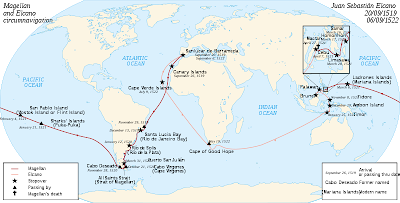
Wired recalls that on this day in 1519, Magellan Sets Sail Into History:

Portuguese explorer Ferdinand Magellan, having sworn allegiance to Spain, sets sail from Seville for what will be the first successful circumnavigation of the Earth. Magellan, however, will not complete the voyage….

After crossing the Atlantic Ocean and coming to the coast of modern-day Brazil, Magellan and his squadron of five ships turned south. Surviving a mutiny and the wreck of one ship, Magellan sailed the length of South America until finding a deep-water strait near the tip of the continent — the strait that now bears his name….

After befriending the tribal chieftan of Cebu, Magellan joined forces with him in an attempt to subdue the natives on the neighboring island of Mactan. They objected, and Magellan was killed by poisoned arrows on April 27, 1521.

What remained of the squadron continued on to the Spice Islands, then headed home across the Indian Ocean and around the Cape of Good Hope. Of the 270 men who set sail with Magellan, only 18 actually completed the circumnavigation by returning to Spain. They reached Seville on Sept. 8, 1522 aboard the ship Victoria.


Magellan’s Expedition — Map from Sémhur of Atelier Graphique

Applying So-Called Sin Taxes Sensibly

In a recent column at Bloomberg, Amity Shlaes writes that not all sin taxes, taxes on supposedly harmful behaviors, are applied to best revenue-generating effect. Shlaes is author of the excellent The Forgotten Man: A New History of the Great Depression. She finds that Franklin Roosevelt understood the best way to implement a ‘sin’ tax — apply the tax as a formerly forbidden substance was legalized:

Roosevelt and the Democratic Party saw that the nation was weary of Prohibition. So they ignored the moral question altogether, colluding to amend the Constitution and repeal the Volstead Act. The New Dealers then proceeded to tax the heck out of liquor, ignoring those who pointed out that liquor taxes were regressive….

In other words, the New Deal made an honest deal with the people: the public gets to drink, and the government gets a new tax. That agreement would have failed if liquor were already legal. But it wasn’t. Roosevelt knew that Americans would view the shift from no beer to taxed beer as a net improvement and stand, or wobble, behind him.

The revenue rolled in. In 1940, liquor taxes represented 11 percent of all tax revenue. Taken together, tax revenue from liquor and tobacco sales accounted for more federal revenue than the income tax.

Shlaes implicitly contrasts Roosevelt’s practical approach with a sin tax on already-legal behavior like using a tanning bed: since people can use tanning beds now, they view the addition of a tax as a net loss, taking away enjoyment from something they can do presently.

(Shlaes thinks that Pres. Obama could rake in vast amounts of money if he would legalize and then tax marijuana, following Roosevelt’s example. Since people can’t smoke legally now, they’d view the imposition of a tax a small impediment to ready access to marijuana.)

Setting aside Shlaes’s marijuana option, her greater point holds that one taxes for revenue, not for supposed health gains. Roosevelt saw this, and so he supported repeal of the Volstead Act, and used repeal to rake in revenue.

See, Snooki Tanning-Bed Protest Splits Sin From Taxes.

I’m not in the habit of suggesting new streams of federal revenue, and neither is Shlaes, I’d guess. Nonetheless, if one is to collect tax revenue, I’ll concede that it’s practical to avoid taxes as moralizing (over something like tanning beds, cola, or candy). Taxes to restrict a good, or curtail a practice, often prove ineffective at curtailing behavior or bringing in estimated revenue.

It’s simply shrewder to tax a good or behavior one expects to be commonplace and flourishing.

Buildings in Tokyo, Japan and in Whitewater, Wisconsin

There’s an intriguing video on YouTube that records in time-lapse filming the construction of a tower in Tokyo. It’s the Tokyo Sky Tree. The video depicts work over an extended period. (Although the description on YouTube somewhat misstates the timespan of the recording, it’s still fascinating.)


Link:

http://www.youtube.com/watch?v=Lb8MUeZrxbc.

Despite all its beauty, the video invites one to ask: who built this, why, and with what means? For the Tokyo Sky Tree, the builders are a combination of a Japanese railway and several Japanese broadcasters. The tower is designed, among other reasons, to transmit digital signals great distances past other urban buildings.

One could take pictures of a local project in a place like my town of Whitewater, too. The building wouldn’t be as large, but it would still be possible.

And yet…even afterward, the same questions would present themselves as they do for the Tokyo Sky Tree: who built this, why, and with what means?

For a place like Whitewater’s Innovation Center, the answers would be (1) the City of Whitewater and University of Whitewater-Wisconsin, (2) in part to house a publicly-funded anchor tenant, (3) with federal tax dollars and municipal debt.

I could take a picture of the building each week, for the full construction schedule, and the same would be true after each photograph.

It will be multi-million dollar public project when it’s one-quarter completed, one-half completed, two-thirds-completed, and when it’s wholly completed.

There’s no magic behind publicly-funded projects. When one takes ten or eleven million in taxes and public debt, using no money of one’s own, one can expect to find a contractor who’ll build something with it. more >>

Wehner: Republicans Fumble Immigration

It should come as a sharp rebuke to Republicans that at (neo) conservative Commentary one finds a post from Peter Wehner entitled, Republicans Fumble Immigration.

Wehner observes that

When asked about changing the Constitution to bar children of illegal immigrants from becoming U.S. citizens, House Minority Leader John Boehner said, “I think it’s worth considering.”

No it’s not.

I’ve previously laid out my reasons why this is a very bad idea. It’s worth adding that children must turn 21 before they can sponsor their parents for legal residency. It is simply not the magnet that people like Boehner and Sens. Lindsey Graham, John McCain, Jeff Sessions, and Jon Kyl insist. They are manufacturing an argument to create an issue….

Republicans are practicing the politics of symbolism in the worst way possible. They are embracing a policy that doesn’t have any realistic chance of becoming law, that will be unnecessarily divisive and inflammatory, and that, in the long term, will be politically counterproductive.

It is an approach that is, among other things, wholly at odds with the one embraced by the last two Republican presidents to win reelection, George W. Bush and Ronald Reagan (see here).

Why Republicans continue to travel down this road is a mystery to me. This is not what the party of Lincoln should stand for.

It’s a mistake, but there are always a few who think that by following this line, they’ll become heroes. They won’t, but they’ll keep trying, stubbornly sure that this losing tactic will one day succeed.

Wisconsin Center for Investigative Journalism: Rock County Feeling Increasing Ripples from GM Departure

Over at the Wisconsin Center for Investigative Journalism, Sara Jerving writes about nearby Rock County’s economy following the departure of GM from Janesville, Wisconsin. In Rock County Feeling Increasing Ripples from GM Departure,” Jerving describes the impact on the area:

More than a year after GM closed its plant in Janesville after three waves of layoffs affecting 2,800 employees, Rock County is showing increasing signs of distress, exacerbated by the recession:

– Home foreclosures in the county have skyrocketed from 55 homes in 2008 to 421 last year – a nearly eight-fold increase, according to Realty Trac Inc. This year is on pace to be even worse: In the first five months of 2010, 283 homes were repossessed in Rock County.

– The average hourly wage for private sector Janesville employees dropped from $23.27 in 2007 to $18.82 last year, according to the U.S. Bureau of Labor Statistics.

– Reports of child abuse and neglect – while on the decline elsewhere in the state – rose 30 percent from 2007 to 2009, from 1,205 to 1,568, according to Rock County Child Protective Services.

– Rock County’s unemployment rate is 10.8 percent as of July – one of the worst in Wisconsin. Beloit, the county’s second-largest city, is the hardest-hit in the state with a 16.5 percent jobless rate.

Even worse off are roughly 2,170 people who worked at companies that supplied GM, such as Lear Corp. and Logistics Services Inc., who also lost their jobs but without the benefits GM workers got.

“When GM closed there was a ripple effect across the entire community. Hotels needed less staff, restaurants needed fewer servers, it was an economic multiplier,” said Robert Borremans, executive director of the Southwest Wisconsin Workforce Development Board.

Sobering, all of it.

Daily Bread for Whitewater, Wisconsin: 8-9-10

Good morning,

Today’s forecast for Whitewater calls for a day of thunderstorms, and a high temperature of eighty-seven degrees.

In the City of Whitewater today, there will be a Park & Rec Board meeting today at 4 p.m., a Planning Commission meeting at 6 p.m., and a LIbrary Board meeting at 6:30 p.m.

The Wisconsin Historical Society recalls that on this day in 1973

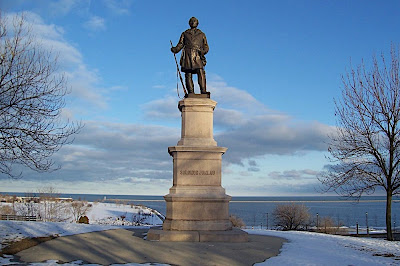
Milwaukee Pioneer Solomon Juneau Born

On this date Laurent Salomon Juneau was born in Repentigny, Quebec, Canada. Known as the founder of Milwaukee, Juneau was a fur trader with John Jacob Astor’s American Fur Company. He built the first log house in Milwaukee in 1822 and followed with the first frame house in 1824. In October 1833 he formed a partnership with Morgan L. Martin to develop a village on the east side of the Milwaukee River. Juneau was elected commissioner of roads and director of the poor in September 1835. He was also appointed postmaster, a position he held until 1843. In 1837 he began publishing the Milwaukee Sentinel. He was elected first mayor of Milwaukee in 1846. Juneau died on November 14, 1856. [Source: Dictionary of Wisconsin Biography, p.198]


Juneau Park, Milwaukee, WI, photo Wikipedia

Recent Tweets, 8-1 to 8-7

Mass Paperback Publisher Goes All Digital — despite trepidation, other publishers will follow – WSJ.com http://bit.ly/dtdeYr

Blockbuster Application hits the Android Market — Too late! no one cares about Blockbuster anymore http://bit.ly/adTQD7

@IJ: Licensing Gone Wild: Gov’t bureaucrats shutcrying little girl’s lemonade stand. Part of nationwide epidemic: http://iam.ij.org/cZ3pve

RT @reasonmag: What motivates Congress to curb their vacay time? Giving away other people’s money http://ow.ly/2lsfd
August 5, 2010

Bargain-hunters, here’s your chance RT @wsjfree: Michael Jackson Mansion Listed, $10 Million Price Cut http://on.wsj.com/dbI1mT
August 5, 2010

RT @IJ: Should YOUR TWEETS be regulated by government bureaucrats? Amazingly enough, they’re already trying: http://iam.ij.org/9UzfvS Pls RT
August 5, 2010

RT @CatoInstitute: @jchidalgo asks, “Is anyone in Washington paying attention (to the failing war on drugs)?” http://bit.ly/aBzmQ1 #tlot
August 4, 2010

Many officials were knee-deep in spending for tax incremental district in my town Now that it’s failing, no one seems to know what happened
August 4, 2010

Lawns care or the failure of an entire tax incremental district? Easier to see which headline Whitewater WI’s town fathers would prefer
August 4, 2010

RT @reasonmag: Missouri Voters Reject Individual Mandate to Purchase Health Insurance http://ow.ly/2kWoP Overwhelmingly – over 70% reject
August 4, 2010

RT @nothingbutnets: 2.85bil people were at risk of #malaria in ’09, according to a new map showing malaria’s range: http://ow.ly/2l1NS
August 4, 2010

Whitewater WI gets headline on regulations “Weed, tree ordinance toughens” Real story’s about planning failure of TID 4 http://bit.ly/bxP0QU
August 4, 2010

davidgumpert: the real dope on raw food safety numbers, why growing crackdown–I’m interviewed on NPR’s “Here and Now” http://bit.ly/cqPg2e
August 4, 2010

RT @WiStateJournal: State unemployment insurance call centers closed Friday for furlough day http://ow.ly/18qwS2 Government service
August 4, 2010

RT @nothingbutnets: Check out the thousands of life-saving bed nets we’ll be distributing in Senegal w/ @NBA Cares! http://ow.ly/i/30Gv
August 4, 2010

What every town has: good old boy politician who’ll introduce legislation to help friends, settle scores Maybe your town could borrow ours?
August 3, 2010

Small-town conflicts: multiple roles, political-newspaper collusion, buddies & lapdogs on commissions, financial interests, you name it
August 3, 2010

Politician in Whitewater, WI is worried about residents w/ natural lawns? How about worrying about city’s unnaturally high child poverty?
August 3, 2010

Learn a New Language Fast – Wired How-To Wiki http://bit.ly/aAbAwt
August 2, 2010

RT @radleybalko: When Law Enforcement Doesn’t Know the Law. http://reason.com/blog/2010/08/02/new-at-reason-radley-balko-on
August 2, 2010

Beyond Paper Packets for Only a Few — all should be able to read meeting docs online before meeting» FREE WHITEWATER http://bit.ly/bLwlIz
6:22 PM Aug 2nd

iPhone 4 antenna woes “significantly worse” than competition http://bit.ly/dfMeKM
9:01 PM Aug 1st

Morici: Keep all tax cuts Why discourage successful people from keeping wealth in U.S. and creating jobs? http://bit.ly/d9bNJ3
11:59 AM Aug 1st

Spoiler Alert: U.S. Unemployment Is Now Rising, Not Falling http://bit.ly/cB2ocU
10:47 AM Aug 1st

President Obama’s electric car subsidies are snobby and foolish. – By Charles Lane – Slate Magazine http://bit.ly/9LoK1S
7:47 AM Aug 1st