
Good morning.

Thursday in Whitewater will be sunny with a high of 72. Sunrise is 6:45 and sunset is 6:46, for 12 hours, 1 minute of daytime. The moon is a waxing crescent with 12.7 percent of its visible disk illuminated.
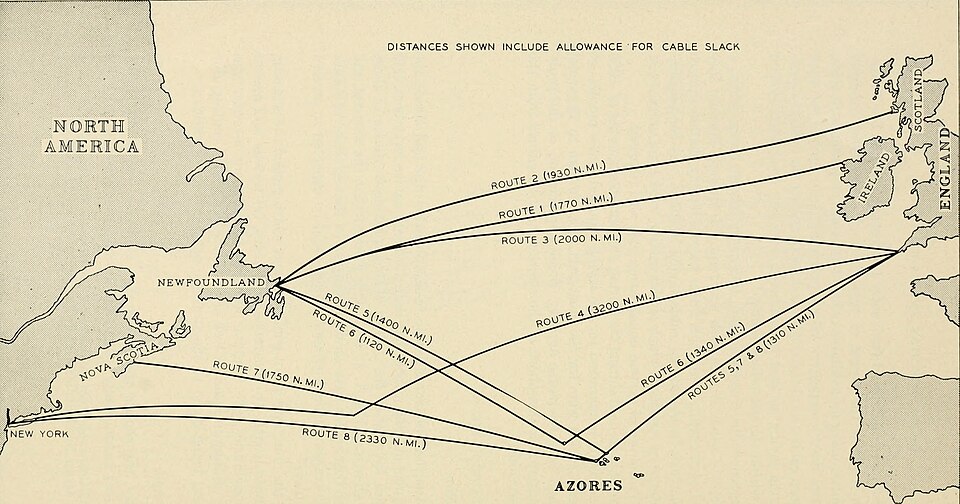
On this day in 1956, TAT-1, the first submarine transatlantic telephone cable system, is inaugurated.
I’ll offer a few thoughts on meetings with complex topics by simple illustrations. It’s important to capture the course of a topical argument within a meeting so that one can refer to it, as easily as possible, and add more arguments later. (For former high school or college debaters, this is simply ‘flow.’ Some of the professions, including my own, rely on versions of flow in their work. There are software and recording combinations that can perform some of this work, but a legal pad and pen are more than adequate.)
There’s a plain way to show how topics become complicated across several meetings. Consider, first, a one-column table, that represents the points made on the same topic, in a single meeting, from the initial point made descending down the column with lower rows representing points made subsequently in that same discussion:
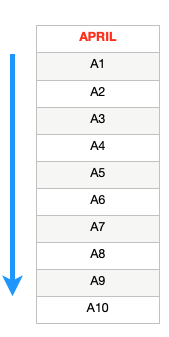
This table is merely a simple representation of how one remembers a thorough newspaper story’s account of the sequential discussion from a meeting. If the story is comprehensive, then that story lists the major arguments and replies on a topic, in the chronological order that those arguments were made.
But what happens if the discussion on that same topic extends over several months? A table for a three-month-long discussion would look like this:
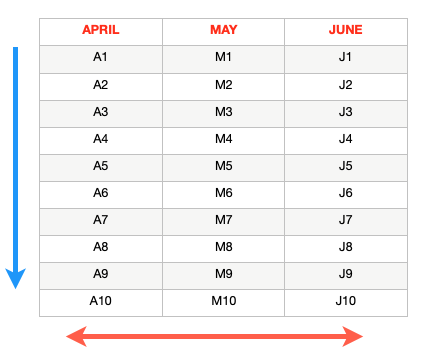
The argument flows downward chronologically within a single month, but must then be matched across time with points made in subsequent months. A point made in April (let’s say point A1) might be answered only in June (let’s say point J9). It’s not merely that there are more cells in the table (points made), but that one must link some points to others to grasp the strength and weakness of given claims. Merely looking at the cells, as it were, doesn’t reveal enough about the discussion. (Obvious point: refuting A1 by J9 lets a lot of misinformation to go unanswered for a long time.)
That’s what keeping track (and thorough reporting) offers — someone watching or reading carefully on each of these monthly discussions could recall that point J9 in June is a refutation of point A1 made in April. Someone reading might also note that some claims have been abandoned, others made more extreme, and yet others made more anodyne. Otherwise, too much of the discussion is unknown or forgotten.
And that’s what flow (or good reporting as a narrative facsimile of flow) gets a community: a catalog and by that catalog a way to evaluate the full range of arguments made on a policy topic over time.
Important discussions in a competitive American town deserve a clear catalog. There’s always more to do, and happily so.
See also The Problems of a Local News Desert and Some Solutions for a News Desert.
Magellanic penguins released back to the sea in Uruguay: