FREE WHITEWATER

Daily Bread for Whitewater, Wisconsin: 5-6-10

Good morning,

Today’s forecast calls for a mostly sunny day in Whitewater, with a high of sixty-three degrees.

Today’s a great anniversary in Wisconsin history — it’s Orson Welles’s birthday. The Wisconsin Historical Society offers details on his extraordinary life:

1915 – Orson Welles Born

On this date George Orson Welles was born in Kenosha. The name George was soon dropped. The family moved to Chicago in 1919, and two years later, Welles’ parents separated. After his mother’s death in 1924, he travelled the world with his father, only to lose him in 1928. Welles turned down the chance at college in 1931, choosing instead to go on a sketching trip to Ireland. In 1934, Welles made his New York debut, playing Tybalt in Katherine Cornell’s staging of Romeo and Juliet.

In the mid 1930s, he established himself as a radio actor on The March of Time and The Shadow, among other shows. He began working with John Houseman and together they formed the Mercury Theatre in 1937. Their program, The Mercury Theatre on Air, became famous for the notorious events surrounding their version of The War of the Worlds in 1938, in which they provoked mass panic among listeners.

A renowned actor, writer, producer, and director, Welles is known best for his roles in such films as Citizen Kane (1941), Jane Eyre (1944), Macbeth (1948), Moby Dick (1956), A Man for all Seasons (1966), and Catch 22 (1970). Welles was awarded an Honorary Oscar in 1971 and a Lifetime Achievement Award from the American Film Institute in 1975.

Despite his lack of commercial success, the Directors Guild of America awarded him their highest award, the D.W. Griffith Award, in 1984. Welles was briefly married to Hollywood actress Rita Hayworth from 1943 to 1948, with whom he had one daughter. Orson Welles died on October 9, 1985. [Source: Wisconsin Film Office].

Here’s a portion of that 1938 program, the original audio having been added to YouTube with a picture of Welles from that time:

Link: http://www.youtube.com/watch?v=jZ70ossbxGA more >>

Should People Raise Really, Really Tiny Horses? Sure, Why Not?

There’s a story at Wired about the world’s smallest horse. Named Einstein, he was “…born in late April on a farm in New Hampshire. Weighing in at 6 pounds at birth, Einstein appears to have beaten the previous record holder by three whole pounds.” See, Could a Mini Horse Be Bred Small Enough to Fit in Your Palm?

The science of animal husbandry that leads to really small horses is still advancing, despite some unknowns. Einstein may now be the world’s smallest horse, but much smaller horses may be possible. We may see horses that really could fit in one’s palm.

Two quick points.

If horses could really be that small, municipal ordinances against horses in Whitewater wouldn’t make sense. Even now, one can see from a photo accompanying the Wired story that Einstein is much smaller than a Saint Bernard. There are few horses like this, but some of them are small enough to render current ordinances outdated, and increasingly irrational. Circumstance and ingenuity run beyond regulatory imagination.

I would also support continued research and breeding of small horses like this. Breeders may make discoveries useful for humans health, through what they learn about genetics from breeding these small horses. That knowledge might be significant, and about matters far more important than developing lines of miniature horses.

Breeders have an incentive to produce happy, healthy horses without government regulation. The Wired story mentions that the limits on human behavior are private and culture, not public and legal:

The real limits then, may not be genetic, but cultural. At some point, it may become difficult to get healthy, tiny horses. To breed ever smaller horses, we might have to deal with a lot of deformed animals.

“It brings up this question of personal responsibility and what’s humane and what’s inhumane. That’s something the tone of which will be set by public opinion,” [university geneticist] Brooks said. “I don’t think we’re at the point that we’re breeding monsters. I don’t think we’re there but maybe we will be.”

The way [Einstein’s owner] Cantrell sees it, avoiding the downsides of mini breeding comes down to the individual breeders. “It’s just like with dogs: There are puppy mills, and there are mini mills,” he noted. Einstein is more a lucky break than an attempt to breed the smallest horse. Both of his parents are champion 30-inch show horses. He just happened to come out lilliputian.

Cantrell argued that despite the difficulty of breeding the minis, it’s worth it because they provide humans with a special feeling that standard horses cannot.

“When you get up close and personal to a miniature horse that is 30 inches tall, there is something about being able to touch him and walk with him in a very calm and safe manner, where you don’t feel like you’re going to be stomped to death,” Cantrell said.

Below I have embedded a video of Einstein, available through YouTube, in which one can see that although he’s tiny, he seems happy and well-adjusted.

Enjoy.

Link: http://www.youtube.com/watch?v=6XQtd9cTGFM more >>

Whitewater’s College Campus During the Depression

There are happy coincidences in life, and I received one yesterday. I’ve written about the campus in the last few days. Yesterday, a post card arrived that someone sent of our college campus in Whitewater, with a picture of the school during the Depression. The University of Wisconsin-Whitewater’s campus appears on part of the card as a ‘Normal School,’ a common term for a teacher’s college.

The postmark is from 1934, at a time when America was still mired in unemployment and uncertainty.

I think there’s something hopeful about the picture of the campus, even in hard times — a representation of strength and confidence. That strength didn’t come then, and doesn’t come now, from how something looks, but from the teaching and opportunities offered.

Lovely, in the deepest way, I think.

Daily Bread for Whitewater, Wisconsin: 5-5-10

Good morning,

It’s a rainy day for Whitewater, with a day of scattered showers and a high of sixty-nine degrees.

It’s Cinco de Mayo, day of celebration of the Mexican defeat of French forces in 1862. The holiday is perhaps more popular in the United States than even Mexico, and represents a defeat over foreign forces outside the hemisphere occupying part of North America. The French later abandoned Mexico.

There’s a Landmarks Commission meeting tonight in Whitewater, from 5 to 7 p.m.

At Washington School, there’s a fifth grade band concert at 2 p.m.

In Wisconsin history today, the Wisconsin Historical Society recalls that today is the birthday of Marc

1942 – Actor Marc Alaimo Born

On this date actor Marc Alaimo was born in Milwaukee. He has appeared in more than 100 TV episodes, including numerous episodes of Star Trek Deep Space Nine, Star Trek The Next Generation, Walker Texas Ranger, Quantum Leap, and Hill Street Blues. He has also appeared in more than 30 films, including Total Recall, Naked Gun 33 1/3, and Tango & Cash. [Source: Internet Movie Database].

The Internet Movie Database to which I have linked observes that Alaimo “has played more distinct roles than anyone else on Trek: two different humans, two different Cardassians, an Antican, and a Romulan.”

Fans of Star Trek may remember particularly Alaimo’s portrayal of Gul Dukat, a Cardassian (who meets a bad end in the Trek series Deep Space Nine).

Go Badger(s)! “Wayward Badger Found at Downtown Post Office.”

The Milwaukee Journal Sentinel website has a story and accompanying video about a badger found in a Milwaukee post office. Reporter Meg Jones describes the badger’s adventure:

A wayward badger somehow managed to get into a building at the main post office in downtown Milwaukee this morning….

A Department of Natural Resources warden was called to the scene and with the help of postal employees, the badger was herded out of the locker room. The animal huddled in a corner of a gated area outside the building where postal trucks are maintained….

The DNR did not put the badger in a cage because it’s likely it’s living nearby with newborn kits. Badgers, Wisconsin’s state animal, are usually nocturnal creatures who burrow holes into the ground where they live underground. It’s unknown how the badger ended up at the post office.

Badgers really are impressive animals with sharp, distinctive markings.

Here’s the video:

more >>

Update: How Long Does It Take a Whitewater, Wisconsin Bureaucrat to Screw in a Traffic Light?

Update to the update:

I’m getting reader suggestions for limiting traffic from the university side of this intersection via signage or a permanent end to travel as an alternative to junking the gateway.

As you can see below, I’d forget about the gateway before I’d delay a pedestrian solution. I’m not concerned about that proposal riling people. (One can guess that I’m not much worried about that risk.)

If there’s a much easier solution, then that’s surely preferable.

Delay is the worst choice of all.

The disparity in city management’s urgency about this project and others is noteworthy.

A reader wrote in concerning yesterday’s post, How Long Does It Take a Whitewater, Wisconsin Bureaucrat to Screw in a Traffic Light?

He wrote with a fair question: What would I suggest? I’ll list remarks and suggestions immediately below.

Bureaucrats and Daily Responsibility. In my post, in both the title and text, I was intentional in mentioning Whitewater’s bureaucrats, those who are daily paid to manage the city. I see a significant difference between elected members of Council who meet periodically and those who are paid for conventional, full-time work for the city.

It’s not a small distinction — those working full-time to trouble-shoot, solve problems, and spot difficulties are the ones who bear principal responsibility for a delay like this. Elected politicians who work full-time jobs or with other full-time duties cannot be expected to be involved in the day-to-day management of this project.

Full-time bureaucrats, like Whitewater’s city manager, her director of public works, or consultants who are well-paid to see and flag problems, bear the principal responsibility for delays like this. When they speak only after a Common Council vote, and then only in vague terms, they ill-serve residents of the city.

Those who are paid for full-time management, or those compensated consultants who are paid to assess construction requirements and timelines, are the ones about whom I am most concerned.

These men were quick to declare in the press how easy this would be, as I quoted from their own words.

True Monuments. In his remarks from his weekly report of April 30th, the city manager writes that “Due primarily to a need to move the historic gateway and entrance walls to the UW-Whitewater campus at the Whiton Street entrance as an integral part of the project, the construction of the long planned improvements to the Main and Whiton Street intersection will now be delayed until next spring.”

Here’s a suggestion, about which I am entirely sincere — abandon the stonework, discard it entirely, and install the traffic signal without regard to the gateway. No historic past should be allowed to trump or delay present human needs.

Any city or university bureaucrat who cares more about these stones than about people in town is gravely misguided.

Let me remind these would-be guardians of the past that a more recent past involved more than aesthetics — someone was struck at this intersection.

That the city manager writes about the need to preserve the gateway over human safety does not redound to his credit; it’s a shameful lack of priority. A shallow and middle-brow deference to this gateway over human need is both risible and wrong.

When there was concern last year about our former tree commission, the city manager insisted that he would not tolerate rudeness toward city workers. He should show at least the same energy on behalf of the safety of common pedestrians.

There was much concern over how tree branches might, just might, impede rapid travel of emergency vehicles through automated intersections. No one could show proof of an actual harm, but the mere possibility was raised, by more than one person.

Well, the significance of this traffic signal is no mere possibility. Whitewater already knows that traffic does impede pedestrians across Main — we know this because there have been actual, not possible, injuries.

If there should be a single administrator in the university insisting for the preservation of the gateway over a rapid installation of the traffic signal, then I would suggest that he may not have been at the university long enough. It’s a school for people in the present, not for monuments to those from the past.

If anyone would fight to preserve the gateway over the rapid installation of the traffic signal, including through a lawsuit, let them try. That’s a challenge that a decent group would welcome — let someone argue for stones over people. That’s a claim worth resisting, resisting confidently and zealously.

A traffic signal, installed promptly, would be its own monument, to the legitimate needs of the present. The steel and aluminum of a signal would be more beautiful than any stone gateway. This is true in the deepest way, just as a small & humble church will always be more beautiful than Rome’s ancient Colosseum.

A plaque could be applied to the new signal, to reflect the right priorities for our city, as confirmation of Whitewater as a truly worthy place:


THIS SIGNAL IS A MONUMENT OF OUR DEDICATION TO PUBLIC SAFETY

CONCERN FOR OUR FELLOW CITIZENS IS OUR FINEST ART

RESPECT FOR THEIR BASIC WELL-BEING IS OUR MOST ADMIRABLE DESIGN

Even without the plaque, our deeper meaning would be clear.

True Accountability. If it should be true that this is a matter primarily of the regulations affecting the gateway — as the city manager’s own words contend — then why was this not seen by the city’s manager, its director of public works, or its consultant?

The gateway did not magically appear. Either those with daily responsibility for this project have not assessed the risks and impediments properly, or have not candidly shared those risks already known to them. Either way, they have failed the pedestrians of the city.

They have no need to mention problems beyond the city limits. The only problem here is not acknowledging lack of foresight within our city limits.

Why not admit as much? Why is that so hard? The bureaucrats of this city should look to themselves.

This project won’t attract cameras and cheerleading publicity as the taxpayer-funded, multi-million dollar Innovation Center will. It won’t offer a chance for bureaucrats to spend millions and feel like wheeler-dealers. There will be no opportunity for flowery talk about the future, progress, dynamism, synergies, whatever.

There will, instead, be something much better. Setting aside superficial concerns and impediments, and by embracing a worthy goal — we will accomplish the simple task of advancing public safety.

That should be the only history that matters.

Daily Bread for Whitewater, Wisconsin: 5-4-10

Good morning,

Whitewater’s forecast calls for a mostly sunny day, with a high of eighty degrees.

There will a Common Council meeting tonight at 6:30 p.m. The agenda (pdf) is available online.

At Lakeview School today, there’s a PTA meeting at 6 p.m.

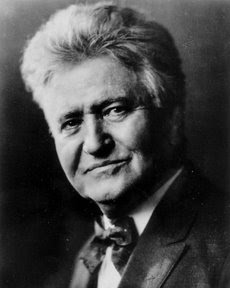
In Wisconsin history on this date, the Wisconsin Historical Society recalls the birthday of progressive Republican James Blaine:

1873 – Progressive Governor John James Blaine Born

On this date John James Blaine was born in the town of Wingville in Grant County. A politician, governor, and U.S. Senator, Blaine attended public schools in Montfort, and received a law degree from Northern Indiana University. He was admitted to the Wisconsin bar in 1897 and practiced briefly in Montfort before settling in Boscobel. A Progressive Republican, he served as Boscobel’s mayor for four terms and was elected to the State Senate in 1909. It was there that he gained prominence by leading investigations into the campaign expenditures of Wisconsin Senator Isaac Stephenson, attempting to block Stephenson’s re-election.

A zealous advocate of progressivism and the ideals embraced by Robert M. La Follette Sr., Blaine was one of the organizers and vice-president of the Wilson National Progressive Republican League. After running unsuccessfully for governor in 1914, Blaine was elected state attorney in 1918. In 1921, he became governor and held this office for three consecutive terms. During his tenure Blaine promoted progressive labor legislation, fostered a campaign to eradicate bovine tuberculosis, and signed the nation’s first law giving equal rights to women.

In 1926, he won the Republican nomination for U.S. Senate where he served from 1927 to 1933, becoming one of the leaders in the effort to repeal prohibition. He died on April 16, 1934. [Source: Dictionary of Wisconsin Biography, SHSW 1960, pg. 39]

Madison’s Isthmus: Janesville on the Brink

From Madison’s Isthmus, one reads a story about hardship in nearby Janesville, hardship that should be of concern to those in Whitewater, too.

No matter how dire the conditions for Janesville now, I believe that an abandonment of virtually every aspect of commercial and business regulation, along with drastic reductions in government spending except principally for police and fire, could yet make the city attractive as one large enterprise zone.

(I think the Isthmus‘s description is accurate, but it’s implied prescription of a public works solution is mistaken. Local press and business ideas relying on private solutions are more realistic.)

One thing’s certain – incremental efforts and conventional solutions will not be enough to mitigate current suffering from poverty and unemployment.

See, Janesville on the Brink.

How Long Does It Take a Whitewater, Wisconsin Bureaucrat to Screw in a Traffic Light?

  • Delay
  • Blame-shifting
  • Supposed, speedy solution
  • Approval of supposed, speedy solution
  • Bureaucrat’s comment immediately after approval of supposed, speedy solution.
  • Delay
  • Blame-shifting

FREE WHITEWATER, February 17, 2010, from Traffic Lights and Limelights in a Small Town:

Like many small towns, Whitewater, Wisconsin has one main thoroughfare through town, past our college campus, connecting the east and west sides of the city. At the campus, there’s a street named Whiton that runs into Main. At the intersection of the two streets, many college students, faculty, and workers cross from campus to homes. It’s a busy intersection, and has been the site an accident at which a pedestrian was hit by a car.

One solution would be to install a traffic stoplight, and that will, eventually, happen. I write eventually because a pedestrian was hit in August 2008, and there have been nearby accidents since, but we still have no conventional traffic light, to stop traffic. There’s a flashing sign, but no conventional red light that would signal to stop traffic so that one could walk across the street more safely.

Just a moment ago, I wrote that this problem became apparent no later than August 2008, and if that date caught one’s notice, it should have. It’s a year and a half ago.

Predictably, local political leaders want to blame our governor, in Madison, for delaying signing off on an approval for a traffic light. It’s a shameful exercise in blame-shifting. See, Whitewater still waiting on Gov. Doyle to sign off on Main Street traffic light.

Got that? Of course you did – Whitewater would have a light by now, if only Gov. Doyle had been more attentive!

Whitewater Public Works Director Dean Fisher, and Luke Holman, Strand Associates consultant, quoted February 2, 2010, in Whitewater Studies Traffic-Control Devices for Main-Whiton Crossing:

What type of traffic-control device will best ensure pedestrian safety at the intersection of Main and Whiton streets?

That was the main question when the City of Whitewater held a public hearing about upgrades to the crosswalk at Main/Whiton streets.

The session was led by Luke Holman of Strand Associates, the city’s consultant on the issues, with additional information provided by Whitewater Department of Public Works director Dean Fischer….

The intersection project has received a federal grant under the American Recovery and Reinvestment Act to cover the estimated $138,000, which is about 90 percent of the project. The city has to cover the other 10 percent, as well as any cost over that 90-percent estimate.

Fischer said the devices cost $270 and need another $2,100 for the computerized controller. The intersection would need a total of eight devices, so the total estimate is about $4,560 if these devices are approved by the council.

Holman said that as soon as the council decides on which device to use, the final project must be reviewed by the Department of Transportation. Next, the project would go out to bid for construction.

Holman estimated it would take about two months to complete the project. The timeline the city is operating under has construction beginning as early as late August.

“Typical signal jobs like this it takes six to 10 weeks to complete,” Holman said.

“Because we are getting federal funds, we have to follow their rules,” Fischer remarked about the timeline after an audience member asked if construction could be completed before school starts in the fall. “Luckily, this is a relatively simple project and we have been able to move this project along by this summer.”

Approval of Traffic Solution, Whitewater Common Council, March 16, 2010:


Remarks from Public Works Director Dean Fisher, immediately after March 16, 2010 Common Council approval of traffic signal, beginning at 46:30 minutes:

Could I make one more comment as long as we’re on that agenda item? It wasn’t in the memo, but there, obviously, the existing pillars and walls as they exist in front of Hyer Hall are very close to the sidewalk and the university has taken it upon themselves to figure out a way to move those, move those out and widen the driveway just a tad, but there is still the significance of the walls that are there, given by a [sic] Class of 1938, and so they’re really looking at some way to move them back so that we can make that whole intersection a whole lot safer for pedestrians and vehicle traffic. I just wanted to make you aware of that.

(Emphasis added.)

Whitewater City Manager Kevin Brunner, from his April 30, 2010 Weekly Report:

Main/Whiton Intersection Work Will be Delayed until Next Spring

Due primarily to a need to move the historic gateway and entrance walls to the UW-Whitewater campus at the Whiton Street entrance as an integral part of the project, the construction of the long planned improvements to the Main and Whiton Street intersection will now be delayed until next spring.

A couple of months ago while final design plans and specifications were being prepared for this intersection improvement project, both the city and University realized that in order to fully provide for both future pedestrian and vehicular safety at the intersection the gateway and attached walls would need to be moved further north of the intersection. This change in project scope along with a change in the Wisconsin Department of Transportation?s (WisDOT) consulting engineer on this project has pushed back WisDOT?s necessary approvals several months. While the project can still be let for bids this coming fall, there will not be enough time to complete the planned work this year.

Notes:

1. Watch the video immediately before the Council votes, and before Fisher speaks after the vote — there’s a statement that there will be time after installation but before fall budget deliberations to address additional costs from installation, etc. Fisher says nothing before the vote, and nothing concretely afterward, to dispel that notion.

2. Governor Doyle (!), the university, the Wisconsin Department of Transportation, etc., — the city’s running out of scapegoats. The installation of this traffic signal will take another year, after a year and a half of waiting already.

3. One should expect more excuses, blame-shifting, and so-called explanations yet to come. more >>

Daily Bread for Whitewater, Wisconsin: 5-3-10

Good morning,

Today’s forecast for Whitewater calls for a chance of thunderstorms and a high of sixty-eight degrees.

There’s a late start for schools in our district today. Students can sleep in a bit.

There are some notable, local stories you may have missed worth reading:

From mid-April, the Gazette published a story on the fortunes of the Walworth County Economic Development Alliance, entitled, “Future promising for economic development alliance.” The story offers lots of detail and remarks from those connected to WCEDA.

From just last week, there’s a story about the investigation of a local crime, entitled, “Stalking suspect lived upstairs.” The account is notably chilling. The story offers expert information about, and suggestions for reducing the risks, of the harassment that stalkers inflict.

Also from mid-April, the Wisconsin State Journal has a truly moving story about Stalin’s daughter, who settled in Wisconsin, entitled, “Lana about Svetlana: Stalin’s daughter on her life in Wisconsin.”

The Wisconsin Historical Society reports that on this date, in 1898, a famous Wisconsin resident was born:

1898 – Golda Meir Born

On this date, Golda Meir (nee Mabovitch) was born in Kiev, Russia. Economic hardship forced her family to emigrate to the United States in 1906, where they settled in Milwaukee. She graduated from the Milwaukee Normal School (now University of Wisconsin-Milwaukee) and joined the Poalei Zion, the Milwaukee Labor Zionist Party, in 1915. In 1921, she emigrated to Palestine with her husband, Morris Myerson, where they worked for the establishment of the State of Israel. Meir served as Israel’s Minister of Labor and National Insurance from 1949 through 1956 and as the Foreign Minister until January of 1966. When Israeli Prime Minister Levi Eshkol died suddenly in 1969, Meir assumed the post, becoming the world’s third female Prime Minister. She died in Jerusalem on December 8, 1978. [Source: Picturing Golda Meir]