FREE WHITEWATER

Whitewater’s Innovation Center Groundbreaking

I’ve written before about Whitewater’s tech park and Innovation Center, and some of the coverage it’s received. The groundbreaking ceremony for the Innovation Center, held this Tuesday, is another opportunity to review officials’ flimsy claims. Statements at the event were sadly, but predictably, empty.

Prior Posts. I’ve written about the Tech Park and Innovation Center before. See, On Whitewater’s “Advancing” Tech Park, Part 1, On Whitewater’s “Advancing Tech Park, Part 2, On the Innovation Center’s Anchor Tenant, and On the Innovation Center’s Anchor Tenant, Part 2.

Press Release and Story. There’s both a press release and a story, Ground broken for Whitewater Innovation Center.

A 125-Acre Park. One learns that the Innovation Center will be the first building in a “125-Acre Whitewater University Technology Park.” It certainly sounds impressive, until one realizes that the 125 acres are empty, and that the large size of the field is no assurance, or even probability, that the rest of the space will fill up.

Of course it’s the “first building,” but similarly, the presence of one does not show — no matter how much the use of the word “first” is meant to imply — that there will be others.

There should be other buildings — millions of dollars in taxpayers’ stimulus money and public debt went into financing this project. That kind of subsidy at taxpayers’ expense should have led by now to lots of tenants!

There’s mention of “preliminary talk of a second building.” There might just as well be preliminary talk of cold fusion, for all the difference it makes. Repeating the insubstantial and unsubstantiated claim serves an official line, while revealing not the least skepticism.

If I put a postage stamp on an open, green field, I’d still have a postage stamp on an open, green field.

The Business Park Nearby. Look less than a thousand yards from the site of the new tech park, and you’ll find our old business park. They have lots of space, too; quite a few acres, actually.

Go to the corner of Prospect & Endeavor, and here’s what you’ll find:

That’s a lot of space, too, but those expansive plots didn’t lead to buildings; they lead to a bumper crop of weeds and grass.

I’m not sure how many jobs these now-ignored plots were supposed to produce, but they’ve probably been good for at least one job — someone has to mow the grass now and then.

Jobs Mentioned Repeatedly, but Quantified Never. Look at coverage of the groundbreaking, and one hears claims of that the project will “create jobs and foster economic development,” but one never hears an estimate of how many. All these clever people, and not a single concrete number. One assumes that job creation is meant to be more than jobs for the contractor, etc., from the public dime.

When these politicians, bureaucrats, and sycophants talk about all that’s being spent, it’s not their money they’re investing . They didn’t contribute a dime of this — they took tax receipts and incurred public debt for this project.

Google, 3-D Television, Whatever. Imagine being at an event like this, where everything’s about “the future,” “jobs,” and “economic development,” and as concrete an idea as one hears is that

I understand that Google is looking for new headquarters, and wouldn’t this be a wonderful place for them. I tell you this because so many of us use technology, and technology is just zooming in places we cannot imagine, like 3-D television.

Too funny — “so many of us use technology” — not all, but at least so many!

Nice Digs. The Innovation Center’s anchor tenant, CESA 2, is rather thrilled: “…. a tremendous opportunity to partner with a university.”

Yes — much nicer than CESA 2’s current building in Milton, Wisconsin, I’m sure. I know that CESA 2 does good work — still, it was unnecessary and laughable that a publicly-funded educational agency would get upgraded accommodations as an anchor tenant in this tech park.

Collaboration. One learns, finally, that this is a “collaboration,” that there were individual thanks offered to “city and UW-Whitewater staff members, architects, consultants, state and federal personnel, and construction companies who have helped in the process of creating the Innovation Center.”

Every one of those named is either on the public payroll as an employee, or receiving federal funds or money from local debt for this project.

This collaboration was hardly a private, charitable venture, and speaking of it as though it were a community charity drive, or a church fundraiser, is both arrogant and misleading. There’s a common practice among managers, bureaucrats, and politicians, to talk about collaboration, etc.

By the way, there’s a place where there are millions of collaborative transactions each hour — it’s called the free market. Buyers and sellers come together, and freely decide whether to sell or purchase goods at a mutually agreed upon price.

It’s not collaboration to take money from productive private citizens, by power of taxation or issuance of debt, then spend it on flashy public projects, while mugging for the camera.

Where’s the Community? The photos of the groundbreaking are unintentionally funny. The closest that Whitewater will come to its own version of A Chorus Line: a group of mostly aging politicians, bureaucrats, and hangers-on, wearing ill-fitting construction hats, and posing as those they might possibly know how to did a proper hole.

For all the talk of innovation, this is a conventional group shot, dull and predictable, a staple of every groundbreaking one might ever see — hats and shovels, coats and ties.

The line of officials looks little like the city itself. They could scarcely be more unrepresentative as a sample.

Where are ordinary people, gathered to celebrate a supposedly epic event? If this project is all that these town squires say it is, why has the community not poured out in interest and appreciation? I’m sure one bureaucrat or another will whine that people just don’t understand, or need to be led, etc.

Nonsense, twice over. These self-important few are no better than anyone else in talent or accomplishment. They’re likely less so, because common people aren’t airy in their descriptions.

It’s also nonsense because most people know where to look to see how this grand project of tomorrow is likely to turn out.

They need go no farther than the corner of Prospect & Endeavor, where they’ll find the remains of yesterday’s grand project of tomorrow.
Daily Bread for Whitewater, Wisconsin: 4-29-10

Good morning,

Today’s forecast for Whitewater calls for a slight chance of showers and a high of seventy-two.

It’s Market Day at the High School, from 4 to 5:30 p.m.

In Wisconsin history on this date, the Wisconsin Historical Society reports that in 1959, the “Railroad Historical Society of Milwaukee Incorporated On this date the Railroad Historical Society of Milwaukee was incorporated as a not-for-profit organization. [Source: Mid-Continent Railway Museum].”

The 2010 the Mid-Continent Railway Museum’s season opens on May 8th, and much more information about the group is available at their website, linked above.

Note: This post didn’t originally load when it was scheduled. I’ve now published it to the proper place in the order.

A Proper American Response

Over at the Washington Post, columnist Michael Gerson summarizes nicely what’s wrong with Arizona’s anti-immigration law:

This law creates a suspect class, based in part on ethnicity, considered guilty until they prove themselves innocent. It makes it harder for illegal immigrants to live without scrutiny — but it also makes it harder for some American citizens to live without suspicion and humiliation. Americans are not accustomed to the command “Your papers, please,” however politely delivered. The distinctly American response to such a request would be “Go to hell,” and then “See you in court.”

The government of Arizona, it turns out, has been ambushed by its own legislature. If this vague law is applied vigorously, the state will be regularly sued by citizens who are wrongfully stopped….

All of this will be wrong, and a shame, for Arizonans, and an example of what not to do for the rest of America. (Gerson also points out how ruinous an anti-immigration stand has been for some of his fellow Republicans.)

(Hat tip to Jennifer Rubin of Commentary.)

Live Program on Policing for Profit: The Abuse of Civil Asset Forfeiture, 11 AM Central

The Cato Institute will hold a policy forum today, Wednesday, April 28, 2010 at noon Eastern, 11 a.m. Central on the Abuse of Civil Asset Forfeiture.

The program will feature Scott Bullock, Senior Attorney, Institute for Justice; and Marian R. Williams, Department of Government and Justice Studies, Appalachian State University; with comments by Scott Burns, Executive Director, National District Attorneys Association. Moderated by Tim Lynch, Director, Project on Criminal Justice, Cato Institute.

Those outside the Washington, D.C. area can watch the program live, by visiting this link at noon Eastern, 11 a.m. Central:

http://www.cato.org/event.php?eventid=7115

Here’s a description of the topic:

Under state and federal law, police departments can seize and keep property that is suspected of involvement in criminal activity. Unlike criminal asset forfeiture, however, with civil forfeiture, a property owner need not be found guilty of a crime—or even charged—to permanently lose her cash, car, home, or other property.

And according to a new report published by the Institute for Justice, “Policing for Profit: The Abuse of Civil Asset Forfeiture,” most state laws are written in such a way as to encourage police agents to pursue profit instead of seeking the neutral administration of justice. The report grades each state and the federal government on its forfeiture laws and other measures of abuse.

The results are appalling: Six states earned an F and 29 states and the federal government received a grade of D. Please join us for a discussion of policing, constitutional rights, and government accountability.

Daily Bread for Whitewater, Wisconsin: 4-28-10

Good morning,

Whitewater’s forecast for today calls for a sunny day, with a high of sixty-four degrees.

Whitewater will hold a Common Council meeting today at 3 p.m. The agenda is available online.

The Common Council will conduct tours of the “Wastewater Treatment Plan, Public Works Garage, Irvin L. Young Memorial Library, and City of Whitewater Municipal Building.” Afterward, the Council will hold a “[d]iscussion regarding [an] automatic meter reading project” and “Common Council will then adjourn the meeting and have a light dinner in the Cravath Lakefront Room.”

Libertarianism as an Experience

Over at Reason‘s blog, Radley Balko writes about how some people become libertarians:

I’ve long had a theory that most people don’t find libertarianism so much as it happens to them. They find themselves on the receiving end of some sort of government incompetence or abuse, or they know someone who is, and it starts them on the road to a generally more skeptical view of state power.

Steven Hatfill, the government scientist whose life was turned upside down when he became a suspect in the 2001 anthrax attacks, is now talking about what happened to him. Hatfill was eventually cleared of any wrongdoing and given a settlement, but only after years of harassment and abuse at the hands of the federal government….

[Hatfill remarks that] “I love my country,” Hatfill, 56, told Lauer. But, he added, “I learned a couple things. The government can do to you whatever they want. They can break the laws, federal laws, as they see fit You can’t turn laws on and off as you deem fit. And the Privacy Act laws were put in place specifically to stop what happened to me. Whether we’re at war or have been attacked, the foundation of society is that you hold to the laws in place. I used to be somebody that trusted the government. Now I really don’t trust anything.”

It’s unfortunate, but understandable, that Hatfill would feel the way he does.

One need not become so skeptical, though: libertarian thinking isn’t merely something that happens to someone, but a view of the world to which one is sometimes delivered. Clear-sighted is not the same as tragic skepticism. One may recognize tragedy and yet be an optimist.

Those who were born in libertarian families (sometimes to return to that view after time away from it), will always welcome those who come into the view, later in life, through hardship and misfortune. Both people who have been mistreated (like Hatfill), and those who return to a family tradition (my case), are often particularly committed and resolute. They didn’t ask to be this way; they just are.

Now, one does not wish hardship on others, as no one hopes for a better world more than we do. Seeing it as it is, though, we welcome others, who have come to our view. Our welcome isn’t compensation; it’s the simple offering of those who can, and will, be your steadfast and understanding friends. more >>

City of Whitewater: We’ve Wasted Spent Less Stimulus Money Than We Expected!

It’s Groundbreaking Part Deux for Whitewater today. Last September, there was a groundbreaking for the tech park, and today there’s one for the Innovation Center. (I’ve no word on whether there will be upcoming celebrations for the warmest tech park afternoon in July, smallest squirrel to frolic nearby, or best children’s depiction of a taxpayer-funded white elephant.)

So how’s it going with all those taxpayer stimulus funds and taxpayer municipal debt, for a taxpayer-supported anchor tenant?

Great! Whitewater officials have thrown away less than they expected. I’m sure they’d appreciate your praise and appreciation.

I’d say it’s time for another celebration.

See, Whitewater OKs Innovation Center Contracts.

Poll Results on Comments at FREE WHITEWATER

Thanks very much to everyone who submitted an opinion on whether there should be comments at FREE WHITEWATER. I thought I’d publish a non-binding poll about whether to include moderated comments on some or all posts.

Most respondents, a bit more than half, voted for comments on some posts, designated as ‘Open Forum’ feature. (The poll had more respondents than any I’ve published previously.)

So, I’ll work on how to craft an Open Forum/Comments post, probably for publication weekly. (I’ve already modified the website to be able to accept comments for designated posts.) Of course, readers will be able to submit comments pseudonymously or anonymously, if they’d like.

I very much appreciate the many responses that I’ve received. Although readers well know that one of the characteristics of FREE WHITEWATER is writing and publishing posts as I see fit, readers’ comments, opinions, and poll results matter.

Very much, actually.

The Language of the Party

It’s a measure of a stagnant, mediocre political class that it substitutes ever-more flamboyant rhetoric for ordinary language.

A normal, common person might describe a meeting as “pretty good, but a lit too long.” By contrast, cheerleaders of all things status quo would describe that event differently: “The exciting and informative meeting, described by everyone in attendance as the best discussion on mushroom growing they had ever heard, was another landmark triumph for local agriculture, already among the most advanced in the nation.”

We’ve people who write about their own supposed accomplishments (often without disclosing their roles) in the stilted language of party apparatchiks.

Descriptions like this are silly to most people, who rather prefer plain-spoken, simple descriptions. There’s a lot of color in American descriptions, but it’s a lively, local flavor, free of tedious puffery.

Places that are troubled, that cannot overcome persistent problems — often because they will not even own up to them — are ones who speak with the stilted and excessive phrases of a party bureaucrat:

Comrade Yuri Yoshenko, a loyal citizen of our noble motherland, and humble worker from State Bakery No. 2357, successfully prepared seventeen-hundred crescent rolls for the Third Party Congress, in a record time of six minutes, thirty-two seconds. Selfless party leaders from across our eternal workers’ paradise, gathered to celebrate the latest advances in science, industry, and anti-fascist crowd control, commended Yoshenko for his unprecedented, accomplishment.

When asked how he was able to make crescent rolls faster than anyone else in this classless society, Yoshenko credited his unthinking commitment to the motherland, an unwillingness to fall victim to decadent practices of capitalistic exploitation, and a steady diet of wholesome rye bread & pure water from mountain springs.

Good job, Comrade! The workers of the motherland salute you and your courageous devotion to advanced, scientific dialectical materialism!

We don’t see commendations so extreme, because we don’t live in a country so ideological that every act is a political statement.

Sadly, a preening, third-tier elite (such an elite as it might be), will speak more like this than normal people will. They’ll talk and write as I satirized in my example about praise for a local meeting on mushroom growing. Nothing will ever be simply a good try, no job will be simply a nice effort but with room for improvement.

Most of all, no official will ever do wrong. Every bureaucrat and entrenched incumbent will be a selfless and noble public servant, reflecting only on the good of his fellow citizens, and always representative of the most advanced principles of his enlightened station.

It’s a lot of nonsense, nothing more than self-praise among the same circle of back-patters.

Daily Bread for Whitewater, Wisconsin: 4-27-10

Good morning,

Today’s forecast calls for a sunny day, with a high of fifty-seven degrees.

This afternoon, at 4 PM, there will be a groundbreaking ceremony for Whitewater’s multi-million dollar, taxpayer-funded Innovation Center. If you’re not able to attend, you can always catch the video of the groundbreaking for the Whitewater University Tech Park, held in September 2009:

http://www.blip.tv/file/2688983

If they’d wanted, those so inclined might simply have set up a large screen near the site of the future Innovation Center, and projected the prior ceremony’s video, without the need for any attendees.

Now, that would have been an innovation.

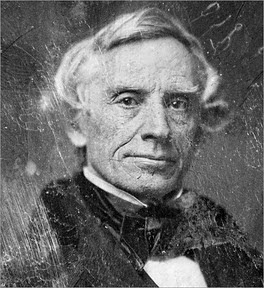
Wired recalls that on this day in 1791, Samuel F.B. Morse, ‘American Leonardo,’ [was] Born:

1791: Samuel Finley Breese Morse, inventor of the practical electromagnetic telegraph, is born in Charlestown, Massachusetts. He’ll also make waves in the art world and in politics.

Morse’s father, Jedidiah, was the co-inventor of cerographic sterotypy (a wax-based printing process), and he improved the bathometer (for measuring water depth). He also wrote and edited geography textbooks and with his brother founded the New York Observer.

S.F.B. Morse went to Yale College, were he studied under mathematician Jeremiah Day and chemist Benjamin Silliman. Neither noticed any particular spark in their young student….

He helped found the National Academy of Design in 1826 and served as its first president all the way through 1845. He also enjoyed considerable popularity as a lecturer on art.

Morse returned to Europe in 1829 to study the old masters, and he stayed in France and Italy until 1832. By the time he returned, he was regarded as one of America’s foremost painters.

Congress was deciding who should paint four of the great panels on the walls of the rotunda of the Capitol Building. Four of the eight panels had already been completed by John Trumbull, president of the American Academy of Fine Arts, from which Morse’s group had seceded.

Many people — Morse included — expected Morse to be among those chosen to paint the four remaining panels. Former President John Quincy Adams, who was then a representative from Massachusetts, submitted a resolution to allow foreign artists to do some of the work, suggesting that American painters had not yet achieved the caliber of greatness required for such monumental work.

Novelist James Fenimore Cooper, a friend of Morse, wrote an anonymous letter to the New York Post defending the native talent. In the midst of a running feud between Morse and Trumbull, the letter’s effect was the reverse of what Cooper intended.

The committee in charge of selecting the artists thought that Morse had written the letter, and they rejected him as a possible candidate. (The panels were eventually painted by John Vanderlyn, William Henry Powell, John Gadsby Chapman and Robert Walter Weir, with all of whom you are no doubt familiar.)

To console him, Morse’s friends got together and commissioned a work from him. He made a few sketches but decided his career as an artist was over. He returned the advances on the commission and never picked up a brush again.

The downturn in his artistic fortunes would be a boon to communications.

On the ship back from Europe in 1832, Morse had started to contemplate the concept of transmitting messages instantaneously by using electricity. And the more he thought about it, the more he became fascinated with it.

Taking a professorship in art at New York University to support himself, Morse worked four years to produce his first model of the telegraph. He also took time to run for mayor of New York City on the anti-immigrant, anti-Abolitionist ticket of the Nativist Party. He lost.

Morse applied for a patent on the telegraph in 1837 and gave the first public exhibition of his device to scientists the following year. He ran for mayor as the Nativist Party candidate again in 1841. He lost again.

Morse petitioned Congress for development funds to work out the practical problems of the telegraph and to build a proof-of-concept system. Congress gave him $30,000 (more than $800,000 in today’s money) in 1842 to build a test line from Baltimore to Washington, D.C.

The first official transmission on the completed 41-mile line came May 24, 1844, with the grandiose message: “What hath God wrought?” (What hath Sam writ?)….

A century after the invention of the telegraph, biographer Carleton Mabee called Morse the American Leonardo. But Morse had once written to Cooper, “I have no wish to be remembered as a painter, for I never was a painter.”

He got his wish.

more >>

Cosmetology Nannies, Part 2: Expensive Courses for Eyebrow Threading

Here’s the second of two posts on cosmetology. (I’ll tackle all manner of topics at FREE WHITEWATER.)

The post is about a Texas salon owner who is among those who brought a venerable practice, eyebrow threading, to the Lone Star state.

It may seem new to us, but it has been practiced safely abroad, and American customers have come to like it, too. (Eyebrow threading doesn’t use chemicals, as do current, entrenched procedures.)

Regrettably, regulators want to force eyebrow threaders to submit to expensive classes that they don’t need, and that would not address eyebrow threading specifically, or they’ll shut the practitioners down.

These expensive classes enrich the government-approved course provider, but have nothing to do with eyebrow threading.
State requirements like this are a threat to economic liberty and consumer choice, but a boon to course providers.

The video is from the Instititute for Justice.

more >>