FREE WHITEWATER

Whitewater Chief Coan Interviews with Mankato [MN] Free Press

Whitewater Police Chief Jim Coan is a candidate for the public safety director’s post in Mankato, Minnesota. I’ve written about his candidacy before, in Whitewater’s Police Chief and the Job in Mankato, MN.

The Mankato Free Press has published interviews with all four candidates for the job. The paper posed the same five questions to each candidate. The full interview is available at Whitewater chief has experience in diversity, budget crunches.

Yes, you read that right: Whitewater chief has experience in diversity, budget crunches. Here’s a screen shot of the Free Press story, to confirm that unexpected headline:

Seldom in the history of press interviews has one person committed so many acts both mediocre and mendacious as Coan has done in this story. He may well be one of the most shameless men in Wisconsin, in Minnesota, or anywhere else in America.

Daily Bread for Whitewater, Wisconsin: 2-16-10

Good morning,

The Whitewater forecast calls for a chance of snow, and a high of thirty-one degrees.

In the City of Whitewater, there’s a Common Council meeting tonight, at 6:30 PM. The agenda for the meeting is available online.

It’s primary election day in Walworth County, and the county has a race for circuit judge. The Gazette offers a story on the four candidates, entitled “Primary to reduce judge field to two in Walworth County.” Elsewhere, the Wisconsin State Journal‘s Dee Hall asks “Is the stage set for judicial elections to become more partisan in Wisconsin?” Her story is about the 4th District Court of Appeals, but the answer to that question will likely be the same for other judicial levels.

In our school district, there’s a principal-for-day program, where movers and shakers get to follow our district’s principals around. One seldom picks an ordinary parent for a task like this; it’s usually a big fish from our small pond. This year, City Manager Brunner will shadow Whitewater High School’s principal.

I don’t know if Brunner will be teaching any classes. He’d be qualified, if only the curriculum included Techniques of Municipal Distraction (entry level and advanced course), Exaggeration as a Way of Life, or How to Spend Eleven Million to Pad a Résumé to Get a New Job. (The Music Parents’ already sponsored a concert, so it’s too late for City Manager: The Musical!)

The Wisconsin Historical Society reports that on this day in 1808

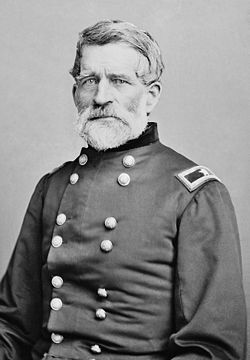
1808 – Lysander Cutler [Was] Born

On this date Lysander Cutler was born in Worcester County, Mass. Cutler moved to Milwaukee in 1856. In July, 1861, he was commissioned Colonel of the 6th Wisconsin Infantry. He was appointed Brigadier General in November, 1862, and Major General in August, 1864. He participated in the battles of Gainesville, Fredericksburg, Chancellorsville, Gettysburg, and in the Wilderness campaign. He was wounded at Gainesville, Frederickburg, and Weldon Road.

On Whitewater’s “Advancing” Tech Park, Part 2

The first part of this topic appears separately, in the preceding post. In this post, I will consider more of Whitewater City Manager Brunner’s published remarks, from a February 8th story entitled, “Whitewater Tech Park advances; panels to study second building.”

A Unique Design. Here’s Brunner, remarking on the building’s supposedly unique character:

“We are excited about the building, too, because it will be unique in design and meeting environmental standards of the LEED program.”

Here Brunner exaggerates, shamelessly. The Innovation Center will be an office building in a city of many such buildings, in a country that has — wait for it — millions of buildings. (For national statistics on commercial office space, see the 2010 Statistical Abstract: Commercial Buildings, from the Census Bureau.)

As long ago as 2003, America had over four million office buildings! Four million, six-hundred sixty-five thousand, actually! Odds that this one’s unique in design: a good portion of four million to one.

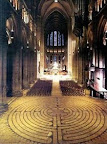
There’s no reason to pretend that we’re building Châtres, but that’s Brunner’s (all-too-common) inclination.

Even as early as 2003, using the federal data to which I have linked above, hundreds of thousands of office buildings in America were about the same size as the planned Innovation Center. That’s not unique, that’s commonplace.

What of the unique design that Brunner trumpets? In neither aesthetics nor in so-called respect for the environment does this forty-thousand square foot building deserve praise.

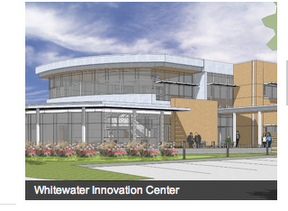
Looking at an artist’s illustration of the building, it’s not different in appearance from countless other modern office buildings, and less impressive than many.

The Innovation Center won’t even be the largest building in Whitewater. The recently completed Hyland Hall, at 180,000 square feet, will remain over four times as large:

At 180,000 square feet, Hyland Hall is more than twice the size of the former business building and boasts 50 percent more classroom space. It includes 34 flat and tiered classrooms, three computer labs, two 150-seat lecture halls, one seminar room and four student project rooms.

Even if one finds anything of the Innovation Center’s design exceptional or unique, one should keep in mind that it’s that way through public money, not private initiative.

Environmental impact. What of the sustainability & environmental regard to which Brunner makes mention? I support private initiatives such as the Nature Conservancy, because I believe in the conservation of natural resources. One should be skeptical, though, of claims for how ‘green’ something is. Those who care about the environment should not be deceived by a possible Leadership in Energy and Environmental Design (LEED) designation for the Innovation Center.

That’s because constructing an office building like this is so destructive to the environment, that pretending the LEED designation mitigates the harm is like contending that band aids and aspirin mitigate for the loss of a limb.

LEED certification doesn’t mean buildings don’t cause significant environmental stress. They do. An assessment from the National Trust for Historical Preservation, entitled “Sustainability by the Numbers,” found that it “takes a lot of energy to construct a building – for example, building a 50,000 square foot commercial building requires the same amount of energy needed to drive a car 20,000 miles a year for 730 years.”

That’s for a building not much bigger than the planned Innovation Center.

I would surely favor reduced regulation and taxation to spur private construction of homes and offices. I think that, on balance, it’s good for society. I’m not simple-minded enough, though, to pretend that offices can be made good for the environment. They can’t. Constructing an office building will always be an environmentally destructive act, and is about as far from green as one can get. I’m realistic about the choices.

Let me help Whitewater’s city manager and his ilk see the difference between office buildings and green living. Let’s look at two pictures. On top is a photo of plants and flowers from Whitewater, and on the bottom is an artist’s illustration of the Innovation Center:

The one on top is ‘green,’ and the one on the bottom is ‘brown.’

My pleasure, I’m sure.

On Whitewater’s “Advancing” Tech Park, Part 1

Last Monday, over at the Daily Union, that paper published an online story entitled, “Whitewater Tech Park advances; panels to study second building.” The story is a solid example of Whitewater officials’ habit of stating the obvious, exaggerating their own achievements, and producing whatever airy speculation they can get into print. In the Daily Union, Whitewater’s officials have found a home where they receive unquestioning acceptance for puffery, distortions, and dodgy claims.

Advancing. One learns that the tech park is advancing. Too funny — no one thought otherwise. With millions of dollars in federal taxpayer money, and millions more in municipal public debt, how could the park not advance? Millions upon millions were sure to amount to something. No one — no one sensible — has seriously doubted that the park’s Innovation Center would be built. I have always assumed that the Tech Park Board would get its park and building — it’s whether it would be worth the cost to the community.

See, from Predictions for Whitewater, Wisconsin 2010:

2. A new Innovation Center will, during the year, produce
A. Cold Fusion
B. the Flux Capacitor
C. More press and publicity than actual benefit
D. More actual benefit than press and publicity

Never did I assume that mere completion of a building could be at issue. If there’s a worry about completion of a building or two, I’d be stunned.

Obvious, really, to set the bar so low — a building or two with millions in public money.

Overwhelming. One learns that there’s overwhelming demand for space in the park, so much that a second building might — might — be necessary: “…investigating a second building due to overwhelming interest in the park.” There’s no mention of the origin of this demand, of course — just the vague reassurance that it’s “overwhelming.”

I can’t tell what overwhelming means, and the story doesn’t bother to quantify or describe that demand. It’s as though writing as much will beguile readers into believing as much. That only works with gullible or foolish people.

The surprise is that more tenants are not yet announced — many more tenants. Others — taxpayers — have paid for all this, and one could expect that a private business or two might enjoy some corporate welfare at federal and city taxpayers’ expense. As it is, it’s not even a private business that’s the anchor tenant; it’s a
taxpayer-funded agency that’s occupying one-quarter of this
publicly-funded building.

For more on CESA 2’s unsuitability as an anchor tenant, see On the Innovation Center’s Anchor Tenant.

For a response to the idea that CESA 2’s size elsewhere benefits Whitewater, see On the Innovation Center’s Anchor Tenant, Part 2.

(Note: The February 8th story merely repeats the unchallenged and silly implication that CESA 2’s service in other places benefits Whitewater. There’s a change, however — downward — in the number of reported employees that CESA 2 will have at the building. Unlike a previous story the DU published on January 19th, in which the city claimed up to 50 CESA 2 employees would work at the building, the number has now changed downward to match what CESA 2’s own administrator has estimated, at 30 employees.)

A Strategic Plan: How to Sell the Lots? Here’s what Whitewater City manager Kevin Brunner had to say about the park:

“On the heels of the first anchor tenant at Tech Park, the board is already talking about additional buildings,” he said. “We need to develop a strategic plan and determine how we are going to sell the lots, or are we going to lease the lots in the park. We are
certainly seeing a lot of interest in the park; that is very encouraging. The board wants to be very pro-active in pushing this forward.”

Oh my, oh my. These gentlemen have their millions, from others who worked for that money, but they’ve not even figured out whether to sell or lease the lots. A serious and responsible person would be ashamed to talk this way — having received a grant from public funds, and issued debt as bonds, the city manager now acknowledges that it’s time to develop a strategic plan for the park.

I’d say it was time even before now.

I am sure city manager Brunner is being honest about this much, however embarrassing it is — no one would lie about being this cavalier.

The Accomplishments at the Friday, February 5th Tech Park Board Meeting. Brunner’s worst critic is not a common blogger, but his own shallow remarks. Consider the story’s account of the February 5th board meeting:

He [Brunner] said the main thing accomplished Friday, besides signage, was setting the Innovation Center groundbreaking.

“We will be getting everything ready for that, on top of some ‘housekeeping’ that still needs to be done,” Brunner said.

Laughable, to be talking about groundbreaking, again, after an earlier groundbreaking at the park, in September. All this money, that other people earned, and that others will have to pay back — and Brunner’s excited about a show, theater, a ceremony, whatever. The main thing accomplished — besides signage, of all things! — was to talk about the groundbreaking.

About that signage, one finds that “the board voted unanimously to approve a 5.4-foot signage for the Tech Park, which will have the park’s logo and will likely have solar-powered lighting….” A sign with the park’s logo! Solar power? Amazing!

Will there ever be a time that the City of Whitewater’s leaders place substance over style?

Next: On Whitewater’s “Advancing” Tech Park, Part 2.

What’s Wrong with PBS, NPR, Etc.?

One month ago, I wrote about launching a fictitious candidacy for one of the non-existent congressional districts to which the federal government had laughably claimed to have distributed stimulus funds. See, Press Release: John Adams to Run for Wisconsin’s 55th Congressional District.

In my campaign platform, I was critical of the Public Broadcasting Service and National Public Radio. Here’s what I wrote:

5. PBS. It’s just got to go. NPR, too. NPR must be the third-biggest cause of traffic accidents, after drunks and deer. How can anyone stay awake to those soporific tones? The end of NPR would be like an espresso shot for the nation.

Few things I have written have drawn more consternation among my readers than teasing about PBS and NPR. (Many of the seemingly controversial posts I publish are nothing of the kind; outside of a few lemmings, most people see that Whitewater officials’ grandiose statements are false, often absurdly so. That’s not surprising — mediocre and self-serving efforts produce mediocre and ridiculous results.)

But PBS and NPR, unlike municipal bureaucrats, have real fans and diehard supporters.

So, what’s not to like about PBS and NPR? First, two quick comments, about content and style. I don’t care that PBS and NPR lean left-of-center. They’re one voice among many, and their politics don’t bother me. Second, of course, I really don’t care if their announcers adopt a soporific tone.

My concern is simply that government should not subsidize broadcast networks, or newspapers, except for limited, exceptional purposes (newspapers for service members, or broadcasts as a part of foreign policy, like Radio Free Europe or the Voice of America).

Government should not be a news publisher, and virtually all people — and all sensible ones — understand that politicians should not be publishers. There are no sensible people who believe, for example, that Bill Clinton should — or could — simultaneously serve fairly as president of the United States and editor-in-chief of the Washington Post.

PBS and NPR may go on as they wish; I just wouldn’t fund them from public coffers. (I know that federal funding amounts to a minority share of NPR’s budget.) For more information, see the fiscal year 2008 NPR financial statement.

Even small amounts may prove tempting, and exclusively private funding removes even the possibility of government persuasion through subsidy.

By the way, I do, in my own way, support NPR, and those who speak on its behalf should consider supporting it with private contributions.

One way to support public radio is through donations. Alternatively, as in my case, one may do so through private subscription to a service that carries NPR programming. I subscribe to Sirius radio, and one of that service’s channels is NPR.

Re-transmission on private networks, for a fee, is just one of the many private arrangements by which NPR and PBS can make their way in the world, free of any intoxicating government subsidies.

Walworth County Genealogical Society Program on Elkhorn Family History Research & Education

I received the following press release that I am happy to post —

The Walworth County Genealogical Society will feature Marshall and Priscilla Wren of Elkhorn in a program about the “Services Available at the Elkhorn Family History Research & Education Center.” The topics covered will be the many resources available on microfilm and microfiche, computer programs, foreign country research, immigration and passenger lists, how to access thousands of data bases on line through the Godfrey Memorial Library and information available at the Alexander Street Press.

The presentation will take place on Tuesday, March 2 at 1:00 PM, in the Community Centre, 826 E. Geneva Street, Delavan.

The Wrens are a husband and wife team that has been involved in genealogy for over 25 years. They were instrumental in the reopening of the Family History Center at the local Church of Jesus Christ-Latter Day Saints on Potter Road, Elkhorn.

The program and brief business meeting are open to the public free of charge but membership in the Walworth County Genealogical Society is encouraged so that people will have access to an informative newsletter and the opportunity to place free queries in the publication.

For additional information, please call the WCGS Vice President at 275-2426.

Daily Bread for Whitewater, Wisconsin: 2-15-10

Good morning,

The today’s forecast for Whitewater calls for a chance of light snow, of little or no accumulation, and a high of twenty-six degrees.

Wisconsin Assembly Speaker Sheridan’s still trying to explain his travel expense accounting. See, Sheridan offers details on some of his travel. Sheridan’s already had to reimburse Wisconsin for double-billing for a trip to California. See, Sheridan reimburses state for California trip, also attended by loan lobbyist.

Meanwhile, the State of Wisconsin has reached a six-figure settlement with a payday lender following a complaint alleging that lender “Arrowhead’s loan contracts violated certain provisions of the Wisconsin Consumer Act.” See, Wis. announces class settlement with payday lender.

Sheridan’s dating of a payday loan industry lobbyist while his caucus drafted legislation to regulate the payday loan industry seems to have played no role in the settlement with Arrowhead; Sheridan’s likely been otherwise occupied.

On this Presidents’ Day, there’s a story at Wired about three presidents with an interest in technology. In a story entitled, Tech Presidents: George, Tom, and Abe, “Wired.com marks Presidents Day weekend with brief vignettes of three of our techiest presidents: Washington steered national policy toward an embrace of science, Jefferson made a significant contribution to paleontology, and Lincoln devised and patented a gimmick for lifting stranded boats.”

Recent Tweets, 2-7 to 2-13


FREE WHITEWATER on Twitter

Journal Sentinel: Deputy in West Allis incident flashed badge in ’08 OWI

Yesterday, in a post entitled, “The Corruption of Familiarity & Favoritism,” I wrote about how West Allis police officers declined to arrest a Milwaukee sheriff’s deputy found apparently drunk, passed out, behind the wheel of a parked car. An ordinary person would surely have been arrested; the deputy was allowed to walk away without punishment.

Unsurprisingly, this isn’t the deputy’s first brush with disgrace:

An off-duty Milwaukee County sheriff’s deputy who was unresponsive and appeared to be intoxicated when he was found behind the wheel of a car that was parked on a West Allis street last week is the same deputy who showed his badge and pleaded with a Hales Corners officer to let him go when he was arrested for drunken driving in 2008.

The deputy, identified by sources as 36-year-old Christopher P. Conell, was convicted of first-offense operating while intoxicated after his 2008 arrest.

That case began when the Hales Corners officer pulled Conell over about 12:45 a.m. March 18, 2008, after seeing Conell’s car drift across the center line three times on W. Grange Ave. near S. 110th St., according to the incident report.

The report says that before the arresting officer was able to explain the reason for the traffic stop, Conell produced his badge and said, “Come on, man, I’m like two blocks from home, just let me go. Please, please.”

Conell also said, “You can’t do this to one of your own,” according to the report.

You can’t do this to one of your own. The Hales Corners officer disregarded Conell’s shameful attempt to evade responsibility, and saw the lie of what Conell said.

The officers of Hales Corners saw the obligation before them: only the people are their own; they have no smaller group or faction that they may every place above each and every resident they serve. Those in West Allis have only embarrassed themselves and their profession.

And yet, one should not doubt that bias and preferential treatment lurk elsewhere in Wisconsin, a stain on every community so corrupted.

See, Deputy in West Allis incident flashed badge in ’08 OWI.

The Corruption of Familiarity & Favoritism

Over at the Milwaukee Journal Sentinel, there’s a story about an off-duty Milwaukee County sheriff’s deputy who was apparently passed out, drunk, behind the wheel of a parked car, running with its lights on. The story’s entitled, “West Allis police chief says deputy probably should have been arrested.” Here’s what happened:

The car’s engine was running and its lights were on, the officials said. But the officers at the scene decided not to arrest the 36-year-old deputy because they did not believe they had probable cause to do so, West Allis Police Chief Michael Jungbluth said.

The officers also did not administer field sobriety tests or a Breathalyzer, police officials said.

Instead, police took the deputy to their station, where he was picked up by “a sober, responsible adult,” Deputy Police Chief Jerry Ponzi said. Before the deputy arrived at the station, the scene supervisor called the highest-ranking on-duty sheriff’s official and told the official the deputy was intoxicated but had not been arrested, Ponzi said.

Jungbluth, Ponzi and Milwaukee County District Attorney John T. Chisholm said the deputy did not receive preferential treatment.

Prosecutors are awaiting more information about the incident before determining whether to charge the deputy with operating while intoxicated, Chisholm said.

The deputy has been suspended with pay pending an investigation.

What would have happened to an ordinary person in these circumstances? One knows very well that an ordinary person would have been arrested.

An experienced Milwaukee attorney confirms the view that failing to charge the deputy was unfairly preferential to the deputy:

Milwaukee defense attorney Jeffrey W. Jensen said the deputy should have been arrested.

“Assuming it’s true that he was in a highly intoxicated state, that’s open-and-closed probable cause to arrest for operating under the influence,” Jensen said.

Jensen estimated he has represented about 100 people in the last 25 years who were found by police in similar circumstances. All were arrested, even those who were in the driver’s seat of a vehicle that was not running but had a key in the ignition, he said.

“If it’s true that the West Allis police found the deputy behind the wheel of the car – with the car running and the headlights on – in a highly intoxicated state, then there’s no conclusion that can be drawn other than the fact that he was given preferential treatment.”

West Allis and Milwaukee are far from my town of Whitewater, but one would not have to travel to those places to hear stories of prefential treatment.

We have it, too — that sad tendency to favor ones’s own, as though there were any such group separate exalted above others. Rules stringently enforced against some are forgotten or explained away for others. One will often hear so many officials and their lapdog hangers-on talk about principle and rectitude, but they are often among the first to forget those worthy concepts when their own
interest is at stake. The price of fitting in with that ilk is to live a servile life, catering to opinion.

Yet, for every town father, every self-regarding town squire squawking only for himself, there are countless other sensible, common people who live well and justly. They do so without praising themselves, without advancing themeselves, without grinning like Cheshire cats.

Those many are admirable, yet unheralded.

Daily Bread for Whitewater, Wisconsin: 2-12-10

Good morning,

Whitewater’s forecast for today calls for sunny skies with a high of twenty-six degrees.

At Washington Elementary today, a pet food drive continues, and at the Middle School, it’s Spirit Day.

The Wisconsin Historical Society notes that on this day in 2002

2002 – Verona Athlete Wins Gold Medal in 2002 Olympics

On this date Verona’s Casey FitzRandolph won a gold medal at the 2002 Salt Lake City Olympic Games in the Men’s 500 Meters. He began his career on the ice playing ice hockey and was inspired by Madison native Eric Heiden, an Olympic speed skater. FitzRandolph tried speed skating in his hockey skates and soon caught the attention of coaches in Wisconsin. He became an Olympian in 1998, when he placed sixth in the 500 meters and seventh in the 1000 at the Nagano Olympic Games. At the Salt Lake City Games he broke the olympic record in the 500 meters with a time of 1:09:23.

Over the years, as the Milwaukee Journal Sentinel reports, “Wisconsin has played key role in U.S. medal haul“:

The many contributions of Wisconsin athletes to the Winter Games is one of the great untold stories of the U.S. Olympic movement. In speedskating alone, the state has produced 33 Olympians, starting with Milwaukee’s Delbert Lamb and Bob Peterson in 1936. Wisconsin also has produced Olympic hockey players, curlers, cross-country skiers and even ski jumpers.

“It is legendary,” said Alan Ashley, managing director of sport performance for the United States Olympic Committee. “It just shows the state and the people in the state are fired up about sports and are involved in sports that are part of the Winter Olympics program, and they’re excellent at it.”