
David Boaz of Cato has the answer: higher taxes and more regulation from Washington, and the legitimate hesitation among investors about the prospect of worse to come.
Press
Retracto the Correction Alpaca
by JOHN ADAMS •
Over at BigJournalism.com there’s a pseudonymous columnist named Retracto the Correction Alpaca.
He submits retraction requests to newspapers and magazines when he believes that he’s spotted an error in a story. His columns are available online.
He’s become popular, and he even has his own theme song.
I don’t always agree with his analysis of a needed correction, but I admire his persistence. His column is part of a collection of websites from Andrew Breitbart. (Breitbart leans right; he espouses a small-government conservatism rather than libertarianism.)
How did this come about, that someone could go online, take a funny name, and demand retractions from major publications?
One might be tempted to say that technology made it possible, but there’s more to it than that. Before the technology, there was the desire and ambition to speak and write as one wished.
Now you know, and I know, that there are stuffy people, smug and stodgy, who deride these new ventures. I’m sure the odd names, and something like a theme song, must be off-putting.
I don’t always think that Retracto’s right, but I do think he’s doing the right thing. It’s not an easy or convenient thing, for him or for those from whom he requests retractions, but it is a good thing.
There’s an evident enthusiasm in Retracto that’s admirable. It’s not the (false) enthusiasm that one sees local officials feign, and their back-patting cronies imitate and publicize.
It’s the genuine article, and happily, America is likely to see much more of it.
City, Police
“Ultimately” Responsible
by JOHN ADAMS •
I live and blog in a small rural town, of about fourteen thousand people, and one often imagines that such places are preserves of plain-speaking officials and straight-talking politicians. I suppose that many rural American towns are like that.
We’re not one of them.
Governance — official action first and foremost through law and legal tradition — has given way to Management. Not fine and serious management, but grandiose claims, excuse-making, and rationalization.
One may hear the words accountability and responsibility, but the vocabulary does not match bureaucratic conduct.
The making of excuses and distortions from bureaucrats in Whitewater, Wisconsin has become a cottage industry, publicly-funded. One need only search this website for an account of false and self-serving claims from Whitewater’s leaders.
There’s a telling sign elsewhere, though: on the City of Whitewater’s website, at the page offering a description of Whitewater’s police chief, Jim Coan.
Here’s the description:
Jim Coan was appointed Chief of Police for the City of Whitewater in 1992. He is ultimately responsible for the management, operation, and representation of the Whitewater Police Department and its employees. Chief Coan holds a Masters Degree in Criminal Justice from Michigan State University and a Bachelors Degree from Northern Michigan University. Previous to his present position he served as a Captain with the Appleton, Wisconsin Police Department.
It’s odd, how the page describes Coan as “ultimately” responsible. It’s not how ordinary people speak — not how the sort of people who are, truly, plain speaking and straight talking would decribe
responsibility. They’d just say a police chief, city manager, etc. is responsible for something. They’d wisely describe responsibility this way: A captain is responsible for his ship, a shephered for his sheep, etc.
Truman didn’t say that the Buck Ultimately Stops Here. He would have been laughed at if he did. Ultimately, as though there were intermediate steps on which he could cast blame if something went wrong. The mention of intermediate steps would have, of course, undermined a plain and clear acceptance of responsibility.
One word wouldn’t matter, were it not a reflection of a long tenure of blame-shifting, excuse-making, and grandiose self-praise so typical of Coan’s leadership. The word’s a consequence, not a cause, of leadership at odds with the values that any town should embrace.
There are, I’d say, two other possibilities for the choice of the word, neither favorable to Coan or the city government he ill-serves. The first is that he’s trying to make himself even more important, by adding ‘ultimately,’ as though he sits at the top of a high ladder, stretching far into the clouds. I’d say this is a possibility, but none to Coan’s credit. (Quick note to Coan: Whatever your lofty self-opinion, it’s not you at the top of that ladder. Gn. 28:13.)
There’s a second possibilty: that Coan’s description says “ultimately responsible” because there’s some confusion in the city about authority between Coan, Whitewater’s Police & Fire Commission, and the Whitewater city manager. There’s no reasonable way that there could be confusion between these groups, but there might be a way in which there’s confusion among these three authorities, in this town. Embarrassing, but possible.
No matter the reason, the qualified description of Coan’s responsibility is a regrettable departure from the clear and plain traditions of a small American town.
Daily Bread
Daily Bread for Whitewater, Wisconsin: 2-10-10
by JOHN ADAMS •
Update, 7:45 AM: Date corrected to February (2) from December (12) – this year’s hardly started.
Good morning,
The forecast calls for a blustery day, with a high of twenty-four degrees.
In the City of Whitewater, there’s a Police & Fire Commission meeting tonight, at 7 PM. The agenda for the meeting is available online, and is reproduced below:
I. Call to Order, Roll Call
II. Approval of minutes of December 14, 2009
III. Citizen Comments
IV. Old Business – None
V. New BusinessA. Review of Patrol Officer Interview Questions
B. Discussion of Chief Coan’s Advancement in the Mankato, MN Public Safety Director Hiring Process
C. Chief’s Report
1. Review of 2010 Management Plan
2. Personnel Update
a) Status of Probationary Officers
b) Status of Employees on Medical Leaves and Transitional Duty
VI. Adjournment
In Wisconsin history today, the Wisconsin Historical Society recalls that Wisconsin was once French, then English, before becoming — happily — American:
1763 – Treaty of Paris Cedes Wisconsin to England
On this date the Treaty of Paris ceded formerly French-controlled land, including the Wisconsin region, to England. [Source:Avalon Project at Yale University]
Libertarians, Politics
Left and Right Worth Reading
by JOHN ADAMS •
I’m a libertarian — neither Republican nor Democrat, conservative nor progressive. That doesn’t mean that I don’t read from among advocates of left and right. I am quite sure that I read more from those who are of either view than I do of libertarians. It would be foolish to avoid so many clever people writing for, or against, one of the major parties.
(It goes without saying that many members of the two major parties are libertarian; David Boaz has written often that political polling shows significant support for libertarian ideas. See, for example, “The Libertarian Vote in the Age of Obama.” )
Here are two sharp writers, on left and right, respectively, that I read regularly:
- David Corn, at Politics Daily. He’s the Washington bureau chief for Mother Jones, and formerly of The Nation.
- Jennifer Rubin, at Commentary’s Contentions Blog.
I’ve been reading both for a while, and ironically the two had a dust up over their views of Sarah Palin. Actually, a dust up about what Jews think of Sarah Palin, and what that might — or might not — mean. I have no understanding of what Jews might think of Palin, etc. as different or the same from what others in America might think, but no matter — I enjoyed the exchange just the same. There’s nothing remote or unapproachable about the exchange — anyone can appreciate it.
Rubin: Why Jews Hate Palin.
Corn: Jews and Sarah Palin: Who’s Got the Problem?
I enjoy reading both pundits. Rubin, very surely, is a polemicist by nature (more than Corn), and there’s a relentless quality to her work that I find admirable even where we’d disagree. Both Corn and Rubin are always worth reading, and easy to recommend.
City, Police, Press
Whitewater’s Police Chief and the Job in Mankato, MN
by JOHN ADAMS •
Update, 6:21 PM: Fixed link for “What Happens in Vegas…” appearing below. Link now leads correctly to that post.
Longtime readers of FREE WHITEWATER know that I have been a critic of Whitewater’s long-tenured (too long, really) police chief, Jim Coan. A search of this site offers ample analysis of Coan’s disappointing tenure in Whitewater, considering his emphasis on appearance over substance, almost every time. Coan has the vocabulary of a modern manager (accountability, excellence, etc.), but no meaningful achievement to support that vocabulary.
I have contended consistently that Coan has ill-served the police officers of our small town, and that they, and we, have deserved better. See, The Force We Need. It’s a commonplace dodge for a weak leader to contend that criticism on him is somehow an attack on policing. On the contrary, the biggest problem policing in this town has is Coan, himself, and a few weak-minded people who can’t tell the difference between a police force and its mediocre manager.
Coan’s a candidate for a job in Mankato, MN, as their public safety director. He’s one of four candidates, and I have only briefly mentioned his prospects. See, Department of Embarrassing Coincidence, Whitewater, Wisconsin Branch Office (“How all this [his candidacy] turns out I cannot say, although I can guess. It speaks clearly on its own about Chief Coan’s low level of commitment and interest in this community.”)
The Daily Union has reported on Coan’s candidacy, in a story entitled, “Whitewater chief finalist for Mankato job.”
Here’s how the DU addresses Coan’s previous job searches, while Whitewater’s police chief:
“My interest in the position is in no way a reflection of any dissatisfaction here whatsoever,” Coan said. “The job is an opportunity to move closer to family in the Minneapolis area.”
He noted that those who have relatives residing nearby can appreciate how important that is.
“Whitewater is a great community and I remain very proud of the quality of our department and the caliber of our personnel,” the Whitewater police chief said.
In June 2006, Coan accepted the chief of police position in the City of Hudson in northern Wisconsin. However, he returned in August before Whitewater officials had an opportunity to fill his former position.
Something’s missing, of course — accepting and then declining an earlier offer didn’t happen once, but twice. Coan didn’t accept one job and then return; he had a similar experience before 2006’s fiasco of leaving and scurrying back from Hudson.
In 2001, Coan accepted, and then declined, a job in Apple Valley, Minnesota. In the minutes of the Apple Valley, Minnesota City Council, from April 26, 2001, one finds remarks about that city’s attempt to hire a new chief:
POLICE CHIEF JOHNSON HIRING
MOTION: of Erickson, seconded by Grendahl, rescinding the action of March 22, 2001, to hire James R. Coan and approving hiring Scott A. Johnson as Chief of Police, as outlined in the City Administrator’s memo dated April 23rd, 2001. Ayes – 5 – Nays – 0.
Mr. Lawell introduced Scott Johnson who is recommended to be hired as the new Chief of Police. As described in his memo, dated April 23, 2001, James Coan has notified the City that he will not be accepting employment as previously approved. Mr. Johnson will be starting employment on May 7, 2001.
The minutes from that Minnesota council meeting are available online.
Either the Daily Union didn’t know, or didn’t bother to mention, Coan’s twice accepting, and then twice declining, a job offer elsewhere. The 2006 Hudson offer, acceptance, and quick return were unusual not merely on their own, but because Coan had accepted and declined before.
There’s much in the Daily Union story that’s more press release than real story, with a reference to Coan’s “ride-alongs with some of the nation’s largest police departments.” Too funny — as though Coan learned something on travels to fancy, big cities like Los Angeles, New York, and Las Vegas that he has in any way used constructively for the city. Funny, in his accounts Coan makes no mention of a trip to Detroit or Cleveland. They’re big cities, too, but they’re not also tourist spots.
For more on Coan’s amazing travels, see “What Happens in Vegas…“
I have no idea how the interviews will go, let alone if Coan will be hired in Mankato, Minnesota.
I do know this much, though, about Hudson, Wisconsin and Apple Valley, Minnesota: they jointly share the distinction of The Two Luckiest Cities on the Face of the Earth™.
Elkhorn, Press
Update: The Secret Warrants of Walworth County
by JOHN ADAMS •
On December 28th, the Janesville Gazette published a story entitled, “Walworth County search warrants could disappear.” I posted on that astonishing possibility, in a post entitled, “The Secret Warrants of Walworth County.” Here’s what the Gazette uncovered in its original story:
ELKHORN – In some Wisconsin counties, sealed court documents hold back details from search warrants for a limited time while investigations are ongoing.
In Walworth County, seals have no time limit, and some records could disappear from the public eye altogether.
Motions to seal search warrants in Walworth County ask that all documents and their existence be kept under wraps. The seal acts as a seal on itself, as if the search never happened, leading some warrants to be kept away from public scrutiny.
The procedure gives law enforcement the power to search homes virtually undetected. The paper trail disappears, and interested parties are unable to find out the basis for the execution of a search warrant or how it was conducted.
The story made clear how anomalous and aberrant was Walworth County’s practice – different from other counties, including nearby ones.
In my original post, I observed that
How very odd, though that “Locally, Koss said changing the language on applications for seals is a start that would come from Koss’ office …” and yet D.A. Koss declares that “It’s never come up before,” Koss said. “Now that we’re having this discussion, we’ll address it.”
Oh my – the Walworth County District Attorney’s office initiates these requests, but it takes a newspaper to bring the matter to the attention of the lawyers in that office? They didn’t otherwise think about the nature of their own requests?
Yes, it did take a newspaper. If the Gazette had not published this story, the deeply un-American practice of keeping secret warrants, sealed forever, would have continued unchanged. This was no faraway tale, but a wrongful practice here, among us, as residents and citizens.
There’s a good – a truly good – result of the Gazette‘s story: search warrants in Walworth County will not remain, as a general practice, permanently sealed. In an update to its original story, the Gazette published, on February 5th, “DA: We have addressed sealed documents loophole.” The Gazette reports that
District Attorney Phil Koss said he has changed the language his prosecutors will use when requesting search warrants be sealed. The new form sets a six-month expiration date for the seal.
The change comes after a Gazette investigation showed search warrants in Walworth County could be shielded forever from public scrutiny, allowing police to search homes virtually undetected.
One should note that this was always a practice that was within Koss’s ability to manage. Koss commends the Gazette, and he rightly should. It’s telling that he commends them for discovering a loophole, when they have done far more — they’ve revealed his own practice of drafting motions such that they would remain sealed.
It was an astonishingly bad, secretive practice, brought to light through the work of a real and solid newspaper. I have contended consistently that among the best tonics for our distorted politics is a press that diligently reports on public officials’ actions.
Bloggers — modern-day pamphleteers — aren’t anywhere as important as a solid newspaper. There’s simply no comparison.
It’s where — in places like Whitewater — that there isn’t a vigorous hometown newspaper that a community becomes thick with official distortions, omissions, grandiose claims, and self-serving lies. We have a hometown paper that doesn’t have a hometown office (Whitewater Register), a nearby paper that scampers after local officials to emulate the Register‘s slavish deference (Daily Union), and a local politician’s commercial website (Whitewater Banner) that might as well be an extended campaign ad for incumbency.
They are both cause and consequence of our mediocre politics.
I’m not a reporter, nor a journalist, and I aspire to neither line of work. It’s enough to be able to read, to see the difference between worthy reporting and sycophancy. I’m truly appreciative of the former, and legitimately critical of the latter.
I’ve also no doubt — absolutely none — that the embarrassing flacking and spinning of which we are afflicted has no future. It causes a great deal of truly regrettable damage, and we would be more prosperous if it disappeared overnight, but disappear it will, over time. Until then, one enters the fray a happy warrior like New York’s Al Smith was, convinced and confirmed.
Politics
Wisconsin State Journal: Sheridan hasn’t answered questions about travel expenses
by JOHN ADAMS •
Wisconsin Assembly Speaker Mike Sheridan faces increasing questions about his conduct while in office. The Janesville resident, representing a city with high unemployment, has been dating a lobbyist for an industry his caucus is seeking to regulate, has moved out of his assembly district, and has filed a vague travel expense report that’s inadequate under Wisconsin law.
The Wisconsin State Journal reports on the latest self-inflicted problem facing Wisconsin’s Assembly speaker, in a story entitled, “Sheridan hasn’t answered questions about travel expenses“:
Sheridan, 51, has repeatedly said his position on regulating the payday lending industry was not been influenced by the lobbyist, 31-year-old Shanna Wycoff. But he has not said whether she accompanied him on his recent travels.
Sheridan aide Rebekah Sweeney said the campaign did not pay for any of Wycoff’s expenses, but added that she didn’t know if Wycoff traveled to any of the same events as Sheridan.
Sweeney said Sheridan is working to amend his recent campaign finance report filed, which currently includes only vague details about travel, such as airfare and travel to “Georgia Conference.”
State public officials are forbidden from soliciting “anything of value” either from lobbyist or organizations that employ them, according to the Government Accountability Board. That could include any money or property, favor, service, payment, advance or loan.
If Sheridan had lived and traveled simply, it shouldn’t be hard to account for his expenses. It’s not hard or complicated for a person of average ability to place a stack of receipts for airfare, hotel, meals, and cab fare on a desk, sort them chronologically, and have one’s expenses ready for account. It’s only hard for people who are incapable of an average ability to collect & organize receipts, or people who are embarrassed about expenses they’ve incurred.
The great shame of this is that Sheridan’s conduct interferes and distracts from the public work of our state, and representation of his constituents.
Previously —
- Wisconsin Assembly Speaker Sheridan’s Shameful and Laughable Self-Absolution (Sheridan dating a lobbyist of an industry he’s seeking to regulate), and
- Update: Wisconsin Assembly Speaker Sheridan’s Shameful and Laughable Self-Absolution (Sheridan dating a lobbyist of an industry he’s seeking to regulate, not living in his district, and vague travel expenses.)
Note: I’ve been asked if I were serious, when wrote in Update: Wisconsin Assembly Speaker Sheridan’s Shameful and Laughable Self-Absolution, that if Sheridan needed money to live in his district, he’d know where to borrow it.
No — absolutely not! — I was teasing about Sheridan’s association with a lobbyist for the payday loan industry. Sheridan should have stayed as far away as possible from this lobbyist, from an industry his caucus sought to regulate.
Daily Bread
Daily Bread for Whitewater, Wisconsin: 12-9-10
by JOHN ADAMS •
It’s a snowy day in Whitewater, with a predicted snowfall of three to seven inches during the day today, another one to three this evening, and a high temperature in the mid twenties.
It’s fitting that on a day with interesting weather, there’s a Wisconsin anniversary about the weather. The Wisconsin Historical Society reports that on this day in 1870
1870 – National Weather Service Authorized
On this date President Ulysses S. Grant signed a joint resolution authorizing a National Weather Service, which had long been a dream of Milwaukee scientist Increase Lapham.
Lapham, 19th-century Wisconsin’s premier natural scientist, proposed a national weather service after he mapped data contributed over telegraph lines in the UpperMidwest and realized that weather might be predicted in advance. He was concerned about avoiding potential disasters to Great Lakes shipping and Wisconsin farming, and his proposal was approved by Congress and authorized on this date. [Source: History Just Ahead: A Guide to Wisconsin’s Historical Markers, edited by Sarah Davis McBride]
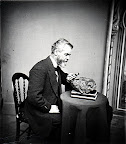
More on the story is available at Feb. 9, 1870: Feds Get on Top of the Weather.
Today is also a memorable day in American aviation history — on this day in 1969, Boeing successfully tested a 747 jumbo jet:
As commercial air travel boomed in the 1960s, the need for a plane capable of handling more passengers than Boeing’s reliable old warhorse, the 707, became obvious. But the technology of jet-engine design was changing rapidly, too, and the feeling was that any new aircraft built using existing subsonic engines would soon be made obsolete by planes capable of supersonic flight.
So the 747 was designed to be easily convertible to hauling cargo, which Boeing believed would ensure its long-term sustainability….
In the end, commercial supersonic flight proved a bust, for various financial, environmental and technical reasons. The 747, meanwhile, expected to be obsolete after 400 were built, surpassed 1,000 aircraft in 1993 and, with several series modifications, remains in production to this day.

Uncategorized
Update: Wisconsin Assembly Speaker Sheridan’s Shameful and Laughable Self-Absolution
by JOHN ADAMS •
Recently, I posted on Assembly Speaker Sheridan’s contention that dating a lobbyist for the payday loan industry, while his caucus was drafting legislation to regulate that industry, wasn’t a conflict of interest. We knew that because Sheridan declared it wasn’t, and reassured us that he had “no problem” saying so.
See, Wisconsin Assembly Speaker Sheridan’s Shameful and Laughable Self-Absolution.
I’m sure that it wasn’t a problem for him — many a smooth talking public official will absolve himself of all sorts of conflicts,
questions, and legitimate lines of inquiry simply by saying they’re not conflicts, not questions, and not legitimate inquiries.
I’m neither a Republican nor a Democrat, but I have a genuine sympathy for committed Democrats who are saddled with an embarrassment like Sheridan. Janesville, of all places, struggling with high unemployment and plant closures, deserves better than Sheridan.
There’s more to this story — Sheridan’s not even living in his district.
The Janesville Gazette reports that
Assembly Speaker Mike Sheridan is not living in the district he represents but plans to return as soon as possible, a spokeswoman said Friday. The change in addresses is the result of a pending divorce between Sheridan and his wife, spokeswoman Rebekah Sweeney said.
“He is absent with the intent to return as soon as possible,” she said.
State law requires a lawmaker to live in the Assembly district he or she represents. A government accountability board spokesperson said the law permits a temporary absence as long as the lawmaker intends to move back into the district.
Sheridan and his wife had been living on Nantucket Drive on the city’s far east side. In the divorce proceeding, the couple have stipulated that the wife will live on Nantucket and Sheridan will live at 4244 Ruger Ave., a home the couple owns that is not in Sheridan’s 44th Assembly District.
Sheridan’s official Assembly Web page lists his address as 828 Sentinel Dr., which is part of the district.
Sweeney said that when Sheridan and his wife separated, he temporarily stayed with a friend at the Sentinel Drive home. He has since moved into the home on Ruger, she said, adding that the state’s Web site has not been updated.
See, Sheridan not living in his Assembly district.
I wouldn’t care why Sheridan’s not in the district, absent a natural disaster that befell everyone there — he should be living there. Even if he needed a loan against his paycheck — something he might have easy access to arranging — he could live in the district. There are residents of Janesville and Wisconsin who are truly struggling to make ends meet.
Sheridan’s not one of those people.
If an obvious conflict over association with a lobbyist, and lack of residency in his district weren’t enough, Sheridan transgresses yet a third time, as the Gazette story reports, citing the Milwaukee Journal Sentinel, that
Meanwhile, the Milwaukee Journal Sentinel reported Friday that Sheridan intends to file an amended campaign finance report to include more detail about travel reimbursements.
The newspaper reported that Sheridan spent more than $5,000 on campaign travel over the final six months of 2009 but did not disclose whom the payments went to, as required by law.
Legislators and other candidates for office are required to report what hotels and airlines received payments, said Reid Magney, spokesman for the Government Accountability Board, which oversees the state’s election laws.
Sheridan used his campaign account to reimburse himself 20 times in the second half of last year, for a total of $7,963.
One entry for $1,800 gave this description: “airfare/travel to Georgia conference; computer printer; campaign meetings.” Another entry for $1,184 said it was for “computer and hotel.” Eleven other entries were marked “travel” but included no other information.
In all, travel expenses that included minimal information came to $5,608. Another $1,017 in reimbursements to Sheridan went toward mileage; $1,015 went toward food for a fundraiser; $282 went toward administrative expenses; and $41 went toward meals and meeting expenses, the Journal Sentinel reported.
Daily Bread
Daily Bread for Whitewater, Wisconsin: 2-8-10
by JOHN ADAMS •
Good morning,
The forecast for Whitewater today calls for a high temperature of thirty degrees, with a chance of snow this evening, of two to four inches accumulation.
In Whitewater today, there will be a Planning Board meeting at 6 PM. The agenda is available online. Later, at 6:30 PM, there will be a meeting of the Library Board. That agenda is also posted online.
There’s a monthly public listening session scheduled tonight with the public school district administrator, at the district’s Central Office. The English language session runs from 5 to 5:45 PM, and the Spanish language session from 5:45 to 6:30 PM.
In Wisconsin history on this date, the Wisconsin Historical Society recalls a confrontation in Congress, in 1858:
1858 – Wisconsin Congressman Starts Fight in Legislature
Just before the Civil War, the issue of slavery tore apart the U.S. Congress. On February 8, 1858, Wisconsin Rep. John Potter (considered a backwoods hooligan by Southern aristocrats) leaped into a fight on the House floor. When Potter embarrassed a pro-slavery brawler by pulling off his wig, the gallery shouted that he’d taken a Southern scalp. Potter emerged from the melee covered in blood and marked by slave owners as an enemy. Two years later, on April 5, 1860, he accused Virginia Rep. Roger Pryor of falsifying the Congressional record. Pryor, feeling his character impugned, challenged Potter to a duel. According to Southern custom, a person challenged had the right to choose weapons. Potter replied that he would only fight with “Bowie knives in a closed room,” and his Southern challenger beat a hasty retreat. Republican supporters around the nation sent Potter Bowie knives as a tribute, including this six-foot-long one. [Source: Badger Saints and Sinners by Fred L. Holmes]
Last night saw an exciting Super Bowl, more so than the final score suggests, but commercials that I think were only average. Of those commericials, I’d say a few stood out for me —
Uncategorized
Running of the Squirrels
by JOHN ADAMS •
During the Super Bowl in 2001 (Ravens 34, Giants 7), EDS ran a commercial entitled, “Running of the Squirrels.” It was a follow-up to their 2000 Super Bowl (Rams 23, Titans 16) commercial, “Cat Herders.”
Enjoy.
Uncategorized
Cat Herding
by JOHN ADAMS •
There have been many fine Super Bowl games, and quite a few fine Super Bowl commercials, too. Commercial advertising’s an art form, and tomorrow, Americans will recall both the game and its commercials. I’m not sure if I have an all-time favorite ad, but this one would be near the top of any list I’d make. Enjoy.
Link: Cat Herders more >>