
FREE WHITEWATER

Real Reporting, However Rare

I’m not a reporter, but like any common person, I can see how far journalism has fallen from fundamental standards.  Standards of ethics, and of diligence, seem almost the exception now.  On the left side of my website, one can find the the Associated Press Managing Editors’ Statement of Ethical Principles.  They’re just one set of standards that reporters and editors can adopt.   

Like many common people who read newspapers, I hope for, and expect, a serious examination of politicians, bureaucrats, lobbyists, etc.       

There have always been reporters who have disgraced themselves and their profession, but now one finds more and more reporters who don’t even seem to think of their work as a professional endeavor; they quickly ingratiate themselves with every small-town bureaucrat and blowhard politician. 

Not so long ago, young Americans dreamed of reporting on public affairs with curiosity, diligence, and zeal.  They didn’t just want to be reporters; they wanted to be intrepid reporters, investigative reporters, and tenacious reporters.  Many still admire, and seek to be, those reporters.        

Sadly, that’s not true for everyone: sycophants, ingratiating weasels, hacks, and ersatz reporters who simply flack happy news, ignoring even the most basic conflicts of interest along the way.  

(Imagine an officer holder, convinced of his own self-professed powers of objectivity and impartiality, covering news of his own actions. No one thinks that even the most skilled politicians could do so without bias.  One would be scornful if intelligent politicians like Bill Clinton or Barack Obama also served, while in office, as editors-in-chief of the Washington Post or New York Times.  If these intelligent men could not serve as editors fairly — and they could not — one should give no credence to claims that it can be done elsewhere. It can’t.  Insisting otherwise is unserious and self-deceiving.)   

There’s a solid story in the Janesville Gazette that shows how far other newspapers have fallen from simple standards of inquiry into public proposals and politicians’ schemes.  Lexie Clinton, in Questions remain as state pushes ahead with “shovel ready” rail line, describes well investigative reporting from the  Wisconsin Center for Investigative Journalism and UW-Madison journalism students, on whether Wisconsin’s truly ready for a light rail line.  

Governor Doyle contends that we are:

We’re maybe one of the only states in the country … if not the only one that’s actually planned for this moment,” Doyle declared July 17 in announcing a new partnership with the Spanish train company, Talgo, to provide sleek new rail cars. “This truly is the most shovel-ready rail project in the Midwest and, I think, the U.S.

Are we?  Ms. Clinton reports on direct, serious investigative reporting into a proposed rail line:

 ….– Wisconsin officials don’t know how many people currently commute along the route between Milwaukee and Madison. State transportation spokesman Christopher Klein countered that record ridership in Wisconsin on Amtrak, the nation’s passenger rail service, shows the state is ready for more. “Wisconsin doesn’t need to prove we want to ride trains,” Klein said. “We already have.” 

— Officials in four cities where stops are planned—Brookfield, Madison, Oconomowoc and Watertown—are enthusiastic supporters but remain unaware of many of the details. Klein said Wisconsin is ahead of most states in planning but cited a federal report that acknowledged some details aren’t worked out because “states have had little time to prepare for a … program for intercity passenger rail of this magnitude.” 

— Critics question the viability of the planned stop at the Madison airport, which is nearly 6 miles from the city’s major downtown destinations. Klein said bringing the train downtown would add at least half an hour to the trip, which would be “extremely undesirable” for passengers not stopping in Madison. 

— Other benefits of the project have been thrown into doubt by a recent U.S. Government Accountability Office report that concluded rail projects would have “little impact on the congestion, environmental, energy and other issues that face the U.S. transportation system.” 

— The description “high-speed” is a misnomer. State transportation officials say the train likely would average about 70 mph the first few years. The train is expected to travel up to 110 mph by 2015 once the state completes additional safety improvements. 

A weak reporter would merely present Governor Doyle’s press release.  A biased reporter would slant the story’s viewpoint toward a friend, acquaintance, or favored cause.  A legislator from the governor’s party in the State Assembly could declare impartial reporting, but only at the risk of credulity.     

The Gazette story on light rail did what Americans have always hoped and admired in our free press: it presented viewpoints, probed and questioned those viewpoints, without slavish devotion and servile deference to politicians and bureaucrats.  

Admirable, yet sadly rare. 
Daily Bread: August 11, 2009

Good morning, Whitewater

The Whitewater-University Tech Park Board meets today, at 4 p.m. The agenda’s available online. A review of the agenda indicates that the board is looking for a Vice President. Here’s my suggestion. He’s experienced, energetic, and familiar with the role. I’m sure he’d be available on loan.

The Wisconsin Historical Society notes that on this day in Wisconsin history, in 1919,

On this date the Green Bay Packers professional football team was founded during a meeting in the editorial rooms of Green Bay Press-Gazette. On this evening, a score or more of young athletes, called together by Curly Lambeau and George Calhoun, gathered in the editorial room on Cherry Street and organized a football the team.

Here’s today’s almanac:

Almanac
Tuesday, August 11, 2009 Sunrise Sunset
Official Time 05:56 AM 08:03 PM
Civil Twilight 05:25 AM 08:33 PM
Tomorrow 05:57AM 08:01 PM
Tomorrow will be: 3 minutes shorter
Amount of sunlight: 14h 7m
Amount of daylight: 15h 8m
Moon phase: Waning gibbous

more >>

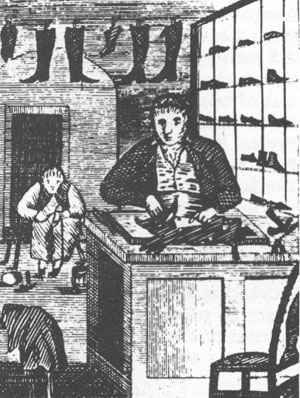
Monsieur Jean-Phillipe Crapaud, Cobbler to the Mighty

August 7, 1740. Monsieur Jean-Phillipe Crapaud, French cobbler from our very own Ville de Vantardise, will be traveling to Versailles later this year, to measure personally the feet of Prince Louis, fourth child of His Most Serene Majesty King Louis XV.

From those careful measurements, M. Crapaud will design and manufacture one pair of bedroom slippers for Prince Louis.

The prince expects first to wear the slippers, of a design now residing only in the imagination of Jean-Phillipe, sometime next year. The exact date is yet unscheduled, although earlier versions have been worn by his father, King Louis, as our monarch staggered to a chamber pot, or while tupping a chamber maid.

Accompanying M. Crapaud will be his discerning wife, Mme. Crapaud, his daughters, Mlle. Social Crapaud & Mlle. Grimpeur Crapaud, and whatever young men are in their favor at the trip’s beginning.

Jean-Phillipe is one of France’s – and Europe’s – leading cobblers. During the past 31 years, M. Crapaud has designed slippers, shoes, boots, and frilly little socks for the world’s most esteemed nobility. From the British royal family, to the King of Sweden, to the third bastard son of the Holy Roman Emperor Charles VI, our renowned cobbler has outfitted them all. Many times, on a cold winter’s night, an aristocrat somewhere in on the Continent will be known to shout, “Oh, Crapaud! My little piggies are cold! Lackey, get me Crapaud, tout de suite!”

Beyond his manufacturing schedule for shoes — including an open-toed style that’s all the rage at our court, and in brothels throughout London — M. Crapaud prepares special, custom shoes for the most dignified and sublime of the civilized world. Among upcoming efforts, Jean-Phillipe has on commission works for over 43 new men, including three drunk British admirals, two fat Prussian generals, and a Scottish merchant who made a killing in tea.

Many from our small village have asked — and how could they not? — why someone of Jean-Phillipe Crapaud’s globe-trotting, carriage-setting travels and social connections would remain among the common folk of Ville de Vantardise. Our humble Jean-Phillipe explains it best:

“Really, being a FAMOUS and ESTEEMED cobbler to the FINEST and MOST EXTRAORDINARY people on Earth is not something that interests me. I don’t feel it’s worth mentioning my WORLD TRAVEL, to the most AUGUST palaces, in the presence of CELEBRITIES of the FIRST ORDER. It’s not about me, at all. I am of no consequence.

It’s not even about being SOUGHT-AFTER by those with FAME, RICHES, and POWER.

I do not consider myself better than the LOW and ORDINARY people of our village, merely because the WEALTHY from AROUND the WORLD seek MY services. I remain a simple cobbler, despite the ACCOLADES and HONORS and NOTORIETY that SO MANY people of the HIGHEST RANK shower on me.”

Nate Beeler on Dissent (from Nationalized Health Care Schemes)

Nate Beeler, editorial cartoonist of the Washington Examainer, on dissent from the Democrats’ nationalized health care plans. Here, Jefferson’s views on dissent meet with modern-day partisan onjections.

(The cartoon appears as a thumbnail, based on the Association of American Editorial Cartoonists’ terms of use. Clicking on the cartoon produces a full-sized version. )

Nate Beeler
Washington Examiner
Aug 9, 2009

Note: I found this cartoon via Instapundit.com, and discovered lots of other interersting, embeddable cartoonists through a subsequent web search. I once toyed with the idea of a local cartoon of my own, but the barriers are obvious, complete lack of ability to sketch first among them.) more >>

Music Monday: Oingo Boingo — Capitalism

Here’s a weekly feature, offering a post of a libertarian-themed song, each Monday.

Here is Oingo Boingo, with Capitalism. I posted it once before, and it’s my favorite Oingo song.

The video is from AraMiraBlack. (Lyrics appear below.)


There’s nothing wrong with Capitalism
There’s nothing wrong with free enterprise
Don’t try to make me feel guilty
I’m so tired of hearing you cry

There’s nothing wrong with making some profit
If you ask me I’ll say it’s just fine
There’s nothing wrong with wanting to live nice
I’m so tired of hearing you whine
About the revolution
Bringin’ down the rich
When was the last time you dug a ditch, baby!

If it ain’t one thing
Then it’s the other
Any cause that crosses your path
Your heart bleeds for anyone’s brother
I’ve got to tell you you’re a pain in the ass

You criticize with plenty of vigor
You rationalize everything that you do
With catchy phrases and heavy quotations
And everybody is crazy but you

You’re just a middle class, socialist brat
From a suburban family and you never really had to work
And you tell me that we’ve got to get back
To the struggling masses (whoever they are)
You talk, talk, talk about suffering and pain
Your mouth is bigger than your entire brain
What the hell do you know about suffering and pain . . .

(Repeat first verse)

(Repeat chorus)

There’s nothing wrong with Capitalism
more >>

Daily Bread: August 10, 2009

Good morning, Whitewater

The week begins with one public, municipal meeting, at 6:30 p.m., of the Irvin Young Memorial Library Board. The meeting’s agenda is available online.

On this day in American history, in 1846, the Smithsonian Institution was created

After a decade of debate about how best to spend a bequest left to America from an obscure English scientist, President James K. Polk signs the Smithsonian Institution Act into law.

In 1829, James Smithson died in Italy, leaving behind a will with a peculiar footnote. In the event that his only nephew died without any heirs, Smithson decreed that the whole of his estate would go to “the United States of America, to found at Washington, under the name of the Smithsonian Institution, an Establishment for the increase and diffusion of knowledge.” Smithson’s curious bequest to a country that he had never visited aroused significant attention on both sides of the Atlantic.

Smithson had been a fellow of the venerable Royal Society of London from the age of 22, publishing numerous scientific papers on mineral composition, geology, and chemistry. In 1802, he overturned popular scientific opinion by proving that zinc carbonates were true carbonate minerals, and one type of zinc carbonate was later named smithsonite in his honor….

After considering a series of recommendations, including the creation of a national university, a public library, or an astronomical observatory, Congress agreed that the bequest would support the creation of a museum, a library, and a program of research, publication, and collection in the sciences, arts, and history. On August 10, 1846, the act establishing the Smithsonian Institution was signed into law by President James K. Polk.

Today, the Smithsonian is composed of 19 museums and galleries including the recently announced National Museum of African American History and Culture, nine research facilities throughout the United States and the world, and the national zoo. Besides the original Smithsonian Institution Building, popularly known as the “Castle,” visitors to Washington, D.C., tour the National Museum of Natural History, which houses the natural science collections, the National Zoological Park, and the National Portrait Gallery. The National Museum of American History houses the original Star-Spangled Banner and other artifacts of U.S. history.

The National Air and Space Museum has the distinction of being the most visited museum in the world, exhibiting such marvels of aviation and space history as the Wright brothers’ plane and Freedom 7, the space capsule that took the first American into space. John Smithson, the Smithsonian Institution’s great benefactor, is interred in a tomb in the Smithsonian Building.

Here’s today’s almanac:

Almanac
Monday, August 10, 2009 Sunrise Sunset
Official Time 05:55 AM 08:04 PM
Civil Twilight 05:24 AM 08:35 PM
Tomorrow 05:55AM 08:03 PM
Tomorrow will be: 2 minutes shorter
Amount of sunlight: 14h 9m
Amount of daylight: 15h 11m
Moon phase: Waning gibbous

more >>

Eagle Historical Society Open House on Sunday August 16th

I received the following press release that I am happy to post —

Eagle Historical Society Open House
Old Time Music on the Mountain Dulcimer

American music is as varied as the imagination. The mountains of Southern Appalachia in the first half of the 19th century were filled with the sounds of a unique instrument called the “dulcimer” which first appeared with the Scots-Irish in the southern Appalachian mountains. The “mountain dulcimer” as it is called became popular because its volume was well-suited to small gatherings.

The down-home sounds of this stringed instrument immediately bring images of a pioneering people who struggled to survive the harsh mountain life. These were men and women with a sprit tough enough to forge a nation.

On Sunday August 16, 2009 from 2:00 p.m. – 4:00 p.m., guests will be given a Sneak Peek of all the changes inside the museum from new tract lighting to the original floors. The theme of the exhibits is “Collectors and Collection”. New exhibits will feature paintings by Ann Meyer on loan from the Nature Conservancy, a quilt made by the 1978-1979 fourth grade class from Eagle Elementary School, and different collections on loan from our members.

A musical program will be provided by member Mal Olson and friends Ruth Sternemann and Rich Schwartz. Mal plays the mountain dulcimer, Ruth plays the guitar and hammer dulcimer and Rich plays the mandolin, banjo and Irish whistle. Rich and Ruth are also known as Bramble and Rose. The music will be a combination of Good Time, Old Time, Folk, Gospel and Celtic Tunes.

This event is free and open to the public. Bring a cozy lawn chair. For more information contact Elaine Ledrowski at 262-594-8961.

Eagle Historical Society Open House

I received the following press release that I am happy to post —

Eagle Historical Society Open House
Old Time Music on the Mountain Dulcimer

American music is as varied as the imagination. The mountains of Southern Appalachia in the first half of the 19th century were filled with the sounds of a unique instrument called the “dulcimer” which first appeared with the Scots-Irish in the southern Appalachian mountains. The “mountain dulcimer” as it is called became popular because its volume was well-suited to small gatherings.

The down-home sounds of this stringed instrument immediately bring images of a pioneering people who struggled to survive the harsh mountain life. These were men and women with a sprit tough enough to forge a nation.

On Sunday August 16, 2009 from 2:00 p.m. – 4:00 p.m., guests will be given a Sneak Peek of all the changes inside the museum from new tract lighting to the original floors. The theme of the exhibits is “Collectors and Collection”. New exhibits will feature paintings by Ann Meyer on loan from the Nature Conservancy, a quilt made by the 1978-1979 fourth grade class from Eagle Elementary School, and different collections on loan from our members.

A musical program will be provided by member Mal Olson and friends Ruth Sternemann and Rich Schwartz. Mal plays the mountain dulcimer, Ruth plays the guitar and hammer dulcimer and Rich plays the mandolin, banjo and Irish whistle. Rich and Ruth are also known as Bramble and Rose. The music will be a combination of Good Time, Old Time, Folk, Gospel and Celtic Tunes.

This event is free and open to the public. Bring a cozy lawn chair. For more information contact Elaine Ledrowski at 262-594-8961.

Daily Bread: August 7, 2009

Good morning, Whitewater

The week ends on a high note: there are no public municipal meetings scheduled for the city today.

Today is a dark, dark day in Wisconsin history, as the Wisconsin Historical Society observes that

1849 – Frank J. Weber Born

On this date Frank J. Weber was born near Milwaukee. A pioneer member of the Socialist party, Weber organized the Federated Trades Council in 1887 and served as its secretary until he retired in 1934. He also founded the Wisconsin State Federation of Labor in June 1893. Weber organized lumber handlers into the American Federation of Labor Longshoreman’s unions. He organized seamen’s unions for the Knights of Labor and the brewery workers in Milwaukee in 1891. Weber served eight years in the legislature and was a leading figure in the fight for the Workingmen’s Compensation Act, old age pensions, and other progressive legislation.

More socialism means less prosperity.

Here’s today’s almanac:

Almanac
Friday, August 7, 2009 Sunrise Sunset
Official Time 05:52 AM 08:08 PM
Civil Twilight 05:20 AM 08:39 PM
Tomorrow 05:53AM 08:07 PM
Tomorrow will be: 2 minutes shorter
Amount of sunlight: 14h 16m
Amount of daylight: 15h 19m
Moon phase: Waning gibbous

more >>

Daily Bread: August 6, 2009

Good morning, Whitewater

There are no public municipal meetings scheduled for the city today.

On this date in 1945, an atomic bomb was dropped on Hiroshima. The New York TImes website recalls the use of the weapon:

Washington, Aug. 6 — The White House and War Department announced today that an atomic bomb, possessing more power than 20,000 tons of TNT, a destructive force equal to the load of 2,000 B-29’s and more than 2,000 times the blast power of what previously was the world’s most devastating bomb, had been dropped on Japan.

The announcement, first given to the world in utmost solemnity by President Truman, made it plain that one of the scientific landmarks of the century had been passed, and that the “age of atomic energy,” which can be a tremendous force for the advancement of civilization as well as for destruction, was at hand.

At 10:45 o’clock this morning, a statement by the President was issued at the White House that sixteen hours earlier- about the time that citizens on the Eastern seaboard were sitting down to their Sunday suppers- an American plane had dropped the single atomic bomb on the Japanese city of Hiroshima, an important army center.

The New York Times observes that, before August 6th, Japan had been warned of the consequences of continued belligerence:

But in a statement vividly describing the results of the first test of the atomic bomb in New Mexico, the War Department told how an immense steel tower had been “vaporized” by the tremendous explosion, how a 40,000-foot cloud rushed into the sky, and two observers were knocked down at a point 10,000 yards away. And President Truman solemnly warned:

“It was to spare the Japanese people from utter destruction that the ultimatum of July 26, was issued at Potsdam. Their leaders promptly rejected that ultimatum. If they do not now accept our terms, they may expect a rain of ruin from the air the like of which has never been seen on this earth.”

Here’s today’s almanac:

Almanac
Thusday, August 6, 2009 Sunrise Sunset
Official Time 05:51 AM 08:09 PM
Civil Twilight 05:19 AM 08:41 PM
Tomorrow 05:52AM 08:08 PM
Tomorrow will be: 2 minutes shorter
Amount of sunlight: 14h 18m
Amount of daylight: 15h 22m
Moon phase: Full moon

more >>

Daily Bread: August 5, 2009

Good morning, Whitewater

There is one municipal public meeting scheduled for the city today. At 5 p.m., there’s a scheduled meeting of the Landmarks Commission. The agenda for a meeting tonight is not yet online, as of this post.

On this date in 1861, the federal government levied an income tax for the first time. The tax was part of the federal Revenue Act of 1861: “Rates under the Act were 3% on income above $800 (adjusted for inflation: $17,679 in as of 2008 dollars [2]) and 5% on income of individuals living outside the country.”

Here’s today’s almanac:

Almanac
Wednesday, August 5, 2009 Sunrise Sunset
Official Time 05:50 AM 08:11 PM
Civil Twilight 05:18 AM 08:42 PM
Tomorrow 05:51AM 08:09 PM
Tomorrow will be: 3 minutes shorter
Amount of sunlight: 14h 21m
Amount of daylight: 15h 24m
Moon phase: Full moon

more >>

Daily Bread: August 4, 2009

Good morning, Whitewater

There are two municipal public meetings scheduled for the city today. At 6 p.m., there’s a meeting of the Alcohol Licensing Committee, with a request from Wal-Mart, and at 6:30 p.m. Common Council meets. The Common Council’s agenda is available online.

The Wisconsin Historical Society reports that on this day in August 1862,

1862 – War Department Order Prompts Riot

On this date the War Department issued General Order No.99, requesting by draft 300,000 troops to reinforce the Union armies in the Civil War. This action reinforced public sentiment against the draft and prompted the citizens in Port Washington, Ozaukee County to riot in protest.

More about the riots is available at the Wisconsin Historical Society’s website.

Here’s today’s almanac:

Almanac
Tuesday, August 4, 2009 Sunrise Sunset
Official Time 05:49 AM 08:12 PM
Civil Twilight 05:17 AM 08:44 PM
Tomorrow 05:50AM 08:11 PM
Tomorrow will be: 2 minutes shorter
Amount of sunlight: 14h 23m
Amount of daylight: 15h 27m
Moon phase: Waxing gibbous

more >>