FREE WHITEWATER

Daily Bread: March 6, 2009

Good morning, Whitewater

There’s still no school today, the second day of parent-teacher conferences. Looking out the window, I can see that the town is still standing. Either concerns about ‘juveniles’ in Whitewater are overblown, or someone managed to handle deftly this community concern.

You may have known about actress Amy Pietz, but carelessly, I didn’t. It’s her birthday. According to the Wisconsin Historical Society, the Milwaukee native was born in 1969. Here’s her bio:

On this date, TV actress Amy Pietz was born in Milwaukee. Pietz was raised in the suburb of Oak Creek and during her childhood trained as a ballet dancer. She was in the first graduating class of the Milwaukee High School of the Arts, and went on to received a B.F.A. degree in acting from DePaul University in 1991. Pietz’s first professional role was in “A View From the Bridge”, produced by Steppenwolf Theatre Company.

She is best known for her role as Caroline’s neighbor, Annie, in the TV sitcom “Caroline in the City,” which she played for the entire 4 seasons that the series aired. Pietz made her feature film debut in “Jingle All the Way,” with California governor Arnold Schwarzenegger.

Somehow, inexplicably, I missed both Caroline in the City and Jingle All the Way, so the Wisconsin Historical Society’s post was particularly helpful.

Thanks so very much.

The Volokh Conspiracy – – How Low Do You Think the Dow Will Fall?

Over at law professor Eugene Volokh’s group blog, Orin Kerr offers readers a poll question on the Dow Jones Industrial Average: ”How Low Do You Think the Dow Will Fall?” I’d guess that it will keep falling, over the next five years (Kerr’s time frame), but like all guesses of this kind, it’s a tenuous prediction.

My selection ~ 5000 to 5500 over the next five years.

Voting is still open.

http://volokh.com/archives/archive_2009_03_01-2009_03_07.shtml#1236274118

Daily Bread: March 5, 2009

Good morning, Whitewater

There’s no school today, and tomorrow, in the district, to allow for parent-teacher conferences. Our town fathers will have to be on heightened alert for the presence of juveniles, loose in town. For the stodgiest of residents: lock your doors, take food and water into a small, secure room, and wait until Monday morning.

It’s a proud day in American history, a day harkening to America’s creative past — on this day in 1963, the Hula Hoop was patented. The History Channel’s website has offers detail:

On this day in 1963, the Hula-Hoop, a hip-swiveling toy that became a huge fad across America when it was first marketed by Wham-O in 1958, is patented by the company’s co-founder, Arthur “Spud” Melin. An estimated 25 million Hula-Hoops were sold in its first four months of production alone.

In 1948, friends Arthur Melin and Richard Knerr founded a company in California to sell a slingshot they created to shoot meat up to falcons they used for hunting. The company’s name, Wham-O, came from the sound the slingshots supposedly made. Wham-O eventually branched out from slingshots, selling boomerangs and other sporting goods. Its first hit toy, a flying plastic disc known as the Frisbee, debuted in 1957. The Frisbee was originally marketed under a different name, the Pluto Platter, in an effort to capitalize on America’s fascination with UFOs.

Melina and Knerr were inspired to develop the Hula-Hoop after they saw a wooden hoop that Australian children twirled around their waists during gym class. Wham-O began producing a plastic version of the hoop, dubbed “Hula” after the hip-gyrating Hawaiian dance of the same name, and demonstrating it on Southern California playgrounds. Hula-Hoop mania took off from there.

The under-rated, under-appreciated film The Hudsucker Proxy, starring Tim Robbins, Paul Newman, and Jennifer Jason Leigh, revolves around the efforts of the fictional Norville Barnes to market something that looks, well, much like a Hula Hoop.

You know, for kids.

Mercatus Center at George Mason University – Freedom in the 50 States: An Index of Personal and Economic Freedom

For George Mason University’s Mercatus Center, professors William Ruger and Jason Sorens, tenured elsewhere, have published a study of American liberties entitled, “Freedom in the Fifty States.”

The scholars define “individual freedom as the ability to dispose of one’s own life, liberty, and justly acquired property however one sees fit, so long as one does not coercively infringe on another individual’s ability to do the same.”

Wisconsin ranks poorly – 35th in economic freedom, 39th in personal freedom, and 37th overall.

More government intervention from city or state is the last thing the beleaguered residents of Wisconsin need. We have gone quite far enough in that direction.

http://www.mercatus.org/PublicationDetails.aspx?id=26154

Alzheimer’s Association: Understanding Intimacy and Sexuality Issues in Individuals with Dementia

The Alzheimer’s Association has issued the following press release:

Understanding Intimacy and Sexuality Issues in Individuals with Dementia — Learn to Respectfully Address and Manage Sexual Behaviors

Milwaukee, WI – February 24, 2009 – The Alzheimer’s Association is offering a presentation about the characteristics and changes of intimacy and sexual behavior in individuals who have dementia. This program will be offered on March 26, 2009 from 2:00 – 4:30 p.m. at the Walworth County HHS Auditorium, W4051 County Rd. NN in Elkhorn, and on March 27, 2009 from 9:00 – 11:30 a.m. at State Fair Park, Tommy Thompson Youth Center, 640 S. 84th St. in West Allis. The cost for either program date is $30; it is open to community members and professionals.

The program will be presented by Daniel Kuhn, MSW, Director of the Professional Training Institute at the Alzheimer’s Association, Greater Illinois chapter. The presentation will cover the impact of dementia on sexually intimate relationships, sexual issues involving residents in care facilities, challenging situations staff face involving the sexuality of residents and interventions with spouses and partners. Ways to respectfully address sexual behaviors and how to effectively communicate with families will also be explained.

For information about either presentation, please call Wendy Betley with the Alzheimer’s Association at 262-210-5288. Registration forms can be obtained from the education page at www.alz.org/sewi.

The Alzheimer’s Association is a national non-profit organization dedicated to eliminating Alzheimer’s disease through the advancement of research, to enhance care and support for all affected and to reduce the risk of dementia through the promotion of brain health. The Alzheimer’s Association provides information, education, and support to people with Alzheimer’s and related dementias, their families, and healthcare professionals throughout an 11-county region. For more information about Alzheimer’s disease and local chapter services visit www.alz.org/sewi or call the toll-free, 24-hour Helpline at 800-272-3900.

Daily Bread: March 4, 2009

Good morning, Whitewater

There’s a Landmarks Committee meeting tonight, from 5 to 7 p.m. More information on that commission, and its work, is available online.

I might suggest that the number of legitimate landmarks in Whitewater is likely a fixed number, but the implication would make me seem a Philistine, I’m quite certain. I’ll not mention anything of the kind.

If we are to have any public meetings, a Landmarks Committee is not a bad place to start.

In our schools, there’s a short post about the search for a new District Administrator. Here’s the full text —

Superintendent Search Moves Forward
The WUSD School Board has narrowed its selection of candidates from 22 to 7. The first round of interviews of the seven candidates will be conducted from March 5 through March 12. After the March 12th interviews, the Board will narrow the candidates from seven to two finalists and their names will be made public. The second round of interviews with the two finalists is tentatively set for March 31 and April 1. Selection of the superintendent will be completed by April 17. The new superintendent will assume duties on July 1.

All the real action depends on knowledge of the candidates, though. Only then, and not before, is anything interesting or noteworthy really before the community.

Parent-Teacher conferences are this Thursday and Friday in the district.

And for those who really love the New Deal, FDR was inaugurated today in 1933. For a great book on the harm the New Deal exacerbated, consider The Forgotten Man: A New History of the Great Depression.

Poll of the Week: “How likely is it that a member of Whitewater’s Common Council will fall asleep during a meeting in 2009?”

I’ve had two pop quizzes, but in the spirit of participatory democracy, I’ll offer a poll, where anyone can answer by clicking a button.

For this week’s poll, a question about our Common Council — “How likely is it that a member of Whitewater’s Common Council will fall asleep during a meeting in 2009?” The poll will stay open through Friday morning. Let’s see what you think…

Enjoy.

more >>

Participatory Democracy

I received an email from a reader, discussing recent neighborhood meetings in Whitewater. It’s true that I have not commented on these meetings. I wrote him yesterday thanking him for his email, and I’ll offer a public post on the topic. First his message, and my reply follows thereafter in red.

There will a second, public meeting of people from the East side of UWW’s campus to discuss ways they can preserve the quality of their neighborhood. The meeting will be held March 5, 7:00 PM, at Starin Park. The first meeting had more than 60-70 people in attendance. Short talks were given by city councilpersons, the city administrator, the city’s code enforcement officer (Bruce Parker), the police chief, and the municipal judge.

There was also a similar meeting for people living South of UWW’s campus. A second meeting is being considered for this group as well.

It would be interesting to read your perspective on matters discussed.

These meetings, well-attended as inaugural sessions, represent a significant development in Whitewater. Sustaining momentum won’t be easy, and how these groups look months from now interests me most.

Some preliminary remarks —

Community Led vs. City Led. These meetings are community meetings, but how they evolve apart from the participation of city officials will show how community-based they truly are.

The City of Whitewater’s played a role in encouraging these groups, through the Housing Task Force. There’s great irony in all that – part of the problem, from the groups’ view, is that the city has not protected adequately their property rights. It’s hardly reasonable to expect that the City of Whitewater’s guidance will make the groups a success. There may be a few city officials who hope for a partnership, where they guide the work of these community groups.

These groups will be a success when they establish a clear objective, that they can explain, and advance, regardless of the views of municipal officials.

Community Led. It’s a risk of every community group that they might propose solutions that are too restrictive, intrusive, or unlawful. Condo associations sometimes stray down this path.

Brunner’s Pandora’s Box. It’s Dr. Nosek who has advanced, at every turn, the idea that student housing, rental housing, is a threat to single family neighborhoods. No politician has advanced this agenda, or any other, so successfully over the last two years’ time. I disagree with Nosek’s analysis and approach, but I can easily see that he has doggedly pushed farther than so many others, on any issue of theirs.

City Manager Kevin Brunner’s affirmed the issue of housing as Whitewater’s greatest challenge, although I have no idea why. I think he’s wrong to think that this is our community’s biggest challenge.

I also think, though, that it was politically foolish to acknowledge the issue without better control over it. If there’s one thing that this administration cannot appreciably control, it’s the mix of housing – rental versus single family – in the city.

Toward this greater goal, Brunner has no hope of success – he can’t appreciably move this market in a different direction.

There is a lesser goal, of simple enforcement, of course. Forget the mix of rental versus single family homes – can the city adequately enforce existing (and recently-enacted) ordinances adequately?

I have argued that we have a problem of both under- and over- enforcement – Whitewater’s either too hot or too cold. In some situations, enforcement is sadly inadequate; in others, it’s too intrusive.

That’s not just an enforcement official’s problem, though – it’s the city manager’s responsibility. Yet, for all the talk on the issue, no task force, mission statement, survey, PowerPoint show, quotation, or motivational slogan on a t-shirt will solve this problem.

Why an administration given to that approach would embrace this issue, I’m not sure. If there was even a faint hope that paying lip-service to the issue would placate Dr. Nosek, it was one of the great miscalculations of recent Whitewater politics.

There’s likely to be a disappointment for someone, somewhere, in all of this.
more >>

Daily Bread: March 3, 2009

Good morning, Whitewater

It’s not just any day in Whitewater — there’s a Common Council meeting at 6:30 p.m. tonight. The agenda for the meeting is available online.

In Wisconsin history, the Wisconsin Historical Society reports that Walter J. Kohler, politician and plumbing king, was born on this day in 1875:

On this date Walter Jodok Kohler was born in Sheboygan. An industrialist, Republican politician, and Wisconsin governor, Kohler was noted for conceiving and building Kohler Village, a planned community for employees of the Kohler Company outside Sheboygan. At an early age, he went to work for his father’s farm implement company. Upon his father’s death in 1900, he and his brothers assumed management of the firm, known after 1912 as The Kohler Co., which grew to be one of the largest of its kind in the nation. It pioneered production methods for plumbing equipment and enamelware, and today supports a museum showing its traditions to visitors.

Kohler was also chairman of the board of the Vollrath Co., an officer of the Security National Bank in Sheboygan, and a regent of the University of Wisconsin from 1918 to 1924. Kohler served one term as Wisconsin governor, from 1929 to 1931, but his chances for a second term were defeated when he lost the Republican gubernatorial nomination to Philip La Follette in 1930. Although successful for the bid in 1932, he was then defeated in the general election by Democrat Albert Schmedeman.

Walter Kohler was often criticized by labor for his opposition to trade unions. In 1934, when his employees attempted to organize and join the A. F. L., Kohler refused to bargain with them. A violent strike ensued and on July 27, 1934, two people were killed.

Kohler is remembered today for his civic services and firm control of one of the state’s most successful corporations during the Roaring Twenties and the Great Depression. He is also looked back upon by many conservatives as a predecessor who shared their values before the modern Republican Party had taken shape in Wisconsin.

There’s a website called Find a Grave, that displays the graves of famous people. (There’s a website for just about anything.) I thought that I’d take a look, to see if a man who profited from the sale of indoor plumbing fixtures might have memorialized those efforts at his gravesite.

No, he didn’t. His grave is surprisingly dignified, actually. Although someone couldn’t refrain from a marker that allows mourners to sit down, it’s just a bench for a relative. See for yourself.

Lincoln School — Special Apology Post

Well, I had a letter from a super angry curious Lincoln Leopards booster this morning. (He’s a longtime reader and prior correspondent, actually, and his message was much appreciated.)

He wrote to observe that coverage at Free Whitewater seems to focus disproportionately on Washington School, to the exclusion of Lincoln School (home of the Leopards) or Lakeview School.

(Lakeview School is home of, well, I’m not really sure, actually, but it’s probably something good. The logo looks like a playful whippet, but it might actually be an Italian greyhound or Pharaoh hound or Ibizan hound. I can’t really tell, and anyway, I only know about those other breeds because I just looked them up on the AKC website as I was writing this post.)

I’ll reply afterward, in red.

Here’s what he had to say:

Hi Adams,

I am a long-time viewer and 3rd time e-mail engager (probably not a word).

Please take this as a curiosity, rather than a complaint, but it seems to me that I have noticed a pronounced exposure weighted toward the activities of Washington Elementary. Is this a personal preference or does Lincoln (and Lakeview) publicly advertise their activities/ events significantly less?

To update you: today Lincoln Elementary celebrated Dr. Seuss’ Birthday with a Green Eggs and Ham Breakfast for students along with their Parents (if possible) and then a school-wide reading of a Dr. Seuss classic in the gymnasium.

I was educated by the Staff of Lincoln (’79-84- then known as “Stinkin’ Lincoln” by Washington kids– they all knew better 😉 ) as is my son now. I am a little sad if the Lincoln activities are not shared as prominently with the community as the Washington activities. I guess if I were a jaded and sullen taxpayer, this would lead me to ASSUME that Lincoln goes through the motions compared to Washington. The result: a negative opinion of a fine Elementary School {so far our experience for our son has been very positive at Lincoln}.

Is your data source devoid of Lincoln (and Lakeview) activities?

Go Leopards!

Sincerely,

George Bailey

Adams replies: I owe an apology to the Leopards. Well, it’s true – I have had more coverage of Washington School. I have no personal preference for Washington, though, either as a school or president, over Lincoln. (I’d rate Lincoln the finer president, and I’ll not rate one of our elementary schools over another on that basis.) I’ll also not argue with someone whose pseudonym shows that, ultimately, he understands that it really is a wonderful life.

I have had more postings on Washington, but that’ll change — I signed up additional sources today to help with Lincoln and Lakeview information. Thanks so much, loyal readers.

I will post more comprehensively on all three schools – and I would be the last person who would wish to ignore a Dr. Seuss celebration. A day of Dr. Seuss is worth, I’d estimate, at least 2.7 days of just about anything else.

Unfair, surely, to ignore the author who wrote this, and the school that celebrated his accomplishments:

I would not like them here or there.
I would not like them anywhere.
I do not like green eggs and ham.
I do not like them Sam I Am.

Clever and endearing, both.

Prisoner Monday

For the next several weeks, I’ll make Monday Prisoner Monday here at Free Whitewater. A longtime reader previously suggested to me that being in Whitewater sometimes felt like living the plot of The Prisoner.

That fine British series, now being re-made as an AMC program, tells the story of a secret agent who resigns from service, only to find himself in a mysterious place called The Village.

I’m sure some uptight official public servant will look at this and bemoan how I’m besmirching the reputation of Whitewater, but that’s not true. If anything, a comparison to The Prisoner is favorable to Whitewater. I’m not sure that Whitewater — and its officials — have ever been as stylish as those in the series, and any comparison makes our public servants look better than they really are.

Besides, I’m hardly wrecking the reputation of our city; our officials can do that job on their own.

AMC has the full episodes of the original series online, and also offers one-minute summaries of those original episodes. I’ve previously posted the first of the videos:

Here’s the second, one-minute summary.

Enjoy.

more >>

Daily Bread: March 2, 2009

Good morning, Whitewater

One often hears that March arrives like a lion, and leaves like a lamb. We’ll see.

In our schools today, the Book Fair at Washington School — proud home of the Golden Eagles — continues today. At the High School today, at 6:30 p.m., there is a scheduled Music Parents meeting.

It’s an astonishing day in Wisconsin and American history today. For those patronizing the Washington School Book Fair, perhaps something to commemorate Dr. Seuss’s birthday — Theodor Geisel was born this day in 1904. The History Channel has a link to a video highlighting events today, including Seuss’s birthday.

(It’s also the anniversary of the New York premiere of the original King Kong.)

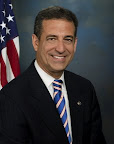
In Wisconsin History, according to the Wisconsin Historical Society, Senator Russ Feingold was born today in 1953:

On this date U.S. Senator Russ Feingold was born in Janesville, Wisconsin. Feingold graduated from Janesville Craig High School in 1971. He graduated from the University of Wisconsin-Madison in 1975 and attended Magdalen College in Oxford, England as a Rhodes Scholar. He received a graduate degree in 1977 and graduated from Harvard University Law School in 1979. He was admitted to the Wisconsin bar in 1979 and practiced law in Madison, Wisconsin from 1979-1985. He served as a visiting professor at Beloit College 1985 and a member of the Wisconsin State Senate from 1983 to 1993. Feingold was elected in 1992 as a Democrat to the United States Senate, reelected in 1998 and in 2004 for the term ending January 3, 2011.

I am no fan of Feingold’s position on so-called campaign finance reform (McCain-Feingold limits speech through its restrictions on campaign spending), but there’s no doubt that he’s been one of the most noted senators in Wisconsin’s history. Feingold’s views are sometimes unpopular even within his own party, and I respect his resolute advocacy. Many senators, even from large states, are dull and unimpressive; one could never say that of Feingold.

Happy birthday.

Daily Bread: February 27, 2009

Good morning, Whitewater

No municipal public meetings today, but the book fair at Washington School continues. The best, probably, one could hope in these troubled times.

On this date in 1904, according to the Wisconsin Historical Society, Wisconsin’s second state capitol burned down (we’re now on our fourth, and one hopes we’ll never need a fifth):

On this date fire destroyed the second State Capitol building in Madison. On the evening of the 26th, the generator was turned off for the night. The only lights visible were two gas jets serving the night watchman. At approximately 2 a.m., night watchman Nat Crampton smelled smoke and followed the odor to a recently varnished ceiling, already in flames. A second watchman arrived to assist, but there was no water pressure with which to operate a hose. The fire department encountered a similar situation upon arrival. Governor Robert M. La Follette telegraphed fire departments in Janesville and Milwaukee for assistance. La Follette was at the capitol, directing efforts to douse the fire and entering the burning building to retrieve valuable papers. The fire was completely extinguished by 10 p.m. the next day. Losses were estimated to be close to $1 million.

The Society has a page dedicated to the fire, entitled, “Up in Smoke: The Story of the Capitol Fire of 1904,” to commemorate the event.