FREE WHITEWATER

Defending Freedom: Welch vs. Weisberg

Over at Reason’s Hit & Run, Matt Welch responds to the big-government loving author of In Defense of Government, Jacob Weisberg of Slate. Weisberg, in a Slate post entitled, “How the Financial Collapse Killed Libertarianism” contends that

The best thing you can say about libertarians is that because their views derive from abstract theory, they tend to be highly principled and rigorous in their logic. Those outside of government at places like the Cato Institute and Reason magazine are just as consistent in their opposition to government bailouts as to the kind of regulation that might have prevented one from being necessary. “Let failed banks fail” is the purist line. This approach would deliver a wonderful lesson in personal responsibility, creating thousands of new jobs in the soup-kitchen and food-pantry industries.

Welch responds, in a post entitled, “The Eternal Death of Libertarianism“:

There is no space in Weisberg’s conception of “libertarians” for people like, for instance, me: Not remotely a utopian, not “of the right,” never read an Ayn Rand novel, spent high school playing sports instead of reading political philosophy, don’t want to do history over (except for Game 5 of the 1986 ALCS), and don’t pine for some presumably awful world where everyone shares my political views. (And, I might add, unlike Weisberg, I don’t want to convert my political views into increased state power over fellow citizens who don’t happen to agree with me.)

No, I just think that, all things being equal, capitalism is vastly superior to socialism, government is by definition inefficient, and would be much better off focused on essential tasks, rather than, say, nationalizing hundred-billion-dollar chunks of the mortgage industry, or trying to guarantee that asset prices never depreciate. In my world, at least, not all regulation is automatically evil, just ripe for being gamed by the very interests being regulated, and so better when pruned back.

Notes:

(1) Game 5 of the ALCS — Boston over California in eleven innings

(2) Weisberg’s book on big government is apparently out of print, but available through used booksellers on Amazon starting at $.01.
Defending Freedom: Boaz vs. Meyerson

Over at Cato@Liberty, David Boaz posts “Gods That Fail,” in response to Harold Meyerson’s Washington Post column, “Gods that Failed.” Boaz defends capitalism against Meyerson’s contention that “Today, conservative intellectuals might want to consider writing a tome on the failure of their own beloved deity, unregulated capitalism. ”

(The titles of the columns are plays on 1949’s The God That Failed, a critique of Communism.)

Boaz concludes:

But let’s think about the comparison that Meyerson is making. Some intellectuals once supported communism, and that failed. Some intellectuals, we’ll concede for the moment, were just as enraptured with capitalism; and that system, too, in Meyerson’s view, has failed. Are these equivalent failures?

Communism’s failure involved Stalin’s terror-famine in Ukraine, the Gulag, the deportation of the Kulaks, the Katyn Forest massacre, Mao’s Cultural Revolution, Che Guevara’s executions in Havana, the flight of the boat people from Vietnam, Pol Pot’s mass slaughter — a total death toll of 94 million people, according to the Black Book of Communism. Prominent American leftists — from Lillian Hellman and Dalton Trumbo and lots of other writers to Alger Hiss of the State Department and FDR speechwriter Michael Straight, who became the publisher of The New Republic – were members of the party that did these things. And that party had total control in the countries that it ruled. There were no opposition parties, no filibusters, no election-related maneuverings that prevented the party in power from getting what it wanted.

What the Communist Party wanted, it got. Communism in practice was communist theory made real.

In the United States, on the other hand, economic and political outcomes are always the result of jockeying between parties and interest groups. So even if Ronald Reagan and his advisers wanted to give Americans “unregulated capitalism,” they had to deal with Tip O’Neill and the Democrats, and with critics in the media, and with many other players….

And what is the ”failure,” as Meyerson puts it, of this semi-deregulated capitalism? Does it involve mass starvation? Does it involve terror-famines? Does it involve millions of deaths? No, so far it involves a sharp decline in the stock market from record levels….It’s had some dips, but it still reflects vast wealth creation, and vast increases in the assets of our IRAs and 401(k)s.

The “failure” of capitalism and the failure of communism are not morally equivalent, and Meyerson should be embarrassed to even imply such a comparison.

Planning Commission 10/20/08: The Administration’s Wages of Appeasement

On September 20th, I posted on a Planning Commission meeting from five days’ time earlier. In that post, I mentioned of City Manager Brunner that

What’s pandering though, both intellectually and practically, is the suggestion that if the Tratt Street neighborhood becomes higher density, then as matter of balance other neighborhoods should be enforced to lower density.

Practically, this administration will be unlikely to enforce zoning requirements elsewhere in the city effectively. It’s just an attempt to placate a few angry people. This administration has had little appreciable success anywhere in the city with enforcement — it’s been an over and under-enforcement problem. (See, Whitewater Common Council Meeting for 9/2: Student Housing (Part 1).)

Intellectually, even if it’s true that the housing imbalance between single family and multi-dwelling units is the biggest problem in the city, the administration cannot redress that imbalance appreciably through zoning restrictions elsewhere in the city.

Only additional single-family homes, perhaps on the periphery of the city, will appreciably shift the proportional balance (one that is now in favor of apartments).

This administration has only encouraged the expectation that ‘tit for tat’ trades between R1 and R3 might be possible. The wages of this encouragement (appeasement, really) — frustration, complaints, debates that waste time better used on truly important matters.

There’s no leadership in this approach. It’s as though an edgy person insisted that nothing is more useful in securing one’s prosperity than a rabbit’s foot, and the administration promised a study of rabbits’ feet, and suggested using a few around town to promote good luck.

That’s nothing but an encouragement to foolishness. A sensible leader would say: Well, I know that you feel it’s important to have a rabbit’s foot, but we see no benefit to the city in it, and so we’ll not be purchasing in bulk, thanks very much for asking.

Countless other people will now have to deal with this issue, again and again, from constituents whose hopes have been raised, but are sure to be dashed, when the idea of swapping R1 and R3 properties proves impossible.

Planning Commission 10/20/08: ‘Not a One’

Ask yourself this question: Who is the most well-known and influential member of our Common Council? Some have been community figures for years, others more recent additions to our politics. Only one, though, has a community following — small, but dedicated, committed, assertive: Dr. Roy Nosek.

Now, I have been a critic of Nosek, but credit where credit is due — he’s stirred up more community debate about his issues than anyone else on Council for any other issues. It’s not even close — only Nosek has advanced indefatigably a clear agenda. No one else on Council has a constituency so intense as Nosek’s, and he has made more headway advancing his views than the rest of the Council put together has on theirs.

(What are the issues of some of these others? No one could even tell you. What are Nosek’s views? Everyone in the city knows.)

(For three my posts critiquing Nosek’s views and their influence, see On Nosek on Student Housing, Part 1 (Economics), On Nosek on Student Housing, Part 2 (Culture), and On Nosek on Student Housing, Part 3 (McCann’s Story in the GazetteXtra).)

Nosek’s moved in one direction, despite possible re-zoning of Tratt Street, to advance his opposition to student housing commitment to single family homes: toward the smallest number of off-campus student rental units, and the preservation or reclamation of single family homes from the depredations of student renters and (dare I speak the word?) landlords.

He’s also fought a war against dumpsters, but that’s been a sideshow, really — his signature issue to my mind has been student housing and its impact on single family homes.

It is a measure of his success that others speak in his terms — he wants preservation or reclamation of single family homes, and offers nothing about new housing growth on the periphery of the city.

(Preservation and reclamation are numerically insignificant efforts in a college town with a college so large as a proportion of the city. See, Whitewater Common Council Meeting for 9/2: Student Housing (Part 2). Only growth of new single family units on the edges of the city will meaningfully alter the proportion of single family to multi-unit homes.)

Nosek now seeks a city commitment to assure that in each case where a home becomes a multi-unit dwelling, a multi-unit dwelling elsewhere in Whitewater will be reclaimed for single-family housing stock.

Nosek’s line in the sand: “No conversions of R1, not a one” absent a comprehensive city plan, unless there is a “tit for tat” reconversion of an R2, R3 property to R1. That’s no recommendation, it’s a proposal for a mandatory requirement to be imposed throughout the city.

Ultimately, this sort of change isn’t a Planning Commission matter, it’s a Common Council matter.

Later in the evening, in an abundance of common sense, but in a nod to Nosek’s influence and insistence, the Planning Commission recommended to the Common Council the preservation of single family homes.

(One quick note — there was an extended discussion about the language of the recommendation, and at first I thought it was too much discussion. Thinking about it, though, it was the best way to achieve the greatest consensus and harmony. Sometimes the answer to intensity is diffusion and discussion, so to speak.)

It’s a recommendation — as it would have to be — but it’s all about preservation, too. Therein lies Nosek’s gain — the debate isn’t about increasing the proportion of single family homes in town through growth, it’s about preservation of existing stock. A reactionary, and not a confident and progressive, approach.

This preservation/reclamation approach won’t alter meaningfully the balance between single family and multi-unit dwellings, but it will leave the city stuck in an enforcement war that it has not a clue how to fight.

In the end, this is a challenge of the city administration, and not the Planning Commission. If anything, the administration has made work of the Planning Commission more difficult. I’ll post more about that next.

Planning Commission 10/20/08: ‘Home Occupation’

This is the first of a series of posts on the October 20th Planning Commission meeting. In this post, I’ll consider Item 5 from the meeting agenda, Applicant Tom Germundson’s request for a conditional use permit for a home occupation (so that he could make sheet metal duct work for heating and cooling installations).

Germundson’s application involves a limited use of the property, with testimony from neighbors that his proposed use was unobjectionable. Representing Whitewater in the role of planning consultant at the hearing, as previously, was Mark Roffers of Vandewalle and Associates.

I’ve been critical of Roffers before.

(See, Planning Commission Meeting for August 18, Part 3 “To serve the city well, a document for display should not have too many markings regarding a church or charity. It should have a minimum of notes, as brief as possible. Marking up a document for a proposed orphanage, for example, would just be giving a hostage to Fortune. It’s too risky that someone might grandstand on the issue” and Live Blogging the July 21st Planning Commission Meeting “A resident complains about water runoff from the storage units, and the consultant responds in ways that show he has no feel for responding to ordinary people,” Planning Commission Meeting for September 15, 2008, “The initial re-zoning proposal from a consulting firm that our city retains was amended before the evening was over; the proposal as the evening began called for the preservation of a small pocket of single family homes in the proposed multi-unit area…
Part of good planning for the consultant would have been to see that a single-family pocket was a bad idea, no matter how much some might have initially wanted it.”)

How long ago was it that a man learned, so that it was easy and effortless, to speak properly to a working person? A long time ago, I’d guess. There stands the applicant, a member of the community, and Roffers lists his concerns in a cold monotone, referring to Germundson as ‘him’ (while Germundson is in the room!), and fumbles Germundson’s name when finally making the effort. (Note the contrast: the Commission’s chair and other members refer to the applicant as Mr. Germundson when speaking to or about him.) This is no small matter — Roffers only distances himself from the community he’s paid to serve with this sort of presentation.

There’s are two larger concerns. Some of Roffers’s professed initial concerns (“my initial recommendation… was to deny approval”) rested on admittedly incomplete information. Germundson’s testimony alleviated some of these concerns. There’s the problem — of what use is an initial recommendation without the awareness of actual circumstances? It’s an arid and unconvincing rationality, that’s all. These zoning categories aren’t abstractions on a map; they’re variously limitations or opportunities for ordinary people to make a living.

If you can live in Whitewater, while America confronts a recession, and think that a denial here serves this community, then I simply doubt your feel for the community, or common sense. It’s not Wal-Mart, nearly insensible to denial for a single store in a vast empire, that makes this conditional request.

A conditional use is a discretionary thing, and that discretion should be leavened with equity.

The Planning Commission made the right decision; it would have done so without any consultant at all.

Daily Bread: October 21, 2008

Good morning, Whitewater

In the city today, at 6:30 p.m., there will be a Common Council meeting at the municipal building. The full agenda for the meeting is available online and includes this sampling of items:

  • A City of Whitewater Common Council Member Rights in Debate Policy
  • An Ordinance Pertaining to Police and Fire Commission Membership
  • and — wait for it, Whitewater — the possible adoption of an Ordinance Prohibiting Jay Walking.

The National Weather Service predicts that today will be sunny, with a high temperature of 53 degrees. The Farmers’ Almanac continues a multi-day prediction that “colder and drier weather moves in.”

Yesterday’s better prediction: NWS. We had rain.

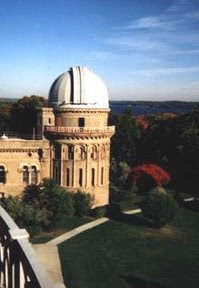
In Wisconsin History on this date, in 1897, according to the Wisconsin Historical Society, the Yerkes Observatory was dedicated:

Founded by astronomer George Hale and located in Williams Bay, the Yerkes Observatory houses the world’s largest refracting optical telescope, with a lens of diameter 102 cm/40 inches. It was built through the largess of the tycoon Charles Tyson Yerkes, who rebuilt important parts of the Chicago transportation system after the fire. Situated in a 77-acre park on the shore of Lake Geneva, this observatory was the center for world astronomy in the early 20th century and invited a number of astronomers from around the world, including Japan, for scientific exchange.

The observatory’s webpage is available at http://astro.uchicago.edu/yerkes/index.html

Orange Salamander for 10/20/08

Millhaven’s four towns: locals, students, immigrants, newcomers Immigrants are newcomers, but some locals see a distinction

Immigrants came as migrant workers, now stay as factory laborers Over 10% of town, but official statistics undercount

Who’d come to America to send a toy salamander? Weirdness like this is homegrown, isn’t it?

Students, locals, newcomers? How about a campus visit, to see if someone there might have a message for Felicia? Administration first.

The Different Standard

Sometimes a story about one topic reveals more about another.  In Pewaukee, there have been chronic concerns about the temperament and conduct of that community’s police chief.  In early August, the Pewaukee City Council requested that the city’s Police and Fire Commission remove police chief Gary Bach from office. Among the Common Council’s charges against him were (1) lying, (2) gossiping, and (3) other departmental violations

(Gossiping in Bach’s case involves alleged trafficking in rumors about personnel changes in the department.) 

The Milwaukee Journal Sentinel has reported on the story, and prior allegations, against Chief Bach. (See, Pewaukee Moves to Fire Police Chief.)

I’m not from Pewaukee, and I have no guess how this matter will be decided.  (Outside consultants, evaluating the Pewaukee Police Department, noted that it was a troubled organization, and the consultants did not believe that the ailments of the department “can be solved under the present leadership.”)

This post, though, is not about policing.  It’s about a proposed technology park, and other improvements, that would change the culture of our town, Whitewater, Wisconsin, population 14,296.

I wrote that a technology park is unlikely here, in part because the sort of newcomers it would attract would not tolerate Whitewater’s business as usual.  (See, A City-University Technology Park in Whitewater.) 

If we experience considerable upper-middle class growth, so that we look more like a successful suburban community than a small town, our current leadership will prove inadequate, in both appointed and elected positions. 

Those who benefit from the existing culture will resist newcomers bringing more exacting standards; newcomers with exacting standards will shun a community that burdens unnecessarily both free exchange and free association.  If those newcomers do arrive in significant numbers, then they’d likely reject business as usual here in favor of a new, spontaneous order.  Knowing that, would-be town squires will fight to kill any plan that might bring these changes.

There are those who would benefit – small entrepreneurs, successful business people unafraid of opportunity and change, those who advocate a less stifling culture, those who prefer true professionalism to slogans and excuses. 

Expect an old guard, otherwise dissipated and enervated, to stir as it might against these changes.

(After all, they fight against the campus as an undergraduate institution; they’ll be less inclined to support a more expansive role for the campus.)

I have no idea if Chief Bach did those embarrassing and unprofessional things that he’s accused of doing; we already know that Pewaukee has a culture that rejects even the appearance of those things.  What culture is that?  It’s the culture of free exchange and free association, the world beyond cliché, sloganeering, and excuse-making.  It’s the culture of American excellence.      

We, too, will have it one day.  In that time, people in Whitewater will look back, and scarcely recognize our time.

Until then, lots of work for bloggers.

Daily Bread: October 20. 2008

Good morning, Whitewater

In the city today, at 6 p.m., there will be a meeting of the Planning Commission at the municipal building. The full agenda for the meeting is available online, and includes these, among other, items:

1. Call to order and roll call.

2. Hearing of Citizen Comments.

3. Approval of the minutes of the August 18, 2008 meeting and the September 15, 2008 meeting.

4. Reports:
a. Report from CDA Representative.
b. Report from Tree Commission Representative.
c. Report from Park and Recreation Board Representative.
d. Report from City Council Representative.
e. Report from the Downtown Whitewater Inc. Board Representative.
f. Report from staff.
g.Report from chair.

5. Hold a public hearing for consideration of a conditional use permit application for a home occupation (to make sheet metal duct work for heating and cooling installations) to be located at 460 W. Whitewater Street for Tom Germundson.

6. Review proposed extension of the SIP (Specific Implementation Plan) for the Mound Meadows Subdivision for Craig Pope.
(REZONING ITEM #7 WILL START AFTER 7:00 P.M.)

7. Hold a public hearing for consideration of a change in the District Zoning Map for the following area to rezone from R-1 (One Family Residence) Zoning District and R-2 (One and Two Family Residence) Zoning District to R-3 (Multi-family Residence) Zoning District, under Chapter 19.21 of the Zoning Ordinance of the City of Whitewater:
The following parcels, located along Tratt, Florence, and Prince Streets and Starin Road are requested to change to R-3:

[as listed on original agenda]

8. Discussion of proposed changes to Whitewater Municipal Ordinance 19.51.080 Front and side yard parking limitations; and correction to 19.51.050 Size and location of parking spaces (Parking Ordinance).

9. Plan Commission Training discussion.

10. Discussion of Downtown signage changes.

11. Information:
a. Possible future agenda items.
b. Next Plan Commission meeting.

12. Adjourn.

In our schools, there will be a special meeting of the School Board at Central Office at 6:30 p.m., in executive session (not a public meeting) involving student disciplinary action.

The National Weather Service predicts that today will bring a 60% chance of showers, and a high temperature of 58 degrees. The Farmers’ Almanac starts a new, multi-day series with a prediction that “colder and drier weather moves in.”

Last week’s better predictions: NWS, again. We had no squalls in Whitewater.

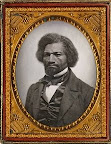
In Wisconsin History on this date, in 1856, according to the Wisconsin Historical Society, Frederick Douglass spoke in Beaver Dam: “On this date Frederick Douglass arrived in Beaver Dam and spoke about the brutality and immorality of slavery. His speech was also intended to generate support for the abolitionist movement in Dodge Co. and Wisconsin.”

Press Ethics

We’re a small town, with limited news coverage. Excellence knows no size; greatness depends on principle, not rationalization or self-praise.

For the media that we have, there should be a respect and adherence to true journalistic standards. The Associated Press has a fine set of principles, their Statement of Ethical Principles, from their Managing Editors. These principles are applicable and useful to journalists of any size.

From those standards are two that are indisputably useful and consistent with American values:

RESPONSIBILITY

The good newspaper is fair, accurate, honest, responsible, independent and decent. Truth is its guiding principle.

It avoids practices that would conflict with the ability to report and present news in a fair, accurate and unbiased manner.

The newspaper should serve as a constructive critic of all segments of society. It should reasonably reflect, in staffing and coverage, its diverse constituencies. It should vigorously expose wrongdoing, duplicity or misuse of power, public or private. Editorially, it should advocate needed reform and innovation in the public interest. News sources should be disclosed unless there is a clear reason not to do so. When it is necessary to protect the confidentiality of a source, the reason should be explained.

The newspaper should uphold the right of free speech and freedom of the press and should respect the individual’s right to privacy. The newspaper should fight vigorously for public access to news of government through open meetings and records.

INDEPENDENCE

The newspaper and its staff should be free of obligations to news sources and newsmakers. Even the appearance of obligation or conflict of interest should be avoided.

Newspapers should accept nothing of value from news sources or others outside the profession. Gifts and free or reduced-rate travel, entertainment, products and lodging should not be accepted.

Expenses in connection with news reporting should be paid by the newspaper. Special favors and
special treatment for members of the press should be avoided.

Journalists are encouraged to be involved in their communities, to the extent that such activities do not create conflicts of interest.

Involvement in politics, demonstrations and social causes that would cause a conflict of interest, or the appearance of such conflict, should be avoided.

Work by staff members for the people or institutions they cover also should be avoided.

Financial investments by staff members or other outside business interests that could create the impression of a conflict of interest should be avoided.

Stories should not be written or edited primarily for the purpose of winning awards and prizes. Self-serving journalism contests and awards that reflect unfavorably on the newspaper or the profession should be avoided.

The AP also has a Statement of News Values and Principles. In this political season — or any season — their statement on political activities is a worthy standard.

POLITICAL ACTIVITIES:

Editorial employees are expected to be scrupulous in avoiding any political activity, whether they cover politics regularly or not. They may not run for political office or accept political appointment; nor may they perform public relations work for politicians or their groups. Under no circumstances should they donate money to political organizations or political campaigns. They should use great discretion in joining or making contributions to other organizations that may take political stands.

Non-editorial employees must refrain from political activity unless they obtain approval from a manager.

When in doubt, staffers are encouraged to discuss any such concerns with their supervisors. And a supervisor must be informed when a spouse — or other members of an employee’s household — has any ongoing involvement in political causes, either professionally or personally.

The Orange Salamander for Last Week

2 Millhaven clues: salamander & note, marginalia in library book. Plan, plot, mystery.

If a plan, then a planner. Phil the city consultant? Crush on Felicia the MBA. Time for a visit.

Phil’s office: shambles, papers everywhere, wrapper from yesterday’s egg salad on rye, half-eaten pickle, gum, few scattered trading cards

Phil’s books: dictionary, directory, Time, Newsweek, Government’s Your Co-Pilot, Zoning for Social Control, Pride in Planning, Farmers’ Almanac

Could Phil the planner have left the salamander with Felicia? I scan his office – no hint of nature-loving in him.

Will you be at the community meeting? Phil asks Yes, I reply Felicia will coordinate it, I observe Phil looks up, about to speak

Small-talk with Phil. Nothing unusual about him, unless one correctly concludes that planning others’ lives is unusual

He’s downcast, and volunteers that Felicia hasn’t returned his voicemail from last week

No one ever hears from Phil, he has a poor feel for the community, and the one person he calls doesn’t know he’s alive

I wonder: What is it with all the screwball weirdos in this town sending each other salamanders and ill-timed birthday cards?

In other places, people see ghosts, or werewolves, or Bigfoot Not a single extraterrestrial – it’s 100% terrestrial weirdness in Millhaven

Outside, I see the Millhaven police chief’s latest energy-saver: a three-wheeled cart powered by a human cyclist, like an old ice cream cart

Police carts debuted last month Uniformed officers, horn, lights & message banner: Community policing – We’re green to save you green

Where’s Whitewater’s M56 Scorpion Anti-Tank Weapon?

I see at the Wisconsin State Journal that there’s an AP story entitled, For Sale: Army Tank Destroyer. As it turns out, a retired sheriff in Sturgeon Bay has one for sale, at only $7,500.

It’s a fixer-upper, but take a look at how impressive a Scorpion looks, from a museum photo of one:

In May, the Whitewater Register the noted that our police leadership sees three challenges from diversity in our community (“A Diverse Community Presents Challenges”): (1) Hispanics, (2) students, and (3) juveniles. It’s an odd list, of course.

These groups do have one thing in common, though: Not one of them is a match for an M56 Scorpion! No how, no way.

Lights, decals? Why think small? The M56 is the way Whitewater should go. The seller points out features that would also be perfect for leadership ride alongs — the “Craigslist ad offers an idea to a potential buyer: “Pop in a Chevy small block (engine) to the GM Allison transmission and have the BADDEST ride in town!” ”

The Scorpion’s up in Sturgeon Bay, waiting for a serious buyer. There is one man (and probably only one man) in Whitewater who could be that serious buyer. Don’t miss this opportunity; chances like this are rare.

Allow me assist our leadership — here are helpful directions for bring the Scorpion Back from Sturgeon Bay:

1. Head west on WI-42/WI-57 toward S Oxford Ave Continue to follow WI-57

2. Slight left to stay on WI-57

3. Merge onto I-43 S via the ramp to Milwaukee

4. Take exit 4 on the left to merge onto I-43 S/US-45 S toward Beloit Continue to follow I-43 S

5. Take exit 38 for State Hwy 20 toward E Troy

6. Turn right at County Rd L/State Rd 20/WI-20 (signs for E Troy) Continue to follow WI-20

7. Turn left at State Rd 20/WI-20

8. Slight right at US-12

9. Turn right at County Rd P/US-12 Continue to follow US-12

10. Turn left at E Main St/US-12/WI-59

11. Slight left at W Whitewater St/WI-59 Destination will be on the right:

312 W Whitewater St, Whitewater, WI 53190

12. You and your new M56 Scorpion are home!