FREE WHITEWATER

Register Watch™ for the March 26th Issue of the Paper.  

Here’s my coverage of the paper that, well, supposedly covers Whitewater.  First, though, a trenchant observation from the Phantom Stranger, received over the weekend.  Always my pleasure to hear from him, and here’s what he had to say about recent issues of the Whitewater Register:

…and to make matters worse, their news is two weeks old…I mean, the Wisconsin slogan story as a headline on the March 26 edition (story happened March 16); and the March 14 candidates forum is the most recent story on the website — 2 weeks later, still—!!!

He’s right.  Until today, March 30th — two weeks’ time later — the candidates forum still led Whitewater news stories at mywalworthcounty.com. 

The banner headline of the Register‘s March 26th issue, entitled, “Wisconsin is the Place to ‘Live Like you Mean It’ refers to a new state slogan covered elsewhere far earlier.  The story, from correspondent Amber Benson, oddly acknowledges that the slogan was unveiled on March 16th.  The slogan is not, itself, a Whitewater story, and deserves less coverage in a paper that proudly places Whitewater in its title.     

Inside, on page 2, the Register acknowledges reporting that Associated Press reporter Ryan Foley, a prominent reporter, has written about others who have used this slogan already.  Foley’s reporting, entitled, “Originality rules in Wisconsin? Not in new slogan,” deserves more than an inside-the-paper mention. 

(See, at Forbes.com, Foley’s fine reporting: http://www.forbes.com/feeds/ap/2009/03/23/ap6201724.html.)   

The Register‘s headline story is neither timely, nor unique to our city, nor curious about how a slogan that so many others have used before would be launched as though it were fresh.  That’s the kind of curiosity that makes for good reporting.  Curiosity about those in power, how politicians and bureaucrats present themselves, and what lies behind their statements. 

One notes, too, how variable the number of pages in the front section of the Register can be — in the March 26th issue 14 pages, in others, as few as 10.  That’s a big shift in potential ad space, or copy space.  Most papers try, even in this recession, to keep page space more fixed, issue to issue.  It’s not a good sign for the Register.   

Another more telling sign, at the my.walworthcounty.com website:  when I clicked on “Whitewater news” on that page, I found that the ‘site sponsor’ was…wait for it, Whitewater…myracinecounty.com.  

Too funny – not even a fine out-of-town sponsor connection, like Madison, Cambridge, or Williams Bay.  Instead, a sponsor connected to a different kind of place, Racine County.    

Prisoner Monday

Continuing for the next several weeks, it’s Prisoner Monday here at Free Whitewater. Why? Because a longtime reader previously suggested to me that being in Whitewater sometimes felt like living the plot of The Prisoner.

It’s a great British series, that tells the story of a secret agent who resigns from his agency, only to find himself in a mysterious place called The Village.

AMC has the full episodes of the original series online, and also offers one-minute summaries of those original episodes. I’ve previously posted the first five videos.

Here’s the sixth, one-minute summary, of an episode entitled, “The General.” (“With the aid of an unseen General, a professor develops a subliminal process for educating the population of The Village. Number 6 must discover the identity of the General, and prove that knowledge is not wisdom.”)

Be seeing you….

The full video is also available at AMC.

Enjoy.

more >>

Daily Bread: March 30, 2009

Good morning, Whitewater

The Community Development Authority meets today at 4:30 p.m. at the Municipal Building.

School’s back in session, at the university, and in our school district.

Over the the right, on my calendar of meetings, I have listed the receptions for school district administrator candidates, one each, on Tuesday and Wednesday of this week. (More on that, later today.)

In Wisconsin history, according to the Wisconsin Historical Society, marking March 28, 1933:

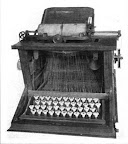
On this date a group of women paid thanks to the inventor of the typewriter, Milwaukee’s C. Latham Sholes, in a national radio program. Amelia Earhart, Anna Boettinger (Franklin Roosevelt’s daughter), Mrs. Robert E. Speer, the president of the National Young Women’s Christian Association, all participated in the program.

Emphasis added.

Impressive invention, and impressive, too, that Amelia Earhart was part of the program. Quite something, really…one could not ask for a better tribute.

Register Watch™ for the March 19th Issue of the Paper

The March 19th issue of the Register reveals both the dependency of the paper as part of a chain, and how poor writing leads to bias or uninformed reporting.

Supreme Court Race. Consider the above-the-fold story on our Supreme Court race, “Judging the Judges.” The story describes a forum before the Milwaukee Press Club at which both Wisconsin Supreme Court candidates spoke.

(Quick note: I am an Abrahamson supporter; Koschnick made a mess of judicial administration in Jefferson County, is running a political rather than judicial race, and has the lesser support among associations of lawyers in the state.)

Look, though, how staff writer Andrew C. Westbrook describes the positions of the candidates — in just under two dozen paragraphs, Westbrook typically leads with Koschnick’s contentions, and leaves Abrahamson in the position of replying to him. Westbrook adopts this technique throughout the article – first Koschnick’s position, and only afterward Abrahamson’s reply. (Thus, Koschnick on judicial activism, on criminal defense rulings, on political contributions, on the supposed anti-police tendency of the sitting Chief Justice of our court, and only after Koschnick’s charge does Westbrook recount Abrahamson’s reply.)

Why does Westbrook write this way? Perhaps, it’s merely a technique, and these accusation-and-reply exchanges never took place. If so, then Westbrook’s distorted the nature of the forum, for a rhetorical device, and a biased one at that.

Alternatively — and those who have followed the campaign know full well — this is how Koschnick presents himself, more politician than judicial candidate. (Judge Gableman became Justice Gabelman this way, just last year.)

Westbrook owes it to his readers to explain this manner — that Koschnick attacks by nature — calling into question his judicial temperament. His manner, and Gabelman’s, is a significant departure from the dispassion one hopes for in a judge, on any court. Westbrook’s story is ultimately uninformative, and reporting that relied on academics in law (or political science) would have offered readers some valuable background.

It’s not as though there was not room in the paper for more detail, and real reporting — the story continues inside, on page 5. There was plenty of room for more.

Westbrook covers this race like it’s a town council contest; it’s not. We’re supposed to be — but are less so each day — a non-partisan, good government state. One hopes for more from a front page, banner story.

(Is not, by the way, Westbrook an editor elsewhere in the Southern Lakes chain? The chain uses, I think, editors at one paper as staff writers, elsewhere. It’s a possible sign of how feeble this chain has become, that it must scrimp at every opportunity.)

Federal Funds for Whitewater. Also above the fold is a story entitled, “City Officials Optimistic about Federal Funding.” One learns that there may be a few possible sources for federal funding, including Milwaukee Street, and a technology park.

(On a technology park — all the funding in the world doesn’t change the sad truth that this town lacks the culture for a thriving technology park, and all the money in the world won’t make tender plants grown among our two or three hundred weeds. Brunner sees this as a ‘tremendous marriage,’ but Whitewater needs more than a Dolly Levi in the Municipal Building.)

Here’s how Editor Schwenke tells the tale:

After instituting a hiring freeze on full-and part-time City of Whitewater job positions earlier this month due to state and general economic concerns, City Manager Kevin Brunner announced the city could likely receive grants for various major development and reconstruction projects in the city.

Quick replies:

1. Does Schwenke think that his readers have short-term memory failure? Only two weeks’ time earlier, Schwenke reported — accurately — that City Manager Kevin Brunner went to council for cover support and approval for a several months’ hiring freeze. (Brunner feared ‘polarizing’ others over a hiring freeze of city workers.) See my earlier post, “Register Watch™ for the March 5th Issue: Hiring Freeze” for more details.

Writing that this was Brunner’s action — as one normally defines the term among the clear, resolute, firm — is risible. Brunner sought cover then, on an obvious mater; he shouldn’t be credited with action now, two weeks’ time later.

2. Imagine being optimistic about federal funding — Why does the city need this federal funding, after all? Because without it, our fiscal condition is dire, not merely for 2009, but beyond. That’s why some of the projects about which Schwenke writes in the story are pushed out so far — 2013 might as well be 2023 — it’s a budgetary device to say some day, some how…

If we are optimistic about federal funding — the tax receipts (or interest bearing debt) from others in America to pay our way — it is because we have failed to budget for ourselves properly. We seek now the last resort of every local official who cannot pay his own way — money from the state, or federal government. State funds are unavailable — Wisconsin’s struggling — and so our City Manager turns his gaze toward … Washington. They’ve billions in deficit spending ready for distribution; Brunner may yet find a place at the trough.

Schwenke’s article asks not a single question, though, about why federal money might be necessary for us, or whether it’s a good idea. It’s so much easier to write his way, but after decades of similar writing, we find ourselves in a situation where we need others so far away, and no one bothers to write about what this may mean.

Register Watch™ for the March 12th Issue of the Paper

Here’s an assessment of the March 12th issue of the Whitewater Register, my Register Watch™ feature.  For those new to the website (welcome, by the way), the feature started because Whitewater’s weekly newspaper has played a longtime role publishing poorly written, dull stories that coddle local politicians and supposedly important Whitewater residents. 

In fact, the Register’s part of an out-of-town chain, offers few local stories, runs ads mostly for out-of-town businesses, and is in a multi-year circulation decline.   

If the Register were not part of a chain, I doubt it would still be publishing; even as part of the Southern Lakes chain, the print edition of the paper may not last much longer.  MyWalworthCounty.com’s the long-in-coming website of the newspaper chain, and that website may be a futile effort to boost circulation for newsprint links in the chain, or perhaps to offer Southern Lakes a publishing platform when many of the local papers fold.  

I don’t know if the Register will fold, but it seems increasingly likely.  Two years ago, or even a year ago, I talked with many people in town who told me that Hell would freeze before the Register would fold.  I’m not so sure anymore.  

(One sign of the Register’s increasing irrelevance is the interest that Whitewater politicians have directed elsewhere.  One follows this interest:   where they turn their attention, I’ll turn mine.)    

The Register’s March 12th issue has an above-the-fold story on civil rights activist Minnijean Brown-Trickey, one of several black students escorted under federal force into Central High in Little Rock.  Brown-Trickey recently spoke on our campus, and her story is both inspiring and, coming as an address on campus, a local one, too.  More of these stories, and the sensibility underlying them, might have made a difference, these last few years.

This could have been a feisty, plucky weekly newspaper, and through that course, might have survived, independent and proud.  Inquisitive stories on political issues, and watching City Hall the Municipal Building closely might have assured an everlasting future. Some feelings might have been bruised, but every reporter who wrote those inquisitive stories on budgets, politicians, and policies would have slept for being true to a free press’s scrutiny of municipal affairs.  

Look, though, at how much white space the Register’s front page has — even with a bold type headline for the story, there are large amounts of white around the headline (and too much around the paper’s bold banner).   To see how anemic the paper’s Whitewater coverage has become, one need only look to page 10, where an East Troy story greets Whitewater residents: “Chamber, WCEDA and Village team up for small business loan workshop.”  It’s the Whitewater Register, but a story about the East Troy Area Chamber of Commerce. 

I wish the best to each and every resident of East Troy; that the Whitewater paper carries the story tells all one need know about our local press.       

Daily Bread: March 27, 2009

Good morning, Whitewater

There’s a fine website, called Local Government Watch, committed to a focus on town government, not merely in Wisconsin, but across America:

While most government watchdogs are watching Washington or the statehouse, who’s watching the courthouse and city hall? This site is intended to give you an example of just what sort of chicanery goes on with your local tax dollars.

The Local Government Watch’s Wisconsin page link is available at http://localgovwatch.blogspot.com/search/label/Wisconsin, and as a link on my blogroll.

Area’s unemployment rate tops state, keeps climbing — GazetteXtra

If anyone were so foolish that he or she doubted the seriousness of our economic condition, then grim statistics will sweep away all uncertainty. Nearby Janesville now has an unemployment rate of 13 percent, the highest in all Wisconsin.

The story’s at the Gazette:

http://gazettextra.com/news/2009/mar/26/areas-unemployment-rate-tops-state-keeps-climbing/

Public Servants of Whitewater — Reject Selfish Compensation

We’ve no politicians in Whitewater, Wisconsin.  We’ve no career bureaucrats, either.  They’re all public servants.  Ask them, and they’ll be happy to tell you as much.  I’ll take them at their word — they (like the Vulcans from Star Trek) have “come to serve.”  We are fortunate for it. 

They have surely noticed what others have, too — that America sinks in recession, groans under increasing public expenditures, all with no end in sight.  Only two dozen miles away, Janesville sinks into something worse than mere recession; her number of unemployed grows each day.  Much was made of the benefits of being in her orbit in better times; in these difficult times, one might guess our prospects, like hers, are darker.   

Let’s be clear, and set aside the euphemisms of well-fed, white-collar politicians and career bureaucrats, that we have ‘difficulties,’ ‘challenges,’ &c.  No we don’t.  We have jobless residents, destitute neighbors, and hungry and frightened fellow citizens.  Not far away, in some vulgar hovel, but here, in the ‘Banner Inland City of the Midwest.’  Here, in this city, of this state, of this beautiful republic.  

All the preening, false humility, and showy processions change nothing of our fellow residents’ condition.   And yet, our Common Council comes to serve

I have a modest proposal, seemingly small, but principled: 

Renounce compensation for service while holding elective office in Whitewater.  Take none of it for yourselves.  Confer it, completely and transparently, to those in need.
 

These are not times in which those who represent Whitewater should take even a penny in compensation from this community.  If it’s an honor to serve — and it is — and one hears it from our politicians often — then it should be a true, unpaid honor, under the increasing unemployment, hunger, and poverty of our city.  (The same should be true — easily as much, perhaps more so — of our elected Municipal Judge, Richard Kelly.) 

Lincoln was right, considering an even more sinister circumstance — one should not wring bread from the sweat of other men’s faces.  

Service needs no compensation, no stipend, no ersatz retirement check.  Reject it all – in doing so, our political class will have embraced a truly principled and fair service.

Our Kevin and Theirs

I thought I’d share a satirical video that I discovered previously, but forgot to pass along.  Kevin Brunner, City Manager of Whitewater, Wisconsin, is no longer new to town.  If nearly everyone in town knows of Dr. Nosek (who could not?), then nearly as many know of Kevin Brunner. 

He’s likely a part of city government for years to come, having re-commited to employment as a city official.  (That re-commitment came only after first-round-interview-and-out applications to positions in Oshkosh and Janesville; no matter, he’s probably here for a while.)    

Not long ago, really, a member of city council was quoted in the Register remarking on the ‘vision of Kevin.’ That’s quite something.  Scripture says that Ezekiel had a vision, but one presumes Brunner’s vision is more …secular and political.  He’s not the only famous Kevin, though, or even the only Kevin celebrated for his vision. 

On the other side of the world, Prime Minister of Australia Kevin Rudd‘s received similar acknowledgment.  A blogger from Australia (Hugh Atkin) won an award for satirizing the Australian Kevin’s supposed vision with a video available on YouTube.  The video’s in the style of an old Chinese propaganda film, in which Rudd’s party (Labor) celebrates his rise in Australian politics. 

The Australian Kevin’s an elected official, and the satire highlights events in Australian politics.  

Still, the physical resemblance to Whitewater‘s Kevin is noticeable, as is the presumption of vision, enlightenment, whatever…

Enjoy.  

more >>

Daily Bread: March 26, 2009

Good morning, Whitewater

The calendar is particularly blank, for our small town. Here’s a screenshot, as confirmation —

That’s a joke, of course — there are thousands of calendars in Whitewater, on walls, in phones, in notebooks, and desks, just filled with reminders for meetings, calls, occasions great or small, for work or play. Thousands.

The emptiness of the city calendar hinders none of that; if anything, an empty city calendar is a happy calendar, for so many (many thousands) who need no guidance from those on the city’s payroll. If there were no public meetings in the city, life would go on here. By contrast, if there were no private gatherings in the city, life would be unrecognizably arid.

It’s a conceit — and a particularly laughable one — that some in the city once described their motivations as the search for civil discourse; having so little understating of civil society — private, productive, and spontaneous beyond any government activity — they’re ignorant and unqualified to venture a compelling opinion.

There were workers in the former Soviet Union who did more, with less, than the white-collar leaders of our municipal building. If anyone in Whitewater possibly believes that the most important — or most productive — work in the city takes place within the walls of 312 W. Whitewater Street, then he’s too foolish to be believed on any matter.

Candid Talk About…England

Readers know that I am not a particular admirer of the English, denizens of a dank, cramped isle, practitioners (mostly) of a dank, cramped politics, (where have you gone, Mrs. Thatcher?), and adherents of a dank, cramped culture.      

Yet, all is not lost, as I see from a fine speech from a British member of the European Parliament, Daniel Hannan, in response to an address from British Prime Minister Gordon Brown.  MEP Hannan also has a blog, www.hannan.co.uk . 

(Note — Hannan felt, all things considered, that Obama was worthy of support in the last election, so he’s of an eclectic politics.) 

Here’s Hannan’s reply to Prime Minister Brown’s latest puffery & braggadocio.  


One is not supposed — I often hear — to speak so candidly in Whitewater, Wiscconsin. Of course not.  Look, though, where this leaves us — less clear, less candid, less honest, less robust, than some of the English.   We did not write a Declaration, win a Revolution, establish a Constitution, and adopt a Bill of Rights, from timiditymore >>

On the Upcoming Walworth County Gazette

I wrote a note of inquiry to Scott Angus, Editor of the Janesville Gazette and GazetteXtra.com, to ask about the upcoming Walworth Country Gazette. He sent along a reply, mentioning that the Walworth County edition will launch on April 27th — the same day that the Janesville Gazette begins seven-day morning publication. (Afternoons are difficult for newspapers, especially now, with so many rival media.)   

We cannot have too much press coverage, of Whitewater, or of Walworth County, and so I wish all these efforts the best.  It’s not just coverage, but plentiful coverage, that assures a better reporting.  (If, for example, we had only a single local weekly newspaper, and no other news at all, then we’d have not a newspaper, but a municipal press release, re-issued periodically.) 

There’s a powerful, natural tendency of local politicians to push a story their way — one cannot fault a politician’s staff for trying to shape coverage favorably.  When a publication seems to be failing, politicians will move on, to find another reporter to beguile, with praise, attention, and promises of special access. 

The challenge — and in a small town it’s a huge challenge — is that young or inexperienced reporters are easily captivated, and will sacrifice their objectivity, curiosity, and integrity to flak a story in exchange for a politician’s attentions, for feeling like an insider in government. 

It’s hard to resist that temptation, and it ruins a good many people, who might otherwise have had promising careers, committed to true standards and principles of journalism, with the assurance of their own integrity.   

A man or woman, raised in a proper tradition, and having lived in the world, would be better to lose anything and everything than conscience and integrity.  No society, neither small nor large, is so worthy that one should bargain principle for access.    

This desire to belong, to be part of a clique, or to stay silent for fear of being shunned, is the Sirens’ call of politicians, self-important town squires, and is hard, even for serious people, to resist.  We are social by nature; the manipulative exploit our natural tendencies to their selfish ends.     

More publications, competing for the same readers, will compel some to consider politics, and politicians, more seriously, less compliantly.  From that competitive environment, a better press will emerge.       

I am a great optimist in this (and so much else), as there are many good and hopeful possibilities from new ventures, and new media.