FREE WHITEWATER

Goldwater ’64: Symbols

Libertarians, be confident in this troubled season — here’s a video in which John Wayne narrates a Goldwater commercial entitled, “Symbols.” The commercial is directed, principally but only by implication, against communism.

Johnson branded Goldwater a warmonger, but Johnson’s own foreign policy record from his inauguration in 1965 to leaving office in January 1969 leaves admirers of the Johnson Administration little reason to be proud.

From the Museum of the Moving Image. more >>

Daily Bread: November 3, 2008

Good morning, Whitewater

There are no public meetings scheduled in Whitewater today.

School’s back in session. Tonight, there’s a special meeting of the school board at 6 p.m., in executive session (not a public meeting) regarding a student disciplinary matter.

In brighter events, there’s a cross country banquet at 5:30 p.m. today at the high school, and a 6:30 p.m. music parents’ meeting, also at the high school.

The National Weather Service forecast calls for a sunny day with a high temperature of 74 degrees. The Farmers’ Almanac ends its first prediction series for November with a forecast that it will be “Stormy for the Great Lakes.”

Last Week’s better predictions: Basically even — more detail from the NWS, but otherwise similar in general if not particular.

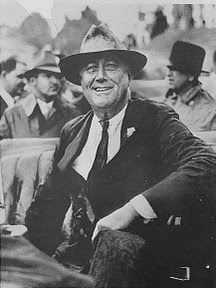
In Wisconsin History on this date, in 1936, from the Wisconsin Historical Society comes an unsurprising election result, considering the year: FDR carried Rock County, then a Republican stronghold:

On this date Rock County voted Democratic in a presidential election for the first time in 74 years. The county’s 17,987 votes for FDR eclipsed 14,689 for Republican Alf Landon. Janesville and Beloit both voted for Roosevelt, who won in the largest national election landslide in history.

(How big did Roosevelt win nationally? He won slightly over sixty percent of the popular vote, and all but two states’ electoral votes. Only Reagan has carried more states — all but Minnesota, in 1984.)

Goldwater ’64: Reagan’s Time for Choosing for Goldwater

Libertarians, here is a direct and clear address, the antidote to empty rhetoric in this troubled season. Reagan speaks on behalf of Goldwater against the many errors of the Johnson Administration, in an address called A Time for Choosing. Reagan delivered versions of this speech several times during the campaign.

The full address, and transcript of it, is available online at the McMiller Center for Public Affairs of the University of Virginia. more >>

Goldwater ’64: Punchcard

Libertarians, more cheer in this troubled season — Goldwater speaks against oppressive big government, in Punchcard, one of his 1964 campaign commercials.

Seems silly to some?

Johnson brought neither peace nor lasting prosperity. War, bloated government, administrative corruption, riots and discord — hardly a Great Society.

From the Museum of the Moving Image. more >>

Fortune Comes Around on the Bailout

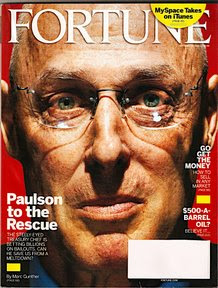
In September, it was “Paulson to the Rescue,” and Fortune asked: “The Steely-Eyed Treasury Chief is Betting Billions on Bailouts. Can He Save Us from a Meltdown?’ Now, in November, Fortune sees something different when it asks, “Who Pays for the Bailout? You Do, Of Course!”

“Of Course!” Wait, wait, wait — you breathless cheerlearders smart editors at Fortune didn’t see as much only six weeks ago?

I scanned the September cover weeks ago, because a different story was sure to follow. On the November cover, even the dachshund, with a pasty complexion, looks worried. That dog’s seen his last can of Science Diet® — from here on out, it’ll probably be some no-name dog food from China listing “additional, semi-digestible ingredients.”

For a solid critique of the bailout, delivered around the time of Fortune‘s first cover, see Barry Ritholtz’s video interview, embedded in my post entitled, Four Minutes, Forty Seconds Against a Misguided Bailout.

Saving Social Security: Run, Sonny, Run

Here’s the final segment of a five-part series from Reason.tv entitled, Saving Social Security. The animated video comes from Lineplot, a company that creatively describes financial topics.

I posted the first of the series, Pimp My Walker, on October 4th, the second part, Boom Baby Boom! on October 11th, the third, Policy Warrior on October 18th, and the fourth, Broken Trust on October 25th.

Boo! Scariest Things in Whitewater 2008

Here’s the FREE WHITEWATER list of the scariest things in Whitewater for 2008. Last year’s edition is available for comparison.

The list runs in reverse order, from mildly frightening to horrifying.

10. Nostalgia. Why is it necessary to describe everything today as a reminder of what some small, humble person in town did forty three years, seven months, and four days ago? Not merely describe it that way, but likely see it that way — so that the present is only visible through a hodgepodge of scenes from the past?

9. Temporal Imperialism. Much worse than seeing everything though a sepia-colored lens, is the idea that everything was better way-back-when. Yes, yes, I am sure that you think everyone in Whitewater was out of Norman Rockwell decades ago, as though that were a better life. They weren’t, it wasn’t, and it’s all just so much self-flattery and self-deception to think so.

8. Cheerleaders. Not just silly, but wrong, is the idea that the best a politician can do for this community is to be a cheerleader for it. A serious man would be humiliated to think this way, but it passes for profound here. If it makes so much sense to think this way, then why not dress the part, for the full effect? I’ll spring for the costume — just email your address to adams@freewhitewater.com. I won’t even charge for shipping.

7. Jaywalkers. Why even bother with an explanation — isn’t it obvious that these no-good, lawbreaking punks are a problem that should be restrained through easier ticketing? Fine away!

6. Squirrels. They’re still walking freely around here. A whole year, and what’s been done? Nothing — these beady-eyed demons should have been stopped long ago. Yet, our local politicians have done nothing. Set a few coyotes out in the downtown, and the problem will be solved.

5. Markets. Why have buyers and sellers, freely choosing, when you can have regulators, picking and deciding for us?

Leave it to the super-smart politicians on Council. You hush up, they’ll run Whitewater for you.

4. Conflicts of Interest. Like poltergeists, they’re invisible here. No one in Whitewater has ever seen a conflict of interest. One cannot see what is so easily rationalized and wished away.

Politicians and press, sycophantic friends on boards, etc. — they’re not conflicts if the town fathers insist that they’re not. It’s just that simple. Houdini couldn’t make things disappear so quickly.

3. Parental Homeowners. People from sick, disgusting communities like Waukesha, New Berlin, and Whitefish Bay are buying homes in Whitewater for their college-attending children. Can’t you stop this, town fathers? They’ve made our neighbors a wasteland, dead, Dead, DEAD!

2. Foreign Homeowners. Did you know, really did you, that there are — right here in our midst — foreign homeowners? Yes, not even God-fearing, red-blooded American parents, but people who grew up beyond our Republic. Worse, they came here. Worse still — nearly unbearable — some of them bought property in our very city.

Any other community would be happy to have willing buyers — for Whitewater, it’s an invasion.

By the way, who were all the ancestors of the local residents of our community, a few generations ago? Were their villages in Europe communities of milk and honey, streets paved with gold, fair maidens everywhere, in Germany or Scandinavia?

No, I think not — why leave if that were so?

My best guess — some vulgar, dark European rat’s nest, an overweight woman milking a scrawny cow, and not a bar of soap to be seen within a hundred miles.

They arrive here, and suddenly they’re all transformed into local versions of the Vanderbilts.

1. The Police and Fire Commission. Last year’s Number 1 was our police chief, and a year of even greater buffoonery places him as a permanent, Hall of Fame member. For this year, it’s the worst, most embarrassing board or commission in the city. Suitable for any small, reactionary town, the PFC never fails to act as a living cliché.

Why, by the way, the conjunction AND in the Commission’s title? It serves no purpose.

The PFC is a B-movie version of a rubber-stamp body, in contrast with the good and open traditions of our state.

Film these meetings, and we’ll have our own horror-movie industry, suitable for this or any other Halloween.

The Argument for Rational Voter Knowledge

Yesterday, I posted on the serious, if unpopular argument, for Rational Voter Ignorance. Are there, even beyond opposing arguments, other options for voters and society? Yes, of course.

A few quick points — these being ones that interest me for Whitewater, specifically

1. Political Ignorance Isn’t Rational in Whitewater, as Our Election Results are Often Close.

Voters can make a difference in Whitewater. Many of our local elections are close, with districts being decided locally by only several handfuls of votes, in a city with thousands of voters. Consider that our local results have been within two votes between winner and defeated candidate, or are uncontested, or are often decided by far less than 100 votes.

These close results reveal the self-gratifying myth on behalf of local incumbency — that it represents some sort of mandate, etc. No — many races are decided by small margins or totals, or without any opposition, and then incumbents claim a mandate from on High.

It is easy to believe what one wants to believe.

A few more voters in local races, informed and motivated, would make a great difference here.

2. Rational Voter Ignorance Produces an Irrational Society, Itself a Risk to the Individual.

Somin makes this point, himself:

In the political realm, on the other hand, widespread rational ignorance helps to spread conspiracy theory in two ways. First, the more ignorant you are about politics and economics, the more plausible simple conspiracy theory explanations of events are likely to seem. If you don’t understand basic economics, you are more likely to believe that rising oil prices are caused by a conspiracy among oil companies or that the subprime crisis was caused by a conspiracy among banks. If you don’t understand the basic workings of our political system, you are more likely to swallow the idea that the federal government could carry out something like the 9/11 attack and then (falsely) blame it on Osama Bin Laden without the truth being quickly exposed through leaks and hostile media coverage.

We are a community filled with asinine conspiracy theories, suspicions, etc. Some of these men and women are closer to children than mature adults, their self-certainty only confirming the condition.

3. An Informed Electorate is Better Check Against Self-Interested Politicians.

I strongly believe that incumbents’ self-justification of many actions as ‘in the public interest,’ or ‘for the common good,’ is just rationalization for their own continued tenure. It’s absurd to believe — no matter how much they insist — that ordinary self-interest is repealed once they’ve taken office. They are ordinary people in the grip of self-interest as are all others.

A check against their rationalizations is better made from and by an informed citizenry.

If that’s not true here, in Whitewater, then nothing’s true here.

For a much longer discussion of some of these points, and others more detailed, see Jeffrey Friedman’s “Public Ignorance and Democracy.”

Ignorance is the last thing we need here, sadly. It’s just too high a price to pay, locally (and so easily changed in a town of thin margins).

Daily Bread: October 30, 2008

Good morning, Whitewater

In Whitewater today, at 7:00 p.m., there’s meeting of the Zoning Board of Appeals at the municipal building.

In our schools today, there’s no school. Play.

The National Weather Service forecast calls for a sunny day with a balmy high temperature of 63 degrees. The Farmers’ Almanac continues a multi-day series prediction that it will be “cold and dry just in time for trick or treaters.”

Yesterday’s better prediction: Even — like yesterday, more vital information from the NWS, but otherwise correct on both counts.

In Wisconsin History on this date, in 1914, from the Wisconsin Historical Society comes a proud report that the first 4-H Club in Wisconsin was organized:

On this date the Linn Junior Farmers Club in Walworth County was organized. This club was started five months after Congress passed the Smith-Lever Act which created the Cooperative Extension Service whereby federal, state, and county governments participate in the county agent system.

Coming Tomorrow for Halloween: the 2008 Edition of Boo! Scariest Things in Whitewater. Last year’s edition is available for ready comparison.

The Argument for Rational Voter Ignorance

In this contentious election season (and what elections are not?), what to make of the case for rational voter ignorance, that being informed about candidates and issues is of slight value, and may rationally, sensibly be ignored?

Today, I’ll briefly set out the case that proponents of the concept make. Tomorrow, I’ll reply to it. Make no mistake, it’s a serious, and not a trivial argument. Those who advance it are hardly foolish, but are themselves rational, sober, intelligent.

Ilya Somin of the George Mason School of Law sets out the argument for rational ignorance:

Voters do not have to be policy wonks to make an informed decision. Sometimes they can get by through the use of what scholars call “information shortcuts,” relying on small bits of information as a substitute for deeper knowledge. For example, even if a voter knows nothing about Candidate X as an individual, a lot of useful information about X’s policy positions can be derived simply from knowing what party he belongs to. But lack of basic knowledge is difficult to overcome through shortcuts. Knowing that a candidate is a Democrat is only useful information to a voter if he or she has some idea of what positions the Democrats stand for, how they differ from the Republicans, and what the likely effects of their competing policy proposals are.

Why Political Ignorance is Rational

It is tempting to conclude that voters must be lazy or stupid. But even a smart and hardworking person can rationally decide not to pay much attention to political information. No matter how well-informed a citizen is, one vote has only a tiny chance of affecting the outcome of an election; about one chance in 100 million in the case of a presidential race. As a result, even a citizen who cares a great deal about public policy has little incentive to acquire sufficient knowledge to make an informed choice. Becoming a well-informed voter is, in most situations, simply irrational. Unfortunately, the rational decisions of individuals create a dysfunctional collective outcome in which the majority of the electorate is dangerously ill-informed.

People who can influence politics in ways beyond casting a vote and those who simply find politics interesting might learn about it for perfectly rational reasons. Political professionals such as lobbyists and interest group leaders have strong incentives to become informed. But few of us are influential activists, or otherwise have political clout that goes beyond the power of the vote. And most Americans find politics far less interesting than other forms of entertainment. Polls show that many more people know the names of the judges on “The People’s Court” than those on the Supreme Court. A March 2006 survey revealed that 52% of Americans can name two or more characters from the Simpsons, but only 28% can name two or more First Amendment rights.

(Note: Somin does not advocate ignorance — he simply observes that in elections it may be rational.)

A podcast in which Somin sets out the argument of rational ignorance is available at Cato:

So, if Somin’s right generally — and he himself is knowledgeable and personally informed — why learn about candidates, issues, blog on politics, support the League, etc?

Tomorrow: Arguments in Favor of an Informed Electorate.

Daily Bread: October 29, 2008

Good morning, Whitewater

In the city today, at 6:30 p.m., there’s a special budget meeting of the Common Council at the municipal building, rescheduled from yesterday. The agenda for the meeting is available online.

Earlier, at 5 p.m., the Community Development Housing Authority’s Housing Committee will meet at the municipal building.

In our schools today, it’s VIP day at Lincoln School, and there is a 6 p.m. Halloween Party at Lakeview School.

The National Weather Service predicts that today be sunny (no ‘mostly’ involved), with a high temperature of 51 degrees. The Farmers’ Almanac ends the month with a new multi-day series prediction that it will be “cold and dry just in time for trick or treaters.”

Yesterday’s better prediction: Even — more detail from the NWS, but otherwise similar predictions.

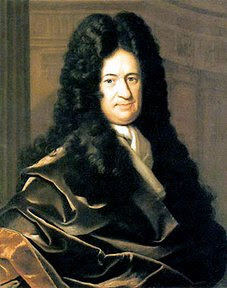
In history today, Wired reports that it’s the anniversary of the day in 1675 on which “Leibniz Sums It All Up.” The skinny from Wired on Leibniz:

Gottfried Leibniz writes the integral sign in an unpublished manuscript, introducing the calculus notation that’s still in use today.

Leibniz was a German mathematician and philosopher who readily crossed the lines between academic disciplines. He had a doctorate in law, served as secretary of the Nuremberg alchemical society and fancied himself a poet.

He also conducted diplomatic missions in London and Paris. While visiting those cities, Leibniz acquainted himself with such scientific luminaries as Christiaan Huygens, Robert Boyle, Robert Hook, John Pell and Jacques Ozanam. He showed an unfinished calculating machine to the Royal Society, which elected him a fellow.

Never mind the wig — Leibniz was sharp where it mattered.

Daily Bread: October 28, 2008

UPDATE 5:57 PM: Council Meeting has been rescheduled for 10/29.

Good morning, Whitewater

Tonight, Downtown Whitewater, Inc. will be celebrating a birthday.
Tuesday October 28, 2008 5:00 p.m. to 7:00 p.m. at the Cravath Lake Front Building.
(More information about Downtown Whitewater is available at www.downtownwhitewater.com.)

In the city today, at 6:30 p.m., there will be a special budget meeting of the Common Council at the municipal building. As of this writing, the agenda for the meeting is not yet posted.

The National Weather Service predicts that today be mostly sunny, with a high temperature of 46 degrees. The Farmers’ Almanac ends the month with a new multi-day series prediction that it will be “cold and dry just in time for trick or treaters.”

Yesterday’s better prediction: NWS — we had — however briefly — the first snowflakes of the season.

A sad day for liberty, today — on this date in 1996, President Clinton signed the Digital Millennium Copyright Act.

What’s wrong with the DMCA? More on that later.

What was wrong with Clinton? I don’t know — depending on the next guy to take the Oval Office, we may be wishing for Clinton!