FREE WHITEWATER

Daily Bread for 12.30.16

Good morning.

Whitewater’s week ends with partly cloudy skies and a high of twenty-nine. Sunrise is 7:25 AM and sunset 4:30 PM, for 9h 05m 23s of daytime. The moon is a waxing crescent with 1.5% of its visible disk illuminated. Today is the {tooltip}fifty-second day.{end-texte}Days since Trump’s election, with 11.9.16 as the first day.{end-tooltip}

On this dayin 1940, California’s first freeway, the Arroyo Seco Parkway, opens. On this day in 1922, authorities in Madison confiscate 1,200 gallons of mash and fifteen gallons of moonshine from the home of a suspected bootlegger.

Recommended for reading in full —

Hungarian author Miklos Haraszti writes I watched a populist leader rise in my country. That’s why I’m genuinely worried for America: “Hungary, my country, has in the past half-decade morphed from an exemplary post-Cold War democracy into a populist autocracy. Here are a few eerie parallels that have made it easy for Hungarians to put Donald Trump on their political map: Prime Minister Viktor Orban has depicted migrants as rapists, job-stealers, terrorists and “poison” for the nation, and built a vast fence along Hungary’s southern border. The popularity of his nativist agitation has allowed him to easily debunk as unpatriotic or partisan any resistance to his self-styled “illiberal democracy,” which he said he modeled after “successful states” such as Russia and Turkey. No wonder Orban feted Trump’s victory as ending the era of “liberal non-democracy,” “the dictatorship of political correctness” and “democracy export.” The two consummated their political kinship in a recent phone conversation; Orban is invited to Washington, where, they agreed, both had been treated as “black sheep.” ”

Andrew Kramer reports How Russia Recruited Elite Hackers for Its Cyberwar: “For more than three years, rather than rely on military officers working out of isolated bunkers, Russian government recruiters have scouted a wide range of programmers, placing prominent ads on social media sites, offering jobs to college students and professional coders, and even speaking openly about looking in Russia’s criminal underworld for potential talent. Those recruits were intended to cycle through military contracting companies and newly formed units called science squadrons established on military bases around the country.”

Reporter David Fahrenthold tells the behind-the-scenes story of his year covering Trump (leading to Fahrenthold’s discovery of corruption within the Trump’s Foundation): “So by the time the New Hampshire primaries were over, the candidates I had covered were kaput. I needed a new beat. While I pondered what that would be, I decided to do a short story about the money Trump had raised for veterans. I wanted to chase down two suspicions I’d brought home with me from that event in Iowa. For one thing, I thought Trump might have broken the law by improperly mixing his foundation with his presidential campaign. I started calling experts. “I think it’s pretty clear that that’s over the line,” Marc S. Owens, the former longtime head of the Internal Revenue Service’s nonprofit division, told me when I called him.”

James Palmer describes What China Didn’t Learn From the Collapse of the Soviet Union: “The hostility toward the color revolutions and the chaos they’ve unleashed has thus been projected backward. The Soviet fall, once seen at least in part as a result of the Communist Party’s own failings, has become reinterpreted as a deliberate U.S. plot and a moral failure to hold the line against Western influence. That has ended what was once a powerful spur to reform — meaning that, barring a major change in leadership, the likely course of Chinese politics over the next few years will be further xenophobia, even more power to the party, and an unwillingness to talk about the harder lessons of history.”

What’s inside a tapestry factory? This is —
For Mr. Trump, It’s STEM, Schwem, Whatever…

In response to a question about whether state-sponsored hacking against an American political party should go unpunished, Donald Trump grew expansive, giving his typically thoughtful perspective on science, technology, engineering, mathematics, and (even) epistemology:

“I think we ought to get on with our lives. I think that computers have complicated lives very greatly. The whole age of computer [sic] has made it where nobody knows exactly what’s going on.”

So much for contemporary science, technology, engineering, and mathematics – why bother with STEM when ‘nobody knows exactly what’s going on’ anyway? Perhaps one thought that science and technology made America the most advanced country in all the world, indeed, made her a world-historical place committed to study and exploration.

But then, Trump knows because he knows that no one knows – under his view, our problems aren’t just educational; honest to goodness, a theory of knowledge, itself, is pointless.  It’s one big muddled scene.

Casting this last point as Trump’s attack on epistemology gives him too much credit, of course.  Saying nobody knows what’s going on has a more practical value for Trump, and is merely a pose: he insists that the truth is indeterminable whenever he wishes to evade responsibility for his own lies.

We’d best hold to our educational pursuits in spite of Trump’s suggestion, and hold as tightly to the conviction that in so many matters, truths – and the lies contrary to them – are determinable.

Wes Benedict Has a Book to Sell

Last month, the Libertarian Party’s executive director (Wes Benedict) sent me a tone-deaf, form email. I posted Libertarianism is Enough: Goodbye to the LP in reply, in which I argued that the Libertarian Party was an unworthy vessel for a liberty-oriented politics:

Imagine, then, after an election in which the LP did poorly, and in which libertarians now face a long struggle against radical populist advocates of state power, the surprise in reading an invitation from Wes Benedict, executive director of the national LP, that

It is time to party…

You are invited to an end of the year

CELEBRATION!

2016 has been a record-breaking year for the Libertarian Party!

Wes Benedict may go to hell, and celebrate there in the outer darkness for so long as he wishes.

Wes wrote again recently, and how touching it is to see that he’s concerned for me:

I see that your Libertarian Party membership has expired.

Any chance you could renew today?

You can renew your membership by clicking here

Or go to LP.org/membership

I hope all is well!

Thanks,

Wes Benedict

P.S. If you want a copy of my book Introduction to the Libertarian Party for renewing, you can renew at the link below for $27.53 or more.

A Trump Administration awaits, and Benedict writes “hope all is well.”  One would think Benedict had been living in a cave these last eighteen months.

Funnier still is Benedict’s offer (for a price) of his book – an introduction to a party of which his recipient had already been a member for many years. 

I’m from a movement family (those who have been liberty-oriented long before there was a party, and even before the term libertarian was coined), and from that vantage Benedict’s emails are instructive but have no emotional impact. If anything, they seem silly, almost absurd.

For one who recently joined, however, and let his or her membership momentarily lapse, Benedict’s message might seem different, as an insult to someone who sought meaning through party membership. 

Odd that he’s too clueless to see how silly his message seems to some, and how insulting it may be to others. 

Benedict’s book? No, the enduring works of the last three thousand years are the ones we’ve need of reading and reading again.

Benedict’s party? We need more than a single, small party now. 

Libertarianism has a long road ahead, and those devoted to it have much work ahead, in a grand coalition with those of different but friendly ideologies, to preserve free institutions in this country.

That may be the task of our time, and membership in the LP contributes nothing to it.

‘His thoughts are so correct’

Consider a letter from Vladimir Vladimirovich Putin, autocrat, murderer, and imperialist.

Putin recently sent Trump a letter, only a few brief paragraphs, and Trump gave a statement in reply:

“A very nice letter from Vladimir Putin; his thoughts are so correct,” Trump said in a statement. “I hope both sides are able to live up to these thoughts, and we do not have to travel an alternate path.”

The alternative path to Putin’s would, in fact, be desirable, as it would encourage democracy and productivity at home, and peaceful international relations abroad.

(Small but worth noting: for all the nativism Trump’s kicked up, he has a poor grasp of his native language. In his obsequious reply to Putin, Trump misuses alternate for alternative, and is maladroit even in his praise, using the awkward, ‘his thoughts are so correct,’ something a struggling newcomer to English might use. He has no valid defense against this criticism: Trump’s insisted that his own bar should be high, as he’s assured us that “I know words, I have the best words…“)

As it is, both words and actions show Trump to be unfit for, and hostile to, the fundamental characteristics of a free society.

Daily Bread for 12.29.16

Good morning.

Thursday in Whitewater will be overcast and windy, with a high of thirty-four. Sunrise is 7:25 AM and sunset 4:29 PM, for 9h 04m 40s of daytime. The moon is new, with .1% of its visible disk illuminated. Today is the {tooltip}fifty-first day.{end-texte}Days since Trump’s election, with 11.9.16 as the first day.{end-tooltip}

It’s the birthday (12.29.1766) of Charles Macintosh, Scottish chemist and inventor of waterproof fabric: “His experiments with one of the by-products of tar, naphtha, led to his invention of waterproof fabric, the essence of his patent was the cementing of two thicknesses of cloth together with natural rubber, the rubber is made soluble by the action of the naphtha. In 1823 he was elected a fellow of the Royal Society, for his chemical discoveries.”

Recommended for reading in full —

For Wisconsin, Patrick Marley reports Major road delays in store: “Madison — If Wisconsin officials don’t put more money toward roads, the full Zoo Interchange won’t be completed until 2020, the north-south portion of I-94 until 2025 and the east-west section of I-94 until 2029, a report released Wednesday found. A related consultant’s report — which cost nearly $1 million — found that the state could take in hundreds of millions of dollars a year from tolling drivers on Wisconsin interstates but that state officials would face difficulties getting federal approval and raising the money necessary to launch such tolling. Together, the reports underscore many of the points Gov. Scott Walker and lawmakers have long known about the challenges to funding Wisconsin’s highways. They were issued a day after Walker’s transportation secretary, Mark Gottlieb, announced he would step down next week.”

Jay Rosen writes that Winter is coming: prospects for the American press under Trump (it’s the first of two parts, with part one listing 26 points): “For a free press as a check on power this is the darkest time in American history since World War I, when there was massive censorship and suppression of dissent. I say this because so many things are happening at once to disarm and disable serious journalism, or to push it out of the frame. Most of these are well known, but it helps to put them all together. Here is my list: 1. An economic crisis in (most) news companies, leaving the occupation of journalism in a weakened state, especially at the state and local level, where newsrooms have been decimated by the decline of the newspaper business. The digital money is going to Google and Facebook, but they do not have newsrooms….”

Nathanael Johnson asks Can capitalism, conservation, and cosmopolitanism coexist?:  “When people have to make short-term, urgent decisions to survive, the natural world suffers. The poverty that forces such decisions renders both land and people vulnerable to exploitation. Where there is prosperity, by contrast, there are institutions to protect natural resources. Historically, there’s only one way large numbers of people have escaped poverty:An economic transformation from an agrarian majority to a modern economy where just a few farmers feed everyone else. Farms become more productive, people move to cities, incomes rise, forests rebound, women gain power, and populations level off.”

Alana Semuels writes that It’s Not About the Economy (‘In an increasingly polarized country, even economic progress can’t get voters to abandon their partisan allegiance’): “This city exemplifies the economic recovery the country has experienced since the Great Recession ended. Elkhart’s unemployment rate, which had reached a high of 22 percent in March of 2009, is now at 3.9 percent. Hiring signs dot the doors of the Wal-Mart, the McDonald’s, and the Long John Silver’s. The RV industry makes 65 percent of its vehicles in Elkhart, and the industry is producing a record number of vehicles, which is creating a lot of jobs in this frosty town in northern Indiana….But despite the decisions that the Obama administration made that might have helped Elkhart, many people here have a strong dislike of Obama, who presided over an economic recovery in which the unemployment rate fell nationally to 4.6 percent from a high of 10 percent in October 2009. They say it’s not Obama who is responsible for the city or the country’s economic progress, and furthermore, that the economy won’t truly start to improve until President-elect Donald Trump takes office.”

A video from Tech Insider explains the origins of seven brand names

Daily Bread for 12.28.16

Good morning.

Midweek in this small Midwestern college town will be cloudy with a high of forty degrees. Sunrise is 7:25 AM and sunset is 4:29 PM, for 9h 04m 02s of daytime. The moon is new today, with just .5% of its visible disk illuminated. Today is the {tooltip}fiftieth day.{end-texte}Days since Trump’s election, with 11.9.16 as the first day.{end-tooltip}

On this day in 1973, Aleksandr Solzhenitsyn publishes The Gulag Archipelago in the West.

For reading in full —

Patrick Marley reports that Wisconsin’s Transportation Secretary Gottlieb to step down: “Madison — Gov. Scott Walker’s transportation secretary is stepping down less than a month after he told lawmakers Wisconsin’s roads would worsen under the GOP governor’s plans. Transportation Secretary Mark Gottlieb will retire Jan. 6 and be replaced by Dave Ross, a former mayor of Superior who now serves as Walker’s safety and professional services secretary, according to the governor’s office. Gottlieb has served as transportation secretary since Walker was inaugurated in 2011. A civil engineer, Gottlieb has at times called for increasing taxes and fees to pay for highways. That’s a different approach than the one Walker has touted in recent years. Walker has said he will not raise gas taxes or vehicle fees unless an equivalent cut is made in other taxes. Gottlieb has gone along with that plan, but this month acknowledged it would result in doubling the number of roads in poor condition over the next decade. He made those comments in testimony to the Assembly Transportation Committee.”

Thanassis Cambanis reports that Moscow is ready to rumble: “Incoming President Donald Trump, meanwhile, appears willing to grant Russia the official recognition that Putin has always craved. Trump and Putin — two macho leaders with empire-sized egos — tempt analysts to reduce the US-Russia relationship to personalities. But the unfolding clash stems from essentials. Russia has considerable hard power, starting with its nuclear arsenal and enormous territory. Its interests conflict with those of the United States and frequently of Europe, through tsarist and Soviet times down to the present. And finally, Moscow’s acerbic rhetoric and commitment to sovereignty and consistency place it in constant opposition in international forums to the United States, with its moralistic style and constant talk of human rights and democracy. “Putin is about restoring his country as a major power recognized by the world,” said Dmitri V. Trenin, a former officer in the Soviet and Russian armies who now heads the Carnegie Moscow Center, an international think tank.”

John Broich describes How Journalists Covered the Rise of Mussolini and Hitler: “By the later 1930s, most U.S. journalists realized their mistake in underestimating Hitler or failing to imagine just how bad things could get. (Though there remained infamous exceptions, like Douglas Chandler, who wrote a loving paean to “Changing Berlin” for National Geographic in 1937.) Dorothy Thompson, who judged Hitler a man of “startling insignificance” in 1928, realized her mistake by mid-decade when she, like Mowrer, began raising the alarm. “No people ever recognize their dictator in advance,” she reflected in 1935. “He never stands for election on the platform of dictatorship. He always represents himself as the instrument [of] the Incorporated National Will.” Applying the lesson to the U.S., she wrote, “When our dictator turns up you can depend on it that he will be one of the boys, and he will stand for everything traditionally American.”

Rebecca Ruiz reports that Russians No Longer Dispute Olympic Doping Operation: “MOSCOW — Russia is for the first time conceding that its officials carried out one of the biggest conspiracies in sports history: a far-reaching doping operation that implicated scores of Russian athletes, tainting not just the 2014 Winter Olympics in Sochi but also the entire Olympic movement….A lab director tampered with urine samples at the Olympics and provided cocktails of performance-enhancing drugs, corrupting some of the world’s most prestigious competitions. Members of the Federal Security Service, a successor to the K.G.B., broke into sample bottles holding urine. And a deputy sports minister for years ordered cover-ups of top athletes’ use of banned substances.”

Dr. Seuss put rhymes to good use

Daily Bread for 12.27.16

Good morning.

Whitewater’s Tuesday will be mostly cloudy with a high of twenty-eight. Sunrise is 7:24 AM and sunset 4:28 PM, for 9h 03m 30s of daytime. The moon is a waning crescent with 2.9% of its visible disk illuminated.


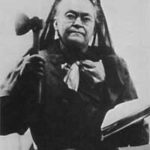
On this day in 1900, fanatical activist Carrie (Carry) Nation took “her campaign against alcohol to Wichita, Kansas, when she smashed the bar at the elegant Carey Hotel. Earlier that year, Nation had abandoned the nonviolent agitation of the Woman’s Christian Temperance Union in favor of direct action that she called “hatchetation.” Since the Kansas Constitution prohibited alcohol, Nation argued that destroying saloons was an acceptable means of battling the state’s flourishing liquor trade.”


Worth reading in full — 

Cara Lombardo and Dee J. Hall report on Failure at the Faucet: Lead in schools, day care centers: “Water from four West Middleton Elementary School faucets taken Sept. 1, the first day of school, had tested high for levels of lead or copper. As a safety precaution, the school would provide bottled water to students until the issue was resolved. Corrigan — whose daughters Brooklyn and Carly are in first and fourth grades — thought little of the news, partly because the email told parents of students at the school west of Madison that it was “highly unlikely” that the water was unsafe to drink. But one faucet at West Middleton had more than six times the federal action level of 15 parts per billion of lead and nearly 19 times the federal action level of 1,300 ppb of copper. Other faucets showed a presence of lead. Any amount of lead can cause permanent brain damage, including reduced intelligence and behavioral problems, according to the U.S. Environmental Protection Agency. Infants and children are considered the most vulnerable to lead’s negative effects.”

Don Behm reports that Coal tar [is the] main source of toxicity in streams: “Coal-tar sealants applied to blacktop parking lots and driveways are the primary source of toxic chemicals found in the muck at the bottom of Milwaukee-area waterways, according to a study by the U.S. Geological Survey and the Milwaukee Metropolitan Sewerage District. Tests of muck samples collected at 40 locations along 19 creeks and rivers in the metropolitan area, and dust from six parking lots, found that coal-tar sealants contributed up to 94% of all polycyclic aromatic hydrocarbons, or PAHs, in streambed sediment, says the study published last week  in the journal Environmental Toxicology and Chemistry. Fully 78% of the samples contained enough PAHs to be considered toxic and capable of causing adverse effects in aquatic animals, said Austin Baldwin, a USGS scientist and lead author of the study. The most toxic sediment came from Lincoln Creek and Underwood Creek.”

Jeremy Peters reports how Wielding Claims of ‘Fake News,’ Conservatives Take Aim at Mainstream Media: “WASHINGTON — The C.I.A., the F.B.I. and the White House may all agree that Russia was behind the hacking that interfered with the election. But that was of no import to the website Breitbart News, which dismissed reports on the intelligence assessment as “left-wing fake news“….Until now, that term had been widely understood to refer to fabricated news accounts that are meant to spread virally online. But conservative cable and radio personalities, top Republicans and even Mr. Trump himself, incredulous about suggestions that fake stories may have helped swing the election, have appropriated the term and turned it against any news they see as hostile to their agenda.”

Steve Inskeep offers (with 16 criteria) How To Tell Fake News From Real News In ‘Post-Truth’ Era: “Hazardous as the post-trust era may be, it shouldn’t cause despair. It’s all right for Americans to be skeptical of what they read and hear. How could I say otherwise? I’m a journalist. It’s my job to question what I hear. While I shouldn’t cynically dismiss everything people tell me, I should ask for evidence and avoid buying into bogus narratives. Being a skeptical reporter has made me a more skeptical news consumer….”

The planet’s had numerous earthquakes over the last fifteen years, and scientists have created an animated map to show the ‘quakes epicenters:

Film: Tuesday, December 27th, 12:30 PM @ Seniors in the Park: Guardians of the Galaxy

local

This Tuesday, December 27th at 12:30 PM, there will be a showing of Guardians of the Galaxy @ Seniors in the Park, in the Starin community building.

Guardians of the Galaxy is a 2014 science-fiction comedy based on the Marvel series of the same name: “Kidnapped by aliens when he was young, Peter Quill now travels the galaxy salvaging anything of value for resale. When he comes across a silver orb however, he gets more than he’s bargained for. The orb is highly desired many but by none so powerful as Ronan. When Ronan finally acquires it, it’s left to Peter and his newfound friends Gamora, Drax, Groot and Rocket to stop him.”

The film is directed by James Gunn, and stars Chris Pratt, Zoe Saldana, Dave Bautista, Vin Diesel, and Bradley Cooper. It has a run time of two hours, one minute and carries a rating of PG-13 from the MPAA.

One can find more information about Guardians of the Galaxy at the Internet Movie Database.

Enjoy.

Daily Bread for 12.26.16

Good morning.

Whitewater’s Monday will be partly cloudy with a high of forty-five. (The average December high is thirty-one.) Sunrise is 7:24 AM and sunset 4:27 PM, for 9h 03m 01s of daytime. The moon is a waning crescent with 6.7% of its visible disk illuminated.

On this day in 1776, having crossed the Delaware, Washington is victorious at Trenton:

“At 4:00 am, the soldiers began to march towards Trenton.[31] Along the way, several civilians joined as volunteers, and led as guides (see Captain John Mott) because of their knowledge of the terrain.[32] After marching 1.5 miles (2.4 km) through winding roads into the wind, they reached Bear Tavern, where they turned right.[33] The ground was slippery, but it was level, making it easier for the horses and artillery. They began to make better time.[33] They soon reached Jacobs Creek, where, with difficulty, the Americans made it across.[34] The two groups stayed together until they reached Birmingham, where they split apart.[8] Soon after, they reached the house of Benjamin Moore, where the family offered food and drink to Washington.[35] At this point, the first signs of daylight began to appear.[35] Many of the troops did not have boots, so they were forced to wear rags around their feet. Some of the men’s feet bled, turning the snow to a dark red. Two men died on the trip.[36]

As they marched, Washington rode up and down the line, encouraging the men to continue.[27] General Sullivan sent a courier to tell Washington that the weather was wetting his men’s gunpowder. Washington responded, “Tell General Sullivan to use the bayonet. I am resolved to take Trenton.”[37]

Worth reading in full — 

It’s December 26th, 2016, after a long but revealing political campaign, yet at the State Journal, ‘Two Minutes with Mitch Henck’ concludes that Donald Trump could really turn on the pressHenck uses the word could the way people with a proper grasp of English use has, is, and will continue.  (Admittedly, Henck’s not sucking on his thumb while speaking of Trump’s conduct, but that’s only because Henck couldn’t speak at all if he did so.)

At Cato, Neal McCluskey asks [concerning a report from Sightlines]  Do Colleges Have an Edifice Complex, an Amenities Arms Race, or Both?: “Essentially, the report says that colleges have been on a big building binge, but enrollment has been stagnant or declining….The basic math is concerning: Greater capital costs, plus decreasing revenue, equals trouble. Has the building boom been driven by an edifice complex — college presidents and faculty love new buildings all over campus that are imposing, cutting edge, or both — or an amenities arms race to bring in students? The report says that for decades, college construction has focused more on creating non-academic than academic space, and about half of all college space today is for non-academic use. It’s a classic arms race: Colleges frightened of losing tuition dollars feel constant pressure to spend on expensive facilities to compete for students, in the process greatly increasing the danger of becoming even more insecure financially, maybe hopelessly so.”

(One reads all this with concern, not because one doubts university life, but with a love for it, from a family that has always loved it, because that life derives strength primarily from substantive learning, and secondarily in a socialization that has no capital cost.)

Sergei Guriev writes that In Russia, It’s Not the Economy, Stupid: “Thanks partly to its near-complete control of the press, television and the internet, the government has developed a grand narrative about Russia’s role in the world — essentially promoting the view that Russians may need to tighten their belts for the good of the nation. The story has several subplots. Russian speakers in Ukraine need to be defended against neo-Nazis. Russia supports President Bashar al-Assad of Syria because he is a rampart against the Islamic State, and it has helped liberate Aleppo from terrorists. Why would the Kremlin hack the Democratic Party in the United States? And who believes what the C.I.A. says anyway?”

Philip Rucker and Robert Barnes report that Trump to inherit more than 100 court vacancies, plans to reshape judiciary: “The estimated 103 judicial vacancies that President Obama is expected to hand over to Trump in the Jan. 20 transition of power is nearly double the 54 openings Obama found eight years ago following George W. Bush’s presidency. Confirmation of Obama’s judicial nominees slowed to a crawl after Republicans took control of the Senate in 2015. Obama White House officials blame Senate Republicans for what they characterize as an unprecedented level of obstruction in blocking the Democratic president’s court picks. The result is a multitude of openings throughout the federal circuit and district courts that will allow the new Republican president to quickly make a wide array of lifetime appointments.”

Tech Insider reports on The 5 biggest tech controversies of 2016:

Daily Bread for 12.24.16

Good morning.

Christmas Eve in Whitewater will be mostly cloudy with a high of thirty-five. Sunrise is 7:23 AM and sunset 4:26 PM, for 9h 02m 16s of daytime. The moon is a waning crescent with 19.1% of its visible disk illuminated.

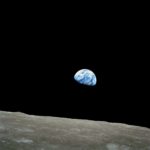
On this day in 1968, astronauts orbit the moon ten times before returning to Earth: “Apollo 8 took three days to travel to the Moon. It orbited ten times over the course of 20 hours, during which the crew made a Christmas Eve television broadcast where they read the first 10 verses from the Book of Genesis. At the time, the broadcast was the most watched TV program ever. Apollo 8’s successful mission paved the way for Apollo 11 to fulfill U.S. President John F. Kennedy‘s goal of landing a man on the Moon before the end of the 1960s. The Apollo 8 astronauts returned to Earth on December 27, 1968, when their spacecraft splashed down in the Northern Pacific Ocean. The crew was named Time magazine‘s “Men of the Year” for 1968 upon their return.”

Worth reading in full — 

Jason Stein reports that, concerning a high-level state administrator who sought to evade the public records law, Panel upholds firing of ex-Corrections secretary: “Madison — Former state Corrections secretary Ed Wall knowingly sought to evade Wisconsin’s open records law, a state panel found in upholding his firing. In a six-page opinion this month, the Wisconsin Employment Relations Commission threw out Wall’s appeal of his dismissal from a backup job by Attorney General Brad Schimel earlier this year. The case was an unexpected outgrowth of the controversy over abuses at a juvenile prison that worsened under Wall’s watch as corrections head….”Here Wall understood that the document indeed was a public record and that the only way to avoid the required disclosure was to unlawfully keep it ‘strictly between you and me’ as Wall proposed,” the panel’s decision reads. “Once the communication was disclosed, the attorney general had no choice but to terminate Wall. The action of a high-level administrator attempting to evade the law would significantly undermine the (Department of Justice) had lesser discipline been imposed.”

It should come as no surprise, as Philip Rucker reports in Trump tweets praise of Putin for attack on Clinton, that a would-be autocrat loves a Russian one more than his own people: “WEST PALM BEACH, Fla. — President-elect Donald Trump late Friday publicly praised Russian President Vladimir Putin for attacking Trump’s former Democratic opponent, Hillary Clinton. In a striking statement that seems to further align Trump with Putin, the incoming U.S. president tweeted that he agreed with the Russian leader’s assessment that Clinton and the Democratic Party generally have not shown “dignity” following widespread loses in the November election. “So true!” Trump tweeted of Putin’s comments, apparently referencing statements the Russian made at his year-end news conference.”

Earlier yesterday, as Harper Neidig reports, Trump share[d] letter from Putin: ‘His thoughts are so correct’: “President-elect Donald Trump on Friday praised Vladimir Putin and shared a Christmas letter the Russian president sent him. “A very nice letter from Vladimir Putin; his thoughts are so correct,” Trump said in a statement. “I hope both sides are able to live up to these thoughts, and we do not have to travel an alternate path.”

On reads that Carl Paladino, Trump Ally [co-chair of Trump’s New York state campaign], Wishes Obama Dead of Mad Cow Disease in ’17: “Mr. Paladino’s comments were published in Artvoice, a weekly Buffalo newspaper. They came in response to an open-ended feature in which local figures were asked about their hopes for 2017. “Obama catches mad cow disease after being caught having relations with a Herford,” said Mr. Paladino, who ran unsuccessfully for governor in 2010, making an apparent reference to the Hereford cattle breed. He said he hoped the disease killed the president. Asked what he most wanted to see “go away” in the new year, Mr. Paladino — who has a reputation in New York political and business circles for speaking in an unfiltered manner reminiscent of Mr. Trump’s — answered, “Michelle Obama.” “I’d like her to return to being a male and let loose in the outback of Zimbabwe where she lives comfortably in a cave with Maxie, the gorilla,” he said.”

At the Toronto Zoo, it’s a Giant Panda vs. a Snowman: