FREE WHITEWATER

Daily Bread for 9.17.15

Good morning, Whitewater.

Thursday in town will be partly cloudy during the day, with a daytime high of eighty-four, and a probability of thunderstorms later tonight. Sunrise is 6:37 and sunset 7:00, for 12h 23m 20s of daytime. The moon is a waxing crescent with 1501% of its visible disk illuminated.

Whitewater’s Fire & Rescue Task Force meets at 7 AM.

It’s Constitution Day in America.  On this day in 1787, thirty-nine delegates sign the draft Constitution:

After nearly four months of debate, on September 8, 1787, the final text of the Constitution was set down and revised. Then, an official copy of the document was engrossed by Jacob Shallus. The effort consisted of copying the text (prelude, articles and endorsement) on four sheets of vellum parchment, made from treated animal skin and measuring approximately 28 inches (71 cm) by 23 inches (58 cm), probably with a goose quill. Shallus engrossed the entire document except for the list of states at the end of the document, which are in Alexander Hamilton‘s handwriting.[103] On September 17, 1787, following a speech given by Benjamin Franklin, 39 delegates endorsed and submitted the Constitution to the Congress of the Confederation.[104]

On this day in 1862, Wisconsin regiments fight at Antietam:

September 17, 1862, was the bloodiest day in U.S. military history. More than 125,000 troops faced off and over 24,000 were killed, wounded or missing as Union forces stopped the first Confederate invasion of the North. The 2nd, 6th and 7th Wisconsin Infantry regiments were in the thickest of the fighting. The 6th Infantry led a charge that killed or wounded 150 of its 280 men. Of the 800 officers and men in the Iron Brigade who marched out that morning, 343 were wounded or killed.

Here’s Puzzability‘s Thursday game in its week-long Mouth Pieces series:

This Week’s Game — September 14-18
Mouth Pieces
We’re listening for art sounds this week. For each day, we started with the name of a famous painting. Then, for the day’s clue, we broke it down into a series of words that, when said in order, sounds like the original title. You’ll probably need to say the words out loud to get the answers.
Example:
Him, purr, Hessians, Hun, rice
Answer:
“Impression, Sunrise” (by Claude Monet)
What to Submit:
Submit the painting’s title (as “Impression, Sunrise” in the example) for your answer.
Thursday, September 17
Newt, diss, hand, Incas, dare, gaze

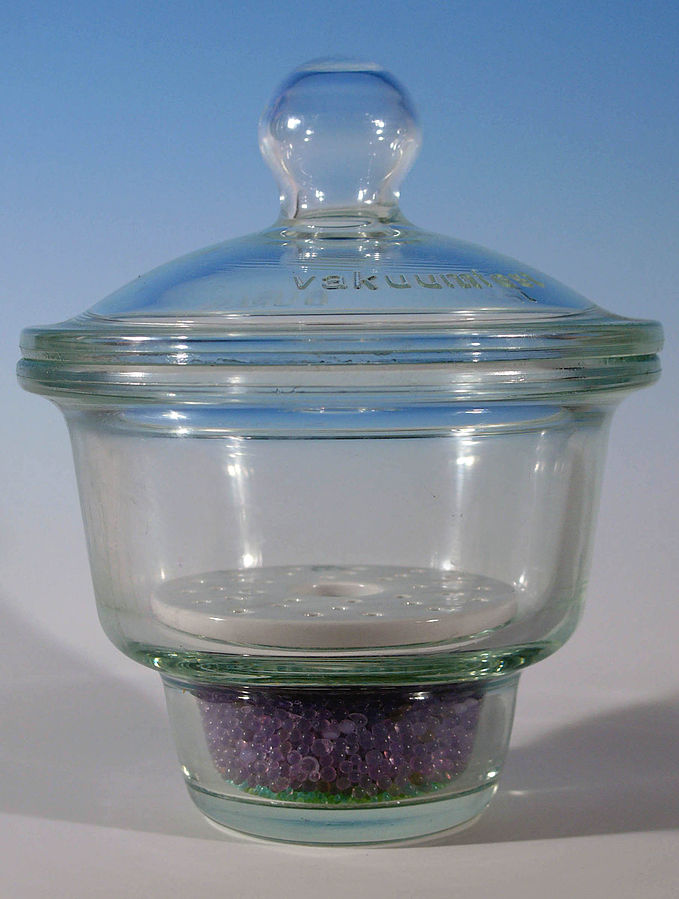
The Desiccator

Exsiccator_hg

Over at National Review, conservative Peter Spiliakos writes in reply to conservative Washington Post blogger Jennifer Rubin on Scott Walker’s campaign. (Rubin thinks Walker has gone too far to the right, but Spiliakos thinks that Walker – and many Republicans leaders – have lost touch with huge parts of their own electorate.)

For Rubin the matter is one of ideology; for Spiliakos it’s one of unfamiliarity with one’s own party.

Spiliakos’s observations, however, are applicable apart from the Walker campaign, and apart from GOP politics. They’re more broadly interesting than as an intra-party discussion. (I’m a libertarian, and find his remarks useful beyond major-party politics to which I have, and owe, no allegiance.)

Spiliakos contends that

If it was just a Scott Walker problem, it wouldn’t matter. Walker is just one politician. The big problem is the social gulf between establishment Republican politicians and large sections of the right-leaning electorate is so big that the politicians can’t even imagine what many of their voters are thinking.

A competent and honest political class would try to find the common ground, and reach a compromise between the party’s factions, but the current Republican leadership seems to take little interest in the opinions of anyone outside the employer interests and consultant/lobbyist/campaign aide/congressional staffer apparatchiks.

Here’s Spiliakos on why this happens:

I think the problem is more social. With the decline of civic institutions among people in the lower half of the income distribution, the social power of groups that are well organized tends to increase. The influence of the donor class doesn’t just come from the checks. It comes from the social interactions at local Chamber of Commerce events where an aspiring politician gives a speech and then listens to local business owners talk about how they have trouble finding willing workers at a good price (to the employer.) The unorganized majority of Americans who disagree with this view don’t get to invite Walker to meetings, because they don’t have meetings.

I’ve no doubt – none at all – that there is a wide gap between self-described elites and ordinary people. Locally, however, I don’t think the biggest problems are ones of personal unfamiliarity. (After all, it’s not as though I am describing myself as a tribune of the people. There are already too many people in town who claim to speak on behalf of all the town; this is a site of individual, independent commentary.)

Our local problem isn’t that elites don’t speak to ordinary people – it’s that local elites, by an over-reliance on an echo chamber of their own kind – lack the clear reasoning of both ordinary people locally and competitive Americans elsewhere. They’re not unfamiliar with ordinary people; they’re too familiar (and too satisfied with) their own thinking.

They see ordinary people each day, but these local elites falsely assume that they have better ideas, and better powers of reasoning, than ordinary people.

Prospective town squires may arrive on our scene educated and reasonable, but needlessly living too much within a small fraction of all society, and scampering to its neurotic demands, leaves reasonable people addled, leaves educated people forgetful and ignorant.

Even the finest, most capable people will wither and atrophy in that desiccator.

Most people are sharp and capable; even the sharpest and most capable degrade their abilities when confined to a small, closed chamber.

After a while, the commonplace reasoning of people from across this continent starts to look to a cosseted few like magic, or an alien teaching unfairly imposed.

On that contrary, that commonplace reasoning – shared equally by all races & ethnic groups – is the language of vast millions from ocean to ocean, who yet remain energetic, creative, capable residents of the most advanced civilization in human history.

Daily Bread for 9.16.15

Good morning, Whitewater.

Midweek in Whitewater will be sunny with a high of eighty-four.  Sunrise is 6:36 and sunset 7:02, for 12h 26m 13s of daytime.  The moon is a waxing crescent with 9% of its visible disk illuminated.

On this day in 1908, General Motors is founded:

194px-General_Motors.svgThe company was founded on September 16, 1908, in Flint, Michigan, as a holding company for McLaughlin Car Company of Canada Limited and Buick, then controlled by William C. Durant.[11] At the beginning of the 20th century there were fewer than 8,000 automobiles in America and Durant had become a leading manufacturer of horse-drawn vehicles in Flint before making his foray into the automotive industry.[12] GM’s co-founder was Charles Stewart Mott, whose carriage company was merged into Buick prior to GM’s creation. Over the years Mott became the largest single stockholder in GM and spent his life with his Mott Foundation which has benefited the city of Flint, his adopted home. GM acquired Oldsmobile later that year. In 1909, Durant brought in Cadillac, Elmore, Oakland and several others. Also in 1909, GM acquired the Reliance Motor Truck Company of Owosso, Michigan, and the Rapid Motor Vehicle Company of Pontiac, Michigan, the predecessors of GMC Truck. Durant lost control of GM in 1910 along with R. S. McLaughlin to a bankers’ trust, because of the large amount of debt taken on in its acquisitions coupled with a collapse in new vehicle sales.[13]

The next year, Durant started the Chevrolet Motor Car Company in 1911 in the U.S. in Canada in 1915 and through this he secretly purchased a controlling interest in GM. Durant took back control of the company after one of the most dramatic proxy wars in American business history. Durant then reorganized General Motors Company into General Motors Corporation in 1916 Merging General Motors of Canada Limited as an ally in 1918. Shortly after, he again lost control, this time for good, after the new vehicle market collapsed. Alfred P. Sloan was picked to take charge of the corporation and led it to its post-war global dominance when the seven manufacturing facilities operated by Chevrolet before GM acquired the company began to contribute to GM operations. These facilities were added to the individual factories that were exclusive to Cadillac, Buick, Oldsmobile, Oakland, and other companies acquired by GM. This unprecedented growth of GM would last into the early 1980s when it employed 349,000 workers and operated 150 assembly plants.
Here’s the Wednesday game from Puzzability in its Mouth Pieces series:
This Week’s Game — September 14-18
Mouth Pieces
We’re listening for art sounds this week. For each day, we started with the name of a famous painting. Then, for the day’s clue, we broke it down into a series of words that, when said in order, sounds like the original title. You’ll probably need to say the words out loud to get the answers.
Example:
Him, purr, Hessians, Hun, rice
Answer:
“Impression, Sunrise” (by Claude Monet)
What to Submit:
Submit the painting’s title (as “Impression, Sunrise” in the example) for your answer.
Wednesday, September 16
Docile, he, pink, chip, sea

Daily Bread for 9.15.15

Good morning, Whitewater.

Tuesday in town will be sunny with a high of eighty-three. Sunrise is 6:35 and sunset 7:04, for 12h 29m 05s of daytime. The moon is a waxing crescent with 6.3% of its visible disk illuminated.

Common Council meets tonight at 6:30 PM.

How strong are crocodiles? They’re really strong

On this day in 1832, the U.S. signs a treaty with the Ho-Chunk nation:

1832 – Ho-Chunk Treaty Signed
On this date a a treaty was signed between the Ho-Chunk and the United States that stipulated that the Ho-Chunk cede lands lying to the south and east of the Wisconsin river as well as lands around the Fox river of Green Bay. [Source:Oklahoma State University Library]

Here’s the Tuesday game from Puzzability:

This Week’s Game — September 14-18
Mouth Pieces
We’re listening for art sounds this week. For each day, we started with the name of a famous painting. Then, for the day’s clue, we broke it down into a series of words that, when said in order, sounds like the original title. You’ll probably need to say the words out loud to get the answers.
Example:
Him, purr, Hessians, Hun, rice
Answer:
“Impression, Sunrise” (by Claude Monet)
What to Submit:
Submit the painting’s title (as “Impression, Sunrise” in the example) for your answer.
Tuesday, September 15
Curl, widow, purr, leer, ink

Technical Memo 4

WGTB logo PNG 112x89 Post 31 in a series. When Green Turns Brown is an examination of a small town’s digester-energy project, in which Whitewater, Wisconsin would import other cities’ waste, claiming that the result would be both profitable and green.

A review of this digester-energy project, one that involves waste-importation and an emphasis on supposed revenue-generation, is more than an examination of a vendor’s work, or city officials’ presentations. If it were only that narrow examination, then Messrs. Clapper & Reel (and the business lobbyists behind this project) would be able to constrict the truth of a project to a few PowerPoint presentations. The actual nature of something is not so easily, so narrowly, constrained.

Still, the centerpiece of proponents’ digester-energy project is – by officials’ own account – Technical Memo 4, from the Donohue firm. It’s fair to post that memo, initially on its own, with no additional questions.

In the weeks ahead, I’ll consider this written keystone and the presentations meant to support it. That will still be only a preliminary consideration of the project (as the project involves fiscal, economic, environmental, health, and business culture considerations that Whitewater officials have not addressed). This series will be lengthy because I will address those aspects of the project, and produce a written and video work thereafter.

Still, it’s fair and useful to begin with the memo. An assessment of it will follow in the weeks ahead.

See, below, Technical Memorandum 4 Digestion Complex and Energy Production —

WHEN GREEN TURNS BROWN: Mondays @ 10 AM, here on FREE WHITEWATER.

A Quick Word About Phosphorous

WGTB logo PNG 112x89 Post 30 in a series. When Green Turns Brown is an examination of a small town’s digester-energy project, in which Whitewater, Wisconsin would import other cities’ waste, claiming that the result would be both profitable and green.

In the course of presentations or public discussion about a wastewater upgrade, one has heard more than a few odd notions about phosphorous: that the more of it one produced the better, and that perhaps, just perhaps, spreading it on vacant land in the industrial park would be a possibility. (I’ll come back to this subject when I consider more about the environmental and health consequences of a protect like this.)

For today, though, a review of vendor Donohue’s own work should dispense with the odd notion (absurdly, from a council candidate and a member of the CDA, respectively) that one can’t get enough of it, or that one could just spread it around:

As discussed in TM 2 Flows, Loadings, and Existing Conditions, one of the primary concerns facing the wastewater treatment facility is a forthcoming low level phosphorous limit expected to be formally issued in the fall of 2014 when the facility’s discharge permit is renewed. This permit is expected to contain a monthly average phosphorous limit of 0.225 mg/L and a six month seasonal phosphorous limit of 0.075 mg/L. The purpose of this Technical Memorandum (TM 3) is to evaluate nutrient management technologies for the City of Whitewater’s wastewater treatment facility that will meet the new effluent requirements.

The full memorandum is embedded below. Quite simply, if phosphorous weren’t a concern, then neither our state, nor other states, nor this vendor would (presumably) be considering it at all.

As for why anyone would take seriously those who don’t think this community should take phosphorous seriously (including grasping what that means), I cannot say.

WHEN GREEN TURNS BROWN: Mondays @ 10 AM, here on FREE WHITEWATER.

Daily Bread for 9.14.15

Good morning, Whitewater.

The work week begins for Whitewater with sunny skies and a high of seventy-nine. Sunrise is 6:34 and sunset 7:06, for 12h 31m 57s of daytime. The moon is a waxing crescent with just 1.2% of its visible disk illuminated.

Whitewater’s Planning Commission meets at 6:30 PM today, and members of Landmarks Commission may be attending a Friends of the Mounds meeting at the Irvin Young Library, also scheduled for 6:30 PM.

On this day in 1814, American resilience inspires Francis Scott Key:

During the War of 1812, Key, accompanied by the British Prisoner Exchange Agent Colonel John Stuart Skinner, dined aboard the British ship HMS Tonnant, as the guests of three British officers: Vice Admiral Alexander Cochrane, Rear Admiral George Cockburn, and Major General Robert Ross. Skinner and Key were there to negotiate the release of prisoners, one of whom was Dr. William Beanes, a resident of Upper Marlboro, Maryland who had been arrested after jailing marauding British troops who were looting local farms. Skinner, Key, and Beanes were not allowed to return to their own sloop because they had become familiar with the strength and position of the British units and with the British intent to attack Baltimore. Thus, Key was unable to do anything but watch the bombarding of the American forces at Fort McHenry during the Battle of Baltimore on the night of September 13–14, 1814.[4]

At dawn, Key was able to see an American flag still waving and reported this to the prisoners below deck. Back in Baltimore and inspired, Key wrote a poem about his experience, “Defence of Fort M’Henry”, which was soon published in William Pechin’s[5] the American and Commercial Daily Advertiser on September 21, 1814. He took it to Thomas Carr, a music publisher, who adapted it to the rhythms of composer John Stafford Smith‘s “To Anacreon in Heaven“,[4] a popular tune Key had already used as a setting for his 1805 song “When the Warrior Returns,” celebrating U.S. heroes of the First Barbary War.[6] (Key used the “star spangled” flag imagery in the earlier song.)[7] It has become better known as “The Star-Spangled Banner“. Though somewhat difficult to sing, it became increasingly popular, competing with “Hail, Colombia” (1796) as the de facto national anthem by the Mexican-American War and American Civil War. More than a century after its first publication, the song was adopted as the American national anthem, first by an Executive Order from President Woodrow Wilson in 1916 (which had little effect beyond requiring military bands to play what became known as the “Service Version”) and then by a Congressional resolution in 1931, signed by President Herbert Hoover.[8]
On this day in 1888, a fire consumes a significant part of Washburn:

1888 – The Great Washburn Fire

On this date a fire broke out in back of Peter Nelson’s Hardware Store in Washburn, Wisconsin. The fire spread quickly, consuming an entire block of homes and businessses, including Meehan’s Clothing Store, two local newspapers, and Beausoliel’s Meat Market. [Source: “B” book : beer bottles, brawls, boards, brothels, bibles, battles & brownstones by Tony Woiak, p.2-3]

Puzzability begins a new weekly series entitled, Mouth Pieces:

This Week’s Game — September 14-18
Mouth Pieces
We’re listening for art sounds this week. For each day, we started with the name of a famous painting. Then, for the day’s clue, we broke it down into a series of words that, when said in order, sounds like the original title. You’ll probably need to say the words out loud to get the answers.
Example:
Him, purr, Hessians, Hun, rice
Answer:
“Impression, Sunrise” (by Claude Monet)
What to Submit:
Submit the painting’s title (as “Impression, Sunrise” in the example) for your answer.
Monday, September 14
Hum, airy, kink, ha, thick

Sunday Animation: Glen Keane Draws in Virtual Reality

2015 Future of StoryTelling Summit Speaker: Glen Keane
Animator, The Little Mermaid, Tarzan, Beauty and the Beast, and Duet
Keane’s VR painting is created in Tiltbrush: www.tiltbrush.com

Over nearly four decades at Disney, Glen Keane animated some the most compelling characters of our time: Ariel from The Little Mermaid, the titular beast in Beauty and the Beast, and Disney’s Tarzan, to name just a few. The son of cartoonist Bil Keane (The Family Circus), Glen learned early on the importance of holding onto your childhood creativity—and how art can powerfully convey emotion. Keane has spent his career embracing new tools, from digital environments to 3D animation to today’s virtual reality, which finally enables him to step into his drawings and wander freely through his imagination. At FoST, he’ll explore how to tap into your own creativity, connecting to emotion and character more directly than ever before.

Via YouTube.

Daily Bread for 9.13.15

Good morning, Whitewater.

Sunday will be lovely, with sunny skies and a high of seventy-one.  Sunrise is 6:33 and sunset 7:07, for 12h 34m 49s of daytime.  We’ve a new moon today.

The Friday FW poll asked readers how many regular-season games the Packers would win this year.  A majority of respondents (52.17%) thought that they would win 12 or 13 games, with just over a quarter expecting ten or eleven wins.


On this day in 1862, a Union soldier discovers Special Order 191, a document with Confederate battle plans:

The order was drafted on or about September 9, 1862, during the Maryland Campaign. It gave details of the movements of the Army of Northern Virginia during the early days of its invasion ofMaryland. Lee divided his army, which he planned to regroup later: according to the precise text Maj. Gen.Stonewall Jackson was to move his command to Martinsburg while McLaws’s command and Walker’s command “endeavored to capture Harpers Ferry.” Maj. Gen. James Longstreet was to move his command northward to Boonsborough. D. H. Hill‘s division was to act as rear guard on the march from Frederick.

Lee delineated the routes and roads to be taken and the timing for the investment of Harpers Ferry. Adjutant Robert H. Chilton penned copies of the letter and endorsed them in Lee’s name. Staff officers distributed the copies to various Confederate generals. Jackson in turn copied the document for one of his subordinates, Maj. Gen. D. H. Hill, who was to exercise independent command as the rear guard. Hill said the only copy he received was the one from Jackson.[1]

About noon [2] on September 13, Corporal Barton W. Mitchell of the 27th Indiana Volunteers, part of the Union XII Corps, discovered an envelope with three cigars wrapped in a piece of paper lying in the grass at a campground that Hill had just vacated. Mitchell realized the significance of the document and turned it in to Sergeant John M. Bloss. They went to Captain Peter Kopp, who sent it to regimental commander Colonel Silas Colgrove, who carried it to the corps headquarters. There, an aide to Brig. Gen.Alpheus S. Williams recognized the signature of R. H. Chilton, the assistantadjutant general who had signed the order. Williams forwarded the dispatch to Maj. Gen. George B. McClellan, the commander of the Army of the Potomac. McClellan was overcome with glee at learning planned Confederate troop movements and reportedly exclaimed, “Now I know what to do!” He confided to a subordinate, “Here is a paper with which, if I cannot whip Bobby Lee, I will be willing to go home.”[3]

As it turns out, McClellan did stop Lee’s advance, but without making the most of the encounter.  McClellan later did go home, so to speak, twice: when Lincoln relieved him of command, and when Lincoln later defeated McClellan in the 1864 presidential election.