
FREE WHITEWATER

Ordinances & Department Regulations @ Public Meetings

Whitewater’s last Planning Commission meeting was a week ago, Monday (10.13.14). 

I’ve two suggestions:

First, it would be a good idea to keep a copy of Whitewater’s ordinances and regulations available at the meeting. 

It may be that a city employee cannot recall a certain requirement or provision of our local law.  That’s not surprising; we have many regulations.

The easiest fix is to keep a indexed copy of our ordinances or other policy documents on hand: at-the-moment inquiry would be possible for simple, matter-of-fact-questions.

There may be some reluctance to look up a simple provision on the spot, as some might fear it suggests an embarrassing ignorance.  Strictly, it does suggest ignorance, but not embarrassing ignorance: one should  only be disappointed by not trying. 

It’s much better in appearance and result to take a moment to consult a book than it is to say, “I can’t recall.”  The latter adds nothing to participants’ knowledge; the former leaves participants knowledgeable.  

Second, there will also be times when a city department not present may need to evaluate part of a proposal.  These evaluations should be arranged, when possible, without the need for a return visit to the Planning Commission. Planning approval can and should be conditioned on a subsequent and satisfactory evaluation (by, for example, the Fire Department over basic code requirements).

There’s (needlessly) reduced value in having rewritten our zoning laws only to delay planning decisions through repeated appearances before the Planning Commission.  

The commissioner who suggested an approach that didn’t require a return recommended sensibly. We are neither a sluggish county nor a large city.  Candidly, for government oversight, most counties and cities should act less like counties and large cities.

One last point, always worth making: every time a commissioner suggests a change or addition to a plan, he or she adds an additional expense for the applicant, if even the cost of revising a plan.  These costs accumulate quickly, and when they do a planning commission becomes, in effect, a taxing commission. 

Some commissioners see this, and evidently understand that they’ve an authority that should be exercised sparingly.  Others most certainly do not see it this way, and are cavalier about demanding changes that are at bottom costs forced on private businesses. 

If these changes are not for health or safety, they’re lower order in need, but sadly no less costly to applicants.   
The Proposed 2015 City of Whitewater Budget

The challenge of government is not fundamentally its cost, but its complexity, intractability, and most concerning of all its use of authority not as representative of residents but as self-interested action contrary to representation.

A small rural town of fifteen-thousand, and it’s 289 pages just to list the town’s annual budget.

There’s an anecdote about a former politician’s view of representation in Whitewater that’s telling. Once asked if he felt an obligation to support the views of his constituents, he scoffed at the very thought of it. He insisted that if those who elected him felt disappointed they could simply try to remove him from office. He felt no obligation to represent them; he declared he was in office to express his own views.

That’s too funny, really: a town squire so very sure of himself, but apparently simultaneously ignorant of public choice theory, or too dense to see that he was a walking expression of numerous economists’ prize-winning analyses within that field.

Here’s the proposed 2015 City of Whitewater budget:

Film: The Spielberg Oner – One Scene, One Shot

The Spielberg Oner – One Scene, One Shot from Tony Zhou on Vimeo.

An assessment of Spielberg:

One overlooked aspect of Spielberg is that he’s actually a stealth master of the long take. From Duel to Tintin, for forty years, he has sneakily filmed many scenes in a single continuous shot.
For educational purposes only.

You can support the channel at patreon.com/everyframeapainting
And you can follow me at twitter.com/tonyszhou

If you’d like to see the original footage from the films, here they are:
Eight lengthy examples: vimeo.com/tonyzhou/spielberg-eight
Twelve short examples: vimeo.com/tonyzhou/spielberg-twelve

Daily Bread for 10.21.14

Good morning, Whitewater.

Tuesday in town will be mostly sunny with a high of fifty-three. Sunrise is 7:16 AM and sunset 6:03 PM. The moon is a waning crescent with five-percent of its visible disk illuminated.

Common Council meets tonight at 6:30 PM.

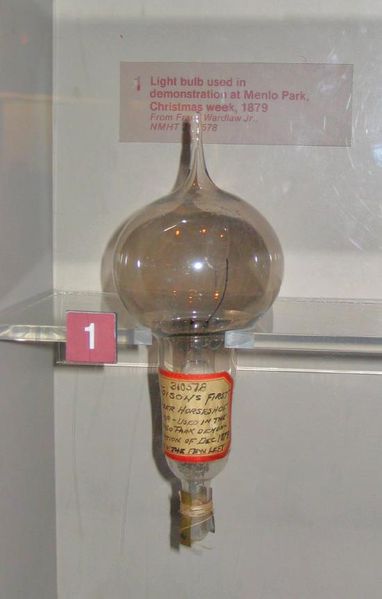
On this day in 1879, Edison invents a workable electric light. Here’s how the New York Times described a visit to his laboratory:

There was no lack of enthusiasm or of confidence about Mr. Edison as he greeted the Times reporter who entered his laboratory at Menlo Park, N. J., yesterday. The inventor, a short, thick-set man, with grimy hands, led the way through his workshop, and willingly explained the distinctive features of what he and many others look upon as an apparatus which will soon cause gas-light to be a thing of the past.

The lamp which Mr. Edison regards as a crowning triumph is a model of simplicity and economy. In the lamp the light is emitted by a horseshoe of carbonized paper about two and a half inches long and the width of a thread. This horseshoe is in a glass globe, from which the air has been as thoroughly exhausted as science is able to do. So good a vacuum is produced that it is estimated that at the utmost no more than a one-millionth part of the air remains.

The operation of pumping lasts one hour and a quarter. At the ends of the carbon horseshoe are two platinum clamps, from which platinum wires run outwardly through a small glass tube contained within a larger one leading out of the glass globe. The small tube contains air. Within it the platinum wires are met by two copper wires connecting with the conductors of the electricity. The air is left in the small tube, because otherwise the copper wires would be fused by the electric current. The carbonized paper is capable of being made incandescent by a current of electricity, and while it allows the current to pass over it, its resistance to the heat is strong enough to prevent it from fusing.

On this day in 1897, Williams Bay sees an observatory’s dedication:

On this date the Yerkes Observatory was dedicated. Founded by astronomer George Hale and located in Williams Bay, the Yerkes Observatory houses the world’s largest refracting optical telescope, with a lens of diameter 102 cm/40 inches. It was built through the largess of the tycoon Charles Tyson Yerkes, who rebuilt important parts of the Chicago transportation system after the fire. Situated in a 77-acre park on the shore of Lake Geneva, this observatory was the center for world astronomy in the early 20th century and invited a number of astronomers from around the world, including Japan, for scientific exchange. [Source: Yerkes Observatory Virtual Museum]

Google-a-Day asks a geography question:

What section of “The Great Silk Road” led from Samarkand via Hodjent to Isfara, Kokand and Osh?

Four Public Topics for the Fall

There are (at least) four predictable public policy topics in the Whitewater area between now and winter’s beginning on December 21st. 

The City of Whitewater’s Proposed 2015 Budget.  It’s budget season in Whitewater.  The city’s proposed budget is now under consideration, at weekly meetings to stretch into November. 

The Schools Referendum.  Outside and inside the city, a close gubernatorial election grips Wisconsinites.  There’s no bigger political topic than Walker-Burke; that contest overshadows, but also underlies, the political prospects for the referendum.

I’ll write about the referendum next week, in three posts: (1) one about its general political prospects based on past elections and the current statewide contests, (2) one about what the campaign for the referendum says about Whitewater’s local politics, and (3) one about how the substance of education (the broad curriculum of academics, athletics, and the arts) is more important even than a budget discussion. 

In this, I’ll be true to my contention from August that what matters is what one wants to accomplish for the children of this community, and that that’s much more than a matter of scores or metrics.

Far from thinking that one should justify an educational ‘return on investment,’ I don’t think that matters as much (or as much to residents) as simply knowing what students are studying, knowing about what they’re trying to do each day.   

Perhaps there are those who feel differently about seeing a supposed return; I’ll explain next week why I’m not among them. 

UW-Whitewater’s Social Relations.  Campus has seen all kinds of construction, and talk about being an entrepreneurial environment, but I doubt that will be remembered half so well as how people on and off campus have related to and treated each each other during this time.

New buildings and grandiose press releases have occupied attention these several years, but social relations are more significant and will prove more memorable. 

The City of Whitewater’s Waste Digester Proposal.  Full-time city leaders plan to present a waste digester proposal to the city in December.  They’ve been working on it for many months, using a cleverly-described ‘study’ as a city-funded means to develop a digester in Whitewater. They have not been studying, in any way that conveys independent reflection; they’ve used tens of thousands in city funds to advance the project through closed-door meeting after meeting. 

Along the way, there have been brief public discussions of their efforts, most of them riddled with gushing, presumptuous advocacy, and the remainder evincing the respective vendors’ half-truths, or local officials’ evident ignorance about a project like this.   (It’s a case of not knowing what they don’t know, or not caring to know.)

If advanced – and there will be a tenacious, relentless effort from vendors and insiders to advance this project – this would be the single most consequential public project of the last thirty years. Nothing this community has spent during that time, for the lakefront, a new high school, an Innovation Center, road projects, etc., comes close in scope to the financial, environmental, or health risks to Whitewater.

It may seem odd that of all the many paths leaders might choose for the city’s future, they’d pick this one.  There’s hubris in this, perhaps from a confidence that the past assures them that they can manage any future opposition.  

Perhaps their brimming confidence is justified, and they will find the future manageable, so to speak.  If they should be wrong, though, it’s a much harder path ahead for all concerned.  

These are merely predictable topics for the fall; the Fates may alter the course of events as they see fit.  

Daily Bread for 10.20.14

Good morning, Whitewater.

Monday in the city will be partly cloudy with a high of fifty-seven.

The tech industry has a style of presenting new products that’s susceptible of satire. Here’s an example, if Silicon Valley has a vegetable it wanted to promote:

On this day in 1944, Douglas MacArthur returns to the Philippines:

On 20 October 1944, troops of Krueger’s Sixth Army landed on Leyte, while MacArthur watched from the light cruiser USS Nashville. That afternoon he arrived off the beach. The advance had not progressed far; snipers were still active and the area was under sporadic mortar fire. When his whaleboat grounded in knee-deep water, MacArthur requested a landing craft, but the beachmaster was too busy to grant his request. MacArthur was compelled to wade ashore.[198] In his prepared speech, he said:

People of the Philippines: I have returned. By the grace of Almighty God our forces stand again on Philippine soil—soil consecrated in the blood of our two peoples. We have come dedicated and committed to the task of destroying every vestige of enemy control over your daily lives, and of restoring upon a foundation of indestructible strength, the liberties of your people.[199]

Since Leyte was out of range of Kenney’s land-based aircraft, MacArthur was dependent on carrier aircraft.[200] Japanese air activity soon increased, with raids on Tacloban, where MacArthur decided to establish his headquarters, and on the fleet offshore. MacArthur enjoyed staying on Nashville’s bridge during air raids, although several bombs landed close by, and two nearby cruisers were hit.[201] Over the next few days, the Japanese counterattacked in the Battle of Leyte Gulf, resulting in a near-disaster that MacArthur attributed to the command being divided between himself and Nimitz.[202] Nor did the campaign ashore proceed smoothly. Heavy monsoonal rains disrupted the airbase construction program. Carrier aircraft proved to be no substitute for land-based aircraft, and the lack of air cover permitted the Japanese to pour troops into Leyte. Adverse weather and valiant Japanese resistance slowed the American advance, resulting in a protracted campaign.[203][204]

By the end of December, Krueger’s headquarters estimated that 5,000 Japanese remained on Leyte, and on 26 December MacArthur issued a communiqué announcing that “the campaign can now be regarded as closed except for minor mopping up.” Yet Eichelberger’s Eighth Army killed another 27,000 Japanese on Leyte before the campaign ended in May 1945.[205] On 18 December 1944, MacArthur was promoted to the new five-star rank of General of the Army.[206]

On October 20, 1856, Frederick Douglass speaks in Wisconsin:

On this date Frederick Douglass arrived in Beaver Dam and spoke about the brutality and immorality of slavery. His speech was also intended to generate support for the abolitionist movement in Dodge Co. and Wisconsin. A former runaway slave and leading orator and author of the abolitionist movement, Douglass is regarded as one of the most influential Americans of the 19th century. [Source: Wisconsin Local History Network]

Google-a-Day asks about a remark:

Early in Conrad’s 1903 novella, Marlow makes a comment [about] “one of the dark places on earth”. About what place does he say this?

Sunday Animation: The Divide

The Divide from Brent Sievers on Vimeo.

Man and nature try to coexist, but their boundaries are falling apart.
2014 Festivals:
Animation Block Party – Best Student Animation
Ottawa International Animation Festival
Northern Wave Festival
Primanima Hungary
Golden Orchid International Animation Festival
State Festival Berlin
CutOut Fest
Airport Ani-fest Chitose
Imagine Science Film Festival
Puchon International Student Animation Festival

Daily Bread for 10.19.14

Good morning, Whitewater.

Sunday in town will be partly cloudy with a high of fifty-seven.

Among respondents to Friday’s FW poll asking about a preference between summer and winter, a clear majority (78.95%) picked summer.

On this day in 1781, Lord Cornwallis’s forces formally surrender at Yorktown, effectively ending the Revolutionary War:

The fire on Yorktown from the allies was heavier than ever as new artillery pieces joined the line.[64] Cornwallis talked with his officers that day and they agreed that their situation was hopeless.[65]

On the morning of October 17, a drummer appeared followed by an officer waving a white handkerchief.[66] The bombardment ceased, and the officer was blindfolded and led behind the French and American lines. Negotiations began at the Moore House on October 18 between Lieutenant Colonel Thomas Dundas and Major Alexander Ross (who represented the British) and Lieutenant Colonel Laurens (who represented the Americans) and the Marquis de Noailles (who represented the French).[66] To make sure that nothing fell apart between the French and Americans at the last minute, Washington ordered that the French be given an equal share in every step of the surrender process.[66]

The articles of capitulation were signed on October 19, 1781.[66] Signatories included Washington, Rochambeau, the Comte de Barras (on behalf of the French Navy), Cornwallis, and Lieutenant Thomas Symonds (the senior Royal Navy officer present).[67] Cornwallis’ British men were declared prisoners of war, promised good treatment in American camps, and officers were permitted to return home after taking their parole. At 2:00 pm the allied army entered the British positions, with the French on the left and the Americans on the right.[66]

The British had asked for the traditional Honors of War (marching out with dignity, flags waving, muskets shouldered, and playing an enemy [American] tune as a tribute to the victors), but remembering that the British, on taking Charleston earlier in the war, had refused the Americans (under Benjamin Lincoln) the same privilege, Washington firmly denied their request. Consequently, the British and Hessian troops marched with flags furled, muskets reversed in shame, while according to legend the British drummers and fifers played the tune “The World Turn’d Upside Down” – actually a popular British marching tune of the time, and in line with custom, but curiously appropriate under the circumstances. The British soldiers had been issued new uniforms hours before the surrender and until prevented by General O’Hara some threw down their muskets with the apparent intention of smashing them. Others wept or appeared to be drunk.[68] In all, 8,000 troops, 214 artillery pieces, thousands of muskets, 24 transport ships, wagons and horses were captured.[69]

Cornwallis refused to meet formally with Washington, and also refused to come to the ceremony of surrender, claiming illness.[69] Instead, Brigadier General Charles O’Hara presented the sword of surrender to Rochambeau. Rochambeau shook his head and pointed to Washington.[70] O’Hara offered it to Washington, but he refused to accept it, and motioned to his second in command, Benjamin Lincoln, who had been humiliated by the British at Charleston, to accept it.[69] The British soldiers marched out and laid down their arms in between the French and American armies, while many civilians watched.[71] At this time, the troops on the other side of the river in Gloucester also surrendered.[72]

Daily Bread for 10.18.14

Good morning, Whitewater.

The weekend begins with partly cloudy skies and a daytime high of fifty-one. Sunrise is 7:12 AM and sunset 6:08 PM. The moon is a waning crescent with twenty-four percent of its visible disk illuminated.

What’s an easy way to draw a circle freehand? Dave Hax has the answer:

On this day in 1867, America takes possession of Alaska:

Alaska Purchase

Financial difficulties in Russia, the desire to keep Alaska out of British hands, and the low profits of trade with Alaskan settlements all contributed to Russia’s willingness to sell its possessions in North America. At the instigation of U.S. Secretary of State William Seward, the United States Senate approved the purchase of Alaska from Russia for $7,200,000. on August 1, 1867. This purchase was popularly known in the U.S. as “Seward’s Folly,”, “Seward’s Icebox,” or “Andrew Johnson’s Polar Bear Garden”, and was unpopular at the time, though the later discovery of gold and oil would show it to be a worthwhile one and be come the 49th state.

After Russian America was sold to the U.S., all the holdings of the Russian–American Company were liquidated.

The Department of Alaska (1867-1884)

The United States flag was raised on October 18, 1867 (now called Alaska Day). Changed from the Julian calendar to the Gregorian calendar. Therefore, for residents, Friday, October 6, 1867 was followed by Friday, October 18, 1867—two Fridays in a row because of the date line shift.

During the Department era, from 1867 to 1884, Alaska was variously under the jurisdiction of the U.S. Army (until 1877), the United States Department of the Treasury (from 1877 until 1879) and the U.S. Navy (from 1879 until 1884).

When Alaska was first purchased, most of its land remained unexplored. In 1865, Western Union laid a telegraph line across Alaska to the Bering Strait where it would connect, under water, with an Asian line. It also conducted the first scientific studies of the region and produced the first map of the entire Yukon River. The Alaska Commercial Company and the military also contributed to the growing exploration of Alaska in the last decades of the 19th century, building trading posts along the Interior’s many rivers.

On this day in 1967, demonstrators protest at UW-Madison:

1967 – Police and Student Activists Clash in Madison
On this date club-wielding Madison police joined campus police to break up a large anti-war demonstration [against Dow Chemical, maker of napalm] on the UW-Madison campus. Sixty-five people, including several officers, were treated for injuries. Thirteen student leaders were ordered expelled from school. State Attorney General Bronson La Follette criticized the police for using excessive brutality. [Source: They Marched Into Sunlight]

Will the last one to leave please turn out the lights?

JANESVILLE—The city of Janesville is losing its second economic development staff member in as many months.

Ryan Garcia, the city’s economic development coordinator announced his resignation effective Nov. 15, according to a city release Wednesday…

Via (subscription req’d)  Janesville economic development coordinator resigning @ Janesville Gazette.

Perhaps the economy-meddling, big-government conservatives at the Gazette will scrounge up some suitable candidates, as that paper’s editorial board has done so well with advice for struggling, conflict-ridden booming, politically-placid Janesville these last several years. 

Updated: Student who allegedly made social media school threat is located at Delavan High School

9:36 AM:

UPDATE: The phone used and person who sent the threat have been located at Delavan High School, according to Delavan Police Chief Tim O’Neill.

O’Neill said it was a male student and he is in custody at Delavan High School.

Officials said Delavan High School was on full lock-down for about 20 minutes when the phone that made the threat was located at the school.

O’Neill said it does not look like any shooting was actually planned.

Via Student who made social media threat is located at Delavan High School @ TMJ4.

Previously: WISN: East Troy says school threat made on social media.

Via WISN’s YouTube Channel: “Published October 17, 2014.  East Troy superintendent Chris Hibner said a threat against a school in the area was made on the social media app Yik Yak.”