FREE WHITEWATER

Daily Bread for 6.18.14

Good morning, Whitewater.

Our Wednesday will have a likelihood of thunderstorms and a high of eighty-one.

As it turns out, naked mole rats are hardier than other rodents, and resistant to diseases that afflict other mammals (notably cancer). How is that? Vox explains:

On this day in 1812, America goes to war with Britain:

The day after the Senate followed the House of Representatives in voting to declare war against Great Britain, President James Madison signs the declaration into law–and the War of 1812 begins. The American war declaration, opposed by a sizable minority in Congress, had been called in response to the British economic blockade of France, the induction of American seaman into the British Royal Navy against their will, and the British support of hostile Indian tribes along the Great Lakes frontier. A faction of Congress known as the “War Hawks” had been advocating war with Britain for several years and had not hidden their hopes that a U.S. invasion of Canada might result in significant territorial land gains for the United States.

Here is the Wednesday game in Puzzability‘s Game Boxes series:

This Week’s Game — June 16-20
Game Boxes
Playing around will work well for you this week. For each day, we’ll give a three-by-three letter grid in which we’ve hidden the name of a tabletop game. Each has 10 or more letters and any number of words. To find the game, start at any letter and move from letter to letter by traveling to any adjacent letter—across, up and down, or diagonally. You may come back to a letter you’ve used previously, but may not stay in the same spot twice in a row. You will not always need all nine letters in the grid.
Example:
RFT/UOC/NNE
Answer:
Connect Four
What to Submit:
Submit the game’s name (as “Connect Four” in the example) for your answer.
Wednesday, June 18
USB/HAE/LDR

Anger and Exhaustion Stalk Local Elites

Years of asking for money for big-ticket projects for big-talking cronies, and insisting on imaginary successes and fabricated accomplishments, have left local insiders facing community anger and exhaustion. 

Of the two, exhaustion is – by far – the more debilitating to town squires’ plans.

Anger flares over a project, here and there, and sometimes prevails against bad ideas. Exhaustion, by its very nature, never flares – it simply erodes and corrodes confidence in local officials.

In communities near Whitewater, local leaders and their press enablers are encountering some anger over local projects (particularly Janesville, a city with long-term leaders who are stumbling and fumbling project after project). 

Worse, though, than anger is the indifference from weariness that residents display when someone comes along to talk up another big idea.  Leaders want residents to get excited about the Next Big Thing, but residents have heard so many false promises, exaggerations, and outright lies from local influencers that few line up to support new proposals. 

These men quickly look like smooth-talking heels trying to get someone into the back of a car. Far from meeting with success, they’re met with a mixture of disinterest and contempt: You’re joking, right?

Look at something like trying to sell another round of WEDC grants. Who runs a big story touting that supposed triumph?  A newspaper that prints an afternoon daily (and that’s not even printed in its own city).  Fair enough to flack in the media one can find, but that’s publishing to an unrepresentative, aged demographic. 

(Afternoon newspapers are traditionally understood to be skewed old even compared with other papers.) 

I come from a newspaper-loving family, going back generations.  And yet, one should be clear: the only demographic group in America with a majority that reads newspapers daily is over sixty-five. 

(These disappointing data are actually generous to newspapers – they’re from Scarborough Research, a firm the newspaper industry prefers to use. An analysis from media consultant Alan Mutter, for example, is even less favorable.)

WEDC ‘CEO’ Reed Hall and Chancellor Telfer would have about as much community reach if they posted their press releases next to a store’s Geritol® counter. 

Here we are, and other cities, too: a decade of boosterism, with aching needs ignored, and these gentlemen speak to nearly-empty rooms, and through declining papers, to communities that are sometimes angry but mostly exhausted from the big sell of the next big thing. 

Daily Bread for 6.17.14

Good morning, Whitewater.

We’ll have morning showers and thunderstorms today, and thereafter a partly sunny day, with a high of eighty-nine.

Common Council meets tonight at 6:30 PM.

On this day in 1972, five burglars are arrested:

In the early morning of June 17, 1972, five men are arrested for breaking into the Democratic National Committee headquarters at the Watergate, an office-hotel-apartment complex in Washington, D.C. In their possession were burglary tools, cameras and film, and three pen-size tear gas guns. At the scene of the crime, and in rooms the men rented at the Watergate, sophisticated electronic bugging equipment was found. Three of the men were Cuban exiles, one was a Cuban American, and the fifth was James W. McCord, Jr., a former CIA agent. That day, the suspects, who said they were “anti-communists,” were charged with felonious burglary and possession of implements of crime.

On June 18, however, it was revealed that James McCord was the salaried security coordinator for President Richard Nixon’s reelection committee. The next day, E. Howard Hunt, Jr., a former White House aide, was linked to the five suspects. In July, G. Gordon Liddy, finance counsel for the Committee for the Re-election of the President, was also implicated as an accomplice. In August, President Nixon announced that a White House investigation of the Watergate break-in had concluded that administration officials were not involved. In September, Liddy, Hunt, McCord, and the four Cubans were indicted by a federal grand jury on eight counts of breaking into and illegally bugging the Democratic National Committee headquarters.

On this day in 1673, a stunning sight along a great journey:

1673 – Marquette & Joliet Reach the Mississippi

“Here we are, then, on this so renowned river, all of whose peculiar features I have endeavored to note carefully.” It’s important to recall that Marquette and Joliet did not discover the Mississippi: Indians had been using it for 10,000 years, Spanish conquistador Hernan De Soto had crossed it in 1541, and fur traders Groseilliers and Radisson may have reached it in the 1650s. But Marquette and Joliet left the first detailed reports and proved that the Mississippi flowed into the Gulf of Mexico, which opened the heart of the continent to French traders, missionaries, and soldiers. View a Map of Marquette & Joliet’s route. Read Marquette’s journal on our Historic Diaries pages.

Here’s the Tuesday game from Puzzability:

This Week’s Game — June 16-20
Game Boxes
Playing around will work well for you this week. For each day, we’ll give a three-by-three letter grid in which we’ve hidden the name of a tabletop game. Each has 10 or more letters and any number of words. To find the game, start at any letter and move from letter to letter by traveling to any adjacent letter—across, up and down, or diagonally. You may come back to a letter you’ve used previously, but may not stay in the same spot twice in a row. You will not always need all nine letters in the grid.
Example:
RFT/UOC/NNE
Answer:
Connect Four
What to Submit:
Submit the game’s name (as “Connect Four” in the example) for your answer.
Tuesday, June 17
NSM/RAX/OGB

Bear Pursues Joggers

They made it into their car, and thereafter published their video to YouTube.

Ironically, news reports at both the Huffington Post and Canada Journal websites cite animal experts who contend that backing away as they did was risky; the better practice here would have been to stand one’s ground, making noise or hurling a rock if necessary.

State Sen. Kedzie Rushes the Exits

Sen. Neal Kedzie, R-Elkhorn, abruptly announced Monday that he was resigning to pursue a “new opportunity,” just about a month after announcing he would retire at the end of the year.

He said he would leave office at the end of the day.

“A new opportunity has come before me, however in order to pursue it further, I must resign from the Senate at this time rather than finish my full term of office,” Kedzie said in a statement.

Via Sen. Neal Kedzie resigns abruptly to pursue ‘new opportunity’ @ Wisconsin State Journal.

Posted also @ Daily Wisconsin.

Perhaps a song that the state senator’s humming today to pass the time while packing up?

Daily Bread for 6.16.14

Good morning, Whitewater.

Monday in the city will be sunny with a high of eighty-six. Sunrise today is 5:16 AM and sunset 8:36 PM. The moon is in a waning gibbous phase with eighty-six percent of its visible disk illuminated.

Whitewater’s Parks & Recreation Board will meet at 4:30 PM.

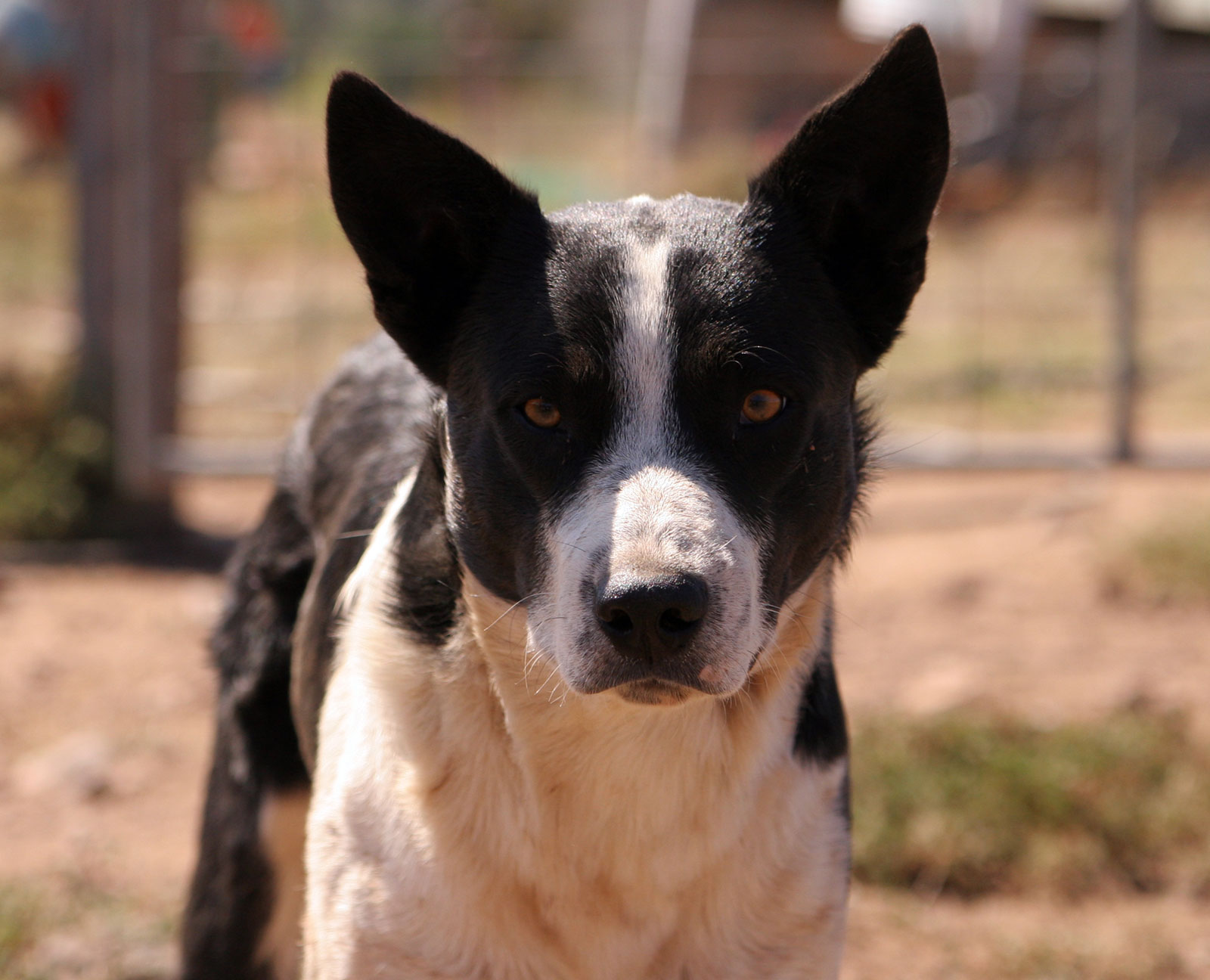
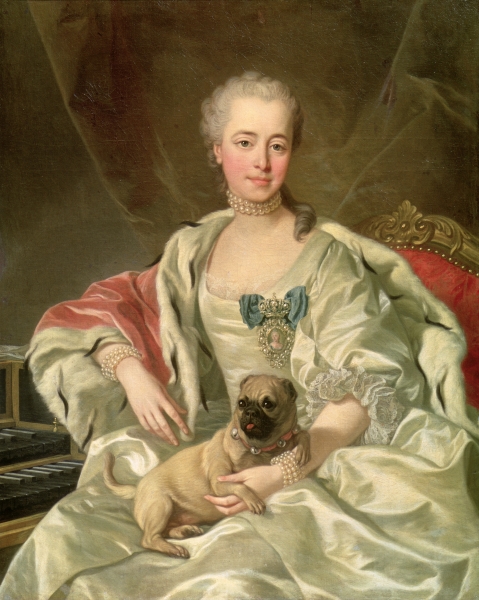
Working_dog_edit Louis-Michel_van_Loo_Princess_Ekaterina_Dmitrievna_Golitsyna

On the question of whether farm dogs or lap dogs have happier lives, a majority of respondents to the Friday FW poll (56%) chose farm dogs as the happier canines. Twenty-eight percent thought both kinds of dog had equally happy lives, but only sixteen percent chose lap dogs as happier.

On this day in 1858, Pres. Lincoln delivers his ‘House Divided’ speech while campaigning for the Senate in Illinois. Here’s that memorable passage:

A house divided against itself cannot stand. I believe this government cannot endure, permanently, half slave and half free. I do not expect the Union to be dissolved — I do not expect the house to fall — but I do expect it will cease to be divided. It will become all one thing or all the other. Either the opponents of slavery will arrest the further spread of it, and place it where the public mind shall rest in the belief that it is in the course of ultimate extinction; or its advocates will push it forward, till it shall become lawful in all the States, old as well as new — North as well as South.

Puzzability begins a new series entitled, Game Boxes:

This Week’s Game — June 16-20
Game Boxes
Playing around will work well for you this week. For each day, we’ll give a three-by-three letter grid in which we’ve hidden the name of a tabletop game. Each has 10 or more letters and any number of words. To find the game, start at any letter and move from letter to letter by traveling to any adjacent letter—across, up and down, or diagonally. You may come back to a letter you’ve used previously, but may not stay in the same spot twice in a row. You will not always need all nine letters in the grid.
Example:
RFT/UOC/NNE
Answer:
Connect Four
What to Submit:
Submit the game’s name (as “Connect Four” in the example) for your answer.
Monday, June 16
SRT/UIA/PLV

The Roughest, Toughest Race in the World

The Barkley Marathons, held every year in the rugged hill country of Tennessee, pit runners against their absolute mental and physical limits. The race is five 20-mile loops, almost entirely off-trail, with a total elevation gain that more than doubles the height of Mt. Everest. In three decades, only 14 people have ever finished.

In this short documentary, filmmaker Brendan L. Young profiles a few of the athletes who were daring enough to compete this year. To learn more about the Barkley Marathons, read Leslie Jamison’s superb essay at The Believer.

Via The Atlantic.

Daily Bread for 6.15.14

Good morning, Whitewater.

Sunday will bring a likelihood of afternoon thunderstorms and a high of eighty-one to Whitewater.

On this day in 1215, King John of England accepts and places his seal on the Magna Carta:

Magna Carta was the first document imposed upon a King of England by a group of his subjects, the feudal barons, in an attempt to limit his powers by law and protect their rights.

The charter is widely known throughout the English speaking world as an important part of the protracted historical process that led to the rule of constitutional law in England and beyond.

The 1215 charter required King John to proclaim certain liberties and accept that his will was not arbitrary—for example by explicitly accepting that no “freeman” (in the sense of non-serf) could be punished except through the law of the land, a right that still exists under English law today. The name Runnymede may be derived from the Anglo-Saxon ‘runieg’ (regular meeting) and ‘mede’ (mead or meadow), describing a place in the meadows used to hold regular meetings. The Witan, Witenagemot or Council of the Anglo-Saxon kings of the 7th to 11th centuries was held from time to time at Runnymede during the reign of Alfred the Great. The Council met usually in the open air. Succeeding versions of the Council influenced the creation of England’s 13th century parliament.

On this day in 1832, Gen. Scott takes command in the Black Hawk War:

On this date General Winfield Scott was ordered by President Andrew Jackson to take command at the frontier of the Black Hawk War. Scott was to succeed General Henry Atkinson, thought to be unable to end the war quickly. General Scott moved rapidly to recruit troops and obtain equipment for his army. However, while in New York, the troops were exposed to an Asiatic cholera. Just outside of Buffalo, the first cases on the ships were reported and death often followed infection. By the time the ships reached Chicago, the number of soldiers had dropped dramatically from 800 to 150, due to disease and desertion. Rather than going on to the front, Scott remained with his troops in Chicago, giving Atkinson a brief reprieve. [Source: Along the Black Hawk Trail, by William F. Stark, p. 90-91]