
FREE WHITEWATER

The Planning Commission Meeting for 11.11.13

Whitewater’s Planning Commission met last night, and among the topics was consideration of re-zoning and a conditional use permit for Casual Joe’s, a new restaurant, tavern, and distillery to operate at 319 W. James Street (at the site of a long-unused commercial building, the former Fort Auto Body).   

On 4-3 votes, a majority of the Commission approved both the re-zoning and the conditional use permit.

I’ve supported this project, hoped that an accommodation could be reached, and think this was the right outcome. See, along this line, Whitewater’s Planning Commission Meeting for 10.14.13. (Needless to say, I have neither a financial nor a personal connection to the proposal; I simply believe it’s a good idea for Whitewater.)

One well-understands that the idea is controversial to some; in two consecutive Planning Commission meetings, concerns were both heard at length and (I’d say) thoroughly and methodically addressed.  

One of Whitewater’s planning commissioners offered an observation about a prior project that was controversial at the outset, but has turned out very well (my transcription, however imperfect):

….Some of the conversation we’ve had reminds me of the drive-thru liquor store conversation over on the Westsider.  Some of you may not even know that we have a drive-thru liquor store, but if you’ve been here, calamity was ensured.  And, I don’t want to make light of this, because in that case there are residents nearby, but the slippery slope argument was used.

What happened in this case is that it was approved, and it was approved because the person, the applicant, did his homework, involved partners, amended the plan, and it was a known…it was somebody who was established in the neighborhood – long-established in the community, and he had a stake….

Well said.  I remember that discussion clearly; there are advantages to a long memory.

It’s also true that the project proposed for 319 W. James Street is exactly the sort of project that Whitewater’s Comprehensive Plan – whatever one thinks of it generally – does contemplate for a location like this one.  To read from those planning documents and believe otherwise, really, is a misunderstanding of what those documents both say and strive to foster.

To paraphrase from a recent presidential campaign slogan, this is the change for which we’ve been waiting.  

For us, in Whitewater, this is the emerging business and entrepreneurial culture, of restaurants, merchants, and independent professionals, for which we have been hoping.  

Big has failed us, stodgy has failed us, top-down has failed us. 

Not everyone sees this as opportunity, I know.  Much of this is comfort with the past, even if for the whole city the past has been embarrassingly less than a reasonable person would hope, excuses and exaggerations notwithstanding.    

What comes to us now, fortunately, will not be yesterday’s environment – it will be a new and better one, more prosperous, more vibrant, of greater opportunities for all the community.  

Best wishes to Chef Sailsbery and his staff for another successful venture.
Daily Bread for 11.12.13

Good morning.

Tuesday in Whitewater will be sunny, clear, and crisp, with a high of thirty.

Whitewater’s Parks & Rec Department meets today at 5:30 PM.

The most recent FW poll asked whether there should be Another Star Wars Film? Just over sixty-percent of respondents wanted to see more films in this series.

Here’s a very young man who, in not-too-many years, is likely to be among those in line to see new additions to the series. After all, even the sound of the Star Wars theme soothes him:

Scientific American‘s daily trivia question asks about a number. (Clicking on the question leads to its answer.)

How many nations were involved in building the International Space Station?

The Leaves on the Streets PSA

Whitewater has a public service announcement about leaf collection, to remind residents not to sweep their leaves into the street.  

It’s a short, clever video.  It does government a lot of good to remind someone of a policy without doing it in a heavy-handed way, but with a more light-hearted approach.

This does the trick nicely.      

Leaves On The Streets? No! – PSA from Whitewater Community TV on Vimeo.

Why Plan?

All people make plans for the future, even if that should be no farther ahead than for later the same day.

Why specifically, though, should government plan?  Every city has plans for development, plans for budgeting, and many (as we do in Whitewater) have a public commission with lawful authority to approve or reject certain private construction or mercantile proposals.  

Whitewater’s Planning Commission, I think, has a choice before it: will you establish fair rules by which private parties can engage in entrepreneurial activity, or will you pick and choose who succeeds and fails, at the outset?  

It’s the oft-repeated distinction between planning for others to compete and planning to control competition.  Watching Whitewater’s Planning Commission, it’s clear that some commissioners would like merely to establish fair rules, and others feel a right to engineer specific results, including preventing entrepreneurs from building and creating in response to consumer demand.

Commissioners who feel they have a right to stop projects based on their personal preferences, or even the authority to stop projects because as appointees they may decide the destiny of others rather than allowing consumers to decide for themselves, overstep legitimate, responsible authority.

Hayek, among so many others since, saw the difference between government planning to facilitate any number of private, voluntary possibilities and planning of a few to compel particular outcomes.  Here, from his Road to Serfdom, are succinct expressions of his views:

“PLANNING” owes its popularity largely to the fact that everybody desires, of course, that we should handle our common problems with as much foresight as possible. The dispute between the modern planners and the liberals is not on whether we ought to employ systematic thinking in planning our affairs. It is a dispute about what is the best way of so doing. The question is whether we should create conditions under which the knowledge and initiative of individuals are given the best scope so that they can plan most successfully; or whether we should direct and organize all economic activities according to a “blue-print,” that is, “consciously direct the resources of society to conform to the planners’ particular views of who should have what.

One might describe this as a case for limited planning, and for expansive private activity.  Hayek draws this distinction:  

It is important not to confuse opposition against the latter kind of planning [of state-mandated outcomes] with a dogmatic laissez faire attitude.

The liberal argument does not advocate leaving things just as they are; it favors making the best possible use of the forces of competition as a means of coordinating human efforts. It is based on the conviction that, where effective competition can be created, it is a better way of guiding individual efforts than any other. It emphasizes that in order to make competition work beneficially a carefully thought-out legal framework is required, and that neither the past nor the existing legal rules are free from grave defects.

Liberalism is opposed, however, to supplanting competition by inferior methods of guiding economic activity. And it regards competition as superior not only because in most circumstances it is the most efficient method known but because it is the only method which does not require the coercive or arbitrary intervention of authority.

The case for a liberal, private order rests on arguments of efficiency and morality.  

Conditions are better, in both ways, when one is free.  

Whitewater will be more prosperous when planning returns to its proper, limited, responsible role. We’ll not have broad-based growth – we’ll not be both hipper and more prosperous – until then.  

Many can achieve here, but only under conditions of political and regulatory restraint.  

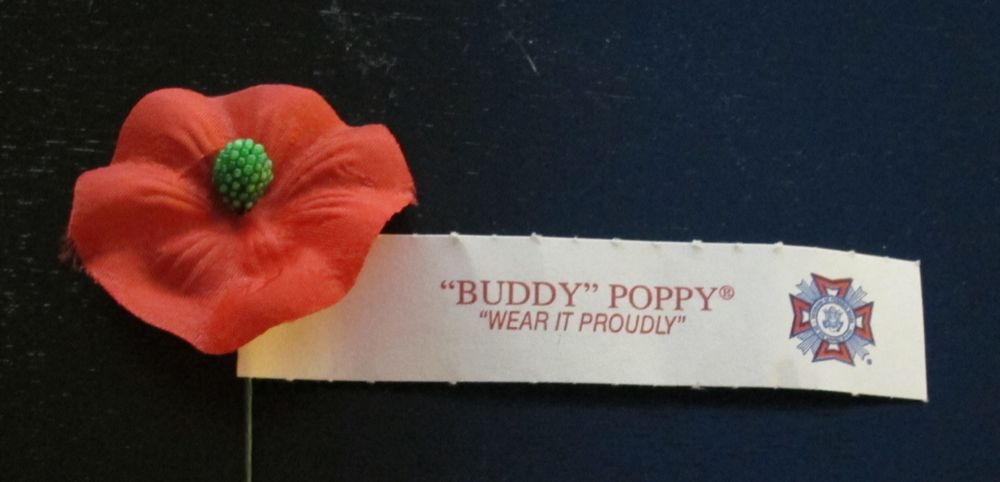
Veterans’ Day 2013

IMG_0744
 

The presidential proclamation for Veterans’ Day 2013:

BY THE PRESIDENT OF THE UNITED STATES OF AMERICA

A PROCLAMATION

On Veterans Day, America pauses to honor every service member who has ever worn one of our Nation’s uniforms. Each time our country has come under attack, they have risen in her defense. Each time our freedoms have come under assault, they have responded with resolve. Through the generations, their courage and sacrifice have allowed our Republic to flourish. And today, a Nation acknowledges its profound debt of gratitude to the patriots who have kept it whole.

As we pay tribute to our veterans, we are mindful that no ceremony or parade can fully repay that debt. We remember that our obligations endure long after the battle ends, and we make it our mission to give them the respect and care they have earned. When America’s veterans return home, they continue to serve our country in new ways, bringing tremendous skills to their communities and to the workforce— leadership honed while guiding platoons through unbelievable danger, the talent to master cutting- edge technologies, the ability to adapt to unpredictable situations. These men and women should have the chance to power our economic engine, both because their talents demand it and because no one who fights for our country should ever have to fight for a job.

This year, in marking the 60th anniversary of the Korean War Armistice, we resolved that in the United States of America, no war should be forgotten, and no veteran should be overlooked. Let us always remember our wounded, our missing, our fallen, and their families. And as we continue our responsible drawdown from the war in Afghanistan, let us welcome our returning heroes with the support and opportunities they deserve.

Under the most demanding of circumstances and in the most dangerous corners of the earth, America’s veterans have served with distinction. With courage, self-sacrifice, and devotion to our Nation and to one another, they represent the American character at its best. On Veterans Day and every day, we celebrate their immeasurable contributions, draw inspiration from their example, and renew our com- mitment to showing them the fullest support of a grateful Nation.

With respect for and in recognition of the contributions our service members have made to the cause of peace and freedom around the world, the Congress has provided (5 U.S.C. 6103(a)) that November 11 of each year shall be set aside as a legal public holiday to honor our Nation’s veterans.

NOW, THEREFORE, I, BARACK OBAMA, President of the United States of America, do hereby pro- claim November 11, 2013, as Veterans Day. I encourage all Americans to recognize the valor and sacrifice of our veterans through appropriate public ceremonies and private prayers. I call upon Federal, State, and local officials to display the flag of the United States and to participate in patriotic activities in their communities. I call on all Americans, including civic and fraternal organizations, places of worship, schools, and communities to support this day with commemorative expressions and programs.

IN WITNESS WHEREOF, I have hereunto set my hand this fifth day of November, in the year of our Lord two thousand thirteen, and of the Independence of the United States of America the two hundred and thirty-eighth.

Daily Bread for 11.11.13

Good morning.

Monday will be a mix of rain or snow in the morning, with a high of thirty-eight for the day, and temperatures falling into the twenties by late afternoon.

Whitewater’s Planning Commission will meet at 6 PM tonight.

On the 11th hour of the 11th day of the 11th month of 1918, the Great War ends:

At 5 a.m. that morning, Germany, bereft of manpower and supplies and faced with imminent invasion, signed an armistice agreement with the Allies in a railroad car outside Compiégne, France. The First World War left nine million soldiers dead and 21 million wounded, with Germany, Russia, Austria-Hungary, France, and Great Britain each losing nearly a million or more lives. In addition, at least five million civilians died from disease, starvation, or exposure.

The Rolling Stones play in Milwaukee on 11.11.1964, and a reporter for the Milwaukee Journal is not impressed:

1964 – Rolling Stones Play Milwaukee
On this date the Rolling Stones first performed in Wisconsin, to a crowd of 1,274 fans at Milwaukee Auditorium. Although Brian Jones remained in a Chicago hospital with a high fever, the rest of the band performed. According to a dubious reporter for the Milwaukee Journal, “Chances are, few in the audience missed his [Jones’] wailing harmonica. Screams from a thousand throats drowned out all but the most insistent electronic cacaphony and the two-fisted smashes of drummer Charlie Watts.”

The reporter continued, “Unless someone teaches guitar chords to chimpanzees, the visual ultimate has been reached in the Rolling Stones. With shoulder length hair and high heeled boots, they seemed more feminine than their fans. The Stones make the Beatles look like clean cut kids. You think it must be some kind of parody – but the little girls in front paid $5.50 a seat.” [Source: Milwaukee Journal November 12, 1964, p.14]

Scientific American‘s daily trivia question asks about a letter. (Clicking on the question leads to its answer.)

What is the only letter that doesn’t appear on the periodic table of the elements?

Daily Bread for 11.10.13

Good morning.

Sunday will grow gradually sunnier, with a high of forty-five, and lighter winds than yesterday, at only 5 to 10 mph for today.

US743801-0

On this day in 1903, Mary Anderson receives a patent:

…the patent office awards U.S. Patent No. 743,801 to a Birmingham, Alabama woman named Mary Anderson for her “window cleaning device for electric cars and other vehicles to remove snow, ice or sleet from the window.” When she received her patent, Anderson tried to sell it to a Canadian manufacturing firm, but the company refused: The device had no practical value, it said, and so was not worth any money. Though mechanical windshield wipers were standard equipment in passenger cars by around 1913, Anderson never profited from the invention.

As the story goes, on a freezing, wet winter day around the turn of the century, Mary Anderson was riding a streetcar on a visit to New York City when she noticed that the driver could hardly see through his sleet-encrusted front windshield. Although the trolley’s front window was designed for bad-weather visibility—it was split into parts so that the driver could open it, moving the snow- or rain-covered section out of his line of vision—in fact the multi-pane windshield system worked very poorly. It exposed the driver’s uncovered face (not to mention all the passengers sitting in the front of the trolley) to the inclement weather, and did not improve his ability to see where he was going in any case.

Anderson began to sketch her wiper device right there on the streetcar. After a number of false starts, she came up with a prototype that worked: a set of wiper arms that were made of wood and rubber and attached to a lever near the steering wheel of the drivers’ side. When the driver pulled the lever, she dragged the spring-loaded arm across the window and back again, clearing away raindrops, snowflakes or other debris. When winter was over, Anderson’s wipers could be removed and stored until the next year. (This feature was presumably designed to appeal to people who lived in places where it did not rain in the summertime.)

People scoffed at Anderson’s invention, saying that the wipers’ movement would distract the driver and cause accidents. Her patent expired before she could entice anyone to use her idea.

Additional information about her patent is available online.

Daily Bread for 11.9.13

Good morning.

Saturday in Whitewater will be partly sunny, and breezy, with a high of fifty-three. We’ll have west winds of ten to twenty mph, with gusts as reaching 30 mph.

What if, as a painter, one were to choose people, themselves, as both subjects and parts of one’s paintings? To be an artist like that would be to be someone like Alexa Meade:

On this day in 1989, the Berlin Wall opens:

East German officials today opened the Berlin Wall, allowing travel from East to West Berlin. The following day, celebrating Germans began to tear the wall down. One of the ugliest and most infamous symbols of the Cold War was soon reduced to rubble that was quickly snatched up by souvenir hunters.

The East German action followed a decision by Hungarian officials a few weeks earlier to open the border between Hungary and Austria. This effectively ended the purpose of the Berlin Wall, since East German citizens could now circumvent it by going through Hungary, into Austria, and thence into West Germany. The decision to open the wall was also a reflection of the immense political changes taking place in East Germany, where the old communist leadership was rapidly losing power and the populace was demanding free elections and movement toward a free market system….

On 11.9.1968, an earthquake in Wisconsin:

1968 – Earthquake Shakes Wisconsin
On this date one of the strongest earthquakes in the central United States occurred in south-central Illinois. Measured at a magnitude of 5.3, press reports from LaCrosse, Milwaukee, Port Washington, Portage, Prairie Du Chien, and Sheboygan indicated that the shock was felt in these cities. [Source: United States Geological Survey]