
Anderson, Cartoons & Comics
Attributes
by JOHN ADAMS •
Good morning.
We’ll have a sunny midweek day, with a high of seventy-eight. Sunrise is 6:54 AM and sunset 6:34 PM. The moon is a waning crescent with 6% of its visible disk illuminated.
The Community Development Authority Board meets today at 5 PM.
On this day in 1869, Gandhi is born.
Closer to home, in 1950, the first Peanuts strip appears on 10.2:

On this day in 1958, a very different Janesville sees a strike:
1958 – Janesville Auto Workers Strike
On this date 4,000 members of United Auto Workers Locals 95 (Fisher Body) and 121 (Chevrolet) at Janesville’s two GM plants walked off the job as part of a national strike over GM’s refusal to agree to a contract patterned after those reached with Ford and Chrysler. The desired contract demanded pay increases of 24 to 30 cents an hour and raises in supplemental unemployment benefits and severance pay. [Source: Local Union No. 95 UAW]
Scientific American‘s daily trivia question asks about a chemical mix. (Clicking on the question leads to its answer.)
Quick scheduling change: I’ll move restaurant reviews to Thursday, and the weekly Anderson comic to Wednesdays, beginning. There will be a new comic today, and a new restaurant review tomorrow.
It’s the month for Halloween, and just in time, Janesville Transit brings Whitewater a trick, but certainly no treat: a Ghost Bus.
One may safely call it this, as it’s almost entirely empty after dropping riders off at multi-billion-dollar Generac, with those few passengers remaining being about as rare and difficult to see as the shades, specters, and apparitions that supposedly haunt graveyards and abandoned houses.
Hundreds of thousands in public money, over a three-year period, and a splashy advertising campaign online and in print, and for it, there’s almost no Whitewater ridership outside of Generac employees.
I’ve embedded the relevant documents from tonight’s Common Council meeting at the bottom of this post.
What do they show (assuming these are even accurately reported passenger trips)?
Generac – flush with a market capitalization of $2.92 billion and a stock price up 72% over the last year – accounts for 30% of all riders, with the Janesville terminal supplying 29%, other Janesville stops 21%, the Milton Piggly Wiggly 10%, Milton other stops 3%, the UW campus only 5%, and non-students, non-Generac workers in Whitewater only 2% of riders.
That’s why the bus seems empty – because when driving through the city, it is empty (or nearly so).
Useless for merchants, useless for ordinary residents, who are stuck subsidizing a big corporation and a bigger city’s transit system.
In my office, I have page upon page of all the color print advertisements Janesville Transit has purchased – full page, many of them – to hawk this bus. They’ve also bought web ads at a local newspaper, thereby creating a conflict with that paper’s reporting on this pricey effort.
For all that money spent, and all the grand crowing about how many passenger trips there would be for our city, what happened?
Janesville’s transit director first said that 2012 was his test year, then it was 2013 that would be the test year, and here we are, near the end of ’13: all that advertising, all those grand claims, most of it at public expense, with the largest portion for a billion-dollar corporation shipping non-resident employees to Whitewater, and here are the embarrassing results.
This is a money-suck, crony capitalist failure. These thousands, for example, could better provide genuine support to small, local merchants, in the downtown or elsewhere.
Generac can and should pay its own way.
What’s really scary about Janesville Transit’s Innovation Express Ghost Bus?
That anyone in Whitewater might pour still more public money into this scheme.
For the Love of Mountains from Al Boardman on Vimeo.
Good morning.
A new month begins. We will have a sunny day with a high of eighty.
Common Council meets tonight at 6:30 PM.
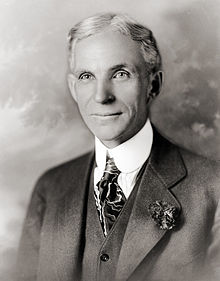
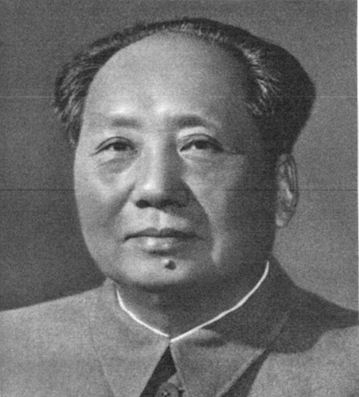
October 1st brings anniversaries good and bad. On 10.1.1908, Ford Motor Company rolls the first Model T off the production line. On 10.1.1949, Mao Zedong declares himself head of state of the so-called People’s Republic of China. Ford didn’t do everything right, but even on his worst day, he was an incomparably better man that Mao ever was. The choice between peaceful American industrialization and violent communist oppression isn’t even a choice: it’s the chasm between civilization and mass murder.
On 10.1.1866, the leading advocate of a Flag Day, who later taught school in Fredonia, is born:
1866 – Bernard Cirgrand Born
On this date Bernard Cirgrand, known as the founder of Flag Day, was born. Bernard showed his patriotism in 1885 by placing a small flag on his school desk on June 14. As it happens, June 14, 1777 was the day that the stars and stripes were decided upon by the new Senate. Bernard wrote many articles and many speeches trying to urge a national Flag Day to be celebrated. In 1916 President Woodrow Wilson finally declared June 14 to be Flag Day. [Source: National Flag Day Foundation]
Scientific American‘s daily trivia question asks about RNA. (Clicking on the question leads to its answer.)
Clicking the informational flyer below produces an even larger image.

Of residential zoning restrictions in Whitewater (restricting residential occupancy to no more than two unrelated persons in an R-O overlay district), a few points may safely be made:
Considering these circumstances, no matter how contentious they’ve been, I’ll offer a compromise: limit these sort of restrictions to this area, and to no other, for at least a decade.
I’ll support the municipal administration’s proposal here – even though I think it’s a mistake for the city and even the long-term selling prospects of the very residents of the neighborhood.
(It’s in the spirit of compromise, with warmth in my heart, that I offer today’s Monday-music post: Smash Mouth Covers Why Can’t We Be Friends?)
There are, to my mind, only two reasons one would support this proposal: (1) under a misguided understanding of what restricting long-term selling prospects will do to resale values a generation from now, or (2) to make a point.
Fair enough, and here’s my point: this is an inherited issue, that’s distracting the city from more important matters. The sooner this municipal administration sets this matter side, and breaks with the policy of the last one, the better off the city will be (to spend time on other, more pressing matters). There’s a chance to end this years-long issue, if only the administration commits to future restraint.
Let those who want this here, even if it should work to their long-term economic disadvantage, have their way – and then move on.
Good morning.
As September ends, we’ll have a bit of fog in the morning, and then a sunny day with a high of seventy-three. The moon is a waning crescent with 19% of the its visible disk illuminated.
Private spaceflight took a step forward this weekend, as SpaceX’s upgraded Falcon 9 rocket saw a successful test:
On this day in 1954, America commissions the world’s first nuclear submarine:
Much larger than the diesel-electric submarines that preceded it, the Nautilus stretched 319 feet and displaced 3,180 tons. It could remain submerged for almost unlimited periods because its atomic engine needed no air and only a very small quantity of nuclear fuel. The uranium-powered nuclear reactor produced steam that drove propulsion turbines, allowing the Nautilus to travel underwater at speeds in excess of 20 knots.
In its early years of service, the USS Nautilus broke numerous submarine travel records and in August 1958 accomplished the first voyage under the geographic North Pole. After a career spanning 25 years and almost 500,000 miles steamed, the Nautilus was decommissioned on March 3, 1980. Designated a National Historic Landmark in 1982, the world’s first nuclear submarine went on exhibit in 1986 as the Historic Ship Nautilus at the Submarine Force Museum in Groton, Connecticut.
On this day in 1859, Abraham Lincoln speaks at a Wisconsin agricultural fair:
1859 – Abraham Lincoln Speaks at State Fair
On this date Abraham Lincoln delivered an address at the Wisconsin State Fair. In his speech, he connected agriculture to education: “Every blade of grass is a study; and to produce two, where there was but one, is both a profit and a pleasure.” The rising political star (who was elected the following year), also stressed the importance of free labor. This was Lincoln’s last visit to Wisconsin. In 1861, after winning the presidential election, Lincoln signed the bill establishing the U.S. Department of Agriculture. [Source: AbrahamLincoln.org]
The text of Lincoln’s speech is available online.
Scientific American‘s daily trivia question asks about early space exploration. (Clicking on the question leads to its answer.)
Good morning.
Sunday in Whitewater looks to be a lovely fall day: sunny, a high of seventy, and light northwest winds around 5 mph becoming calm in the afternoon.
The results of my latest poll are in, and they’re decisive: 87.1% of respondents felt that convicted animal-abuser Patricia Ritz met her deserved fate when her mistreated wolf-dogs consumed her after she died. They (apparently) didn’t kill her, but they cadged a meal after she expired. I was with a majority on this one.
On this day in 1758, Horatio Nelson, an unsurpassed naval hero, is born:
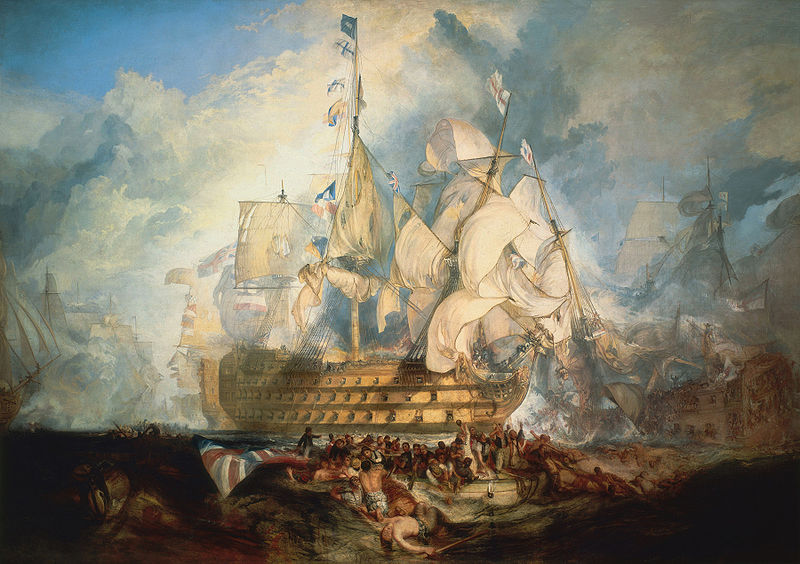
Horatio Nelson, Britain’s most celebrated naval hero, is born in Burnham Thorpe, England. In the French Revolutionary and Napoleonic wars, he won a series of crucial victories and saved England from possible invasion by France….
In October [1805], Napoleon ordered Villeneuve to run the blockade and sail to Italy to assist a French campaign. On October 19, Villeneuve slipped out of Cadiz with a Franco-Spanish force of 33 ships, but Nelson caught him off Cape Trafalgar on October 21. Nelson divided his 27 ships into two divisions and signaled a famous message from the flagship Victory: “England expects that every man will do his duty.” In five hours of fighting, the British devastated the enemy fleet, destroying 19 enemy ships and capturing Villeneuve. No British ships were lost, but 1,500 British seamen were killed or wounded in the heavy fighting. The battle raged at its fiercest around the Victory, and a French sniper shot Nelson in the shoulder and chest. The admiral was taken below and died about 30 minutes before the end of the battle. Nelson’s last words, after being informed that victory was imminent, were “Now I am satisfied. Thank God I have done my duty.”
Victory at the Battle of Trafalgar ensured that Napoleon would never invade Britain. Nelson, hailed as the savior of his nation, was given a magnificent funeral in St. Paul’s Cathedral in London. A column was erected to his memory in the newly named Trafalgar Square, and numerous streets were renamed in his honor. The HMS Victory, where Nelson won his most spectacular victory and drew his last breath, sits preserved in dry-dock at Portsmouth.
Good morning.
Today will be warm and mostly sunny, with a one-third chance of afternoon showers, and a high of eighty.
On this day in 1941, Ted Williams becomes the last player to hit .400 in a season:
…the Boston Red Sox’s Ted Williams plays a double-header against the Philadelphia Athletics on the last day of the regular season and gets six hits in eight trips to the plate, to boost his batting average to .406 and become the first player since Bill Terry in 1930 to hit .400. Williams, who spent his entire career with the Sox, played his final game exactly 19 years later, on September 28, 1960, at Boston’s Fenway Park and hit a home run in his last time at bat, for a career total of 521 homeruns….
Impressive, wholly impressive.