
Big.
Free Markets, Libertarians, Liberty
Lessons from Atlas Shrugged
by JOHN ADAMS •
Here’s a fine video about what the videographer learned from Atlas Shrugged.
I’m a libertarian, rather than an Objectivist (as I’d guess the videographer is), but the video offers an appeal to both groups.
(Libertarianism is a political view, of individual rights and limited government, and has no inherent suspicion of religion, as Objectivism does. On the contrary, libertarians include among their numbers Methodists, Baptists, Jews, Catholics, etc.)
The video’s a sharp defense of liberty, stylishly presented, that people of many beliefs can enjoy.
Law, Liberty
Concise video on the Rule of Law
by JOHN ADAMS •
Professor Tom Bell explains how important a clear rule of law – and limits on it – will be for any free society.
Science/Nature
Ars Technica: Where’s Tyche, the 10th 9th planet? Getting the full story
by JOHN ADAMS •
The very solid science and technology website has Ars Technica reports on speculation about another planet far from the sun, in the Oort cloud. They consider the speculation, and the quality of information behind the frenzy:
On February 14th, the UK’s Daily Mail reported the possible discovery of a planet four times bigger than Jupiter and lurking in the outer solar system. From there, the story quickly spread like a wildfire on the Internet, seeing coverage by mainstream outlets including the Huffington Post and TIME online. The tone of various news stories varied from “Tyche, Giant Hidden Planet, May Exist In Our Solar System” (The Huffington Post) to “Astronomers Question Existence of Solar System’s Mystery Planet Tyche” (Fox News). So, is there really a new planet lying out there?
Via Where’s Tyche, the 10th 9th planet? Getting the full story.
Daily Bread
Daily Bread for 3.3.11
by JOHN ADAMS •
Good morning,
Today’s forecast for the Whippet City calls for a mostly cloudy day, with a high temperature of thirty-eight degrees.
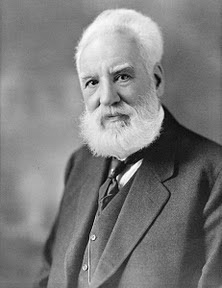
Today is the anniversary of the birthday of Alexander Graham Bell, born in 1847.
Laws/Regulations
Nanny of the Month for February 2011: Would-Be Brothel Banner Sen. Harry Reid
by JOHN ADAMS •
Charity
The Charitable Concern
by JOHN ADAMS •
In every town, there are people in need. Whitewater has more than many places, fewer than some others. By nature and teaching, able-bodied and established people often assist those who are trouble or disadvantaged. People are social by nature, and compassion is a basic trait. Without government’s request or intervention, people commit privately (often anonymously) to many charitable concerns.
These concerns affect directly the lives not only of the disadvantaged, but also those who are donors, volunteers, and patrons. Some of those volunteers will prove insightful beyond others, and may have good ideas for the ongoing work of the charity. I’ve met people like this, who volunteer their time and money, but have an even greater gift in good ideas.
None of these volunteers is disadvantaged; they’re privileged people who come to help others through compassion. They act from good and worthy motives. Compared with those the charity serves, the volunteers will often be among the most fortunate and privileged within their communities. Since American communities have so much, that places them among the most fortunate and privileged people in all the world.
And yet, and yet, these clever and dedicated volunteers aren’t all the same. Some will speak up, and fight for their good ideas for charitable improvement, but others will remain silent.
They have all the world, by station and privilege, but only some will venture an opinion against prevailing, ineffective customs.
There’s much in this that’s discouraging. It makes sense that a troubled or fragile person would not speak up; need requires attention over advocacy. It would be wrong and unfair to expect more, then and there.
The same is not true of the fortune. It is a truth and a teaching, simply stated, that ‘to whom much is given, much is expected.’
There’s nothing more galling than a fortunate person who hesitates, or stays silent, rather than advocate his or her good ideas for a charitable concern (a place where, from others’ need, good ideas are most useful).
Some, though, will arrive, see problems, and nevertheless stay silent. Talking about talking, and talking about acting, is not action. It’s talk. They’ll see a problem, and ponder what to do or say, but say nothing that makes a difference. They’re be all sorts of preliminary talk about the right process, about how to handle a difficult conversation, but no actual conversing. Worries about how a few words might be perceived, but no action to change how things are done.
People of this ilk often focus — despite all their advantages — on what they deserve by way of deference, etc.
Government will see some of these deficiencies, too, but diffident bureaucrats will stay silent. A hundred thunderbolts from Olympus when an official wants something, but for those in need, not even a spark.
The admirable ones are those who both serve and speak, so that service to others might be more effective.
City
Fiction by the Numbers
by JOHN ADAMS •
A man walks into a Perkins restaurant, and orders an omelet, juice, and coffee. The order arrives promptly. After a while, the waitress checks on him, and asks if he’s finished eating. One would expect the man to answer the waitress’s question with either “yes, thank you’ or “no, not yet, thank you.” One wouldn’t expect the patron to say that he’s “87% finished,” let alone “87.1% finished.”
That’s because people don’t typically describe tasks with such nicety. They don’t do so because they’re not sharp enough, but because they are sharp enough: they know that such supposed accuracy of measurement is a fiction.
(Looking at an omelet, and all items ordered, and then fixing the quantities involved so as to reduce consumption to a nice percentage isn’t believable. Trying to determine the exact quantities of the meal by glancing at the plate, the coffee cup, etc., and assessing progress as a definite percentage is a dubious task.)
So, if the man were to answer not merely that he was eighty-seven percent finished, but eighty-seven-point-one percent finished, the waitress would have every reason to think the patron was teasing. (52 and 52.0, for example, aren’t the same; they represent different degrees of measurement. If someone telling you he’s 52% done seems overdone, it’s more so when someone tells you he’s 52.0% done. )
If the patron were serious, somehow, the waitress would have sound reason to skip that table during his next visit.
Perhaps, I’d guess, it’s all meant to sound impressive, scientific, the height of positivism. By contrast, I’d suppose that even Comte wasn’t that much of a positivist.
Is using silly percentages like this a defensive technique? That is, if a person said he was ‘mostly done’ he might fear a question or two, but by answering “I’m 87.1% done” he feels he’s safely beyond inquiry. After all, isn’t someone who answers so exquisitely seem a man of science, like, say, Isaac Newton? Someone might question an ordinary man, but not a seemingly scientific man.
(That’s a false idea of science, and scientists. I’ll bet anything that Newton, himself, would never have answered a waitress with a percentage.)
One has no reason to be deterred upon hearing a flimsy percentage in the place of a straight-forward answer.
Daily Bread
Daily Bread for 3.2.11
by JOHN ADAMS •
Good morning,
It’s a mostly sunny day ahead for Whitewater, with a high temperature of twenty-four degrees.
Whitewater’s Landmarks Commission meets tonight, from 5:30 p.m. to 7 p.m. The agenda is available online.
It’s Dr. Seuss’s birthday. Theodor Seuss Geisel was born in 1904, and passed away in 1991.
City
Whitewater’s 2010 City Performance Plan (Part 3)
by JOHN ADAMS •
Here’s the final part of a series of posts on Whitewater’s 2010 City Performance Plan. Parts 1 and 2, and the document itself, appear in the preceding posts.
Far worse than a ginned-up success rate, or a shameless claim about tax incremental financing, is the apparent expectation that residents should believe these shady statements.
I am quite sure we, common residents of Whitewater, are sharp, capable, sincere. This is the foundation of libertarian thinking: that people — as individuals — possess admirable skills and abilities that they have a right to exercise free of coercion, trickery, or the guidance of a selfish political vanguard.
Those who say otherwise do so, often, merely to flatter themselves.
Beside my desk, just an arm’s length away, I have a collection of American political writings, from the earliest settlement of this continent until much more recently. In those books, one finds some — but only the smallest part — of Americans’ thinking across these centuries. There’s hope and confidence for anyone who reads those thoughts, preserved and enduringly vibrant even for us.
So many of those great men and women loved and respected common men and women, common as we are. They saw people as capable and responsible. Seeing them that way, they knew the futility of dribbling child’s lie upon child’s lie on the heads of their fellow citizens. On the contrary, their love and respect for each person made that ill-treatment impossible.
We are not so fortunate. Rather than embrace our long tradition of honesty, integrity, and dedication to humble service, so many of our town squires seek only their own positions, as ‘people of influence.’ They believe in nothing so much as in their own self-importance. Their only cause is to find a chair before the music stops.
In thinking that way, they separate themselves from America’s long and worthy political tradition. They condescend when they should consider, self-promote when they should quietly serve. They see — in vivid colors — their own supposed successes; invisible to them are the struggles of many others in the city. No bureaucratic hand has helped our fellow residents; no quotation book has lessened their burdens. The grand projects of the city are not for them, but are only ornaments to selfish bureaucrats’ pride.
These last several years have been among the city’s worst, and conditions for a time may grow even worse.
And yet – cause for optimism. Circumstances will improve after that, when so much of the dumb show, all mugging and jazz hands, no longer crowds the stage.
City
Whitewewater’s 2010 City Performance Plan (Part 2)
by JOHN ADAMS •
Here’s part two of a series of posts on Whitewater’s 2010 City Performance Plan. Part 1, and the document itself, appear in the preceding post.
Far worse than a ginned-up success rate is a claim so shameless that a reasonable person would never venture the proclamation.
Under City Manager Kevin Brunner’s supposed accomplishments, one finds this item:
2. Complete all TIF and CIP projects on time and within budget. All projects completed on time and within budget.
In a city with a distressed tax incremental district — a failure present in only a small minority of Wisconsin cities — Whitewater’s city manager proclaims TIF success.
This is a shamelessness and arrogance nearly unbounded. It also confirms that maxim that mediocre leaders don’t get better, they get worse.
You know, and I know, too, that there’s a way to rationalize all this. It’s all definitional; under the intended definition, the statement of success supposedly makes sense.
What nonsense that is.
A man who burns down his own house is in no position to declare himself a prudent homeowner because he habitually took out the trash on time.
In these municipal claims, one sees the descent into self-parody, and further fall into absurdity.
The residents of Whitewater deserve much, much better than this.
Next — There’s something even worse than inflated percentages and shameless declarations of success.
City
Whitewater’s 2010 City Performance Plan (Part 1)
by JOHN ADAMS •
In the Whitewater 2010 City Performance Plan, City Manager Kevin Brunner contends that in 2010, municipal leaders accomplished 87.1% of their goals. (I have embedded the full document below.)
That sounds like an impressive success rate, until one considers that many of the goals listed are ordinary tasks that one should perform fully as part of one’s job.
As it turns out, I’ve been thinking of becoming a professional basketball player for the Miami Heat. Let’s see how far along I am toward that goal:
- Locate a sporting goods store. CHECK!
- Purchase a basketball. CHECK!
- Find a shoe store. CHECK!
- Buy some basketball shoes. CHECK!
- Make sure I save the receipts from the two stores for tax purposes — business expense! CHECK!
- Get a plane ticket to Miami. CHECK!
- Find a hotel in town. CHECK!
- Pick up some cool sunglasses in the hotel gift shop. CHECK!
- Take a cab to the arena where the Heat plays home games. CHECK!
- Actually play on the same court with LeBron and Dwayne. PENDING…
That’s 9 out of 10 — and by City Manager Brunner’s reasoning, I’m 90% of the way toward a professional sports career. That’s — ready? — actually 2.9% closer to my goal than the entire municipal government is toward its goals.
(It’s also higher than my 86.3% achievement in 2008 toward the goal of becoming a ninja, and my 88.9% achievement in 2009 toward the goal of singing at La Scala.)
The inclusion of mundane tasks stacks any supposed achievement in one’s favor.
Of the nearly 150 goals the city manager lists, countless tasks are simply the conventional work of the year. Of all the competed tasks, by my count — and yours may differ — well over half are duties one would normally expect as part of a year’s work. After one excludes the conventional tasks, a majority of tasks weren’t fully completed.
There’s nothing wrong with not reaching all of one’s goals — especially when those goals are lofty ones.
There’s something wrong — risible and refutable — about a municipal leader presenting these numbers as grand progress (up from last year!).
It should be enough to work hard each day, without a ginned up set of percentages to pretend performance is more than it is.
Next — There’s something even worse than inflated percentages.
Daily Bread
Daily Bread for 3.1.11
by JOHN ADAMS •
Good morning,
It’s a new month, that much closer to spring. For Tuesday, the forecast calls for a breezy day with a high temperature of forty degrees.
There’s a Common Council meeting tonight at 6:30 p.m. The agenda is available online.
Today is the day on which, in 1961, the Peace Corps was founded. Their website as a 50th Anniversary information sheet.
The Peace Corps represents America’s very best wishes, and is one of so many reasons to be proud of this country.
Uncategorized
Last WWI doughboy dies at 110 in West Virginia
by JOHN ADAMS •
Patriot.
See, from Veterans’ Day 2008, a VOA video embedded in a post entitled, Thank you, Corporal Buckles —