FREE WHITEWATER

The Entrepreneurial Spirit

There’s a fine story over at the GazetteXtra entitled, New Janesville business planning to stick around, about a cane and walking stick manufacturer.

[Lenny] Staller, a self-taught cabinetmaker, spent years making wooden toys. Now the 70-year-old Janesville man creates canes, walking and hiking sticks. He works in a shop in the back of the store he opened in December on Highway 14 west of Janesville.

“I think I’ve got the biggest selection in the Midwest,” he said while standing in the Lenny’s Canes showroom.

On display were 1,500 unique creations, among them walking sticks made from sunflower and Brussels sprout stalks, canes made from black walnut, palm tree and willow tree branches, plus a rain stick with rabbit fur.

The selection is attractive and considerable; a walking stick with a turkey topper looks particularly sharp.

I’ve no connection to the proprietor or his business (with a website at lennyscane.com), but admire the evident commitment behind the venture.

Best wishes, surely.

Walworth County Today: Whitewater developer pays $1 million for Delavan Industrial Park properties

D R Plastics Inc., a waste material recycling company, and Wild Impact Marketing, a marketing and merchandising firm, are expected to begin operations March 2011, once the build-outs are completed.

Premier Real Estate Development, a Whitewater, Wisconsin-based real estate specialist company, purchased the two industrial buildings for $1.1 million, or about $21.26 per square foot, according to a news release on www.costar.com

See, Whitewater developer pays $1 million for Delavan Industrial Park properties.

For more concerning D R Plastics, see Whitewater Community Development Authority meeting agendas for 12/13/10 and 12/22/10.

Daily Bread for 1-20-11

Good morning,

Whitewater’s forecast calls for a chance of snow showers, with a high temperature of seventeen degrees.

There’s no school today or tomorrow in our district. Play responsibly.

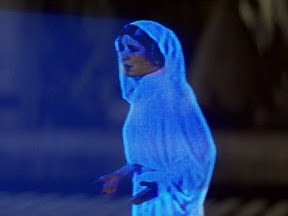
If you thought that holographic images from Star Wars and other movies would always remain merely the fanciful ideas of science fiction, the you may be underestimating American ingenuity. Over at ScienceNews.org, there’s a story entitled, Coming soon: Holographic Skype – Researchers close to creating real-time 3-D TV – that reports

Arizona researchers have created the first 3-D hologram movie that plays almost in real time, they report in the Nov. 4 Nature. It?s the fastest known demonstration of telepresence, where a 3-D hologram depicts a scene from another location.

The key to the invention is a new type of plastic that can refresh the hologram once every two seconds. While that?s too slow to watch the World Series in 3-D, the researchers estimated holographic TV could be coming in seven to 10 years.


LIVE IN 3-D from Science News on Vimeo.

more >>

Whitewater’s Emerald Ash Borer Plan


The City of Whitewater’s municipal administration has offered a plan to combat a small, invasive insect that threatens ash trees. See, Whitewater’s Emerald Ash Borer Plan.

Whitewater, Wisconsin proudly bears a designation as a Tree City USA. Having sought the designation, it’s predictable that residents would be proud and concerned over trees in the community. We’ve had contentious debates in town over the city’s trees, more than once. We’ve gone from a Tree Commission to an Urban Forestry Commission, and several Council meetings have been occupied with the care of Whitewater’s trees.

(Many of these debates have been made far worse by the municipal administration, hurling overblown charges about officials being ‘maligned’ or citizens committing ‘egregious’ acts.)

The Emerald Ash Borer (EAB) isn’t the first pernicious insect or disease that’s threatened North American crops or trees; it won’t been the last. Pioneers faced locusts throughout the nineteenth century, and Dutch elms and chestnut trees succumbed to diseases in the twentieth. I recall my father describing the effects of Dutch Elm Disease, and how startling it was for neighborhoods to see so many fine trees lost to infection.

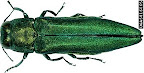
There are vast numbers of ash trees in America, of different varieties, so the borer threatens many communities, and whole groves may be destroyed. It’s nearly poignant that a threat to their survival comes from a tiny, beautiful insect. Whitewater’s EAB plan, with a picture of the insect on top of a penny, does not do that small insect justice — in so many other photos, the EAB is a striking, iridescent green. If it were not so destructive, the EAB would be a tiny jewel among insects. (Perhaps, even now, it’s worthy of that honor.)

When I first heard of Whitewater’s plan regarding the EAB, I thought: Perhaps, as in earlier times with locusts, we will fight against any infestation, even if the odds are long. (I’ve learned that there’s uncertainty about what caused locusts, in huge numbers, to disappear; many scientists doubt that they disappeared through human efforts, however strenuous they were).

Still, there’s something admirable in the trying, in that case and this one. If — regarding trees rather than crops — we could save some ash trees, would that not be a commitment to conservation, to preservation of part of the created order?

I’ve linked to Whitewater’s plan, and embedded it previously. But before commenting on it, I wanted to check and see if my own instincts about the plan — those of a layman — were sound.

Whitewater’s Management Plan. One sees, from the Executive Summary and other passages within the document, that this plan is not original to Whitewater. It’s from Beloit, and has been adopted for use here. There’s no dispositive wrong in taking a good plan from elsewhere and using it here.

(I’ve contended that Whitewater often takes too little of outside practices, and instead clings to a false, local exceptionalism in substitution for a genuine American exceptionalism. America, after all, does not end where Whitewater’s city limits begin.)

There is, however, a question about commitment to implementation, here in this city, if the plan’s a cribbed effort. A purchased term paper may be accurate, but it’s also evidence of indolence.

Process Boilerplate. Virtually the entire plan is collection of generic summaries or process boilerplate.

It’s not that it’s wrong, it’s that, after all, a Coversheet, Executive Summary, Index, History of EAB in Wisconsin, generic Planning Process, vague Goals/Priorities/Actions, Historical Background, full-page picture of a composite site, States Notification System, City of Whitewater Notification System, info on the City of Whitewater Command System (yes, ‘command system’), List of Regulatory Authorities, Applicable Laws Statutes Administrative Codes, outdated(!) EAB Quarantine Map, and blank end page

do not constitute a plan of action.

There’s nothing that indicates commitment or zeal to fight this infestation. On the contrary, Beloit’s plan, now Whitewater’s plan, hedges on just about every remedial measure:

There are Chemical Treatment options that may be looked at for protecting ash trees from E.A.B. It should be noted however, that Chemical Treatment carries with it trade-offs, that may not be environmentally safe. Caution should be exercised and all product information should be reviewed before product treatment is done.

Yes, but what will Whitewater actually do? There are ways to protect these trees, but there’s so much hesitation in this plan. Consider Whitewater EAB Management Plan, page 16:

Table 1. Insecticide options for professionals and homeowners for controlling EAB that have been tested in multiple university trials. Some products may not be labeled for use in all states. Some of the listed products failed to protect ash trees when they were applied at labeled rates. Inclusion of a product in this table does not imply that it is endorsed by the authors or has been consistently effective for EAB control.”

Yes, but what, if any of these, works in our state, and is there any recommendation from those who wrote this plan? Of what use is a plan that disclaims much, but offers little? For prevention or cure, wouldn’t no plan be as preventive as this plan?

Managing Infestation. In the end, that’s what this plan, such as it is, does — it simply manages infestation and destruction. It’s not prevention, or cure, but a passive response to a serious problem. I’m sure referring to it as a passive response will produce consternation among some bureaucrats. Yet, that’s all these two-dozen vague pages are — not a plan, but a resignation to loss.

There’s all the zeal in the world, to defend every last bureaucratic action as above reproach, but not so nearly much for hard work that would justify a reputation for industry and dedication.

Whitewater deserves a municipal plan as committed and dedicated to conservation as are so many of her residents.

This isn’t it.

Ilya Somin: Libertarianism and the Reliance Interests of People Who Depend on Government Programs

Prof. Somin writes that

It is indeed true that there are people who depend on government programs that should be abolished, and in some cases it would be unjust to simply cut them off immediately. But that doesn’t mean we should simply leave the programs in place forever. There is a wide range of options in between going cold turkey and feeding the addiction indefinitely. For example, we could lower program benefits without eliminating them completely. We can also continue paying current beneficiaries, but gradually eliminate the program for future ones (who generally rely on the program less). Another option might be to give some or all of the beneficiaries a lump sum “severance payment” to cushion them through the transition they face.There are also some relevant moral distinctions to be made between different classes of program beneficiaries. There is a difference between an ordinary citizen who relies on a program he or she had no hand in creating and a politically sophisticated, powerful interest group that aggressively lobbied for its establishment and perpetuation. That’s the distinction between, say, a low-income old lady who lives off a Social Security check and big agribusiness interests that lobby for massive farm subsidies and then whine about having become dependent on them.

Via The Volokh Conspiracy » Libertarianism and the Reliance Interests of People Who Depend on Government Programs.

In a small city like Whitewater, there’s vast spending on programs that are nothing up a kind of wasteful business welfare, while the city budget ignores pervasive poverty in favor of a narrow, and well-fed constituency.  Our present direction is not merely wrong, but wrong also for being built on dodgy, absurd claims of success.

P.J. Byrne: The Secret to a Libertarian State

Byrne writes:

I read an intriguing story last month about Toby Ord, a lecturer at Oxford University, who has pledged to donate £1,000,000 to charitable causes over his lifetime. Dr Ord is no millionaire – he currently earns £25,300 per year. He and his wife have pledged to give annually 10% of their income to charitable causes, and they’ve convinced others to do the same through his internet-based organization, Giving What We Can….

[Ord’s] organization and its members are proof that human nature and social responsibility are not mutually exclusive, and that people are certainly able—though perhaps not predisposed—to engage in meaningful voluntary altruistic activity. Second, we should note that Giving What We Can states openly that its members commit “to give 10% of their income to the most effective charities they can find,” as measured by the number of “Disability-Adjusted Life Years” preserved by their donations. One wonders what our society might look like if all social welfare provision were as rational, efficient, and accountable as this.

A community of those who traditionally tithe as an expression of faith would achieve similar results.  Efforts such as these can reliance on the state.

Via The secret to a libertarian state – CSMonitor.com. more >>

Daily Bread for 1-19-11

Good morning,

Whitewater’s forecast calls for a chance of light snow, with a high temperature of nineteen degrees.

In the City of Whitewater, there’s a 7 p.m. meeting about a Whitewater Effigy Mounds Preserve Restoration Plan. Here’s the city’s description of the meeting, with an agenda that’s available online:

Neighbors and interested community members are invited to attend a community meeting on Wednesday, January 19th at 7:00 PM, held at the Whitewater Municipal Building in the 1st floor community room. This will be the second public meeting, at this meeting Jennings & Associates will present a draft restoration plan for the site. The meeting will also be an opportunity to learn about restoration efforts at the Whitewater Effigy Mounds Preserve (formerly Indian Mounds Park). A plan is being prepared to guide the city in the restoration and preservation of this archaeologically significant site in Whitewater. The City has contracted with Jennings & Associates, a planning firm that has significant background in both land restoration and planning, as well as archaeological preservation.

In our schools today, it’s Green and Gold Family Fun Night at Lakeview School, from 6 to 8 p.m. It’s also Spirit Day at the Middle School.

This is no ordinary day, as the Wisconsin Historical Society rightly recalls. It’s a day to honor Ernest Hausen:

1939 – Chicken Plucking World Record

On January 19, 1939 Ernest Hausen (1877 – 1955) of Ft. Atkinson set the world’s record for chicken plucking. [Source: Guiness Book of World’s Records, 1992]

The Emerald Ash Borer Plan: Intro


Part of Whitewater’s Common Council meeting tonight concerns a plan to deal with the Emerald Ash Borer (EAB), an insect that represents a significant threat to ash trees.

I mentioned a few weeks ago that I would write, to experts in the field, and see what they thought of the plan that Whitewater has proposed to deal with the EAB threat.

Americans — including American scientists and researchers — are typically a friendly lot, and that’s been the case with responses to my inquiries. Before I write about the plan, though, I’d like to hear a discussion of the written plan at tonight’s council session, to see if there are remarks that modify or change the existing document’s provisions.

(I had planned to write about the EAB plan before the Council session, but I’m curious to hear if there are modifications to the plan presented tonight.)

For a copy of that written plan, as it now stands, is embedded above.

I’ll write more about all this tomorrow, on the basis of the written plan and any incorporated remarks from tonight’s session.

Daily Bread for 1-18-11

Good morning,

Today’s forecast calls for a chance of flurries, with a high of twenty-six degrees. (Yesterday, the National Weather Service predicted an accumulation of only one to three inches, and we exceeded that range. The NWS owes Whitewater a couple of inches and a few sunny days by way of compensation.)

In the City of Whitewater today, there are two municipal meetings. From 4:15 p.m. to 6:00 p.m., there’s a meeting of Whitewater’s Urban Forestry Commission. The agenda is available online.

Later, at 6:30 p.m., there’s a meeting of Whitewater’s Common Council. That agenda is also available online.

Mickey Kaus has a post at Kausfiles (now at the online Newsweek) that asks, “Are We Sure ‘Civility’ Will Help the Democrats?” He suggests that so-called civility many help incumbent…Republicans. I think he’s right. Kaus writes:

But now that they’ve won the House in an off year election, GOP pols don’t need to please the base so much. They need the middle. They need swing congressmen to vote for their bills and they need supportive poll numbers to encourage those congressmen to do so. If a “civility” crusade succeeds in getting the most volatile Republicans to cool it and stop irritating the center, it won’t be doing Obama’s work for him. It will be doing John Boehner’s work for him.

America has always been a place of robust rhetoric and polemics. A milder tone may seem self-satisfying, but it won’t help the out-of-power party retake the House (or the Wisconsin Assembly and Senate, for that matter). Scoring points now doesn’t assure an out-of-power party of winning votes in ’12. For voters to change their minds about a House Republican majority, they’ll have to think something’s wrong with Republicans, and that requires, I think, a more pointed approach than so-called civility allows.