
See, Video: Doctors battle to save baby koala – Telegraph.
Hat tip to Huffington Post for the link.
See, Video: Doctors battle to save baby koala – Telegraph.
Hat tip to Huffington Post for the link.
Indeed. Here’s a press release from the Libertarian Party:
Libertarian Chair: Time to Re-Legalize Immigration
WASHINGTON – Amid controversy over U.S. immigration policy, Libertarian Party Chair Mark Hinkle says the proper way to end illegal immigration is to re-legalize immigration. Hinkle released the following statement today:
“In debate after debate, Democratic and Republican politicians have decried the problem of illegal immigration, called for more border security and employer sanctions, and eagerly searched for evidence that their rivals employed undocumented help. The Obama administration proudly touts the fact that it is deporting more undocumented aliens than George W. Bush, while many of the families they support remain stranded in the United States, and most of whom were guilty of nothing more than the inability to satisfy a nightmarish bureaucracy.
“Our government has made it practically impossible for most would-be immigrants to work legally in America, a fact illustrated by this flowchart from Reason Magazine.
“For most of American history, immigrants streamed into this country, found jobs, and either stayed to build a life or returned to their native country if they couldn’t. America was admired by the world and proudly displayed an ode to immigration on the Statue of Liberty, within sight of the major processing center at Ellis Island. We can and should return to that tradition.
“Every significant problem blamed on immigration in this country is either imaginary or caused by government. In Arizona, where illegal immigrants are being blamed for an increase in violent crime, violent crime has actually been declining for a decade, and declining much faster than the national average. Immigrants (both legal and illegal) commit crimes at lower rates than natives. If you’re worried about gangs, then end the War on Drugs which funds them, just as it did the gangsters under alcohol prohibition.
“Immigrants are often accused of overloading the welfare system. This is again the fault of a government program. But the idea that welfare is a magnet for immigrants is a myth. In an ingeniously designed study by University of Hawaii Professor Ken Schoolland, patterns of migration within the 50 states, which have no travel restrictions between them, were studied. Schoolland found that were was, in fact, a very strong correlation between welfare and immigration: it was strongly negative. All of the states with the highest levels of government welfare benefits experienced net emigration to other states, and all of the states with the lowest levels of welfare experienced net immigration. Arizona, the current focus of anti-immigrant fears, ranks 46th in welfare benefits.
“Immigrants come here to work. Anyone who works and produces makes others better off. And unemployment and immigration actually are another two factors with a negative correlation. There has only been one decade in American history in which we did not have net immigration: the 1930s. If that is your idea of a great decade, you can have it.
“One unintended side effect of border crackdowns is to increase the number of undocumented aliens who remain because of the difficulty and cost of leaving and returning. Another is to create an ‘underground railroad’ that makes it easier for terrorists to enter without detection. The overwhelming majority of immigrants would love to come in through the front door. It is our bad immigration policy that has constructed the back door.
“It is time we stopped scapegoating the people who represent what is most admired about America. When the Libertarian Party was formed in 1971, we selected the Statue of Liberty as our symbol. We’re the only political party that deserves it.”
The Libertarian Party platform includes the following:
“3.4 Free Trade and Migration
“We support the removal of governmental impediments to free trade. Political freedom and escape from tyranny demand that individuals not be unreasonably constrained by government in the crossing of political boundaries. Economic freedom demands the unrestricted movement of human as well as financial capital across national borders. However, we support control over the entry into our country of foreign nationals who pose a credible threat to security, health or property.”
The Libertarian Party platform is available in Spanish.
The Libertarian Party has 21 candidates for U.S. Senate and 169 candidates for U.S. House in the upcoming November 2010 elections.
For more information, or to arrange an interview, call LP Executive Director Wes Benedict at 202-333-0008 ext. 222.
The LP is America’s third-largest political party, founded in 1971. The Libertarian Party stands for free markets, civil liberties, and peace. You can find more information on the Libertarian Party at our website.
I’m an optimist about my small town. I have concerns, of course, two of which I mentioned in a post from earlier today:
There are two trends I think well possible for my part of the world, one of which matters, the other not at all. The first, the one that matters, is that Whitewater, Wisconsin is heading toward conditions in which she has a permanent underclass. That’s tragic, for everyone in the city, and a large topic for other days.
The second, the one that doesn’t matter, is that one can expect a lurch in local politics toward an even louder defense of all things status quo, of all things institutional.
I believe that we may yet avert a permanent underclass in Whitewater. That’s what matters most, and I am still hopeful we may succeed.
As for the second trend, well, it’s farther along than the more serious one. Yet, it won’t matter, as the multiplication of error is still error, and one or a hundred Babbitts are still only….on or a hundred Babbitts. One serious man or woman is worth far more than one hundred cheerleaders. We deserve better, but we can manage a pack of Panglosses.
And so, for it all, I’m an optimist.
I follow the several newspapers of our immediate area, and every so often I write a post with thoughts on the lot of them. Many people are interested in newspapers, and I’m no exception.
On the left sidebar of this website, I have a link to the AP Managing Editors’ Statement of Ethical Principles. It’s not there because I’m a reporter — I’m not, and don’t wish to be. It’s because some of what passes as press coverage of our area just isn’t very independent — it’s all too cozy.
There are good newspapers in this state, but not as many as we could use.
Here are a few trends to consider.
Newspapers have been having a hard time for a long time.
Recent years may have been hard on the print press, but challenges are longstanding. See, for a quick overview, Jack Shafer’s The Beginning of the End for Newspapers: It was game over for metro dailies by 1965.
(1. Shafer’s writing about metropolitan papers. 2. He doesn’t mean over-and-out, but merely a decline. 3. I don’t wish for the end of newspapers, but for a resurgence of plucky papers.)
My theory: Most local newspapers gave up on being plucky – if they ever were — long ago.
They’ve made a bad and false bargain with readers: We’ll be boosters, if you’ll keep reading. The newspapers have upheld, for the most part, their end of the bargain. Yet, many readers didn’t know they were part of a bargain, and have walked away.
Online classifieds may have hurt the print business, but that’s nothing compared to All-the News-That’s-Fit-to-Bolster-and-Reelect.
As I’ll show tomorrow about a local story, some reporting’s so odd it seems like science fiction.
Smaller print editions.
Newspapers will be physically smaller. One example is the Whitewater Register. It’s owned by an out-of-town chain, and has less circulation than even a few years ago. Other papers will likely follow the Register‘s lead on print size — newspapers aren’t done shrinking. Expect to see smaller papers.
Reporters.
I’d guess that there will be fewer reporters, and more freelancers. That’s a bad sign, as no freelancer will rock the boat, or report a story that displeases local officials.
Coverage.
There will be no effort to challenge any statistics or contentions that officials make. Expect lots of stories where officials’ remarks are unchallenged, or where the only printed questions officials have to answer are easy ones — “To what do you attribute your remarkable vision, insight, and good looks while in office?” If there’s any follow up, it will be a second, allied official declaring that the first bureaucrat was absolutely, positively right. This will be made plain for readers who might misunderstand: “Yes, that first official was absolutely, positively right about everything he said, and might ever say, for that matter.”
What will coverage look like? These papers will approach issues about the same way that a local politician’s ersatz news site, the Whitewater Banner does; the major differences will be the range of stories and design of the newspaper’s online websites. Professional papers will have a sharper online design, and superior composition, but their perspectives won’t be that much different.
It’s not that the Banner will come closer to journalistic independence (of which it has none, as it’s not journalism); it’s that actual papers in our area will decline.
Circulation.
The future of nearby papers will be ones with less circulation (some of whom will issue dodgy circulation figures), but readers more satisfied with that coverage. That’s where the false bargain with readers leads — continued decline in readership, but a remnant that’s contented. Whether that’s enough to sustain all of the print papers is hard to say.
Already, the online editions of some nearby papers have fewer readers than this website. Over three years ago, when I started out, I would never have thought that possible. I would have expected that this blog would always be smaller than all of them, and smaller than the Banner, too. That’s not true anymore, and hasn’t been for over a year. (The Gazette, though, is larger — by a huge amount — than everyone else.)
A strategy of fawning or narrow reporting will erode, and then permanently limit, readership; that’s a decision these publishers are free to make for themselves. They may conclude that less is more, that a contented remnant is enough. A newspaper from Pleasantville will be interesting only to some from Pleasantville, and then not even most living there. It’s all preaching to the same choir. The financial impact is one that papers can assess for themselves. (As I have no advertisers, and wouldn’t look for them any more than they’d want a controversial site, it’s not a constraint that I have.)
Better results would come through a simpler approach, which some still take, but others have abandoned.
There’s the day-to-day of books, pen, paper, keyboard, time having lived in the world, and principles learned from so living. That’s all anyone and everyone should rely upon — of no single day or season, just a continuing endeavor.
There are two trends I think well possible for my part of the world, one of which matters, the other not at all. The first, the one that matters, is that Whitewater, Wisconsin is heading toward conditions in which she has a permanent underclass. That’s tragic, for everyone in the city, and a large topic for other days.
The second, the one that doesn’t matter, is that one can expect a lurch in local politics toward an even louder defense of all things status quo, of all things institutional. The skepticism that some felt toward government was a temporary one, less a principle, and more a partisan position against incumbents of an opposing party or faction. Expect many who voiced doubts to become, now, defenders of things institutional.
For some others, who always took a fawning posture, there’s nothing left except to repeat the same devotions to the status quo in a louder voice. They’ll falsely insist that they were right all along, and that recent events have vindicated every last thing they ever believed. Criticism will become harder, and less acceptable, than ever before.
For libertarians, there’s always this question: Go it alone, or form alliances with other groups? See, for example, The Case for Libertarian Independence.
In the end, I believe that we should go it alone, welcoming new friends, but not expecting allies, along the way. Books, pen, paper, keyboard, time having lived in the world, and principles learned from so living — that’s what we have, and all we need.
Let others seek partisan gain here or there, we’re better off going it alone, on relying on conscience and principle.
If you’ve not seen Kung Fu Panda, you’ve missed a great film.
Here’s the trailer to KFP 2:
Here’s a trailer for the original film —
Good morning,
Whitewater’s forecast calls for a sunny day with a high temperature of sixty-seven degrees.
Whitewater’s Urban Forestry Commission meets today, from 4:15 to 6:00 p.m. The agenda is available online.
Book fairs continue at Lakeview School and the middle school today, and there’s a PATT meeting at Washington School tonight at 6:30 p.m.
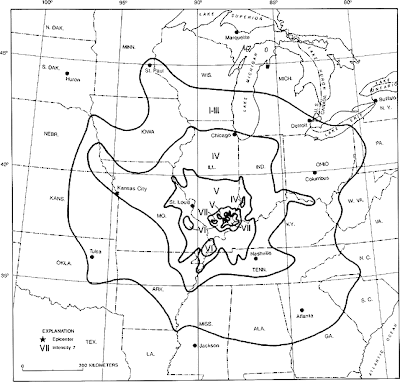
The Wisconsin Historical Society recalls an earthquake from 1968, having taken place on this day —
1968 – Earthquake Shakes Wisconsin
On this date one of the strongest earthquakes in the central United States occurred in south-central Illinois. Measured at a magnitude of 5.3 [5.4 per USGS], press reports from LaCrosse, Milwaukee, Port Washington, Portage, Prairie Du Chien, and Sheboygan indicated that the shock was felt in these cities. [Source: United States Geological Survey]
Here’s a map with lines indicating equal intensity from the earthquake, equivalent to a topographical map showing lines of equal elevation —
Modern science’s equivalent of a sweet tooth —
Why people prefer certain foods over others depends largely on a combination of taste and texture. While taste sensations are fairly well understood, scientists are just beginning to unravel the mystery of food texture.
Now, researchers at the Monell Chemical Senses Center in Philadelphia have found that an enzyme in saliva called amylase, which breaks down starch into liquid, could play a key role in determining the appeal of various textures of food. A new genetic study shows that people produce strikingly different amounts of amylase, and that the more of the enzyme people have in their mouth the faster they can liquefy starchy foods….
See, The Science Behind Why We Love Ice Cream (and Other Things Creamy) – WSJ.com.
Magnificent and wild, the grizzly bear of the American west has a fearsome reputation. But as a population boom forces them from their deep wilderness habitat of the Rocky Mountains, their increasingly close encounters with humans are altering their lifestyles, making them lazy and fat, conservation experts say.
Following a house party at which over one-hundred people were cited for underage drinking, Whitewater’s long-tenured police chief, James Coan, announced that two people hosting the party would be cited for violations amounting to six-thousand dollars apiece. (What they’ll actually pay may be a different matter.) See, Residents fined $12,000 from party bust.
(I’ve written about this incident before. In each case, it’s clear that I am no admirer of a drinking or drug culture — they have no appeal whatever. See, Citations and Drinking, The Utter Foolishness of Jim Coan’s Prohibition, and The Weak Reasoning of Prohibitionism.)
Twelve thousand, or one-hundred twenty-thousand — it won’t matter. Coan’s approach is a useful case only of bad enforcement policies that will do little to stop underage drinking. Sporadic enforcement, using civilians in foolish ways, with supposedly harsh punishments that are only useful to grab headlines and impress people into thinking that something’s happening. Below, at the bottom of this post, I have embedded a video that I posted previously, in which noted UCLA Professor of Public Affairs Mark Kleiman explains that approaches like these are failures.
(Kleiman is talking about incarceration as a punishment, but his remarks on sporadic punishment are apt in many situations.)
In fact, Whitewater’s citations are a fine example of what not to do to solve a chronic problem. Too much show, with declarations that — this time — there will be a stop to this, until the next time, when the same things happen, and the cycle starts all over again.
I do have a question, though:
It’s not been a few years, but now nearly two decades’ time.
For all that time, Coan’s made no headway against substance crimes in the city, and certainly not a problem like underage drinking. Big parties, drinking, big raids, headlines, drinking, dispersal to smaller parties, drinking, smaller raids, smaller headlines, same drinking: that’s Coan’s spin cycle.
Each effort and each headline is the one that’s going to turn it all around.
Except it never does.
These unsolved problems are not borne by a few police leaders, but by residents and officers for whom these efforts are ineffectual.
There’s no effort at education, at outreach, because Coan shows no aptitude for those key elements of community policing. It’s just a big headline here, years passing, and then another one. He’s less like a tenured leader than like someone inexperienced and just starting out.
There are still a few — now only a few — who will trumpet these fines and raids as progress. Like a one-party state whose doctrine is overemphasized by a few, yet disbelieved by most, there’s no longer credibility to these claims.
The problems of the city go on, unsolved.
Link: http://www.youtube.com/watch?v=G-lDr3DQnHo
UCLA Professor of Public Affairs Mark Kleiman is “angry about having too much crime….”
In his book, When Brute Force Fails, Kleiman explains that, when it comes to punishment, there is a trade-off between severity and swiftness. For too long the U.S. has erred heavily on the side of severity… .
Quick note: Kleiman’s book is available in hardcover, paperback, or Kindle editions. more >>
Good morning,
Whitewater’s forecast calls for a mostly sunny day, with a high temperature of sixty-four degrees.
In the CIty of Whitewater, the library board meets tonight at 6:30 p.m. That agenda is available online.
Whitewater’s district administrator will conduct two listening sessions today, at the district’s Central Office, in English from 5:00-5:45 p.m. and Spanish from 5:45 to 6:30 p.m. Central Office is located at 419 South Elizabeth Street.
Lakeview School has a book fair this week, as does the Middle School.
The Wisconsin Historical Society recalls that on this day in 1870,
First National Weather Forecast Published
On this date Increase Lapham recorded the first published national weather forecast, calling for “high winds and falling temperatures for Chicago, Detroit and the Eastern cities.” [Source: History Just Ahead: A Guide to Wisconsin’s Historical Markers edited by Sarah Davis McBride]
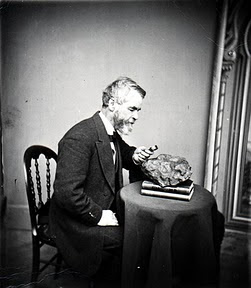
We’ve come a long way, as Alexandra Witze at ScienceNews.org reports, in a story entitled, “Hurricane forecasts can be made years in advance,” that
The parade of storms that pummels the western fringe of the North Atlantic every year just got a bit more predictable. Scientists say they have developed a way to forecast how many Atlantic hurricanes there will be — not just for the upcoming year, as some groups already do each spring, but for several years out.
“This is the first time anyone has reported skill in predicting the number of hurricanes beyond the seasonal time scale,” says Doug Smith, a climate modeler at the Met Office Hadley Centre in Exeter, England. A paper by Smith and his colleagues appeared online Nov. 7 in Nature Geoscience.