FREE WHITEWATER

Chinese Freeze Before Gov’t Turns on the Heat – World Watch – CBS News

One size fits none —

Since the Communists came to power, November 15 has been circled in red on many Beijing calendars. It’s not Mao Zedong’s birthday. November 15 is the day when city officials dutifully flick the switch to turn on the capital’s centrally-controlled heating system, supplying warmth to most of Beijing’s 22 million residents.

See, Chinese Freeze Before Gov’t Turns on the Heat – World Watch – CBS News.

John Nichols: Oshkosh recognizes the ‘plastic packaging of Ron Johnson’

If you don’t know much about Ron Johnson, you’re not alone:

No Wisconsin candidate in modern times has been so inaccessible to the press or to the voters of Wisconsin.

Who says? Johnson’s hometown paper.

In a column published Sunday, the Northwestern’s managing editor, Jim Fitzhenry, wrote: “Despite the millions spent on these precision strikes delivered over the airwaves, I’m struck by how little we know about Johnson and where he stands on dozens of issues he may be voting on over the next six years.”

Comparing Democrat Russ Feingold and Republican Ron Johnson, the managing editor wrote: “What’s the difference? I will be able to look Russ Feingold in the eye and hear his answer to those questions Monday afternoon when he visits the Northwestern’s editorial board. Can’t say the same for Johnson. His campaign turned down a request for a meeting with the board along with an invitation to debate Feingold at the (Oshkosh) Grand Opera House.”

See, John Nichols: Oshkosh recognizes the ‘plastic packaging of Ron Johnson’.

Video Shows 13 Wolves Near Rhinelander – JSOnline.com

Here’s a video of thirteen wolves — four adults and nine pups — from a pack near Pelican Lake, in Pelican, Wisconsin.

Paul Smith of the Journal Sentinel reports that

According to Ron Eckstein, Department of Natural Resources wildlife biologist in Rhinelander, the video was taken Oct. 11  in the Town of Pelican, about 6 miles southeast of Rhinelander in Oneida County.The footage was shot by a father and son while bear hunting on private land. The hunters presented a copy to Eckstein for review.


Video Link: http://www.youtube.com/watch?v=v1c1NfZtHck.

Via Video shows 13 wolves near Rhinelander – JSOnline. more >>

Physics of Wet Dogs

From scientists at the Georgia Institute of Technology, there’s research leading to an interesting story about dogs — Physics of Wet Dogs Shake Out in High-Speed Videos.

[Andrew] Dickerson, along with some colleagues from the Georgia Institute of Technology, has written “The Wet-Dog Shake,” published in Fluid Dynamics. They attempt to calculate the optimum speed at which dogs should shake to most efficiently dry their fur.

The team built a mathematical model of the processes involved, reasoning that surface tension between the water and the dog’s hair is what keeps the dog wet. Overcoming that tension requires a centripetal force that exceeds it.

….the team filmed a wide range of dogs shaking, and used the images to calculate the period of oscillation. For a labrador retriever, that turned out to be 4.3 Hz. He then expanded the search, filming animals as small as mice (27 Hz) and as large as bears (4 Hz).


Video Link:
http://www.youtube.com/watch?v=kvoKN1UfLn0
. more >>

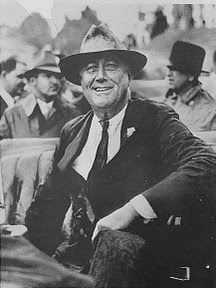
Sumner, Roosevelt, and the Forgotten Man

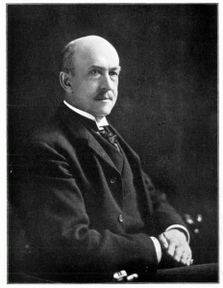
William Graham Sumner and Franklin Roosevelt had different definitions of “The Forgotten Man.” Amity Shlaes writes of the two in her book, The Forgotten Man: A New History of the Great Depression. I’ve written of the book, favorably, several times.

Sumner saw the forgotten man as one who was burdened under government; Roosevelt saw him as someone who needed government.

Here’s how Shlaes juxtaposes the two views, with Roosevelt’s redefinition of Sumner’s description —

As soon as A observes something which seems to him to be wrong, from which X is suffering, A talks it over with B, and A and B then propose to get a law passed to remedy the evil and help X. Their law always proposes what C shall do for X, or in the better case what A,B, and C shall do for X….

What I want to do is look up C. I want to show you what manner of man he is. I call him the Forgotten man. Perhaps the appellation is not strictly correct. He is the man who is never thought of…

He works, he votes, generally he prays — but he always pays.

— WILLIAM GRAHAM SUMNER, YALE UNIVERSITY, 1883

These unhappy times call for the building of plans that rest upon the forgotten, the unorganized but indispensable units of economic power, for plans like those of 1917 that build from the bottom up and not from the top down, that pit their faith once more in the forgotten man at the bottom of the economic pyramid.

— GOV. FRANKLIN ROOSEVELT OF NEW YORK, RADIO ADDRESS IN ALBANY, APRIL 7, 1932

I believe Sumner’s view the more astute and uplifting one, as he favored arrangements with the most potential for allowing people to escape misery and dependency. No system brings more people out of poverty than one of free markets in capital and labor.

(Although Sumner’s students admired him, Roosevelt was – as the photographs suggest – more personable. That’s an admirable trait all its own.)

However much these definitions are different, they have one thing in common — both Sumner and Roosevelt were concerned about real people, real conditions. They had an immediate, practical concern.

The difference between either of these views (one libertarian, the other progressive) and the thinking behind something like a multi-million dollar Innovation Center project in Whitewater, Wisconsin is vast. For more on this idea, see Whitewater’s Innovation Center from the Perspective of the New Deal.

From Sumner’s or Roosevelt’s real and practical concern for others, one finds now only an unrealistic and fantastic string of declarations, proclamations, and grand statements.

And yet, not a single declaration, proclamation, or grand statement will make a difference in the lives of Whitewater’s residents if the thousand new jobs promised never appear. Sumner — and Roosevelt’s New Dealers — would have seen this easily.

Is the Free Market Improving the Lives of India’s Dalits?

At the BBC’s website, the online correspondent for BBC News in India, Soutik Biswas, writes: Is the free market improving lives of India’s Dalits?

Here’s his question:

Does free market drive social change? By rewarding talent and hard work, does it help bring down social barriers? More pertinently, has the unshackling of the Indian economy helped the country’s untouchables, or Dalits, to forge ahead?

A group of economists and Dalit scholars led by Devesh Kapur at the University’s of Pennsylvania’s Centre for the Advanced Study of India, believes so. India’s 160 million Dalits are some of its most wretched citizens, because of an unforgiving and harsh caste hierarchy that condemns them to the bottom of the heap.
The study quizzed all Dalit households – more than 19,000 – in two clusters of villages in Azamgarh and Bulandshahar, two poor, backward districts in Uttar Pradesh state.

Dalits were asked about their material and social conditions now and in 1990 when economic reforms were kicking off in India. The answers, says the study, provide proof of “substantial changes in a wide variety of social practices affecting Dalit well-being.”

Many Dalits report a genuine and valuable improvement in their condition following economic liberalization.

Yet, these are hard questions, and they’re difficult to answer in a society so old, and so large, as India. That there are positive accounts from Dalits, themselves, is encouraging.

Biswas offers a cautious, hopeful conclusion —

Whether the market is reducing inequality remains a highly contentious point. My hunch is that political empowerment must have played a powerful role in many of the changes: the rise of Dalit politics coincided with the liberalisation of the economy. But the last word comes from the group of scholars behind the study: “No one would argue Dalits have achieved anything like equality, but it is certainly the case that many practices that reflected subordination and routine humiliation of Dalits have declined considerably.” That, by itself, is a considerable triumph for India’s wretched of the earth.

That’s reason for optimism and confidence.

Jeremy Lott on William F. Buckley Jr.’s Faith and Politics

I have never been a great fan of National Review, but over the years I have come to admire its founder’s principled, diligent, often iconoclastic, and (over time) increasingly libertarian political views. He made mistakes, surely, but he acknowledged them. Buckley was an honest, serious, and courageous man.

Here’s a description that accompanies Reason’s interview with Jeremy Lott about Buckley:

In William F. Buckley Jr., Reason contributor Jeremy Lott delves into the famed public intellectual’s life, politics and Catholicism. From the founding of National Review to his opposition to civil rights legislation to his embrace of pot legalization, Lott details how Buckley’s religion hugely shaped his political principles.

Lott, the author The Warm Bucket Brigade (a history of the vice presidency) and In Defense of Hypocrisy, sat down with Nick Gillespie to discuss Catholicism, communism, and Buckley’s late-life rebranding of himself as a “libertarian journalist.”

They also talked about Lott’s new gig as editor of the website, RealClearReligion.org, a just-launched sister site to the immensely popular and influential RealClearPolitics.com.

Approximately 10 minutes.

Shot and edited by Meredith Bragg.

Link:
http://www.youtube.com/watch?v=ztiukxWJqNQ more >>

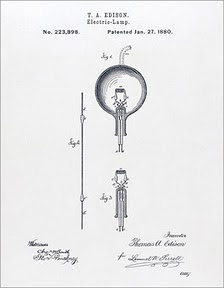
Wired: Edison Gets the Bright Light Right

In Edison Gets the Bright Light Right, Wired‘s Randy Alfred writes that, on October 21st, 1879,

Thomas Edison crowns 14 months of testing with an incandescent electric light bulb that lasts 13+ hours. Sir Humphrey Davy had produced incandescent electric light in 1808 by passing battery current through a platinum wire. But the voltaic pile was expensive and could be messy.”

….Soon, the [Menlo Park] lab got a carbon-filament bulb to last 40 hours. It had cost $40,000 (about $850,000 in today’s money) and taken 1,200 experiments, but was ready at last for a public debut.

On New Year’s Eve, 3,000 people visited the lab in Menlo Park to witness 40 electric light bulbs glowing merrily. Edison switched them on and off at will, dazzling and delighting his guests. These bulbs used carbonized cardboard.


Daily Bread for Whitewater, Wisconsin: 10-21-10

Good morning,

Whitewater’s forecast calls for a sunny day with a high temperature of fifty-five degrees.

In our schools, there will be band concerts at Lakeview and Washington Schools, respectively, today at 2 p.m. and 7 p.m.

In Wisconsin history, the Wisconsin Historical Society recalls an important date in science —

1897 – Yerkes Observatory Dedicated

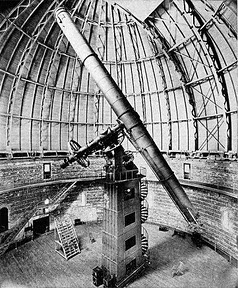
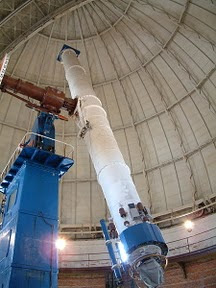
On this date the Yerkes Observatory was dedicated. Founded by astronomer George Hale and located in Williams Bay, the Yerkes Observatory houses the world’s largest refracting optical telescope, with a lens of diameter 102 cm/40 inches. It was built through the largess of the tycoon Charles Tyson Yerkes, who rebuilt important parts of the Chicago transportation system after the fire. Situated in a 77-acre park on the shore of Lake Geneva, this observatory was the center for world astronomy in the early 20th century and invited a number of astronomers from around the world, including Japan, for scientific exchange. [Source: Yerkes Observatory Virtual Museum]

Here are photographs of the giant refractor, from 1897 and 2006 —


Volt Fraud at Government Motors – Investors.com

It’s simply wrong to claim this thing’s especially good for the environment —

Advertised as an all-electric car that could drive 50 miles on its lithium battery, GM addressed concerns about where you plug the thing in en route to grandmas house by adding a small gasoline engine to help maintain the charge on the battery as it starts to run down. It was still an electric car, we were told, and not a hybrid on steroids.

That’s not quite true. The gasoline engine has been found to be more than a range-extender for the battery. Volt engineers are now admitting that when the vehicles lithium-ion battery pack runs down and at speeds near or above 70 mph, the Volts gasoline engine will directly drive the front wheels along with the electric motors. That’s not charging the battery — thats driving the car.

So its not an all-electric car, but rather a pricey $41,000 hybrid that requires a taxpayer-funded $7,500 subsidy to get car shoppers to look at it.

We heard GM’s then-CEO Fritz Henderson claim the Volt would get 230 miles per gallon in city conditions. Popular Mechanics found the Volt to get about 37.5 mpg in city driving, and Motor Trend reports: “Without any plugging in, a weeklong trip to Grandmas house should return fuel economy in the high 30s to low 40s.”


See, Volt Fraud at Government Motors – IBD – Investors.com

Institute for Justice Takes Arizona School Choice Fight to U.S. Supreme Court

Sometimes a commitment to liberty, one that would offer low and middle-income students a better life, requires a strenuous defense. That’s the task facing the Institute for Justice in a school choice dispute. The IJ is taking its case for Arizona school choice to the United States Supreme Court.

Here’s a video that describes what’s at stake for thousands of students, and why it’s a case worth fighting for.

I will post in greater detail on the case later — for now, here’s a fine video that describes the issues involved. The Arizona program allows private individuals to make private contributions for individual families to send children to schools of their choice.

Here’s the description that accompanies the video:


On November 3, 2010, the U.S. Supreme Court will hear the oral arguments in the case Garriot v. Winn. Arizona, like many states, offers tax credits to individuals and businesses for donations to fund scholarships for students to attend private schools. The goal of these programs is to give as many students as possible the resources they need to get a good education. The Dennard family has benefited from this program. Hear their story.


Link:
http://www.youtube.com/watch?v=weipY6rpMss. more >>

Whitewater-Area League of Women Voters Candidate Forum for the 43rd Assembly District (Hixson/Wynn)

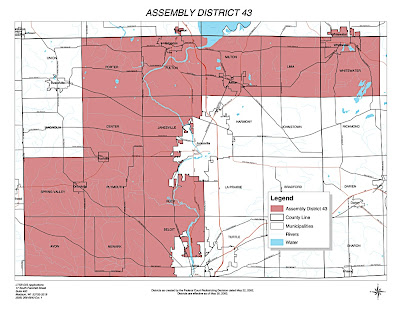
The Whitewater-Area League of Women Voters hosted a forum with the candidates for Wisconsin’s 43rd Assembly District, Kim Hixson and Evan Wynn. I have embedded the video of the discussion below. The 43rd district includes Whitewater and other communities to south and west.

10/25/10 — updated with district map:


Additional information on the two candidates is available at Wisconsin State Journal – Candidate Profiles: 43rd Assembly District and Evan Wynn / Kim Hixson 43rd Assembly Forum 2010 – WCLO.

more >>