FREE WHITEWATER

Daily Bread for Whitewater, Wisconsin: 6-16-10

Good morning,

Whitewater’s forecast calls for a mostly sunny day, with a high of eighty-one degrees.

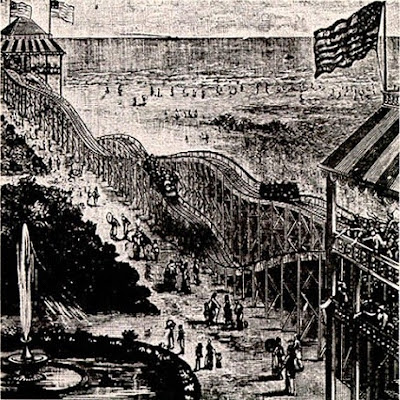
On this day in American history, in 1884, the first roller coaster in America opened. The History Channel has the details:

On this day in 1884, the first roller coaster in America opens at Coney Island, in Brooklyn, New York. Known as a switchback railway, it was the brainchild of LaMarcus Thompson, traveled approximately six miles per hour and cost a nickel to ride. The new entertainment was an instant success and by the turn of the century there were hundreds of roller coasters around the country.

Coney Island, a name believed to have come from the Dutch Konijn Eilandt, or Rabbit Island, is a tract of land along the Atlantic Ocean discovered by explorer Henry Hudson in 1609. The first hotel opened at Coney Island in 1829 and by the post-Civil War years, the area was an established resort with theaters, restaurants and a race track. Between 1897 and 1904, three amusement parks sprang up at Coney Island–Dreamland, Luna Park and Steeplechase. By the 1920s, Coney Island was reachable by subway and summer crowds of a million people a day flocked there for rides, games, sideshows, the beach and the two-and-a-half-mile boardwalk, completed in 1923.

The hot dog is said to have been invented at Coney Island in 1867 by Charles Feltman. In 1916, a nickel hot dog stand called Nathan’s was opened by a former Feltman employee and went on to become a Coney Island institution and international franchise. Today, Nathan’s is famous not only for its hot dogs but its hot dog-eating contest, held each Fourth of July in Coney Island. In 2006, Takeru Kobayashi set a new record when he ate 53.75 hot dogs with buns in 12 minutes.

The City Manager’s Greetings from Ames, Iowa

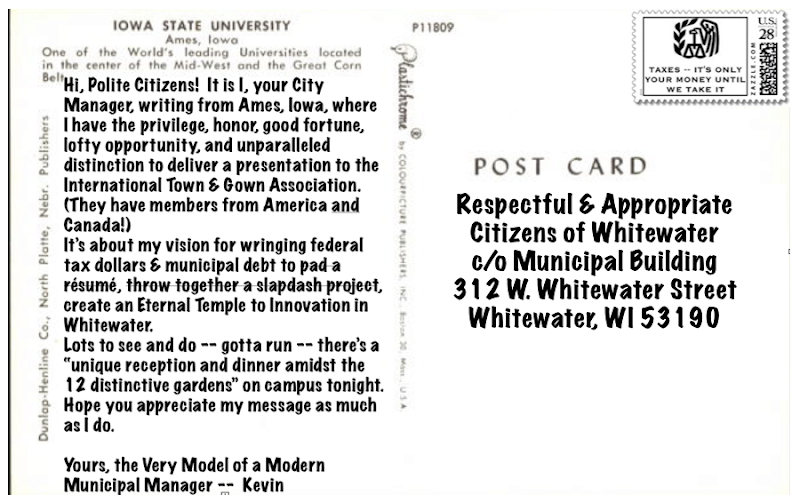
I’ve posted cards about Whitewater from earlier times, but it’s a card from Iowa that I’ve embedded today.

Imagine someone passing along a card from Ames, Iowa, site of a recent International (!) Town and Gown Association meeting on sustainable partnerships. Here’s that recent find:


Click card to view larger image

The postcard that I’ve embedded is a parody, but the actual description of the conference, from Whitewater’s city manager, is no parody. It’s more like a self-parody.

Here, from his early June Weekly Report, is what Whitewater’s city manager had to say about the conference:

Presentation at International Town and Gown Best Practices Conference

I had the opportunity and privilege of making a presentation at the 5th Annual Best Practices in Building University/City Relations Conference at Iowa State University earlier this week. Jan Bilgen of the UW-Whitewater Office of Career and Leadership Development and I spoke about the Whitewater Technology Park and the Whitewater Innovation Center.

Our presentation focused on how quickly this project has come together primarily due to the extraordinary partnerships that have been developed between the city and its Community Development Authority and the University of Wisconsin-Whitewater. Attendees at our session told us that they were very impressed with the speed at which this project has evolved. There were representatives from Michigan State University, Florida State University, Northwest Missouri State University, Eastern Kentucky University, Iowa State University, Clemson University among others at our session. We received many favorable comments and requests for additional information on three items: (1) how our new University Technology Park is organized on the principle of shared governance; (2) information on the green and sustainable restrictive covenants that have been developed for the park; and (3) specific architectural information on the Innovation Center itself.

In addition to making our presentation, Jan Bilgen and I were able to attend a number of educational sessions on improving and building University and community relations. There was considerable sharing with both City and University officials on some of our ideas for future projects and initiatives that might bring our Town and Gown relationship even further in the future.

Of the requests for additional information that Brunner and Bilgen received, not one involved the kind of businesses that will locate in the park, how many will be private businesses (unlike the anchor tenant), how many new, private jobs will be created, etc. Those are the significant and substantial issues about any tech park. Instead, they received peripheral requests about less important concerns. Say what one wants about the attendees at Brunner and Bilgen’s talk, but at least those attendees didn’t waste time asking for follow up on significant questions for which there are no clear answers, anyway.

I’m not sure what to make of the paltry list of attendees at Brunner and Bilgen’s presentation. One school represents the host university, and another (Clemson) is the headquarters of the International Town & Gown Association.

(International, I’d guess, because someone from Canada once joined. That’s silly, and it’s like a tiny airport claiming it’s an international airport because a private plane from Canada once crash-landed on a runway.)

I wouldn’t imagine that too many ordinary residents were able to travel out-of-state to attend a pricey conference of sundry universities. There’s a membership application to the ITGA available online, but it’s not focused on ordinary people, any more than the conference was. The group wants better town & gown relationships, but a conference like this is mostly a few self-important public employees talking to other self-important public employees. Actual conditions in a town are unaffected positively by such bureaucrats.

I have no idea if Whitewater’s attendees enjoyed any of the special events at the conference, each and every one useless to our city during a deep recession, but surely fun for participants nonetheless:

  • a reception and walking tour (“Regular shuttles will run between the conference hotels and campus to ensure attendees can participate whenever they arrive!” — so much for “green” living),
  • dinner and a concert at one of the “most beautiful locations at Iowa State University. The evening will feature a unique reception and dinner amidst the12 distinctive gardens and lake that make up this beautiful venue. Situated on 14 acres, the conservatory will provide a backdrop to this great networking. Enjoy wandering about the unique rose gardens, which will be at their peak at the time of this event.”),
  • or a downtown reception with a concert (“To complete your town and gown experience, on the last night we will take attendees to the Ames Main Street Cultural District. Attendees can take part in a favorite community outing, enjoying one of the first Band shell concerts of the summer, or wander through our downtown, experiencing the unique retail and dining opportunities that are available to them. A reception will be held at the Ames Community Center, conveniently located in the Cultural District. Shuttles will be offered until late that evening, to allow attendees enough time to not miss a single location!’)

Even if Whitewater’s attendees didn’t visit these events, it’s an embarrassment to attend a conference where people waste money on these events. Learning about city-school relations requires meeting with common people, not attending fancy events, or associating with fancy people who think these events tell them anything about ordinary life. There’s no investigation here; it’s just entertainment. No, and no again — there’s nothing useful to be learned in these vanity excursions.

For prior FREE WHITEWATER coverage of the grossly wasteful project that the Innovation Center/Tech park is shaping up to be, several posts are available in their own category. more >>

Nick Gillespie on Congressional Conflicts of Interest

On CNBC, libertarian Nick Gillepie argues against financial conflict of interest reporting requirements. He contends that the resulting information is confusing to voters, and that those politicians without interests in the fields they regulate are often ignorant of the underlying subject matter.

I’m not persuaded that we should abandon reporting requirements. I am persuaded of two points: Gillespie is right that government is involved in far too much. Government reaches intrusively into many aspects of American life, and those intrusions create conflict after conflict.

I’m also convinced that existing conflict of interest rules, and even the simplest understandings, are frequently ignored and inequitably enforced. A city like Whitewater is lousy with conflicts not of business interests, but of overlapping and conflated roles and jobs.

There’s not adequate thought given to separation of responsibilities between committees and boards. The same people serve on boards that should be wholly independent of each other. That’s a serious conflict of interest that amounts to an insiders’ assurance that the projects they want are rushed through, and discussions they don’t want are ignored, from board to board during an approval process.

That’s how bad ideas become wasteful projects so quickly in Whitewater.

Here’s Gillespie battling against financial conflict rules and for smaller government that creates fewer conflicts.


Link: Nick Gillespie on Congressional Conflicts of Interest.

Kick-Off Party Set for Alzheimer’s Association Memory Walk® — Saturday, September 18th

I received the following press release that I am happy to post —


Kick-Off Party Set for Alzheimer’s Association Memory Walk®

Teams are Forming Now!

Milwaukee, WI – June 14, 2010 – Teams are forming now for the Alzheimer’s Association Memory Walk® scheduled for Saturday, September 18, 2010 at Library Park, 900 West Main Street in Lake Geneva. Over 600 people from Walworth and surrounding counties are expected to participate in this year’s event, which will feature both one-mile and three-mile walk routes. In 2009, over $60,000 was raised to help individuals and families affected by Alzheimer’s disease, including the Alzheimer’s Association 24/7 Helpline, support groups, research, education and training.

The kick-off party for individuals and teams who are planning to participate is on Thursday, July 22nd, 4:30 to 6:30 p.m., at The Highlands of Geneva Crossing, 721 South Curtis Street, Lake Geneva WI. To attend the kick-off party, please contact Wendy Betley, co-chair, at 414-479-8800.

The Alzheimer’s Association’s Memory Walk is the nation’s largest event to raise awareness and funds for Alzheimer care, support and research programs. Held annually in hundreds of communities across the country, this inspiring event calls on volunteers of all ages to become Champions in the fight against Alzheimer’s. Champions include those living with the disease, families, caregivers, corporate and local leaders, who actively support Memory Walk in the community.

Leading the 2010 walk will be local physician, Dr. Britton Kolar, MD, a specialist in Geriatric Medicine. Entertainment will be provided by Petty Thieves, along with a hot-dog cookout, compliments of Stinebrink’s Pick ‘n Save. Key sponsors of this event include Oconomowoc Memorial Hospital, the Cordon Family Foundation, and the Mueller Family. The event is being presented by FOX6 News News, the Milwaukee Journal Sentinel and local radio station 96.1 WLKG.

To register online for the Alzheimer’s Association Memory Walk in Walworth County go to www.alz.org/sewi and click “Memory Walk.” For questions, please contact the Alzheimer’s Association at www.alz.org/sewi or call 414.479.8800.

The Alzheimer’s Association is a national non-profit organization whose mission is to eliminate Alzheimer’s disease through the advancement of research, to provide and enhance care and support for all affected and to reduce the risk of dementia through the promotion of brain health. For more information about Alzheimer’s disease and local services visit www.alz.org/sewi or call the Alzheimer’s Association 24/7 Helpline at 800-272-3900.

Daily Bread for Whitewater, Wisconsin: 6-15-10

Good morning,

Today’s forecast calls for an even chance of scattered showers, with a high of seventy-four degrees.

Whitewater’s Common Council will meet tonight, at 6:30 p.m. The agenda is available online.

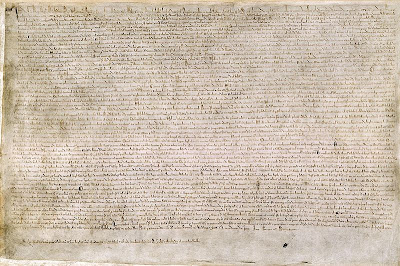
On this day in 1215, the King John placed his seal on the Magna Carta. One step, of so many, toward greater liberty in the Western world. Here’s an electronic version of the text.


The La Crosse Tribune has a story about a Wisconsin patron who saw a deer in a New York restaurant. In Deer drops in for dinner at upstate NY restaurant one reads that

Management and customers say a deer crashed through a window at an Applebee’s in Batavia just after 7 p.m. Sunday.

Customer Bruce Beck, who was visiting from Wisconsin, says the deer nearly slid into the booth next to his before veering away and running through the restaurant.

Witnesses say people were able to herd the deer out the front door.

No one was hurt.

Whitewater’s Planning Commission Meeting for 6-14-10 (Live Blogging)

Here’s a format I will be using for live blogging tonight’s Planning Commission meeting. I wouldn’t expect anyone to read my comments live; instead, I’m interested in experimenting with live blogging to produce commentary more quickly, and to test the format, a format that might be useful for other events. (The comments will remain after the meeting for later viewing.)

The window will become live just before 6 PM, and comments will appear with the newest remarks at the top of the window. (Update: For replay, comments will appear from top to bottom, first to last.)


more >>

Fox Business Channel Leans Libertarian

Fox Business Channel, a newer cable channel, is taking a libertarian tack, as the liberal Huffington Post notes in a story entitled, Are Libertarians a Political Force?.

Fox is no small enterprise, and committing one of its channels to a libertarian-leaning message shows how influential libertarian ideas are. The ideals of individual liberty, limited government, free markets, and peaceful relations abroad have had their ups and downs. They are, however, ideals that offer people better lives at a better standard of living than any political alternatives.

One will still meet people here or there who find some of these ideals strange, or which to ridicule those who hold them. No matter — the best of America’s past has rested, and her bright future will rest, on these beliefs.

For more on Fox programs like Stossel and Judge Andrew Napolitano’s show, see http://stossel.blogs.foxbusiness.com/ and http://www.foxbusiness.com/on-air/freedom-watch/.

Whitewater Municipal Staff: Where’s the Packet?

In Whitewater, there’s a one-monthly Planning Commission meeting. Those meetings have an agenda that’s posted online. The agenda for the June 14th meeting is available online now.

It’s common in Whitewater for city officials to refer to employees collectively as “city staff, so I’ll do the same by way of a question. Whitewater municipal staff: where’s the packet of information that you prepare for each Planning Commission meeting? Anyone listening to the meetings hears references to a packet, and an electronic packet of documents typically accompanies the Common Council agenda online.

Why no electronic packet for Planning? It cannot be because it cannot be done, as there’s an electronic packet for Council. It cannot be because the City of Whitewater cannot afford to scan a papers into a copier, as there’s plenty of money for other things, like groundbreakings, press releases, celebrations, catered gatherings, etc.

Planning in the city is important enough that planning documents should be prepared timely, and placed online as council documents are placed online. It’s not a favor to citizens to make available to them the things for which they are already paying, and that should be readily available as a matter of good, open government. (Just as, by the way, it’s not a favor to citizens to record only one meeting a year of some public meetings; it’s a failure to provide resources to make each and every meeting available as a complete and accurate electronic record.)

It’s a simple choice for the City of Whitewater: provide a simple electronic record in advance of a meeting, as good government policy would indicate, or sit around and make excuses for how Whitewater shouldn’t have, or doesn’t need, what should be the minimum for every community in America.

Why is America So Successful?

John Stossel asks, “Why is America So Successful?

Stossel concludes, following Friedman, that it’s not natural resources that gave America “a standard of living that’s the envy of most of the world.” Instead, it’s limited government and free market choices that make America prosperous:

More than any other American, Friedman, who won the Nobel Prize in economics in 1976, clearly warned the world about the unintended consequences of big government.

“We’ve become increasingly dependent on government,” said Friedman. “We’ve surrendered power to government; nobody has taken it from us. It’s our doing. The results — monumental government spending, much of it wasted, little of it going to the people whom we would like to see helped.”

That’s from Friedman’s PBS TV series “Free to Choose,” which aired 30 years ago and became the basis of his No. 1 bestseller by the same name….

The title says a lot. If we are free to make our own choices, we prosper. That was a new idea to many back then. At the time — when inflation and interest rates were in double digits and unemployment approached 10 percent — people thought a wise government could ensure economic growth, guarantee full employment and eliminate poverty.

Friedman explained that the opposite was true, that bigger government had brought us “burdensome taxes, high inflation, a welfare system under which neither those who receive help nor those who pay for it are satisfied. Trying to do good with other people’s money simply has not worked.”

No, it hasn’t. So why, 30 years later, is America doing so much more of it?

Because people still have not learned Friedman’s lesson.

No, they haven’t. Even in a small town like Whitewater, Friedman’s lesson escapes most of our town squires and supposed people of influence. That’s why, although we should be a successful American town, we’re beset with chronic child poverty. Local government meddles in our town’s economy with disastrous results: money is wasted, better private alternatives inhibited, and the fairytale persists that our city administration is gifted in its understanding of business and productive enterprises. Repeating the tale again and again doesn’t make it true; the repetition only reveals the foolishness of those who believe it, and their willingness to embrace tall tales over the actual conditions before us.

It’s predictable that those who have made a career out of spending taxpayers’ money (and insisting that they can do so better than the taxpayers themselves) would not have the humility to admit that all these projects have done little or nothing to uplift ordinary people.

Even if one chooses to ignore the poverty, hunger, and empty buildings and lots in Whitewater, there’s another way to see that this municipal administration’s proud claims are false.

Would you be more likely to place your retirement savings in the hands of a private advisor, or the city bureaucrats of Whitewater? If you received an inheritance, would you find a private advisor to help manage it, or one of the appointed bureaucrats of Whitewater?

The question is meant to be rhetorical, as the answer’s clear. Without the authority to spend money taxed from others, these gentlemen would never have the chance to spend amounts so large. Private parties, large and small, would not freely cast their lot with the advice of Whitewater’s public officials. In a world of greater free choice, these officials’ advice would be ignored.

It’s only through the power of compulsion, and the collection of special interests and hangers-on who wish to stand close to that power, that the string of empty projects on which Whitewater is hooked could continue. In a world of free, private choice, sensible people would never have committed to these ineffectual schemes.

We’d be freer, and consequently more prosperous, with a more limited and restrained local government.

Walworth County Genealogical Society Gathering at Lyons Cemetery (Saturday, July 10th)

I received the following press release from the Walworth County Genealogical Society that I am happy to post —

Genealogical Society Gathering at Lyons Cemetery

Come and join the Walworth County Genealogical Society as the members and friends help proof-read the gravestone listings for a new book to be published soon. The event will occur on Saturday, July 10, 2010 at 9:00 AM at the Lyons/Hudson Cemetery located on North Road just north of Hwy 36 in the town of Lyons.

Participants are asked to bring a sack lunch, pencil and notebook. Later, some of the group will also do St. Joseph’s Cemetery, which is located south of Lyons. Walking cemeteries prove to be interesting and rewarding as it is one way of recording past generations for the present and future generations to use in compiling their family trees. One might even come across an unusual notation or symbol on a gravestone.

This outing is in place of the regular monthly meeting. For additional information, please call 262-215-0118 or 262-728-6182.

Genealogical Society Gathering at Lyons Cemetery

Genealogical Society Gathering at Lyons Cemetery

Come and join the Walworth County Genealogical Society as the members and friends help proof-read the gravestone listings for a new book to be published soon. The event will occur on Saturday, July 10, 2010 at 9:00 AM at the Lyons/Hudson Cemetery located on North Road just north of Hwy 36 in the town of Lyons.

Participants are asked to bring a sack lunch, pencil and notebook. Later, some of the group will also do St. Joseph’s Cemetery, which is located south of Lyons. Walking cemeteries prove to be interesting and rewarding as it is one way of recording past generations for the present and future generations to use in compiling their family trees. One might even come across an unusual notation or symbol on a gravestone.

This outing is in place of the regular monthly meeting. For additional information, please call 262-215-0118 or 262-728-6182.

Daily Bread for Whitewater, Wisconsin: 6-14-10

Good morning,

Whitewater’s forecast calls for a day with likely showers and a high of seventy-one degrees.

In the City of Whitewater today, there’ll be a Planning Commission meeting at 6 p.m. The agenda for the meeting is available online. I will live blog that meeting tonight, using different software from previous live blogging efforts. I wouldn’t expect anyone to read my comments live; instead, I’m interested in experimenting with live blogging to produce commentary more quickly, and to test of the format.

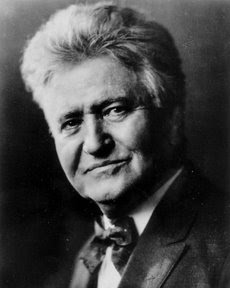
The Wisconsin Historical Society recalls the anniversary of a prominent politician’s birthday. On this date in 1855,

… Robert M. La Follette was born in Primrose, Dane County. A renowned lawyer, politician, governor, and U.S. Senator, La Follette was the son of a prosperous, politically active Republican farmer who died eight months after Robert was born. Robert grew up on his family’s farm and entered the UW in 1874. While a student at UW, he edited the campus newspaper and was strongly influenced by the teachings of John Bascom. After receiving a B.A. in 1879, he studied law and was admitted to the bar in 1880. The same year, he was nominated and elected district attorney over the opposition of local political boss Elisha W. Keyes. On December 31, 1881 he married his college sweetheart, Belle Case. In 1884 he was elected to Congress, again defeating Keyes.

Known as “Fighting Bob”, he actively advocated conservation, preservation of public lands, and conservative public spending. Defeated in the 1890 election, he returned to his Madison law practice but remained active in state politics. He served as governor from 1900 to 1906, where he pushed a broad reform agenda which became known as “the Wisconsin Idea.” As governor, he enacted a program that included direct primaries, more equitable taxation, a more effective railroad commission, civil service reform, conservation, control of lobbyists, a legislative reference library, and bank reform.

In 1905 the Wisconsin legislature elected La Follette to the U.S. Senate. He was a controversial senator almost from the beginning. After William Howard Taft became president, La Follette forged the progressive Republican opposition to the Payne-Aldrich Tariff and became a persistent critic of the administration. In 1909, he founded La Follette’s Weekly Magazine (later known as The Progressive) to promote his ideology. In 1911 he was chosen as the progressive Republican candidate to displace Taft, but he was superseded by Theodore Roosevelt in 1912. La Follette supported most of the policies of Democratic President Woodrow Wilson until the question of U.S. entry into World War I arose. Vigorously opposed to entry, he was the victim of an unsuccessful attempt to expel him from the Senate for an antiwar speech. In the postwar period La Follette resisted the anti-Communist scare and fought for the interests of workers and farmers against the business-oriented Republican administrations. He initiated the investigation into the Teapot Dome scandal in 1922.

In 1924, he ran for president on the Progressive Party ticket but lost to Calvin Coolidge. He died on June 18, 1925, still a fervent believer in democracy. Both of La Follette’s sons, Robert Jr. and Philip, carried on his political ideals after his death. La Follette was one of the most eloquent orators of his time, consistently speaking out in favor of popular democracy and in opposition to government by special interests. He is regarded as one of the most important Progressives in American history. [Source: Dictionary of Wisconsin Biography, SHSW 1960, pg. 217]

There are parts of the La Follette’s career and advocacy that I consider mistaken (opposition to Coolidge being one of them), but his impact on Wisconsin and American history, an impact resting on firm, principled advocacy, is undeniable.