FREE WHITEWATER

Fox Business Channel Leans Libertarian

Fox Business Channel, a newer cable channel, is taking a libertarian tack, as the liberal Huffington Post notes in a story entitled, Are Libertarians a Political Force?.

Fox is no small enterprise, and committing one of its channels to a libertarian-leaning message shows how influential libertarian ideas are. The ideals of individual liberty, limited government, free markets, and peaceful relations abroad have had their ups and downs. They are, however, ideals that offer people better lives at a better standard of living than any political alternatives.

One will still meet people here or there who find some of these ideals strange, or which to ridicule those who hold them. No matter — the best of America’s past has rested, and her bright future will rest, on these beliefs.

For more on Fox programs like Stossel and Judge Andrew Napolitano’s show, see http://stossel.blogs.foxbusiness.com/ and http://www.foxbusiness.com/on-air/freedom-watch/.

YouTube Play: Looking for Submissions

YouTube and the Guggenheim Museum are offering a showcase of videos, based on submissions received before July 31st. Although I can’t produce anything like this, I bet there are many readers who are more than up for the challenge. Here’s a description of the contest:

YouTube Play is a collaboration between YouTube and the Guggenheim Museum to unearth and showcase the very best creative video from around the world. To have your work considered, simply post it on YouTube, and then submit it at youtube.com/play. A jury of experts will decide which works presented at the Solomon R. Guggenheim Museum in New York on October 21, 2010 with simultaneous presentations at the Guggenheim museums in Berlin, Bilbao, and Venice. The videos will be on view to the public from October 22 through 24 in New York and on the YouTube Play channel.

Music by Niwouinwouin, courtesy of Ego Twister Records.

Submissions close July 31, 2010.


Link: http://www.youtube.com/play more >>

Whitewater Municipal Staff: Where’s the Packet?

In Whitewater, there’s a one-monthly Planning Commission meeting. Those meetings have an agenda that’s posted online. The agenda for the June 14th meeting is available online now.

It’s common in Whitewater for city officials to refer to employees collectively as “city staff, so I’ll do the same by way of a question. Whitewater municipal staff: where’s the packet of information that you prepare for each Planning Commission meeting? Anyone listening to the meetings hears references to a packet, and an electronic packet of documents typically accompanies the Common Council agenda online.

Why no electronic packet for Planning? It cannot be because it cannot be done, as there’s an electronic packet for Council. It cannot be because the City of Whitewater cannot afford to scan a papers into a copier, as there’s plenty of money for other things, like groundbreakings, press releases, celebrations, catered gatherings, etc.

Planning in the city is important enough that planning documents should be prepared timely, and placed online as council documents are placed online. It’s not a favor to citizens to make available to them the things for which they are already paying, and that should be readily available as a matter of good, open government. (Just as, by the way, it’s not a favor to citizens to record only one meeting a year of some public meetings; it’s a failure to provide resources to make each and every meeting available as a complete and accurate electronic record.)

It’s a simple choice for the City of Whitewater: provide a simple electronic record in advance of a meeting, as good government policy would indicate, or sit around and make excuses for how Whitewater shouldn’t have, or doesn’t need, what should be the minimum for every community in America.

Milwaukee County’s Immoral Utilitarianism: Update 7 (Supervisor Holloway Supports Hiding the Truth)

Politicians begin their careers insisting that they’re public servants advancing the public interest, but soon become entrenched incumbents eager to keep public matters secret from the very citizens they supposedly serve. A recent example of this desire to keep public matters from the public, itself, is to be found in Milwaukee County. There, Milwaukee County supervisor seeks to censure a fellow supervisor who revealed the embarrassing truth about perverse policies and patient abuse in that county’s mental health system.

Readers will recall that Behavioral Health Division administrator John Chianelli advanced a policy of mixed gender wards at the Mental Health Complex to trade male-on-male violence for male-on-female sexual assault. I’ve written before about Milwaukee County’s Behavioral Health Division, and sexual assaults among mental patients at its Mental Health Center. BHD’s Director, John Chianelli, has implemented a policy of trading male-on-male violence among mental patients for male-on-female sexual assault.

I’ve posted about Chianelli’s policy, and the tragedy that is conduct at the MHC, before. See, A Milwaukee County Bureaucrat’s Immoral Utilitarianism, Update: A Milwaukee County Bureaucrat’s Immoral Utilitarianism, Update 2, Update 3, Update 4, Update 5, and Update 6.

Now, one finds that Milwaukee County supervisor Lee Holloway wants to censure a fellow supervisor, Lynne DeBruin, for revealing to the public they both serve Chianelli’s immoral remarks in a trade off between kinds of violence. See, Supervisor Target of Censure Attempt: De Bruin accused by Holloway of violating closed session protocol. The Milwaukee Journal Sentinel describes the basis of Holloway’s censure motion:

Milwaukee County Supervisor Lynne De Bruin faces a censure attempt led by County Board Chairman Lee Holloway over her release of a letter and notes she wrote based on a closed-door discussion of patient sexual assaults at the Mental Health Complex.

Holloway’s resolution accuses De Bruin of “willful acts of misconduct” for divulging what he calls confidential information.

The move, backed by at least four other supervisors, highlights a thorny issue that Holloway and others have unsuccessfully fought to keep quiet, fearing potential lawsuits.

De Bruin’s move may inhibit frank closed-session remarks in the future from county lawyers and other officials, according to Holloway’s censure resolution.

The County Board judiciary committee is slated to review Holloway’s resolution Tuesday.

It says De Bruin’s disclosure was “a violation of a trust” and a “violation of closed session protocol,” but does not allege any law or ordinance violation.
Deputy County Corporation Counsel Robert Andrews said Friday he knew of no state law, county ordinance or County Board policy that bans supervisors from talking about closed-session topics.

The cold theory behind a confidentiality of this kind is that it allows a municipality to defend of prevent lawsuits more effectively. The cold truth is that it allows incumbents and bureaucrats to hide misdeeds and citizen abuse from citizens themselves. Far from saving taxpayers money by better defending against lawsuits, confidentiality like this undermines politicians’ and bureaucrats’ accountability for the injuries and abuses they inflict, thereby providing no improvement against future abuses.

This is how so-called public servants become self-interested incumbents and aggregate to themselves the recourses fit only for private parties. When these gentlemen contend that secrecy in public matters in necessary for the public good, what they really mean is that secrecy in public matters is necessary to conceal their failures, lies, abuses, and mediocrity. Suddenly men who are all insistent their about their public authority, and their role ensuring a better community, start talking about the need for private and closed discussion.

My own small town of Whitewater is rotten with this kind of hypocrisy. The bureaucrats who run Whitewater expect to meddle in any number of economic matters, and to inject the public into the private at a moment’s notice. There’s no commercial activity beyond their professed purview. And yet, if a citizen sues based on alleged violations of federal constitutional law, then suddenly a settlement in that case (six-figures!) should be a private matter, and kept confidential. I’ve contended that this sort of approach is wrong. See, Against Confidentiality in Municipal Litigation.

In that post, I offered seven arguments against confidentiality, and concluded that

Here is the clear test, the question of principle: Why should this public lawsuit, involving public officials, involved in the public exercise of their duties, be made confidential?

To each of the gentlemen involved on behalf of the City of Whitewater and its police department, this is the question that I pose to you. The defendants need not admit wrongdoing in connection with payment of settlement money. I am stunned, however, at the arrogance and audacity that causes the defendant to request that this public matter be hidden from view. It’s disgraceful that public employees and the City of Whitewater would request this unnecessary step.

Officials proclaim — at each and every opportunity — that their actions are beyond reproach. If that should be true, then why ask a court to make these public actions confidential and private?

No one in Milwaukee should be surprised that Holloway wants to keep secrets. It’s an inclination common to so very many career politicians and bureaucrats. Perhaps Milwaukee County residents might wish to remind Holloway of his own public declaration, on the Milwaukee County website:

Dear Citizens,

We enjoy a tremendous quality of life in Milwaukee County. Nineteen distinct municipalities make Milwaukee County the most populated, diverse and vibrant county in Wisconsin. Our county government is deeply involved in maintaining the quality of life for our citizens. From administering health care for the indigent to providing amenities like the Mitchell Park Domes, McKinley Marina and dozens of swimming pools and basketball courts, we are busy working for the people of this community.

Holloway works for the people when he wants to trumpet his accomplishments, but hides the truth from them when his county commits abuses and misdeeds.

Wrong, unjust, and yet, predictably so. No matter — Holloway’s far from being able to stop this story now. He can’t help, though, revealing himself as a selfish careerist as it unfolds.

Why is America So Successful?

John Stossel asks, “Why is America So Successful?

Stossel concludes, following Friedman, that it’s not natural resources that gave America “a standard of living that’s the envy of most of the world.” Instead, it’s limited government and free market choices that make America prosperous:

More than any other American, Friedman, who won the Nobel Prize in economics in 1976, clearly warned the world about the unintended consequences of big government.

“We’ve become increasingly dependent on government,” said Friedman. “We’ve surrendered power to government; nobody has taken it from us. It’s our doing. The results — monumental government spending, much of it wasted, little of it going to the people whom we would like to see helped.”

That’s from Friedman’s PBS TV series “Free to Choose,” which aired 30 years ago and became the basis of his No. 1 bestseller by the same name….

The title says a lot. If we are free to make our own choices, we prosper. That was a new idea to many back then. At the time — when inflation and interest rates were in double digits and unemployment approached 10 percent — people thought a wise government could ensure economic growth, guarantee full employment and eliminate poverty.

Friedman explained that the opposite was true, that bigger government had brought us “burdensome taxes, high inflation, a welfare system under which neither those who receive help nor those who pay for it are satisfied. Trying to do good with other people’s money simply has not worked.”

No, it hasn’t. So why, 30 years later, is America doing so much more of it?

Because people still have not learned Friedman’s lesson.

No, they haven’t. Even in a small town like Whitewater, Friedman’s lesson escapes most of our town squires and supposed people of influence. That’s why, although we should be a successful American town, we’re beset with chronic child poverty. Local government meddles in our town’s economy with disastrous results: money is wasted, better private alternatives inhibited, and the fairytale persists that our city administration is gifted in its understanding of business and productive enterprises. Repeating the tale again and again doesn’t make it true; the repetition only reveals the foolishness of those who believe it, and their willingness to embrace tall tales over the actual conditions before us.

It’s predictable that those who have made a career out of spending taxpayers’ money (and insisting that they can do so better than the taxpayers themselves) would not have the humility to admit that all these projects have done little or nothing to uplift ordinary people.

Even if one chooses to ignore the poverty, hunger, and empty buildings and lots in Whitewater, there’s another way to see that this municipal administration’s proud claims are false.

Would you be more likely to place your retirement savings in the hands of a private advisor, or the city bureaucrats of Whitewater? If you received an inheritance, would you find a private advisor to help manage it, or one of the appointed bureaucrats of Whitewater?

The question is meant to be rhetorical, as the answer’s clear. Without the authority to spend money taxed from others, these gentlemen would never have the chance to spend amounts so large. Private parties, large and small, would not freely cast their lot with the advice of Whitewater’s public officials. In a world of greater free choice, these officials’ advice would be ignored.

It’s only through the power of compulsion, and the collection of special interests and hangers-on who wish to stand close to that power, that the string of empty projects on which Whitewater is hooked could continue. In a world of free, private choice, sensible people would never have committed to these ineffectual schemes.

We’d be freer, and consequently more prosperous, with a more limited and restrained local government.

Walworth County Genealogical Society Gathering at Lyons Cemetery (Saturday, July 10th)

I received the following press release from the Walworth County Genealogical Society that I am happy to post —

Genealogical Society Gathering at Lyons Cemetery

Come and join the Walworth County Genealogical Society as the members and friends help proof-read the gravestone listings for a new book to be published soon. The event will occur on Saturday, July 10, 2010 at 9:00 AM at the Lyons/Hudson Cemetery located on North Road just north of Hwy 36 in the town of Lyons.

Participants are asked to bring a sack lunch, pencil and notebook. Later, some of the group will also do St. Joseph’s Cemetery, which is located south of Lyons. Walking cemeteries prove to be interesting and rewarding as it is one way of recording past generations for the present and future generations to use in compiling their family trees. One might even come across an unusual notation or symbol on a gravestone.

This outing is in place of the regular monthly meeting. For additional information, please call 262-215-0118 or 262-728-6182.

Genealogical Society Gathering at Lyons Cemetery

Genealogical Society Gathering at Lyons Cemetery

Come and join the Walworth County Genealogical Society as the members and friends help proof-read the gravestone listings for a new book to be published soon. The event will occur on Saturday, July 10, 2010 at 9:00 AM at the Lyons/Hudson Cemetery located on North Road just north of Hwy 36 in the town of Lyons.

Participants are asked to bring a sack lunch, pencil and notebook. Later, some of the group will also do St. Joseph’s Cemetery, which is located south of Lyons. Walking cemeteries prove to be interesting and rewarding as it is one way of recording past generations for the present and future generations to use in compiling their family trees. One might even come across an unusual notation or symbol on a gravestone.

This outing is in place of the regular monthly meeting. For additional information, please call 262-215-0118 or 262-728-6182.

Daily Bread for Whitewater, Wisconsin: 6-14-10

Good morning,

Whitewater’s forecast calls for a day with likely showers and a high of seventy-one degrees.

In the City of Whitewater today, there’ll be a Planning Commission meeting at 6 p.m. The agenda for the meeting is available online. I will live blog that meeting tonight, using different software from previous live blogging efforts. I wouldn’t expect anyone to read my comments live; instead, I’m interested in experimenting with live blogging to produce commentary more quickly, and to test of the format.

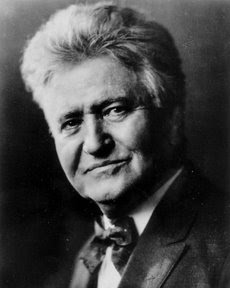
The Wisconsin Historical Society recalls the anniversary of a prominent politician’s birthday. On this date in 1855,

… Robert M. La Follette was born in Primrose, Dane County. A renowned lawyer, politician, governor, and U.S. Senator, La Follette was the son of a prosperous, politically active Republican farmer who died eight months after Robert was born. Robert grew up on his family’s farm and entered the UW in 1874. While a student at UW, he edited the campus newspaper and was strongly influenced by the teachings of John Bascom. After receiving a B.A. in 1879, he studied law and was admitted to the bar in 1880. The same year, he was nominated and elected district attorney over the opposition of local political boss Elisha W. Keyes. On December 31, 1881 he married his college sweetheart, Belle Case. In 1884 he was elected to Congress, again defeating Keyes.

Known as “Fighting Bob”, he actively advocated conservation, preservation of public lands, and conservative public spending. Defeated in the 1890 election, he returned to his Madison law practice but remained active in state politics. He served as governor from 1900 to 1906, where he pushed a broad reform agenda which became known as “the Wisconsin Idea.” As governor, he enacted a program that included direct primaries, more equitable taxation, a more effective railroad commission, civil service reform, conservation, control of lobbyists, a legislative reference library, and bank reform.

In 1905 the Wisconsin legislature elected La Follette to the U.S. Senate. He was a controversial senator almost from the beginning. After William Howard Taft became president, La Follette forged the progressive Republican opposition to the Payne-Aldrich Tariff and became a persistent critic of the administration. In 1909, he founded La Follette’s Weekly Magazine (later known as The Progressive) to promote his ideology. In 1911 he was chosen as the progressive Republican candidate to displace Taft, but he was superseded by Theodore Roosevelt in 1912. La Follette supported most of the policies of Democratic President Woodrow Wilson until the question of U.S. entry into World War I arose. Vigorously opposed to entry, he was the victim of an unsuccessful attempt to expel him from the Senate for an antiwar speech. In the postwar period La Follette resisted the anti-Communist scare and fought for the interests of workers and farmers against the business-oriented Republican administrations. He initiated the investigation into the Teapot Dome scandal in 1922.

In 1924, he ran for president on the Progressive Party ticket but lost to Calvin Coolidge. He died on June 18, 1925, still a fervent believer in democracy. Both of La Follette’s sons, Robert Jr. and Philip, carried on his political ideals after his death. La Follette was one of the most eloquent orators of his time, consistently speaking out in favor of popular democracy and in opposition to government by special interests. He is regarded as one of the most important Progressives in American history. [Source: Dictionary of Wisconsin Biography, SHSW 1960, pg. 217]

There are parts of the La Follette’s career and advocacy that I consider mistaken (opposition to Coolidge being one of them), but his impact on Wisconsin and American history, an impact resting on firm, principled advocacy, is undeniable.

Whitewater’s Fourth of July

I received the following press release that I am happy to post —

The Whitewater Area 4th of July committee is excited to announce it has a packed line-up of activities and entertainment for the 2010 festival held at the Cravath Lakefront Park.

The festival has secured national recording artist Heidi Newfield formerly of “Trick Pony” for a Saturday evening show. Heidi is an award winning American Country Music talent well known for her numerous hits including “What Am I Waiting For.” This female singer/songwriter powerhouse will undoubtedly pack the grounds and put on a show Whitewater won’t soon forget.

The 2010 event runs Thursday July 1st through Sunday July 4th and is an absolutely FREE festival. In addition to Heidi Newfield, the Independence Day celebration includes performances by The Blue Olives, Pipe Circus, Steve Meisner, Saddlebrook, Shelly Faith, Hours Left, the Minnieska Ski Team and Beatles Tribute Band “The Britins” plus more. Christman Amusements will provide a quality midway sure to please kids of all ages. For the adults, a 10,000 sq. ft. beer garden and full spread of food vendors will be onsite to satisfy even the hungriest appetite.

Sunday morning, July 4th, view the exciting “Whippet City Mile” race down Main Streetmainstreet. Then sit back and relax for our incredible Parade, organized by the Lions Club. This year we are fortunate to have the University of WI-Madison Marching Band in addition to all the local talent right here in our “Banner City.” The 2010 Honorary Parade Marshal, Jim Stewart will be enjoying the festivities including 2 nights of fireworks on the lake, a classic car show, beer garden, a taste of Whitewater food court and FREE high-caliber music and entertainment on the main stage.

Please visit us at… ww4th.com …for all the details.

Here’s a video of Heidi Newfield performing Johnny and June


more >>

Recent Tweets, 6-6 to 6-12

RT @reasonmag: Veronique de Rugy on Cutting the Pentagon Budget http://ow.ly/1Xlzm Room to cut & protect America militarily & economically
3:01 PM Jun 11th via Seesmic

RT @CatoInstitute: Hayek’s ‘Road to Serfdom’ #1 on Amazon. You should go buy it too. http://bit.ly/bLyfLH One of the greatest works ever
2:25 PM Jun 10th via Seesmic

RT @reasonmag: John Stossel on Why America Prospered http://ow.ly/1WN8w
12:37 PM Jun 10th via Seesmic

RT @reasonmag: T-Shirt Tuesday: Get Your Miranda Rights On Your Chest http://ow.ly/1VIpi
12:30 PM Jun 8th via Seesmic

RT @NewLedger “Dances With Bears”: How bearish the sentiment has turned among market and economics observers…. http://bit.ly/akepOe
12:28 PM Jun 8th via Seesmic

Abby Sunderland: Admirable and Adventuresome Girl

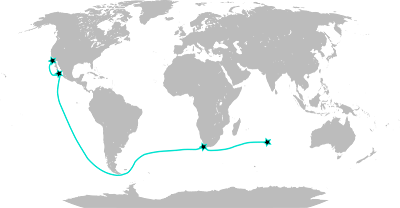
Sixteen-year old American girl Abby Sunderland set out alone in a boat earlier this year, attempting to circumnavigate the globe alone. She ran into rough seas in the Indian Ocean, and became temporarily lost and stranded. She was located, and has now been rescued by a French fishing vessel.

I know that an expedition like this isn’t for every sixteen year old girl, but I think her effort was admirable. Criticism directed at her parents is overdone, and is just so much fuss from dull scolds. See, for example the clucking of Joel Achenbach at the Washington Post (“I will let one of my kids sail solo around the world the day I let my ancient cat Phoebe drive my Honda.”)

Achenbach is free to choose for his own child, but he’s wrong to assume his timid approach should apply to all children.

Achenbach’s not alone, of course. There are lots of people who fuss about what’s acceptable, appropriate, and proper, and thereby they take all the adventure, excitement and grand dreams out of life. A neo-Victorian world is not, and should never be, for us. Those values didn’t build great nation; they hardened the arteries of a formerly successful people, slowly squandering what they had achieved a century earlier.

I see that search and rescue crews reportedly found Sunderland in great spirits. I hope that proves to be true; she should be in great spirits, having attempted something worthy and remarkable. I hope just as much, by the way, that she tries again.