FREE WHITEWATER

Monthly Archives: May 2014

Vandalism, of Property and Opportunity

Not long ago, at a nearby golf course, vandals caused tens of thousands in property damage. A newspaper account reported the damage at about $50,000, and included photos of the scene.

I’m not a patron of the course, and don’t know the owners. I have, though, cycled past it many times. The course has always been an early and happy marker on my rides into Jefferson County. It’s pleasant to ride by – golf’s not my sport, but it’s uplifting to see people enjoying their sport.

We’ve had more vandalism in Whitewater than our community deserves, because the right amount of vandalism is none at all. (For an earlier post of the senselessness of property destruction in town, see The Crude Illegitimacy of Vandalism.)

A few remarks seem in order.

Investigation. Since the newspaper account, I know of no official word on an investigation into the crime. The investigation is under the jurisdiction of the Jefferson County Sheriff’s office. The community has a right to know about the progress of that investigation: (1) are there suspects? (2) has anyone been charged? (3) does that department expect to bring charges?

Property. There’s a waxing movement now to criticize private property, but that’s not seeing property rights correctly. Private property is correctly considered a foundation of liberty, and space from within which one may be secure from the state.

It’s more than that, though: private earnings committed to leisure are expressions of peace, of voluntary, cooperative exchanges. No one gets hurt, no one is insulted, no one denied, in a free and open market. All those people who patronize that course do so with their earnings, there and then spent on peaceful pursuits in off-hours.

So many trendy attacks on property, and the contention that property, itself, is wrong or excessive, ignore this truth: that private transactions on golf courses, at clubs, etc., are free, cooperative exchanges for mutual happiness.

A Teachable Moment. I’m not a Democrat, but I surely respect Pres. Obama’s use of the phrase a ‘teachable moment.’ An accounting of this vandalism affords an opportunity not for demonization but for a teachable moment, of reconciliation to a deeper understanding: that private property in a free market originates from effort and thereafter sustains voluntary, cooperative pursuits.

That teachable moment depends on a public accounting of ongoing investigatory efforts.
Daily Bread for 5.12.14

Good morning.

Monday in Whitewater will be a day of eighty degrees and likely thunderstorms. Sunrise today is 5:35 AM and sunset 8:08 PM. The moon is in a waxing gibbous phase with ninety-five percent of its visible disk illuminated.

Whitewater’s Planning Commission meets tonight at 6 PM.

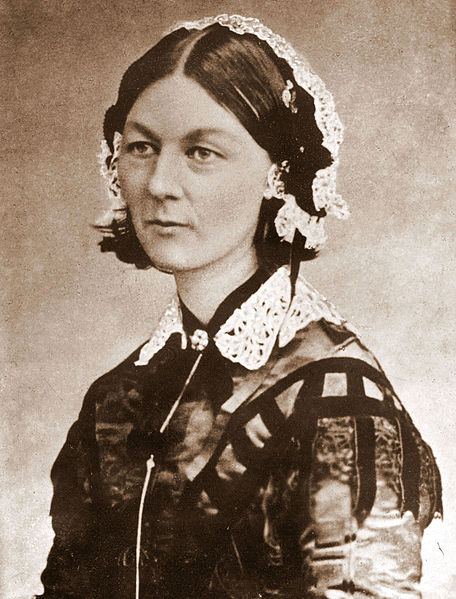
456px-Florence_Nightingale_CDV_by_H_Lenthall

It’s Florence Nightingale’s birthday:

Florence NightingaleOMRRC … 12 May 1820 – 13 August 1910) was a celebrated English social reformer and statistician, and the founder of modern nursing. She came to prominence while serving as a nurse during the Crimean War, where she tended to wounded soldiers. She was known as “The Lady with the Lamp” after her habit of making rounds at night.

Early 21st century commentators have asserted Nightingale’s achievements in the Crimean War had been exaggerated by the media at the time, to satisfy the public’s need for a hero, but her later achievements remain widely accepted. In 1860, Nightingale laid the foundation of professional nursing with the establishment of hernursing school at St Thomas’ Hospital in London. It was the first secular nursing school in the world, now part of King’s College London. The Nightingale Pledge taken by new nurses was named in her honour, and the annual International Nurses Day is celebrated around the world on her birthday. Her social reforms include improving healthcare for all sections of British society, improving healthcare and advocating for better hunger relief in India, helping to abolish laws regulating prostitution that were overly harsh to women, and expanding the acceptable forms of female participation in the workforce.

Nightingale was a prodigious and versatile writer. In her lifetime much of her published work was concerned with spreading medical knowledge. Some of her tracts were written in simple English so they could easily be understood by those with poor literary skills. She also helped popularise the graphical presentation of statistical data. Much of her writing, including her extensive work on religion and mysticism, has only been published posthumously.

Puzzability‘s new weekly series is entitled, Just Drop It! –

This Week’s Game — May 12-16
Just Drop It!
Sometimes, it goes without saying. For each day this week, we started with a word that contains the two-letter chunk IT and deleted it to get a new word. The two-word answer phrase, described by each day’s clue, is the longer IT word followed by the shorter word.
Example:
Einstein from England
Answer:
Britain brain
What to Submit:
Submit the two-word phrase, with the IT word first (as “Britain brain” in the example), for your answer.
Monday, May 12
Courteous resident of Warsaw

The ‘Movers and Shakers’ Who Aren’t

I sometimes write about Janesville’s politics, because the more one sees how confused they are, the more one feels obliged to contend for a better way in our own politics.

Just Friday, the Gazette‘s editorialist took a stand (subscription req’d) against the false hopes that a big-talking developer and smarmy politician are spreading about the return of GM to Janesville.

The editorial is more than welcome – the developer-politicain duo are a carnival act, a spectacle for gawkers.

Sadly, though, here’s how the editorial ends: “If this idea materializes, we’d be surprised, and so would many other movers and shakers in this community.”

Oh, brother. So the editorialist thinks that an appeal to the authority of many other ‘movers and shakers’ confirms the case against these gentlemen’s hollow promises?

Here’s where the editorialist is lost: (1) the case against false promises stands on its own, (2) an appeal to the supposed authority of others is unconvincing without a sound case, (3) few people are so arrogant as to declare themselves among ‘many other movers and shakers,’ and (4) few people infelicitously use the term ‘movers and shakers’ in any event.

If all Janesville’s self-claimed important people were half what they thought they were, they wouldn’t live in a city filled with bad deals, lies, false promises, white-collar welfare, and alienated residents.

The best one can say is that those movers and shakers are moving in the wrong direction, and shaking for fear that someone will say as much.

Make the good case, on the merits, and defy all opposition thereafter in defense of it.

The rest impresses no one.

Daily Bread for 5.11.14

Good morning.

Mother’s Day in Whitewater brings a high of seventy-seven, with a four-in-ten chance of afternoon thunderstorms.

On this day in 1947, B.F. Goodrich publicizes a true automotive innovation:

…the B.F. Goodrich Company of Akron, Ohio, announces it has developed a tubeless tire, a technological innovation that would make automobiles safer and more efficient.

Pneumatic tires–or tires filled with pressurized air–were used on motor vehicles beginning in the late 1800s, when the French rubber manufacturer Michelin & Cie became the first company to develop them. For the first 60 years of their use, pneumatic tires generally relied on an inner tube containing the compressed air and an outer casing that protected the tube and provided traction. The disadvantage of this design was that if the inner tube failed–which was always a risk due to excess heat generated by friction between the tube and the tire wall–the tire would blow out immediately, causing the driver to lose control of the vehicle.

The culmination of more than three years of engineering, Goodrich’s tubeless tire effectively eliminated the inner tube, trapping the pressurized air within the tire walls themselves. By reinforcing those walls, the company claimed, they were able to combine the puncture-sealing features of inner tubes with an improved ease of riding, high resistance to bruising and superior retention of air pressure. While Goodrich awaited approval from the U.S. Patent Office, the tubeless tires underwent high-speed road testing, were put in service on a fleet of taxis and were used by Ohio state police cars and a number of privately owned passenger cars.

The testing proved successful, and in 1952, Goodrich won patents for the tire’s various features. Within three years, the tubeless tire came standard on most new automobiles. According to an article published in The New York Times in December 1954, “If the results of tests…prove valid in general use, the owner of a 1955 automobile can count on at least 25 per cent more mileage, easier tire changing if he gets caught on a lonely road with a leaky tire, and almost no blowouts.” The article quoted Howard N. Hawkes, vice president and general manager of the tire division of the United States Rubber Company, as calling the general adoption of the tubeless tire “one of the most far-reaching changes ever to take place in the tire industry.” The radial-ply tire, a tubeless model with walls made of alternating layers–also called plies–of tough rubber cord, was created by Michelin later that decade and is now considered the standard for automobiles in all developed countries.

There were similar designs before, but Goodrich received and successfully defended Patent No. US2859792 A.

On this day in 1955, Milwaukee formally loses a basketball team:

1955 – Milwaukee Hawks Relocate to St. Louis
On this date the NBA approved transferring the financially strapped Milwaukee Hawks to St. Louis. The Hawks stayed in St. Louis until 1968, then moved to Atlanta. [Source: Milwaukee Journal Sentinel Online]

Daily Bread for 5.10.14

Good morning.

Saturday in Whitewater looks to be beautiful, with sunny skies and a high of seventy-one. Sunrise is 5:38 AM and sunset 8:06 PM. The moon is in a waxing gibbous phase with eighty-two percent of its visible disk illuminated.

The results of Friday’s FW poll, Friday Poll — Toronto’s Mayor Rob Ford: Optimist or Reprobate? are now in: 78.57% of respondents doubted Ford’s supposed break with a troubled past.

Perhaps you’ve never seen a rabbit eating raspberries. You’re one click away from changing that:

On this day in 1869, America goes truly transcontinental:

The First Transcontinental Railroad (known originally as the “Pacific Railroad” and later as the “Overland Route“) was a 1,907-mile (3,069 km) contiguous railroad line constructed between 1863 and 1869 across the western United States to connect the Pacific coast at San Francisco Bay with the existing Eastern U.S. rail network at Council Bluffs, Iowa, on theMissouri River. The rail line was built by three private companies: the original Western Pacific Railroad Company between Oakland and Sacramento, California (132 miles (212 km)), theCentral Pacific Railroad Company of California eastward from Sacramento to Promontory Summit, Utah Territory (U.T.) (690 miles), and the Union Pacific Railroad Company westward to Promontory Summit from the road’s statutory Eastern terminus at Council Bluffs on the eastern shore of the Missouri River opposite Omaha, Nebraska (1,085 miles).[1][2][3]

Opened for through traffic on May 10, 1869, with the driving of the “Last Spike” with a silver hammer at Promontory Summit,[4] the road established a mechanized transcontinental transportation network that revolutionized the settlement and economy of the American West by bringing these western states and territories firmly and profitably into the “Union” and making goods and transportation much quicker, cheaper and much more flexible from coast to coast.

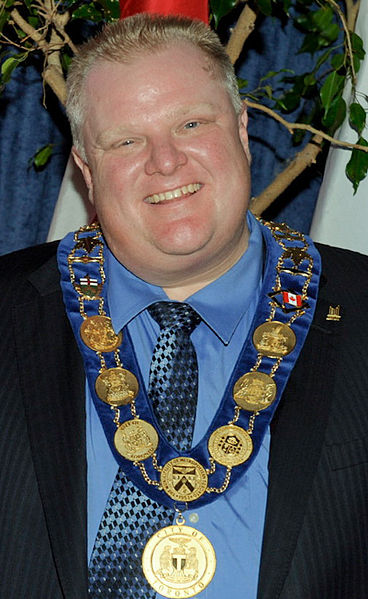
Friday Poll — Toronto’s Mayor Rob Ford: Optimist or Reprobate?

368px-Rob_Ford_Mayor


Toronto Mayor Rob Ford, the admittedly crack-smoking and heavy-drinking chief executive of that large city, now finds himself in rehab after yet another revelation that he’s still an addict.

After checking himself into in rehabilitation, here’s how Ford described his initial experience in that facility:

“I feel great,” he said. “Rehab is amazing. It reminds me of football camp. Kind of like the Washington Redskins camp I went to as a kid. I am working out every day and I am learning about myself, my past and things like that.”

He’s also looking ahead:

Of course, I am coming back and I am going to kick butt,” Ford told the paper. “I will be on the ballot for mayor in October, guaranteed, and I will do well. On Oct. 28, there will be no need to change the locks. There will be no need to clean out my office because I am coming back.”

So, what do you think, from this distance: does Rob Ford strike you as a sunny optimist, or more like an incorrigible reprobate?