
Monthly Archives: October 2014
Daily Bread
Daily Bread for 10.20.14
by JOHN ADAMS •
Good morning, Whitewater.
Monday in the city will be partly cloudy with a high of fifty-seven.
The tech industry has a style of presenting new products that’s susceptible of satire. Here’s an example, if Silicon Valley has a vegetable it wanted to promote:
On this day in 1944, Douglas MacArthur returns to the Philippines:
On 20 October 1944, troops of Krueger’s Sixth Army landed on Leyte, while MacArthur watched from the light cruiser USS Nashville. That afternoon he arrived off the beach. The advance had not progressed far; snipers were still active and the area was under sporadic mortar fire. When his whaleboat grounded in knee-deep water, MacArthur requested a landing craft, but the beachmaster was too busy to grant his request. MacArthur was compelled to wade ashore.[198] In his prepared speech, he said:
People of the Philippines: I have returned. By the grace of Almighty God our forces stand again on Philippine soil—soil consecrated in the blood of our two peoples. We have come dedicated and committed to the task of destroying every vestige of enemy control over your daily lives, and of restoring upon a foundation of indestructible strength, the liberties of your people.[199]
Since Leyte was out of range of Kenney’s land-based aircraft, MacArthur was dependent on carrier aircraft.[200] Japanese air activity soon increased, with raids on Tacloban, where MacArthur decided to establish his headquarters, and on the fleet offshore. MacArthur enjoyed staying on Nashville’s bridge during air raids, although several bombs landed close by, and two nearby cruisers were hit.[201] Over the next few days, the Japanese counterattacked in the Battle of Leyte Gulf, resulting in a near-disaster that MacArthur attributed to the command being divided between himself and Nimitz.[202] Nor did the campaign ashore proceed smoothly. Heavy monsoonal rains disrupted the airbase construction program. Carrier aircraft proved to be no substitute for land-based aircraft, and the lack of air cover permitted the Japanese to pour troops into Leyte. Adverse weather and valiant Japanese resistance slowed the American advance, resulting in a protracted campaign.[203][204]
By the end of December, Krueger’s headquarters estimated that 5,000 Japanese remained on Leyte, and on 26 December MacArthur issued a communiqué announcing that “the campaign can now be regarded as closed except for minor mopping up.” Yet Eichelberger’s Eighth Army killed another 27,000 Japanese on Leyte before the campaign ended in May 1945.[205] On 18 December 1944, MacArthur was promoted to the new five-star rank of General of the Army.[206]
On October 20, 1856, Frederick Douglass speaks in Wisconsin:
On this date Frederick Douglass arrived in Beaver Dam and spoke about the brutality and immorality of slavery. His speech was also intended to generate support for the abolitionist movement in Dodge Co. and Wisconsin. A former runaway slave and leading orator and author of the abolitionist movement, Douglass is regarded as one of the most influential Americans of the 19th century. [Source: Wisconsin Local History Network]
Google-a-Day asks about a remark:
Early in Conrad’s 1903 novella, Marlow makes a comment [about] “one of the dark places on earth”. About what place does he say this?
Animation, Film
Sunday Animation: The Divide
by JOHN ADAMS •
The Divide from Brent Sievers on Vimeo.
Man and nature try to coexist, but their boundaries are falling apart.
2014 Festivals:
Animation Block Party – Best Student Animation
Ottawa International Animation Festival
Northern Wave Festival
Primanima Hungary
Golden Orchid International Animation Festival
State Festival Berlin
CutOut Fest
Airport Ani-fest Chitose
Imagine Science Film Festival
Puchon International Student Animation Festival
Daily Bread
Daily Bread for 10.19.14
by JOHN ADAMS •
Good morning, Whitewater.
Sunday in town will be partly cloudy with a high of fifty-seven.
Among respondents to Friday’s FW poll asking about a preference between summer and winter, a clear majority (78.95%) picked summer.
On this day in 1781, Lord Cornwallis’s forces formally surrender at Yorktown, effectively ending the Revolutionary War:
The fire on Yorktown from the allies was heavier than ever as new artillery pieces joined the line.[64] Cornwallis talked with his officers that day and they agreed that their situation was hopeless.[65]
On the morning of October 17, a drummer appeared followed by an officer waving a white handkerchief.[66] The bombardment ceased, and the officer was blindfolded and led behind the French and American lines. Negotiations began at the Moore House on October 18 between Lieutenant Colonel Thomas Dundas and Major Alexander Ross (who represented the British) and Lieutenant Colonel Laurens (who represented the Americans) and the Marquis de Noailles (who represented the French).[66] To make sure that nothing fell apart between the French and Americans at the last minute, Washington ordered that the French be given an equal share in every step of the surrender process.[66]
The articles of capitulation were signed on October 19, 1781.[66] Signatories included Washington, Rochambeau, the Comte de Barras (on behalf of the French Navy), Cornwallis, and Lieutenant Thomas Symonds (the senior Royal Navy officer present).[67] Cornwallis’ British men were declared prisoners of war, promised good treatment in American camps, and officers were permitted to return home after taking their parole. At 2:00 pm the allied army entered the British positions, with the French on the left and the Americans on the right.[66]
The British had asked for the traditional Honors of War (marching out with dignity, flags waving, muskets shouldered, and playing an enemy [American] tune as a tribute to the victors), but remembering that the British, on taking Charleston earlier in the war, had refused the Americans (under Benjamin Lincoln) the same privilege, Washington firmly denied their request. Consequently, the British and Hessian troops marched with flags furled, muskets reversed in shame, while according to legend the British drummers and fifers played the tune “The World Turn’d Upside Down” – actually a popular British marching tune of the time, and in line with custom, but curiously appropriate under the circumstances. The British soldiers had been issued new uniforms hours before the surrender and until prevented by General O’Hara some threw down their muskets with the apparent intention of smashing them. Others wept or appeared to be drunk.[68] In all, 8,000 troops, 214 artillery pieces, thousands of muskets, 24 transport ships, wagons and horses were captured.[69]
Cornwallis refused to meet formally with Washington, and also refused to come to the ceremony of surrender, claiming illness.[69] Instead, Brigadier General Charles O’Hara presented the sword of surrender to Rochambeau. Rochambeau shook his head and pointed to Washington.[70] O’Hara offered it to Washington, but he refused to accept it, and motioned to his second in command, Benjamin Lincoln, who had been humiliated by the British at Charleston, to accept it.[69] The British soldiers marched out and laid down their arms in between the French and American armies, while many civilians watched.[71] At this time, the troops on the other side of the river in Gloucester also surrendered.[72]
Animals, Nature
Sleeping Whales
by JOHN ADAMS •
Daily Bread
Daily Bread for 10.18.14
by JOHN ADAMS •
Good morning, Whitewater.
The weekend begins with partly cloudy skies and a daytime high of fifty-one. Sunrise is 7:12 AM and sunset 6:08 PM. The moon is a waning crescent with twenty-four percent of its visible disk illuminated.
What’s an easy way to draw a circle freehand? Dave Hax has the answer:
On this day in 1867, America takes possession of Alaska:
Alaska Purchase
Financial difficulties in Russia, the desire to keep Alaska out of British hands, and the low profits of trade with Alaskan settlements all contributed to Russia’s willingness to sell its possessions in North America. At the instigation of U.S. Secretary of State William Seward, the United States Senate approved the purchase of Alaska from Russia for $7,200,000. on August 1, 1867. This purchase was popularly known in the U.S. as “Seward’s Folly,”, “Seward’s Icebox,” or “Andrew Johnson’s Polar Bear Garden”, and was unpopular at the time, though the later discovery of gold and oil would show it to be a worthwhile one and be come the 49th state.
After Russian America was sold to the U.S., all the holdings of the Russian–American Company were liquidated.
The Department of Alaska (1867-1884)
The United States flag was raised on October 18, 1867 (now called Alaska Day). Changed from the Julian calendar to the Gregorian calendar. Therefore, for residents, Friday, October 6, 1867 was followed by Friday, October 18, 1867—two Fridays in a row because of the date line shift.
During the Department era, from 1867 to 1884, Alaska was variously under the jurisdiction of the U.S. Army (until 1877), the United States Department of the Treasury (from 1877 until 1879) and the U.S. Navy (from 1879 until 1884).
When Alaska was first purchased, most of its land remained unexplored. In 1865, Western Union laid a telegraph line across Alaska to the Bering Strait where it would connect, under water, with an Asian line. It also conducted the first scientific studies of the region and produced the first map of the entire Yukon River. The Alaska Commercial Company and the military also contributed to the growing exploration of Alaska in the last decades of the 19th century, building trading posts along the Interior’s many rivers.
On this day in 1967, demonstrators protest at UW-Madison:
1967 – Police and Student Activists Clash in Madison
On this date club-wielding Madison police joined campus police to break up a large anti-war demonstration [against Dow Chemical, maker of napalm] on the UW-Madison campus. Sixty-five people, including several officers, were treated for injuries. Thirteen student leaders were ordered expelled from school. State Attorney General Bronson La Follette criticized the police for using excessive brutality. [Source: They Marched Into Sunlight]
Corporate Welfare, Development, Local Government, Planning, Politics
Will the last one to leave please turn out the lights?
by JOHN ADAMS •
JANESVILLE—The city of Janesville is losing its second economic development staff member in as many months.
Ryan Garcia, the city’s economic development coordinator announced his resignation effective Nov. 15, according to a city release Wednesday…
Via (subscription req’d) Janesville economic development coordinator resigning @ Janesville Gazette.
Perhaps the economy-meddling, big-government conservatives at the Gazette will scrounge up some suitable candidates, as that paper’s editorial board has done so well with advice for struggling, conflict-ridden booming, politically-placid Janesville these last several years.
Crime
Updated: Student who allegedly made social media school threat is located at Delavan High School
by JOHN ADAMS •
9:36 AM:
UPDATE: The phone used and person who sent the threat have been located at Delavan High School, according to Delavan Police Chief Tim O’Neill.
O’Neill said it was a male student and he is in custody at Delavan High School.
Officials said Delavan High School was on full lock-down for about 20 minutes when the phone that made the threat was located at the school.
O’Neill said it does not look like any shooting was actually planned.
Via Student who made social media threat is located at Delavan High School @ TMJ4.
Previously: WISN: East Troy says school threat made on social media.
Via WISN’s YouTube Channel: “Published October 17, 2014. East Troy superintendent Chris Hibner said a threat against a school in the area was made on the social media app Yik Yak.”
Cats
Friday Catblogging: Cat Appraises Singer’s Performance
by JOHN ADAMS •
Strong language as an irritable singer experiences a cat’s appraisal of her singing —
Poll
Friday Poll: Summer or Winter
by JOHN ADAMS •
Here in autumn, summer lies behind us and winter yet ahead.
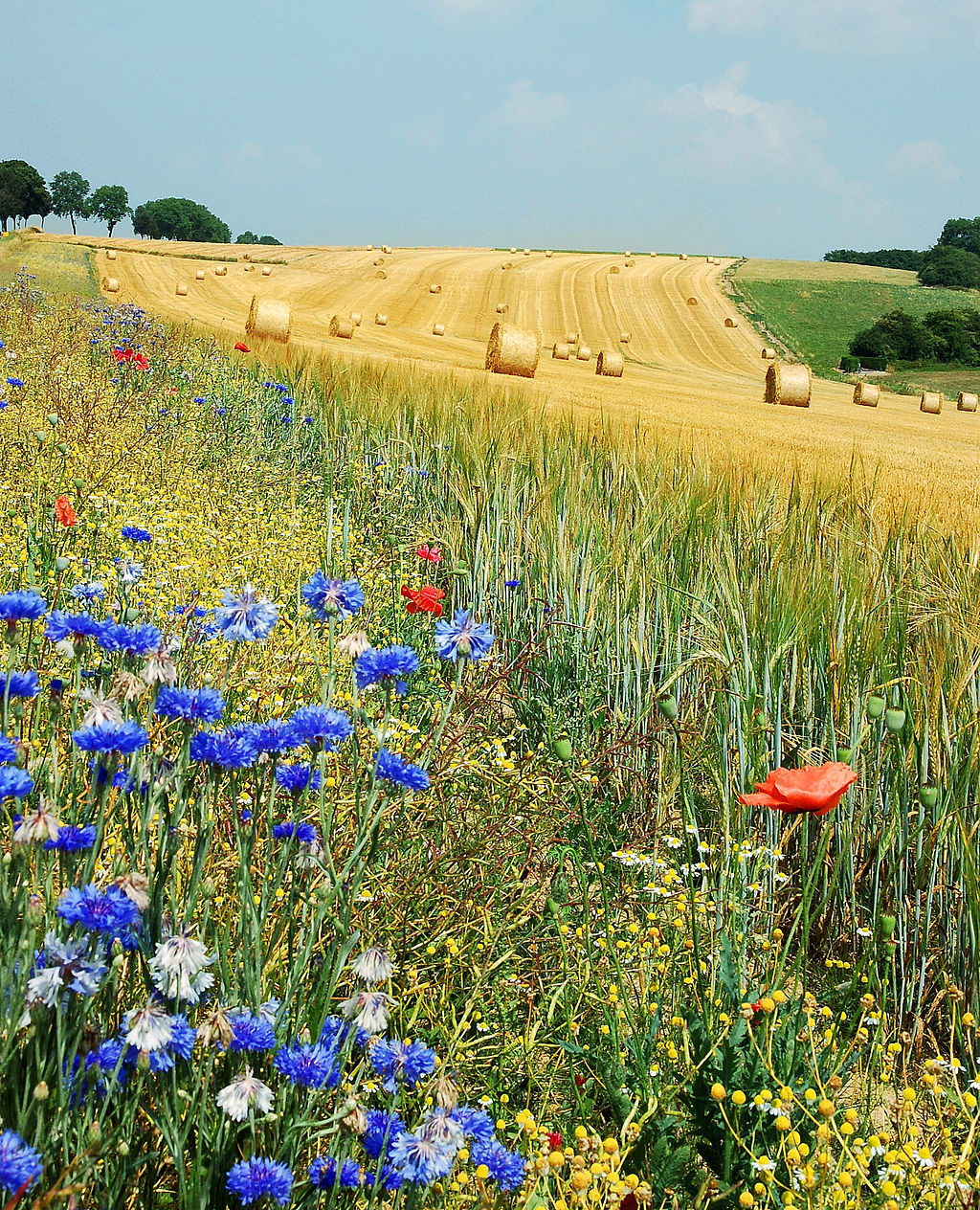
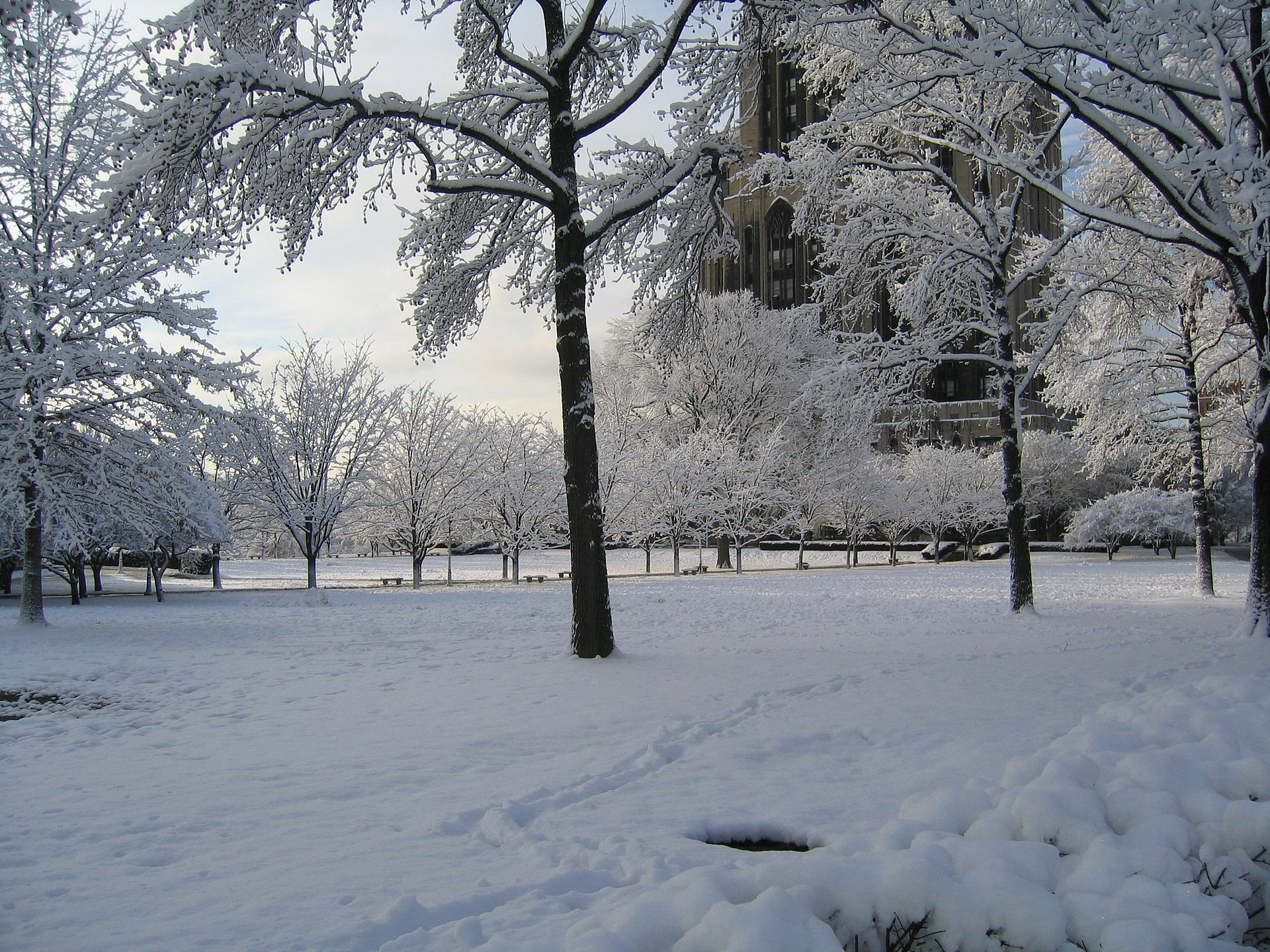
If you could choose, today, which would you pick: a return to summer, or a race ahead to winter?
Daily Bread
Daily Bread for 10.17.14
by JOHN ADAMS •
Good morning, Whitewater.
The work week ends with mostly cloudy skies, only a slight chance of rain, and a high of fifty-six.
On this day in 1777, British Gen. Burgoyne surrenders at Saratoga:
Burgoyne’s strategy to divide New England from the southern colonies had started well, but slowed due to logistical problems. He won a small tactical victory over General Horatio Gates and the Continental Army in the September 19 Battle of Freeman’s Farm at the cost of significant casualties. His gains were erased when he again attacked the Americans in the October 7 Battle of Bemis Heights and the Americans captured a portion of the British defenses. Burgoyne was therefore compelled to retreat, and his army was surrounded by the much larger American force at Saratoga, forcing him to surrender on October 17. News of Burgoyne’s surrender was instrumental in formally bringing France into the war as an American ally, although it had previously given supplies, ammunition and guns, notably the de Valliere cannon, which played an important role in Saratoga.[9] This battle also resulted in Spain joining France in the war against Britain.
Google-a-Day asks a zoology question:
What does the name given to the Aldabra giant tortoise, considered one of the longest-living animals on record at the time of his death, mean in English?
Crime, Open Government, University
Support the Campus Accountability and Safety Act
by JOHN ADAMS •
Discussion is better than silence; knowledge trumps ignorance. Thousands of universities receive federal funds, including our own campus.
Under the law, those universities are required, since the Clery Act, 20 U.S.C. § 1092(f), 34 C.F.R. 668.46 to record and report instances of crime on and near their campuses. (UW-System schools publish that information in compliance with federal and state law.)
Unfortunately, it’s not enough – auditing of reports is underfunded. Even if reporting statistics are accurate, there’s no way to know with assurance how university administrators addressed incidents of violence. The Campus Accountability and Safety Act, S.2692 — 113th Congress (2013-2014), a bipartisan federal proposal, would require campus administrators to report more comprehensively, and to disclose how they’ve handled reported acts of violence.
(Individual identities would be protected; the goal is to learn of violent incidents and their handling.)
One would prefer – especially a libertarian would prefer – a country that needed fewer laws.
But some of those administrators who count their institutions as entitled to millions in aid will still contend that they’re equally entitled to conceal how they address campus violence. University administrators of better character would be more open; there are too few leaders of that kind.
Those schools that take federal money should both report publicly the crimes on their campuses and how they’ve addressed those reported crimes.
A better climate would push public-relations to the back of the room, or into the hallway, where it belongs:
“Right now schools have reason to repress reporting and be focused on public image rather than being focused on the problem, because there is no real penalty for not accurately reporting and there is no standardized survey,” said Nancy Cantalupo, a research fellow with the Victim Rights Law Center and a researcher at the Georgetown University Law Center, who acted as an informal consultant during some stages of the bill’s creation.
Ms. Dauber [professor of law, Stanford] says transparency is the single most important change that Congress could bring about. “Absent transparency, we don’t know what problem we are trying to solve and we have no idea how to solve it,” she said. “We are just fumbling around in the dark. When you want to change, you take an honest inventory of your situation.”
The legislation is not perfect; it could use stronger provisions for investigatory efforts. More money should be authorized for audits of university reporting and handling of campus-related crimes.
Even without the Campus Accountability and Safety Act, our campus and the entire UW System should begin reporting more openly the disposition, and not merely incidents, of violence. (Particular identities are not the goal, but information about the number of incidents and how they were handled should be.)
Administrators throughout the UW System should demand state legislation to require for Wisconsin provisions like CASA’s proposed federal requirements.
Anything less is inadequate.
Embedded below readers will find a summary of the legislation and a draft bill.
Daily Bread
Daily Bread for 10.16.14
by JOHN ADAMS •
Good morning, Whitewater.
Thursday brings a cloudy morning but a sunny afternoon to the Whippet City. We can expect a high of about fifty-five, and no more than a ten-percent chance of rain.
The Fire & Rescue Task Force meets again tonight at 6:30 PM.
Perhaps you’ve watched a letter or bank statement travel through a pneumatic tube and wondered, ‘what’s that look like from the inside?’ More likely, you’ve not wondered, but someone has. Here’s their video depicting the journey:
On this day in 1976, the song Disco Duck hits number one on U.S. pop charts, confirming (if one needed confirmation) that the 70s were a troubled time:
Google-a-Day has question about a different kind of music for today:
The Curatorial Director of the Rock and Roll Hall of Fame Museum authored a book describing 50 years of what rock band?
Wisconsin
Resting
by JOHN ADAMS •
Even the toughest of badgers need to curl up on a gloomy day. pic.twitter.com/Qqa6tQe064
— UW-Madison (@UWMadison) October 15, 2014
He’s just resting before Maryland @ Camp Randall on 10.25.