

Anderson, Cartoons & Comics
Extinct
by JOHN ADAMS •
Good morning, Whitewater.
It’s a chilly day today, with a high expected to be no more than three below zero. For it all, we’ll have sunny skies. Sunrise is 7:25 AM and sunset 4:37 PM, for 9h 12m 45s of daytime. The moon is a waning gibbous with 94.7% of its visible disk illuminated.
The Whitewater Schools are closed today. Stay warm, play responsibly.
There’s a trailer online for Marvel’s upcoming feature-length film, Ant-Man. Wow, it looks promising, and from the trailer one gets the impression that the film has a sense of humor about itself.
See what you think:
Ant-Man is scheduled for release on July 17, 2015.
On this day in 1953, Pres. Truman makes an announcement:
President Harry S. Truman tells the world that that the United States has developed a hydrogen bomb.
It was just three years earlier on January 31, 1950, that Truman publicly announced that had directed the Atomic Energy Commission to proceed with the development of the hydrogen bomb. Truman’s directive came in responds to evidence of an atomic explosion occurring within USSR in 1949.
On this day in 1901, Fighting Bob becomes governor:
1901 – Robert Marion La Follette Inaugurated as Governor
On this date Robert M. La Follette was inaugurated as governor after winning the November 6, 1900 election. La Follette was born in Dane County in 1855. A Wisconsin Law School graduate and three-term member of congress, La Follette was renowned for his oratorical style. He was the first Wisconsin-born individual to serve as governor.
Google-a-Day asks a question about literature:
What was the only bestselling novel by the author who gave Hemingway his letter of introduction to Gertrude Stein?
I’d still vote yes on Gremlins, then or now.
Good morning, Whitewater.
Tuesday in Whitewater will be mostly sunny with a high of nine degrees. Sunrise is 7:25 AM and sunset 4:36 PM. The moon is a waning gibbous with 98.3% of its visible disk illuminated.
On this day in 1838, Samuel Morse demonstrates his telegraph:
Samuel Morse’s telegraph system is demonstrated for the first time at the Speedwell Iron Works in Morristown, New Jersey. The telegraph, a device which used electric impulses to transmit encoded messages over a wire, would eventually revolutionize long-distance communication, reaching the height of its popularity in the 1920s and 1930s.
Samuel Finley Breese Morse was born April 27, 1791, in Charlestown, Massachusetts. He attended Yale University, where he was interested in art, as well as electricity, still in its infancy at the time. After college, Morse became a painter. In 1832, while sailing home from Europe, he heard about the newly discovered electromagnet and came up with an idea for an electric telegraph. He had no idea that other inventors were already at work on the concept.
Morse spent the next several years developing a prototype and took on two partners, Leonard Gale and Alfred Vail, to help him. In 1838, he demonstrated his invention using Morse code, in which dots and dashes represented letters and numbers. In 1843, Morse finally convinced a skeptical Congress to fund the construction of the first telegraph line in the United States, from Washington, D.C., to Baltimore. In May 1844, Morse sent the first official telegram over the line, with the message: “What hath God wrought!”
Over the next few years, private companies, using Morse’s patent, set up telegraph lines around the Northeast. In 1851, the New York and Mississippi Valley Printing Telegraph Company was founded; it would later change its name to Western Union. In 1861, Western Union finished the first transcontinental line across the United States. Five years later, the first successful permanent line across the Atlantic Ocean was constructed and by the end of the century telegraph systems were in place in Africa, Asia and Australia.
Because telegraph companies typically charged by the word, telegrams became known for their succinct prose–whether they contained happy or sad news. The word “stop,” which was free, was used in place of a period, for which there was a charge. In 1933, Western Union introduced singing telegrams. During World War II, Americans came to dread the sight of Western Union couriers because the military used telegrams to inform families about soldiers’ deaths.
Over the course of the 20th century, telegraph messages were largely replaced by cheap long-distance phone service, faxes and email. Western Union delivered its final telegram in January 2006.
Samuel Morse died wealthy and famous in New York City on April 2, 1872, at age 80.
On this day in 1921, Janesville women fight the salacious:
1921 – Janesville Women Abhor Salacious Entertainment
On this date the Janesville Federation of Women decided to “censor” movies and vaudeville in the city. Members of this organization praised and promoted what they considered “better offerings.” They were zealously critical towards those of a “salacious” nature. No follow-up ever determined whether the women were successful in their quest or if the increased publicity for “salacious” shows backfired. [Source: Janesville Gazette]
Google-a-Day asks about a drama:
What is the name of the play in which Tom’s older sister withdraws into a fantasy life she has created amid her collection of glass animal figurines?
Good morning, Whitewater.
It will be cold today, with cloudy skies and a high of ten degrees. Sunrise is 7:25 AM and sunset 4:35 PM, for 9h 10m 25s of daytime. We’ve a full moon today.
On this day in 1914, Henry Ford announces a new business model. The New York Times promptly reports on it, with some astonishment over the plan:
Detroit, Mich., Jan. 5. — Henry Ford, head of the Ford Motor Company, announced today one of the most remarkable business moves of his entire remarkable career. In brief it is:
To give to the employees of the company $10,000,000 of the profits of the 1914 business, the payments to be made semi-monthly and added to the pay checks.
To run the factory continuously instead of only eighteen hours a day, giving employment to several thousand more men by employing three shifts of eight hours each, instead of only two nine-hour shifts, as at present.
To establish a minimum wage scale of $5 per day. Even the boy who sweeps up the floors will get that much.
Before any man in any department of the company who does not seem to be doing good work shall be discharged, an opportunity will be given to him to try to make good in every other department. No man shall be discharged except for proved unfaithfulness or irremediable inefficiency.
The Ford Company’s financial statement of Sept. 20, 1912, showed assets of $20,815,785.63, and surplus of $14,745,095.57. One year later it showed assets of $35,033,919.86 and surplus of $28,124,173.68. Dividends paid out during the year, it is understood, aggregated $10,000,000. The indicated profits for the year, therefore, were about $37,597,312. The company’s capital stock authorized and outstanding, is $2,000,000. There is no bond issue.
About 10 per cent of the employees, boys and women, will not be affected by the profit sharing, but all will have the benefit of the $5 minimum wage. Those among them who are supporting families, however, will have a share similar to the men of more than 22 years of age.
On this day in 1855, Fond du Lac produces a razor baron:
1855 – King Camp Gillette Born
On this date King Camp Gillette was born in Fond du Lac. He worked for many years as a traveling salesman. After much experimentation, he developed a disposable steel blade and razor. He established the Gillette Safety Razor Company in 1901. Sales for his product skyrocketed. Gillette remained president of his company until 1931 and was a director until his death the following year. [Source: Lemelson-MIT Program]
Google-a-Day asks a question about literature:
How many more books is Milton’s 1667 epic masterpiece than the connected work that was published in 1671?
Good morning, Whitewater.
We’ll have about an inch of additional snowfall during the day today, with cloudy skies giving way to sunny ones, and a high of thirty-three falling into the single digits by the late afternoon. Sunrise is 7:25 AM and sunset 4:34 PM, for 9h 09m 20s of daytime.
In Friday’s FW poll, asking whether UFO sightings in the ’50s and ’60s were more likely the result of CIA experiments or extraterrestrial beings, a majority of respondents picked extraterrestrial beings.
So someone challenges Gaston to a push-up contest at Disney World. No doubt, Gaston‘s a swine in Disney’s Beauty and the Beast, but the man playing him here acquits himself (in the spirit of the character) very well:
On this day in 1785, Jacob Grimm is born:
Jacob Ludwig Carl Grimm (4 January 1785 – 20 September 1863) was a German philologist, jurist and mythologist. He is known as the discoverer of Grimm’s Law (linguistics), the author (with his brother Wilhelm) of the monumental Deutsches Wörterbuch, the author of Deutsche Mythologie and, more popularly, as one of the Brothers Grimm, as the editor of Grimm’s Fairy Tales.
On this day in 1923, Milton College bans dancing:
1923 – Student Dancing Banned
On this date Milton College president A.E. Whitford bannned dancing by students in off-campus, semi-public places such as confectionery stores. [Source: Janesville Gazette]
The college closed in 1982.
Here’s my amateur version of the late William Safire’s long-standing tradition of offering annual predictions. The list for 2015, the FW eighth-annual edition:
1. The biggest policy discussion of 2015 will be
A. City of Whitewater’s scrutiny of vendors
B. Campus culture and policies
C. Police Department community relations
D. Over debates about the direction of the Whitewater Schools
2. For the Whitewater Schools, the biggest issue will be over
A. Finances
B. Academics
C. Extracurricular activities
D. There will be no big issues during the year
3. Whitewater’s economy will
A. Expand along with the American economy
B. Expand more slowly than the American economy
C. Be stagnant
D. Fall into recession
4. Gov. Walker will
A. Run for president to considerable nationwide attention throughout the year
B. Run for president with little nationwide notice throughout the year
C. Decide not to run
D. Move to Whitewater
5. After the spring general election, Common Council will be
A. Farther to the left
B. Farther to the right
C. Unchanged in ideology
D. Deeply but closely divided by personality
6. The Municipal Administration leadership (full-time staff) will see
A. One leader leave
B. Two leaders leave
C. More than two leave
D. No leaders leave
7. The search for a new chancellor at UW-Whitewater will
A. Be mostly a campus matter
B. Be mostly a local, non-campus matter
C. Be mostly a state matter
D. Continue into 2016
8. The city commission that gets the most attention in 2015 will be the
A. Urban Forestry Commission
B. Police and Fire Commission
C. Community Development Authority
D. Tech Park Board
9. UW-Whitewater athletes will win
A. No national championships
B. One national championship
C. Two or three national championships
D. Four or more national championships
10. 2015 will see an invasion of
A. Tourists
B. Locusts
C. Extraterrestrial beings from Zeta Reticuli
D. Ferrets
Adams’s guesses for 2015:
1. The biggest policy discussion of 2015 will be
B. Campus culture and policies. All four choices will be big topics, but UW-Whitewater will draw significant attention over its policies.
2. For the Whitewater Schools, the biggest issue will be over
B. Academics. District leadership would prefer a discussion of something else, or a discussion of academics on their own terms. It doesn’t matter: that’s not the discussion they’ll get.
3. Whitewater’s economy will
B. Expand more slowly than the American economy. I wish it were otherwise, but we’ll lag an expanding American economy. Relying on state grants won’t expand our economy; those pushing these ideas have long since run out of effective options for the city.
4. Gov. Walker will
B. Run for president with little nationwide notice throughout the year. He’ll run, but if he does well in the GOP primary contest, a surge won’t be evident until 2016. Others will draw more attention in ’15.
5. After the spring general election, Common Council will be
B. Farther to the right. Just a bit, I think. Council will see three new members and one incumbent re-elected.
6. The Municipal Administration leadership (full-time staff) will see
B. Two leaders leave.
7. The search for a new chancellor at UW-Whitewater will
C. Be mostly a state matter. Campus and local notables will not play a decisive role; the Walker Administration will play a significant, behind-the-scenes role in the selection of a new chancellor.
8. The city commission that gets the most attention in 2015 will be the
C. Community Development Authority.
9. UW-Whitewater athletes will win
C. Two or three national championships. An excellent year, by any standard, despite notable departures among coaches and athletes.
10. 2015 will see an invasion of
D. Ferrets. In New York City, there’s talk of lifting a ban on ownership of domesticated ferrets. I doubt the ban will be lifted. That’s a problem, as there are thousands of clandestinely-owned ferrets in the Big Apple.
When those many ferrets realize that the ban on their residency within New York City will not be lifted, they’re sure – out of pique and frustration – to decamp to another place.
Most likely, that place will be Whitewater. There must be vast numbers of ferrets in the Five Boroughs who will march westward to our small city. By mid-October, I’d guess, this city will be teeming with aggrieved, edgy, Mustela putorius furo.
Thousands, if not tens of thousands.
I’d suggest reading up now, while there’s still time: A Ferret Care Guide for Beginners.
You’ll be glad you did.

Good morning, Whitewater.
We’ve a bit of snow on the ground this morning, but that should hardly surprise: we’re an upper-Midwest state, this is January, and one should expect that precipitation during this time of year falls as snow. Tribes lived in this area for eons, with less-developed shelters, yet with winter weather like ours.
We’ll have a few snow showers today, with a high temperature of thirty-three. Sunrise is 7:25 AM and sunset 4:33 PM, for 9h 08m 20s of daytime. The moon is a waxing gibbous with 97.3% of its visible disk illuminated.
On this day in 1959, America gets her 49th state:
Washington, Jan. 3 — Alaska became a state today.
By the clock on the mantel in the Cabinet Room at the White House, it was two minutes past noon. In Juneau, capital of the forty-ninth state, it was 9:02 A.M., Pacific Standard Time.
President Eisenhower signed the document of proclamation at the long table at which he meets his Cabinet. He used six pens to inscribe his name and the date. Then he took another handful of pens from the drawer in front of him and signed an Executive order setting a new design of forty-nine stars for the official flag of the United States.
On this day in 1950, a foul smell emanates from a public utility’s latest plan (as it so often does with these sorts of plans):
1950 – Conversion to Natural Gas Stinks
On this date Wisconsin Power & Light customers in Edgerton, Milton and Milton Junction were converted from manufactured gas to natural gas for heating and cooking. The conversion coincided with an ongoing change in Janesville and Beloit. The conversions were not without temporary drawbacks. The stench of skunk oil was added to the otherwise odorless natural gas so utility workers could more easily detect leaks. [Source: Janesville Gazette]
Here’s a review of my amateur version of the late William Safire’s long-standing tradition of offering annual predictions. This was my list for 2014, the seventh-annual FW edition. Let’s see how I did:
1. In the governor’s race, Scott Walker will:
A. Win the city and the state
B. Lose the city but win the state
C. Lose the city and the state
D. The election results will be contested with no certain winner in 2014
Adams’s guess: B. Lose the city but win the state.
Correct answer: B. Lose the city but win the state.
2. In the 43rd Assembly race, Rep. Jorgensen will
A. Win a close race (less than 3 pt. margin)
B. Lose a close race (less than 3 pt. margin)
C. Win comfortably (between 3 and 7 pts.)
D. Win decisively (over 7 pts.)
Adams’s guess: D. Win decisively (over 7 pts.).
Correct answer: D. Win decisively (over 7 pts.). Rep. Jorgensen won by 20 points.
3. The Municipal Administration leadership (full-time staff) will see
A. One leader leave
B. Two leaders leave
C. More than two leave
D. No leaders leave
Adams’s guess: A. One leader leave.
Correct answer: A. One leader left. Latisha Birkeland left Neighborhood Services in the spring.
4. Of print newspapers in the area,
A. One will fold
B. Two will fold
C. One will reduce its print edition from a daily to a weekly
D. There will be no significant changes to print or online operations
Adams’s guess: C. One will reduce its print edition from a daily to a weekly.
Correct answer: D. There will be no significant changes to print or online operations. The Daily Union did cease its own printing, and that’s a big change, but it’s not one readers likely noticed. In the end, though, local print newspapers will fold, and mostly by consequence of their own mistakes.
5. For the Whitewater Schools, the biggest issue will be
A. Academic performance
B. Fiscal challenges
C. Administrative misconduct
D. Teacher misconduct
Adams’s guess: B. Fiscal challenges. Chronic budgetary uncertainty will haunt the district, as it will others nearby, despite supposed (actually overrated) legislative tools from Madison to empower local solutions.
Correct answer: B. Fiscal challenges.
6. The Whitewater University Tech Park will
A. Attract significant statewide praise
B. Attract significant statewide criticism
C. Receive no more attention than in past years
D. Attract a combination of statewide praise and criticism
Adams’s guess: D. Attract a combination of statewide praise and criticism. Different groups will see what they want to see.
Correct answer: D. Attract a combination of statewide praise and criticism. The future for WEDC-connected activities is bleak, however.
7. By 2014’s end, the amount of vacant commercial space in Whitewater will be
A. Greater than in 2013
B. The same as 2013
C. Slightly less than 2013
D. Far less than 2013
Adams’s guess: D. Far less than 2013. An improving economy will also give Whitewater’s merchants their best year in the last ten.
Correct answer: C. Slightly less than 2013.
8. The public commission that attracts the most attention in 2014 will be the
A. Planning Commission
B. Police and Fire Commission
C. Community Development Authority
D. Tech Park Board
Adams’s guess: C. Community Development Authority and D. Tech Park Board (about even between them).
Correct answer: C. Community Development Authority and D. Tech Park Board (about even between them).
9. After the spring election, Whitewater’s Common Council will be
A. A bit farther to the left
B. A bit farther to the right
C. Unchanged in ideology
D. Deeply split along ideological lines
Adams’s guess: A. A bit farther to the left. Over time, Council will grow more ideological.
Correct answer: A. A bit farther to the left. Just a bit.
10. The talked-about animal-sighting of 2014 will be
A. A coyote
B. A wolf
C. A bear
D. An aardvark
Adams’s guess: A. A coyote.
Correct answer: None of these choices.
That’s seven of ten – not bad, overall.
Tomorrow: Predictions for 2015.
That place would be India:
Leopards that roam rural India have a surprising favorite food: dogs.
The big cats even seem to prefer eating domestic dogs in areas where cows, goats and other farm animals are plentiful, according to a new study.
To reconstruct leopard diets, scientists had to take a close look at leopard poop. A team led by researchers with the Wildlife Conservation Society scooped up 85 leopard fecal samples as they scoured footpaths, dried-up streams and fields in a rural section of western Maharashtra (the same state where Mumbai is located). Back in a lab, the researchers looked for signs of claws, hoofs and hair and other indigestible parts of unlucky prey in the scat. [See Photos of Leopards in Western Maharashtra]
The researchers found that domestic dogs were by far the most common prey, making up 39 percent of the leopards’ diet (in terms of biomass). The remains of domestic cats were found in 15 percent of poop samples and accounted for 12 percent of the mass of leopards’ meals.
By comparison, livestock were a relatively small portion of the leopard diet. Domestic goats, for example, accounted for just 11 percent of the mass of the big cats’ meals, even though they were seven times more abundant than dogs in the study area….
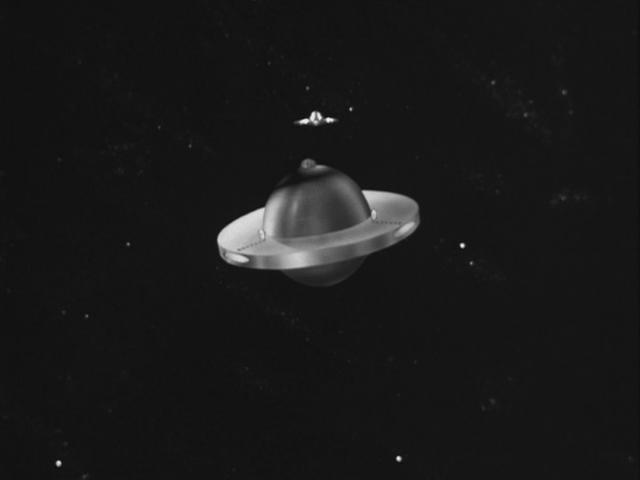
One reads the CIA claims that, if one thought he or she saw a UFO in the ’50s or ’60s, the object sighted was most likely not of extraterrestrial origin, but instead a CIA project
So what do you think? Were those mysterious objects that people spotted (1) alien spacecraft or (2) CIA projects?

Good morning, Whitewater.
Friday in the Whippet City will be mostly sunny with a high of thirty-three. Sunrise is 7:25 AM and sunset 4:32 PM for 9h 07m 25s of daytime. The moon is a waxing gibbous with 93.1% of its visible disk illuminated.
Prolific science fiction author Isaac Asimov is born this day in 1920:
Isaac Asimov (/?a?z?k ?æz?m?v/;[2] born Isaak Yudovich Ozimov; circa January 2, 1920[1] – April 6, 1992) was an American author and professor of biochemistry at Boston University, best known for his works of science fiction and for his popular science books. Asimov was one of the most prolific writers of all time, having written or edited more than 500 books and an estimated 90,000 letters and postcards.[3] His books have been published in 9 of the 10 major categories of the Dewey Decimal Classification.[4]
Asimov is widely considered a master of hard science fiction and, along with Robert A. Heinlein and Arthur C. Clarke, he was considered one of the “Big Three” science fiction writers during his lifetime.[5] Asimov’s most famous work is the Foundation Series;[6] his other major series are the Galactic Empire series and the Robot series. The Galactic Empire novels are explicitly set in earlier history of the same fictional universe as the Foundation series.
Later, beginning with Foundation’s Edge, he linked this distant future to the Robot and Spacer stories, creating a unified “future history” for his stories much like those pioneered by Robert A. Heinlein and previously produced by Cordwainer Smith and Poul Anderson.[7] He wrote hundreds of short stories, including the social science fiction “Nightfall”, which in 1964 was voted by the Science Fiction Writers of America the best short science fiction story of all time. Asimov wrote the Lucky Starr series of juvenile science-fiction novels using the pen name Paul French.[8]
Asimov also wrote mysteries and fantasy, as well as much nonfiction. Most of his popular science books explain scientific concepts in a historical way, going as far back as possible to a time when the science in question was at its simplest stage. He often provides nationalities, birth dates, and death dates for the scientists he mentions, as well as etymologies and pronunciation guides for technical terms. Examples include Guide to Science, the three-volume set Understanding Physics, and Asimov’s Chronology of Science and Discovery, as well as works on astronomy, mathematics, the Bible, William Shakespeare’s writing, and chemistry.
On this day in 1918, Wisconsinites leave for combat in Europe:
On this date the Wisconsin 127th and 128th Infantries departed for France from their training facility at Camp Arthur in Waco, Texas. Initially, these divisions were assigned to construct depots and facilities for troops that would follow. On May 18, they were assigned to the frontline at Belmont in the Alsace where they faced three German divisions. In the following months, 368 troops were killed, wounded or missing. Ironically, their enemy, native Alsatians, spoke German and the Wisconsin troops were better able to communicate with them than their French allies.
Google-a-Day asks a question about architecture:
Who is credited with introducing Early Renaissance-style architecture to the capital city of Lombardy, Italy?