FREE WHITEWATER

Author Archive for JOHN ADAMS

Daily Bread for 10.5.18

Good morning.

 Friday in Whitewater will be rainy with a high of fifty-seven.  Sunrise is 6:57 AM and sunset 6:28 PM, for 11h 30m 43s of daytime.  The moon is a waning crescent with 17.4% of its visible disk illuminated.

On this day in 1846, Wisconsin’s first constitutional convention meets:

On this date Wisconsin’s first state Constitutional Convention met in Madison. The Convention sat until December 16, 1846. The Convention was attended by 103 Democrats and 18 Whigs. The proposed constitution failed when voters refused to accept several controversial issues: an anti-banking article, a homestead exemption (which gave $1000 exemption to any debtor), providing women with property rights, and black suffrage. The following convention, the Second Constitutional Convention of Wisconsin in 1847-48, produced and passed a constitution that Wisconsin still very much follows today.

Recommended for reading in full — Rev. Dr. William Barber receives award, Nobel Peace Prize for work against sexual violence, Salk Lake Tribune blasts Orrin Hatch, states could seek restitution from Trump, and video on the evolution of Mark Hamill —

 Michelle Boorstein reports ‘Closest person we have to Martin Luther King Jr.’: Pastor-activist William J. Barber wins $625,000 ‘genius’ grant:

On Thursday, the day the Rev. William Barber Jr. was awarded a $625,000 “genius grant,” Barber was hard to reach, because he was being arrested. Which is related to why the North Carolina preacher was given one of the rare MacArthur Foundation awards.

Barber, 55, is one of the country’s best-known public advocates fighting racism and poverty, known for successfully organizing tens of thousands of people in marches and other nonviolent acts of civil disobedience around the country. On Thursday, as MacArthur was announcing that Barber was among 25 people “on the precipice of great discovery or a game-changing idea,” Barber’s Poor People’s Campaign was tweeting about his arrest.

“I’ve just been arrested in Chicago, and I’m waiting on their process,” he said in a call to the Raleigh News & Observer. “For minimum wage, in front of McDonald’s headquarters.”

“It doesn’t say rest on your laurels, but to keep on pushing. In this work, sometimes you get heavy criticism. People do say ugly things, ‘You just want money.’ I just want other people to have health care. You know, Jesus healed everybody and never charged a co-pay,” he told the paper.

Rukmini Callimachi, Jeffrey Gettleman, Nicholas Kulish, and Benjamin Mueller report Nobel Peace Prize Awarded to Denis Mukwege and Nadia Murad for Fighting Sexual Violence:

The 2018 Nobel Peace Prize was awarded on Friday to two campaigners against wartime sexual violence: Dr. Denis Mukwege, 63, a Congolese gynecological surgeon; and Nadia Murad, 25, who became the bold voice of the women who survived sexual violence by the Islamic State.

The Norwegian Nobel Committee said the two were given the award “for their efforts to end the use of sexual violence as a weapon of war and armed conflict.”

Dr. Mukwege campaigned relentlessly to shine a spotlight on the plight of Congolese women, even after nearly being assassinated a few years ago. Ms. Murad, who was held captive by the Islamic State, also known as ISIS, has told and retold her story of suffering to organizations around the world, helping to persuade the United States State Department to recognize the genocide of her people at the hands of the terrorist group.

[Read about the struggles of Dr. Mukwege and Ms. Murad, in their own words.]

In a year when the “Me Too” movement has turned the world’s attention to survivors of sexual assault and abuse, the Nobel Committee’s decision focused on the continuing global campaign to end the use of mass rape as a weapon in global conflict.

A Salt Lake Tribune editorial contends Hatch attack on alleged witness is despicable:

Apparently, a former TV weatherman from Washington, D.C., provided the committee with a sworn statement revealing, allegedly, some details about [Julie] Swetnick’s personal sexual preferences that are both none of anyone’s damn business and utterly irrelevant to the question of what Kavanaugh might or might not have done all those years ago.

In a sleazy nutshell, the story is that Dennis Ketterer claims that Swetnick approached him at a Washington bar one night and struck up first a conversation and then a brief relationship in which sex was discussed but never performed.

And, Ketterer said, Swetnick never said anything about seeing, knowing or being attacked by Kavanaugh.

Clearly, the only reason for any individual to say any of this, and the only reason for the committee to make it public, is the belief that any women who would approach a self-described fat man in a bar, any women who would choose to discuss sex, is some kind of libertine who, for that reason, cannot be trusted.

Adam Davidson explains How State Officials and Unpaid Taxes Could Force Trump to Liquidate Part of His Family Fortune:

Sean Shaw, the Democratic candidate for state attorney general in Florida, has a message for Donald Trump. If elected, Shaw will investigate the President’s financial activities across the Sunshine State. “We’ll pursue any area that is worthy of pursuit,” Shaw told me in an interview this week. “The charity not being charitable. Trump Mar-a-Lago and emoluments.” Shaw told me he would go “where the law takes me.” He plans to investigate whether “the President of the United States is personally profiting from the Presidency in Florida.”

Trump, of course, has several properties in Florida, including Mar-a-Lago, a private club that doubled its initiation fee after Trump was elected. Since Trump took office, three of its members have exerted sweeping influence on the Department of Veterans Affairs. Another member was named the U.S. Ambassador to the Dominican Republic. Shaw also said that he will investigate reports that a Trump-branded development project in Sunny Isles, Florida, bears hallmarks of possible money laundering. Shaw made clear that his investigations would be broad and open-ended: “They may lead you to tax returns, financial records. I don’t know where they lead. No one is above the law in Florida. No one. We are going to make it such that if I find bad stuff going on, we’re going to go where it takes us, no matter how big.”

One recent poll put Shaw just behind his Republican opponent, Ashley Moody, who has expressed support for President Trump. Even if Shaw loses, Trump may be vulnerable in several other states where he has done business. In New York, the Democratic candidate for attorney general, Letitia James, is all but assured a victory. James is promising Democratic voters that she will aggressively investigate the President. After this week’s stunning Times investigation alleged that the Trump Organization’s wealth was built, in large part, on a variety of complex tax schemes, many of which could be illegal.

The Evolution of Mark Hamill:

The Motivation of the Horde

Most people, in all times and places, are clever and intelligent. It’s simply false to contend that only a few people are sharp; society does – and only can – function through the capable participation of many.

At times in our own history, however, large numbers of our people have slipped into malevolence, in opposition to the better principles of our own culture. We’ve faced (and thankfully overcome) Tories, Know Nothings, Confederates, Copperheads, Klan, and Bund. The members of these dark movements were not of lesser intelligence than others; they were of lesser character. They were just as human, but less humane.

Now there is before us another threat. They are many, although they are not, and never will be, a national majority. (They see no rebuke in this, as they seek a herrenvolk, a sham democracy supporting only their own demographic ilk.)

Adam Serwer describes well the dark motivation of this movement, concluding that, for them, The Cruelty Is the Point (“President Trump and his supporters find community by rejoicing in the suffering of those they hate and fear”):

The Trump era is such a whirlwind of cruelty that it can be hard to keep track. This week alone, the news broke that the Trump administration was seeking to ethnically cleanse more than 193,000 American children of immigrants whose temporary protected status had been revoked by the administration, that the Department of Homeland Security had lied about creating a database of children that would make it possible to unite them with the families the Trump administration had arbitrarily destroyed, that the White House was considering a blanket ban on visas for Chinese students, and that it would deny visas to the same-sex partners of foreign officials. At a rally in Mississippi, a crowd of Trump supporters cheered as the president mocked Christine Blasey Ford, the psychology professor who has said that Brett Kavanaugh, whom Trump has nominated to a lifetime appointment on the Supreme Court, attempted to rape her when she was a teenager. “Lock her up!” they shouted.

….

The laughter undergirds the daily spectacle of insincerity, as the president and his aides pledge fealty to bedrock democratic principles they have no intention of respecting. The president who demanded the execution of five black and Latino teenagers for a crime they didn’t commit decrying “false accusations,” when his Supreme Court nominee stands accused; his supporters who fancy themselves champions of free speech meet references to Hillary Clinton or a woman whose only crime was coming forward to offer her own story of abuse with screams of “Lock her up!” The political movement that elected a president who wanted to ban immigration by adherents of an entire religion, who encourages police to brutalize suspects, and who has destroyed thousands of immigrant families for violations of the law less serious than those of which he and his coterie stand accused, now laments the state of due process.

This isn’t incoherent. It reflects a clear principle: Only the president and his allies, his supporters, and their anointed are entitled to the rights and protections of the law, and if necessary, immunity from it.

The millions in opposition and resistance, including those of us who are Never Trump, can expect a long and difficult struggle against this horde.

Of those of us from Never Trump, a group chiefly comprised from among true conservatives or libertarians, there is a particular fortitude against the mob, the mass, the horde: we have spent our lives contending for individual rights against majoritarian tyranny. We are grateful for all the talented many, of other ideologies, who form the largest part of resistance, but by education and disposition we who are truly libertarian are well-suited to standing against a horde. (Whatever deficiencies we may have, at least this we do well.)

In what we lawfully say, in what we lawfully do, in how we describe ourselves, and in the exercise of that opposition by time, place, and manner, we will go on (with our many friends) as a matter of necessity.

Daily Bread for 10.4.18

Good morning.

Thursday in Whitewater will be partly sunny with a high of fifty-eight.  Sunrise is 6:56 AM and sunset 6:30 PM, for 11h 33m 35s of daytime.  The moon is a waning crescent with 25.9% of its visible disk illuminated.

Whitewater’s Landmarks Commission meets at 6 PM,  the Finance Committee also at 6 PM, (canceled), and there is a scheduled Fire Department board meeting at 6:30 PM.

On this day in 1957, the Space Age begins as the Soviet Union launches Sputnik 1 into a low Earth orbit.


Recommended for reading in full —  Trump-voting counties most affected by retaliatory tariffs,  American ambassador to  Estonia quits over lack of Trump support for small democracy threatened by Russia, Russian spies & hackers rigging Olympics, Wisconsin lawmakers to vote on corporate welfare after the election, and video of a freediver who reached new depths —

 Joseph Parilla and Max Bouchet ask (and answer) Which US communities are most affected by Chinese, EU, and NAFTA retaliatory tariffs?:

COUNTIES THAT VOTED FOR PRESIDENT TRUMP HAVE HIGHER RELIANCE ON TARIFF-AFFECTED EXPORTS

Trade policy is inextricably linked with politics, and the retaliatory tariffs seem geographically and industrially targeted to mobilize political angst. A county-level analysis reveals that, while a political diversity of places will be implicated, counties that voted for President Trump are more exposed to the tariffs, as measured by the share of exports in tariff-affected industries (8.1 percent) and the share direct and indirect jobs those exports support (8.1 percent). Comparatively, in counties that voted for Hillary Clinton, 4.2 percent of exports are in tariff-affected industries, which support about 3.2 percent of export jobs.

2017 share of exports and export-supported jobs in industries targeted by partners' retaliation, by county vote in the 2016 US presidential election

James D. Melville Jr. writes I stepped down as U.S. ambassador to Estonia. Here’s why:

This spring, I reached the point where I could no longer support President Trump’s policies and rhetoric regarding NATO, our European allies and Russia.

What do I believe? I am extremely uncomfortable with the trade policies the United States is pursuing. I also believe it is a historic mistake to cozy up to Russian President Vladimir Putin.

It is in the United States’ fundamental interests to champion a rules-based world order. After the dark years of World War II, we worked in accordance with our values to pursue, nurture and achieve a peaceful and prosperous world. The great global and transatlantic institutions — NATO, the United Nations and, to an extent that would surprise many of my fellow citizens, even the European Union — are the fruits of policies carried out and resources expended by the United States over decades.

The refusal of the United States to give up on Estonia’s independence through the entire Soviet occupation is the cornerstone of Estonians’ deep appreciation for America. But it is the values of our nation and the leadership and role we have played in protecting the democracies in Europe that give them the confidence to stand up to the genuine threats emanating from their eastern neighbor.

Ellen Nakashima, Michael Birnbaum, and William Booth report U.S. indicts Russian spies in hacking campaign linked to Olympics doping scandal:

The Justice Department on Thursday announced the indictment of seven Russian military spies on cyber hacking charges linked to the leaking of Olympic athletes’ drug-test data in an alleged attempt to undermine international efforts to expose Russian doping.

Four of the officers with Russia’ GRU military intelligence agency also were charged with targeting organizations probing Russia’s alleged use of chemical weapons, including the poisoning of a former Russian spy in Britain. Three were indicted in July for allegedly conspiring to interfere in the 2016 presidential election.

The indictment further exposes Moscow’s ongoing, widespread campaign to discredit western democracy and international institutions through disinformation and other measures. The aim, officials said, is to muddy or alter perceptions of the truth.

Laurel White reports Lawmakers To Vote After Election On $100M Tax Deal For Kimberly-Clark:
Freediver Breaks World Record For Deepest Dive, Reaching Over 350ft:

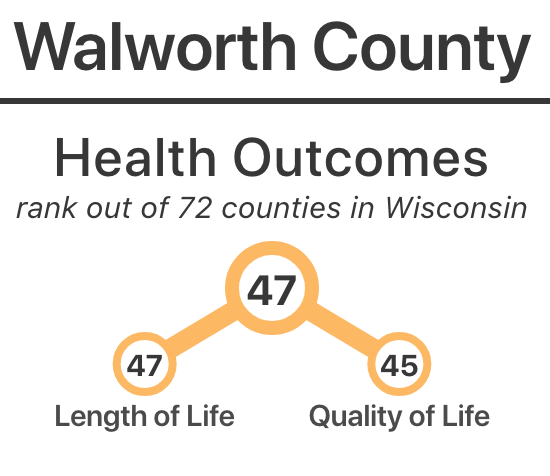
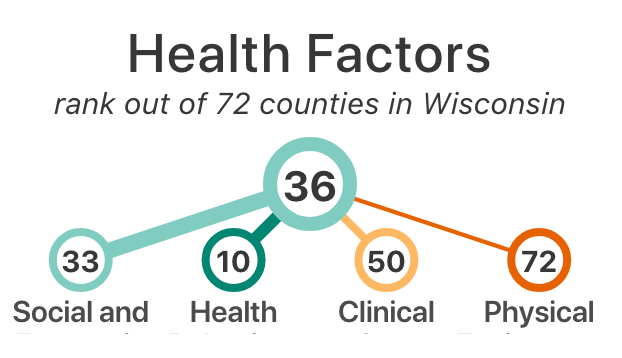
Majority of Walworth County’s Renters are Rent-Burdened

A new study, Paying the Rent, from the Wisconsin Policy Forum finds that a majority of Walworth County’s renters are rent-burdened, placing the county in the top five most distressed in the state by that measurement. (There are, of course, 72 counties in Wisconsin, so Walworth County is among the weakest of a very large group.)

The study defines being rent-burdened using a common definition: “[a] 30% rent-to-income (RTI) ratio is a standard used nationally to define housing affordability. Based on this standard, households can afford to spend up to 30% of their income on gross rent (contract rent plus utilities) and still cover other expenses. Those spending over 30% are considered “rent burdened.””

State, county, and local ‘development’ agencies have failed to make headway in the critical measure of individual and household incomes.

Expensive projects that still leave tens of thousands rent-burdened don’t represent community development at all.

See also Walworth County’s Working Poor.

The Theory of Moral Sentiments and the Morality of Markets

In Five myths about capitalism, Steven Pearlstein describes the primary myth as a misunderstanding about motivations of those choosing freely in the marketplace (broadly understood, these choices are about not only capital, but also labor or goods):

Myth No. 1: Greed, a natural human instinct, makes markets work.

Adam Smith, the father of economics, first pointed out in his most famous work, “The Wealth of Nations,” that in vigorously pursuing our own selfish interests in a market system, we are led “as if by an invisible hand” to promote the prosperity of others. Years later, Smith’s theme that capitalism runs on selfishness would find its most famous articulation in a speech by a fictional corporate raider, Gordon Gekko, in the movie “Wall Street”: “Greed . . . is good, greed is right, greed works.” (Defenders of free markets have been desperate to disown the “greedy” label ever since.)

Smith, however, was never the prophet of greed that free-market cheerleaders have made him out to be. In other passages from “The Wealth of Nations,” and in his earlier work, “The Theory of Moral Sentiments,” Smith makes clear that for capitalism to succeed, selfishness must be tempered by an equally powerful inclination toward cooperation, empathy and trust — traits that are hard-wired into our nature and reinforced by our moral instincts. These insights have now been confirmed by brain researchers, behavioral economists, evolutionary biologists and social psychologists. An economy organized around the cynical presumption that everyone is greedy is likely to be no more successful than one organized around the utopian assumption that everyone will act out of altruism.

Smith understood that free exchanges in the marketplace require a natural cooperative impulse.  He’s been proved right that the overwhelming number of people are oriented toward voluntary social cooperation, and it’s for this reason that a society organized around free exchange (rather than state or private coercion) works so productively.

It’s encouraging to see Pearlstein lead with this point. Smith’s Theory of Moral Sentiments (online and available at Amazon) reminds one that, despite imperfections in any human arrangement, from natural and worthy inclinations men and women cooperate voluntarily in the marketplace.

Consider, after all, how Smith begins this great work (Part First, Section I, Chapter I, Of Sympathy).  He begins not with an exaggerated notion of human greed, but with a realistic understanding of  human concern for others:

How selfish soever man may be supposed, there are evidently some principles in his nature, which interest him in the fortune of others, and render their happiness necessary to him, though he derives nothing from it, except the pleasure of seeing it.

Upon some occasions sympathy may seem to arise merely from the view of a certain emotion in another person. The passions, upon some occasions, may seem to be transfused from one man to another, instantaneously, and antecedent to any knowledge of what excited them in the person principally concerned. Grief and joy, for example, strongly expressed in the look and gestures of any person, at once affect the spectator with some degree of a like painful or agreeable emotion. A smiling face is, to everybody that sees it, a cheerful object; as a sorrowful countenance, on the other hand, is a melancholy one.

Markets work so well because they rest, truly, on virtues.  A well-ordered society (although not all societies are such), free from government or factional manipulation, allows worthy traits to express themselves to the benefit of all.

Daily Bread for 10.3.18

Good morning.

Wednesday in Whitewater will see an occasional morning shower with a high of eighty-two.  Sunrise is 6:55 AM and sunset 6:31 PM, for 11h 36m 27s of daytime.  The moon is a waning crescent with 37.9% of its visible disk illuminated.

The Whitewater School Board will hold a listening session at the high school at 7 PM tonight about an upcoming operational referendum.

On this day in 1862, the Second Battle of Corinth, Mississippi, begins: “The Second Battle of Corinth began when Confederate forces attempted to retake Corinth, Mississippi. The 8th, 14th, 16th, 17th and 18th Wisconsin Infantry regiments, along with the 6th and 12th Wisconsin Light Artillery batteries, fought to protect the city from Confederate troops. The brigade commander recalled that, “I had the 8th Wisconsin, big burly fellows, who could march a mule off its feet, and who proved at Corinth… that they could fight as well as march.” At one point, musket fire coming at the 8th Wisconsin Infantry cut the tether holding Old Abe the Eagle on his perch. He soared high above the lines as the battle raged beneath him.”

Recommended for reading in full —  Trump family’s documented tax fraud, Trump mocks Christine Blasey Ford, silence in the face of Russian election interference, conditions for detainees, and video of Earthrise —

David Barstow, Susanne Craig, and Russ Buettner report Trump Engaged in Suspect Tax Schemes
as He Reaped Riches From His Father (“The president has long sold himself as a self-made billionaire, but a Times investigation found that he received at least $413 million in today’s dollars from his father’s real estate empire, much of it through tax dodges in the 1990s”). The reporting is so detailed – relying on thousands of documents – that it has its own explanatory summary, 11 Takeaways From The Times’s Investigation Into Trump’s Wealth:

Donald J. Trump built a business empire and won the presidency proclaiming himself a self-made billionaire, and he has long insisted that his father, the legendary New York City builder Fred C. Trump, provided almost no financial help. “I built what I built myself,” the president has repeatedly said.

But an investigation by The New York Times has revealed that Donald Trump received the equivalent today of at least $413 million from his father’s real estate empire. What’s more, much of this money came to Mr. Trump through dubious tax schemes he participated in during the 1990s, including instances of outright fraud, The Times found.

In all, the president’s parents transferred well over $1 billion in wealth to their children, which could have produced a tax bill of at least $550 million under the 55 percent tax rate on gifts and inheritances that was in place at the time. Helped by a variety of tax dodges, the Trumps paid $52.2 million, or about 5 percent, tax returns show.

….

The line between legal tax avoidance and illegal tax evasion is often murky, and there is no shortage of clever tax-avoidance tricks that have been blessed by either the courts or the Internal Revenue Service itself; the wealthiest Americans rarely pay anything close to full freight. The Trumps’ tax maneuvers met with little resistance from the I.R.S., The Times found.

But tax experts briefed on The Times’s findings said the Trumps appeared to have done more than exploit legal loopholes. They said the conduct described here represented a pattern of deception and obfuscation that repeatedly prevented the I.R.S. from taxing large transfers of wealth to Fred Trump’s children.

….

All told, The Times documented 295 distinct streams of revenue Fred Trump created over five decades to channel wealth to his son.

But the partnership between Donald Trump and his father was about more than the pursuit, and the preservation, of riches. They were also confederates in a more ambitious project: creating the myth of Donald J. Trump, Self-Made Billionaire. If Fred Trump was the silent partner, helping finance the accouterments of wealth, it was Donald Trump who spun them into a seductive narrative.

Emblematic of this dynamic is Trump Tower, the talisman of privilege that established Donald Trump as a player in New York. Fred Trump’s money helped build it. His son recognized and exploited its iconic power as the primary stage for both “The Apprentice” and his presidential campaign.

….

With the cash flowing out of Fred Trump’s empire, the Trumps began transferring ownership of the lion’s share of the empire itself to Donald Trump and his siblings. The vehicle they created to do that was a special kind of trust called a grantor-retained annuity trust, or GRAT.

The purpose of a GRAT is to pass wealth across generations without paying the 55 percent estate tax. The Trump parents did have to pay gift taxes based on one crucial number: the market value of Fred Trump’s empire. But The Times found evidence that they dodged hundreds of millions of dollars in gift taxes by submitting tax returns that grossly undervalued the assets placed in two GRATs, one for each parent.

Fred Trump’s 1995 gift tax return claimed that the 25 apartment complexes and other properties in the trusts were worth just $41.4 million. The implausibility of this claim would be made plain in 2004, when banks valued that same real estate at nearly $900 million.

Josh Dawsey and Felicia Sonmez report Trump mocks Kavanaugh accuser Christine Blasey Ford:

 President Trump mocked the account of a woman who accused Supreme Court nominee Brett M. Kavanaugh of assault and told a Mississippi crowd that the #MeToo movement was unfairly hurting men.

Trump, in a riff that has been dreaded by White House and Senate aides, attacked the story of Christine Blasey Ford at length — drawing laughs from the crowd. The remarks were his strongest attacks yet of her testimony.

“ ‘I don’t know. I don’t know.’ ‘Upstairs? Downstairs? Where was it?’ ‘I don’t know. But I had one beer. That’s the only thing I remember,’ ” Trump said of Ford, as he impersonated her on stage.

“I don’t remember,” he said repeatedly, apparently mocking her testimony.

Ford has said the incident happened in an upstairs room and that she is “100 percent” certain it was Kavanaugh who assaulted her, although she has acknowledged that her memories of other details of the evening remain unclear.

WaPo’s @GregPMiller describes a tense moment from 2016 involving a CIA director trying to sound the alarm on Russia and a senior U.S. senator wanting none of it…:

Madison Pauley reports A Surprise Inspection of an ICE Detention Center Reveals Horrific Conditions (“Federal investigators found ‘significant threats’ to detainees’ health and safety”):
 Earthrise (“The first people to see the Earth from the moon were transformed by the experience. In this film, they tell their story”):

No Principle But Principle

Over these years that I have written, Whitewater has seen two city managers, three chancellors, four district administrators, and dozens upon dozens of other municipal, school district, and university officials.

During this time, this ilk has relied on projects, press releases, committees, and conferences to advance itself at the expense of the community it professes to serve.

And yet, and yet — so many of their number have come and gone, with the well being of individuals and households no better off after so many professions of concern and all that puffery.

Sadly, this beautiful but troubled city is littered with those who took refuge in these things, only to wither and fall away.

And look, and look — committees, conferences, press releases, puffery, offices, titles, selfishness, and self-importance offer no defense against the inexorable withering that truth of principle, reasoning, and of human nature bring.

(Indeed, a collection of people committed to ignoring wrongdoing is often weaker even than a single person so committed; the collective will be just as wrong in principles, but even more vulnerable in description as a horde arrayed against individual regard and individual well being.)

There’s nothing that Hyer Hall, or the Municipal Building, or Central Office can do to make the worse become the better reason, or false arguments become true ones.

Like so many others who’ve chosen wrongly and failed before, some of those now in office will yet try the same feeble maneuvers that brought failure before. Of course they will. For it all, they’ll meet the same disappointments that others have met before.

No principle but principle.

Daily Bread for 10.2.18

Good morning.

Tuesday in Whitewater will be cloudy with a high of sixty-two.  Sunrise is 6:54 AM and sunset 6:33 PM, for 11h 39m 20s of daytime.  The moon is a waning crescent with 48.1% of its visible disk illuminated.

Whitewater’s Common Council meets today at 6:30 PM.

On this day in 1780, British Major John André is hanged as a spy by the Continental Army during the American Revolutionary War for assisting Benedict Arnold’s attempted surrender of the fort at West Point, New York.


Recommended for reading in full —  Manafort meets Mueller’s team, children in detention, Nobel laureates in physics, a playoff guide to the Brewers, and video of what’s up in the sky for October 2018 —

The Committee to Investigate Russia writes Manafort and Mueller Teams Meet:

Politico reports Paul Manafort is meeting with Robert Mueller‘s team, based on seeing Richard Westling and Tom Zehnle, two of Manafort’s lawyers, speaking with lead prosecutor Andrew Weissmann outside the special counsel’s Washington, DC office Monday.

The men parted ways to buy lunch and then were seen returning with their food to the secure building where the special counsel’s team is headquartered.

Manafort pleaded guilty last month to charges of conspiracy against the United States and conspiracy to obstruct justice and agreed to cooperate with government and law enforcement officials “fully, truthfully, completely, and forthrightly.”

Sentencing for the longtime GOP operative is not scheduled to occur until after the November midterms, with a joint written report from the special counsel and Manafort’s lawyers due Nov. 16.

(…)

[Manafort] exchanged emails with other campaign aides about then-foreign policy adviser George Papadopoulous’ efforts to arrange a meeting between Trump and Russian officials. He also attended the 2016 Trump Tower meeting with a Russian lawyer who promised dirt on Democratic opponent Hillary Clinton.

Trump, his lawyers and allies have nonetheless downplayed the guilty plea, saying the information Manafort is providing to the special counsel has no bearing on the president.

“I believe that he will tell the truth. And if he tells the truth, no problem,” the president told reporters last month.

Manafort meets with Mueller prosecutors (Politico)

The New York Times editorial board writes Hundreds of Children Rot in the Desert. End Trump’s Draconian Policies (“The administration created this crisis”):

It doesn’t take a psychologist to understand that ripping children from their beds in the middle of the night, tearing them from anyone they’ve forged a connection with, and thrusting them into uncertainty could damage them.

Yet the crisis that has led federal immigration authorities to bus nearly 2,000 unaccompanied children (so far) from shelters around the country to a “tent city” in the desert town of Tornillo, Tex., is almost entirely of the American government’s own making.

The Trump administration has struggled for solutions as the 100 or so shelters that house minors who’ve crossed the border without parents have filled to capacity. More children stuck in immigration limbo for increasing periods of time have strained the system that manages such kids. (As The Times reported, officials feared that the children being taken to Texas — among 13,000 being detained nationwide — would run off if they were told ahead of time, or moved them during waking hours.)

Sarah Kaplan reports Nobel Prize in physics awarded for ‘tools made of light’; first woman in 55 years honored:

The 2018 Nobel Prize in physics was awarded Tuesday to Arthur Ashkin, Gérard Mourou and Donna Strickland for their pioneering work to turn lasers into powerful tools.

Ashkin, a researcher at Bell Laboratories in New Jersey, invented “optical tweezers” — focused beams of light that can be used to grab particles, atoms and even living cells and are now widely used to study the machinery of life.

Mourou, of École Polytechnique in France and the University of Michigan, and Strickland, of the University of Waterloo in Canada, “paved the way” for the most intense laser beams ever created by humans via a technique that stretches and then amplifies the light beam.

“Billions of people make daily use of optical disk drive, laser printers and optical scanners … millions undergo laser surgery,” said Nobel committee member Olga Botner. “The laser is truly one of the many examples of how a so-called blue sky discovery in a fundamental science eventually may transform our daily lives.”

JR Radcliffe writes The beginner’s guide to the Milwaukee Brewers in the playoffs: Who do they play, when do they play and more:
Here’s What’s Up for October 2018:
more >>

Walworth County’s Working Poor

In Whitewater and throughout Walworth County, huge numbers of residents are “asset limited, income constrained [yet] employed” (ALICE®). A report from the United Way of Wisconsin, entitled ALICE® ASSET LIMITED, INCOME CONSTRAINED, EMPLOYED WISCONSIN, reveals the truth about many in our community.

Walworth County measures slightly worse than the already-disappointing state average.

The talk of supposed development gurus, many of them earning public salaries while feebly chattering about all the tools they have, meets its refutation in the actual measurement of residents’ economic lives.

Decades of taxpayers’ wages used for corporate welfare, smarmy officials’ attention to their business buddies, and a rejection of truly free and productive markets, have not uplifted individuals’ and households’ economic well being.

These alphabet agencies – WEDC, Whitewater CDA, Walworth County EDA, and dozens more – still leave us here: large press releases extolling empty claims but for it all still larger numbers of working poor.

A portion of the executive summary, and the full report, are embedded below —

Across Wisconsin, 42 percent of households struggled to afford basic household necessities in 2014.

Like the nation as a whole, Wisconsin faced difficult economic times during the Great Recession. Yet the Wisconsin poverty rate of 13 percent obscures the true magnitude of financial instability in the state. The official U.S. Federal Poverty Level (FPL), which was developed in 1965, has not been updated since 1974, and is not adjusted to reflect cost of living differences across the U.S. A lack of accurate measurements and even updated language to frame a discussion has made it difficult for states – including Wisconsin – to identify the full extent of the economic challenges that so many of their residents face.

This Report presents four new instruments that measure the number and conditions of households struggling financially, and it introduces the term ALICE – Asset Limited, Income Constrained, Employed. With the cost of living higher than what most wages pay, ALICE families work hard and earn above the Federal Poverty Level (FPL), but not enough to afford a basic household budget of housing, child care, food, transportation, and health care. ALICE households live in every county in Wisconsin – urban, suburban, and rural – and they include women and men, young and old, of all races and ethnicities. The Report includes findings on households that earn below the ALICE Threshold, a level based on the actual cost of basic household necessities in each county in Wisconsin. It outlines the role of ALICE households in the state economy, the public resources spent on households in crisis, and the implications of struggling households for the wider community.

Using the realistic measures of the financial survival threshold for each county in Wisconsin, the Report reveals a far larger problem than previously identified. Wisconsin has 289,209 households with income below the FPL but also has 670,922 ALICE households, which have income above the FPL but below the ALICE Threshold. These numbers are staggering: In total, 960,131 households in Wisconsin – fully 42 percent, and triple the number previously thought – are struggling to support themselves.

ALICE households hold jobs and provide services that are vital to the Wisconsin economy, in positions such as retail salespeople, office clerks, cashiers, and food preparers. The issue is that these jobs do not pay enough to afford the basics of housing, child care, food, health care, and transportation. Moreover, the growth of low-skilled jobs is projected to outpace that of medium- and high-skilled jobs into the next decade. At the same time, the cost of basic household necessities continues to rise.

There are serious consequences for both ALICE households and their communities when these households cannot afford the basic necessities. ALICE households are forced to make difficult choices such as skipping preventative health care, healthy food, or car insurance. These “savings” threaten their health, safety, and future – and they reduce Wisconsin’s economic productivity and raise insurance premiums and taxes for everyone. The costs are high for both ALICE families and the wider community

[embeddoc url=”https://freewhitewater.com/wp-content/uploads/2018/10/16UW-ALICE-Report_WI_FINAL_Lowres_9.27.16.pdf” width=”100%” download=”all” viewer=”google”]

Daily Bread for 10.1.18

Good morning.

A new month begins with showers and thunderstorms in Whitewater and a high of sixty-one.  Sunrise is 6:53 AM and sunset 6:35 PM, for 11h 42m 12s of daytime.  The moon is a waning gibbous with 60.2% of its visible disk illuminated.


On this day in 1890, an act of Congress creates Yosemite National Park.


Recommended for reading in full —  The end of GOP conservativism, why Trump can’t win the war on demography, working Americans are worse off under Trump, the Senate’s Kavanaugh hearing was about shielding Kavanaugh, and video on how we may get to Alpha Centauri  —

Conservative Eliot A. Cohen writes The Republican Party Abandons Conservatism:

There has always been a dark side to American conservatism, much of it originating in the antebellum curse of a society, large parts of which favored slavery and the extermination of America’s native population, the exclusion of immigrants from American life, and discrimination against Catholics and Jews. Many of us had hoped that the civil-rights achievements of the mid-20th century (in which Republicans were indispensable partners), changing social norms regarding women, and that rising levels of education had eliminated the germs that produced secession, lynching, and Indian massacres. Instead, those microbes simply went into dormancy, and now, in the presence of Trump, erupt again like plague buboes—bitter, potent and vile.

….

It is impossible at this moment to envisage the Republican Party coming back. Like a brontosaurus with some brain-eating disorder it might lumber forward in the direction dictated by its past, favoring deregulation of businesses here and standing up to a rising China there, but there will be no higher mental functioning at work. And so it will plod into a future in which it is detested in a general way by women, African Americans, recent immigrants, and the educated young as well as progressives pure and simple. It might stumble into a political tar pit and cease to exist or it might survive as a curious, decaying relic of more savage times and more primitive instincts, lashing out and crushing things but incapable of much else.

Intellectuals do not build American political parties. Politicians do. The most we can do is point out the truths as we see them, and cheer on those who can do the necessary work. It is supposedly inconceivable that a genuinely conservative party could emerge, but then again, who thought the United States could be where it is now? And progressives, no less than bereft conservatives, should want this to happen, because the conservative virtues remain real virtues, the conservative insights real insights, and the conservative temperament an indispensable internal gyro keeping a country stable and sane. “Cometh the hour, cometh the man” runs the proverb. The hour is upon the country: Conservatives wait for the men (or more likely women) to meet it.

William H. Frey contends Trump Can’t Win the War on Demography:

Since the early days of his campaign, from his proposal to build a wall along the Mexican border to his discredited committee on voter fraud, President Trump has declared war on America’s changing demography. His administration has followed through on that strategy with a proposal to add a question to the 2020 census asking about citizenship. If the question remains on the form, millions of households, particularly Hispanic and Asian-American, could skip the census, leading to an overrepresentation of white Americans during this once-a-decade count.

Six lawsuits seeking to remove the proposed question are moving through the federal courts, with the first trial likely to take place this fall.

If it is added to the census form, the citizenship question will distort our understanding of who resides in the country. What this selective underenumeration will not do is make America’s growing racial minority populations disappear. The losers from this undercount include members of Mr. Trump’s older white base, who will suffer from lost investments in a younger generation, whose successes and contributions to the economy will be necessary to keep America great.

The demographic trends make this plain. America’s white population is growing tepidly because of substantial declines among younger whites. Since 2000, the white population under the age of 18 has shrunk by seven million, and declines are projected among white 20-somethings and 30-somethings over the next two decades and beyond. This is a result of both low fertility rates among young whites and modest white immigration — a trend that is not likely to change despite Mr. Trump’s wish for more immigrants from Norway.

Robert J. Shapiro writes Don’t be fooled: Working Americans are worse off under Trump:

Another blow to the White House’s preferred economic narrative: The current earnings decline is a new development. Using the same measure, real median weekly earnings increased substantially during Barack Obama’s final 18 months as president.

Before adjusting for inflation, median weekly earnings increased during Obama’s last 18 months from $803 in the third quarter of 2015 to $849 in the last quarter of 2016. People’s average weekly earnings thus increased $46, or 5.73 percent, before adjusting for inflation. Over the same months, cumulative inflation from July 2015 to December 2016 was 1.12 percent, so the real earnings of a typical working person clearly increased. By how much? Adjust the median weekly earnings in December 2016 of $849 for the 1.08 percent inflation over the preceding 18 months, which comes to $838.82. In real terms, the weekly earnings of a typical employed American increased $35.82, or 4.5 percent, over Obama’s last 18 months in office, growing from $803 in the third quarter of 2015 to $838.82 in the fourth quarter of 2016.

In Ronald Reagan’s succinct terms, average working Americans are worse off under the Trump presidency than they were under Obama’s. Yes, low unemployment is something to applaud, but there might be a good reason that so many who have jobs aren’t clapping.

Matt Thompson writes This Was Never About Finding Out the Truth (“Brett Kavanaugh’s testimony before the Senate was a lesson in power—who wields it, and at whose expense”):
So, How Will We Get to Alpha Centauri?:

An Example of Old Whitewater’s Deficient Reasoning

Old Whitewater – a state of mind rather than a person or a person’s age – seldom speaks except to reveal its deficient reasoning (and to reveal, in fact, that it doesn’t even know what good reasoning might look like).  Before going further, a reminder: FREE WHITEWATER is the work of one person, writing without collaboration, of views directly stated. One needn’t – and here doesn’t – speak for others.

Today, I’ll consider – not for its merit. but for its utter lack of merit – a letter to the editor of the Janesville Gazette signed by Shirley M. Grant of Whitewater, and entitled Criticism of Kopper over husband’s actions unfair (subscription req’d). Grant contends criticism of UW-Whitewater’s Beverly Kopper stems not from Kopper’s public role, her responsibility for her public workplace, or her appointment of her own spouse to a public position, but instead Kopper’s “falling in love with a man she thought she could trust.”

No, and no again: private feelings of love do not govern this public matter.  See No Ordinary, Unconnected Spouse: Public officials’ use of family appointees. and Questions Concerning a Ban on the UW-Whitewater Chancellor’s Husband After a Sexual Harassment Investigation.

Grant goes on to contend that a person in her twenties (referring to only one of the five reported complainants of workplace harassment and assault) could not possibly know the character of her – the complainant’s – own husband. Grant’s claim is an oddly personal, but easily refuted, one: society often correctly assumes that those in their twenties can and do assess complex matters – including character – correctly.  From those in their twenties, America commissions officers in her armed services, schools assign teachers, cities hire police officers, and both religious and secular Americans get married. All of these matters require a general discernment of character. If Grant’s claim about not being able to assess character were generally true, then America would be wrong to commission her military officers, schools to hire teachers, cities to hire police officers, or for families and churches to support marriage from among those in their twenties.

And yet, and yet — for centuries on this continent we have selected from those in their twenties for these weighty matters requiring an understanding of character, and while so doing we have become the most influential and extraordinary society in human history.  It’s highly improbable that we could have been so mistaken about people in their twenties and yet been so successful as a society.  It’s more likely that our longstanding confidence has been wisely placed.

Perhaps Grant doubts the choices she or the people of her acquaintance made in their twenties, but there’s no reason to concern oneself with this point: the tiny handful within her horizon are nothing as against many millions who have and continue to discern wisely to the great benefit of our society.

Grant observes that she “attended UW-Whitewater when there were riot police on campus to make sure we got to class safely….Did the university fall apart? Did the students stay away? It looks to me as though it just got stronger.”

The implications are perverse: (1) that because she once had hardships others should accept injustices now, (2) that daily functioning under injustices excuses the injustices, (3) that continued popularity during injustices excuses the injustices, (4) and that an institution’s increase in wealth or size excuses the individual harms inflicted or tolerated during that increase.

That’s similar to claims that corrupt corporations make during financial scandals, religious institutions make during sexual abuse scandals, and governments make when officials abuse the public trust: a crude and amoral act utilitarianism. See The Act Utilitarians.

Finally, like so many of the Old Whitewater mindset, Grant thinks that a few exclamation points make her weak claims stronger (‘you are kidding!’, ‘whatever it might be!’)

They don’t.

One does not make Alchemy, Witchcraft, and Cold Fusion more plausible by writing Alchemy! Witchcraft! and Cold Fusion!  False before, false afterward.

There is no sign from her letter that Grant thought about the issue more than superficially (and so, as a consequence, she’s apparently thought about it only deficiently). It’s evidence of the old – but failed, withering – poor quality of reasoning that slowly slips away in Whitewater.

Previously:  Journal Sentinel: UW-Whitewater chancellor’s husband banned from campus after sexual harassment investigationQuestions Concerning a Ban on the UW-Whitewater Chancellor’s Husband After a Sexual Harassment Investigation, Chancellor Kopper Should Resign, A fifth woman publicly accuses UW-Whitewater chancellor’s husband of sexual harassmentThe UW-Whitewater Chancellor’s Lack of Individual Regard, and No Ordinary, Unconnected Spouse: Public officials’ use of family appointees.

Daily Bread for 9.30.18

Good morning.

Sunday in Whitewater will be rainy with a high of fifty-one.  Sunrise is 6:51 AM and sunset 6:37 PM, for 11h 45m 05s of daytime.  The moon is a waning gibbous with 70.2% of its visible disk illuminated.


On this day in 1938, the Munich Agreement temporarily sates Nazi Germany’s territorial ambitions: “permitting Nazi Germany’s annexation of portions of Czechoslovakia, along the country’s borders mainly inhabited by German speakers, for which a new territorial designation, the “Sudetenland”, was coined. The agreement was signed in the German city of Munich early on 30 September 1938 (although dated 29 September) after being negotiated upon by the major powers of Europe, excluding the Soviet Union. The purpose of the conference was to discuss the future ownership of the Sudetenland in the face of demands made by Adolf Hitler. The agreement was signed by the government leaders of Germany, France, the United Kingdom, and Italy, but not Czechoslovakia, who were not invited to the conference, even though the Sudetenland was of immense strategic importance to Czechoslovakia as most of its border defenses and banks were situated there,[1][2] as well as heavy industrial districts.[3] The Agreement was soon followed by dismemberment of the Czech state.  Today, it is widely regarded as a failed act of appeasement, and the term has become “a byword for the futility of appeasing expansionist totalitarian states”.[4]”


Recommended for reading in full —  Who’s left behind after the Great Recession, Voter ID suppresses the vote, the most hardcore Trumpists are secular ones, a reminder of the WEDC’s corruption,  and video revealing the secrets on the world’s best green tea   —

Lauren Bauer and Jay Shambaugh write Workers with low levels of education still haven’t recovered from the Great Recession:

Demographically Adjusted Employment Rate Gap, by Level of Education

Those with less education were disproportionately harmed by the Great Recession (figure 2).2 We see that graduate degree holders—and to a lesser extent bachelor’s degree holders—experienced smaller reductions in employment during the recession. For those with no postsecondary degree, the employment rate gap in 2011 was 5 percent or more, while it was just 2 percent for those with a bachelor’s degree.

Recovery from the bottom of the trough occurred earlier for those with more education. The first upturn among graduate degree holders was between 2009 and 2010, between 2010 and 2011 for those with a bachelor’s degree. By 2018, only those with bachelor’s or graduate degrees had returned to their demographically adjusted pre-recession employment rate.

The recession was particularly hard on those without a high school diploma. In 2010 and 2011, this group had an employment-to-population ratio that was fully six percentage points lower than in 2007. Those with a high school diploma and/or some college followed a similar trend through this period, with a slightly shallower trough during the worst of the recession than those who didn’t graduate from high school. In recent years, workers without a postsecondary degree have seen improving employment outcomes, though a gap remains.3

Not only have less-educated groups not recovered as fully from the recession, they started at lower levels of employment rates prior to the crisis such that at this point, amongst those aged 25 and higher, 72.5 percent of those with a bachelor’s degree work compared to just 55 percent of those with only a high school degree.

Cameron Smith reports Voter ID linked to lower turnout in Wisconsin, other states; students, people of color, elderly most affected:
Challengers to the voter ID law had argued that hundreds of thousands of valid Wisconsin voters — many of them Hispanic, African-American and students — could be barred from casting ballots because of the identification requirement.

Kenneth Mayer, a professor of political science at the University of Wisconsin-Madison, studied voter turnout in Wisconsin after the state implemented a voter ID requirement. Mayer’s study, commissioned by the Dane County clerk’s office, concluded that between 7.8 and 15.5 percent of eligible voters in Dane and Milwaukee counties had been deterred from voting due to confusion over voter ID requirements or lack of proper identification.

A UW-Madison study commissioned by Dane County Clerk Scott McDonell in 2017 tried to measure the effect. The study estimated that thousands of registered voters in Dane and Milwaukee counties were deterred or prevented from voting because of the photo ID requirement in the 2016 presidential election — a situation that more heavily affected low-income people and African-Americans. The survey was mailed to 2,400 registered voters; 293 were returned.

Based on the sampling weight, UW-Madison political science professor Kenneth Mayer concluded that between 7.8 and 15.5 percent of eligible voters in these two counties had been deterred from voting due to confusion over voter ID requirements or lack of proper identification. That equated to between 11,701 and 23,252 people, the study concluded.

Trump won Wisconsin by 22,748 votes.

Emily Ekins writes The Liberalism of the Religious Right (“Conservatives who attend church have more moderate views than secular conservatives on issues like race, immigration and identity”):

President Trump has been a regular speaker at recent Values Voter Summits, and for this year’s event, he will send Vice President Mike Pence to rally the religious right. This will not surprise many people on the left who have questioned the authenticity of social conservatives’ values and their place in the Trump-Pence coalition. They think the religious right has compromised its Christian values in order to attain political power for Republicans.

But new data suggest the left may have a lot more common ground with some of these conservatives than it thinks. In a Democracy Fund Voter Study Group report, I found that religious conservatives are far more supportive of diversity and immigration than secular conservatives. Religion appears to actually be moderating conservative attitudes, particularly on some of the most polarizing issues of our time: race, immigration and identity.

….

Many progressives hope that encouraging conservatives to disengage from religion will make them more tolerant. But if the data serve as any guide, doing so may in fact make it even harder for left and right to meet in a more compassionate middle.

(See also Ross Douthat’s Conservatism After Christianity. It’s true that many prominent evangelical leaders are Trumpists, but the most fervid Trumpists among the rank-and-file are secular rightists. They’ve replaced religion with an aggressive, bigoted nationalism. Secularism, like religion, tends in more than one direction. Those who think that secularism necessarily tends toward the left are simply wrong, as good data show.)

One Wisconsin Now reminds of what the WEDC has done to Wisconsin:

Learn The Secret Behind the World’s Best Green Tea:

In Hangzhou, China, there’s a local saying that frying is always better than boiling. So that’s exactly how the world-famous Dragon Well tea gets prepared. Fan Shenghua’s family has made this special green tea for over one thousand years, but he fears the next generation will not carry it forward. For now, he’s keeping the unique methodology alive in his Tongwu Village home.

Daily Bread for 9.29.18

Good morning.

 Saturday in Whitewater will be increasingly cloudy with a high of fifty-eight.  Sunrise is 6:50 AM and sunset 6:38 PM, for 11h 47m 58s of daytime.  The moon is a waning gibbous with 80.1% of its visible disk illuminated.


On this day in 1957, the Packers dedicate a new stadium: “On this date, the Green Bay Packers dedicated City Stadium, now known as Lambeau Field, and defeated the Chicago Bears, 21-17. In the capacity crowd of 32,132 was Vice President Richard Nixon.”


Recommended for reading in full —  Wisconsin DOT pays twice for work, analysis indicates Wisconsin lower Wisconsin job creation, Thomas Paine on Donald Trump, toxic waterways in North Carolina, and video telling about a dog and a shaky bridge  —

Raquel Rutledge reports Investigation: Wisconsin DOT knowingly paid twice on stretch of roadwork for Zoo Interchange:

As a percentage of the nearly $200 million budget for rebuilding a chunk of Wisconsin’s busiest freeway, $404,250 might seem insignificant.

But what if the money were paid by Wisconsin taxpayers for work that was never done? And what if the state knew it when the bill was paid?

That’s what happened when contractors for the Milwaukee Zoo Interchange project double billed the state for 15,000 cubic yards of gravel, enough to help pave one lane of highway for five miles.

Although a project engineer with the Wisconsin Department of Transportation discovered the discrepancy in advance, and alerted supervisors, those in charge insisted the contractor be paid the additional money anyway, an investigation by the Milwaukee Journal Sentinel has found.

Joy Powers reports Analyst Finds Gov. Scott Walker May Have Cost Wisconsin 80,000 Jobs:

When Gov. Scott Walker mounted his first gubernatorial campaign he made a bold claim: that during his first term as governor he would create 250,000 jobs for Wisconsinites. He is just now nearing that figure after nearly two terms on the job.

Most economists believe that governors have a limited impact on how many jobs are created in a given state. That being said, local economist Bruce Thompson [professor emeritus at the Rader School of Business at the Milwaukee School of Engineering] believes Walker’s policies may have actually resulted in a loss of 80,000 jobs in Wisconsin.

Thompson created an algorithm which essentially calculates how many jobs would have been created in Wisconsin, regardless of who was governor. He did this by using data from several states in the upper Midwest: Iowa, Illinois, Minnesota, Michigan, Indiana and Ohio. The data comes from labor reports from each state, collected since 1990.

(Job creation, often touted by the Walker Admin and WEDC, does not consider the quality of the jobs created. Nonetheless, it’s notable that even by a common Walker and WEDC metric, there’s reason to question claims of success.)

Clive Irving writes Thomas Paine Knew How to Deal With a Mad King Like Trump:

America has become careless with its democracy. So careless, it seems, that it is allowing the return of the very institution that it had to remove in the course of its birth as a free nation: an absolute monarchy.

We have a man in the White House with all the inclinations of an unhinged monarch who on a daily basis acts as though he is above the law. And, as though in a medieval court, he is surrounded by a conniving bunch of supplicants and robber barons.

It is a good time, therefore, to remember that the principles of American democracy were crafted as a response to the outrages of kingly powers, in the person of George III. One of the authors of those principles described the threat that had to be faced:

“Tyranny, like hell, is not easily conquered; yet we have this consolation with us, that the harder the conflict, the more glorious the triumph. What we obtain too cheap, we esteem too lightly; ‘tis dearness only that gives everything its value.”

Reading this, Washington, declared: “A few more of such flaming arguments will not leave numbers at a loss to decide on the propriety of separation.”

Rebecca Leber reports Two Weeks After Florence, We Still Don’t Know How Toxic Carolina Waterways Are:

Coal ash is toxic stuff. A combustion byproduct, it is a concentrated mix of heavy metals, arsenic, mercury, and other unpleasant materials typically held in landfills and ponds that have historically been monitored by little federal oversight. So far, the daily sampling the Waterkeeper Alliance, a water advocacy organization, has taken from three flood plains, and what Lisenby has seen—gray, soupy coal refuse turning the water into thick muck and the floating islands of coal ash—does not reconcile with the preliminary report from Duke Energy, one of the largest utilities in the country.

Duke Energy admitted that last week the floodwaters from Florence had breached at least one dam responsible for preventing one of its coal ash ponds at a retired Sutton coal plant in Wilmington from flowing into the Cape Fear River. Days later, Duke Energy announced that its own water sampling showed negligible impact to the river.

Duke claimed that the floating islands of coal ash—in some cases amounting to 180 dump trucks worth of ashy material—is relatively harmless. Even though Duke’s testing at the L.V. Sutton Power Station showed elevated levels of arsenic and heavy metals, they were all within state requirements. While the state is still waiting for its own lab results, activists have raised questions about the accuracy of Duke’s testing.

Galloping Gertie and a Three-Legged Dog…