FREE WHITEWATER

Author Archive for JOHN ADAMS

Daily Bread for 9.9.16

Good morning, Whitewater.

Friday brings mostly cloudy skies and a high of eighty-two to Whitewater. Sunrise is 6:13 AM and sunset is 7:13 PM, for 12h 44m 05s of daytime. The moon is in its first quarter today.

On this day in 1965, Sandy Koufax achieved baseball perfection:

270px-sandy_koufaxSandy Koufax of the Los Angeles Dodgers pitched a perfect game in the National League against the Chicago Cubs at Dodger Stadium on September 9, 1965.[1] Koufax, by retiring 27 consecutive batters without allowing any to reach base, became the sixth pitcher of the modern era, eighth overall, to throw a perfect game. The game was Koufax’s fourth no-hitter, breaking Bob Feller‘s Major League record of three (and later broken by Nolan Ryan, in 1981). Koufax struck out 14 opposing batters, the most ever recorded in a perfect game, and matched only by San Francisco Giants pitcher, Matt Cain, on June 13, 2012. He also struck out at least one batter in all nine innings (Cain did not strike out a batter in the ninth in his perfect game), the only perfect game pitcher to do so to date.

The game was also notable for the high quality of the performance by the opposing pitcher, Bob Hendley of the Cubs. Hendley gave up only one hit (which did not figure into the scoring) and allowed only two baserunners. Both pitchers had no-hitters intact until the seventh inning. The only run that the Dodgers scored was unearned. The game holds the record for fewest base runners (both teams), with two; the next lowest total is four.[2]

Koufax’s perfect game is a memorable part of baseball lore. Jane Leavy‘s biography of Koufax is structured around a re-telling of the game. An article in Salon.com honoring Dodgers broadcaster Vin Scully focuses on his play-by-play call of the game for KFI radio.[3]This game was selected in a 1995 poll of members of the Society for American Baseball Research as the greatest game ever pitched.[4]

JigZone‘s daily puzzle is of colorful candy:
Unfunded Mandates 

Whitewater’s not the last place on earth where government should avoid unfunded mandates, but the last place is probably Rwanda, so that’s not much consolation for policymakers (and is no consolation for residents).

This is a full-time municipal administration of publicly-paid employees that shows almost no understanding of market conditions and burdens.

Each step like this reveals that full-time, publicly-paid managers don’t understand the relative disadvantage that costs impose on Whitewater. It’s always easier to explain away obligations that public employees don’t pay, or that their thin majority on Council doesn’t pay. 

The administration’s majority on Common Council can push expensive regulations onto the community, and the DU can dutifully write what a few insiders want it to write, but there’s a limit to their current posture.

Nothing human stays the same: organizations and communities either wax or wane. Each day of imposing new unfunded obligations, or insisting on new regulations, or proposing waste-importation schemes resting on exaggerations, lies, and evasions brings this city farther along the road to a near-permanent, comparative disadvantage.

But the city manager already has his job, and these costs aren’t coming out of his pocket, so why worry?

Daily Bread for 9.8.16

Good morning, Whitewater.

Thursday in town will see scattered thunderstorms in the morning, and partly cloudy skies in the afternoon, with a high of eighty-two.  Sunrise is 6:28 AM and sunset 7:15 PM, for 12h 46m 55s of daytime.  The moon is a waxing crescent with 40% of its visible disk illuminated.

On this day in 1966, the first episode of Star Trek airs on NBC:

NBC ordered 16 episodes of Star Trek, besides “Where No Man Has Gone Before“.[18] The first regular episode of Star Trek,The Man Trap,[23] aired on Thursday, September 8, 1966 from 8:30–9:30 as part of an NBC “sneak preview” block. Reviews were mixed; while The Philadelphia Inquirer and San Francisco Chronicle liked the new show, The New York Times and The Boston Globe were less favorable,[24] and Variety predicted that it “won’t work”, calling it “an incredible and dreary mess of confusion and complexities”.[25] Debuting against mostly reruns, Star Trek easily won its time slot with a 40.6 share.[26] The following week against all-new programming, however, the show fell to second (29.4 share) behind CBS. It ranked 33rd (out of 94 programs) over the next two weeks, then the following two episodes ranked 51st in the ratings.[27][28]

Star Treks first-season ratings would in earlier years likely have caused NBC to cancel the show. The network had pioneered research into viewers’demographic profiles in the early 1960s, however, and, by 1967, it and other networks increasingly considered such data when making decisions;[30]:115 for example, CBS temporarily cancelled Gunsmoke that year because it had too many older and too few younger viewers.[24] Although Roddenberry later claimed that NBC was unaware of Star Treks favorable demographics,[31] awareness of Star Treks “quality” audience is what likely caused the network to retain the show after the first and second seasons.[30]:115 NBC instead decided to order 10 more new episodes for the first season, and order a second season in March 1967.[18][32]

The Original Series was digitally remastered for a Blu-ray version in 2009.  Here’s how that first episode, from 1966, looks when compared with the remastered and CGI enhanced version –

JigZone‘s daily puzzle is of ivy & a lamp:

Origins of the ‘Comic Book Font’

Comic book culture is mass culture — even lacrosse moms and field hockey dads who’ve never been in a comic book store can recognize the “comic book font.”

But calling it a font is a misnomer — as the above video shows, this distinctive style of handwriting is an aesthetic shaped by culture, technology, and really cheap paper.

That style is just as interesting in a digital era. I spoke to the founders of Comicraft, a digital font firm that replicates the handwritten style for many major comics. It turns out that the switch from pen to pixels is an evolution — not a rejection — of a long history of lettering in comics.

If you want to learn more about comic lettering, you can explore the blog of legendary letteretime you see a comic, taker Todd Klein. Or, at the very least, next the time to mind those meticulously constructed Ps and Qs.

Via Phil Edwards of Vox.

Wagon-Circling Versus Persistence 

I’ve posted before about the unraveling of medical-diagnostics startup Theranos, and founder Elizabeth Holmes, now revealed as a multi-billion-dollar fraud. See, previously, Theranos as a Cautionary Tale.

The story has useful lessons even for small-town Whitewater. I’ll illustrate one of those lessons today.

There’s a thorough update of Theranos’s dodgy claims now online at Vanity Fair. See, Exclusive: How Elizabeth Holmes’s House of Cards Came Tumbling Down.

The Vanity Fair update describes the work of Wall Street Journal reporter John Carreyrou.

Carreyrou had doubts about Theranos:

Carreyrou came away from [another publication’s] story surprised by Theranos’s secrecy—such behavior was to be expected at a tech company but not a medical operation. Moreover, he was also struck by Holmes’s limited ability to explain how it all worked. When The New Yorker reporter asked about Theranos’s technology, she responded, somewhat cryptically, “a chemistry is performed so that a chemical reaction occurs and generates a signal from the chemical interaction with the sample, which is translated into a result, which is then reviewed by certified laboratory personnel.”

After Carreyrou began to write about Theranos, the startup’s employees predictably – but childishly – circled the wagons:

…the leaders of Theranos stood before their employees and surveyed the room. Then a chant erupted. “Fuck you . . .,” employees began yelling in unison, “Carreyrou.” It began to grow louder still. “Fuck you, Carreyrou!” Soon men and women in lab coats, and programmers in T-shirts and jeans, joined in. They were chanting with fervor: “Fuck you, Carreyrou!,” they cried out. “Fuck you, Carreyrou! Fuck. You. Carrey-rou!”

Holmes and Theranos, however, underestimated Carreyrou’s persistence:

On the Friday morning that they gathered in the war room, Holmes and her team of advisers had believed that there would be one negative story from the Journal, and that Holmes would be able to squash the controversy. Then it would be back to business as usual, telling her flawlessly curated story to investors, to the media, and now to patients who used her technology.

Holmes and her advisers couldn’t have been more wrong. Carreyrou subsequently wrote more than two dozen articles about the problems at Theranos…

Holmes and Theranos chose wagon-circling, Carreyrou chose persistence.

There’s the lesson: the defiant huddling of a few is no match for the persistent inquiry of one. Even among the talented and well-heeled, wagon-circling is futile, if predictable.

That’s why those committed to competitive standards know that there is no single story, no single post. There is only the return again and again to a properly distant, detached, and diligent inquiry.

Daily Bread for 9.7.16

Good morning, Whitewater.

It’s midweek already, and Wednesday in town will see thunderstorms and a high of eighty-four.  Sunrise is 6:27 AM and sunset is 7:17 PM, for 12h 49m 46s of daytime.  The moon is a waxing crescent with 31.2% of its visible disk illuminated.

The Summer Paralympics begin today in Rio.  They’ll continue through September 18th.

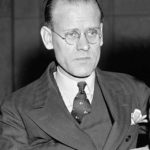
On this day in 1927, Philo Farnsworth tests a version of television (an ‘image dissector’):

330px-Philo_T_Farnsworth

Philo Taylor Farnsworth (August 19, 1906 – March 11, 1971) was an American inventor and television pioneer.[2] He made many contributions that were crucial to the early development of all-electronic television.[3] He is perhaps best known for his 1927 invention of the first fully functional all-electronic image pickup device (video camera tube), the “image dissector“, as well as the first fully functional and complete all-electronic television system. He was also the first person to demonstrate such a system to the public.[4][5] Farnsworth developed a television system complete with receiver and camera, which he produced commercially in the form of the Farnsworth Television and Radio Corporation, from 1938 to 1951, in Fort Wayne, Indiana.[6][7]

In later life, Farnsworth invented a small nuclear fusion device, the Farnsworth–Hirsch fusor, or simply “fusor”, employing inertial electrostatic confinement (IEC). Although not a practical device for generating nuclear energy, the fusor serves as a viable source of neutrons.[8] The design of this device has been the acknowledged inspiration for other fusion approaches including the Polywell reactor concept in terms of a general approach to fusion design.[9] Farnsworth held 300 patents, mostly in radio and television….

Farnsworth worked out the principle of the image dissector in the summer of 1921, not long before his fifteenth birthday, and demonstrated the first working version on September 7, 1927, having turned 21 the previous August. A farm boy, his inspiration for scanning an image as series of lines came from the back-and-forth motion used to plow a field.[50][51] In the course of a patent interference suit brought by RCA in 1934 and decided in February 1935, his high school chemistry teacher, Justin Tolman, produced a sketch he had made of a blackboard drawing Farnsworth had shown him in spring 1922. Farnsworth won the suit; RCA appealed the decision in 1936 and lost.[52] Although Farnsworth was paid royalties by RCA, he never became wealthy. The video camera tube that evolved from the combined work of Farnsworth, Zworykin and many others was used in all television cameras until the late 20th century, when alternate technologies such as charge-coupled devices started to appear.[citation needed]

Farnsworth also developed the “image oscillite”, a cathode ray tube that displayed the images captured by the image dissector.[53]

Farnsworth called his device an image dissector because it converted individual elements of the image into electricity one at a time. He replaced the spinning disks with caesium, an element that emits electrons when exposed to light.

On this day in 1977, Wisconsin holds her first judicial recall election:

Dane County citizens voted Judge Archie Simonson out of office. Simonson called rape a normal male reaction to provocative female attire and modern society’s permissive attitude toward sex. He made this statment while explaining why he sentenced a 15-year-old to only one year of probation for raping a 16-year-old girl. After the recall election, Simonson was replaced by Moria Krueger, the first woman judge elected in Dane County history. [Source: Initiative & Referendum Institute].

Wednesday’s JigZone puzzle is of a kayak by a lake:

Polls, Polls, Polls

In the weeks ahead, we’re sure to hear about dramatic results! or shocking details! from presidential or statewide polls. 

Over at FiveThirtyEight, they’ve 13 Tips For Reading General Election Polls Like A Pro.

All thirteen are instructive, but tips 1 and 2 are especially useful guidelines:

  1. Beware of polls tagged “bombshells” or “stunners.” Any poll described thusly is likely to be an outlier, and outlier polls are usually wrong. Remember those American Research Group polls that had Republican John Kasich climbing rapidly in primary after primary? They were pretty much all wrong; stunners usually are. That said, sometimes they’re right, such as the Des Moines Register poll that projected a large Joni Ernst victory in the 2014 Iowa Senate race, when other polls showed a tighter race. So don’t dismiss outliers, either.
  2. Instead, take an average. I don’t just say this because it’s what we do at FiveThirtyEight. I say it because aggregating polls, especially in general elections, is the method that leads to the most accurate projection of the eventual result most often. Put simply, it’s the best measure of the state of the race….

The full list of tips is well worth heeding. There’s no need to be buffeted about by sketchy surveys and dodgy data; these two months will have their share of both.

Daily Bread for 9.6.16

Good morning, Whitewater.

Tuesday in town will be partly cloudy with a high of eighty-nine.  Sunrise is 6:26 AM and sunset is 7:19 PM, for 12h 52m 36s of daytime.  The moon is a waxing crescent with 22.6% of its visible disk illuminated.

Whitewater’s Alcohol Licensing Committee meets at 6:15 PM, and her Common Council at 6:30 PM.

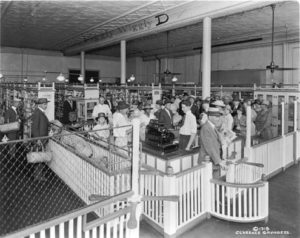
A century ago, on this day in 1916, Piggly Wiggly opens the first self-service grocery in America:

495px-Piggly-wigglyPiggly Wiggly was the first true self-service grocery store.[3] It was founded on September 6, 1916, at 79 Jefferson Avenue in Memphis, Tennessee, by Clarence Saunders. A replica of the original store has been constructed in the Memphis Pink Palace Museum and Planetarium, a mansion that Saunders built as his private residence, which was later sold to the city.

The origin of the name “Piggly Wiggly” is unknown. When asked why he had chosen it, Saunders said “So people will ask that very question”. Theories include Saunders seeing some pigs struggling to get over a fence, or a reference to the “This Little Piggy” nursery rhyme.[4]

At the time of its founding, grocery stores did not allow their customers to gather their own goods. Instead, a customer would give a list of items to a clerk, who would then go through the store himself, gathering them. Like full-service gas stations, this created a greater cost, therefore higher prices. Piggly Wiggly introduced the innovation of allowing customers to go through the store, gathering their own goods. This cut costs, allowing for lower prices.[5] Others were initially experimenting with this format as well, which initially came to be known as a “grocerteria”, reminding people of cafeterias, another relatively new, self-service idea.[6]

Piggly Wiggly Corporation secured the self-service format and issued franchises to hundreds of grocery retailers for the operation of its stores. The concept of the “self-serving store” was patented[7] by Saunders in 1917. Customers at Piggly Wiggly entered the store through a turnstile and walked through four aisles to view the store’s 605 items sold in packages and organized into departments. The customers selected merchandise as they continued through the maze to the cashier. Instantly, packaging and brand recognition became important to companies and consumers.

JigZone today offers a puzzle of a window:

Daily Bread for 9.5.16

Good morning, Whitewater.

Monday in town will be partly cloudy with a high of eighty-six. Sunrise is 6:25 AM and sunset 7:20 PM, for 12h 55m 26s of daytime. The moon is a waxing crescent with 15.3% of its visible disk illuminated.

On this day in 1774, the First Continental Congress assembles in Philadelphia:

The First Continental Congress was a meeting of delegates from twelve of the Thirteen Colonies that met on September 5 to October 26, 1774 at Carpenters’ Hall in Philadelphia, Pennsylvania, early in the American Revolution. It was called in response to “The passage of the Coercive Acts” (also known as Intolerable Acts by the Colonial Americans) by the British Parliament. The Intolerable Acts had punished Massachusetts for the Boston Tea Party.

The Congress was attended by 56 delegates. The Pennsylvania delegation was appointed by the colonial assembly. Georgia declined to send delegates because they were hoping for British assistance with Native American problems on their frontier and did not want to upset the British.[1]

The Congress met briefly to consider options, including an economic boycott of British trade; rights and grievances; and petitioned King George III for redress of those grievances.

The Congress also called for another Continental Congress in the event that their petition was unsuccessful in halting enforcement of the Intolerable Acts. Their appeal to the Crown had no effect, and so the Second Continental Congresswas convened the following year to organize the defense of the colonies at the onset of the American Revolutionary War. The delegates also urged each colony to set up and train its own militia.

JigZone has a puzzle of a colorful fish for Monday:

A Fishing Trip on Colorado’s Gunnison River

Often, going fishing consists of more talking than actually catching anything. In this short documentary A Fishing Trip on the Gunnison, three members of the conservation organization Trout Unlimited discuss the impacts of irrigation on the beautiful Gunnison River in Colorado. The organization that works with farmers, ranchers, and conservationists to find ways to preserve Colorado waterways.

This film comes to us from the world-traveling web series The Perennial Plate. To learn more about this series, visit its Facebook, Instagram, and Twitter pages.

Via The Atlantic.

Daily Bread for 9.4.16

Good morning, Whitewater.

Ted Yoder covers Everybody Wants to Rule the World on a dulcimer. Quite something –

Sunday in town will become increasingly sunny with a high of seventy-nine. Sunrise is 6:24 AM and sunset 7:22 PM, for 12h 58m 15s of daytime. The moon is a waxing crescent with 9.1% of its visible disk illuminated.

Friday’s FW poll asked whether readers thought that Vladimir Putin was, in fact, ignorant of the hacking of a major American political party’s servers. Most respondents thought that he was lying (84%), but 16% thought he was ignorant of the hacking’s perpetrators.

On this day in 1884, George Eastman patents the film-roll camera:

George Eastman (July 12, 1854 – March 14, 1932) was an American innovator and entrepreneur who founded the Eastman Kodak Company and popularized the use of roll film, helping to bring photography to the mainstream. Roll film was also the basis for the invention of motion picture film in 1888 by the world’s first film-makers Eadweard Muybridgeand Louis Le Prince, and a few years later by their followers Léon Bouly, William Dickson, Thomas Edison, the Lumière Brothers, and Georges Méliès.

He was a major philanthropist, establishing the Eastman School of Music, and schools of dentistry and medicine at the University of Rochester and in London; contributing to the Rochester Institute of Technology (RIT) and the construction of several buildings at MIT‘s second campus on the Charles River. In addition he made major donations to Tuskegee and Hampton universities, historically black universities in the South. With interests in improving health, he provided funds for clinics in London and other European cities to serve low-income residents….

In 1884, Eastman patented the first film in roll form to prove practicable; he had been tinkering at home to develop it. In 1888, he perfected the Kodak camera, the first camera designed. Eastman was progressive for his era. He promoted Florence McAnaney to be head of the personnel department, one of the first women to hold an executive position in a major U.S. company.