FREE WHITEWATER

Economy

Daily Bread for 1.3.25: The Market Barriers in Whitewater

Good morning.

Friday in Whitewater will be partly sunny with a high of 22. Sunrise is 7:25 and sunset is 4:33, for 9 hours, 8 minutes of daytime. The moon is a waxing crescent with 15.7 percent of its visible disk illuminated.

On this day in 1777, after victory at the Second Battle of Trenton the day before,  American forces under Genera Washington then defeat British forces at the Battle of Princeton, helping boost Patriot morale.


There’s a story one sometimes hears, including in Whitewater, that there are only two forces shaping an economy: private and public. In this story, the private endeavors of individuals and businesses are defined as necessarily encouraging of general prosperity, and the public reach of government as necessarily restrictive of general prosperity.

While it’s a story, it’s also a false story, and sometimes no more than a self-serving lie.

Prosperity rests on the free interactions between individuals, businesses, and government. The relationship (of free action) precedes the result. That’s why libertarians (bona fide ones, who read more than superficially) are free-market men and women.

Government constrains, but not only government constrains. There are private men and private business, including those who proudly tout their ‘pro-business,’ ‘pro-growth’ outlook, but who stifle growth and inhibit the economic liberty of others.

They’re not the champions of positive change but its adversaries. They oppose competition.

How does this happen, that private men and incumbent businesses work against the economic liberty of others?

Here are a few ways (and residents of Whitewater will recognize them):

Control of government agencies and boards to favor cronies and limit alternatives. These private men don’t bother to count to 15,000, but instead stop at 4 of 7, simply enough to run a board or commission for their benefit and to the detriment rival businesses or individuals. This is regulatory or agency capture (shaping regulations their way, or controlling the whole agency and dismissing anyone who won’t go along with their selfish ambitions).

They’ll say this is what the people want, but they’ve not bothered to poll a community; they merely assert that they know the popular will. They’ll point to a few co-opted people as though a few were many. To gather these few, a special interest will rely on any claim imaginable, spreading fear, uncertainty, and doubt about potential rivals with better ideas and new approaches.

Control of a market by monopoly or oligopoly. We think of this approach as applicable only on a large scale, but it happens in small communities, too. One or a few private men will control an entire market and fight to keep new, rival businesses (especially ones with fresh ideas) from forming. They’ll buy resources and deny access to those who’d like to compete in a free market. Many are the one-horse towns where the old horse fights like hell to keep new horses from showing up, so to speak.

Whitewater has had both of these problems for many years. In Whitewater, specifically, It’s not government that has held people back, it’s scheming and selfish private men who think that they own the place and work to keep new enterprises from taking root.

When they talk ‘pro-business,’ they mean their businesses, their opportunities, their way. Indeed, they simply deny, at bottom, that there could be any other way than their businesses, their opportunities, their way.

Here’s a key technique: they’ll argue against any better opportunity for others in favor of an imagined perfect opportunity that they know won’t arrive. They’re like bakers who tell the hungry not to make their own bread but instead to wait for cake and caviar.

Again and again: Who owns Whitewater? Everyone and no one.

There’s no reason for residents in this town to deny themselves better opportunities for the sake of a few old men who insist that it must be their way or no way. The adversaries of free markets in Whitewater are private men who want to deny opportunity for others. No one in Whitewater lives at the pleasure of these aged schemers, no one here was born merely to deny himself or herself better life on an incumbent’s behalf.

Open the market to alternatives, and let people freely choose among them.


Daily Bread for 1.2.25: The Extraordinary Ordinary

Good morning.

Thursday in Whitewater will be partly sunny with a high of 28. Sunrise is 7:25 and sunset is 4:32, for 9 hours, 7 minutes of daytime. The moon is a waxing crescent with 8.2 percent of its visible disk illuminated.

On this day in 1777, American forces under the command of General Washington repulse a British attack led by General Charles Cornwallis at the Second Battle of Trenton near Trenton, New Jersey:

After assaulting the American positions three times and being repulsed each time, Cornwallis decided to wait and finish the battle the next day. Washington moved his army around Cornwallis’s camp that night and  attacked [Lieutenant Colonel Charles] Mawhood at Princeton the next day.


Somewhere in America, perhaps even in Whitewater, a grammarian is pondering whether nouns or adjectives are more important as parts of speech. And so, and so, in the expression the extraordinary ordinary, that person might wonder: does the noun ordinary matter more, or might the modifier extraordinary tell the crucial tale?

The public policy of Whitewater offers an answer.

Bringing the city into an ordinary development position, like other cities, is for Whitewater an act that should be ordinary, but requires instead extraordinary effort.

It’s in this way that Whitewater’s politics (and culture) are best understood. What should be easy is often hard, and what should be embraced often meets special-interest opposition.

Whitewater’s like a community where a few people have always eaten well, but some of those few have left others with less and worse, all the while insisting falsely that less and worse is somehow more and better.

If we’d had better policies before, one could say that this city for the last generation was meeting an ordinary development standard; as we had worse policies before, Whitewater is only now overcoming below-average standards.

We’re now on a proper diet after years of missed meals and poor nutrition. It’s simply that a few would like the community to believe that the past’s poor nutrition is preferable to the present’s proper diet.

For Whitewater, it’s extraordinary to be, at long last, ordinary in policy. It’s from the ordinary — the normal, and business-standard — that we can at last take advantage of the national and state growth that other communities have enjoyed.

Whitewater has waited long for ordinary, long for normal, long for business-standard.

There’s the answer to a grammarian pondering whether the noun or adjective of extraordinary ordinary is more important. For Whitewater, it’s extraordinary to be, at long last, ordinary in policy. It’s from the ordinary — the normal and business-standard — that we can at last take advantage of the national and state growth that other communities have enjoyed.

That’s a notable accomplishment.

A methodical, patient look at recent development projects, post by post, is overdue. Not so overdue as the projects themselves, of course, but that fault lies with the past.

Looking at these projects, of the last two years, is a good way to begin this year.

That’s what this libertarian blogger will do.


Daily Bread for 12.26.24: Economic Growth Remains Strong

Good morning.

Thursday in Whitewater will be cloudy with a high of 43. Sunrise is 7:24 and sunset is 4:27, for 9 hours, 2 minutes of daytime. The moon is a waning crescent with 17.5 percent of its visible disk illuminated.

On this day in 1776, at the Battle of Trenton, the Continental Army under George Washington executes a successful surprise attack and defeats a garrison of Hessian forces serving Great Britain.


A reminder, as the year ends, that American economic growth has been strong:

The US economy expanded at a faster pace in the third quarter than previously estimated, owing in part to to stronger consumer spending and exports.

Gross domestic product increased at a 3.1% annualized rate in the third quarter, the third estimate of the figures from the Bureau of Economic Analysis showed Thursday. That compared to a previous projection of 2.8%. Consumer spending was marked up to a 3.7% pace — the fastest since early 2023 — boosted by stronger outlays on services.

Exports expanded by 9.6% in the July-to-September period, up from 7.5% in the prior estimate. That was also entirely due to services.

The numbers reinforce the notion that the economy is still powering ahead despite expectations among forecasters for an eventual slowdown. 

See Matthew Boseler, US Growth Revised to 3.1% on Stronger Consumer Spending, Exports, Bloomberg, December 19, 2024.

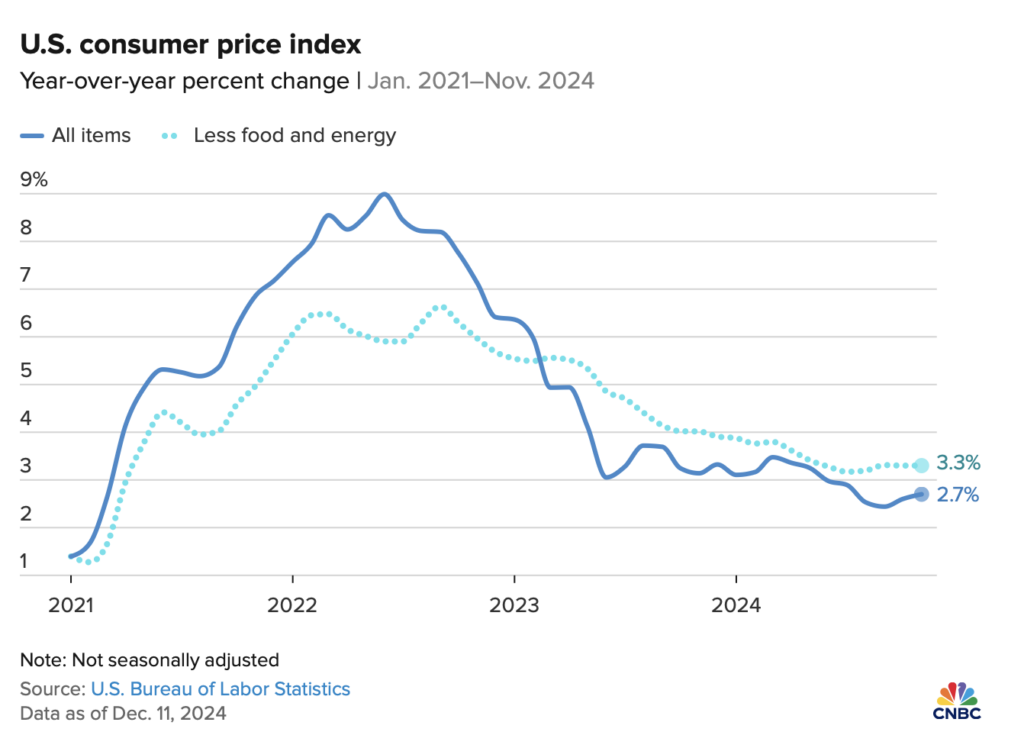
Of inflation, a similar good story is true: national inflation peaked two years ago, and has since fallen drastically. See Greg Iacurci, Here’s the inflation breakdown for November 2024, CNBC, December 11, 2024.

The contention that the economy has been terrible, most notably these last two years, is false. And yet, and yet, one hears each day new contentions that distort to the point of mythology the state of the economy. If the economic continues to do well, expect the populists to insist that it was only strong from January 20th onward. If the economy does poorly, expect the populists to say that the fault lies with anyone and anything other than the populists themselves.

One more point, evergreen in Whitewater: Whitewater’s old guard, its special interest faction, has never produced through its policies for this city broad economic gains for individuals and households. For themselves, of course. For others, no.

On the contrary, even in solid national conditions they found themselves bemoaning their own policies’ inability to capitalize. See Whitewater’s Still Waiting for That Boom.

In this respect, these transactional, special-interest men in Whitewater are like the populists: they don’t care about the accuracy of what they’re saying, but only that what they’re saying serves their particular political interests.


PBS Wisconsin Visits the Yerkes Observatory:

Daily Bread for 12.12.24: November Inflation Numbers

Good morning.

Thursday in Whitewater will be cloudy with a high of 13. Sunrise is 7:16, and sunset is 4:21, for 9 hours, 4 minutes of daytime. The moon is a waxing gibbous with 90.5 percent of its visible disk illuminated.

On this day in 1941, Hitler declares the imminent extermination of the Jews at a meeting in the Reich Chancellery.


CNBC offers a summary of national inflation numbers for November:

Consumers saw inflation pick up slightly in November as price increases in categories including groceries, gasoline and new cars outweighed a deceleration in others such as shelter during the month.

The consumer price index, a key inflation gauge, rose 2.7% last month relative to November 2023, the Bureau of Labor Statistics reported Wednesday. The annual rate was up from 2.6% in October.

….

See Greg Iacurci, Here’s the inflation breakdown for November 2024, CNBC, December 11, 2024.


Volcanic eruption covers a Philippine town in ash:

Homes, roads and buildings were covered in ash in the aftermath of the Kanlaon volcano eruption in the Central Philippine province of Negros Occidental, drone footage released by the Philippine Red Cross on December 10 showed.

Daily Bread for 12.9.24: A Fundamentally Strong National Economy (and a Local Reminder)

Good morning.

Monday in Whitewater will be partly sunny with a high of 49. Sunrise is 7:14, and sunset is 4:20, for 9 hours, 6 minutes of daytime. The moon is a waxing gibbous with 61.5 percent of its visible disk illuminated.

The Whitewater School Board meets at 5:30 PM to review a community referendum survey.

On this day in 1775, British troops and Loyalists, misinformed about Patriot militia strength, lose the Battle of Great Bridge, ending British rule in Virginia.


Now, in December 2024, America has a fundamentally sound economy:

The economy added 227,000 jobs in November, making for a strong jobs report despite a slight increase in the unemployment rate. Although the labor market has cooled this year, the Trump administration stands to inherit a fairly healthy labor market, with decent job growth across many sectors.

The number of jobs was bolstered by the return of striking workers, according to the U.S. Bureau of Labor Statistics report. Employment in transportation equipment manufacturing rose by 32,000 jobs. Boeing machinists who went on strike in September seeking higher pay and better retirement benefits reached a deal in November.

The agency also revised up the number of jobs added in the October and September reports by 56,000 jobs combined.

Although the unemployment rate ticked up from 4.1% to 4.2%, the economy is looking strong, particularly when you look at gross domestic product, said Louise Sheiner, with the nonpartisan Brookings Institution.

“It’s been remarkably strong. If you look at what the Congressional Budget Office projected the level of real GDP before the pandemic, it’s higher now. We’ve just had a really strong economy,” said Sheiner, who focuses on fiscal policy.

See Casey Quinlan, US adds 227,000 jobs in what analysts say is a healthy economy, Wisconsin Examiner, December 8, 2024.

There are three reasons to mark the present state of the national economy: (1) a simple affirmation of the truth, (2) a reminder that the national economy has been good before when local special-interest types failed to capitalize on it (notably 2014 to 2017 and 2019 to early 2020) in Whitewater, and (3) a reminder that these old-guard types expect deference today despite serial failures for many years.


Amazon is using generative AI to drive more same-day shipping using smarter robots and better routes:

Daily Bread for 12.2.24: Wisconsin Agriculture Grows More Slowly than Rest of State’s Economy

Good morning.

Monday in Whitewater will be cloudy with a high of 28. Sunrise is 7:07, and sunset is 4:21, for 9 hours, 14 minutes of daytime. The moon is a waxing crescent with 2.3 percent of its visible disk illuminated.

Whitewater’s Police & Fire Commission meets at 6:30 PM.

On this day in 2001, Enron files for Chapter 11 bankruptcy.


Hope Kirwan reports that while the Wisconsin agriculture industry grew over a 5-year period, agriculture became a smaller part of Wisconsin’s overall economy:

Wisconsin’s agriculture industry has grown over the last five years. But new data shows farming and food’s contribution to the state’s economy has gotten smaller.

The study by researchers at the University of Wisconsin-Madison found that agricultural production and food processing contributed $116.3 billion in revenues to the state’s economy in 2022.

That’s nearly 11 percent higher than the same report from 2017, growth that’s been celebrated by Gov. Tony Evers’ administration and the ag industry.

The study also found that farming and food processing made up 14.3 percent of the state’s total revenues, which is 2 percentage points less than in 2017.

Steve Deller, UW-Madison professor of agricultural and applied economics and co-author of the report, said that’s because the state’s overall economy is growing.

“The size of the pie is getting bigger,” Deller said. “Agriculture’s slice of that pie is also getting a little bit bigger, but it’s not growing at the same pace as the state’s economy is growing.”

See Hope Kirwan, Report: Wisconsin farm, food industry grows slightly behind the rest of state’s economy, Wisconsin Public Radio, December 2, 2024.


Wind power is making a comeback in shipping:

Daily Bread for 11.27.24: Big Travel for Wisconsinites (and What It Reveals About the Economy)

Good morning.

Wednesday in Whitewater will be cloudy with a high of 40. Sunrise is 7:02, and sunset is 4:23, for 9 hours, 21 minutes of daytime. The moon is a waning crescent with 12 percent of its visible disk illuminated.

On this day in 1924, in New York City, the first Macy’s Thanksgiving Day Parade is held:

The Parade first took place in 1924, tying it for the second-oldest Thanksgiving parade in the United States with America’s Thanksgiving Parade in Detroit (with both parades being four years younger than Philadelphia’s Thanksgiving Day Parade). The three-hour parade is held in Manhattan, ending outside Macy’s Herald Square, and takes place from 9:00 a.m. to 12:00 p.m. Eastern Standard Time on Thanksgiving Day, and has been televised nationally on NBC since 1953.


And so, and so, one reads that over a million and a half Wisconsinites plan to travel over Thanksgiving:

A record number of Wisconsinites are expected to travel for the upcoming Thanksgiving holiday, according to AAA. The group says nearly 1.6 million residents are expected to drive or fly this week.

Wisconsin’s last record for Thanksgiving travel recorded by AAA was set in 2019. Midwest Public Affairs Director Nick Jarmusz told WPR that holiday travel overall declined in subsequent years due to concerns over the COVID-19 pandemic. 

….

Between Tuesday and Monday, Dec. 2, AAA projects more than 1.4 million Wisconsin residents will hit the roads for their Thanksgiving holiday festivities. Around another 115,000 are expected to fly to their family gatherings.

….

“It’s a reflection of what we’ve seen throughout the year with other travel holidays during the summer that we monitored, and just you know, a reflection of people’s improving confidence in the economy and their ability to spend the money necessary to take trips like these,” [American Automobile Association Midwest Public Affairs Director Nick] Jarmusz said.

See Rich Kremer, AAA predicts record-breaking Thanksgiving travel in Wisconsin, Wisconsin Public Radio, November 25, 2024.

This many would not have been traveling over the summer of 2024 and would not travel over Thanksgiving 2024 if economic conditions were poor. The summer of 2024 and Thanksgiving 2024 precede January 20, 2025. It’s not until then but instead right now that we have good economic conditions.


Trail walk:

Daily Bread for 10.30.24: National Economy Grows, Inflation Cools

Good morning.

Wednesday in Whitewater will be windy with a high of 76. Sunrise is 7:27, and sunset is 5:49, for 10 hours, 22 minutes of daytime. The moon is a waning crescent, with 3.4 percent of its visible disk illuminated.

Whitewater’s Finance Committee meets at 4 PM.

On this day in 1938,  Orson Welles broadcasts a radio adaptation of H. G. Wells’s The War of the Worlds, causing a panic in some of the audience in the United States.


Megan Leonhardt reports U.S. Economy Sees Solid Growth and Cooling Inflation in Third Quarter, GDP Report Shows:

The U.S. economy expanded at a healthy pace during the third quarter, keeping fears of a downturn at bay while Federal Reserve officials eye further interest-rate cuts.

Inflation-adjusted, or real, gross domestic product grew at an annualized rate of 2.8% over the three months ended in September, according to the first estimate by the Bureau of Economic Analysis released Wednesday. The consensus call among economists surveyed by FactSet was for growth of 2.6% in the third quarter, though Bloomberg’s forecast was for 2.9%.

Wednesday’s solid third-quarter growth is a tick slower from real GDP growth of 3% during the second quarter. The economy expanded 1.6% during the first three months of the year.

The third quarter’s real GDP growth was primarily driven by increases in consumer spending, as well as federal expenditures and net exports, the bureau said Wednesday. Imports, which act as a drag on GDP, did increase markedly during the past quarter and weighed on the overall growth. Economists noted Tuesday, however, that this uptick in imports is likely a short-term trend due to the threat of the longshoremen strike in October.

….

Wednesday’s data included a quarterly update on the Fed’s preferred inflation gauge, the personal consumption expenditures, or PCE, price index. During the third quarter, PCE inflation increased 1.5%, putting it lower than the Fed’s 2% target. That should make it easier for policymakers to justify additional rate cuts. It also marked a slower pace of price growth than the 2.5% rate logged during the second quarter.

Favorable, notably favorable.


POV Part 2: You are the pumpkin:

Daily Bread for 10.18.24: Wisconsin’s Strong Employment Numbers

Good morning.

Friday in Whitewater will be sunny with a high of 68. Sunrise is 7:12, and sunset is 6:06, for 10 hours, 54 minutes of daytime. The moon is a waning gibbous, with 98.1 percent of its visible disk illuminated.

On this day in 1867,  the United States takes possession of Alaska after purchasing it from Russia for $7.2 million. Celebrated annually in the state as Alaska Day.


September was another good month for Wisconsin’s economy. Erik Gunn reports Wisconsin employment, jobs numbers stayed strong in September, state reports:

Unemployment in Wisconsin remained at a record-low rate in September while the number of jobs was still close to a record high, the state labor department reported Thursday.

The projected number of Wisconsinites employed in September topped 3,059,700 — a state record, according to the state Department of Workforce Development (DWD). The department reported that September was the fifth month in a row that the state employment number reached a new record high.

The unemployment rate for the month remained at 2.9%, according to DWD. Employment numbers are projections drawn from a federal survey of households.

We’ve reason to feel optimistic that this favorable, months-long trend will continue.


Rescued sea otters make their debut at the New York Aquarium:

Two rescued southern sea otters made their formal debut at the New York Aquarium on October 17. The two female otters were rescued off the coast of California at young ages and were deemed non-releasable as pups. They were cared for at other Association of Zoos and Aquariums before arriving in New York, where they will now reside.

Daily Bread for 10.17.24: Mass Deportation Would Be Economically ($1,000,000,000,000) Devastating

Good morning.

Thursday in Whitewater will be sunny with a high of 64. Sunrise is 7:11, and sunset is 6:08, for 10 hours, 57 minutes of daytime. The moon is full, with 100 percent of its visible disk illuminated.

Whitewater’s Finance Committee meets at 5 PM, and the Community Development Authority meets at 5:30 PM.

On this day in 1781, British General Charles, Earl Cornwallis surrenders at the Battle (Siege) of Yorktown:

The British Prime Minister, Lord North, is reported to have exclaimed “Oh God, it’s all over” when told of the defeat.[87] Three months after the battle, a motion to end “further prosecution of offensive warfare on the continent of North America” – effectively a no confidence motion – passed in the British House of Commons. Lord North and his government resigned.


Anti-immigrant rhetoric often proposes with mass deportation, although in neither Wisconsin nor Whitewater is there majority support for that extreme approach. See The Curious Case of the ‘Invasion’ that Didn’t Bark in the Night and Wisconsin Polling on Immigration.

Mass deportation would be a moral failure, as wholesale detention and dispossession would be an ethic cleansing abhorrent to the reasonable & civilized. It would, secondarily, be an economic catastrophe for America.

In a review of mass deportation, Eric Boehm @ Reason writes Trump’s Deportation Plan Would Cost Nearly $1 Trillion (‘And it would wreck the economy’):

The governmental infrastructure required to arrest, process, and remove 13 million undocumented immigrants would cost nearly $1 trillion over 10 years and would deal a “devastating” hit to economic growth, according to a report published last week by the American Immigration Council (AIC). The think tank estimates that a mass deportation plan would shrink America’s gross domestic product by at least 4.2 percent, due to the loss of workers in industries already struggling to find enough labor.

Trump has promised to create a “deportation force” to round up undocumented immigrants and eject them from the country. This would entail targeting two groups: the roughly 11 million people who lacked permanent legal status as of 2022 (that’s the most recent number from the American Community Survey) and the estimated 2.3 million people who have entered the country without legal status since January 2023 (that figure come from the Department of Homeland Security).

The notion that the native born would fill jobs and gaps is false, as Boehm writes:

The costs of mass deportation would rebound into the economy in several ways. The economy would shrink and federal tax revenues would decline. The construction industry, where an estimated 14 percent of workers are undocumented migrants, would be particularly hard hit, but the effects would be felt throughout the economy.

“Removing that labor would disrupt all forms of construction across the nation, from homes to businesses to basic infrastructure,” the AIC notes. “As industries suffer, hundreds of thousands of U.S.-born workers could lose their jobs.”

That’s an important point. Immigration restrictionists often assume that deporting millions of undocumented workers would allow more Americans to fill those jobs, but the economy is not a zero-sum game. A shrinking economy would be bad news for many workers who aren’t directly impacted by Trump’s deportation plan.

The AIC’s estimates are generally in line with the estimates made earlier this year by analysts at the Penn Wharton Budget Center (PWBM), a fiscal policy think tank housed at the University of Pennsylvania. “The costs of the former president’s plan to deport the more than 14 million unauthorized immigrants in the U.S. today could easily reach more than $1 trillion over 10 years, before taking into account the labor costs necessary for such a project or the unforeseen consequences of reducing the labor supply by such drastic amounts over a short period,” reported Marketwatch, which requested the PWBM estimate.

Of the AIC report, see Mass Deportation Devastating Costs to America, Its Budget and Economy.

Mass deportation would be morally reprehensible and economically devastating.


Commuter distracted by phone survives close call with train:

A commuter distracted by their phone survived a close call with an oncoming train in Buenos Aires.

Daily Bread for 10.10.24: National Inflation Rate Falls Again

Good morning.

Thursday in Whitewater will be sunny with a high of 73. Sunrise is 7:03, and sunset is 6:19, for 11 hours, 17 minutes of daytime. The moon is a waxing crescent, with 48 percent of its visible disk illuminated.

Whitewater’s Board of Zoning Appeals meets at 6 PM.

On this day in 1985,  US Navy aircraft intercept an Egyptian airliner carrying the perpetrators of the Achille Lauro hijacking, and force it to land in Italy.


Christopher Rugaber reports US inflation reaches lowest point since February 2021, though some price pressures remain:

Inflation in the United States dropped last month to its lowest point since it first began surging more than three years ago, adding to a spate of encouraging economic news in the closing weeks of the presidential race. 

Consumer prices rose just 2.4% in September from a year earlier, down from 2.5% in August, and the smallest annual rise since February 2021. Measured from month to month, prices increased 0.2% from August to September, the Labor Department reported Thursday, the same as in the previous month.

These favorable national measures are beneficial throughout the county.

Go ahead, Whitewater, make the most of these better times. Take someone’s recommendation and turn the page.


Nearly One Hundred — 100! — Raccoons Surround Seattle-Area Woman’s House:

Daily Bread for 10.5.24: National Economy Adds Quarter Million Jobs, Surpassing Expectations

Good morning.

Saturday in Whitewater will be sunny with a high of 79. Sunrise is 6:57, and sunset is 6:28, for 11 hours, 31 minutes of daytime. The moon is a waxing crescent, with 7.1 percent of its visible disk illuminated.

Whitewater Pride will hold its 4th annual Pride Rally from 11 AM to 2 PM at the Cravath Lakefront.

On this day in 1921, the World Series is first broadcast on radio (the last experimental best-five-of-nine series, which the Giants won in five games to three over the Yankees).


U.S. economy adds 254,000 jobs in September, exceeding expectations:

The U.S. economy added 254,000 jobs in September and the unemployment rate dropped to 4.1%, blowing away expectations. NBC News’ Christine Romans and editor-in-chief at Investopedia Caleb Silver break down the promising numbers from the September jobs report. 

No reason for Whitewater to waste today’s good national economy on yesteryear’s oldguard fumblers.


Wisconsin Life | Raiders of the Lost Memorabilia:

Michael T. Miller is a big fan of the Indiana Jones films. His home in Sheboygan houses a vast collection of Indy memorabilia — from movie props to signed Harrison Ford photos — spanning decades of fandom. The quest to collect it all, sparked by early childhood memories, has taken Miller and his wife Martha across Wisconsin and beyond.

Daily Bread for 9.18.24: Now’s the Time

Good morning.

Wednesday in Whitewater will be sunny with a high of 83. Sunrise is 6:39, and sunset is 6:57, for 12h 18m 05s of daytime. The moon is a waning gibbous, with 99.7 percent of its visible disk illuminated.

The Library Board Development Committee meets at 4:30 PM and the Parks & Recreation Board meets at 5:30 PM.

On this day in 1942,  Spring Valley endures a flood:

On the evening of September 17, 1942, after a day of heavy rain, water began rolling through the streets of Spring Valley, in Pierce Co. The village, strung out along the Eau Galle River in a deep valley, had been inundated before, but this was no ordinary flood. By 11:30p.m., water in the streets was 12 to 20 feet deep, flowing at 12 to 15 miles an hour, and laden with logs, lumber, and dislodged buildings. Throughout the early morning hours of Sept. 18th, village residents became trapped in their homes or were carried downstream as buildings were swept off foundations and floated away. One couple spent the night chest-deep in water in their living room, holding their family dog above the water and fending off floating furniture. The raging torrent uprooted and twisted the tracks of the Northwestern Railroad like wire, and electricity and drinking water were unavailable for several days. Miraculously, there were no deaths or serious injuries.

On this day in 1945, General Douglas MacArthur moves his general headquarters from Manila to Tokyo.


Now’s the time for Whitewater to make good on improving national conditions. (The best way for the city to do so is to set aside the low-quality work but above-average sense of entitlement of the aged special-interest men who have kept Whitewater back for a generation1. See of yesteryear’s serial mediocrity Whitewater’s Still Waiting for That Boom.)

Of those improving national conditions, Jeff Cox reports The Fed’s biggest interest rate call in years happens Wednesday. Here’s what to expect:

For all the hype that goes into them, Federal Reserve meetings are usually pretty predictable affairs. Policymakers telegraph their intentions ahead of time, markets react, and everyone has at least a general idea of what’s going to happen.

Not this time.

This week’s gathering of the central bank’s Federal Open Market Committee carries an uncommon air of mystery. While markets have made up their collective mind that the Fed is going to lower interest rates, there’s a vigorous debate over how far policymakers will go.

Will it be the traditional quarter-percentage-point, or 25-basis-point, rate reduction, or will the Fed take an aggressive first step and go 50, or half a point?

Fed watchers are unsure, setting up the potential for an FOMC meeting that could be even more impactful than usual. The meeting wraps up Wednesday afternoon, with the release of the Fed’s rate decision coming at 2 p.m. ET.

“I hope they cut 50 basis points, but I suspect they’ll cut 25. My hope is 50, because I think rates are just too high,” said Mark Zandi, chief economist at Moody’s Analytics. “They have achieved their mandate for full employment and inflation back at target, and that’s not consistent with a five and a half percent-ish funds rate target. So I think they need to normalize rates quickly and have a lot of room to do so.”

A rate cut of either size will be good for all America, including small-town Whitewater.


  1. One might wonder why these aged men didn’t have more time to choose well for Whitewater when they were younger. Wonder not: exaggerating, tale-bearing, pretending, posing, scheming, memorizing trickle-down jargon, and shoving themselves to the front of the line takes a lot of time, for goodness’ sake. ↩︎

Daily Bread for 9.11.24: National Inflation Reaches a Three-Year Low

Good morning.

Wednesday in Whitewater will be sunny with a high of 83. Sunrise is 6:31, and sunset is 7:10, for 12h 38m 11s of daytime. The moon is a waxing gibbous with 53.13 percent of its visible disk illuminated.

There is a Special Lakes Advisory Committee meeting at 4:30 PM, and a Special Finance Committee meeting at 5:30 PM.

On this day in 1789, Alexander Hamilton is appointed the first United States Secretary of the Treasury. On this day in 2001, the September 11 attacks, a series of coordinated terrorist attacks kill 2,977 people using four aircraft hijacked by 19 members of al-Qaeda. Two aircraft crash into the World Trade Center in New York City, a third crashes into the Pentagon in Arlington County, Virginia, and a fourth into a field near Shanksville, Pennsylvania.


We have in our small town this morning some good national economic news. Christopher Rugaber of the Associated Press reports Consumer prices rose 2.5% last month, with U.S. inflation reaching a 3-year low:

WASHINGTON (AP) — The post-pandemic spike in U.S. inflation eased further last month as year-over-year price increases reached a three-year low, clearing the way for the Federal Reserve to cut interest rates and likely shaping the economic debate in the final weeks of the presidential race.

Wednesday’s report from the Labor Department showed that consumer prices rose 2.5% in August from a year earlier, down from 2.9% in July. It was the fifth straight annual drop and the smallest since February 2021. From July to August, prices rose just 0.2%.

America had a good night last night, and today the nation awakes to good economic news. And yet, much work lies ahead…


Behind the Spacecraft: Europa Clipper:

Meet some of the engineers contributing to NASA’s Europa Clipper mission, which will study Jupiter’s icy moon Europa to see if it has conditions suitable to support life. This trailer is an introduction to the team members profiled in the “Behind the Spacecraft: Europa Clipper” video series.