
FREE WHITEWATER

The Institute for Justice on “Policing for Profit.”

I’ve posted before on the work of the Institute for Justice, and readers can find their website on my blogroll, on the left side of this website. They’re a libertarian public interest law firm, and they sometimes produced videos describing cases and issues in their work.

They have two that they’ve recently recorded, and I’ll post the first of those today. (I’ll post the second one tomorrow morning.)

One often hears that one cannot — or should not — put a price on justice. Unfortunately, many communities have turned policing into a so-called profit center. There are, among the wrongs that government many commit, few that could be worse than turning police officers into treasure hunters. “Policing for Profit” tramples on citizens’ property rights, and corrupts the departments that foolishly and greedily undertake widespread confiscations. The IJ has published a report entitled, Policing for Profit, and they’ve prepared an accompanying video.

(The IJ has a scale grading states on how far they’ve descended into making policing a profit-seeking endeavor. Wisconsin merits only a mediocre grade, a “C.”)

There’s at least one local, published story describing how selling confiscated property can cause big problems for a small town: Town, former lieutenant reach settlement.

In that situation,

A lawnmower taken as evidence in a theft investigation was sold by [Chief] Wisniewski more than two years ago to a relative of the detective who investigated the case.

[Lt.] Terrance O’Brien filed a complaint about the incident. Walworth County District Attorney Phil Koss decided not to pursue criminal charges against the chief, but the town board suspended the chief for three days without pay.

Wisniewski in July filed charges against O’Brien and asked the town police committee to consider firing him. The committee in October suspended O’Brien without pay through the end of 2009 and demoted him to patrolman with a lower salary.

The Town of Linn later entered into a five-figure settlement with O’Brien, the whistle-blower:

The town might have pocketed $250 from the sale of a lawnmower more than two years ago, but it will have to pay $75,000 to a former police lieutenant who took issue with the sale.

The town of Linn reached a settlement last month with Terrance O’Brien, who in October was demoted for what town officials said was disrespecting the police chief and harming department credibility and morale by talking about an ongoing criminal investigation involving members of the department.

Far beyond our part of the world, Policing for Profit has taken hold in a more comprehensive way.

Here’s the IJ video.

more >>

Alzheimer’s Association Selects 2010 Award Winners

I received the following press release, from the Alzheimer’s Association, that I am happy to post. Congratulations to all award winners. [Quick note: I am not a member of this organization, or connected to any of its award recipients, as is true with other releases that I’ve published today.]

Alzheimer’s Association Selects 2010 Award Winners

Torrenga to Receive Outstanding Family Caregiver Award

Milwaukee April 17, 2010 Ms. Arlene Torrenga of Delavan, Wisconsin will receive the 2010 Outstanding Family Caregiver Award at an awards ceremony to be held at the 24th Annual State Conference on Alzheimer’s Disease, May 2-4, 2010 at the Kalahari Resort Conference Center in Wisconsin Dells.

The award recognizes individuals or families who embody the courage to face the challenges of providing care for a loved one with Alzheimer’s disease, the compassion to ensure dignity for their loved one and the wisdom to reach out and access support.

Shortly after Arlene and her husband, Bob, retired, he was diagnosed with Alzheimer’s disease. As the disease progressed, Arlene sought out resources through the Alzheimer’s Association. She joined a local support group and became an advocate for the group. She let other families know how the group helped her, and would routinely explain the challenges she faced, helping the entire group to understand and deal with their own personal challenges. After Bob’s death, Arlene took over the leadership as a facilitator for the local Alzheimer’s Association support group. She continues to provide support, connecting families with resources and help. Arlene is a leader, a facilitator, a supporter, a friend and a compassionate listener.

Award winners are selected based on their outstanding contributions as caregivers to those with Alzheimer’s disease in Wisconsin. Other award category winners include:

Professional Award: Terry Fleming (La Crosse)
Physician Award: Janelle Cooper, M.D. (La Crosse)
Advocacy Award: Senator Russ Feingold
Organization Award: Helen Bader Foundation (Milwaukee)
Special Service Award: Judy Koffarnus (Colby)
Courage Award: Jestene McCord (Milwaukee)

The Outstanding Caregiver Awards are coordinated by the Alzheimer’s Association Wisconsin chapter network as part of their annual statewide conference held each May. The state conference highlights innovative approaches to Alzheimer’s care, examines critical research initiatives and facilitates the sharing of ideas among dedicated professionals and family members.

Registration materials, scholarship information and conference details are available through the Alzheimer’s Association State Conference website at www.alzwi.org. For more information contact Kathy Davies, conference planner, at kathy.davies@alz.org. Information is also available at www.alzwi.org.

The Alzheimer’s Association is a national non-profit organization whose mission is to eliminate Alzheimer’s disease through the advancement of research, to provide and enhance care and support for all affected and to reduce the risk of dementia through the promotion of brain health. For more information about Alzheimer’s disease and local services visit www.alz.org/sewi or call the 24/7 Helpline at 800-272-3900.

WPVGA Offers Reward for Metals Theft Information

I received the following press release, from the Wisconsin Potato & Vegetable Growers Association (WPVGA), to post. Making a living in agriculture should never be so hard that farmers face theft of their property.

FOR IMMEDIATE RELEASE

Reward Offered for Metals Theft Information

The Wisconsin Potato & Vegetable Growers Association (WPVGA) announced today that a fund has been established to offer a reward for information leading to the arrest and conviction of any individual or group for stealing metal such as copper or aluminum from WPVGA members? farms.

The reward is in response to a rash of very bold thefts over the past several months ranging from wires off equipment and irrigation systems to metal culverts and other metal parts used in potato storage facilities.

The reward fund, which was used successfully in past years, will pay a significant sum of money for information leading to the arrest and conviction of people responsible for these thefts.

In 2008 the WPVGA worked with legislators to pass legislation requiring scrap metal purchasers to record basic information about people from whom they purchase scrap metal. The intent of the legislation is to deter the sale of stolen metal and to be able to trace back sales if necessary.

?These thefts have reached epidemic proportions,? said Duane Maatz, WPVGA Executive Director. ?The WPVGA is fighting back by offering a reward, addressing the situation in the legislature and using all of our communication resources to insure that all growers and their neighbors know about the recent increase in thefts. It is important that everyone in rural areas be especially vigilant and keep an eye out for suspicious activity around farm buildings and near irrigation units.?

The WPVGA is a group of 140 growers of potatoes and other vegetables who operate farms throughout Wisconsin.

Wisconsin Potato & Vegetable Grower’s Assn.
PO Box 327
Antigo, WI 54409

Phone (715) 623-7683
Fax (715) 623-3176
Email: jpaff@wisconsinpotatoes.com

Wisconsin Artist Selected to Exhibit at 28th Annual Smithsonian Craft Show

I received the following press release, concerning a Wisconsin studio, that I am happy to post —


Bruce Johnson Selected to Exhibit at
28th Annual Smithsonian Craft Show: Telling America’s Story through the Art of Craft

Bruce Johnson of Lake Mills is one of 120 of America’s finest artists and craftsmen chosen to exhibit at the 28th annual Smithsonian Craft Show.

Exemplifying innovation, creativity and technical merit, the Smithsonian Craft Show features superb craft artists from across the country. Each of the 2010 exhibitors reflects the story of contemporary American craft in one of 12 categories: basketry, ceramics, decorative fiber, furniture, glass, jewelry, leather, metal, mixed media, paper, wearable art and wood.

The 120 exhibitors were selected from over 1,300 applicants and no artist is ever included without being juried into the show. This year’s show includes artists from 30 states as well as 45 first-time exhibitors.

The artists for this year’s Show were selected by a panel of three jurors: David Brooks, owner with his wife Paula of the Appalachian Spring galleries in the Washington D.C. area; Diana Baird N’Diaye, Ph.D, a cultural anthropologist and curator in the Center for Folklife and Cultural Heritage at the Smithsonian Institution; and Stoney Lamar, renowned wood artist.

Bruce Johnson was selected in the ceramics category for his particular objects. His work is wheel thrown with hand built additions. The surface on his work is coated with a natural ash glaze that resembles limbs of trees. Each piece is functional and decorative.

The 2010 Smithsonian Craft Show will kick-off with a Preview Night Benefit, on Wednesday, April 21, from 6:30 to 9:30 pm. This cocktail buffet will offer “First Choice Shopping” and music by the Smithsonian Jazz Masterworks Trio.

In addition to the items for sale by the artists at the show, a silent auction will be held online beginning April 14. This will include over 100 craft items donated by exhibitors and other talented artists.

In accordance with James Smithson’s directive to create “an establishment for the increase and diffusion of knowledge,” all proceeds from the Craft Show are disseminated annually to support education, outreach and research at the Smithsonian Institution.

Libertarian Beliefs and Expectations

Over at Reason’s Hit and Run, Radley Balko offers a concise explanation of the difference between wanting government to fail, and expecting that it will:

I don’t promote government failure, I expect it. And my expectations are met fairly often. What I promote is the idea that more people share my expectations, so fewer people are harmed by government failure, and so we can stop this slide toward increasingly large portions of our lives being subject to the whims, interests, and prejudices of politicians.

I will concede that there’s a problem, here. In the private sector failure leads to obsolescence (unless you happen to work for a portion of the private sector that politicians think should be preserved in spite of failure). When government fails, people like Dinauer and, well, the government claim it’s a sign that we need more government. It’s not that government did a poor job, or is a poor mechanism for addressing that particular problem, it’s that there just wasn’t enough government. Of course, the same people will point to what they call government success as, also, a good argument for more government.

It’s a nifty trick….

That Pew poll is also a pretty good indication that the more government tries to do, the more poorly it does it. Your usual caveats about correlation and causation apply, but the federal government certainly didn’t shrink over the period the trust-in-government trend line has taken a nosedive. Note too that during the Clinton administration, federal spending actually shrank as a percentage of GDP, and the federal workforce shrank by nearly 400,000, leaving it at its lowest level since 1960. And wouldn’t you know it, that’s one period in the last 50 years over which trust in the federal government took a sharp climb.

But in general—yes—I think the fact that more people are realizing that government isn’t capable of solving all of their problems is an encouraging trend.

Over at Cato@Liberty, David Boaz explains in Are Libertarians Anti-Government? how libertarians are supporters of limited government, rather than being anti-goverment:

For the past several years, especially since the Oklahoma City bombing, the national media have focused a lot of attention on “anti-government” extremists. Libertarians, who are critical of a great deal that government does, have unfortunately but perhaps understandably been tossed into the “anti-government” camp by many journalists.

There are two problems with this identification. The first and most obvious is that many of the so-called anti-government groups are racist or violent or both, and being identified with them verges on libel.

The second and ultimately more important problem is that libertarians are not, in any serious sense, “anti-government.” It’s understandable that journalists might refer to people who often criticize both incumbent officeholders and government programs as “anti-government,” but the term is misleading.

A government is a set of institutions through which we adjudicate our disputes, defend our rights, and provide for certain common needs. It derives its authority, at some level and in some way, from the consent of the governed.

Libertarians want people to be able to live peacefully together in civil society. Cooperation is better than coercion. Peaceful coexistence and voluntary cooperation require an institution to protect us from outside threats, deter or punish criminals, and settle the disputes that will inevitably arise among neighbors—a government, in short. Thus, to criticize a wide range of the activities undertaken by federal and state governments—from Social Security to drug prohibition to out-of-control taxation—is not to be “anti-government.” It is simply to insist that what we want is a limited government that attends to its necessary and proper functions….

So if we’re not anti-government, and not really for weak or small government, how should we describe the libertarian position? To answer that question, we need to go back to the Declaration of Independence and the Constitution. Libertarians generally support a government formed by the consent of the governed and designed to achieve certain limited purposes. Both the form of government and the limits on its powers should be specified in a constitution, and the challenge in any society is to keep government constrained and limited so that individuals can prosper and solve problems in a free and civil society.

Thus libertarians are not “anti-government.” Libertarians support limited, constitutional government—limited not just in size but, of far greater importance, in the scope of its powers.

Well said. We’re sure in our beliefs, founded in liberty, and confirmed through human experience.

Daily Bread for Whitewater, Wisconsin: 4-21-10

Good morning,

Whitewater’s forecast calls for a mostly sunny day with a high of fifty-nine degrees.

At Lincoln School today, a book fair continues. At Washington School, first and second graders will take a field trip to the Ivin Young Auditorium.

Today, from 5 to 7 p.m., representatives of Walmart will answer questions about a proposed expansion of Store No. 1274. They’ll be at the Municipal Building, in the main community room.

I posted yesterday on Walmart, and here’s an article from Radley Balko, entitled, Does Wal-Mart Make You Skinny?, that discusses a university study showing that “there was a small but statistically significant reduction in obesity rates in communities with a Wal-Mart, perhaps because the store also sells fresh produce of good quality at a good price.”

We could use more private competition in town, and the best way to have it is with as little government involvement as possible: neither burdensome regulation nor preferential treatment.

The Wisconsin Historical Society notes that today is a famous birthday —

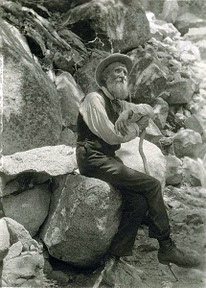
1838 – John Muir Born

On this date John Muir was born in Dunbar, Scotland. He immigrated with his family to Wisconsin in 1849 and spent his youth working on his father’s farms in Marquette County, experiences that are recounted in The Story of My Boyhood and Youth (1913). In 1868 he moved to Yosemite Valley, California, where he became a conservationist and leader in the forest preserve movement. His work led to the creation of the first national parks, the saving of California’s redwoods, and the founding of the Sierra Club. [Source: Dictionary of Wisconsin Biography, SHSW 1960, pg. 261]

Visalia, California’s Sensible Choice in Favor of a Free Market

Visalia, California is far from Whitewater, Wisconsin. (It’s about 2100 miles by car, according to Google Maps.) Despite the distance, they recently confronted a question like one we in Whitewater once faced.

In Whitewater, we once foolishly imposed a moratorium on residential apartments in our downtown; in Visalia, they considered and rejected a moratorium on additional groceries for their city. They were sensible to reject a moratorium.

A government-imposed ban, no matter how short, prevents consumers from being able to act on their preferences for new sellers, new apartments, etc. A political body decides against free choice and voluntary transactions.

Bans like this usually don’t come merely from politicians insensitive to consumers’ desires, but also from politicians all-too-sensitive to incumbent businesses’ desires to keep competitors out of the market.

Visalia decided to let consumers and businesses, buyers and sellers, freely decide where they might sell, and purchase, groceries.

Well decided.

See, Visalia City Council Rejects Moratorium on New Grocery Stores, Favoring Free Market Forces.

A Bigger Walmart Proposed for Whitewater, Wisconsin

I wrote once about the Walmart, No. 1274, in Whitewater. (Walmart now uses a name without a hyphen in advertising. I’m guessing they consider it both simpler and more upscale than “Wal-Mart.”)

I wrote about Walmart a while ago, and a lot has changed. Walmart now sells both beer and liquor, there’s no east side of Whitewater grocer, and a recession has left Whitewater with higher-than-average unemployment.

What’s unchanged, though, is my opinion of Walmart as a benefit to the community: “There’s nothing elegant about Wal-Mart, and Wal-Mart wouldn’t expect there to be. Without this general merchandising retailer, however, our small town would likely have fewer items for sale, stocked less frequently, and priced above Wal-Mart’s prices.”

One sees that Walmart hopes for a larger store, over a third again as large. See, “Wal-Mart plans upgrade of Whitewater store.”

There will be an open house for discussion of Walmart’s proposal on Wednesday; more particulars will be available then. The latest Weekly Report from Whitewater’s City Manager, Kevin Brunner, also listed briefly elements of a possible expansion.

More competition will be good for Whitewater, and this expansion will produce competition in food prices, and lower costs for food sold within the city.

I’m surely no detractor of Walmart; they’ve been useful to many consumers. Those who have an ideological bias against Walmart ignore the popularity of the retailer among all groups of people — all ages, races, and ethnic backgrounds. Walmart is as close to a universal retailer as America has right now.

Residents should be able to choose shopping at an expanded Whitewater Walmart, as they now travel to shop at larger Walmart stores nearby. (A preference that Walmart ‘s Wisconsin spokeswoman, Lisa Nelson, correctly notes in her remarks with the Janesville Gazette.)

I am happy to hear that Walmart wants to sell more products to Whitewater’s consumers. There’s profit in those sales, and common gain for buyers and sellers.

Significantly, Walmart’s expansion should not come at a cost to Whitewater’s taxpayers. We should not give Walmart myriad concessions for her expansion. One great problem of this town is that her bureaucrats are over-awed by a few big projects, and neglect the needs of smaller ventures. There’s a star-struck quality to officials here, where a few small-town bureaucrats try to make themselves big by advancing large projects (at large cost in taxpayer spending, taxpayer debt, and other concessions).

Meanwhile, small business owners have to scrape by, and listen to one dull official or another insist on burdensome changes and regulatory requirements that serve no use to Whitewater’s consumers. It’s predictable that those who clamor most for regulatory enforcement are taxpayer-paid officials, or taxpayer-compensated consultants and professionals in their employ. (That means in the public employ, at bottom.)

Just a few years ago, the east of the town was sure to have a green grocer, we added a roundabout, and were waiting for an explosion of retail in that area.

Today, we have a roundabout, where one can drive in circles for as long as one wants, until his gasoline runs low, and he has to find a station beyond the area where one was supposed to be, but was never, built.

We have more than a roundabout to show, surely. We have a tax incremental district (Number 4) that’s parched and dessicated, likely a desperate candidate for Governor Doyle’s signature on a distressed tax incremental district bill. (There’s much more to say about tax incremental districts in Whitewater, at another time.)

Much of the public effort for these projects amounts to so much of a circus act, spinning plates one after another, hoping that residents will not notice that the earlier ones in the series have fallen and are broken. So much the better, that no official in Whitewater ever has to accept responsibility for prior messes.

Whitewater will see what Walmart has to offer, and I hope that it’s a solid proposal. We shouldn’t be fooled, though, by the notion that we have to give away the city in return. Excessive concessions will not serve Whitewater’s taxpayers, but will instead only obligate them to burdens and debt.

It’s possible that Walmart will ask for nothing exceptional. That would be the best situation for all concerned.

Our small town doesn’t need to subsidize businesses through selective breaks; she just needs to stand out of the way, and let private companies meet consumer need without interference.

Daily Bread for Whitewater, Wisconsin: 4-20-10

Today’s Whitewater forecast calls for a sunny day with a high temperature of sixty-five degrees.

There’s a Common Council meeting tonight, at 6:30 p.m. The agenda is available online.

Lincoln School, proud home of the Leopards, has a book fair today in the LMC library.

There are updates on the meteor that streaked across our skies last week. First, Space.com reports in “Meteor Fragment From Wisconsin Fireball Discovered by Farmer” that a Wisconsin farmer discovered a small fragment on the roof of his shed. There’s also a story from the Wisconsin State Journal about others who are on the hunt for fragments, entitled, “Meteorite hunters flock to southwest Wisconsin.”

As a follow up to yesterday’s post about repeat offender and state assemblyman Jeff Wood, of Chippewa Falls, there’s a story in the Milwaukee Journal Sentinel that reports on Wood’s sentencing yesterday:

State Rep. Jeff Wood was convicted Monday of third-offense drunken driving and possession of drug paraphernalia and sentenced to 45 days in jail and more than $1,600 in fines.

The sentence came a day before members of the Assembly were expected to try to remove him from office for three arrests for driving under the influence in less than a year.

“I’m sorry for what I did and especially for putting people in danger on the highway,” the Chippewa Falls independent told the court.

Wood, 40, pleaded no contest and was found guilty of third-offense drunken driving and paraphernalia possession in a deal that saw a charge of marijuana possession dropped.

Wood was convicted of drunken driving in 1991 and 1992.

Note — if it’s true that Wood’s first two offenses came before he was most recently re-elected to the Assembly, I think it strengthens the case that he should not be expelled, as the people of his district have foolishly elected him, and should have to live with that bad decision until the next election.

The Wisconsin Historical Society recalls that on this day in 1836 the

Oldest Library in the State [was] Founded

On this date an Act of Congress created the Territory of Wisconsin and in the sixteenth and final section of that Act appropriated funds for the Wisconsin State Library to support the needs of the fledgling government. The library is still functioning but has been renamed as the Wisconsin State Law Library [Source: Wisconsin State Law Library]

The Wisconsin Meteor of ’10

I’m sure that everyone in Wisconsin has seen video of a meteoro streaking across our skies. Here are two followup stories.

First, over at Walworth County Today, there’s a story about discovered meteorites that have struck Wisconsin since the 1860s. See, Walworth County meteorite of ’55 struck near Zenda.

Second, here’s a story about a request from UW-Madison scientists for those who might have fragments from the meteor seen last week to bring them to the university. The story also includes a link to meteorite hits in Wisconsin. See, UW-Madison scientists seeking meteor fragments.

Finally, here’s a video of the meteor streaking across our skies, as seen from a few cameras. Enjoy.


more >>

Rushed Meetings in the Wisconsin Assembly

I seldom write about Wisconsin’s Assembly, the exception being a recent series of posts on Assembly Speaker Mike Sheridan of Janesville, who managed to embarrass his caucus, and the state, more ways that one. Over the weekend, though, the Associated Press wrote an analysis of Assembly deliberations on how to punish serial-offender assemblyman Jeff Wood of Chippewa Falls. (Wood has at least thrice been charged with operating a vehicle while under the influence.)

The AP’s analysis, entitled, “Analysis: Criticism of Nass one of many Democratic stumbles in Jeff Wood case,” is right on the mark.

First, the Assembly should never have acceded to Wood’s request to begin consideration late at night, so that a vote on punishment wasn’t held until just before dawn. Just before dawn — as though Wisconsin faced a natural disaster or threat to her political security. This was no crisis, and our legislators had no need to scurry to vote before a court date (today) that Wood had to enter a plea agreement. There wouldn’t have been any deadline if Wood had been sober, by the way. He created the circumstances that led to his court date; there’s no need for Wisconsin’s representatives to accommodate Wood.

Second, there should never have been a vote while assemblyman Nass was unable to attend due to the passing of his mother. Never. The Assembly majority owed Nass consideration for these circumstances, and it’s shameful that they acted both rashly in a pre-dawn vote, and disrespectfully to Nass.

Third, even if Nass had not experienced a family loss, he would still be owed more consideration that Wood. Wood is, after all, the one who should be accommodating — he’s the elected representative who’s conduct is in question. Nass hasn’t done anything wrong.

Fourth, representative Colon made himself ridiculous when he contended that Nass should have shown up for the overnight vote, and was even more ridiculous to offer an apology that was anything but a true apology (“I am very sorry that my statements were misconstrued on the floor of the Assembly and I certainly did not intend to criticize Representative Nass for missing session last night due to the unfortunate death of his mother”).

Nass is right not to accept an ersatz apology that blames him, Nass, for supposedly misconstruing something. Colon speaks as though an insult is all in Nass’s imagination. That’s nonsense. Even those who oppose Nass politically should be embarrassed by this sort of apology. It follows the Mike Sheridan course — a so-called apology that actually casts blame on those insulted by implying they’re just misunderstanding or misconstruing something. No, they’re not.

Nass was right to reject a false apology.

Fifth, I’m neither a Republic nor a Democrat. If I somehow found myself with the misfortune of being in the Wisconsin Assembly, I wouldn’t want to caucus with either major party.

Still, Democrats should look on this vote, and statements from Colon, with embarrassment. They should also take note that the Associated Press — hardly a right-wing organization — sees the late-night vote, and Colon’s remarks — as the stumbles they were.

Those progressive Wisconsinites who want good government will not find it in a majority party that holds rushed and ill-timed votes, and offers only false apologies for shameful statements.

Sixth, although I am sure that the rushed vote was a mistake, I don’t support expelling Wood. The Assembly has the power to do so, but Wood is already obligated to the law and his constituents. He has violated the former, and failed the latter. If the people of Wood’s Chippewa Falls district were foolish enough to elect him, they should have to live with that decision unless they can persuade him to resign, or until the next election. (Wood’s not running again, of course.)

Wood’s not someone who should have been in office as long as he has been, but that’s proof of the ill-judgment of his constituents. Wood was first elected in 2002. Admittedly, his offenses have all come (I believe) since he was last re-elected in 2008, the first of three recent offenses taking place in December 2008. Yet, the man the voters of Chippewa Falls foolishly selected, the voters of Chippewa Falls deserve until the next election.

Most importantly, Wisconsin deserved much better from her representatives than a rushed vote on Wood’s fate. We deserved proper deliberations, consideration for a representative’s family loss, and a true apology to assemblyman Nass, rather than a weak and insincere one that shirks responsibility.

Daily Bread for Whitewater, Wisconsin: 4-19-10

Good morning,

Whitewater’s forecast calls for a mostly sunny day, with a high of sixty-two degrees.

This afternoon, from 4 p.m. to 8 p.m., it’s CROP Walk Night at Culver’s. Our Culver’s is on the west side of town, at 1414 West Main Street in Whitewater. A total of 10 per cent of the proceeds will be donated to the Whitewater CROP Walk, which is on April 25th.

This is a fun way to help our hungry neighbors everywhere. To learn more, contact Rev. David Huxley at 262-749-1168.

There’s also a CDA Board of Directors meeting this afternoon, from 4:30 p.m. to 7 p.m. The agenda is available online.

Today marks two sad anniversaries, and one happy beginning.

In 1862, according to the Wisconsin Historical Society, Wisconsin Governor Harvey drowned in the Tennessee River, while

leading an expedition to relieve Wisconsin troops after the battle of Shiloh. The expedition was bringing doctors, nurses, and much-needed medical supplies to soldiers when Harvey, crossing from one steamboat to another, slipped, fell into the swift currents of the Tennessee River, and never re-surfaced. His body was recovered ten days later, nearly sixty miles downstream. When news reached Madison, Lieutenant Governor Edward Salomon was sworn in as Wisconsin’s first German-American governor. [Source: Wisconsin in the Civil War, by Frank L. Klement]

One hears much about what it means to be a great leader; Harvey’s a true example of service and leadership in response to dire need.

Today is also the anniversary of the bombing of a federal building in Oklahoma, in 1995, killing or severely injuring hundreds of innocent people, including children. The New York Times has details from early reporting on one of the worst crimes and acts of terrorism in our history.

On a much happier note, the History Channel notes that today is the anniversary of the first Boston Marathon, first run in 1897:

On April 19, 1897, John J. McDermott of New York won the first Boston Marathon with a time of 2:55:10.

The Boston Marathon was the brainchild of Boston Athletic Association member and inaugural U.S. Olympic team manager John Graham, who was inspired by the marathon at the first modern Olympic Games in Athens in 1896. With the assistance of Boston businessman Herbert H. Holton, various routes were considered, before a measured distance of 24.5 miles from the Irvington Oval in Boston to Metcalf’s Mill in Ashland was eventually selected.

Fifteen runners started the race but only 10 made it to the finish line. John J. McDermott, representing the Pastime Athletic Club of New York City, took the lead from Harvard athlete Dick Grant over the hills in Newton. Although he walked several times during the final miles, McDermott still won by a comfortable six-minute, fifty-two-seconds. McDermott had won the only other marathon on U.S. soil the previous October in New York.

The marathon’s distance was changed in 1908 in accordance with Olympic standards to its current length of 26 miles 385 yards.