FREE WHITEWATER

Whitewater-Area League of Women Voters — January 2010 Newsletter

Whitewater-Area League of Women Voters’ January 2010 Newsletter is now available, and the latest issue includes a calendar of upcoming LWV events. A copy of the newsletter [2/6/10– latest issue] is available as a link on my blogroll, and through a document service called Scribd. Scribd offers its own link to the document, with the ability to view, print, and share documents, including viewing in a full-screen mode.

Updated: 2/6/10 — updated to Google Documents Viewer for a cleaner format.

Here is a sampling of upcoming events mentioned in the January newsletter:

Date: January 9th (Saturday)
Event: LWV Board Meeting
Where: Public Library, 10:00 AM

Date: January 21st (Thursday)
Event: Whitewater Area LWV Public Program, 2010 Census.
Where: Municipal Building,Council Chambers, 7:00 PM

“Professor Jolly Emrey from the Department of Political Science at the University of Wisconsin— Whitewater talking about why the census is important. Her title is “The Politics of the Census and Its Political Implications for Redistricting.” The talk is scheduled for Thursday evening the 21st of Jan. at 7:00 PM in the Council Chambers at City Hall. Professor Emrey is an alumna of Cal State—Los Angeles and she received her doctorate in Political doctorate in Political Science in 2002 from Emory University.”

2009-2010 Contemporary Issues Lecture Series

The College of Letters and Sciences at the University of Wisconsin-Whitewater is once again offering the Contemporary Issues Lecture Series. All lectures will be in the Young Auditorium at 7 p.m. and are free and open to the public. Contact Susan Johnson (johnsons@uww.edu or 472-4766) for further information.

Monday, February 15th 2010 — “Naked Trends: What Can Basic Economics Tell Us About the Future”– Charles Wheelan

“Charles Wheelan, a faculty member at the Harris School of Public Policy at the University of Chicago and a former Midwest correspondent for The Economist, writes Yahoo!‘s popular “Naked Economics” column. Prior to joining the faculty at the University of Chicago, Wheelan was Director of Policy and Communications for Chicago Metropolis 2020, a business-backed civic group promoting healthy regional growth in the Chicago area. He has written for the Chicago Tribune, the New York Times, the Wall Street Journal and other publications. His 2003 book, Naked Economics: Undressing the Dismal Science, seeks to make economics accessible, comprehensible and appealing.”

Daily Bread for Whitewater, Wisconsin: 1-7-10

Good morning,

It’s a snowy day in Whitewater, with several inches forecast, and a likely high in the mid-twenties. I am sure that any snowball throwing within the city limits of our fair city will be done appropriately, and in a positive, community-approved manner. While outside, please make sure that any snowmen you might build are the right height and weight, deviating from proper standards by 2.7% or, one hopes, an even smaller amount. An exceptional community could, and should, expect no less.

I don’t see any municipal, public meetings scheduled for today, so you can go about the private activities of work and play that support the city’s tax levy, with no additional interference.

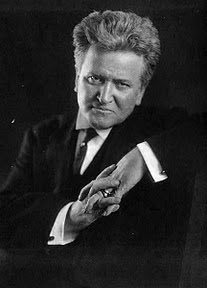
It took until the beginning of the 20th century, but on this date in 1901, Wisconsin’s first native-born governor was inaugurated. The Wisconsin Historical Society has the details:

1901 – Robert Marion La Follette Inaugurated as Governor

On this date Robert M. La Follette was inaugurated as governor after winning the November 6, 1900 election. La Follette was born in Dane County in 1855. A Wisconsin Law School graduate and three-term member of congress, La Follette was renowned for his oratorical style. He was the first Wisconsin-born individual to serve as governor. [Source: Dictionary of Wisconsin History]

The Secret Warrants of Walworth County

Update, 2/9/10:  See a follow-up post, Update: The Secret Warrants of Walworth County.

A tenured surgeon walks into an operating room with a pair of chopsticks. Someone notices that the surgeon is carrying two wooden sticks instead of a scalpel. The surgeon replies, “Now that we’re having this discussion, I’ll address it.”

What would you think, if you heard that conversation? You might think that a surgeon should be aware of the instruments he uses, and would require no reminding from others. Any surgeon, of course, but especially one with a long tenure in that profession.

Whitewater sits, mostly, in Walworth County, where a similar story – about law, not medicine, about sealed warrants, not scalpels – recently made the pages of the Janesville Gazette and Walworth County Gazette:

Walworth County search warrants could disappear.

Here are the pertinent details, from the story:

ELKHORN – In some Wisconsin counties, sealed court documents hold back details from search warrants for a limited time while investigations are ongoing.

In Walworth County, seals have no time limit, and some records could disappear from the public eye altogether.

Motions to seal search warrants in Walworth County ask that all documents and their existence be kept under wraps. The seal acts as a seal on itself, as if the search never happened, leading some warrants to be kept away from public scrutiny.

The procedure gives law enforcement the power to search homes virtually undetected. The paper trail disappears, and interested parties are unable to find out the basis for the execution of a search warrant or how it was conducted.

Worse still, Walworth County’s long-tenured district attorney, Phil Koss, acknowledges in the story that

It has happened before, District Attorney Phil Koss said.

“The problem may come when the matter is sealed, and then we never get it filed, there’s no referral from law enforcement or for whatever reason the investigation doesn’t pan out,” Koss said.

“With really no active mechanism to tickle them, have them brought up again so that people remember to unseal them, they get filed with the clerk, the clerk is not going to unseal them, and the judge is not going to think about them until we ask him to.”

The reasons to have a limited and definite time for a seal are clear, as the story ably sets out:

Bill Lueders is the president of the non-profit Wisconsin Freedom of Information Council and news editor at Isthmus, a weekly newspaper in Madison. When documents are sealed, he said, the custodian of records should still provide as much information as possible without compromising the contained information.

“It’s important that we do not have secret courts in this country, that everything that happens in the court of law is public,” Lueders said. “The courts have tremendous amounts of power to make decisions that affect people’s lives, and it’s appropriate that there be a maximum amount of transparency.”

The goal is to protect the public’s interest to promote open and accountable courts, he said.

“The fact is that police and prosecutors occasionally do things that they shouldn’t,” Lueders said. “And for that and among other reasons, a high level of transparency is in everybody’s interest.”

Bob Dreps, an attorney at Madison-based Godfrey and Kahn law firm, said Wisconsin law is unclear, and there is no standard practice when it comes to sealing search warrants. It’s not spelled out in statutes, so each county does it differently, he said.

“The expectation is that search warrants, after they are returned, will be sealed only for good cause and only while that good cause exists,” said Dreps, who regularly represents media companies in court. “So if a prosecutor persuades a judge to seal a subpoena, it should be for a defined period of time.” ….

In Dane and Rock counties, court officials put out summaries of executed search warrants, including information about the ones sealed and how long the seal will remain.

Why should we have fewer safeguards on the power of government in Walworth County than in Rock or Dane counties? There is no principled reason at all.

How very odd, though that “Locally, Koss said changing the language on applications for seals is a start that would come from Koss’ office …” and yet D.A. Koss declares that “It’s never come up before,” Koss said. “Now that we’re having this discussion, we’ll address it.”

Oh my – the Walworth County District Attorney’s office initiates these requests, but it takes a newspaper to bring the matter to the attention of the lawyers in that office? They didn’t otherwise think about the nature of their own requests?

These gentlemen in high Walworth County positions expect deference and praise for their work, but depart time and again from the better standards of Wisconsin and America.

One sees in this story what a solid story, from a serious newspaper, looks like. If other newspapers and so-called news sites had troubled themselves these many years to do the same, we might not find ourselves so ill-governed.

Yet others haven’t, and so we do.

Landmarks Commission

I. Call to Order

II. Roll Call

III. Approval of Agenda and Possible Rearrangement

IV. Approval of Minutes of December 2, 2009 Meetings

V. Set date of next meeting (Wednesday, February 3, 2010, at 5:00 PM)

Old Business

VI. Update on Train Depot Renovation (Lashley)

VII. Update of possible moving or demolition of James and Ella Rockefeller House at 837 South Janesville Road (Scott)

VIII. Update on possible landmark status of Congregational Church Clock Tower (Scott)

IX. Report from Indian Mound Task Force Meeting – (Christ, Scott)

X. Update on Whitewater Effigy Mound Archeological Park
1. Friends of the Mounds Report (Dade)
2. Solstice Walk Observations (Scott)

XI. Action on Landmark Commission Bylaws (Singer & Daniels)

XII. Report on implementing the New Provisions of Chapter 17. (Scott)
1. Discuss establishing criteria for designation
2. List of possible items – Stone Pillars in Starin Park, Free Library Sign, White Building Lanterns

XIII. Certified Local Government Report – (Scott)

New Business

XIV. Discuss possible events and projects for 2010
1. Whitewater Historical Survey Recommendations
2. Historic Preservation Month Activities Events
3. Leaflets and Educational Materials
4. Tours

XV. Future Agenda Items

XVI. Adjournment

Daily Bread for Whitewater, Wisconsin: 1-6-10

Good morning,

It’s a forecast for mostly cloudy skies with a high of twenty degrees.

In the City of Whitewater this afternoon, there will be a Landmarks Commission meeting at 5 PM, in the City Manager’s Conference Room. Here’s the agenda for the meeting, typically held the first Wednesday of each month:

I. Call to Order

II. Roll Call

III. Approval of Agenda and Possible Rearrangement

IV. Approval of Minutes of December 2, 2009 Meetings

V. Set date of next meeting (Wednesday, February 3, 2010, at 5:00 PM)

Old Business

VI. Update on Train Depot Renovation (Lashley)

VII. Update of possible moving or demolition of James and Ella Rockefeller House at 837 South Janesville Road (Scott)

VIII. Update on possible landmark status of Congregational Church Clock Tower (Scott)

IX. Report from Indian Mound Task Force Meeting – (Christ, Scott)

X. Update on Whitewater Effigy Mound Archeological Park
1. Friends of the Mounds Report (Dade)
2. Solstice Walk Observations (Scott)

XI. Action on Landmark Commission Bylaws (Singer & Daniels)

XII. Report on implementing the New Provisions of Chapter 17. (Scott)
1. Discuss establishing criteria for designation
2. List of possible items – Stone Pillars in Starin Park, Free Library Sign, White Building Lanterns

XIII. Certified Local Government Report – (Scott)

New Business

XIV. Discuss possible events and projects for 2010
1. Whitewater Historical Survey Recommendations
2. Historic Preservation Month Activities Events
3. Leaflets and Educational Materials
4. Tours

XV. Future Agenda Items

XVI. Adjournment

At Lincoln School today, home of the Leopards, the leadership team meets from 3-5 in the LMC. (LMC: that’s the library, I think. I went to school when people still called a library a library, and there was a card catalog inside.)

On this date in 1921, in nearby Janesville, the some of the women of the city conducted a witch-hunt campaign for civic improvement against ‘salacious’ entertainment. The Wisconsin Historical Society has the details:

1921 – Janesville Women Abhor Salacious Entertainment

On this date the Janesville Federation of Women decided to “censor” movies and vaudeville in the city. Members of this organization praised and promoted what they considered “better offerings.” They were zealously critical towards those of a “salacious” nature. No follow-up ever determined whether the women were successful in their quest or if the increased publicity for “salacious” shows backfired. [Source: Janesville Gazette]

Whitewater, Wisconsin Topics for the Year Ahead

I’ve offered predictions for 2010, but here’s something different: a list of topics for this website in the year ahead. It’s sure to change, but here are a few broad topics that interest me.

1. The Press. Nothing would improve our local politics more than a strong local press. Not blogs, but a local press that’s something more than a lapdog to politicians and bureaucrats. The old year was a good lesson in how bad most press coverage of Whitewater really is, and reviewing and commenting on news coverage will require more time and attention. If anything, newspapers in 2009 got an easy pass, much to the detriment of truth, fairness, and common sense.

Only one publisher covered Whitewater and Walworth County professionally. For the rest, it was fawning, flacking, and excuse-making on behalf of politicians and bureaucrats.

I’m also curious about the relative strength of nearby papers (Register, Daily Union, Gazette), and the online Banner. The papers report their circulation figures to the state, using one from a number of circulation auditing services, but Wisconsin is tardy in updating those numbers.

We may be the only town in Wisconsin where the conflict between politician and news site is so complete they are one in the same. As much wouldn’t have happened in a normal political culture.

It’s one of the many reasons for optimism in 2010 – the examples here are so stark and egregious, that one can illuminate them easily.

2. Markets. The Phantom Stranger wrote in recently, and reminded me of some of the challenges that we have with local markets– we don’t have enough competition for certain basic services, and consumers are at the mercy of only a few suppliers. He’s right, and this is a problem for Whitewater that’s ignored when one reads or thinks only about what the City of Whitewater considers a priority.

Our municipal administration favors big ticket projects over the actual improvement that would come from a city more inviting to business.

We aren’t more attractive because we spend and tax for big ticket projects, or because we waste money marketing a town different from the one that business people will find when they actually visit Whitewater. We could be more attractive, if we would reduce significantly both taxes and regulations, and allow businesses to take root on their own.

The guiding, but shaky, hand of our municipal administration offers no real improvement in life for common people.

The only power our small city has is to regulate, and she so often oversteps prudent exercise of that authority that current businesses are burdened to exhaustion, and prospective businesses discouraged from ever setting up shop here.

3. Public Records. There’s much about which to consider, and then write, about how Whitewater’s leading politicians and bureaucrats comply with Wisconsin’s public records law.

I have a series to run, after some follow up.

4. Open Meetings. Wisconsin has an open meetings law, governing public meetings in the state. (See, WOML, ss. 19.81-19.98, Stats.)

The law is more – far more – than a guide to officials’ conduct of meetings. It’s a defense of citizens’ rights, assuring open access to public proceedings.

In Whitewater, some meetings are televised, but others aren’t. There are only so many places that Whitewater’s public access television staff can reach. They currently provide the only truly comprehensive records of Whitewater meetings.

And yet, it doesn’t have to be this way. A citizen has a right to record public meetings, too, and a municipality has a legal obligation to accommodate that recording.

There is much more to write about this topic, at another time: what the law allows citizens, what it requires of officials, and how one can usefully record public, open-session meetings in Wisconsin.

It’s enough to say this – some of these gentlemen will not end the year as they have arrogantly lived so many before: relying only on shabby minutes, with their actual words (whether many or few) unknown to the broader public.

What they once did unobserved can lawfully be recorded and seen openly. They may choose to conduct themselves as they wish: the result will be available either way.

5. Grant Spending. Ever wonder what a federal grant requires, and how the money gets spent? How a project starts out at one cost, but ends up far higher in final expense?

Why not pick a project, and find out?

The year will offer all number of twists and turns, but that’s part of the fun – the adventure – of commentary on life in town.

Daily Bread for Whitewater, Wisconsin: 1-5-10

Good morning,

There’s a forecast for a partly sunny day in Whitewater, with a high of around twenty. Nearly spring.

There are no municipal public meetings scheduled for Whitewater today. Less is more. I’d almost happily pay more in taxes for less in planning. Like protection money, I’d guess.

There’s a PTA meeting at Lakeview School tonight, at 6:30 PM.

A very predictable lesson awaits Wisconsin, and all America, really, from the Wisconsin Historical Society:

1813 – Utopian Community Leader Warren Chase Born

On this date the founder of a Fourierite Utopian community in what is now Ripon was born. Their inspiration came from the writings of Charles Fourier, a French Socialist who urged the rebuilding of society from its foundation as the only cure for economic ills such as the depression of 1837. The idea was supported by Horace Greely in New York and caught the eye of Warren Chase. Chase and others built a successful, non-religous communal society in which everyone recieved wages according to their skill, need, and work ethic. The community reached their greatest population (180) in 1845 but soon dissipated when members began moving toward agriculture as an economic tool. Families gradually left the community to live in their own houses and work their own land in the same area. In 1850, the community disbanded and $40,000 in assets was divided among the remaining members. Warren Chase moved around the country and finally settled in California, where he held many public offices. [Source: Wisconsin Saints and Sinners by Fred L. Holmes, p. 94-104]

Emphasis added.

From utopian socialist founder of failed community to politician: Why should one not be surprised?

Daily Bread for Whitewater, Wisconsin: 1-04-10

Good morning,

It’s an overcast day in the forecast for Whitewater, with a predicted high of about seventeen. I’ve had a readers tell me that she lives in a place where people start wearing overcoats when the temperature falls into the fifties. That wouldn’t be a falling temperature here; that would be an unseasonal high.

There are two municipal meetings for the city today: a senior forum at noon, and a Park and Rec Board meeting at 5 PM. The Park and Rec agenda is available online.

School is back in session today. There will be a music parents’ meeting at the high school choir room at 6:30 PM.

In our state’s proud history, on this date in 1923, according to the Wisconsin Historical Society:

1923 – Student Dancing Banned

On this date Milton College president A.E. Whitford banned dancing by students in off-campus, semi-public places such as confectionery stores. [Source: Janesville Gazette]

Sounds like a version of the movie Footloose.

Here’s a modern version of Footloose, from Drew Carey.

Link: Dance Ban: Footloose in Arizona, by Drew Carey and Reason.tv more >>

Predictions for Whitewater, Wisconsin for 2010

Here’s my local, amateur version of (the now late) William Safire’s tradition of offering annual predictions, when he was at the New York Times. The list for 2010:

1. In 2010, the University will win the following number of national sports championships:
A. None
B. One
C. Two
D. More than two

2. A new Innovation Center will, during the year, produce
A. Cold Fusion
B. the Flux Capacitor
C. More press and publicity than actual benefit
D. More actual benefit than press and publicity

3. Of the following print publications, how many will fold in 2010? (Daily Union, Janesville Gazette, Good Morning Advertiser, Whitewater Register, City of Whitewater Newsletter as Utility Bill Insert, Newsweek.)
A. None
B. One
C. Two
D. More than two

4. This year, how many incumbent Common Council members will be defeated in their bids for office?
A. None
B. One
C. Two
D. Three

5. During the year, how often will Whitewater politicians and bureaucrats use the phrases “in my years of municipal experience,” “I don’t know who would do such a thing,” “he said it was in the Constitution already,” or “move on to other business?”
A. Never
B. Occasionally
C. Often
D. Too often

6. During the year, how many high-placed city officials will leave office?
A. None
B. One
C. Two
D. Not enough

7. By year’s end, most residents will likely conclude that enforcement of city codes and ordinances is
A. Fair and impartial as always
B. Sometimes unfair and biased as currently
C. Much improved
D. Much worse

8. Retail vacancies across the city will at year’s end will be
A. Far fewer than now
B. Slightly fewer than now
C. About the same as now
D. Greater than now

9. The 2011 Whitewater city budget, adopted in the late fall, will
A. Lead to a slight net tax decrease for city residents
B. Lead to a slight net tax increase for city residents
C. Lead to a significant net tax decrease for city residents
D. Lead to a significant net tax increase for city residents

10. Tax Incremental District 4 will be a candidate for
A. Not much of anything
B. Distressed status, should the state pass relevant legislation in 2010
C. A newly-created General Motors Award for sound financial management
D. Designation as a prairie habitat

Adams’s guesses for 2010:

1. In 2010, the University will win the following number of national sports championships:
B. One

2. A new Innovation Center will, during the year, produce
C. More press and publicity than actual benefit

3. Of the following print publications, how many will fold in 2010? (Daily Union, Janesville Gazette, Good Morning Advertiser, Whitewater Register, City of Whitewater Newsletter as Utility Bill Insert, Newsweek.)
C. Two (Note to the Phantom Stranger: I think this will be the year.)

4. This year, how many incumbent Common Council members will be defeated in their bids for office?
A. None

5. During the year, how often will Whitewater politicians and bureaucrats use the phrases “in my years of municipal experience,” “I don’t know who would do such a thing,” “he said it was in the Constitution already,” or “move on to other business?”
D. Too often

6. During the year, how many high-placed city officials will leave office?
C. Two (Although ‘not enough’ is right choice, too, a priori.)

7. By year’s end, most residents will likely conclude that enforcement of city codes and ordinances is
B. Sometimes unfair and biased as currently (that is, no improvement at all)

8. Retail vacancies across the city will at year’s end will be
D. Greater than now

9. The 2011 Whitewater city budget, adopted in the late fall, will
D. Lead to a significant net tax increase for city residents

10. Tax Incremental District 4 will be a candidate for
B. Distressed status, should the state pass relevant legislation in 2010

We’ll see how I did at predicting at year’s end.

Review: Predictions for Whitewater, Wisconsin for 2009

Here is my early January 2009 post with predictions for the year. How did I do?
Results below the post….

Here’s my local, amateur version, in honor of former columnist [the late] William Safire’s long-standing tradition, of offering annual predictions. The list for 2009:

1. In 2009, the University will win the following number of national sports championships:
A. None
B. One
C. Two
D. More than two

2. The land adjacent to Whitewater’s award-winning roundabout will be
A. Fully developed
B. Partially developed
C. Proposed, but undeveloped, along an entirely new plan
D. As it is now, with no additional development proposed or undertaken

3. Of the following print publications,how many will fold in 2009? (Daily Union, Janesville Gazette, Good Morning Advertiser, Whitewater Register, City of Whitewater Newsletter as Utility Bill Insert, Journal of the American Medical Association.)
A. None
B. One
C. Two
D. More than two

4. This year, how many current Common Council members will be defeated in their bids for office?
A. None
B. One
C. Two
D. Three

5. Following last year’s prediction — between now and year’s end, the unemployment rate in Whitewater will
A. Drop
B. Increase slightly
C. Increase significantly — up 25% or more as a percentage increase year-over-year
D. No change

6. Of these choices, it is most likely that the Whitewater City Manager will
A. Reduce unemployment in the city
B. Reduce poverty in the city
C. Increase opportunities for small businesses
D. Write the introduction to the next edition of Emily Post’s Etiquette

7. During the current recession, nearby Fort Atkinson and Delavan will fare, compared against Whitewater in economic health,
A. Worse than Whitewater
B. The same as Whitewater
C. Better than Whitewater
D. Far better than Whitewater

8. The City of Whitewater’s Administration will form a task force to study
A. Super-shrewd techniques in public relations
B. Wearing of plaid in the off-season
C. Use of false humility to win friends and influence people
D. The easier formation of task forces

9. Following last year’s prediction, market-penetration rate of the Whitewater Register will
A. Remain unchanged
B. Decline slightly
C. Decline significantly
D. Increase

10. The new District Administrator, after Dr. Steinhaus, for the Whitewater Unified School District will be
A. A current WUSD principal
B. Chief Jim Coan — no other teaches so well
C. An outside candidate
D. Dr. Steinhaus, again — will she really offer less in retirement than she does now? Stick with the known!

Adams’s guesses for 2009:

1. In 2009, the University will win the following number of national sports championships:
C. Two

2. The land adjacent to Whitewater’s award-winning roundabout will be
C. Proposed, but undeveloped, along an entirely new plan

3. Of the following print publications,how many will fold in 2009? (Daily Union, Janesville Gazette, Good Morning Advertiser, Whitewater Register, City of Whitewater Newsletter as Utility Bill Insert, Journal of the American Medical Association.)
B. One

4. This year, how many current Common Council members will be defeated in their bids for office?
C. Two

5. Following last year’s prediction — between now and year’s end, the unemployment rate in Whitewater will
B. Increase slightly

6. Of these choices, it is most likely that the Whitewater City Manager will
D. Write the introduction to the next edition of Emily Post’s Etiquette

7. During the current recession, nearby Fort Atkinson and Delavan will fare, compared against Whitewater in economic health,
C. Better than Whitewater

8. The City of Whitewater’s Administration will form a task force to study
D. The easier formation of task forces

9. Following last year’s prediction, market-penetration rate of the Whitewater Register will
C. Decline significantly

10. The new District Administrator, after Dr. Steinhaus, for the Whitewater Unified School District will be
C. An outside candidate

We’ll see how we did at predicting at year’s end.

Here’s how I’d say I did —

1. Correct — football and wheelchair basketball.

2. Wrong — I was wrongly optimistic — there wasn’t any meaningful plan — it’s just vacant land, except for a realtor’s sign.

3. Wrong — Each publication is still around.

4. Wrong — Only one current Council member was defeated, and that’s because it was a race between two current members. Incumbency won yet again.

5. Wrong — On an annual basis, unemployment is up significantly almost everywhere in Wisconsin, by large percentages over last year. See, November Local Unemployment Rates Announced, WI DWD. Again, I was overly optimistic.

6. Correct. I didn’t predict what would happen, merely what was most likely. I am proved correct: it was and is more likely that City Manager Kevin Brunner would write the introduction to the next edition of Emily Post’s Etiquette than reduce unemployment, reduce poverty, or increase opportunities for small businesses. I think he’s more likely to become an astronaut than do any of those positive things. When conditions improve, it will have been in spite of his polices.

7. Correct. I think this is true – that where poverty is greater (with us) conditions will have been worse than where it has been less (with neighboring towns).

8. Wrong, but only so far. The city’s fickle and inconstant attentions have drifted to a Tech Park, but that interest will fade, and there’ll be another object of ardent attention soon enough. Then, perhaps, the need to manage task forces will present itself again.

9. Correct, I think. I would guess that the Register has declined year over, yet again. Unfortunately, Wisconsin is tardy in updating official circulation numbers through a state website. When someone at the state finally decides to update a project that was once updated monthly, then one will have a better understanding. If there’s any group that could stand an increase in unemployment, it’s the State of Wisconsin’s workforce.

10. Correct. The WUSD chose an outside candidate.

So, fifty-fifty for this year, I’d say. Not great forecasting, but great fun in the writing, surely.

Next: Predictions for 2010.

Daily Bread for Whitewater, Wisconsin: 12-31-09

Good morning,

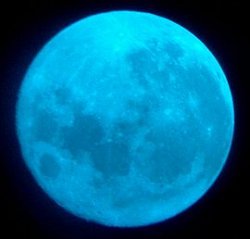
It’s a blue moon tonight. I have no idea if that rarity will produce rarities for Whitewater, Wisconsin. If one unusual event begets another, expect some of the following: a Whitewater city manager who sets aside false humility and résumé-building marquee projects, a Whitewater police chief who sets aside public relations for true community policing, a common council member who sets aside the rationalization of conflicts of interest, and a political class that doesn’t confuse looking good with being good.

I am quite sure that 2009 has been a horrible year for Whitewater, and America. If we are an exceptional town, then we’re an exceptional town of self-important politicians and town squires who have, yet again, put their own images ahead of better lives for their constituents and neighbors. We are a place of deep poverty, mostly ignored by those who would rather trumpet, well, anything except the truth.

And yet, I am convinced that these difficult times offer more for reform in Whitewater than ever before. Not, I’m quite sure, because any number of arrogant new men will see how wrong they’ve been. On the contrary, I very much expect them to lie, rationalize, hide, and self-promote even more in the new year. They won’t get better; they’ll get worse.

It is, instead, because the opportunity unfolds to exercise one’s rights under the law vigorously, and litigate at their denial, that I believe the new year offers so much promise. There’s a point when one simply exercises one’s rights, ignoring what others think. There has never been a better time for that approach.

It is sad and troubling that life in Whitewater is hard for so many, and that their pains are made worse by the arrogance of third-tier municipal officials and their deluded apologists. I have not lost a focus on this fundamental truth of our common condition; no other remarks matter half so much.

I will, though, offer these personal remarks for my readers: since Advent, and growing through the season, I don’t believe I have ever felt better. I am so very much convinced and confirmed in the exercise of individual liberty, the power of markets, and the opportunities from a smaller government and more vigorous civil (that is, private) society.

More than that: one should take the message of these principles and the exercise of individual rights to within an inch of a bureaucrat’s nose, so to speak.

In that there is hope, opportunity, and a bit of adventure (as a ‘happy warrior,’ in the way of Al Smith), too.

Daily Bread for Whitewater, Wisconsin: 12-30-09

Good morning,

There’s a likelihood of a light snow today, with a high in the mid twenties. No meaningful accumulation is expected.

On this day in 1922, law enforcement in Madison had a busy day, as the Wisconsin Historical Society recalls:

1922 – Authorities Confiscate Illegal Alcohol

On this date authorities in Madison confiscated 1,200 gallons of “mash” and fifteen gallons of moonshine from the home of a suspected bootlegger. As the illegal liquor trade flourished in Madison’s Greenbush neighborhood during Prohibition, two rival gangs, one on Regent Street and the other located on Milton Street, fought to gain control until the “Rum War” erupted among these factions in 1923. [Source: Bishops to Bootleggers: A Biographical Guide to Resurrection Cemetery, p.189]

Incumbency: The Gift to Oneself that Keeps on Giving

By early January, Wisconsin law requires citizens declare their candidacies for local office, as challengers, incumbents seeking re-election, or incumbents who will not seek re-election, having tormented their communities enough during their current terms.

In Whitewater, there will be some incumbents seeking another term, on our common council or school board.

It’s sure to be an interesting season, even if no challengers step forward. I’ll cover both races. I am curious how one of the candidates covers his own race, how he reports on city events during his candidacy, and how he may handle council matters, or those of commissions on which he serves, that involve his advertisers.

What, though, could be the campaign slogan of someone seeking re-election on our council? Sadly, “The Voice of the People” is already taken; incumbents will have a hard time finding something more presumptuous than that, although I am sure they’ll do their level best to find something.

You may have heard, as I have more than once, how important it is to have “adults in the room.” I am sure it is important, but only in the banal way that one considers it important that candidates have a pulse – necessary, but hardly exemplary.

One could not find a standard that’s greater proof of what’s wrong with Whitewater, Wisconsin’s politics (at least, not one to which one might readily admit). The standard of politicians as adults reveals how little we expect of politicians, and how much politicians think of themselves.

Someone who runs for office on the platform that he or she has good judgment might kindly answer the question: Could you please tell us what your good judgment entails? If there’s no ready answer, we can safely conclude that that judgment amounts to little more than a high opinion of himself or herself.

For what do they stand, other than their own re-election?

The year ends with interesting political and legal questions ahead for our small town in the year to come.

Daily Bread for Whitewater, Wisconsin: 12-29-09

Good morning,

It’s a cold day in Whitewater, with a predicted high of only 19 degrees.

There’s no school (of course) and no municipal, public meetings for the City of Whitewater (thankfully).

If one reads one local story today, about our part of the world, I would suggest the Gazette’s Walworth County Search Warrants Could Disappear. There’s much more to post of the topic, but I’ll first point toward the story.

It’s also the anniversary, from 1879, of the birthday of William “Billy” Mitchell. The Wisconsin Historical Society marks the anniversary:

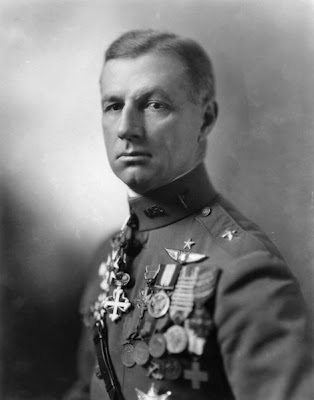
1879 – General William “Billy” Mitchell Born

On this date aviation pioneer Billy Mitchell was born in Nice, France. Mitchell grew up in Milwaukee and attended Racine College. During World War I, Mitchell was the first American airman to fly over enemy lines. He also led many air attacks in France and Germany. Upon return to the U.S., he advocated the creation of a separate Air Force. Much to the dislike of A.T. Mahan, Theodore Roosevelt, and other contemporaries, Mitchell asserted that the airplane had rendered the battleship obsolete, and attention should be shifted to developing military air power. Mitchell’s out-spokenness resulted in his being court martialed for insubordination. He was sentenced to five years suspension of rank without pay. General Douglas MacArthur — an old Milwaukee friend — was a judge in Mitchell’s case and voted against his court martial. Mitchell’s ideas for developing military air power were not implemented until long after his death. In 1946 Congress created a medal in his honor, the General “Billy” Mitchell Award. Milwaukee’s airport, General Mitchell International Airport, is named after him. [Source: American Airpower Biography]