Has Whitewater Police Chief Jim Coan already hired a trainer for Whitewater’s Police and Fire Commission members?
Earlier this week, on May 20th, 2009, Whitewater’s Police and Fire Commission met for a quarterly meeting. They met in a small conference room, rather than a chamber suitable for public attendance, and unlike so many other public meetings in Whitewater, the public portions of their proceedings were untelevised.
Two days later, in his Weekly Report, Whitewater’s City Manager, Kevin Brunner, announced the results of a portion of that meeting’s agenda: the hiring of two new officers. Here’s what he wrote in his weekly report:
Police Chief James Coan and the Whitewater Police and Fire Commission announce that conditional offers of employment as police officers for the City of Whitewater have been made to John Kleinfeldt and Terrence (TJ) Sullivan. The employment offers are contingent upon successful completion of medical examinations and psychological testing. If all goes well, both candidates will begin field training with the department on June 8th.
John Kleinfeldt graduated from UW-Eau Claire with a Bachelors Degree in Criminal Justice. John also worked as a Community Service Officer for the Eau Claire Police Department. Terrence is a recent graduate of UW-Whitewater and is a veteran of the United States Air Force. Both candidates have graduated from recruit academies and are eligible to be certified as police officers in the State of Wisconsin.
There are some details that he left out.
The agenda for that Police and Fire Commission, written before the meetings, tells how much time the PFC planned to give to this matter. (It’s their plan for the evening, only.)
POLICE AND FIRE COMMISSION AGENDA
Wednesday, May 20, 2009
7:00 p.m.
CITY MANAGER’S CONFERENCE ROOM
312 W. Whitewater Street, Whitewater, Wisconsin
I. Call to Order, Roll Call
II. Election of Officers
III. Oath of Office
IV. Adjournment to Closed Session,
to Reconvene per Wisconsin State Statute §19.85(1) (c) “Considering
employment, promotion, compensation or performance evaluation data
of any public employee over which governmental body has jurisdiction
or exercises responsibility.”
A. Items to be discussed: Interview of Patrol Officer Candidates – 2
V. Reconvene into Open Session at 7:20 p.m.
VI. Announcement of recommendation to Chief of Police concerning
Patrol Officer candidates
VII. Approval of minutes of February 18, 2009
VIII. Citizen Comments
IX. Old Business – None
X. New Business
A. Chief’s Report
1. Staffing Update
2. PFC Training Availability.
XI. Adjournment
Amazing!
The meeting plan had the PFC starting at 7:00 p.m., and a Call to Order, Roll Call, Election of PFC Commission Officers, and Oath of Office, and Interview of Two Patrol Officer candidates, all in 20 minutes.
How could anyone meaningfully plan to accomplish all these duties — consideration of two candidate interviews included — in just 20 minutes?
There is a way, perhaps.
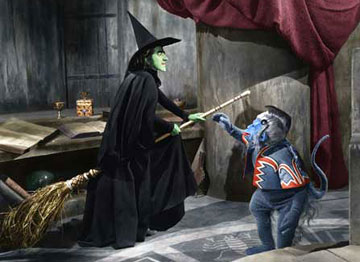
Later in the agenda, at item X. A. 2., the agenda lists ‘Training Availability.’ Perhaps the training already took place, and Coan, and all the Whitewater Police and Fire Commission members, took training from this gentleman:
Once again, as so many times before, Jim Coan and the Whitewater Police and Fire Commission lead the nation — that’s all 306,500,137 people in America — in a new and innovative way to conduct a meeting.
Unique as always.
There might be a different way, though, more intelligible and consistent with current public meeting practices in America — allot more time in the agenda, hold the meeting in a suitable chamber, and televise the open proceedings.
Take these duties seriously.
Something one might want to consider, perhaps, just perhaps. more >>
The holiday weekend begins, and there’s lots of posting ahead over the next few days — on local press coverage, the Police and Fire Commission, our local economy, and charitable and civic press releases to publish.
To set the right mood for the writing ahead, I offer two clips that encourage a positive outlook while working. I’ve posted the second before, and it’s a clever homage to the first.
There are countless reasons, big and small, to love America. This is, I am convinced, the most extraordinary place in all the world, for our liberties, productivity, creativity, and natural beauty.
We have been creative always, in our past as we are today. Here’s an example of America’s contribution to popular culture from 1928 – Steamboat Willie.
I received the following press release that I am happy to post —
Brain Wellness Program Offered at Muskego Library
Program to Underscore Importance of Brain Health
Milwaukee, WI – May 14, 2009 – The Alzheimer’s Association will present a community program called “Nourish Your Noggin” on Tuesday, June 16, 2009 from 6:30 – 8:30 p.m. at the Muskego Public Library, S73 W16663 Janesville Road, Muskego.
This program will be provided at no charge, and is open to the community. Join us for this fun and interactive program for those who are interested in brain health. Learn how memory works, about age-related changes – what is normal, what is not – and how to live a brain-healthy lifestyle.
This program will be presented by Judy Gunkel, Regional Services Coordinator, Alzheimer’s Association. To register for this complimentary program, please contact Judy Gunkel at 262-548-7224 or via email at judy.gunkel@alz.org.
The Alzheimer’s Association is a national non-profit organization dedicated to eliminating Alzheimer’s disease through the advancement of research, to enhance care and support for all affected and to reduce the risk of dementia through the promotion of brain health.
The Alzheimer’s Association, Southeastern Wisconsin chapter provides information, education, and support to people with Alzheimer’s and related dementias, their families, and healthcare professionals throughout an 11-county region. For more information about Alzheimer’s disease and local services visit www.alz.org/sewi or call the toll-free, 24-hour Helpline at 800-272-3900.
Campaign finance laws are often heralded as positive reform — but there’s a much darker side to those laws — they often limit free expression of political speech. Over at Cato, they’ve prepared a video to discuss aspects of a case involving the Federal Election Commission’s presumed entitlement to regulate political speech, a case now before the U.S. Supreme Court —
Campaign finance laws become a way by which government — and its incumbent politicians — can regulate messages they dislike in circumvention of First Amendment protections.
There’s a
Common Council meeting tonight at 6:30 p.m. The agenda is available online. (It’s a pdf but not a useful, searchable text pdf like other City of Whitewater agendas.)
On this date in 1934, the Wisconsin Historical Society recalls the anniversary of a step toward bigger government, intrusion in commercial and private life, and less individual choice —
“Wisconsin Progressive Party Formally Organized” —
On this date Wisconsin’s Progressive Party was formally organized near 30 E. 2nd St. in Fond du Lac. It had begun as a “progressive” movement within the Wisconsin Republican Party more than 30 years before, and under leaders such as Robert M. LaFollette its list of achievements brought national attention to Wisconsin.
By the 1930s, a new generation of policy makers, many of whom had been trained under progressive Republicans, were advocating for reforms as part of Democrat Franklin Roosevelt’s New Deal programs (see our page on the Wisconsin roots of Social Security for an example). At the same time, a new generation of Republicans such as Walter Kohler were advocating their own solutions to the nation’s problems. The heirs of the LaFollette tradition organized a third party, the Wisconsin Progressive Party, to keep alive the traditions they valued.
[Source: History Just Ahead: A Guide to Wisconsin’s Historical Markers, edited by Sarah Davis McBride]
From our elementary schools today, there’s a choir concert in the high school auditorium at 1:30 p.m. and again at 7 p.m.
I received the following announcement, that I am happy to post, about a wiki (a collaborative webpage) at the university to which those with memories of UWW can contribute —
“UW-W: Then and Now” created in celebration of the inauguration of Chancellor Richard J. Telfer, is a place where members of the broader UW-W community can share their memories and experiences, engage in conversations with one another, and explore and document our university’s rich history.
As the 2008-2009 school year comes to a close, please take a moment and share your UWW memories from this year as well as past years. To contribute to this living history please visit http://wiki.uww.edu/uwwhistory.
You may make changes on any given page or you may send your comments or stories to thenandnow@uww.edu. “UW-W: Then and Now” is a wiki; as such, any visitor is welcome to contribute and make changes.
Continuing for the next few weeks, it’s Prisoner Monday here at Free Whitewater. Why? Because a longtime reader previously suggested to me that being in Whitewater sometimes felt like living the plot of The Prisoner.
It’s a great British series, that tells the story of a secret agent who resigns from his agency, only to find himself in a mysterious place called The Village.
Here’s the thirteenth, one-minute summary, of an episode entitled, “Do Not Forsake Me Oh My Darling.” (“No. 6 undergoes an eerie transformation that transmits his mind and personality into another man’s body.”)
There are no public meetings scheduled in the City of Whitewater today, but there will be a Common Council meeting tomorrow, and a Police and [sic] Fire Commission meeting on Wednesday.
The Wisconsin Historical Society recalls a student protest in Milwaukee on this date in 1964:
On this date, the 10th anniversary of Brown v. Board of Education, students from Milwaukee schools participated in the first boycott of the city’s public schools, a critical moment in civil rights and desegregation movements in Wisconsin.
Two months earlier, in March 1964, the NAACP, CORE, and other civil rights organizations formed MUSIC — the Milwaukee United School Integration Committee. Its purpose was to implement mass action to highlight the issue of educational inequality. For two years, sit-ins, picketing, prayer vigils, marches, and boycotts had raised public awareness about segregation but failed to move the school board to action.
In December of 1965, Wisconsin civil rights activist and attorney Lloyd Barbee filed a formal desegregation suit in federal court on behalf of 41 black and white children, eventually decided in their favor in 1976. [Source: Rethinking Schools].
In our schools, there will be a Whitewater Middle School choir concert at the high school tonight at 7 p.m.
The City of Whitewater has one public meeting scheduled for today. At 3:00 p.m., there will be a Police Day ceremony at the municipal building.
According to the Wisconsin Historical Society, on this date in 1911, the City of Janesville sought to ban — wait for it — fortune tellers:
On this date the Janesville City Council proposed ordinances banning fortune-tellers and prohibiting breweries from operating bars in the city. For more on Wisconsin brewing history, see the “Brewing and Prohibition” page at Turning Points in Wisconsin History. [Source: Janesville Gazette].
Over at the Janesville Gazette online, there’s news that Wisconsin’s Hispanic population is about 5% statewide. It is surely far higher in Whitewater, likely over 10% if counted thoroughly.
Fortunately, the population is too large to be intimidated or badgered out of town; Whitewater’s local Know-Nothings are out of luck – our future is a better, truly American and multicultural one.
The City of Whitewater’s Planning Commission meeting will take place tonight, beginning at 6 p.m., at the municipal building. The meeting agenda is available online.
There will be a Whitewater Middle School Band Concert, held at the High School Auditorium, tonight at 7 p.m.
There are no public meetings listed for the City of Whitewater today. There will be others later this week; you’ll not go too very long without public regulation of your productive, private activity.
On this day in 1846, Congress granted President Polk’s request for a declaration of war against Mexico. Many prominent Americans, including Lincoln and John Quincy Adams, opposed the war.
It’s worth noting that their dissent from a generally popular American action was honorable; it’s also worth noting that the war ended in 1848.