FREE WHITEWATER

Daily Bread: March 11, 2009

Good morning, Whitewater

There’s a Birge Fountain Committee meeting at 2 p.m. today, at the White Memorial Building. That’s Whitewater’s only apparent public meeting. If we must have city government, then our municipality’s focus on the Birge Fountain’s better than most activities in which someone would otherwise meddle. If you’ve not already requested time off from work to attend the meeting, there’s still time. I’m sure your private sector employer will understand why you want to wander off attend a fountain meeting in the middle of the day.

Scheduling like this isn’t even a public meeting, for goodness’ sake — it’s like someone’s club, styled as a public activity. Sell the fountain to some rich person with poor taste in sculpture, and let him scrub it, or polish it, or whatever. It probably wouldn’t even go for that much, on the market, anyway. A few hundred bucks would probably get a buyer the fountain, filled with water, and even a few goldfish thrown in the deal. After the sale — one less item to schedule on the city’s calendar.

Well, if a fountain committee in a town with vacant storefronts (by Main & Elizabeth, Main & Tratt) isn’t enough, there’s more to lift your pride today — it’s Jerry Zucker’s birthday. The Wisconsin Historical Society marks the occasion —

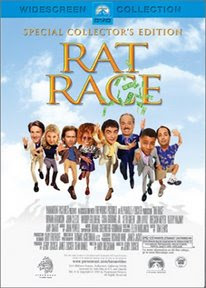
On this date [in 1950] film producer Jerry Zucker was born in Milwaukee. With his brother David, he has written, produced, and directed a number of classic comedies including Naked Gun, Airplane!, Top Secret, Police Squad, and Rat Race. Zucker also produced My Best Friend’s Wedding, First Knight, A Walk In the Clouds, and My Life and gave the 2003 commencement address at the University of Wisconsin – Madison.

Be proud.

Associated Press Managing Editors’ Statement of Ethical Principles

These principles, and even more so basic principles of reasoning, and standards of writing, are useful to a common person who wishes to think, and write, about press coverage of his town.

Statement of Ethical Principles

These principles are a model against which news and editorial staff members can measure their performance. They have been formulated in the belief that newspapers and the people who produce them should adhere to the highest standards of ethical and professional conduct.

The public’s right to know about matters of importance is paramount. The newspaper has a special responsibility as surrogate of its readers to be a vigilant watchdog of their legitimate public interests.

No statement of principles can prescribe decisions governing every situation. Common sense and good judgment are required in applying ethical principles to newspaper realities. As new technologies evolve, these principles can help guide editors to insure the credibility of the news and information they provide. Individual newspapers are encouraged to augment these APME guidelines more specifically to their own situations.

RESPONSIBILITY

The good newspaper is fair, accurate, honest, responsible, independent and decent. Truth is its guiding principle.

It avoids practices that would conflict with the ability to report and present news in a fair, accurate and unbiased manner.

The newspaper should serve as a constructive critic of all segments of society. It should reasonably reflect, in staffing and coverage, its diverse constituencies. It should vigorously expose wrongdoing, duplicity or misuse of power, public or private. Editorially, it should advocate needed reform and innovation in the public interest. News sources should be disclosed unless there is a clear reason not to do so. When it is necessary to protect the confidentiality of a source, the reason should be explained.

The newspaper should uphold the right of free speech and freedom of the press and should respect the individual’s right to privacy. The newspaper should fight vigorously for public access to news of government through open meetings and records.

ACCURACY

The newspaper should guard against inaccuracies, carelessness, bias or distortion through emphasis, omission or technological manipulation.

It should acknowledge substantive errors and correct them promptly and prominently.

INTEGRITY

The newspaper should strive for impartial treatment of issues and dispassionate handling of controversial subjects. It should provide a forum for the exchange of comment and criticism, especially when such comment is opposed to its editorial positions. Editorials and expressions of personal opinion by reporters and editors should be clearly labeled. Advertising should be differentiated from news.

The newspaper should report the news without regard for its own interests, mindful of the need to disclose potential conflicts.

It should not give favored news treatment to advertisers or special-interest groups.It should report matters regarding itself or its personnel with the same vigor and candor as it would other institutions or individuals. Concern for community, business or personal interests should not cause the newspaper to distort or misrepresent the facts.

The newspaper should deal honestly with readers and newsmakers. It should keep its promises.

The newspaper should not plagiarize words or images.

INDEPENDENCE

The newspaper and its staff should be free of obligations to news sources and newsmakers. Even the appearance of obligation or conflict of interest should be avoided.

Newspapers should accept nothing of value from news sources or others outside the profession. Gifts and free or reduced-rate travel, entertainment, products and lodging should not be accepted. Expenses in connection with news reporting should be paid by the newspaper. Special favors and special treatment for members of the press should be avoided.

Journalists are encouraged to be involved in their communities, to the extent that such activities do not create conflicts of interest.

Involvement in politics, demonstrations and social causes that would cause a conflict of interest, or the appearance of such conflict, should be avoided.Work by staff members for the people or institutions they cover also should be avoided.

Financial investments by staff members or other outside business interests that could create the impression of a conflict of interest should be avoided.

Stories should not be written or edited primarily for the purpose of winning awards and prizes. Self-serving journalism contests and awards that reflect unfavorably on the newspaper or the profession should be avoided.

(Adopted 1994 as revision to APME Code of Ethics) 

Available online at
http://www.apme.com/ethics/

On Press Criticism

I have written before that bloggers may appear new to the American scene, but that they really represent only a contemporary innovation on America’s tradition of pamphleteering.  America’s colonial and revolutionary writers published pamphlets on all manner of subjects, and that’s true of blogging, too. 

Blogging on political affairs, whether about places near or far, is particular in one way: the blogger finds himself noticing how reporters and journalists have covered the topics in which he, too, is interested.  Often, a blogger only begins writing after reading shoddy reporting.  Shoddy in every which way: inaccuracies, half-truths, conflicts of interest, lack of curiosity, favoritism, dull writing, &c.  

Whitewater has this problem – we’re a town with a weekly newspaper (the Register) that’s failed this community, and two nearby papers (the Gazette and the Daily Union) that cover the Whitewater only sporadically.  (There’s more to be said about these two nearby daily papers, different in their ways, but I’ll leave that for another time.)    

These papers have left Whitewater politicians, community leaders, and supposed people of influence (big fish only in our small pond) without the critique common in bigger cities, and healthier communities. 

I’m convinced that if we had better journalism in Whitewater, we’d have a better, healthier politics.  Instead, lots of asinine ideas go without a healthy public critique, convincing their asinine proponents that their ideas might – indeed, must – somehow make sense. 

So, a blogger finds himself, by consequence, a press critic.  Bloggers are not reporters, nor journalists.  They are, instead, common people who see poor reporting for what it is, on the basis of their own reading and reflection.  (I have never met anyone, ever, who did not consider me a common man, for example.  There’s nothing fancy about anything I write.  The only thing that makes me slightly different is that I really don’t care what anyone in the world thinks about what I write.  Lots of supposedly important people in this town do care what people think, and it’s part of the reason the town’s a mess.)  

In my next post, I’ll re-print the full Statement of Ethical Principles of the Associated Press’s Managing Editors.  I have posted parts of the Whitewater Register, Daily Jefferson County Union, and the Janesville Gazettemore >>

Poll of the Week: Favorite Local Newspaper

Here’s a second poll, folowing last week’s, this time asking a question about readers’ favorite local newspaper.

For this week’s poll, a question about which of three local newsapers, with coverage of Whitewater news, that readers might favor. Preferences are only among these three, each with a print edition (although readers may be reading news through the online editions of the newspapers.) The poll will stay open until Friday morning. Let’s see what you think…

Enjoy.

more >>

Daily Bread: March 10, 2009

Good morning, Whitewater

There is one scheduled public meeting in Whitewater, at 4:30 p.m. today, about the reconstruction of Center Street. Here’s a description, from the City of Whitewater website:

The public is invited to a meeting to discuss the reconstruction of Center Street. Center Street will be reconstructed from Fourth Street to S. Franklin Street. The project includes the reconstruction of the street surface with new curb and gutter, complete replacement of water main, and spot repairs of the sanitary sewer. The street is being widened slightly to accommodate parking on the south side of the street in front of the Library. There will be no assessments to the adjacent property owners for this project. Mark Fisher, Strand Associates engineer and DPW staff will provide a brief presentation of the project then will listen to comments from the public. This project’s contract is scheduled to be awarded by the City Council on May 5 with construction to start in early June and completion in early September.

There’s one public meeting scheduled in Fort Atkinson, at 10 a.m., but I don’t cover Fort Atkinson (except by contrast), and anything involving stormwater is 23% less interesting that anything I would ever consider blogging about. (I seriously doubt that I have any readers who care about stormwater, but if I do, please stop reading. Go out to a bar, or take your girl to a movie, or something, anything, to balance an interest in ‘stormwater issues.’)

In American history today, it’s an anniversary of two technical accomplishments. If you thought that Jefferson and Lincoln were just political men, you’d be mistaken:

Wired reports that

It’s the anniversary of significant scientific and technical accomplishments by two of the greatest U.S. presidents. Thomas Jefferson read a scientific paper in 1797 that’s considered the first American contribution to vertebrate paleontology. Fifty-two years later, Abraham Lincoln filed for a patent, starting a process that would make him the only U.S. president to patent an invention.

The full story is available at Wired‘s website.

Prisoner Monday

For the next several weeks, it’s Prisoner Monday here at Free Whitewater. Why? Because a longtime reader previously suggested to me that being in Whitewater sometimes felt like living the plot of The Prisoner.

It’s a great British series, that tells the story of a secret agent who resigns from his agency, only to find himself in a mysterious place called The Village.

AMC has the full episodes of the original series online, and also offers one-minute summaries of those original episodes. I’ve previously posted the first two videos.

Here’s the third, one-minute summary, of an epiosde entitled, “A. B. and C.” (There’s a wonder drug involved.) The full video is also available at AMC.

Enjoy.

more >>

Daily Bread: March 9, 2009

Good morning, Whitewater

Two public meetings are scheduled this afternoon in Whitewater. At 4:30 p.m., the CDA Business Park Marketing Committee meets, and at 6:30 p.m. the Irvin Young Memorial Library Board meets.

School’s also back in session, and so many young people are now safely back behind cinderblock walls. Breathe easy, municipal leaders. Conserve your strength until spring break.

It’s another unexpected celebrity birthday in Wisconsin history today, from the Wisconsin Historical Society: in 1959, Kato Kaelin was born on this day.

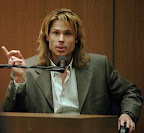
On this date Kato Kaelin was born in Milwaukee. He made a few appearances in film and TV, but is mainly known for his testimony in the O.J. Simpson trial. Kaelin lived on Simpson’s estate when O.J.’s wife was murdered.

Local jobless rate soars — GazetteXtra

There’s predictable, but troubling, news on the local economy, as the Janesville-Beloit area now has a double-digit unemployment rate. The national average of 8.1% looks favorable by comparison.

Planners cannot keep up – a study on municipal mass transit between nearby towns was, and now surely is, immaterial. Getting people to and from work that way was destined to be expensive; providing stable, private sector work matters so much more than a public transit scheme.

http://gazettextra.com/news/2009/mar/06/local-jobless-rate-soars/

Poll’s Closed : “How Likely is it that a member of Whitewater’s Common Council will fall asleep during a meeting in 2009?”

On Tuesday, I posted a poll asking how likely a member of Whitewater’s Common Council would be to fall asleep during a 2009 meeting. The results – admittedly unscientific but nonetheless interesting- show that among respondents –

35% think there’s an even chance
22% think there’s an eighty percent chance
18% think it’s certain

For the nearly one-quarter who thought it impossible for a Council member to fall asleep – is your certainty contingent on the outcome of the at large Council race in April?

Daily Bread: March 6, 2009

Good morning, Whitewater

There’s still no school today, the second day of parent-teacher conferences. Looking out the window, I can see that the town is still standing. Either concerns about ‘juveniles’ in Whitewater are overblown, or someone managed to handle deftly this community concern.

You may have known about actress Amy Pietz, but carelessly, I didn’t. It’s her birthday. According to the Wisconsin Historical Society, the Milwaukee native was born in 1969. Here’s her bio:

On this date, TV actress Amy Pietz was born in Milwaukee. Pietz was raised in the suburb of Oak Creek and during her childhood trained as a ballet dancer. She was in the first graduating class of the Milwaukee High School of the Arts, and went on to received a B.F.A. degree in acting from DePaul University in 1991. Pietz’s first professional role was in “A View From the Bridge”, produced by Steppenwolf Theatre Company.

She is best known for her role as Caroline’s neighbor, Annie, in the TV sitcom “Caroline in the City,” which she played for the entire 4 seasons that the series aired. Pietz made her feature film debut in “Jingle All the Way,” with California governor Arnold Schwarzenegger.

Somehow, inexplicably, I missed both Caroline in the City and Jingle All the Way, so the Wisconsin Historical Society’s post was particularly helpful.

Thanks so very much.

The Volokh Conspiracy – – How Low Do You Think the Dow Will Fall?

Over at law professor Eugene Volokh’s group blog, Orin Kerr offers readers a poll question on the Dow Jones Industrial Average: ”How Low Do You Think the Dow Will Fall?” I’d guess that it will keep falling, over the next five years (Kerr’s time frame), but like all guesses of this kind, it’s a tenuous prediction.

My selection ~ 5000 to 5500 over the next five years.

Voting is still open.

http://volokh.com/archives/archive_2009_03_01-2009_03_07.shtml#1236274118

NEW WISCONSIN FREE MARKET THINK TANK LAUNCHED

The Daily Kenoshan reports that Wisconsin has a new, free market think tank. Considering how poorly Wisconsin ranks in personal and economic freedom, our state could use several new free market think tanks.

(George Mason University’s Mercatus Center’s study of American liberties entitled, “Freedom In the Fifty States” ranks Wisconsin poorly – 35th in economic freedom, 39th in personal freedom, and 37th overall. See yesterday afternoon’s post for more details on the study.)

Information on the new think tank is available through the link below. Best wishes to all concerned.

http://dailykenoshan.com/index.php?option=com_content&task=view&id=7457&Itemid=114

Daily Bread: March 5, 2009

Good morning, Whitewater

There’s no school today, and tomorrow, in the district, to allow for parent-teacher conferences. Our town fathers will have to be on heightened alert for the presence of juveniles, loose in town. For the stodgiest of residents: lock your doors, take food and water into a small, secure room, and wait until Monday morning.

It’s a proud day in American history, a day harkening to America’s creative past — on this day in 1963, the Hula Hoop was patented. The History Channel’s website has offers detail:

On this day in 1963, the Hula-Hoop, a hip-swiveling toy that became a huge fad across America when it was first marketed by Wham-O in 1958, is patented by the company’s co-founder, Arthur “Spud” Melin. An estimated 25 million Hula-Hoops were sold in its first four months of production alone.

In 1948, friends Arthur Melin and Richard Knerr founded a company in California to sell a slingshot they created to shoot meat up to falcons they used for hunting. The company’s name, Wham-O, came from the sound the slingshots supposedly made. Wham-O eventually branched out from slingshots, selling boomerangs and other sporting goods. Its first hit toy, a flying plastic disc known as the Frisbee, debuted in 1957. The Frisbee was originally marketed under a different name, the Pluto Platter, in an effort to capitalize on America’s fascination with UFOs.

Melina and Knerr were inspired to develop the Hula-Hoop after they saw a wooden hoop that Australian children twirled around their waists during gym class. Wham-O began producing a plastic version of the hoop, dubbed “Hula” after the hip-gyrating Hawaiian dance of the same name, and demonstrating it on Southern California playgrounds. Hula-Hoop mania took off from there.

The under-rated, under-appreciated film The Hudsucker Proxy, starring Tim Robbins, Paul Newman, and Jennifer Jason Leigh, revolves around the efforts of the fictional Norville Barnes to market something that looks, well, much like a Hula Hoop.

You know, for kids.