
Daily Bread
Daily Bread: February 16, 2009
by JOHN ADAMS •
Good morning, Whitewater
The Municipal Building is closed today, for Presidents’ Day. It’s closed for some, but not all, federal holidays. The building was open, and ready for business — such as that is — through the evening of January 19th. Some federal holidays are a day of rest for municipal employees public servants, and some aren’t.
No matter — there will be much more later this week, including a Police and Fire Commission meeting, and a Common Council meeting.
Over at Washington School today, there will be a celebration of Washington’s Birthday, and at the High School, it’s National History Day.
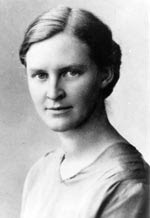
The Wisconsin Historical Society reports on a sad anniversary today, from 1943: “Mildred Harnack Guillotined in Berlin” —
On this date Mildred Harnack was guillotined in Berlin, Germany. Harnack was born in Milwaukee and studied and lectured at the University of Wisconsin. She and her husband, Arvid Harnack, were key members of a German resistance group which assisted German Jews and political dissidents, circulated illegal literature, met secretly with prisoners of war, and worked to document Nazi atrocities in Europe. Known by the Nazis as the “Red Orchestra,” Harnack’s companions were arrested, tortured, and tried for their activities. Mildred Harnack was guillotined in Berlin on the personal orders of Adolf Hitler.
Many fine presidents these last two centuries, but not one a finer citizen, or more worthy of respect for personal sacrifice, than Harnack.
Daily Bread
Daily Bread: February 13, 2009
by JOHN ADAMS •
Good morning, Whitewater
There are no public meetings scheduled in the City of Whitewater today.
It’s activity night, though, at the Middle School. If there must be activity in town, the Middle School’s as good a place as any.
And in commemoration of this day…

Daily Bread
Daily Bread: February 12, 2009
by JOHN ADAMS •
Good morning, Whitewater
It’s Lincoln’s birthday today. The History Channel has more on the anniversary of Lincoln’s birth:
On this day in 1809, Abraham Lincoln is born in Hodgenville, Kentucky.
Lincoln, one of America’s most admired presidents, grew up a member of a poor family in Kentucky and Indiana. He attended school for only one year, but thereafter read on his own in a continual effort to improve his mind. As an adult, he lived in Illinois and performed a variety of jobs including stints as a postmaster, surveyor and shopkeeper, before entering politics. He served in the Illinois legislature from 1834 to 1836, and then became an attorney.
Daily Bread
Daily Bread: February 11, 2009
by JOHN ADAMS •
Good morning, Whitewater
There are no public meetings scheduled in the city today. Surprising, really, yet apparently true. Not even a single committee or commission? Even a tiny task force?
It’s an odd anniversary in Wisconsin history, as the Wisconsin Historical Society observes that in 1842 there was a shooting in the Wisconsin territorial legislature:
On this date the Territorial Legislature of Wisconsin met in Madison, only to be interrupted by the shooting of one member by another. The legislature was debating the appointment of Enos S. Baker for sheriff of Grant County when Charles Arndt made a sarcastic remark about Baker’s colleague, James Vineyard. After an uproar, adjournment was declared and when Arndt approached Vineyard’s desk, a fight broke out during which Vineyard drew his revolver and shot Arndt. [Source: Badger Saints and Sinners by Fred L. Holmes]
So, what happened to Vineyard, the shooter? He benefitted from the incident, as the Wisconsin Historical Society notes:
Pioneer settler, lead miner, politician, b. Kentucky. He moved to the Wisconsin area in 1827, settling near Platteville, where for a number of years he engaged in lead mining and prospecting. A Democrat, Vineyard was a member of the upper house of the territorial legislature (1836-1842), and in 1842 gained notoriety when he shot and killed Charles Arndt (q.v.) during a bitter argument on the council floor. Vineyard was tried for manslaughter, was defended by Moses M. Strong (q.v.), and was subsequently acquitted of the slaying. The incident is described at length in in the Wisconsin Magazine of History vol. 5, no. 3 (March 1922): 264-283.
Despite this incident, he maintained his popularity in the lead region, was a delegate to the first state constitutional convention (1846), and was state assemblyman (1849). In 1850 he followed the Gold Rush to California, later served in the California legislature, and remained in that state until his death. Wis. Mag. Hist., 5; K. W. Duckett, Frontiersman of Fortune: M. M. Strong . . . Madison, 1955]; J. R. Berryman, ed., Bench and Bar of Wis. (2 vols., Chicago, 1898); M. M. Quaife, ed., Convention of 1846 (Madison, 1919).
I am not sure what this means for the Whitewater Common Council. Perhaps, just perhaps, debate has been too tame, too polite, too deferential, and too cerebral.
Daily Bread
Daily Bread: February 10, 2009
by JOHN ADAMS •
Good morning, Whitewater
The finest two minute video you’ll ever see. Beautiful for the power of Friedman’s calm reasoning. (Hat tip via Instapundit.com.)
Daily Bread
Daily Bread: February 9, 2009
by JOHN ADAMS •
Good morning, Whitewater
There are two public meetings scheduled for the City of Whitewater, today. One of them will enrich our present and next generations, in so many ways, and the other is the CDA Business Park Marketing Committee meeting at 4:30. The one that can shape Whitewater’s future, and places beyond, is the Young Memorial Library Board meeting at 6:30 p.m.
I’d guess one library is worth a dozen task forces and committees, yet even then I likely underestimate a library’s power.
City
League of Women Voters’ February Newsletter
by JOHN ADAMS •
The Whitewater-Area League of Women Voters’ has published its February 2009 Newsletter, with a schedule of upcoming LWV events. A copy of the newsletter is available as a pdf link in this post, and as a link on my blogroll.
Here is a partial listing of events, with more information and events inside the newsletter.
Date: March 14, 2009 (Saturday)
Event: LWV Candidate Forum, Candidates for Municipal Office
Location: 10 AM, City Hall Council Chambers
Date: March 19, 2009 (Thursday)
Event: Whitewater Zoning & Housing Issues
Location: 7 PM, City Hall Council Chambers
There’s also a Fall Fairhaven Lecture Series, available to the public at no charge. Here are the lectures in the upcoming series:
FEB. 9: Listen Up! Strategies for Being a Better Listener.
Barb Pennington, Associate Professor and Chair, Communications Department
FEB. 16: Generations Theory: Looking Across Generations to Create Understanding
Brenda O’Beirne, Associate Professor, Counselor Education Department
FEB. 23: Advertiser Use of Psychology: Behavioral Conditioning.
Lois Smith, Professor, Marketing Department and Interim Dean, College of Business and Economics
(“All lectures are open to the public at no charge on Mondays at 3 p.m. at the Fellowship Hall, located at the Fairhaven Retirement Community, 435 West Starin Road, Whitewater, WI 53190. The Fall 2008 Fairhaven Lecture Series will examine a number of critical issues relevant to the 2008 elections. Sponsored by the UW-Whitewater Office of Continuing Education.”)
The latest newsletter also reminds readers that March brings Sunshine Week, part of what makes Wisconsin and America a great place to live —
Mark your Calendar: Sunshine Week ‘09.
On Friday, March 20 from 1 – 2:30 PM (ET), LWVEF will co-host the 4th Annual Sunshine Week National Dialogue to discuss opportunities for citizens to use government information to make a difference in their communities. Entitled “Opening Doors: Finding the Keys to Open Government”, the event will be held in Washington DC and available via webcast. For more information, visit www.openthegovernment.org.
About the League —
The League of Women voters, a nonpartisan political organization, encourages the informed and active participation of citizens in government, works to increase understanding of major public policy issues, and influences public policy through education and advocacy. We take action on public policy positions established through member study and agreement. We are political, but we do not support or oppose any political party or candidate.
Daily Bread
Daily Bread: February 6, 2009
by JOHN ADAMS •
Good morning, Whitewater
So far as I know, there are no municipal public meetings today. I’ll keep my fingers crossed. Regardless, even without the gathering of a single municipal task force, somehow our lives will go on. Perhaps, just perhaps, something good will happen today without government intervention. That’s just the optimist in me, I wouldn’t wonder.
It’s Spirit Day at Washington School, proud home of the Golden Eagles.
It’s the anniversary of a great moment in American history: On this date in 1778, representatives from the United States and France sign the Treaty of Amity and Commerce and the Treaty of Alliance in Paris.. The website of the History Channel describes the treaties and their happy consequences —
The Treaty of Amity and Commerce recognized the United States as an independent nation and encouraged trade between France and the America, while the Treaty of Alliance provided for a military alliance against Great Britain, stipulating that the absolute independence of the United States be recognized as a condition for peace and that France would be permitted to conquer the British West Indies….
In 1776, the Continental Congress appointed Benjamin Franklin, Silas Deane, and Arthur Lee to a diplomatic commission to secure a formal alliance with France. Covert French aid began filtering into the colonies soon after the outbreak of hostilities in 1775, but it was not until the American victory at the Battle of Saratoga in October 1777 that the French became convinced that the Americans were worth backing in a formal treaty.
On February 6, 1778, the treaties of Amity and Commerce and Alliance were signed, and in May 1778 the Continental Congress ratified them. One month later, war between Britain and France formally began when a British squadron fired on two French ships. During the American Revolution, French naval fleets proved critical in the defeat of the British, which culminated in the Battle of Yorktown in October 1781.
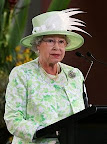
Today is also the anniversary of the coronation of Queen Elizabeth II, and the anniversary of our treaties — the first ever for America — with France is one of the reasons that I don’t have to kneel, genuflect, crawl, or bow low to Britain’s doddering impressive & shrewd monarch.
As one need not servilely defer to the monarch of an entire nation, there’s no need to do so for any much smaller, local versions of the same.
City
Nosek vs. Kienbaum, Part 3
by JOHN ADAMS •
Here’s the third of three preliminary posts on the Nosek-Kienbaum race for an at-large Common Council seat. I posted previously on Kienbaum’s advantages, Nosek’s opportunity to win despite them, and now offer remarks on Kienbaum’s best strategy for her (likely) victory. (Quick, obvious declaration – I support neither of these candidates.)
- Avoid Debate. Nosek would easily over-match Kienbaum in any debate between the two, every single time, were it not for his unfortunate tendency to overplay his hand. If Kienbaum could be assured of provoking Nosek, reliably at each encounter, there might be some value in debating him. It’s not enough, though, to hope that Nosek’s over-bearing manner will express itself to his detriment. He’s just much more adept, and even people who dislike his positions can see as much. Kienbaum’s best bet – one debate, softball forum, limited coverage, little public notice.
- Flyers/Campaign Statements with Substantive Positions. If Kienbaum’s not as strong as Nosek in a public forum, she can certainly appear as substantive and well-versed on paper. Anyone can, really. She is, after all, a contributor to the Whitewater Register, and if she can write for that fine publication, then she can put some words on paper that convey a serious understanding of the issues. Well, I suppose…
- Students. Don’t just gather student support – you have it! – make it a real issue of Nosek’s judgment. Use student spokespeople who are serious, dedicated, and can calmly declare that Nosek’s rhetoric is over-over—over-heated (death knell, neighborhoods where people still live being dead, etc.). Appear reasonable by contrast. How hard can it be?
- Community Charitable Activities. People vote on what they believe to be true, not the truth itself. Mention a few items from your CV, and that’s all you’ll need. If anyone questions you about the effectiveness of your community service, express outrage that anyone might question anything about you. What’s the point of being a long-tenured resident, if not to deflect the very questions that one so shamelessly hurls at others?
- The Status Quo Yes, yes, Dr. Nosek seems to represent a more traditional, back-to-basics Whitewater. That’s nonsense, though – only one candidate can be the true guardian of the past, revived and enshrined, eternally, as the present. Whitewater (old, stodgy Whitewater) loves the idea of an Unchanging Status Quo. Kienbaum must see that Nosek’s ordinance-enforcing vision is quite radical in its own way. However often he waxes nostalgic about an earlier Whitewater, Nosek doesn’t want containment, so to speak, he wants roll-back to an earlier time. He’s a dissenter from the status quo, one he often thinks has gone terribly wrong.
Whitewater prefers, strongly, a traditionalist over a dissenter.
Kienbaum should play up her careful public reputation as more moderate, traditional, and less doctrinaire than Nosek. More than anything else, it makes her seem a safer choice for the city. (Had Nosek been more light-hearted, more subtle, these last two years, Kienbaum would be vulnerable in this race. In his bombast Nosek gave a hostage to Fortune, and to Kienbaum, too.)
It’s Kienbaum’s race to lose, owing mostly to vulnerabilities in Nosek’s candidacy that she can exploit.
City
Nosek vs. Kienbaum, Part 2
by JOHN ADAMS •
Can Dr. Roy Nosek, acerbic scourge of ordinance infractions, defeat incumbent at-large Council member Marilyn Kienbaum? Yes, but it’s a long shot. I am no supporter of either candidate (cf. Kissinger, “It’s a shame they both can’t lose.”). Still, here’s Nosek’s tough-row-to-hoe path to victory:
- Debate. Debate Kienbaum as often as possible, on television or large public forums. Learn to be genuinely funny and deferential, if that’s even possible. If Nosek would only lighten up a bit, he’s serve his candidacy handsomely. Kienbaum cannot win a debate with Nosek, except on sympathy when he overplays his hand (as he does, at least 93.42% of the time).
- Lawn Signs. Nosek wants a voluntary moratorium on candidate lawn signs. I think it’s a bad idea, but also a bad idea for him. Most will correctly assume that grandmotherly Kienbaum will be the popular favorite, but some strategically-placed Nosek-for-Council signs will give him an aura of support, that might actually make others more inclined to him, or less certain of her inevitability. Nosek shouldn’t shy from signs, but rather fight her on that front.
- Door-to-Door. Nosek should visit every house in the city. As many as possible. Let each resident know that he’s running, and that he will talk to anyone.
- Public Forums. Be available to talk, even beyond visits to homes. Put up a card table and a sign somewhere. (The good doctor surely knows that he’ll have to comply with city regulations, but how could he not? No matter – none of those regulations will — or legally can — involve the mere content of his political speech. He’s entitled even if people don’t like him.
- Make a Video or Slides for Our Public Access Channel. This is risky for Nosek – someone will have to help him make sure it’s light, funny, and witty (that’s light and funny and witty as ordinary people understand the concept). He’ll need an editor. (If there’s one up now, then I’ve missed it.)
- Find a Student Spokesperson or Two for Support. There have to be a few quislings somewhere in the city. There are probably even tuna who’ll eat Starkist® , after all. Nosek needs some student supporters, and not just uptight ones. He’ll need a cadre who actually look and talk like mainstream students. Coeds would be ideal, really.
- Campaign Swag. Perhaps not a bad idea, if someone explains to Nosek what swag means.
- Self-Deprecating Humor. This won’t be easy for Nosek, but it’s an outside possibility. He could even have fun with a James Bond “Dr. No” persona. Corny, but why not dispel with a little humor fears that he’ll spend the next two years brow-beating city officials?
Next: How likely favorite Kienbaum wins the Council race, despite facing a more tenacious — by far — opponent.
City
Nosek vs. Kienbaum, Part 1
by JOHN ADAMS •
Dr. Roy Nosek, dentist-politician, is challenging incumbent Marilyn Kienbaum for her at-large seat on our Common Council. It’s not Ali-Fraser, but more Iran-Iraq, in my estimation, and an interesting contest. I’ve remarked before that “Whitewater just wouldn’t have its own unique students-within-a-tiny-cramped-corridor line and my-nostalgic-salt-of-the-earth-any-other-ideas-be-damned feel without such community treasures. ”
Over the last two years, since he took office in April, Dr. Nosek has played a more notable – indeed, notorious – role than any politician in the city. No one else is as well-known for a clear set of issues. I disagree with Nosek on every one of main concerns (student housing, dumpsters, signs, ordinance enforcement), but I admire his ability to make his issues known. Even causal followers of local politics know of Nosek, and are familiar with where he stands.
The same cannot be said for others on our Common Council, however more reasonable or temperate their views. Jim Stewart, Patrick Singer, Lynn Binnie, Max Taylor – no one who serves is as easily identified. Many of these other incumbents could not be readily connected to a single substantive program in the city. (I see that one need not be so identified to be successful; it’s merely true that Nosek is far better known for a set of positions.)
He’s hardly gentle, but then, I am not particularly shocked – as you can guess – by an assertive public stand. There is, despite all my dislike for his views, something refreshing about a man who really doesn’t seem to give a damn what people think. In a world of lemmings, or ostriches, Nosek is, well, not a lemming or an ostrich. I have satirized Nosek variously, but he’s surely no wallflower.
Nosek inclines to a community ordered through ordinances and regulations, and often likens infractions – even minor ones – to law-breaking. There’s not a lot of subtlety in Roy Nosek, and if there were, one would not see it for all his bluster, anyway.
Only Marilyn Kienbaum is as well-known as Nosek, for her manner, for her work on the food pantry, and as a contributor to the Whitewater Register. She benefits from a particularly effective public persona as a grandmotherly guardian of Ol’ Fashioned Common Sense and Wholesome, Home-Grown Whitewater values (such as they are). She’s an advocate of a certain, seemingly business-friendly approach, without an apparent understanding of markets, or free, voluntary exchange and association. (I would not – ever – consider her a libertarian. Quite the contrary, in fact.)
Kienbaum speaks, frequently, through metaphor and nostalgic reference. Nosek, by contrast, displays far more grasp of issues, whenever his unfortunate tendency to cause people to wince as he talks is not so distracting. For it all, despite her less-sure grasp, Kienbaum remains the favorite in this race.
Why?
- Kienbaum’s grandmotherly persona is all most people know of her. She seems so sweet and caring, so warm and friendly. She’s as local as local will ever be, and that helps her enormously, too. What she actually thinks about any number of things really doesn’t matter politically. She’s hardly Mother Angelica (with or without the eye patch Sister sometimes wears). That’s not all there sometimes is to a person. That she might flimsily espouse on any number of subjects isn’t worth anything to me. (It’s a shame that others, educated and mature, are so easily cowed, or duped.)
- Kienbaum’s also known for her food pantry work. I have no certain idea how the food pantry’s actually run, or how well it serves our community, but years of association with it helps Kienbaum enormously. That’s all many people know of her.
- Nosek’s anti-student rhetoric makes him a protest, minority candidate. Even many homeowners upset with housing issues, or supposed aesthetic concerns, likely find Nosek’s harsh statements (‘death’ of this or that) cringe-inducing. He’d be a much better columnist (or blogger) than politician – print is a warmer medium than in-person or television debate, but Nosek shows no understanding of those differences.
- Students will walk over broken glass, from every corner of the city, to vote against Nosek. Are there any students who support Nosek? No more by percentage than cows who support Burger King.
So, is Nosek, scourge of dumpsters, mourner of Tratt Street, doomed to lose to an incumbent who shows far less grasp, in my estimation, of political discourse? He’s not my candidate (nor is she!), but there is a path – however rocky and narrow – to victory for Dr. Roy Nosek, DDS.
Next: How Nosek can actually win against Kienbaum.
Daily Bread
Daily Bread: February 5, 2009
by JOHN ADAMS •
Good morning, Whitewater
There are no municipal public meetings today. The weekend comes early, Whitewater.

It’s a memorable date in Wisconsin history, today: On this date in 1849, the University of Wisconsin opened. The Wisconsin Historical Society tells of those early days —
On this day in 1849 the University of Wisconsin began with 20 students led by Professor John W. Sterling. The first class was organized as a preparatory school in the first department of the University: a department of science, literature, and the arts. The university was initially housed at the Madison Female Academy building, which had been provided free of charge by the city. The course of study was English grammar; arithmetic; ancient and modern geography; elements of history; algebra; Caesar’s Commentaries; the Aeneid of Virgil (six books); Sallust; select orations of Cicero; Greek; the Anabasis of Xenophon; antiquities of Greece and Rome; penmanship, reading, composition and declamation. Also offered were book-keeping, geometry, and surveying. Tuition was “twenty dollars per scholar, per annum.”
The Memoirs of Mrs. W.F. Allen, available online, recount the beginning of the university.
Register Watch™
Register Watch™ for the January 29th Issue: School District on Target for Budget.
by JOHN ADAMS •
Above the fold, far-right column, in the January 29th issue of the Register, one finds a blogger’s natural prey – an uncritical, one-sided view of a topic. It’s a story about our public school district’s budget. I would prefer, as I have written before, a robust private school alternative in Whitewater, alongside our public schools. We’re too small, it seems, for a private alternative. I would be less inclined toward, but still supportive of, those parents who wish to home-school their children. (It wouldn’t be my choice, but it should be theirs.)
School District on Target with Budget. We’ll, the headline’s the story – the school district budget is on target.
One quick question, though: What’s the target? The Whitewater Unified School District’s Business Manager, Jane Nikolai, reports that “All the percentages are real close to last year.” Well done, surely.
By these percentages, she describes, of course, the supposed financial health of the district. The budget, though, is not an end-in-itself, but a mere means to another, far greater end. A quick example illustrates this point.
Suppose I told you that the federal government could produce a new and innovative public program, at a cost of $220 billion dollars. The program would cost a bit less than initially estimated, down from an original figure of $245 billion.
Would you support the program?
Perhaps, but first you’d ask me: What’s the program?
I might give you two possibilities. Possibility One would be a program that, for $220 billion, would definitely produce an efficient, compact, reliable, fusion reactor design, easily constructed throughout cities in America. I would prefer that the whole program be privately undertaken, over several years’ time, but I’d listen to the public works proposal for such an extraordinary achievement.
Possibility Two, for the same $220 billion (remember, down from $245 billion!), would be a federally-controlled chain of Hardee’s style restaurants near bus terminals, train stations, vacant lots, and skid rows across America. (Set aside, for the moment, that the private sector has already achieved as much.)
Would you support, or oppose, these possibilities equally? Probably not. The $220 billion seems more or less reasonable when considered as a substantive proposal, for definite ends and goals.
A few quick questions, then, for district leaders – each sincere — some serious, some light. The answers should be known to every leader in our district, as the metrics that matter more – far more — than the budget.
- How do Whitewater students perform on basic measures of academic performance, against other students in the state? Is their performance better or worse relative to others now, as against five, or ten years’ time, ago?
- How many students read at or above grade level in our elementary schools, compared to students from other districts (excluding ones with extreme poverty, like Milwaukee)?
- How many students, each year, drop out of school in our district?
- How many languages do we offer in our schools? Spanish, French, yes, but what else?
- How many canonical works of literature are taught – not just mentioned – in our schools? How long do students spend on a given work? Other than American and British literature, what else is taught to interested students?
- Do students readily know that they may take university courses if our district does not offer a course for them? Are they encouraged to do so?
- How many students will attend post-secondary education upon graduating this year? Is that number more or less than five, ten years ago?
- Where will they attend, if they attend post-secondary education?
- How many of these students, attending colleges outside the area, will return to live in Whitewater?
- Is there anything interesting about calculus? Why study that subject? Is it more, somehow, than notations on a page?
- For the natural sciences that we teach, is there a history and sociology of them, too, that might add color and understanding to the problems we ask our students to solve?
- When is the last time our District Administrator walked into a classroom, and had a substantive discussion with students about history, philosophy, art history, trigonometry, biology, agricultural science, or music. A full discussion, animated and interesting, than neither students nor Administrator wanted to end?
Now, I am not a teacher. Sorry, professional educator, or doctor of whatever field. Imagine a world – ours, sadly — where ‘teacher’ is role and title not enough. There was a time when a great people, first in the wilderness, yet later setting the foundation for our way of life, saw the honor in calling someone ‘Rabbi.’ No longer – we must be titled more elaborately now. Teacher was, and should be, enough.
I have, at least occasionally, opened a book, and read it, and done so without feeling the need for anyone’s permission. A free person needs no license to read, either from government, or any number of self-important town squires. He does need, though, the desire to pick up a book, apart from any program or class, and enjoy it.
School ends for all of us. Yet we might do ourselves and our children the service of lifetime learning, far beyond cold metrics, if we would instill that desire forever.