FREE WHITEWATER

The Orange Salamander for 10/7/08

Small pewter box, unmarked Inside: orange plastic salamander & note, folded in thirds

The note: ‘Walk Swim More Talk Write More Never a Chore’ Notebook paper, cut unevenly, folded awkwardly

Odd handwriting in blue ink Confident, bold Spoof? Mental patient? Politician? All possibilities

Felicia asks me what it means I don’t know Unusual acquaintances? Anyone/anything different? She stares back at me

Salamander left at her office door this morning I take the items, head to my place to ponder The Clergyman drives past

The Orange Salamander for 10/6/08

Last real danger was two years ago, ending in capture and commitment of Loretta a.k.a. ‘Lottie the Psycho’ Only caught after confession on live TV

Since Lottie, garden variety crime and administrative mediocrity are enjoying an extended run before packed houses each night

Felicia the MBA: friends with ex-wife #2, still cordial Smart, hard-working, clever What we’d like to be if we stopped insisting we already were

Elderly Betty Crockman walks by Called Betty Crock o’ for her b.s. Sure she hears God’s voice in her own humble opinions

I step inside Felicia’s office She looks concerned Have you ever seen something like this? she asks, as she pushes a small metal case toward me

On (Easy) Stories by Criminal Complaint

Most newspapers have a ‘police blotter’ or ‘public record’ column, listing those who have been ticketed for speeding, failing to yield, etc.  These are often simple, summary offenses.  Pay a fine, that’s it. No appearance necessary. 
 
Police blotter columns tell a tale from one side only, without acknowledgement of possible over-reach.  Still, they’re so much a part of our press tradition that they’re likely to stay even if newspapers decline further. 
 
It’s different, though, when longer stories in a paper rely solely on a criminal complaint as the source of information about a serious charge. It’s foolish to treat a criminal complaint as though it were the very truth of a defendant’s conduct.  
 
Allegations may be substantially correct, tactical bargains, unwittingly erroneous, or deliberate over-reach.       
 
It’s tempting for a reporter to print a complaint’s allegations without rebuttal or questions – (1) it’s easy, and (2) reporters on a crime beat want and need access to police and prosecutors.  They may feel that unless they run stories the way prosecutors want, they’ll lose access.
 
Often, the story on the complaint will run without any follow-up or investigation. 
 
It’s hard to take an independent line, but that’s journalism, or blogging.  That’s the gig – take it, or play elsewhere.  (Political blogging’s developed, in part, because bloggers saw that newspapers took the easiest way out – aligning with one powerful politician or another, in the city, county, state.)
 
Newspapers are in decline for lots of reasons, but I think this is one: too close to one party, politician, career appointee, prosecutor, activist, etc.  The belief, too, that there’s no harm in that, and that representing an incumbent’s brings no conflicts, that somehow that view is objectively true, fair, or enlightened. 
 
Our criminal law – no matter how evolved — has never been so simple.

Register Watch™ for October 2nd: Patrol Cars

On the back page of the paper is a brief, unattributed story entitled, “Whitewater police patrol cars are sporting two new additions.”
 
On Media Relations.  There’s a false theory that says that if you repeat the same information enough times, people will believe what you’ve said, regardless of how erroneous it might be. 

It’s nonsense.  It just gives more opportunity to (1) rebut the story, and (2) show that those flacking the story are rigid and incapable of acknowledging error. 
 
There’s one other mistake – these stories told in the Register gain no new ground.  Some die-hard Register subscribers probably think that Christ Himself was baptized in waters of Cravath, before preaching against the supposed sinfulness of student renters and immigrants.  
 
To the author of “Whitewater police patrol cars are sporting two new additions” – you already had this audience, for goodness’ sake.  If you think you need to bolster the spirits of this group, then you have nowhere left to turn.         
 
“We need to get our story out” only works if the story’s not so easily dismissed.  The narrow team that considers how to present the city’s story only makes things worse for itself.  Phrases like ‘civil discourse,’ ‘fairly innocuous,’ or ‘we’re not doing our jobs if we’re not criticized’ are futile, and counter-productive. 

They’re one step removed from the trite sports phrases of Bull Durham: ‘one day at a time,’ ‘just happy to be part of the club,’ etc.   

This approach shows rigidity, and appears increasingly foolish the farther one goes from a small circle of would-be town squires. 

The whole group’s a minority in town, and nothing outside of it.  A story like this looks like a parody, like something from the Onion, to those not so ignorant that they confuse their friends with society itself.     

These subscribers are not a persuadable audience; one can, however, easily point out the Register‘s reactionary, statist views to a wider, more reasonable audience. 
 
Keep the Register – declining year-over-year; bloggers will happily take the Web.   
 
On Accreditation.  Part of the story is about the accreditation of the Whitewater Police Department.   The Register‘s press release story on patrol cars is like that – how many times can one paper hawk the same shoddy goods? 
 
So much leadership effort for an accreditation, and facing rebuttals to it, leaves the author of this article with nothing but repetition. 

(Not even full repetition, but the abandonment of the most ludicrous contention – that completing a checklist of hundreds of standards -220, 200, 300, whatever – is a meaningful accomplishment.)           

On accreditation, see my assessment, made before, but just as true now:

I have previously posted showing how accreditation is an empty honor. See, for example, “Whitewater Police Department Re-Accreditation”.

In that post, I noted that

(1) accreditation effort is self-selected,
(2) measuring hundreds of checklist items is trivial,
(3) accreditation evaluators are often favorable representatives of nearby departments,
(4) accreditation ignores sensible standards that serious, unaffiliated institutions and organizations have proposed that directly concern the most important matters in policing.
 
On Foggy-Headed Notions of Professionalism.  Here’s the final paragraph of the story:
 
“It is believed that the department’s black and white squad cards [sic] with new light bars and accreditation decals combine to project a very positive and professional imagine for the department.”
 
These are men and women who talk about image, etc., in a community that needs what’s inside, not what’s outside.  What Augustine’s paraphrased as saying about the Ancients is true about this notion of professionalism: these supposed virtues are merely resplendent vices.       

Professionalism is conduct, above appearance.  No uniform allowance, shiny paper decals, or plastic LED lights atop a car will make a man or woman more professional for this community.   
 
This is a child’s notion of being a professional: carrying a stethoscope does not make one a doctor.  Where is the patrol officer’s celebration – true, genuine, unforced – of accreditation?  There’s no picture like that. 
 
Neither car, nor decal, nor lights are sworn to uphold anything.  People alone make the true difference – good or bad.

Daily Bread: October 7, 2008

Good morning, Whitewater

Today, beginning at 6:15 p.m., there will be a meeting of Whitewater’s Nominations Committee. Afterward, at 6:30 p.m. there will be a meeting of the World’s Finest Deliberative Body Whitewater’s Common Council. The agenda for the council session is online at the city’s website.

In our schools today, Pennies for Patients continues at Lakeview and Washington Schools, and at 6:30 p.m. there will be a PTA meeting at Lakeview School.

The National Weather Service predicts today will bring thunderstorms (70% chance) with a high of 67. The Farmers’ Almanac predicts “squalls especially Great Lakes area.”

Yesterday’s better prediction: NWS — no squalls in Whitewater yesterday.

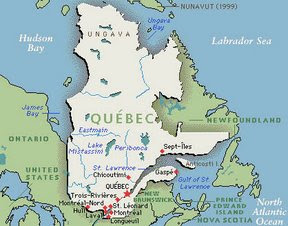
On this day in history, in 1774, an odd moment in our history — Wisconsin became part of Quebec. Here’s the tale, from the Wisconsin Historical Society:

On this date Britain passed the Quebec Act, making Wisconsin part of the province of Quebec. Enacted by George III, the act restored the French form of civil law to the region. The Thirteen Colonies considered the Quebec Act as one of the “Intolerable Acts,” as it nullified Western claims of the coast colonies by extending the boundaries of the province of Quebec to the Ohio River on the south and to the Mississippi River on the west.

What it’s like now —

What we missed —

Register Watch™for the October 2nd Issue of the Paper

Today offers a multipart Register Watchh™ for the October 2nd issue of the paper.  In this first post, I’ll survey the newspaper in transition.
 
Bye Bye Bylines.  The most notable change in the paper is the absence of bylines, anywhere on the front page.  America has traditionally celebrated a free press, and countless films, books, and stories champion small, plucky newspapers.  We’re right to do that – America’s an exceptional place, in part, because she’s a free place. 
 
In all those cases of small-town pride, the newspaper’s a careful, loving work, where the editors, reporters, photographers claim ownership over the whole paper.  (That’s true of most blogs, too – they are typically the work of one person, the same person, sometimes writing under a pseudonym, as was common earlier in our history.) 
 
When the Register goes from prominent editor to no bylines on the front page, it’s a sign that the Register‘s not the sort of hometown paper America’s lionized elsewhere.  It’s part of a larger chain, lacking the quaint charm and plucky skepticism of government befitting heroic, small-town papers.
 
All of the principal stories on the front page read like press releases.  They’re not even edited to alter that suspicion.  In the above-the-fold story entitled “City receives Transportation Enhancement grants for two projects,” the third paragraph begins, “Special thanks to Mary Nimm and Matt Amundson who wrote the grant applications for the city….” Is the paper offering thanks, as an editorial, or is this someone else’s work, unedited to disguise original authorship?  I can’t tell.  [I will assume that Amundson and Nimm deserve thanks.  That’s not my concern; it’s that this newspaper does so little to meet simple reportorial standards.]  
Someone once wrote to me and remarked that perhaps the Register does not pay well, and that’s the problem with finding good, interesting writers.  I have no idea about compensation that the Register offers reporters, editors, etc. 
 
I’ll offer two replies: (1) there are surely writers and editors who would have done more for this paper for less than it pays now, whatever that is, and (2) the Register‘s not been unwilling to take an active point of view, infused in the supposedly neutral stories it runs on most pages.  There’s been ample energy for particular ideas presented as news stories, however the chain compensates.

More to come…

The Orange Salamander for Last Week

The Orange Salamander describes a small-town mystery, but ‘small-town mystery’ is as conventional as the story’s description gets. If you mixed a hard-boiled crime story with a cyberpunk novel, and asked a non-writer to write it, The Orange Salamander is what you might get.

The sound of waves crashing against the beach repeats every 42 seconds. Less than a minute and a seagull squawks again.

I could measure time easily if the pattern repeated every 60 seconds. Instead: 42, 84, 126. Two minutes gone. Forever.

I reach up, turn off the machine. Without ocean sounds, I can’t sleep. Is my conscience heavy? No, I’m just masking the sounds of town.

No ocean nearby. No seagulls. Just students, dogs, drunks. I like the first two, tolerate the third. It’s my sensitive side.

Millhaven: rural college town, miles from the big city. Locals, immigrants, newcomers, students. Four towns: unshaken, unstirred.

I live downtown, above the Agneau Grille, a Tunisian restaurant. Tasty lamb requires no passport.

Restaurants, bars, small shops behind aging facades. Banners welcoming returning students, faded flyers in windows.

Outside, cool autumn air. Cigarette butts on sidewalk – tokens of indifference, rebellion. I smile, lighting a Lucky Strike.

A fat man walks by, eyeing a bakery’s cherry pie. The bakers are brothers, nicknamed the Pie Men. They do everything together.

A scone and a cup of kona to go. Real kona, but Hawaiian means something else to the Pie Men, Ronnie and Donnie. They seem almost sober.

ow are you, Ronnie asks. We saw Sophie. Ex-wife number two, back on campus after sabbatical. His way of warning me. Thanks.

The mayor walks in. Our first mayor, first term. Gray hair, gray suit, blue tie, blue blood of Millhaven’s hue. Pale blue, watercolor.

The mayor glances dismissively my way. He opposed the office, ran when we adopted it, will rely on apathy to hold it. Not a bad bet.

Part-time mayor, full-time defender of convention, tradition, propriety. Private club manners, if the club’s small, decaying, dull.

We’re a town without left or right – incumbency is the only political party. Get office, justify conduct, keep office. Our way, since forever.

eople drift to work, starting early to end early. Local notables pass outside, the mayor leaves, to make Millhaven more orderly

Lyons, the university president for a decade, passes – a smug and subtle cheerleader Does what town fathers ask Considers student silence golden

Phil Bartram, city planning consultant, here a year, seems longer Thinks a half-Windsor’s a short arisocrat Crush on Felicia the MBA

Felicia the MBA, of the college-city-business task force We’ve a task force for every issue incumbents won’t tackle Say, 8 or 9, minimum

City workers hang a banner across Main Street with Millhaven’s logo and a new slogan: We’ll Make Our Way Your Way – Just You Wait!

Daily Bread: October 6, 2008

Good morning, Whitewater

In Whitewater today, beginning at 5 p.m., there will be a meeting of the Park & Recreation Board. The agenda for the meeting is available online.

In our schools today, there will be a special meeting of the School Board at 6:30 p.m.

In events that directly and immediately affect students (without the delay, ambiguity, or hidden effects of policy), Pennies for Patients takes place at Lakeview and Washington, there are picture re-takes at the High School, and Music Parents will meet at 6:30 at the High School.

The National Weather Service predicts today will be partly sunny and have a high of 70. The Farmers’ Almanac predicts “squalls especially Great Lakes area.” They won’t both be right.

Last week’s better prediction: NWS, again.

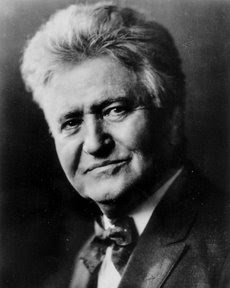
On this day in history, in 1917, a proud and worthy moment in Wisconsin history: Robert La Follette’s support of free speech in wartime. The Wisconsin Historical Society recounts that moment:

On this date Senator Robert La Follette gave what may have been the most famous speech of his Senate career when he responded to charges of treason with a three hour defense of free speech in wartime. La Follette had voted against a declaration of war as well as several iniatives seen as essential to the war effort by those that supported U.S. involvement in the first World War. His resistance was met with a petition to the Committee on Privileges and Elections that called for La Follette’s expulsion from the Senate. The charges were investigated, but La Follette was cleared of any wrong doing by the committee on January 16, 1919.


The Orange Salamander for 10/3/08

People drift to work, starting early to end early. Local notables pass outside, the mayor leaves, to make Millhaven more orderly

Lyons, the university president for a decade, passes – a smug and subtle cheerleader Does what town fathers ask Considers student silence golden

Phil Bartram, city planning consultant, here a year, seems longer Thinks a half-Windsor’s a short arisocrat Crush on Felicia the MBA

Felicia the MBA, of the college-city-business task force We’ve a task force for every issue incumbents won’t tackle Say, 8 or 9, minimum

City workers hang a banner across Main Street with Millhaven’s logo and a new slogan: We’ll Make Our Way Your Way – Just You Wait!
Daily Bread: October 3, 2008

Good morning, Whitewater

Throughout the city today, it’s UW-W’s Make a Difference Day. Volunteers from the UW-Whitewater students and staff, and Whitewater residents and employees will come together for community service projects.

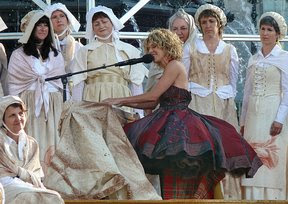
Here’s an inspirational song for everyone in campus and town, working today at Make a Difference Day, to make life here better. It’s from the 2007 film, Enchanted. The campus and its students enrich and benefit our community in countless ways, today being only one example.


The National Weather Service predicts today will be sunny with a high of 59. The Farmers’ Almanac predicts today will be “fair and cold.”

Yesterday’s better prediction: NWS, again.

In our schools today and tonight — Homecoming, with a parade beginning at the high school this afternoon. more >>

The Orange Salamander for 10/2/08

How are you, Ronnie asks. We saw Sophie. Ex-wife number two, back on campus after sabbatical. His way of warning me. Thanks.

The mayor walks in. Our first mayor, first term. Gray hair, gray suit, blue tie, blue blood of Millhaven’s hue. Pale blue, watercolor.

The mayor glances dismissively my way. He opposed the office, ran when we adopted it, will rely on apathy to hold it. Not a bad bet.

Part-time mayor, full-time defender of convention, tradition, propriety. Private club manners, if the club’s small, decaying, dull.

We’re a town without left or right – incumbency is the only political party. Get office, justify conduct, keep office. Our way, since forever.