
Life in Western Mongolia is an adventure. Training eagles to hunt, herding yaks, and racing camels are just a few of the daily activities of the nomadic Kazakh people. I spent a few weeks living with them and experiencing one of the most unique cultures in the world. Saddle up and enjoy the ride.
Select clips from this video are available for licensing. For inquiries: licensing@unscripted.com
licensing.unscripted.comOriginal score by Max LL
www.maxll.caFollow me on Instagram: @brandon_l_li
Bali: vimeo.com/136405903
Tokyo: vimeo.com/129171397
North India: vimeo.com/116044343
Barcelona: vimeo.com/99401340
Dubai: vimeo.com/88224399
Turkey: vimeo.com/106755674
South India: vimeo.com/113689725
Arabia: vimeo.com/86774980
Las Vegas: vimeo.com/147458521
Australia: vimeo.com/98652051
Guam: vimeo.com/138830005camera:
Sony A7rii
Sony RX10ii
GoPro Hero 4 Black
Daily Bread
Daily Bread for 1.5.16
by JOHN ADAMS •
Good morning, Whitewater.
Tuesday in town will be mostly sunny with a high of thirty. Sunrise is 7:25 and sunset 4:35, for 9h 10m 10s of daytime. The moon is a waning crescent with 20.6% of its visible disk illuminated.
An ad hoc group from the Urban Forestry Commission (Heritage Tree Committee) meets today at 4:30 PM.
On this day in 1933, construction begins on the Golden Gate Bridge:
The Golden Gate Bridge is a suspension bridge spanning the Golden Gate strait, the one-mile-wide (1.6 km), three-mile-long (4.8 km) channel between San Francisco Bay and the Pacific Ocean. The structure links the U.S. city of San Francisco, on the northern tip of the San Francisco Peninsula, to Marin County, bridging both U.S. Route 101 and California State Route 1 across the strait. The bridge is one of the most internationally recognized symbols of San Francisco, California, and the United States. It has been declared one of the Wonders of the Modern World by the American Society of Civil Engineers.[7]
The Frommers travel guide considers the Golden Gate Bridge “possibly the most beautiful, certainly the most photographed, bridge in the world”.[8] It opened in 1937 and was, until 1964, the longest suspension bridge main span in the world, at 4,200 feet (1,300 m)….
Construction began on January 5, 1933.[9] The project cost more than $35 million,[29] completing ahead of schedule and under budget.[30] The Golden Gate Bridge construction project was carried out by the McClintic-Marshall Construction Co., a subsidiary of Bethlehem Steel Corporation founded by Howard H. McClintic and Charles D. Marshall, both of Lehigh University.
Today is the birthday of a socialist whose supposedly successful community proved – predictably – anything but successful:
1813 – Utopian Community Leader Warren Chase Born
On this date the founder of a Fourierite Utopian community in what is now Ripon was born. Their inspiration came from the writings of Charles Fourier, a French Socialist who urged the rebuilding of society from its foundation as the only cure for economic ills such as the depression of 1837. The idea was supported by Horace Greely in New York and caught the eye of Warren Chase. Chase and others built a successful, non-religious communal society in which everyone received wages according to their skill, need, and work ethic.
The community reached their greatest population (180) in 1845 but soon dissipated when members began moving toward agriculture as an economic tool. Families gradually left the community to live in their own houses and work their own land in the same area. In 1850, the community disbanded and $40,000 in assets was divided among the remaining members. Warren Chase moved around the country and finally settled in California, where he held many public offices. [Source: Wisconsin Saints and Sinners by Fred L. Holmes, p. 94-104]
Here’s the Tuesday game in this week’s Sweet Sixteen series from Puzzability:
|
This Week’s Game — January 4-8
|
|||||
|
Sweet Sixteen
|
|||||
|
Happy 2016! For each day this week, we’ll give an eight-letter word or phrase and a trivia question. The 16-letter answer to that question (a title, name, or place) uses only the eight letters given.
|
|||||
|
Example:
|
|||||
|
HISTOGEN: What Rod Stewart song was his first U.S. #1 after “Maggie May,” five years later?
|
|||||
|
Answer:
|
|||||
|
“Tonight’s the Night”
|
|||||
|
What to Submit:
|
|||||
|
Submit the 16-letter title, name, or place (as “Tonight’s the Night” in the example) for your answer.
|
|||||
 |
|||||
|
Tuesday, January 5
|
|||||
|


Nature
Mystery of the Devil’s Kettle
by JOHN ADAMS •
WGTB, WHEN GREEN TURNS BROWN
What’s a Greenhouse Gas?
by JOHN ADAMS •
 Post 54 in a series. When Green Turns Brown is an examination of a small town’s digester-energy project, in which Whitewater, Wisconsin would import other cities’ waste, claiming that the result would be both profitable and green.
There are two points to this post about Whitewater’s waste-importation proposal. First, one can state a simple fact about methane; second, one can easily deduce what this says about the seriousness of the full-time city officials in Whitewater, Wisconsin who have advanced a supposedly clean and green process of turning others’ unwanted filth into methane.
First, the simple fact is that – far from being environmentally friendly – methane is an environmentally destructive greenhouse gas:
A greenhouse gas (sometimes abbreviated GHG) is a gas in an atmosphere that absorbs and emits radiation within the thermal infrared range. This process is the fundamental cause of the greenhouse effect.[1] The primary greenhouse gases in Earth’s atmosphere are water vapor, carbon dioxide, methane, nitrous oxide, and ozone. Without greenhouse gases, the average temperature of Earth’s surface would be about 15 °C (27 °F) colder than the present average of 14 °C (57 °F).[2][3][4] In the Solar System, the atmospheres of Venus, Mars andTitan also contain gases that cause a greenhouse effect.
Human activities since the beginning of the Industrial Revolution (taken as the year 1750) have produced a 40% increase in the atmospheric concentration of carbon dioxide, from 280 ppm in 1750 to 400 ppm in 2015.[5][6] This increase has occurred despite the uptake of a large portion of the emissions by various natural “sinks” involved in the carbon cycle.[7][8]Anthropogenic carbon dioxide (CO2) emissions (i.e. emissions produced by human activities) come fromcombustion of carbon-based fuels, principally coal, oil, and natural gas, along with deforestation.[9]
It has been estimated that if greenhouse gas emissions continue at the present rate, Earth’s surface temperature could exceed historical values as early as 2047, with potentially harmful effects on ecosystems, biodiversity and the livelihoods of people worldwide.[10]
Second, although I’ll produce a far longer, peer-review-sourced assessment of methane’s dangers later in this series, even a cursory review of methane’s impact would have suggested to Whitewater’s City Manager Cameron Clapper and Wastewater Superintendent Tim Reel that methane production is destructive to the environment.
It’s hard to overstate how troubling this is, as a policy matter: either Messrs. Clapper and Reel are incapable of anything more than lightweight, erroneous, vendor-inspired work, or they could do better but feel that lightweight, erroneous, vendor-inspired work is all that Whitewater’s residents deserve.
Those who sat in rooms and listened to presentations from Clapper and Reel in which they touted methane as a good byproduct of waste importation heard junk science in the place of reasoning, a selling job over a sound job.
There’s much on which to focus, on the science side, later in this series. I certainly don’t think a link to Wikipedia settles this matter – I think a link to Wikipedia shows that Clapper in particular hasn’t – after two years’ time – even begun to consider this matter properly.
Repeating vendors’ talking points, especially repeating the same discredited points over and over, is unworthy of a salary, particularly one derived from the taxes of so many struggling working people in a small rural town.
WHEN GREEN TURNS BROWN: Mondays @ 10 AM, here on FREE WHITEWATER.
Music
Monday Music: Art Blakey, Say Dr. J
by JOHN ADAMS •
Daily Bread
Daily Bread for 1.4.16
by JOHN ADAMS •
Good morning, Whitewater.
Our first work week of the year begins today, and I hope you’re looking forward to it as I am. Challenges await our city, but nothing that cannot be overcome, and much to which we can look forward. We have a day of partly cloudy skies and twenty-six degrees for a high. Sunrise is 7:25 and sunset 4:34, for 9h 09m 06s daytime. The moon is a waning crescent with 28.9% of its visible disk illuminated.
A quick note – I had promised posts on how UW-Whitewater (and now the UW System) have addressed sexual assault. I’ve delayed the posts only to consider to additional information. It’s a serious subject, and an ongoing one for this city (and state). I’ll publish posts when they’re ready, with the understanding that there will be more policy developments to address throughout the year. It seems there will, sadly, always be the risk and occurrence of some violence in society; there needn’t, by contrast, be any administrative self-protection and mendacity in a well-ordered society.
On this day in 2004, the American rover Spirit landed on Mars:
Spirit, also known as MER-A (Mars Exploration Rover – A) or MER-2, is a robotic rover on Mars, active from 2004 to 2010.[1] It was one of two rovers of NASA‘s ongoing Mars Exploration Rover Mission. It landed successfully on Mars at 04:35 Ground UTC on January 4, 2004, three weeks before its twin, Opportunity (MER-B), landed on the other side of the planet. Its name was chosen through a NASA-sponsored student essay competition. The rover became stuck in late 2009, and its last communication with Earth was sent on March 22, 2010.
The rover completed its planned 90-sol mission. Aided by cleaning events that resulted in higher power from its solar panels, Spirit went on to function effectively over twenty times longer than NASA planners expected. Spirit also logged 7.73 km (4.8 mi) of driving instead of the planned 600 m (0.4 mi),[5] allowing more extensive geological analysis of Martian rocks and planetary surface features. Initial scientific results from the first phase of the mission (the 90-sol prime mission) were published in a special issue of the journal Science.[6]
Puzzability begins the year with a series entitled, Sweet Sixteen:
|
This Week’s Game — January 4-8
|
|||||
|
Sweet Sixteen
|
|||||
|
Happy 2016! For each day this week, we’ll give an eight-letter word or phrase and a trivia question. The 16-letter answer to that question (a title, name, or place) uses only the eight letters given.
|
|||||
|
Example:
|
|||||
|
HISTOGEN: What Rod Stewart song was his first U.S. #1 after “Maggie May,” five years later?
|
|||||
|
Answer:
|
|||||
|
“Tonight’s the Night”
|
|||||
|
What to Submit:
|
|||||
|
Submit the 16-letter title, name, or place (as “Tonight’s the Night” in the example) for your answer.
|
|||||
|
|||||
|
Monday, January 4
|
|||||
|

Animals, Animation, Science/Nature
Sunday Animation: The Living Fossil Fish
by JOHN ADAMS •
Daily Bread
Daily Bread for 1.3.16
by JOHN ADAMS •
Good morning, Whitewater.
Sunday look much like yesterday: cloudy in the morning, sunny in the afternoon, with a high of thirty. Sunrise is 7:25 and sunset 4:33 for 9h 08m 06s of daytime. The moon is a waning crescent with 36.8% of its visible disk illuminated.
Friday’s FW poll asked readers if, on New Year’s Day, they’d watch a college football game. Most respondents (76.47%) said yes, that they would watch one.
Two-thousand fifteen saw (at least) 83 rocket launches. Here are those 83:
On January 3rd, 1777, following his earlier victories at Trenton and Assunpink Creek, Washington is again victorious at Princeton:
The Battle of Princeton (January 3, 1777) was a small battle in which General George Washington‘s revolutionary forces defeated British forces near Princeton,New Jersey.
On the night of January 2, 1777 George Washington, Commander-in-Chief of the Continental Army, repulsed a British attack at the Battle of the Assunpink Creek inTrenton. That night, he evacuated his position, circled around General Lord Cornwallis‘ army, and went to attack the British garrison at Princeton. Brigadier GeneralHugh Mercer of the Continental Army clashed with two regiments under the command of Lieutenant Colonel Charles Mawhood of the British Army. Mercer and his troops were overrun and Washington sent some militia under Brigadier General John Cadwalader to help him. The militia, on seeing the flight of Mercer’s men, also began to flee. Washington rode up with reinforcements and rallied the fleeing militia. He then led the attack on Mawhood’s troops, driving them back. Mawhood gave the order to retreat and most of the troops tried to flee to Cornwallis in Trenton….
The British viewed Trenton and Princeton as minor American victories, but with these victories, the Americans believed that they could win the war.[43]American historians often consider the Battle of Princeton a great victory, on par with the battle of Trenton, due to the subsequent loss of control of most of New Jersey by the Crown forces. Some other historians, such as Edward Lengel consider it to be even more impressive than Trenton.[4] A century later, British historian Sir George Otto Trevelyan would write in a study of the American Revolution, when talking about the impact of the victories at Trenton and Princeton, that “It may be doubted whether so small a number of men ever employed so short a space of time with greater and more lasting effects upon the history of the world.”[51]
City
Whitewater Predictions for 2016
by JOHN ADAMS •
Here’s my amateur version of the late William Safire’s long-standing tradition of offering annual predictions. The list for 2016, the FW ninth-annual edition:
1. Whitewater’s economy will
A. Expand along with the American economy
B. Expand more slowly than the American economy
C. Be stagnant
D. Fall into recession
2. For the Whitewater Schools, the biggest issue will be
A. Budgetary
B. Academic
C. Athletic
D. Of the arts and music
3. Local government’s efforts to reach out, generally, to residents to encourage participation in government affairs will be a
A. Smashing success
B. Slight success
C. Slight disappointment
D. Significant disappointment
4. Local government’s efforts to reach out, specifically, to Hispanic residents to encourage participation in government affairs will be a
A. Smashing success
B. Slight success
C. Slight disappointment
D. Significant disappointment
5. In the April 5 primary election, Whitewater’s electorate will be
A. Predominantly Democratic
B. Predominantly Republican
C. Roughly split between the major parties
D. Impossible to determine
6. In the November 8 general election, Whitewater’s electorate will be
A. Predominantly Democratic
B. Predominantly Republican
C. Roughly split between the major parties
D. Impossible to determine
7. On November 8, Whitewater will vote between major-party candidates
A. Clinton and Rubio
B. Clinton and Cruz
C. Sanders and Bush
D. Sanders and Trump
8. For UW-Whitewater, the biggest issue will be
A. Budgetary
B. Academic
C. Athletic
D. Campus relations and sexual assault prevention
9. The biggest community event of 2016 will be the
A. July 4th events @ Cravath
B. City Market
C. Christmas Parade
D. Run Whitewater
10. The surprising development of 2016 will be the
A. Discovery of gold beneath the Starin Park water tower
B. Discovery of a witches’ coven beneath the Starin Park water tower
C. End of one local print newspaper
D. Departure of one local leader
Adams’s guesses for 2016:
1. Whitewater’s economy will
C. Be stagnant. Huge public spending, with even millions more due in the next few years, will leave Whitewater mired in an uncompetitive position.
2. For the Whitewater Schools, the biggest issue will be
A. Budgetary. Budgetary, sadly, as this district can’t get traction on any other issue. Efforts to tout academic accomplishments even when sincere are far less read than insiders think (or hope). It’s mostly the same small circle of people reading and writing for each other.
3. Local government’s efforts to reach out, generally, to residents to encourage participation in government affairs will be a
D. Significant disappointment. Local government can’t sell itself on a message of perimeter fence-building and come on gang, let’s put on a show. Whitewater’s local government has reached peak cheerleader: what insiders describe as all Whitewater is now a declining minority within the city.
4. Local government’s efforts to reach out, specifically, to Hispanic residents to encourage participation in government affairs will be a
D. Significant disappointment. Local government can’t sell itself on a Spanish-language message of perimeter fence-building and come on gang, let’s put on a show. Whitewater’s local government has reached peak cheerleader: the Hispanic community in Whitewater is a growing minority within the city, one that doesn’t need locals to guide them in a feeble, pro-government direction.
5. In the April 5 primary election, Whitewater’s electorate will be
C. Roughly split between the major parties. Republicans may still have a presidential primary race on their hands; Democrats will have settled on Sec. Clinton by April 5. What might otherwise be a predominantly Democratic electorate in a presidential year will be less so in April, where Democrats will have less immediately at stake.
6. In the November 8 general election, Whitewater’s electorate will be
A. Predominantly Democratic. Not hard to pick this one – the Democratic candidate will carry the city, and the state.
7. On November 8, Whitewater will vote between major-party candidates
B. Clinton and Cruz. Sec. Clinton will, effectively, wrap up the primary race by April; Sen. Cruz will win in a more protracted GOP primary contest.
8. For UW-Whitewater, the biggest issue will be
D. Campus relations and sexual assault prevention. This issue’s not going away; attempts to ignore the issue will make matters far worse. The UW System, itself, will find this a 2016 issue, beyond UW-Whitewater (although our local campus is an administrative bastion of act utilitarians.)
9. The biggest community event of 2016 will be the
A. July 4th @ Cravath. July 4th wins, but the Discover Whitewater series is probably secure as an ongoing Whitewater tradition (the fourth annual’s on 9.18.16).
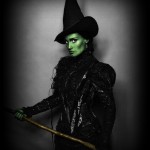 10. The surprising development of 2016 will be the
B. Discovery of a witches’ coven beneath the Starin Park water tower. Whitewater – a beautiful but sometimes troubled place – certainly has at least one witch left, waiting to make her reappearance. We needn’t worry – here in our version of the Emerald City, I’ve no doubt that she will meet her Oz.
All will be well.
Daily Bread
Daily Bread for 1.2.16
by JOHN ADAMS •
Good morning, Whitewater.
The second day of the year will be, for Whitewater, sunny with a high of twenty-nine. Sunrise is 7:25 and sunset 4:32, for 9h 07m 11s of daytime. The moon is a waning crescent with 46.7% of its visible disk illuminated.
One can be sure that a Star Wars tide has swept all before it when Sarah Reich tap dances to a medley from that film series –
1863 – (Civil War) Final day of Battle of Stones River, Tennessee
This was the final day of the Battle of Stones River, near Murfreesboro, Tennessee. The 1st, 10th, 15th, 21st and 24th Wisconsin Infantry regiments and 3rd, 5th, 8th, and 10th Wisconsin Light Artillery batteries participated. The 21st was in the forefront all three days. The 24th lost nearly 40 percent of its men and almost all its officers. The two sides had traded control for three days until they both withdrew and the Union took possession of the field. The rich farmland meant to feed the Confederates now supplied the Union.
City
Review: Whitewater Predictions for 2015
by JOHN ADAMS •
Here’s my amateur version of the late William Safire’s long-standing tradition of offering annual predictions. This was the list for 2015, the FW eighth-annual edition. Let’s see how I did:
1. The biggest policy discussion of 2015 will be
A. City of Whitewater’s scrutiny of vendors
B. Campus culture and policies
C. Police Department community relations
D. Over debates about the direction of the Whitewater Schools
Adams’s guess: B. Campus culture and policies.
Correct answer: B. Campus culture and policies. I think this was the right answer, with a caveat: addressing sexual assault is now a statewide topic, that Whitewater’s campus administration has discussed vaguely, poorly, or even deceptively. There’s no better example of how local officials create and support a narrative at odds with statewide or national discussion than this one. There’s much more ahead on this topic.
2. For the Whitewater Schools, the biggest issue will be over
A. Finances
B. Academics
C. Extracurricular activities
D. There will be no big issues during the year
Adams’s guess: B. Academics.
Correct answer: D. There will be no big issues during the year. All in all, surprisingly quiet.
3. Whitewater’s economy will
A. Expand along with the American economy
B. Expand more slowly than the American economy
C. Be stagnant
D. Fall into recession
Adams’s guess: B. Expand more slowly than the American economy.
Correct answer: B. Expand more slowly than the American economy. Whitewater – and much of Wisconsin – lags America’s level of nationwide growth (itself frustratingly unimpressive).
4. Gov. Walker will
A. Run for president to considerable nationwide attention throughout the year
B. Run for president with little nationwide notice throughout the year
C. Decide not to run
D. Move to Whitewater
Adams’s guess: B. Run for president with little nationwide notice throughout the year.
Correct answer: B. Run for president with little nationwide notice throughout the year. Wisconsinites noticed him – understandably – but Republicans across the country quickly shifted attention to others after Walker’s announcement, and he was out of the race in under 80 days.
5. After the spring general election, Common Council will be
A. Farther to the left
B. Farther to the right
C. Unchanged in ideology
D. Deeply but closely divided by personality
Adams’s guess: B. Farther to the right. Just a bit, I think. Council will see three new members and one incumbent re-elected.
Correct answer: B. Farther to the right. Just a bit, I think. Council saw three new members and one incumbent re-elected.
6. The Municipal Administration leadership (full-time staff) will see
A. One leader leave
B. Two leaders leave
C. More than two leave
D. No leaders leave
Adams’s guess: B. Two leaders leave.
Correct answer: D. No principal leaders left.
7. The search for a new chancellor at UW-Whitewater will
A. Be mostly a campus matter
B. Be mostly a local, non-campus matter
C. Be mostly a state matter
D. Continue into 2016
Adams’s guess: C. Be mostly a state matter.
Correct answer: B. Be mostly a local, non-campus matter. Local insiders made themselves felt here, with a slate of outside candidates so mediocre that insiders’ preferred candidate was a predictable, if unimpressive, pick. UW-Whitewater has for a second consecutive time to chosen an administrator below the level of her best faculty, and below the level of chancellors in other UW System schools.
8. The city commission that gets the most attention in 2015 will be the
A. Urban Forestry Commission
B. Police and Fire Commission
C. Community Development Authority
D. Tech Park Board
Adams’s guess: C. Community Development Authority.
Correct answer: All wrong – no one received much notice at all, and even relative comparisons belie scant attention.
9. UW-Whitewater athletes will win
A. No national championships
B. One national championship
C. Two or three national championships
D. Four or more national championships
Adams’s guess: Two or three national championships.
Correct answer: B. One national championship (Men’s Wheelchair Basketball).
10. 2015 will see an invasion of
A. Tourists
B. Locusts
C. Extraterrestrial beings from Zeta Reticuli
D. Ferrets
Adams’s guess: D. Ferrets.
Correct answer: None of these choices. There’s a question where I’m happy to be wrong – we’ve been spared a ferret invasion.
That’s only four of ten – a disappointing showing. Let’s see if I can do better in 2016.
Tomorrow: Predictions for 2016.
Cats
Friday Catblogging: Cat’s Drinking Innovation
by JOHN ADAMS •
Poll, Sports
Friday Poll: College Football on January 1st
by JOHN ADAMS •
There are five Division I bowl games today (Outback, Citrus, Fiesta, Rose, and Sugar). Will you watch any of them?
Daily Bread
Daily Bread for 1.1.16
by JOHN ADAMS •
Good morning, Whitewater.
A new year begins in the Whippet City, with cloudy skies, perhaps a few flurries, and a high of twenty-five. Sunrise is 7:25 and sunset 4:31, for 9h 06m 20s of daytime each day. The moon is a waning gibbous with 56.7% of its visible disk illuminated.
I’ve made a change to the cartoon feature here at FW. Before, only Wednesday featured a cartoon, but I have replaced the weekly cartoon with a widget on the right sidebar that, when clicked, will produce a daily cartoon. The image on the sidebar stays the same, but clicking it shows a larger, daily cartoon from the popular, professional cartoonist Mark Anderson. I’m a big fan of his work and I know that many of you are, too (thanks for your messages about these cartoons).
On this day in 1946, an American solider has an unexpected encounter:
An American soldier accepts the surrender of about 20 Japanese soldiers who only discovered that the war was over by reading it in the newspaper.
On the island of Corregidor, located at the mouth of Manila Bay, a lone soldier on detail for the American Graves Registration was busy recording the makeshift graves of American soldiers who had lost their lives fighting the Japanese. He was interrupted when approximately 20 Japanese soldiers approached him—literally waving a white flag. They had been living in an underground tunnel built during the war and learned that their country had already surrendered when one of them ventured out in search of water and found a newspaper announcing Japan’s defeat.
On this day in 1836, Michigan forms a territory:
1836 – Wisconsin Territory Formed
On this date the Wisconsin Territory was formed by an act of the Michigan Legislature. Brown County lost a portion of its original possession north of the Menominee River but gained the remainder of the eastern peninsula. Territorial officials were sworn on July 4th of the same year. [Source: Sussex-Lisbon Area Historical Society]