
Big Bang Dog from Parquerama Studios on Vimeo.
Daily Bread
Daily Bread for 7.20.14
by JOHN ADAMS •
Good morning, Whitewater.
Sunday will be mostly sunny with a high near eighty-one, and winds of five to ten mph from the south.
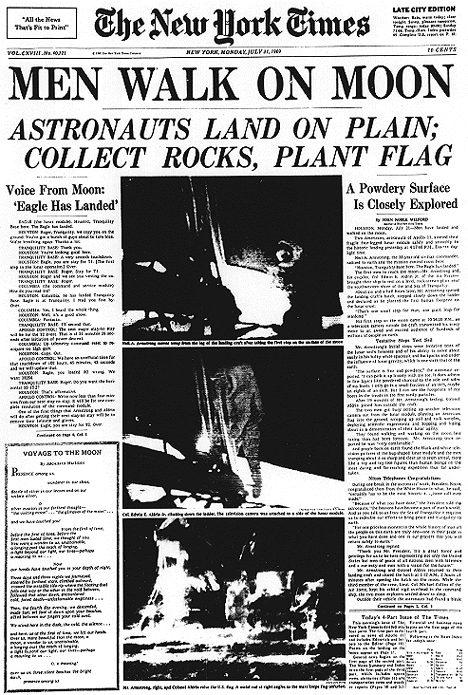
On this day in 1969, man fist walked on the moon. The New York Times reported the extraordinary feat the next day:
Houston, Monday, July 21–Men have landed and walked on the moon.
Two Americans, astronauts of Apollo 11, steered their fragile four-legged lunar module safely and smoothly to the historic landing yesterday at 4:17:40 P.M., Eastern daylight time.
Neil A. Armstrong, the 38-year-old civilian commander, radioed to earth and the mission control room here:
“Houston, Tranquility Base here. The Eagle has landed.”
The first men to reach the moon–Mr. Armstrong and his co-pilot, Col. Edwin E. Aldrin, Jr. of the Air Force–brought their ship to rest on a level, rock-strewn plain near the southwestern shore of the arid Sea of Tranquility.
About six and a half hours later, Mr. Armstrong opened the landing craft’s hatch, stepped slowly down the ladder and declared as he planted the first human footprint on the lunar crust:
“That’s one small step for man, one giant leap for mankind.”
His first step on the moon came at 10:56:20 P.M., as a television camera outside the craft transmitted his every move to an awed and excited audience of hundreds of millions of people on earth.
To commemorate the anniversary, the Atlantic has published A Reading List of Stories About the Moon: For the 45th anniversary of the lunar landing, we dipped into the archives.
In Wisconsin on July 20, 1976, Hank Aaron hit his final home run:
1976 – Hank Aaron Hits Record Home Run
On this date Hank Aaron hit his 755th and last home run at Milwaukee County Stadium against the California Angels. [Source: Milwaukee Brewers]
Art
An Eiffel Tower… on the Tip of a Pencil
by JOHN ADAMS •
Daily Bread
Daily Bread for 7.19.14
by JOHN ADAMS •
Good morning, Whitewater.
We have a lovely Saturday ahead, with mostly sunny skies and a high of eighty.
The United States Geological Survey doesn’t just map and analyze American lands – they’ve now completed the most detailed map of Mars ever created.

On this day in 1832, soldiers pursue Black Hawk:
1832 – Dodge and Henry pursue the British Band
On this date General James Henry and Colonel Henry Dodge found the trail of the British Band and began pursuit of Black Hawk and the Sauk Indians. Before leaving camp, the troops were told to leave behind any items that would slow down the chase. The troops camped that evening at Rock River, 20 miles east of present day Madison. Some sources place this event on July 18, 1832. [Source: Along the Black Hawk Trailby William F. Stark, p. 119]
Sports
The Finest Jerseys in All of Baseball
by JOHN ADAMS •
No matter how much I like the Brewers, it’s hard to argue with the jerseys of the El Paso Chihuahuas, #FeartheEars:
Now this is what @MiLB is all about… Check out our newest jerseys! @UniWatch @bensbiz >>>http://t.co/Ex4Xs85x9r pic.twitter.com/PFW27wLGQY
— El Paso Chihuahuas (@epchihuahuas) July 16, 2014
Cats
Friday Catblogging: High-Tech Cat Feeder
by JOHN ADAMS •
Bistro has designed and will market a cat feeder that uses facial recognition, among other technologies, to monitor a cat’s feeding habits:
Our four-legged friends have a habit of not eating when something ails them. However, if you’re at work all day, you may not pick up on the lack of appetite until it’s too late. Well, there’s a smart cat feeder with built-in facial recognition that’s looking to lend a hand. Bistro is a high-tech feline food and water hub with sensors that monitor consumption. There’s the requisite camera to distinguish between members of your in-home pack and the furry creatures stand on a scale that measures their weight while eating. All of the collected data is beamed to a smartphone app to keep you abreast of the activity while you’re away for your “quantified cat.” Heck, you can even watch your pets feast, should you choose to do so. If you’re looking to snag one, act quickly to nab a Bistro for $149 instead of the full $249 price it’ll carry when it launches in March.
Via High-tech cat feeder uses facial recognition to save all nine lives @ Engadget.
Poll
Friday Poll: Where will the Brewers Place in the NL Central?
by JOHN ADAMS •

The season’s half over: where do you think the Brewers will place within their division? A recent assessment at the Journal Sentinel places the Odds of Brewers making the playoffs: [at] 45.5.
After a first half that started well and ended poorly, what do you think will happen?
Daily Bread
Daily Bread for 7.18.14
by JOHN ADAMS •
Good morning, Whitewater.
Friday in Whitewater looks to be mostly sunny, with a high of seventy-seven, and south winds of five to ten mph.
On this day in the year 64, Rome burns:
The Great Fire of Rome was an urban fire that started on the night between 18 and 19 July in the year 64 AD. It caused widespread devastation before being brought under control after six days. Differing accounts either blame Emperor Nero for initiating the fire or credit him with organizing measures to contain it and provide relief for refugees.[1]….
Tacitus describes the fire as beginning in shops where inflammable goods were stored, in the region of the Circus neighboring the Caelian and Palatine hills of Rome. The night was a windy one and the flames rapidly spread along the full length of the Circus. The fire expanded through an area of narrow, twisting streets and closely located apartment blocks. In this lower area of Rome there were no large buildings such as temples, or open areas of ground, to impede the conflagration. It then spread along the Palatine and Caelian slopes.
The population fled first to areas unaffected by the fire and then to the open fields and rural roads outside the city. Looters and arsonists were reported to have spread the flames by throwing torches or, acting in groups, to have hindered measures being made to halt or slow the progress of the flames. Tacitus surmises that some may have acted under orders or that they may simply have wanted to plunder unhindered.
Google-a-Day asks a science question:
The private papers of what scientist had to be decontaminated for two years in the 1990’s before being put on file at the National Library in Paris?
Animals
Tex-Mex Beagle Rescue
by JOHN ADAMS •
City, Politics
How Conservatives Ruined Conservatism in Whitewater
by JOHN ADAMS •
There are plenty of conservatives in the City of Whitewater, a small rural town, that’s home to a medium-sized campus within the city limits, and is principally located in conservative Walworth County.
In many ways, this rural town should be mostly conservative, mostly Republican, campus notwithstanding. After all, Walworth County is hardly a liberal place.
And yet, and yet, anyone visiting from Waukesha, Ozaukee, or Washington counties would see quickly that Whitewater is neither as conservative nor as Republican as those places. If anything, it’s a cultural adjustment for conservative Republicans when they move to Whitewater (as some have mentioned to me): Whitewater seems liberal to them.
iNow, I don’t think Whitewater is a liberal city, although it is becoming bluer.
Still, I’d say that conservatives from GOP strongholds in Wisconsin are right to see how Whitewater’s less red, or more blue, than their own communities.
How is that?
Why wouldn’t Whitewater, during the height of GOP success statewide, be more conservative? Even as recently as ten years ago, conservatives were doing better in the city than they are now.
Here’s Whitewater’s current political climate:
The Democrats’ statewide or nationally typically carry Whitewater. National or statewide Republicans can win here, but they depend more on an occasional red wave (2010), and even then it’s not a sure thing that they’ll prevail locally.
What happened?
I’d suggest that it’s not social but economic issues that have fractured the GOP, and many so-called Republicans look like putative moderates to Tea Party Republicans and movement conservatives. (Most social issues don’t matter for local offices that have no authority over applicable policies.)
But on economic matters, Whitewater’s old-guard Republicans have flacked tax-incremental financing and Innovation Center spending – and flacked them in the most platitudinous and grandiose way – so that they look weak and unprincipled to true, small-government conservatives.
Tax Incremental Financing and the Innovation Center were not GOP ideas; the problem is that so-called conservatives in Whitewater lined up to push them, with sugary language to disguise poor economic and fiscal results.
In the eyes of a rock-ribbed conservatives in elsewhere in Wisconsin, GOP luminaries in Whitewater look slow, stodgy, bloated, and appeasing of (often sketchy) government projects.
City GOP leaders from 2000-2010, especially, squandered the local party’s reputation on acquiescence to big projects and a ‘Hey kids, let’s put on a show’ mentality.
Unfortunately, their “jobs, jobs, jobs” and “businesses, businesses, businesses” approach is empty of employment and full of white-collar welfare.
It’s true conservatives and Republicans elsewhere who are among the biggest critics of that approach.
So what does the local Republican party have now?
They have a landlords’ and realtors’ pro-business lobbying group, some signs along Main Street during election time, and lots of meetings to announce successes and triumphs where the rooms are mostly empty and without ordinary residents.
That’s something, but it’s not much for a small rural town.
The move toward a small group that seeks to influence and pressure is a common dynamic after a political party has conceded influence of the electorate. It’s the refuge of groups that are waning.
The Left in Waukesha County, and the Right in Dane County, took similar steps when they were losing electoral influence in those respective places. These steps were half-measures, but ineffectual to reverse electoral decline.
Even the Koch Brothers, who could not carry an issue in Whitewater, would at least be able to draw a crowd with their American for Prosperity team.
Whitewater’s Republicans compromised to go along, to fit in, with a trend toward big-spending on white collar welfare and chimerical accomplishments, successes, and achievements.
Those who brought conservatism to this condition in Whitewater, of all places, will not be able to repair their own damage.
A new generation will have to pick up the shards that clumsy town squires have left all across town.
I’m a libertarian, not a conservative Republican; these failures are not ones of the liberty movement.
Still, I cannot avoid seeing how a few gentlemen have harmed their professed ideology, in a city where conditions should have been fitting for ongoing success.
Daily Bread
Daily Bread for 7.17.14
by JOHN ADAMS •
Good morning, Whitewater.
Thursday will be sunny, with a high of seventy-six and southwest winds of five mph.
On this day in 1955, Disneyland opens in California:
Disneyland Park, originally Disneyland, is the first of two theme parks built at the Disneyland Resort in Anaheim, California, opened on July 17, 1955. It is the only theme park designed and built under the direct supervision of Walt Disney. It was originally the only attraction on the property; its name was changed to Disneyland Park to distinguish it from the expanding complex in the 1990s.
Walt Disney came up with the concept of Disneyland after visiting various amusement parks with his daughters in the 1930s and 1940s. He initially envisioned building a tourist attraction adjacent to his studios in Burbank to entertain fans who wished to visit; however, he soon realized that the proposed site was too small. After hiring a consultant to help him determine an appropriate site for his project, Walt bought a 160-acre (65 ha) site near Anaheim in 1953. Construction began in 1954 and the park was unveiled during a special televised press event on the ABC Television Network on July 17, 1955.
Since its opening, Disneyland has undergone a number of expansions and renovations, including the addition of New Orleans Square in 1966, Bear Country (now Critter Country) in 1972, and Mickey’s Toontown in 1993. Disney California Adventure Park was built on the site of Disneyland’s original parking lot and opened in 2001.
Disneyland has a larger cumulative attendance than any other theme park in the world, with over 650 million guests since it opened. In 2013, the park hosted approximately 16.2 million guests, making it the third most visited park in the world that calendar year.[2] According to a March 2005 report from the Disney Company, there are 65,700 jobs supported by the Disneyland Resort, which includes, at the Resort itself, 20,000 direct Disney employees and 3,800 third-party employees (that is, independent contractors or their employees).[3]
On this day in 1832, Gen. Atkinson’s soldiers complete their fort:
1832 – Fort Koshkonong Construction Completed
On this date General Henry Atkinson wrote General Winfield Scott that he had finished constructing Fort Koshkonong. The fort, constructed of oak logs, was abandoned when the army pursued and defeated Black Hawk at the Battle of Bad Axe in August of 1832. The logs from the fort were then used in the construction of houses in the community now known as Fort Atkinson. By 1840, little of the original fort remained. [Source: History Just Ahead: A Guide to Wisconsin’s Historical Markers edited by Sarah Davis McBride, p. 107]
Google-a-Day asks about a German word:
What was Germany’s term for its amazing economic rebound in the 1950’s?
Animals, Nature
Bear and Cubs Returned to the Wild
by JOHN ADAMS •
City, Corporate Welfare, Government Spending, Local Government, Politics, WEDC
WEDC Update
by JOHN ADAMS •
Anyone betting locally on the supposed prestige and success of the Wisconsin Economic Development Corporation has placed a bad bet.
That corrupt and incompetent agency is in the news yet again for its failures and lies:
WEDC award recipients outsourced Wisconsin jobs to foreign countries —
Report: WEDC-backed Kestrel had financing issues in Maine before moving to Wisconsin —
On Monday, Hackett passed along this piece from Maine about Kestrel Aircraft, the company that has promised to create 600 jobs in Superior with help from the Wisconsin Economic Development Corporation.
Headlined “Kestrel in Brunswick: How blue-sky promises came crashing down,” the story describes how Kestrel owner Alan Klapmeier had been fighting with officials in Maine about not providing enough taxpayer support for his dream of manufacturing commercial airplanes at a closed military base in Brunswick.
According to the report, Klapmeier was expecting a $100 million allocation of New Markets Tax Credits — a federal program designed to encourage investment in low-income rural areas — but had only received about a fifth of that amount.
Failing to land enough funding in Maine, Klapmeier began seeking other sources of public money and apparently found a willing participant in newly-elected Wisconsin Gov. Scott Walker.
“Note the quote where people in Maine were happy that Wisconsin won this battle,” Hackett says of the report in the Forecaster, a weekly published in Falmouth, Maine.
With new backing in place from WEDC, Klapmeier joined Walker in January 2012 to announce plans to design and build a carbon fiber passenger airplane in Superior.
Unfortunately, the project hasn’t taken hold and Kestrel has yet to follow through on its promises. Klapmeier is also apparently involved in a dispute with Wisconsin officials over the amount of New Markets Tax Credits that had been promised, according to BusinessNorth.com.
Now, admittedly, the WEDC is not the only mistake in the history of American politics and policy.
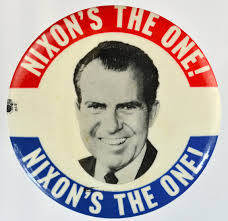
Whitewater’s town fathers might have hit upon something equally embarrassing, if only they had kept looking:
For prior FW posts on the WEDC, consider The Truth About the Wisconsin Economic Development Corporation and The Disgrace that is the Wisconsin Economic Development Corporation.
Tomorrow: How Conservatives Ruined Conservatism in Whitewater.
Anderson, Cartoons & Comics
Timpani
by JOHN ADAMS •
