
Daily Bread
Daily Bread for 2.10.14
by JOHN ADAMS •
Good morning.
Monday will be sunny and cold, with a high of eight degrees.
Whitewater’s Planning Commission meets tonight at 6 PM.
NASA’s Curiosity rover recently took a picture of the Martian night sky, with Earth and the Moon visible:


This view of the twilight sky and Martian horizon taken by NASA’s Curiosity Mars rover includes Earth as the brightest point of light in the night sky. Earth is a little left of center in the image, and our moon is just below Earth. Two annotated versions of this image are also available in Figures 1 and 2.
Researchers used the left eye camera of Curiosity’s Mast Camera (Mastcam) to capture this scene about 80 minutes after sunset on the 529th Martian day, or sol, of the rover’s work on Mars (Jan. 31, 2014). The image has been processed to remove effects of cosmic rays.A human observer with normal vision, if standing on Mars, could easily see Earth and the moon as two distinct, bright “evening stars.”
The distance between Earth and Mars when Curiosity took the photo was about 99 million miles (160 million kilometers).
On this day in 1763, Wisconsin – once French – becomes English:
1763 – Treaty of Paris Cedes Wisconsin to England
On this date the Treaty of Paris ceded formerly French-controlled land, including the Wisconsin region, to England. [Source: Avalon Project at Yale University]
Puzzability begins a new game series today, with a Valentine’s holiday theme:
|
This Week’s Game — February 10-14
|
|||||
|
Candy and Flowers
|
|||||
|
We’ve gotten you two gifts every day this Valentine’s week. For each day, we started with the name of a chocolate brand plus the name of a flower. Each day’s clue shows the brand name and the flower name melded together in a string of letters, with each in order but intermingled with the other.
|
|||||
|
Example:
|
|||||
|
LDOILVEY
|
|||||
|
Answer:
|
|||||
|
Dove/lily
|
|||||
|
What to Submit:
|
|||||
|
Submit the brand and the flower, in that order (as “Dove/lily” in the example), for your answer.
|
|||||
 |
|||||
|
Monday, February 10
|
|||||
|


Animation
Sunday Animation: Mouse on Mars – Cream Theme
by JOHN ADAMS •
Daily Bread
Daily Bread for 2.9.14
by JOHN ADAMS •
Good morning.
We will enjoy a mostly sunny day in Whitewater with a high of fifteen degrees. Sunrise is 7 AM today, and sunset 5:16 PM. The moon is in a waxing gibbous phase with seventy-nine percent of its visible disk illuminated.
On this day in 1950, a Wisconsin senator levels an accusation:
Joseph Raymond McCarthy, a relatively obscure Republican senator from Wisconsin, announces during a speech in Wheeling, West Virginia, that he has in his hand a list of 205 communists who have infiltrated the U.S. State Department. The unsubstantiated declaration, which was little more than a publicity stunt, suddenly thrust Senator McCarthy into the national spotlight.
Asked to reveal the names on the list, the reckless and opportunistic senator named officials he determined guilty by association, such as Owen Lattimore, an expert on Chinese culture and affairs who had advised the State Department. McCarthy described Lattimore as the “top Russian spy” in America.
These and other equally shocking accusations prompted the Senate to form a special committee, headed by Senator Millard Tydings of Maryland, to investigate the matter. The committee found little to substantiate McCarthy’s charges, but McCarthy nevertheless touched a nerve in the American public, and during the next two years he made increasingly sensational charges, even attacking President Harry S. Truman’s respected former secretary of state, George C. Marshall….
On 2.9.1870, America gets a National Weather Service:
1870 – National Weather Service Authorized
On this date President Ulysses S. Grant signed a joint resolution authorizing a National Weather Service, which had long been a dream of Milwaukee scientist Increase Lapham. Lapham, 19th-century Wisconsin’s premier natural scientist, proposed a national weather service after he mapped data contributed over telegraph lines in the UpperMidwest and realized that weather might be predicted in advance. He was concerned about avoiding potential disasters to Great Lakes shipping and Wisconsin farming, and his proposal was approved by Congress and authorized on this date. [Source: History Just Ahead: A Guide to Wisconsin’s Historical Markers, edited by Sarah Davis McBride]
Daily Bread
Daily Bread for 2.8.14
by JOHN ADAMS •
Good morning.
We’ll have snow today in Whitewater, with an accumulation of one to two inches, and a high of seventeen.
It was a good day in Sochi for Sage Kotsenburg, who won a snowboarding gold:
Here’s his happy, justifiably proud tweet afterward:
WOW!! I just won the Olympics!! Bringing back the first Gold here to the USA! Love seeing all the support from everyone YOU RULE!!
— sage kotsenburg (@sagekotsenburg) February 8, 2014
Garry Kasparov, former world chess champion and (since his retirement from competitive chess in 2005) a human rights activist, as a fine post online about politics and sport: Putin’s Sochi and Hitler’s Berlin: The Love Affair Between Dictators and the Olympic Games. Kasparov is a powerful, succinct writer, and in this essay he nicely addresses political manipulation of sporting events, among other topics.
Significantly, Kasparov isn’t opposed to the Olympics, or even to the Olympics in Sochi, but to their politicization under Putin:
Do not mistake the epic graft in Sochi as unusual or incidental. Corruption is the overriding principle of Putin’s 14 years in power and looting the Russian treasury and the Russian people is itself the goal. For all the foolish attempts to interpret Putin’s geopolitical strategy and personal ideology, the common denominator is always whether or not an action helps him maintain the cash flow that in turn enables him and his clique to stay in power.
Of comparisons to Hitler generally – when legitimate or when overwrought, here’s Kasparov’s spot-on assessment:
I will detour for a moment because this where I often see interviewers and pundits roll their eyes. The phrase “Putin is no Hitler!” forms on their lips before the word “Berlin” is completed. It is a fascinating development in historical ignorance that nearly any mention of Hitler or the Nazis is now ritually scoffed at, from professional journalists to anonymous tweets. “Godwin’s Law,” which doesn’t even say what most wits seem to think it says, is immediately invoked, as if the slow and public evolution of a German populist politician into history’s most infamous monster is beyond rational contemplation.
Of course the evil of the Nazis is beyond comparison. Of course no one can rival the murderous fiend Hitler became in the 1940s. Of course no one expects a new world war or an attempt to emulate the Holocaust. But summarily discarding the lessons of Hitler’s political rise, how he wielded power, and how he was ignored or abetted abroad is foolish and dangerous. In 1936, even Hitler was no Hitler. He was already viewed with suspicion by many inside and outside Germany, yes, but he stood beaming in that Berlin Olympic stadium and received accolades from world leaders and stiff-armed salutes from the world’s athletes. There is no doubt this triumph on the world stage emboldened the Nazis and strengthened their ambitions.
Powerful, all of it, and well worth reading and bookmarking.
For chess players in particular, I’d recommend also Kasparov’s The Bobby Fischer Defense, a review of Frank Brady’s Endgame: Bobby Fischer’s Remarkable Rise and Fall—from America’s Brightest Prodigy to the Edge of Madness.
Kasparov so evidently understands and respects Fischer, all the while appreciating Fischer’s later, sad decline into paranoia.
Cats
Friday Catblogging: Pug v. Cat
by JOHN ADAMS •
Poll, Sports
Friday Poll: Winter Olympics
by JOHN ADAMS •

It’s the Winter Games in Sochi. How interested are you?
This year, I’m less interested than I have been past games. I can’t point to a single reason, but I will probably only watch a few speed skating events, perhaps some bobsledding, where in other years I would have followed many more events.
How about you?
Daily Bread
Daily Bread for 2.7.14
by JOHN ADAMS •
Good morning.
Our Friday in Whitewater will be sunny with a high of twelve. Sunrise is 7:03 AM and sunset will be 5:16 PM. The moon is in a waxing gibbous phase with 59% of its visible disk illuminated.
On this day in 1964, its Beatlemania:
On February 7, 1964, Pan Am Yankee Clipper flight 101 from London Heathrow lands at New York’s Kennedy Airport–and “Beatlemania” arrives. It was the first visit to the United States by the Beatles, a British rock-and-roll quartet that had just scored its first No. 1 U.S. hit six days before with “I Want to Hold Your Hand.” At Kennedy, the “Fab Four”–dressed in mod suits and sporting their trademark pudding bowl haircuts–were greeted by 3,000 screaming fans who caused a near riot when the boys stepped off their plane and onto American soil.
Two days later, Paul McCartney, age 21, Ringo Starr, 23, John Lennon, 23, and George Harrison, 20, made their first appearance on the Ed Sullivan Show, a popular television variety show. Although it was difficult to hear the performance over the screams of teenage girls in the studio audience, an estimated 73 million U.S. television viewers, or about 40 percent of the U.S. population, tuned in to watch. Sullivan immediately booked the Beatles for two more appearances that month. The group made their first public concert appearance in the United States on February 11 at the Coliseum in Washington, D.C., and 20,000 fans attended. The next day, they gave two back-to-back performances at New York’s Carnegie Hall, and police were forced to close off the streets around the venerable music hall because of fan hysteria. On February 22, the Beatles returned to England.
On February 7, 1867, a popular Wisconsin author is born:
1867 – Laura Ingalls Wilder born
Wisconsin’s most famous children’s author, Laura Ingalls Wilder, was born this day near Pepin. Although her family moved away a year later, it subsequently returned in 1870 and remained until 1874. It is this period that is immortalized in her first book, Little House in the Big Woods. [Source: Dictionary of Wisconsin History]
Puzzability‘s tv-themed series concludes with Friday’s game:
|
This Week’s Game — February 3-7
|
|||||
|
Horizontal Holds
|
|||||
|
Everything is edited for television this week. For each day, we started with the title of a well-known TV series and replaced all the letters with asterisks, except for letters that spell out a word that’s a clue to the series title. (Those letters may appear elsewhere in the title as well.)
|
|||||
|
Example:
|
|||||
|
******, SH* **OT*
|
|||||
|
Answer:
|
|||||
|
Murder, She Wrote
|
|||||
|
What to Submit:
|
|||||
|
Submit the series title (as “Murder, She Wrote” in the example) for your answer.
|
|||||
|
|||||
|
Friday, February 7
|
|||||
|

Free Markets, Liberty
Why Do Doctors Oppose Nurse Practitioners?
by JOHN ADAMS •
Here’s why —
Daily Bread
Daily Bread for 2.6.14
by JOHN ADAMS •
Good morning.
Thursday brings sunny skies and cold temperatures, with a high of seven. Wind chill values will be between ten and twenty below, from west winds of five to ten miles per hour.
Whitewater’s Landmarks Commission meets at 6 PM.
It’s Babe Ruth’s birthday:
George Herman “Babe” Ruth, Jr. (February 6, 1895 – August 16, 1948), nicknamed “the Bambino” and “the Sultan of Swat”, was an American professional baseball outfielder and pitcher who played 22 seasons in Major League Baseball (MLB), from 1914 to 1935. Beginning his career as a stellar left-handed pitcher for the Boston Red Sox, Ruth achieved his greatest fame as a slugging outfielder for the New York Yankees. He established many batting (and some pitching) records, including career home runs (714), slugging percentage (.690), runs batted in (RBIs) (2,213), bases on balls (2,062), and on-base plus slugging (OPS) (1.164), some of which have been broken. One of the most prolific hitters in baseball history, Ruth was one of the first five players to be elected into the National Baseball Hall of Fame in 1936.
On 2.6.1967, a nationally-known activist visits Whitewater:
1967 – Stokely Carmichael Speaks at Whitewater
On this date nationally known activist Stokely Carmichael spoke at UW-Whitewater as part of a forum series entitled “Black Power and the Civil Rights Movement.” The chairman of the Student Non-Violent Coordinating Committee at Whitewater motivated students in attendance, stating that blacks must reclaim their identity and history, and organize to control local political offices, especially in large cities. [Source: Janesville Gazette]
Here’s Puzzability’s Thursday game, in its television series:
|
This Week’s Game — February 3-7
|
|||||
|
Horizontal Holds
|
|||||
|
Everything is edited for television this week. For each day, we started with the title of a well-known TV series and replaced all the letters with asterisks, except for letters that spell out a word that’s a clue to the series title. (Those letters may appear elsewhere in the title as well.)
|
|||||
|
Example:
|
|||||
|
******, SH* **OT*
|
|||||
|
Answer:
|
|||||
|
Murder, She Wrote
|
|||||
|
What to Submit:
|
|||||
|
Submit the series title (as “Murder, She Wrote” in the example) for your answer.
|
|||||
|
|||||
|
Thursday, February 6
|
|||||
|

Anderson, Cartoons & Comics
Favorites
by JOHN ADAMS •
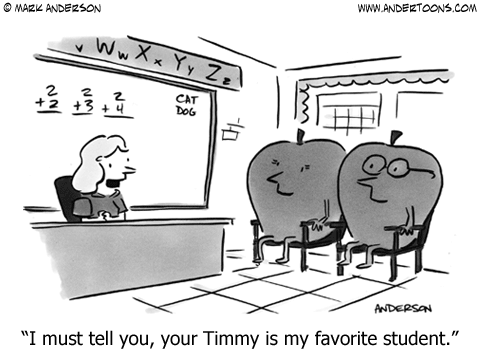
Daily Bread
Daily Bread for 2.5.14
by JOHN ADAMS •
Good morning.
We’ll have a day of light snow or flurries today, with only a slight accumulation of less than half and inch, and a high of seventeen.
On this day in 1917, Congress overrides Pres. Wilson’s veto, and passes immigration restrictions:
With more than a two-thirds majority, Congress overrides President Woodrow Wilson’s veto of the previous week and passes the Immigration Act. The law required a literacy test for immigrants and barred Asiatic laborers, except for those from countries with special treaties or agreements with the United States, such as the Philippines.
During the late 19th and early 20th centuries, the United States received a majority of the world’s immigrants, with 1.3 million immigrants passing through New York’s Ellis Island in 1907 alone. Various restrictions had been applied against immigrants since the 1890s, but most of those seeking entrance into the United States were accepted.
However, in 1894, the Immigration Restriction League was founded in Boston and subsequently petitioned the U.S. government to legislate that immigrants be required to demonstrate literacy in some language before being accepted. The organization hoped to quell the recent surge of lower-class immigrants from Southern and Eastern Europe. Congress passed a literacy bill in 1897, but President Grover Cleveland vetoed it. In early 1917, with America’s entrance into World War I three months away, xenophobia was at a new high, and a bill restricting immigration was passed over President Wilson’s veto.
On February 5, 1849, the University of Wisconsin opens:
1849 – University of Wisconsin opens
On this day in 1849 the University of Wisconsin began with 20 students led by Professor John W. Sterling. The first class was organized as a preparatory school in the first department of the University: a department of science, literature, and the arts. The university was initially housed at the Madison Female Academy building, which had been provided free of charge by the city. The course of study was English grammar; arithmetic; ancient and modern geography; elements of history; algebra; Caesar’s Commentaries; the Aeneid of Virgil (six books); Sallust; select orations of Cicero; Greek; the Anabasis of Xenophon; antiquities of Greece and Rome; penmanship, reading, composition and declamation. Also offered were book-keeping, geometry, and surveying. Tuition was “twenty dollars per scholar, per annum.” For a detailed recollection of early UW-Madison life, see the memoirs of Mrs. W.F. Allen [Source: History of the University of Wisconsin, Reuben Gold Thwaites, 1900]
Here’s the Wednesday game from Puzzability:
|
This Week’s Game — February 3-7
|
|||||
|
Horizontal Holds
|
|||||
|
Everything is edited for television this week. For each day, we started with the title of a well-known TV series and replaced all the letters with asterisks, except for letters that spell out a word that’s a clue to the series title. (Those letters may appear elsewhere in the title as well.)
|
|||||
|
Example:
|
|||||
|
******, SH* **OT*
|
|||||
|
Answer:
|
|||||
|
Murder, She Wrote
|
|||||
|
What to Submit:
|
|||||
|
Submit the series title (as “Murder, She Wrote” in the example) for your answer.
|
|||||
|
|||||
|
Wednesday, February 5
|
|||||
|

City, Government Spending, Local Government, Waste Digesters
The New, Old Idea
by JOHN ADAMS •
Over these last few weeks, I’ve received messages from readers asking my view of a new digester proposal first mentioned at Council on December 3rd (but discussed, I know, among officials well before that). Like others, I’ve quietly watched the progression of this second digester plan. (I have posted occasionally at FW about a prior effort.)
I’ve written the same reply to each kind reader: the best initial response wouldn’t possibly be my remarks, but would come, instead, in the form of Frédéric Bastiat’s Gift to Whitewater.
If this were a prudent administration, the foresight that Bastiat teaches would settle consideration of a proposal like this. I doubt that anyone advancing this plan understands or cares about Bastiat or any of that.
Of the brief presentation on December 3rd, and a subsequent one on January 21st, one finds an odd combination of ignorance and arrogance. Of the contract for a conflicted, self-interested ‘feasibility study’ now included in the February 4th council packet, one finds a document that would make a prudent municipal attorney demand modifications.
And yet, and yet, one can expect not only an initial seventy-thousand for this preliminary work, but an insistence thereafter on subsequent steps costing vastly more, for the benefit of powerful interests outside the city (and a few useful flacks within Whitewater, predictably lurking behind the scenes).
Whitewater is beautiful to her residents, but convenient to others beyond the city merely as a dumping ground.
Of those watching the new proposal, someone asked me why this municipal administration, relatively new and generally well-received, would risk so much on a waste digester plan. (The farther it progresses, the greater the risk all around – fiscally, environmentally, and consequently politically.)
Her theory was that it made some sense for the last administration – whose manager was figuratively stumbling out the door – to grasp at a digester as a last, feeble effort to achieve something supposedly amazing.
In the present case, the City of Whitewater and its municipal administration would assume ongoing, direct responsibility for this project. Why this administration would try another version, one with even greater involvement, seemed puzzling to her.
For now, I’ve no ready answer. Even on a list of a hundred choices before Whitewater, I would not have included this.
There’s much work to be done here, on this new proposal, understanding well that a long, demanding effort waits ahead. (See, along these lines, Steps for Blogging on a Policy or Proposal.)
It would not have been demanding work of my choosing, but, to be sure, no one acts in conditions wholly of his or her own choosing.
Film, Nature
Film: Huelux
by JOHN ADAMS •
Huelux from Randy Halverson on Vimeo.