FREE WHITEWATER

Daily Bread for 11.9.13

Good morning.

Saturday in Whitewater will be partly sunny, and breezy, with a high of fifty-three. We’ll have west winds of ten to twenty mph, with gusts as reaching 30 mph.

What if, as a painter, one were to choose people, themselves, as both subjects and parts of one’s paintings? To be an artist like that would be to be someone like Alexa Meade:

On this day in 1989, the Berlin Wall opens:

East German officials today opened the Berlin Wall, allowing travel from East to West Berlin. The following day, celebrating Germans began to tear the wall down. One of the ugliest and most infamous symbols of the Cold War was soon reduced to rubble that was quickly snatched up by souvenir hunters.

The East German action followed a decision by Hungarian officials a few weeks earlier to open the border between Hungary and Austria. This effectively ended the purpose of the Berlin Wall, since East German citizens could now circumvent it by going through Hungary, into Austria, and thence into West Germany. The decision to open the wall was also a reflection of the immense political changes taking place in East Germany, where the old communist leadership was rapidly losing power and the populace was demanding free elections and movement toward a free market system….

On 11.9.1968, an earthquake in Wisconsin:

1968 – Earthquake Shakes Wisconsin
On this date one of the strongest earthquakes in the central United States occurred in south-central Illinois. Measured at a magnitude of 5.3, press reports from LaCrosse, Milwaukee, Port Washington, Portage, Prairie Du Chien, and Sheboygan indicated that the shock was felt in these cities. [Source: United States Geological Survey]

Poll: Another Star Wars Film?

Disney’s announced a date for the next Star Wars film, the seventh in the series:

“Star Wars: Episode VII” has an official release date: Dec. 18, 2015.

“We’re very excited to share the official 2015 release date for ‘Star Wars: Episode VII,’ where it will not only anchor the popular holiday filmgoing season but also ensure our extraordinary filmmaking team has the time needed to deliver a sensational picture,” Alan Horn, chairman of Walt Disney Studios, said in a press release announcing the date. “Star Wars: Episode VII” was initially expected to arrive sometime during that previous summer. (All six previous “Star Wars” films were released during the month of May.)

In a separate press release from Disney regarding the move, it was also revealed that “Episode VII” will screen in 3D.

Should they keep making more? It’s hard to keep a series going. (I thought that the Lord of the Rings trilogy succeeded, but that the Matrix trilogy should have stopped after the first, good film.)

So what do you think about more Star Wars films? I’d like to see another good film (the first was very good, indeed) , but I’m doubtful. How about you?


Daily Bread for 11.8.13

Good morning.

Friday will be increasingly cloudy with a high of forty-six.

On this day in 1895, a profound discovery:

1
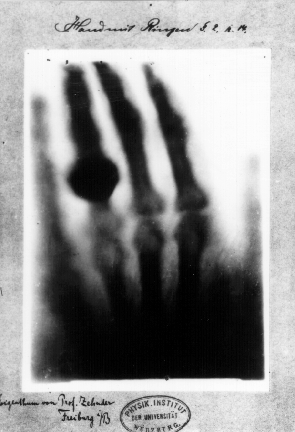
“Hand mit Ringen (Hand with Rings): a print of one of the first X-rays by Wilhelm Röntgen (1845–1923) of the left hand of his wife Anna Bertha Ludwig. It was presented to Professor Ludwig Zehnder of the Physik Institut, University of Freiburg, on 1 January 1896.” Photo and caption via Wikipedia

….physicist Wilhelm Conrad Rontgen (1845-1923) becomes the first person to observe X-rays, a significant scientific advancement that would ultimately benefit a variety of fields, most of all medicine, by making the invisible visible. Rontgen’s discovery occurred accidentally in his Wurzburg, Germany, lab, where he was testing whether cathode rays could pass through glass when he noticed a glow coming from a nearby chemically coated screen. He dubbed the rays that caused this glow X-rays because of their unknown nature.

On 11.8.1870, a first for America:

1870 – First National Weather Forecast Published
On this date Increase Lapham recorded the first published national weather forecast, calling for “high winds and falling temperatures for Chicago, Detroit and the Eastern cities.” [Source: History Just Ahead: A Guide to Wisconsin’s Historical Markers edited by Sarah Davis McBride]

Scientific American‘s daily trivia question asks about a patent. (Clicking on the question leads to its answer.)

When was nylon patented?

Downtown Whitewater and an Emerging Business Culture

At Tuesday’s Common Council meeting, there was a brief presentation from two board members of Downtown Whitewater (DTWW), with others from that group also in attendance.  In the life of a small town, success of merchants matters greatly.  (I’m opposed to pitting local independent merchants against local chain stores, but I very much support local businesses generally.)  

Years ago, when we first saw a Main Street program in Whitewater, there was considerable attention to the effort.  The Great Recession later swept across all America, and despite it all, many of our local merchants survived where one might have feared they would succumb (difficult though that time was, and still is).

Now, with a national recovery slowly underway, and years since its founding, DTWW and her merchants look to the new year.  

I’ll consider a few points from that presentation.

New Merchants.  DTWW has new merchants moving in, and if there’s a single gain that a group could have, it’s the ability to attract and retain businesses.  

Nothing kills the way emptiness kills.  There’s a place for marketing, and a place for the look and feel that façade grants bring, but new merchants are the ultimate marketing, occupied storefronts the best façade.  

DTWW’s ability to draw new merchants is an unalloyed gain. 

Memorandum of Understanding.  DTWW is under a clearer arrangement with the city, by the way, that makes accountability more easily reviewed.  

Fundraising. Most of the money received for DTWW now comes from private sources or in-kind donations.  That’s a key accomplishment: one may be rightly suspicious of many government-private partnerships, but by design and inclination this program moves toward greater self-reliance.   

An Emerging, Entrepreneurial Business Culture.  There’s a point in presentation where Dave Saalsaa, DTWW board president, mentions that DTWW is looking to encourage UW-Whitewater grads to stay and be part of an expanding business culture (such as along Whitewater Street).  
He’s right to mention this possibility: there is a real possibility now of an emerging business culture for Whitewater, of independent restaurants and independent merchants.  It has not come – and it will not come – from big grants, state or federal schemes, or big institutions’ heavy hands.  

But we are starting to see it here, after many years of approaches that mostly made things worse, or at least no better.  

After headlines, after exclamation points, after Big Ideas, there’s something better: the actual accomplishments of smaller, independent business people with good ideas.

Once a culture like this takes root, even in a few places, it can spread quickly and inspire others.  

The efforts of an emerging group of small business people, striving mostly on their own, with a new, hip and more fashionable presentation to this town, may be an important development of the next few years.  

Communications.  How the group communicates among its leaders, members, and the community is something I’m sure they’ll sort out.  If it goes well for them, they’ll advance their goals; if not, they’ll have difficulty meeting them.  Communicating should, after all, be a simple routine, like respiration.  

It’s only when one notices it that it’s a problem.  

Whatever hard work it takes to get there, though, is something the group can and almost surely can accomplish.

Pig in the Park and the Jack Hanna Animal Show.  Downtown Whitewater is planning two events, among others, for next year: Pig in the Park near Cravath Lake, and a return of Jack Hanna’s animal show (this time in collaboration with the university).

Events like this, if handled well, endear people to the city.  They’re not a substitute for prosperity, but can advance an optimism that prosperity requires.

My youngest attended the Jack Hanna show when it was here, and very much enjoyed it.  

DTWW is a small group, and these events are sure to be demanding to them.  Whitewater can manage big, annual events very well (our Fourth of July celebration comes to mind), but it takes more effort and planning when the group is small.

One simple suggestion: each and every volunteer should carry a sheet with the behind-the-scenes work for the day, the public schedule of events, the mobile numbers of every other volunteer, and all volunteers’ designated responsibilities.

That way, whenever anyone asks about a given event or with a question, everyone volunteering will have access to information or a directory listing others of whom they can ask.  

Full storefronts and a full calendar are both beneficial.      

Façades.  In the end, it seems to be that nothing matters more than occupancy, but I see that the ‘look and feel’ of a shop matters.  

(About this topic, I’m thinking of Virginia Postrel’s excellent book, The Substance of Style: How the Rise of Aesthetic Value Is Remaking Commerce, Culture, and Consciousness.  Postrel’s a libertarian and former editor at Reason who rightly sees that a free society and economy offer the best opportunities for creative, inspiring design. )

Style does matter, and so façades do matter.  TID 4’s dried up; we’ll have to go on in any event.  Fundraising from private sources to provide money for new façades certainly has its place.  

2014.  Lasting gains won’t come from big organizations or so-called big players: it’s been tried and it’s failed.  

Whitewater will have to look toward gains from small entrepreneurs, often unheralded, yet truly meaningful to the town’s confidence and long-term prospects.

We have a good chance for a better year ahead.

Daily Bread for 11.7.13

Good morning.

Thursday will be cloudy with a high of forty-three.

Whitewater’s Landmarks Commission meets tonight at 6 PM.

On this day in 1944, America re-elects FDR a third time, for a total of four presidential wins:

In 1940, with World War II raging in Europe and the Pacific, Roosevelt agreed to run for an unprecedented third term. Reelected by Americans who valued his strong leadership, he proved a highly effective commander in chief after the December 1941 U.S. entrance into the war. Under Roosevelt’s guidance, America became, in his own words, the “great arsenal of democracy” and succeeded in shifting the balance of power in World War II firmly in the Allies’ favor. In 1944, with the war not yet won, he was reelected to a fourth term.

Scientific American‘s daily trivia question asks about dinosaurs. (Clicking on the question leads to its answer.)

640px-Sue_side_full_(Field_museum)

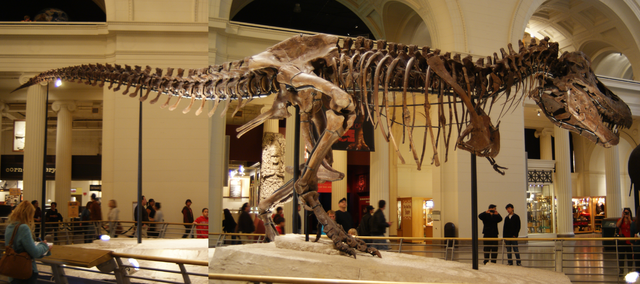
Sue (Tyrannosaurus rex) at the Field Museum, Chicago, IL via Wikipedia

How many dinosaur genera have been discovered?

Common Council for 11.5.13 (Bus & Budget)

Update, 2 PM: Earlier today, in response to my email inquiry, I received kind messages in reply from City Manager Clapper and City Clerk Michele Smith, about posting online the documents I mentioned below. They’ve acted quickly and thoroughly to provide materials that others gave to them only at the last minute. It’s right to mention as much plainly.

I’ve one other comment, that requires mentioning, about the current municipal administration. Whitewater has had its share of challenges, and policy disagreements now and again, but it seems obvious to me that one should hope for the success of this city administration – Whitewater would very much benefit if her current municipal manager enjoys a long and successful career. Not every day can be an easy one, but I have never met anyone who wasn’t hoping for the best in this regard. I know I am; there’s reason to have optimism about our future.

Last night’s Common Council session continued budget presentations, but also saw a presentation from Downtown Whitewater and discussion of a possible 80% increase in funding for a transit bus that benefits, mostly, one big company.

There’s more to write about the budget, but I’ll do so after considering the city’s long and short-term fiscal prospects.

The Downtown Whitewater presentation was interesting, and I’ll follow up on it Thursday.

About the bus, though, there was about an hour’s discussion, and a decision to defer consideration while City Manger Clapper and Finance Director Doug Saubert look for other places within the budget to take money for 2014 funding. They’ll be back to Council with options they believe they’ll find.

The hour was a trove of information about the bus – in this, one could not have been happier. The more one hears, the more that’s said, the more telling is the situation.

The discussion, and the arguments presented, reminded me that there’s an opportunity to look at Council presentations on the bus, in the spring and fall of 2012, and now in 2013, and prepare posts that list each and every argument made for or against the project, and to assess them. One could include the actual statements made for or against, supplemented with clips of what those speaking once said, or promised, about the bus.

I’ll work out how to organize posts like that, but I’m curious: what will these presentations, from over a year and a half, look like? One could catalog 2012, then 2013, and then offer a separate assessment of the claims made over these eighteen months.

There’s a lot of discussion in Whitewater, but how much of what one reads in print is much more than a warmed-over press release or poorly-written account? Isn’t our city worth more than that?

I’m quite sure it is.

As the discussion began, City Manager Clapper mentioned documents that he’d received from Janesville’s transportation director, but too late to appear in the City of Whitewater’s online agenda packet about the meeting. This is the second time that some documents about the bus from Janesville’s representative have appeared late at Council; the same happened in 2012. There’s no emergency nature in any of these materials – Janesville’s representative could have provided them on time for all Whitewater’s residents to see.

I’ve written to City Manager Clapper, to request these documents that were mentioned and available at the meeting (including a marketing survey that Janesville’s representative mentioned last night), but that were too late to make Whitewater residents’ online packet.

One last point, for now, although no one should be surprised: multi-billion-dollar Generac sent no one to the meeting. They’ll gain from hundreds of thousands (in total public money) for a venture that benefits mostly them, but as for sending any representative to speak to our Common Council?

No, that’s just not on their agenda.

Police and Fire Commission Meeting for 11.6.13

There’s a Police and Fire Commission meeting tonight, at 6 PM. The PFC meets quarterly, but will meet twice this month, both tonight and (according to tonight’s agenda) again on Thursday, November 14th.

There are three main parts of tonight’s meeting: (1) election for two PFC offices (a vice president and a secretary), (2) a presentation – but apparently not discussion until next week – of draft PFC policies and a proposed Commissioner’s Oath, and (3) a closed session to discuss an investigation of allegations against a PFC Commissioner.

The election of officers is an ordinary event, but likely should have happened at an earlier meeting. It looks to be the simple clean-up of an oversight.

Of the allegations against a Commissioner, I’ve written before, briefly, to caution against an approach based on speculation. (See, Common Council Session of 9.17.13: Police and Fire Commission Dismissal Proceedings.) Whether this matter will be resolved or prove ongoing, one cannot be sure. It’s reasonable to let whatever process is involved run its course before addressing it further.

There’s an irony in this, to be sure: I’ve been an occasional critic of police leadership in this city, but it’s surely some of those who have been reflexively supportive of that leadership who are most interested in the details of an investigation. A waning cadre that’s not thought about ideas but about connections, not policy but people of influence, is a group that will, in times like these, turn to base curiosity over good judgment.

There’s a third part of the agenda, about the proposed oath, procedures, etc., and their significance for sound policy in our city. These policies deserve careful consideration and review.

That’s a worthy topic for a time between now and the next PFC meeting.

Daily Bread for 11.6.13

Good morning.

Wednesday will be rainy with a high of fifty-three, but with falling daytime temperatures into the forties by the afternoon.

Welcome, new readers. Yesterday was a big day for new visitors. Thanks very much for stopping by. To longtime readers, my thanks, too. Each year I’ve been writing has seen solid growth from earlier years. People write, I think, simply because they believe in their efforts, but readers should be, and in my case truly are, much appreciated.

Whitewater’s Police and Fire Commission meets tonight at 6 PM.

So what happened in history today?

On this day in 1860, Abraham Lincoln was first elected president of the United States:

The canvass for the Presidency of the United States terminated last evening, in all the States of the Union, under the revised regulation of Congress, passed in 1845, and the result, by the vote of New-York, is placed beyond question at once. It elects ABRAHAM LINCOLN of Illinois, President, and HANNIBAL HAMLIN of Maine, Vice-President of the United States, for four years, from the 4th March next, directly by the People.

It’s also the birthday, from 1860, of John Philip Sousa:

John Philip Sousa did not invent the musical genre he came to personify, but even if no other composer had ever written a single piece in the same style, the standard repertoire of the American marching band would be little changed. The instantly recognizable sound of Sousa’s timeless pieces—”The Washington Post” (1889), “The Liberty Bell” (1893), and “Stars And Stripes Forever” (1896)—is permanently etched in many Americans’ memory banks. One of the most popular, prolific and important American composers of all time, John Philip Sousa—”the March King”—was born in Washington, D.C., on this day in 1854

Here’s the Liberty Bell March:

On this day in 1837, Wisconsin gets a temporary capital city in Iowa:

1837 – Burlington, Iowa Selected as Temporary Capital
On this date Burlington, Iowa was chosen as a temporary capital of the Wisconsin Territory. A year earlier, legislators offered a bill making Madison the capital with a temporary capital in Dubuque until which time a permanent building could be constructed in Madison. Legislators also proposed the City of Belmont as a temporary capital. One month later, on December 12th, a fire destroyed the two-story temporary capital in Burlington. The new legislature moved its headquarters to the Webber and Remey’s store in Burlington where they conducted government affairs until June 1838.[Source: Wisconsin Legislature]

Scientific American‘s daily trivia question asks about fatal diseases. (Clicking on the question leads to its answer.)

When did Einstein publish his general theory of relativity?

The Empty Bus

The Empty Bus from John Adams on Vimeo.

Whitewater’s Common Council will tonight consider the performance of an often-empty Janesville Transit Bus that mostly benefits one multi-billion-dollar corporation. At the end of this post, readers will find links to prior posts about this failed project. I’ve also embedded the relevant documents from tonight’s meeting – the bus would require 80% more money from Whitewater than last year, and more public money overall. There’s no funding in the proposed budget for this project – anyone advocating continued funding would have to take from another, budgeted item.

Any city funding, in any event, would be better used elsewhere.

Those Whitewater residents who’ve noticed that the bus is empty when driving through Whitewater are right. The short, looping video that I’ve embedded above shows from the inside what the bus looks like from the outside while going through town: mostly empty, mile after mile, wasting fuel.

And yet, and yet, the case against this project does not rest simply on a video clip, but more fully on sound arguments and data. The transit figures, themselves, reveal powerfully what a small clip merely illustrates in part, as I wrote in an earlier post:

‘What do they show (assuming these are even accurately reported passenger trips)?

Generac – flush with a market capitalization of $2.92 billion and a stock price up 72% over the last year – accounts for 30% of all riders, with the Janesville terminal supplying 29%, other Janesville stops 21%, the Milton Piggly Wiggly 10%, Milton other stops 3%, the UW campus only 5%, and non-students, non-Generac workers in Whitewater only 2% of riders.

2%

That’s why the bus seems empty – because when driving through the city, it is empty (or nearly so).

To those who have kindly written to me over the last year and a half, with their disappointment in the project (and their detailed arguments against it), I offer my heartfelt thanks. I’ve done my level best to make good use of your suggestions. Whitewater has better uses for this money, surely. But if through guile funding from Whitewater somehow continues, we’ll continue on, too, with point-by-point assessments of public statements about this project, clip by clip, measured against actual performance.

Prior Posts: Whitewater’s 3.20.12 Common Council Meeting, A Local Flavor of Crony Capitalism, A little consistency would be in order, Whitewater Uses Public Money for Big Corporation While Big Corporation Invests in Whitewater Mexico, The City of Whitewater’s 2013 Draft Budget: Crony Capitalism, Ceaseless Press Errors About the So-Called ‘Innovation Express’, The Innovation Express Generac Bus: ‘Public Transit Is Not Expected to Make Money’, and Janesville Transit’s Ghost Bus. more >>

Daily Bread for 11.5.13

Good morning.

Whitewater will have a seventy-percent chance of rain today, and a near-certainty of rain tonight. Tuesday’s high will be fifty-five.

Common Council meets tonight, at 6:30 PM. Tonight’s meeting includes, among other topics, budget presentations.

On this day in 1862, Lincoln removes a general:

….a tortured relationship ends when President Abraham Lincoln removes General George B. McClellan from command of the Army of the Potomac. McClellan ably built the army in the early stages of the war but was a sluggish and paranoid field commander who seemed unable to muster the courage to aggressively engage Confederate General Robert E. Lee’s Army of Northern Virginia….

After his removal, McClellan battled with Lincoln once more–for the presidency in 1864. McClellan won the Democratic nomination but was easily defeated by his old boss.

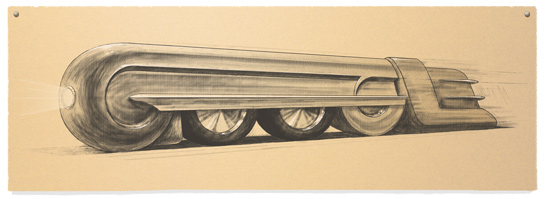
Google’s homepage today celebrates a renowned industrial designer, Raymond Loewy, who was born one-hundred twenty years ago today:

raymond-loewys-120th-birthday-ca-fr-us-nl-uk-ie-6388231276855296-hp

Google’s latest doodle celebrates the birthday of Raymond Loewy, the late industrial designer of the Coca-Cola bottle who was also involved in creating the Shell, Exxon, TWA and former BP logos.

Loewy’s slenderised design for an S1 steam locomotive that saw service in the eastern US forms the basis of the doodle.

Described by admirers as the “father of industrial design”, Loewy, who died in 1986 at the age of 92, was responsible for other notable symbols including the Lucky Strike cigarette packet.

Born in France, he emigrated to the US in 1919 after completing his engineering studies at the Université de Paris and École de Laneau.

On this day in 1912, a referendum to grant women the right to vote fails:

1912 – Women’s Suffrage Referendum
On this date Wisconsin voters (all male) considered a proposal to allow women to vote. When the referendum was over, Wisconsin men voted women’s suffrage down by a margin of 63 to 37 percent. The referendum’s defeat could be traced to multiple causes, but the two most widely cited reasons were schisms within the women’s movement itself and a perceived link between suffragists and temperance that antagonized many German American voters. Although women were granted the vote in 1920 by the 19th Amendment to the U.S. Constitution, Wisconsin’s own constitution continued to define voters as male until 1934. [Source: Turning Points in Wisconsin History]

Scientific American‘s daily trivia question asks about fatal diseases. (Clicking on the question leads to its answer.)

What is the number one killer of American women?