FREE WHITEWATER

Daily Bread for 2.17.13

Good morning.

We’ll have a mostly sunny day with a high of twenty-five.  Today brings 10h 39m of sunlight, 11h 37m of daylight, with a waxing crescent moon.

On 2.17.1972, Nixon goes to China:

Washington, Feb. 17 — President Nixon left for China today.

He is to reach Peking on Monday morning, China time (Sunday night, New York time), for a week’s stay on the mainland that is to include two conferences, with Chairman Mao Tse-tung and meetings with Premier Chou En-lai.

Addressing ‘Vice’ President Agnew, the leaders of Congress, members of his Cabinet and a large crowd assembled on the White House lawn this morning to bid him farewell, the President said in a brief statement that the United States and China must “find a way to see that we can have differences without being enemies in war.”

If We Can Make Progress

“If we can make progress toward that goal on this trip,” he declared, “the world will be a much safer world and the chance particularly for all of those young children over there to grow up in a world of peace will be infinitely greater.”

The trip produced several accords with Mao’s China, and was even the inspiration for an opera (from the composer, but most certainly not the blogger who lacks any of those talents, John Adams):

On 2.17.2002, a gold medal for a Wisconsinite:

2002 – Wisconsin Skater Takes Gold
On this date West Allis native Chris Witty won a gold medal in speed skating’s 1000 meter at the Salt Lake City Olympic Winter Games. She broke the world record with a time of 1:13.82, even though she was recovering from mononucleosis. Before Witty competed in ice staking, she was a professional bicyclist. [Source: US Olympic Team]

Google-a-Day asks a history question:  “Whose disciples founded Yellow Hats?”
Daily Bread for 2.16.13

Good morning.

Saturday in Whitewater will bring a slight chance of flurries, a high of eighteen, and partly sunny skies.

On this day in 1923, an archaeological wonder:

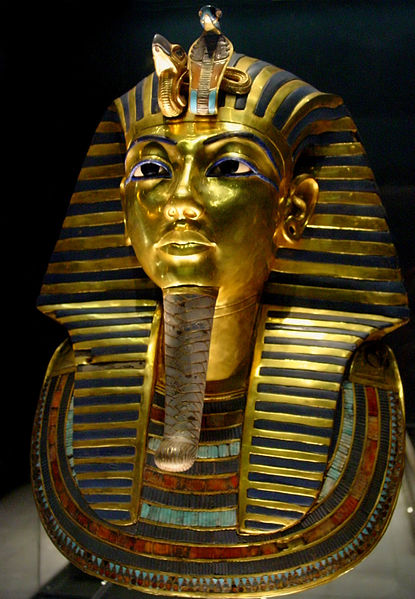
Tuthankhamun_Egyptian_Museum

[I]n Thebes, Egypt, English archaeologist Howard Carter enters the sealed burial chamber of the ancient Egyptian ruler King Tutankhamen….

When Carter arrived in Egypt in 1891, he became convinced there was at least one undiscovered tomb–that of the little known Tutankhamen, or King Tut, who lived around 1400 B.C. and died when he was still a teenager. Backed by a rich Brit, Lord Carnarvon, Carter searched for five years without success. In early 1922, Lord Carnarvon wanted to call off the search, but Carter convinced him to hold on one more year.

In November 1922, the wait paid off, when Carter’s team found steps hidden in the debris near the entrance of another tomb. The steps led to an ancient sealed doorway bearing the name Tutankhamen. When Carter and Lord Carnarvon entered the tomb’s interior chambers on November 26, they were thrilled to find it virtually intact, with its treasures untouched after more than 3,000 years. The men began exploring the four rooms of the tomb, and on February 16, 1923, under the watchful eyes of a number of important officials, Carter opened the door to the last chamber.

Inside lay a sarcophagus with three coffins nested inside one another. The last coffin, made of solid gold, contained the mummified body of King Tut. Among the riches found in the tomb–golden shrines, jewelry, statues, a chariot, weapons, clothing–the perfectly preserved mummy was the most valuable, as it was the first one ever to be discovered. Despite rumors that a curse would befall anyone who disturbed the tomb, its treasures were carefully catalogued, removed and included in a famous traveling exhibition called the “Treasures of Tutankhamen.” The exhibition’s permanent home is the Egyptian Museum in Cairo.

On 2.16.1943, the Nazis execute a Milwaukee native and leader of a small German resistance:

1943 – Mildred Harnack Guillotined in Berlin
On this date Mildred Harnack was guillotined in Berlin, Germany. Harnack was born in Milwaukee and studied and lectured at the University of Wisconsin. She and her husband, Arvid Harnack, were key members of a German resistance group which assisted German Jews and political dissidents, circulated illegal literature, met secretly with prisoners of war, and worked to document Nazi atrocities in Europe. Known by the Nazis as the “Red Orchestra,” Harnack’s companions were arrested, tortured, and tried for their activities. Mildred Harnack was guillotined in Berlin on the personal orders of Adolf Hitler. [Source: UW – Madison Archives and Records Management Services]

Google-a-Day aska a question about a patron of the arts: “What was the name of the 8000-acre estate inherited by the art patron who commissioned ‘Lobster Telephone’?”

Friday Poll: Cruise from Hell Compensation Package

All America’s been watching the return and disembarkation of the Carnival Cruise ship Triumph, after days without power, in conditions of filth, for about four-thousand passengers and crew.

The line has offered a compensation package for those so distressed these last few days:

As a third tug boat was dispatched to assist in towing Carnival Triumph to port in Mobile, Alabama, Carnival Cruise Lines announced further compensation for passengers affected and the cancellation of 12 additional voyages.

USD$500 per person will be added to the current compensation package that includes a full refund of the cruise along with transportation, expenses and reimbursement of all shipboard purchases during the voyage (excluding casino charges, art and gift shop purchases).

Passengers will also receive a future cruise credit to the amount paid for this voyage.

Is that compensation enough?

I’ll say no: they’d do better to offer far more (ten or twenty times that amount), across the board, to produce a greater goodwill among the general public. They might also offer an especially large package as settlement of any and all claims, but that should be done individually, passenger by passenger, rather than as part of an offer to all passengers.

What do you think?


Daily Bread for 2.15.13

Good morning.

Whitewater’s week ends with a chance of scattered flurries and a high of twenty-four. We’ll have 10h 34m of sunlight, 11h 32m of daylight, with a waxing crescent moon.

On 2.15.1898, a explosion still remembered today, as a prelude to war:

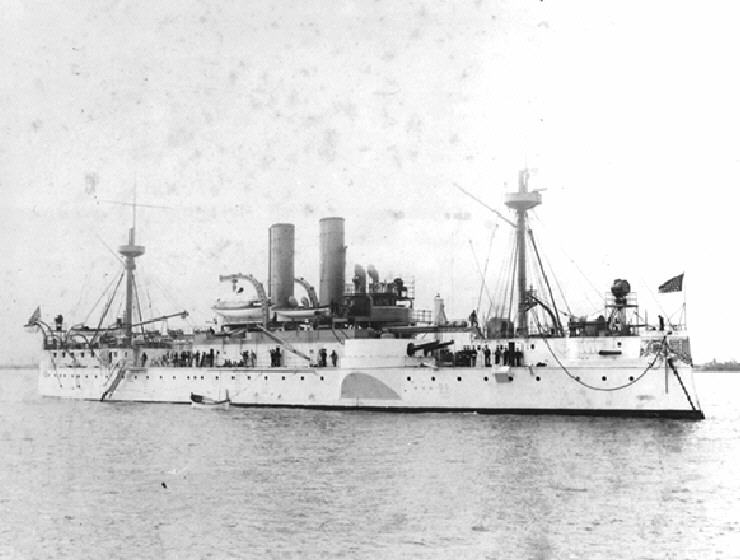
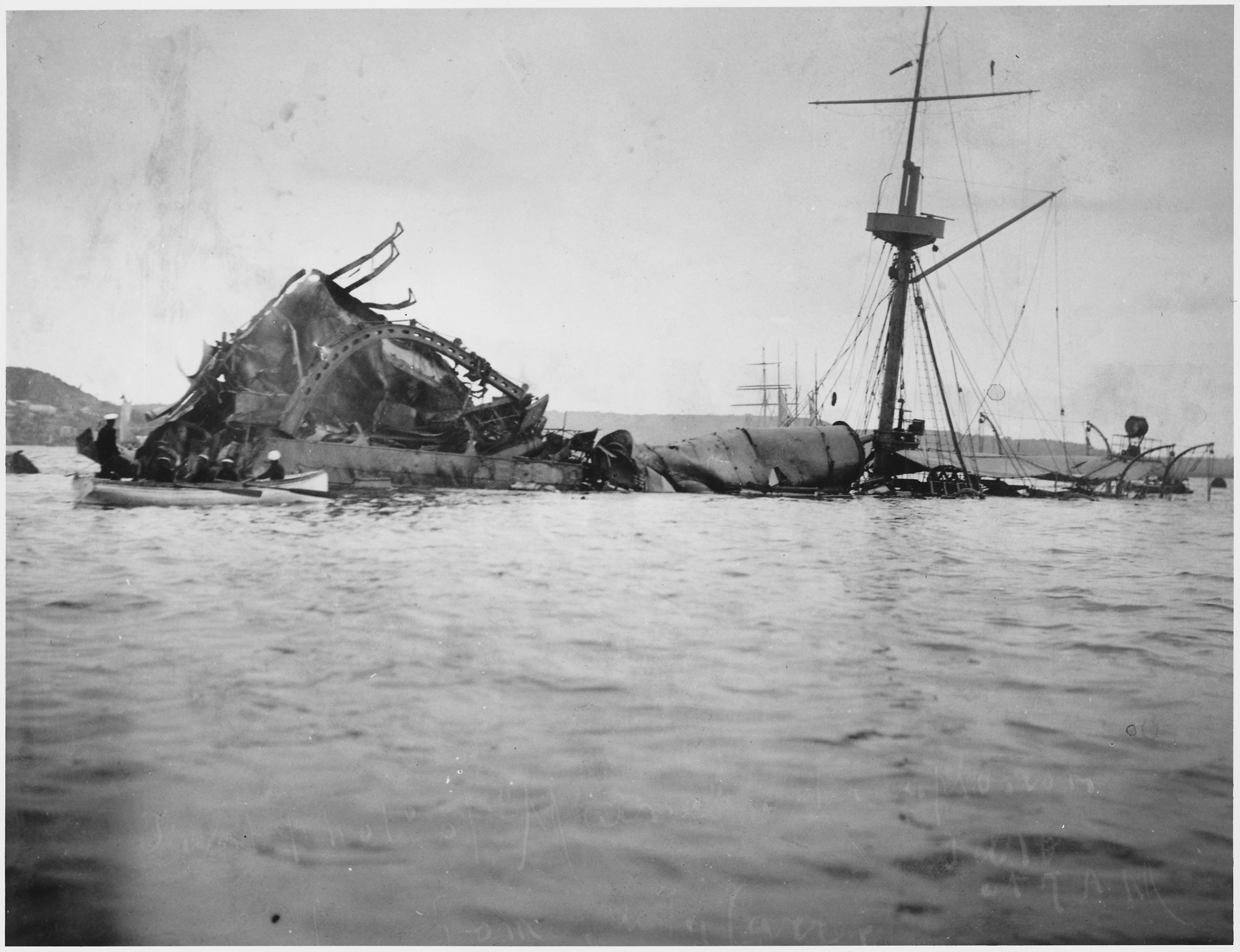
USS_Maine_h60255a

url

A massive explosion of unknown origin sinks the battleship USS Maine in Cuba’s Havana harbor, killing 260 of the fewer than 400 American crew members aboard.

One of the first American battleships, the Maine weighed more than 6,000 tons and was built at a cost of more than $2 million. Ostensibly on a friendly visit, theMaine had been sent to Cuba to protect the interests of Americans there after a rebellion against Spanish rule broke out in Havana in January.

An official U.S. Naval Court of Inquiry ruled in March that the ship was blown up by a mine, without directly placing the blame on Spain. Much of Congress and a majority of the American public expressed little doubt that Spain was responsible and called for a declaration of war.

Subsequent diplomatic failures to resolve the Maine matter, coupled with United States indignation over Spain’s brutal suppression of the Cuban rebellion and continued losses to American investment, led to the outbreak of the Spanish-American War in April 1898.

Within three months, the United States had decisively defeated Spanish forces on land and sea, and in August an armistice halted the fighting. On December 12, 1898, the Treaty of Paris was signed between the United States and Spain, officially ending the Spanish-American War and granting the United States its first overseas empire with the ceding of such former Spanish possessions as Puerto Rico, Guam, and the Philippines.

In 1976, a team of American naval investigators concluded that the Maineexplosion was likely caused by a fire that ignited its ammunition stocks, not by a Spanish mine or act of sabotage.

Google-a-Day poses a geography question: “In the Russian monument of the founder of Moscow, which hand is he holding out to the side?”

Daily Bread for 2.14.13

Good morning.

Valentine’s Day in Whitewater will be mostly cloudy, with a chance of afternoon snow, and a high of thirty-seven.

Whitewater’s Police & Fire Commission meets at 6 PM tonight.

On this day in 1929, a shocking Prohibition-related crime:

7 Chicago Gangsters Slain by Firing Squad of Rivals, Some in Police Uniforms

Chicago, Feb. 14 — Chicago gangland leaders observed Valentine’s Day with machine guns and a stream of bullets and as a result seven members of the George (Bugs) Moran-Dean O’Banion, North Side Gang are dead in the most cold-blooded gang massacre in the history of this city’s underworld.

The seven gang warriors were trapped in a beer-distributors’ rendezvous at 2,122 North Clark Street, lined up against the wall by four men, two of whom were in police uniforms, and executed with the precision of a firing squad.

The killings have stunned the citizenry of Chicago as well as the Police Department, and while tonight there was no solution, the one outstanding cause was illicit liquor traffic.

On this day in 1819, a famous inventor and longtime Wisconsin resident was born:

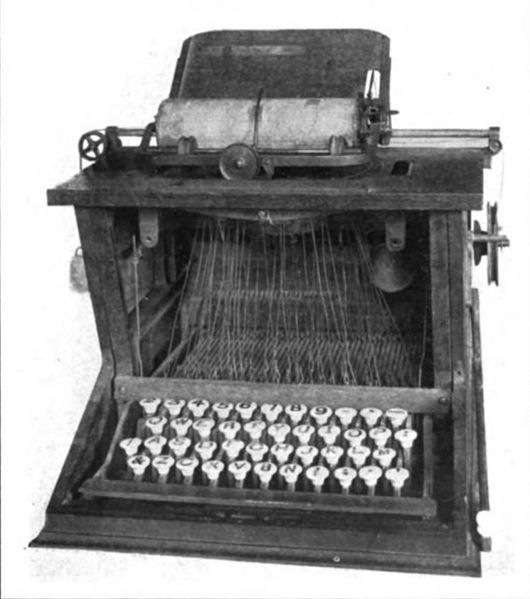
Sholes_typewriter

1819 – Typewriter Inventor Born
On this date the inventor of the modern typewriter, C. Latham Sholes, was born. Sholes moved to Wisconsin as a child and lived in Green Bay, Kenosha, and Milwaukee. In 1867, in Milwaukee, he presented his first model for the modern typewriter and patents for the device were taken out in 1868. Sholes took the advice of many mechanical experts, including Thomas Edison, and so claims that he was the sole inventor of the typewriter have often been disputed. [Source: Badger Saints and Sinners by Fred L. Homes, pg 316-328]

Google-a-Day asks about art: What was the profession of the father of the artist who created the portrait entitled “A Young Hare”?

Restaurant Reviews

I’ve started reviewing restaurants, in the city and nearby, with the first review to be published next week (as part of a Wednesday feature).

It’s a longstanding project, about which I’ve been thinking for over a year. (To the readers who’ve encouraged me: thank you, kindly.)

We’ve a small but growing restaurant culture here in Whitewater, and that’s all to the good.

Here are a few introductory remarks about reviews.

How does one review something? One takes what one knows and understands, visits and experiences the subject of one’s review, and writes about it afterward. Someone could tell you it’s more complicated than that, but it isn’t. A hundred new men could tell you it’s more complicated, intricate, and difficult than that, but then (having said so) all of them would be wrong.

Readers may consider these reviews as they wish, delivered simply as they surely will be. I’ve every confidence that readers – sensible and knowledgeable as people typically are – can decide whether they consider whether what others write is persuasive.

I will neither accept requests to review a restaurant, nor consider requests to avoid one. A good and genuine review – rather than a thinly-veiled promotional announcement – requires true independence and rests securely on a fundamental right of expression.

Just as much, it’s wrong to announce oneself as a reviewer, ask for special seating or conditions, or make a great show and fuss during a meal. A restaurant review is meant to describe the experience of ordinary patrons, for prospective ones, rather than a special & favored situation. (People who go into restaurants and try to intimidate the staff by declaring that they’ll be publishing their reviews on Yelp show particularly bad form.)

I’ve selected a format, and will visit each restaurant at least twice before posting a review.

Reviews about nearby restaurants will appear here at FREE WHITEWATER. Reviews of establishments farther away will appear at all my sites.

There’s a New Whitewater, a more hip and prosperous place, ahead not too far away.

Hope you’ll check back on 2.20.13 for the first review.

Assorted Items

Just a few quick housekeeping items, and a look ahead to features at this site in 2013.

Advertising. Two of my sites run advertising (Daily Adams, Daily Wisconsin), but FREE WHITEWATER, as I’ve mentioned before, never will.

There’s nothing wrong with advertising, of course, but running advertising in a small town would limit a site’s free range of expression. Nor do I have any interest in flacking every proposition that comes along. Glad-handing is of no benefit to Whitewater. It’s just a distraction from one’s independent commentary.

Upgrades. To meet increasing traffic volume, I’ve undergone a server upgrade. There have been some growing pains along the way, and there may be a few yet ahead. But the support I have had for this transition is excellent. Any mistakes have been mine, any quick recoveries have been theirs.

Reviews. I’ve long wanted to do more reviewing, of restaurants especially. A few readers know that restaurant reviews have long been a plan of mine, and I’ll begin this month. Later today I’ll write more about this, and the first review will be published on 2.20.13.

Regular weekly features. FREE WHITEWATER has several regular features, and 2013 will bring a few more. Organized by day of the week, here they are:

Every day. Every day has a morning Daily Bread post, a feature first begun in 2008, and expanded to every day (including Saturday and Sunday) in 2012.

Sunday. Sunday Morning Cartoon, Recent Tweets.

Monday. Monday Music.

Tuesday. A film clip – animation or live action. I’ll move my own videos, and add new ones, to Vimeo, as I think it’s a cleaner, less-cluttered look. (Transition this month.)

Wednesday. Reviews of restaurants. (Starting 2.20.13.)

Thursday. A cartoon from Mark Anderson. (Started in January 2013.) I’ll post at least one cartoon weekly from Anderson. I very much like his work, and good cartoons are hard to find, so I feel fortunate.

Friday. Friday Poll, Catblogging. Both have been features at this site for a while; catblogging’s been a staple of many American bloggers for years. Cats make great pets. Lincoln and Twain both liked cats, and over a century later felines pretty much rule the Internet.

Saturday. No Saturday-exclusive feature for now, but I’m sure something will come along.

Series. Upcoming posts or series for the year, with date of publication (more to be added, of course):

The Whitewater Political Scene. A survey of political trends in the city. February 20th and 21st.

Techniques of Political (Municipal) Distraction. An updated version of these earlier posts. April 12th.

A Simple Wisconsin Declaration. A brief libertarian statement of rights for Wisconsinites. May 1st.

The Curse of the Orange Salamander. An updated version of a Twiller from a few years ago, expanded and consolidated as a single story. July 12th.

Grant Chasers and Crony Capitalists. A comprehensive series on the ‘Innovation’ Express. The whole project is like a poster-child for bad policy, with every hackneyed claim and fool’s explanation. Well worth addressing in a much longer form. October 12th.

When Green is Really Brown. Bogus environmentalism, where the only green that matters is the green of public money. December 12th.

More beyond this, too, I’m sure.

Daily Bread for 2.13.13

Good morning.

It’s a mostly sunny day, with a high of thirty-seven, ahead for Whitewater.

Whitewater’s Tech Park Board meets today at 8 AM.

The agenda posted at the City of Whitewater website for that Tech Park Board meeting is unprofessional and sloppy at best, and legally deficient at worst. Here’s the full text:

MEETING NOTICE
Whitewater University Technology Park Board Meeting Wednesday, Feb 13, 2013 at 8:00 a.m.
Whitewater Innovation Center
1221 Innovation Drive
Whitewater, WI 53190

Agenda
1. Call to Order
2. Approval of Minutes from Jan. 16, 2013 Meeting
3. Review/Acceptance of Jan. 2013 Financial Reports – Clapper
4. WUTP Architectural Review Committee Discussion – Telfer & Clapper
5. Innovation Center Facility / Security Discussion – Ehlen
6. City of Whitewater Seed Capital Fund Update – Knight
7. Whitewater Incubation Program (WhIP) Updates – Ehlen
8. Strategic Priorities and Development and Plan
9. Reconvene into Open Session
10. Future Agenda Items
11. Future Meeting Dates Mar. 20, Apr. 10, May 8, June 19
12. Adjournment

Did anyone bother to review and proofread this notice? At best, there’s a stray entry at item 9: “9. Reconvene into Open Session.” At worst, there’s a missing entry for a closed session, somewhere before item 9, that’s been wholly omitted.

The law requires that a closed session be expressly noticed, and that its purpose be expressly stated, under one of 13 possible purposes. Wis. Stat. § 19.84(2), § 19.85(1).

The notice looks like it was dashed off hastily, but there’s no exception for this public body under Wisconsin law for “I didn’t feel like complying,” “I can’t do any better,” or “I’ll tell the public only what I feel like telling them.”

These are clear and simple provisions, and in any event, gentlemen who’ve taken millions in others’ money should be expected to do a bit of proofreading for their publicly-financed undertaking.

If the minimum standards of law and professionalism are too hard, one may always quit the project.

On this day in 1861, America awards the first Medal of Honor to a soldier:

The earliest military action to be revered with a Medal of Honor award is performed by Colonel Bernard J.D. Irwin, an assistant army surgeon serving in the first major U.S.-Apache conflict. Near Apache Pass, in southeastern Arizona, Irwin, an Irish-born doctor, volunteered to go to the rescue of Second Lieutenant George N. Bascom, who was trapped with 60 men of the U.S. Seventh Infantry by the Chiricahua Apaches. Irwin and 14 men, initially without horses, began the 100-mile trek to Bascom’s forces riding on mules. After fighting and capturing Apaches along the way and recovering stolen horses and cattle, they reached Bascom’s forces on February 14 and proved instrumental in breaking the siege.

Also on this day, in 1935, Wisconsin rejects a true market in gasoline for a fixed and arbitrary price:

1935 – Gasoline Price Wars Quelled
On this date, in an effort to stop gasoline price wars, the state of Wisconsin established a minimum price of 16 cents per gallon for gasoline. [Source: Janesville Gazette]

Google-a-Day offers a geography question: “What’s the southernmost province of the country that occupies approximately one sixth of the Iberian Peninsula?”

The Failure of Inside-Out (Thanks in Part to Governor Walker)

It’s never been sensible to believe that the center of civilization is 312 W. Whitewater Street, with people and events beyond shrinking markedly in significance as one gets farther from that supposed center. Under that theory, by the time one reaches Palmyra, one might as well be in the unexplored Amazon.

Exaggerating the significance of local – becoming obsessively hyper-local – exaggerates the near and unreasonably diminishes the far. It elevates local customs no matter how backward, and denies a fair consideration of beneficial practices that could be adopted from across the state or country.

I’d say it’s Gov. Walker, of all people, how has made the hyper-local in Wisconsin politically impossible. By raising the ideological stakes between left and right – as matter of state policy that alters former legal, political, and economic relationships within small communities – Walker has made state politics more important. He has simultaneously and necessarily (in this case) made local politics less important.

In effect, he’s Wisconsinized politics away from cities and towns through sweeping legislation from Madison. (The irony is that he’s of a political party that insists it stands for local control.)

Although I’m not a Republican, it’s one of the consequences of his policies that I think is beneficial: one is more powerfully confronted with the question of where one stands. As I’ve always favored an approach that produces local policies only after considering state and national trends, a political approach that looks beyond the town line isn’t a bad idea.

Gov. Walker’s not looking in a libertarian direction (not at all), but he is looking past the idea that only what’s within a hundred yards is what matters.

Hyper-local approaches would have faded anyway, as new media have made connecting to national news and trends as easy – or easier – than walking across the street.

Yet, Walker’s ideological zeal has accelerated the decline of local. It’s a more divided state, no doubt, but at least it’s one that cannot credibly pretend that a city or town is an island. More than ever, state government influences local policy.

The statewide fight over alternative courses of action is worth waging, in itself and for its broadened horizon.

One should use the best ingredients from across all America; anything less is a recipe for mediocrity.

Looking at state (and federal) actions, and shaping local policy only after that examination, is all too the good.

We’ll have a better, less provincial, politics.