FREE WHITEWATER

On Whitewater’s Candidates’ Forum for City Manager

Update, 9.22.12:  Embedded below is the video of the Friday evening candidates’ community forum.

City Manager Candidates Forum 09/21/2012 from Whitewater Community TV on Vimeo.

Original post from 9.21.12:

Earlier this evening, Whitewater held a candidates’ forum for her open city manager position. There are five candidates, and it’s likely that Council will pick one of them by tomorrow afternoon.

Whitewater is in need of something different from her last two municipal administrations. The earlier of the two ended with a bang, the more recent with a whimper. Both were celebrated when they began; either would have done better to manage humbly and inclusively.  These last four or so years, in particular, have been mostly wasted – a city in need of basic management has been littered with big schemes and tiny results.

A few observations on the community forum, held in the municipal building, and lasting a bit over an hour —

1.  Traditional and Conventional.  All of the candidates are professional public administrators, are committed to that work, and have studied public administration at one time or another.  Most are about the same age, and from their answers, all have a (mostly) similar outlook.  Four of the five are near the end of their careers, I’d guess.  These are all men (and they are all men, by the way) who see the world as public officials would see it; there’s is shared a government-to-outside perspective.  The similarities in the selection of finalists are almost certainly by design.  It’s a group meant to be heavy on experience, of a certain type.

2.  Understated.  At least in these interviews, each candidate was even-spoken, steady, and almost subdued.  Although this was understandably a long day for them, there’s a value in hearing candidates after a long day: some working days will be long, too.  One gets a better sense of their reserves of energy and enthusiasm.   No one was ebullient or powerfully expressive, but instead simply moderate in expression.

3.  Inside or outside?  Whitewater has a choice to make: inside or outside?  Will the next city manager take a highly-visible or a low-profile role?  Either approach can be successful, but only if both possibilities are grounded in true humility, fairness, and respect for honest analysis and practical accomplishments.  A pyramid-builder is of no use, but much harm, to a small city.  Generally, the more traditional and conventional the candidate, the better a low-profile role will be.  

4.  Who decides?  Who will play the leading role, of policymaker, in the city?  Will it be the city’s common council or her city manager and his staff?  All correctly deferred to common council as the legitimate policymaker, but the proof is in the pudding.  There will always be the risk of bureaucratic mission creep, a few months or a year after a new city manager is in the job.   That kind of overreaching has been bad for the city; trying more of it will produce the same disappointing results.

5.  Development success stories.  Most of the candidates described development success stories as ones in which prospective businesses got tax breaks, federal or state grants, the buying out of homeowners to clear the way for business expansion,  etc.  No.  Those are bad ideas, but predicable ones for men who see the world from a government-out perspective.   It’s also an approach of reduced prospects:  there’s less an less public money  to invest (really, to waste) on big businesses that want big handouts.  

The people of Whitewater don’t owe big-talking and big-scheming businesses a dime of their money, or their public obligation (as municipal debt).  Public money should be , first and foremost, for public safety and care of the poor.  Real capitalists use true, private capital; the rest are frauds and burdens on their less fortunate neighbors.

Those near the end of their municipal careers may look back to days when government could impose on taxpayers again and again.  There’s no more to take; they won’t be able to manage that way in the decade ahead

6.  A Distressed Tax Incremental District.  Whitewater is one the very few communities in Wisconsin to have a distressed tax incremental district.  All the candidates but one seemed to know that we are one of the unfortunate few.  The fifth answered a question about TID 4 with a general reply that supposed tax incremental districts are designed to overcome an area’s distress.  That’s correct, that is their intended purpose.  It’s just that they’re seldom so sparingly used – it’s often a spending scheme used too often, that promises too much and delivers too little.

And so, here we are.

How to fix a distressed TID?  Most of the candidates proposed refinancing (reasonable if possible) or borrowing from other TIDs that might be doing better.  It’s this second idea that’s really and truly mistaken.  Borrowing from other TIDs compounds a city’s troubles.  (For more about TIDs in the city, here’s a search link to earlier posts.)

The only viable, longterm solution is to find the growth in private investment that the TID was designed to attract as the very reason for its creation.  

7.  A Chance to Do Better.  In these candidates, Whitewater has a chance to do better.  I wrote earlier, when posting about the finalists, that I wished them all well.  These have been hard years for the city, but we can – and I believe we will — do better.   Practical, matter-of-fact, day-in day-out management would do us a world of good.  

I hope, as everyone here does, for the best for our city.

An Introduction to Waste Digesters: What Goes Into a Digester

Waste digesters take organic waste (and any substances, chemicals, or concoctions attached to that waste) and process it through composting (‘digestion’). Although a few describe these ingredients as ‘clean and green,’ that’s false: they’re mostly brown and entirely foul. Nor are these ingredients assured to be natural: they will inevitably include the unnatural, concocted chemicals and pollutants with which the natural ingredients will have come into contact.

Organic Ingredients.

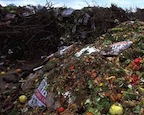
Of the organic ingredients, digesters take in discarded and masticated food, the rotting carcasses of rendered animals, animal excrement, or even human excrement. Take it in they do, in large amounts: a commercial operation will require dozens of full truckloads of waste – perhaps fifty or more – each day. As the digester operates both day and night, these trucks will travel great distances at all hours to deposit their contents. The filth and dead animals of other places, far from the host city, will be carted to the digester at a continuous, relentless pace.

In this way, a waste digester reverses the tried-and-true method of waste disposal: instead of taking rotting food, flesh, and excrement to places far away from people’s homes, they bring that waste from faraway places near the very homes in communities with digesters.

A digester reverses all experience, and even the habits of animals: it’s natural to stay away from rotting substances and excrement. There’s never been, in all the history of the world, a successful culture that brought these substances closer to their homes. Not one.

In all history, there’s never been a culture that wished to be nearer to waste, or have their children closer to it. Not one.

The Organic Ingredients’ Other Ingredients.

Perhaps the strong of stomach and confused of mind are unconcerned about the excrement and rotting things that go into a digester. Perhaps. That’s not all that goes through a community’s streets, day and night, into a digester: it’s not only those rotting things, but each and every thing of which those rotting things may be contaminated.

If discarded food, then it’s also what went into it: pesticides, plant diseases, fertilizers, additives, dyes, with whatever unnatural genetic modifications that food underwent.

If partly-eaten, masticated food, then it’s also all those substances that went into the food during eating: whatever those consuming it took with the food, including any infections or viruses they may have had, or medicines they may have been given. Few would happily hold the half-chewed remains a burger found on the street, or comfortably carry the masticated patties in their pockets.

If excrement, that organic matter includes everything those animals ate or touched and then excreted: their medicines, their diseases whether bacterial or viral, and their meals of whatever unhealthy and chemically-enhanced kind.

Some of these other ingredients are themselves organic, but dangerous; others are inorganic and dangerous.

Not Simply Plants.

Though one will hear that digesters process food waste (with an emphasis on vegetables), that’s only part of what they consume. (There’s a way in which talking about food waste is a feint, a distraction from the full ingredients’ list in waste digestion. Even if food, the food itself is only part of the contents: it’s every unnatural thing in the food, of course.)

Despite rosy claims, the contractual agreements for waste digesters won’t specify the exclusive use of ‘really-clean vegetables’ or ‘perfectly fine but uneaten food.’ Of course not – the full truckloads are crammed with whatever can go into the digester, whether plants or animals or excrement.

In it all goes.

With so many truckloads, day and night, how would one verify their contents, anyway? Even if one could verify that only the certain things went in, one would have no way to know the contents’ contents, so to speak (of contaminants, etc.).

If these things are trucked into a town, and then into a digester, where do they go thereafter?

Tomorrow: What Comes Out of a Digester.

Friday Poll: A Wild Card Spot for the Brewers?

Update: the poll’s now open –

It’s been a long season for the Brewers, with months of it spent under .500, but now they’ve a chance for a wild card entry into the post-season.

Do they make it into October as a wild card team? They’ve missed so many opportunities this season, that instinct suggests to me that they won’t, but I’ll still answer that they do, because late September is baseball’s time for enduring hope.

What do you think?


Daily Bread for 9.21.12

Good morning.

The week ends for Whitewater with a likelihood of showers and a high of fifty-nine.

There is a reception for city manager candidates today at 4 PM, and a community forum at 6:30 PM today:

4:00 p.m. – 5:30 p.m. COMMUNITY RECEPTION – MEET AND GREET
Innovation Center Atrium, 1221 Innovation Drive in Whitewater –
Candidates will meet members of the Whitewater Community

6:30 p.m. – 8:30 p.m. COMMUNITY PUBLIC FORUM
Candidates will respond to questions from the Whitewater community.
The forum will be held in the Council Chambers in the Municipal Building at 312 West Whitewater Street.

Whitewater’s Pig in the Park begins this evening and continues tomorrow at the Cravath Lakefront.

On this day in 1780, Benedict Arnold betrayed America:

On this day in 1780, during the American Revolution, American General Benedict Arnold meets with British Major John Andre to discuss handing over West Point to the British, in return for the promise of a large sum of money and a high position in the British army. The plot was foiled and Arnold, a former American hero, became synonymous with the word “traitor.”

From Google’s daily puzzle, a question about ancient chemistry: “What did the ancients call the chemical element that’s often used as a vulcanizing agent?”

A Quick Fix for Uncertainty about Contracts

Cities and towns routinely enter into contracts, agreements, memoranda of understanding, etc. Both local legislators and a town’s residents should have a clear, concise idea of these deals’ requirements.

The recent Whitewater Common Council meeting of 9.18.12 shows how many deals there are, and how hard it is to keep track. Considering a deal with our university over use of parking meters or parking permits, Council looked back to see the terms of the agreement: who could decide whether spaces had parking meters or required permits?

Under the agreement, the university had that power, and chose parking meters. They may be inconvenient, but it was within the university’s power to choose them. It’s understandably hard to keep track. There are many deals, and serving on a city council is not a fulltime job.

An easy way to spot and recall provisions like this is to offer a summary of each agreement, of a paragraph or two, that describes the deal’s terms simply: who does what for whom?

Even a complicated agreement should be reduced to a page, perhaps two. Simple agreements might require only a paragraph or so. The summary’s not law, but it is a useful reference before and after an agreement wins approval.

There’s another benefit to a summary-formula like this: it helps concentrate attention on the key parts of a deal. Deals that go bad don’t often go bad because they’re poorly drafted; they go bad because they’re ill-considered. It’s not for lack of draftsmanship, but instead from ill-considered terms, that uncertainty and disappointment often arises.

If one cannot describe a deal simply, then it’s a sign that key requirements (who has the power to make decisions, etc.) haven’t been well considered.

A simple summary helps focus one’s concentration in a world of many such deals, one after another.

Introduction to Waste Digesters: How They Work

Waste digesters take organic refuse (e.g., rotting food, dead animal carcasses, human or animal excrement) and process that waste by composting it into sludge, liquids, carbon dioxide, and methane. The methane (‘biogas’) is sometimes used for fuel, and the sludge and moisture extracted from the composting is spread on the ground or released into the air.

Waste digestion may involve oxygen (aerobic digestion) or may operate without oxygen (anaerobic digestion).

Proponents describe this as a new, green, and clean process. It’s really an old, brown, and filthy one. There’s nothing pristine in this: it’s waste in, waste out.

You may have heard it works like this:

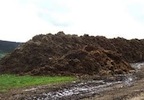
It’s really more like this:

I once heard it described as analogous to human digestion, of those of poor nutrition: filth and junk goes in, and excrement, fluids, and gases come out. That’s a solid analogy.

This principle isn’t new or innovative. Even less-developed peoples, centuries ago, tried anaerobic digestion:

Anaerobic digestion has been used for centuries. During the 10th century BC, bath water was heated by biogas in Assyria. In the 17th century, Jan Baptista Van Helmont learned that flammable gases could evolve from decaying organic matter, and in 1808 Sir Humphrey Davy determined that the anaerobic digestion of cattle manure produced methane. In 1859, a digestion plant was built at a leper colony in Bombay, India.

These peoples hit upon the idea of anaerobic digestion because it was like human and animal digestion: the result mimics defecation, expectoration, urination, and flatulence.

It’s says all one needs to know that experimenters placed their anaerobic digester near a leper colony.

Tomorrow: What Goes into a Digester.

Daily Bread for 9.20.12

Good morning.

It’s a mostly sunny day with a high of sixty-six ahead for Whitewater.

On this day in 1973, millions of Americans watched a tennis match:

On this day in 1973, in a highly publicized “Battle of the Sexes” tennis match, top women’s player Billie Jean King, 29, beats Bobby Riggs, 55, a former No. 1 ranked men’s player. Riggs (1918-1995), a self-proclaimed male chauvinist, had boasted that women were inferior, that they couldn’t handle the pressure of the game and that even at his age he could beat any female player. The match was a huge media event, witnessed in person by over 30,000 spectators at the Houston Astrodome and by another 50 million TV viewers worldwide. King made a Cleopatra-style entrance on a gold litter carried by men dressed as ancient slaves, while Riggs arrived in a rickshaw pulled by female models. Legendary sportscaster Howard Cosell called the match, in which King beat Riggs 6-4, 6-3, 6-3. King’s achievement not only helped legitimize women’s professional tennis and female athletes, but it was seen as a victory for women’s rights in general.

Google’s daily puzzle asks about then-secret messages during the Second World War: ““The long sobs of the violins of autumn” was the first of two secret messages broadcast to the French resistance during WWII. What was the second (in English)?”

An Introduction to Waste Digesters

You may have heard that Whitewater has before her a ‘monumental’ opportunity for the construction of a vast waste digester in the city, and that this prospect is an example of green technology. There have been two local newspaper stories to this effect, but little substance to either (and significant errors in one).

I have a post category dedicated to the proposal, but over the next few days I will write about waste digesters generally. I’ll describe how they work, what goes into them, what comes out of them, and the economics of digesters.

There are other questions, particular to Whitewater, that I will consider in detail another time.

One should be clear about what digesters are truly like, beyond vague claims and airy speculation. An American community should be a place of sound reasoning, open discussion, and good policy. We are an honest, reasonable, technologically-advanced people. No one deserves less than a plain and accurate description.

Tomorrow: How Digesters Work.

The Extraordinary Ordinary

Two recent meetings illustrate the simple, routine workings of government in the city: the 9.10.12 Planning Commission meeting, and the 9.11.12 Common Council session. I have embedded both below. You’ll find, I’d say, nothing extraordinary in either. Instead, it’s just the routine business of city planning, and the preparations for interviewing candidates to be Whitewater’s next city manager.

All cities have planning meetings, and all cites eventually replace hired managers with new ones. It’s sensible that this should be matter-of-fact. Most municipal government events are, and should be treated as, routine. Years of the supposedly grand and the visionary have left us only smaller and short-sighted.

We’re much better off with a politics of the ordinary. If we should develop that routine, we’ll have found the extraordinary in the practice of routine, ordinary government.

Here are recordings of those recent meetings:

Plan Commission Meeting 09/10/2012 from Whitewater Community TV on Vimeo.

Common Council Meeting 09/11/2012 from Whitewater Community TV on Vimeo.

Daily Bread for 9.19.12

Good morning.

Whitewater’s midweek will be sunny and breezy, with a high of seventy-three.

The city’s Zoning Rewrite Steering Committee meets tonight at 6 PM.

From Australia, a film maker caught a rare fire devil, a fiery tornado, on film. Astounding:

On this day in 1832, the Fox and Sauk signed the treaty that ended the Black Hawk War:

1832 – Sauk and Fox cede Iowa Lands
On this date Sauk and Fox Indians signed the treaty ending the Black Hawk War. The treaty demanded that the Sauk cede some six million acres of land that ran the length of the eastern boundary of modern-day Iowa. The Sauk and Fox were given until June 1, 1833 to leave the area and never return to the surrendered lands. Some sources place the date as September 21.[Source: Along the Black Hawk Trail by William F. Stark, p. 160-161]

Google’s daily puzzle asks about ancient Egyptian religion: “Who did the wife of the first monotheist king of Egypt worship?”

Does Mitt Romney Really Want to be President of the United States?

I don’t think so.

All America has seen the surreptitious recording of Romney at a Boca Raton fundraiser, answering donors’ questions, and in one clip opining that almost half of America is a vast, parasitic class.

Some conservative activists think Romney’s right to have said this, but most pundits (regardless of ideology) think it’s a politically destructive observation.

Romney’s wildly wrong about America, of course, and in a way that’s startling. Worse – yes, worse – he professes no feeling for half of his countrymen: “and so job is is not to worry about those people. I’ll never convince them they should take personal responsibility and care for their lives.”

What does this say about Romney? It says he’s better suited to private conversations with those of his ilk than he is in a public role. He’s evidently happier with the private than with the public.

One may have heard Romney speak fifty times, and never heard him speak so comfortably. For those who doubted he had any poise at all, here’s the answer: he’s relaxed in the company of wealthy, often self-made, financiers.

Although neither Romney nor his wife is self-made (his protestations of such notwithstanding), this fundraiser was hardly an old-money gathering; it was not a gathering of coupon-clippers, but of successful, working executives. (Had the attendees been from old families, they would not have been half so receptive to Romney’s message.)

Here was Romney in his element, in a money-man’s version of sitting at the end of a bar and philosophizing. That’s not a bad life, and in his investments, Romney’s created many opportunities for himself and others. There’s nothing wrong — there should be nothing wrong — with that pursuit.

It’s not, however, a life suited to politics. America has had many wealthy politicians, but among those of any success, they have all – I truly think all – shown more understanding of ordinary people than Romney shows. Without that undertanding and empathy, Romney’s useless to his political party, or any political party. (Reagan and Kemp, for example, deeply believed in the talents of people generally.)

There’s much that’s good about a life spent in the boardroom. Romney should have stayed there.

Posted on 9.18.12 at Daily Adams.

Daily Bread for 9.18.12

Good morning.

It’s a slight chance of showers and a high of sixty-one for Whitewater today.

In the afternoon, Whitewater’s Bicycle and Pedestrian Committee meets at 3:45 PM. This evening, Whitewater’s Alcohol Licensing Commission meets at 6:00 PM, with Common Council meeting thereafter at 6:30 PM.

On this day in 1793, an architectural beginning:

George Washington lays the cornerstone to the United States Capitol building, the home of the legislative branch of American government. The building would take nearly a century to complete, as architects came and went, the British set fire to it and it was called into use during the Civil War. Today, the Capitol building, with its famous cast-iron dome and important collection of American art, is part of the Capitol Complex, which includes six Congressional office buildings and three Library of Congress buildings, all developed in the 19th and 20th centuries.

From Google’s daily puzzle, a question for stargazers: “If you live in an area classified as the most polluted on the Bortle Scale, which Messier object is typically visible to the naked eye?”