FREE WHITEWATER

A Libertarian’s View of the WI 43rd Assembly Race: Collective Bargaining Changes of Act 10

Wisconsin discussed, debated, protested for or against, and saw legislative & gubernatorial recall elections over Gov. Walker’s collective bargaining changes. It was, in fact, a national and international story. These changes were easily the biggest political issue for Wisconsin in a generation – with protests and recall elections unprecedented in our history.

How odd, then, that of the two candidates running for the WI 43rd Assembly District, only one even mentions clearly and expressly on his campaign website restrictions placed on workers’ collective bargaining.

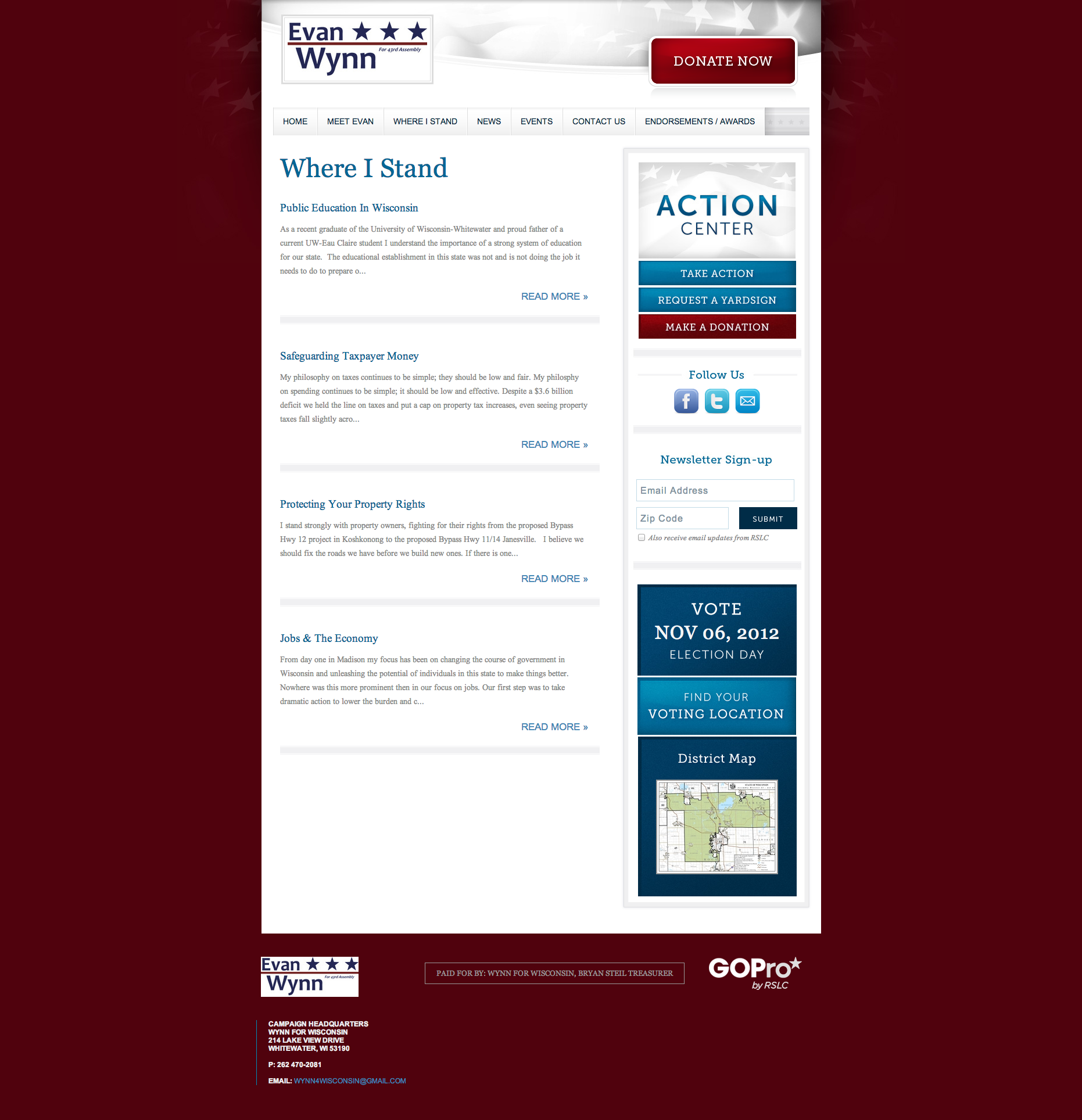
Andy Jorgensen – but not Evan Wynn — refers plainly to these changes on the ‘Issues/Where I Stand’ section of his campaign website?    Perhaps Rep. Wynn doesn’t remember what he was doing on April 6, 2011.  Allow me to refresh his memory:
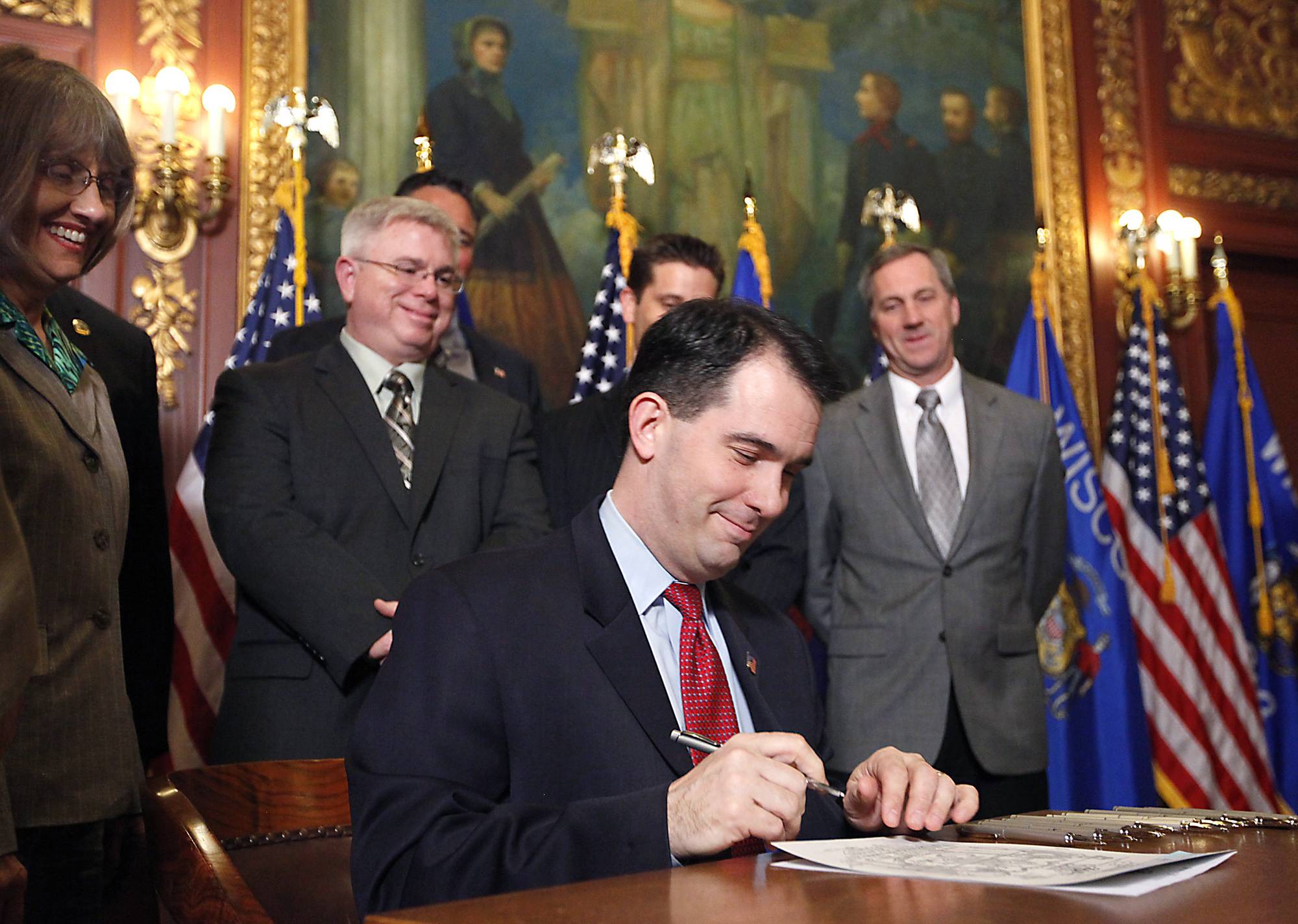
Rep. Evan Wynn stands with Wisconsin Governor Scott Walker at a ceremonial signing of his budget repair bill at the State Capitol building in Madison, Wisconsin on Wednesday, April 6, 2011. The bill repealed most collective bargaining options of public employees. (AP Photo/Wisconsin State Journal, John Hart)
 

I hold an AP license to this photo, as it speaks a thousand words, while about collective bargaining on his website (as of this post, so very close to the election) Rep. Wynn still provides not even one direct, clear word.

(See, Jorgensen’s issues page and Wynn’s issues page and budget highlights. I’ve saved screenshots of the candidates’ respective campaign websites, as of this post, which any American may do of any campaign site as fair use. It’s a right worth exercising and defending.)

Although I support significant and permanent reductions in the size of government, I did not support reductions in (to my mind) all workers’ legitimate rights of association. Some libertarians supported Gov. Walker’s enacted, collective bargaining restrictions, others opposed them. (A solid summary of libertarian view of workers’ union rights, recognizing the competing needs and interests involved, is available from Jacob Levy in a post entitled, ‘Thoughts on unions.’)

To Gov. Walker’s credit, when he ran in the 2012 recall, he ran on all his programs, including express mention of his reductions to workers’ bargaining rights. He held this position throughout the recall elections, and espoused it both in Wisconsin and across America. For his open and express defense of Act 10, he gained loyal Republican supporters in Wisconsin and places far beyond. He might have said the same before the 2010 election, but he was certainly upfront in June 2012.

Although I disagree with his restrictions, I respect that he ran on them plainly in 2012, and I think most Wisconsinites do, too.

In the end, one doesn’t win with people, but on issues, forthrightly stated.

Tomorrow: China and the WI Assembly Race.
Daily Bread for 10.28.12

Good morning.

Sunday brings clear, sunny skies to Whitewater, with a high of forty-six, and north winds around five miles per hour.

On this day in 1886, Pres. Cleveland dedicated the Stature of Liberty in New York Harbor:

Originally known as “Liberty Enlightening the World,” the statue was proposed by the French historian Edouard de Laboulaye to commemorate the Franco-American alliance during the American Revolution. Designed by French sculptor Frederic-Auguste Bartholdi, the 151-foot statue was the form of a woman with an uplifted arm holding a torch. Its framework of gigantic steel supports was designed by Eugene-Emmanuel Viollet-le-Duc and Alexandre-Gustave Eiffel, the latter famous for his design of the Eiffel Tower in Paris.

In February 1877, Congress approved the use of a site on New York Bedloe’s Island, which was suggested by Bartholdi. In May 1884, the statue was completed in France, and three months later the Americans laid the cornerstone for its pedestal in New York Harbor. In June 1885, the dismantled Statue of Liberty arrived in the New World, enclosed in more than 200 packing cases. Its copper sheets were reassembled, and the last rivet of the monument was fitted on October 28, 1886, during a dedication presided over by President Cleveland and attended by numerous French and American dignitaries.

From Google’s daily puzzle for today,  a science question: “What did the great-granddaughter of John “Crazy” Fitch invent as a way of reducing damage done by servants?”

A Libertarian’s View of the WI 43rd Assembly Race: A Newsletter for the 43rd

Most legislators send newsletters, at taxpayers’ expense, to constituents. Although I know that some residents don’t have computer access, it’s still a lot of paper, sent to a lot of homes. Many of these so-named newsletters are no more than thinly-disguised campaign flyers. Republicans, Democrats, the few independents who might be in a state legislature somewhere: they all send these newsletters. We’d be better off if they did so at their own expense.

Embedded below is a newsletter that Rep. Evan Wynn sent to constituents after the 2011 legislative session.   In format and style, it’s representative of many others.   I’ll off a few remarks, after the embed.

What’s Inside?  Four photos of Rep. Wynn, an introductory letter, three selected initiatives inside the newsletter (concealed carry, the biennial budget, road repair), contact information, and a summary of other proposals on the back cover.

What’s Not Here?  I saved this newsletter after I received it (as I am a resident of the 43rd), because it struck me as so very odd for what it didn’t include.  If you were a Wisconsin resident in 2011, you didn’t just hear about an effort to balance the budget: you heard, and debated, over the means by which Gov. Walker intended – and did – balance the budget.  He and the Republicans who supported him balanced the budget – by Gov. Walker’s on account – by changes to longstanding collective bargaining laws, affecting public-sector employees in state and local government.  

They might have done it other ways; they did it one way.

All America watched the debate in Wisconsin over Walker’s effort (Act 10), the protests of thousands it spawned, the recall of a few legislators it sparked, and the successful defeat of a recall of Gov. Walker, himself.  

(Readers know that I am a libertarian, and not a supporter of Gov. Walker.  Nonetheless, Gov. Walker wasn’t merely successful in overcoming the recall, he did so by a greater margin in 2011 than the one by which he was elected governor in 2010.)

For Walker, it wasn’t merely the ends, but also the means, by which he balanced the budget that mattered.

Why wouldn’t Rep. Wynn proudly tout a record that expressly described the means that our governor and Rep. Wynn’s own party believed were essential to their goals?  Why omit from mention the very actions of which Gov. Walker and other straightforward Republicans are so very proud?  

I believe that Gov. Walker should have run on the changes he later proposed after he was elected. He deserves credit, however, for being direct and unwavering in support of those proposals once he offered them – he was willing to run on those sweeping reductions to collective bargaining rights in the June 2012 recall.

Why wasn’t Wynn as direct and clear in his newsletter?  To write about the Wisconsin budget while omitting mention of historic reductions in collective bargaining rights was hardly a stand-up effort.

The Other, Odd Omission.   Rep. Wynn lives in Whitewater, a multi-ethnic city, with an increasingly diverse population.   How very odd, then, that among his list of ‘Legislative Proposals, Initiatives, and Ongoing Work,’ he omits mention of his co-sponsorship of Assembly Bill 173, a bill that would have brought Arizona-like immigration restrictions to Wisconsin, of all places.  

The bill failed to pass only in March of this year.  He introduced it as  co-sponsor on 6.8.2011.

What possible credibility is their for a legislator to say that he’s fighting for people if, in fact, the legislator conceals the very things for which he’s fighting as a sponsor?

That’s not direct and forthright representation for Whitewater.

Tomorrow: The Collective Bargaining Changes of Act 10.

Daily Bread for 10.27.12

Good morning.

Saturday in Whitewater brings a lovely October day, with a high of forty-four and sunny skies.

On this day in 1775, King George III spoke to the British Parliament about growing rebellion in the American colonies:

…King George III speaks before both houses of the British Parliament to discuss growing concern about the rebellion in America, which he viewed as a traitorous action against himself and Great Britain. He began his speech by reading a “Proclamation of Rebellion” and urged Parliament to move quickly to end the revolt and bring order to the colonies.

The king spoke of his belief that “many of these unhappy people may still retain their loyalty, and may be too wise not to see the fatal consequence of this usurpation, and wish to resist it, yet the torrent of violence has been strong enough to compel their acquiescence, till a sufficient force shall appear to support them.” With these words, the king gave Parliament his consent to dispatch troops to use against his own subjects, a notion that his colonists believed impossible.

Just as the Continental Congress expressed its desire to remain loyal to the British crown in the Olive Branch Petition, delivered to the monarch on September 1, so George III insisted he had “acted with the same temper; anxious to prevent, if it had been possible, the effusion of the blood of my subjects; and the calamities which are inseparable from a state of war; still hoping that my people in America would have discerned the traitorous views of their leaders, and have been convinced, that to be a subject of Great Britain, with all its consequences, is to be the freest member of any civil society in the known world.” King George went on to scoff at what he called the colonists’ “strongest protestations of loyalty to me,” believing them disingenuous, “whilst they were preparing for a general revolt.”

On this day in 1864, a Waukesha soldier made a particular contribution to the Union war effort:

1864 – Waukesha Soldier Sinks Confederate Ship
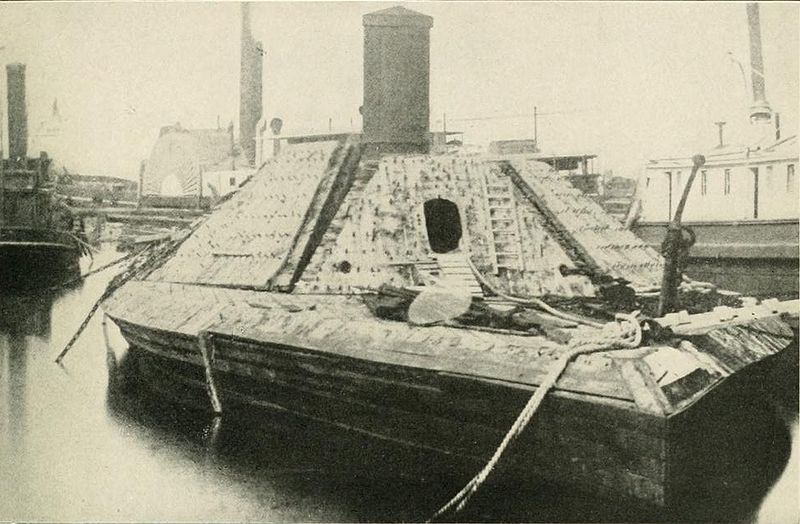
On this date William Cushing led an expedition to sink the Confederate ram, the Albermarle, which had imposed a blockade near Plymouth, North Carolina and had been sinking Union ships. Cushing’s plan was extremely dangerous and only he and one other soldier escaped drowning or capture. Cushing pulled very close to the Confederate ironclad and exploded a torpedo under it while under heavy fire. Cushing’s crew abandonded ship as it began to sink. The Albemarle also sunk. Cushing received a “letter of thanks” from Congress and was promoted to Lieutenant Commander. He died in 1874 due to ill health and is buried in the Naval Cemetery at Annapolis, Maryland. [Source: Badger Saints and Sinners by Fred L. Holmes, p.274-285]

Google’s daily puzzle offers a history question: “The daughter of Abraham Lincoln’s nominee for the post of minister to Spain invited her fiance to Lincoln’s second inauguration. Who was her fiance?

The End of the Waste Digester Proposal in Whitewater

Earlier this week, I posted about a closed-session agenda item of the Tech Park Board about ‘negotiations’ with Green Energy Holdings concerning a waste digester in the city. Of the scope of those negotiations I had no idea. As readers surely know, I think there are sound objections of municipal finance, community development, economic policy, environmental protection, and open & responsible government to the idea. One holds one’s views sincerely, and so a resumption of the dodgy idea – however unsound and improbable – would have justified a diligent effort in opposition.

As it turns out, that ambiguous Tech Park Board discussion item seems to have been about the collapse of the project, and its out-of-town backers’ thousands in delinquent rent for office space at the Innovation Center.

One guesses as much from an open session discussion at the 10.25.12 Community Development Authority meeting. The discussion of the waste-digester project begins at 4:20 on the video:

Community Development Authority 10/25/2012 from Whitewater Community TV on Vimeo.

We may all be grateful when one of the worst ideas in recent memory is entirely behind our small and beautiful community. Turning away from that bad idea was, for so many reasons, a very good thing for Whitewater.

A Libertarian’s View of the WI 43rd Assembly Race: Mailers

Every election brings flyer after flyer in the mail, tree after tree chopped down in the hope that at least a few voters will change their minds, or go to the polls despite earlier plans otherwise. Most people are clear in their convictions, and would vote for or against a candidate without a single scrap of paper being printed.

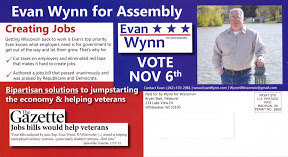
Many mailers are conventional, like these, for Republican Evan Wynn and Democrat Andy Jorgensen. One may click on the embedded image for a larger view:

It’s not those conventional flyers, but a comparative one, that’s of greater interest. In the mailer below, reproduced front and back, Rep. Wynn draws a contrast between himself and Rep. Jorgensen. After the photos, I’ll offer a few remarks.


Military Service. There’s nothing wrong with an ad that touts a candidate’s honorable military service, and veterans still receive less attention and after-service care than they deserve. Of all the myriad services the federal government provides, veterans’ affairs are underfunded, in favor of countless other projects directed to those who don’t truly need or want them.

One may have significant disagreement with parts of our current foreign policy, yet still see that military service is dangerous, generally difficult even when not dangerous, and necessary for America in both instances.

A Military-Civilian Contrast, Two Years On? Wynn’s mailers borrow themes from his last campaign, when he was a challenger to incumbent Rep. Kim Hixson. As Rep. Wynn has now been in office for two years, the election in which he’s engaged is hardly a battle between a former solidier and an incumbent legislator. It’s a contest between two civilian incumbents.

Military service is a significant accomplishment, but the accomplishments that should matter most are the civilian, legislative ones of the last term. The Wisconsin Assembly neither has, needs, nor would by law be able to have, an independent foreign or military policy.

Neither Wynn nor Jorgensen were fighting abroad these last two years: they’ve been members of a Midwestern legislature, working in civilian roles, of law and politics.

Supposedly “Shameful and Out of Control” Conduct. Oh, brother. Andy Jorgensen has been in the legislature for years, he’s known to countless people in the area, and no one thinks he’s out of control. That he wore an orange t-shirt and once protested vociferously against changes to collective bargaining laws doesn’t mean he was out of control.

One would have to be a low-information voter to think Jorgensen was truly uncomposed.

But what of this, really? It says much about how narrow Wynn’s view is – or how narrow he hopes yours is – that non-violent protests at the Capitol, including of elected legislators themselves, were somehow shameful.

Over several weeks, hundreds of thousands protested in total, and still more thereafter voted in recall elections, without the sky falling. We’ve become fussy and prissy about these things, worrying needlessly over nothing more than people gathering to speak and carry signs.

American has a long and proud history of protests, and civil disobedience, about which a few only squawk when the protests aren’t to their ideological liking.

Wynn received considerable support from Tea Party groups, and without them he probably wouldn’t have been elected. Those groups were formed in protest; it’s ironic that once in office some of those they’ve helped elect have become among the most squeamish about counter-protests.

There’s you’re challenger-incumbent transformation: from a Tea Partier’s legitimate exercise of protest to an incumbent Republican’s starched shirt of conformity.

Move On, or the Tea Party: I respected these groups more when their advocacy for free speech was more than someone’s calculated means to incumbency.

Democrat, Republican, or Bipartisan? Democrat Jorgensen tells people that he’s a Democrat; Republican Wynn tells you he’s bipartisan. Wynn might consider himself such, but he’s still a Republican. Why not say it? One presumes Wynn is more than uncommitted, uncertain, unaffiliated, or ambivalent. Is it so hard for a Republican to call himself… a Republican?

Unless, perhaps, Wynn thinks that calling himself a Republican is somehow… shameful. Other Republicans in the area running for the Assembly and Senate typically have ‘Republican’ proudly listed on their mailers. There are Republicans, Democrats, Greens, Libertarians, etc. One might just as well say what one is. (It’s just a practical dodge to say that we’ve non-partisan elections – Wisconsin lines up blue and red.)

Funny, about this, too – it’s hard to see how far Wynn’s supposed bipartisanship will take him when he thinks that the biggest political division in the Legislature in the last two years effectively leaves everyone of the opposing party (of which Jorgensen was just one part) as out of control or shameful. So much for a conciliatory spirit.

Tomorrow: A Newsletter for the 43rd.

Friday Catblogging: Adopting Black Cats

Surprisingly – because they look particularly sharp – black cats are among the last shelter cats to be adopted, as people superstitiously believe they bring bad luck. Animal shelters and rescue groups have created videos like this one to encourage black-cat adoptions.


Daily Bread for 10.26.12

Good morning.

Whitewater’s work week ends with a mostly sunny day and a high of forty-six.

On this day in 1881, a famous shootout:

On this day in 1881, the Earp brothers face off against the Clanton-McLaury gang in a legendary shootout at the OK Corral in Tombstone, Arizona.

After silver was discovered nearby in 1877, Tombstone quickly grew into one of the richest mining towns in the Southwest. Wyatt Earp, a former Kansas police officer working as a bank security guard, and his brothers, Morgan and Virgil, the town marshal, represented “law and order” in Tombstone, though they also had reputations as being power-hungry and ruthless. The Clantons and McLaurys were cowboys who lived on a ranch outside of town and sidelined as cattle rustlers, thieves and murderers. In October 1881, the struggle between these two groups for control of Tombstone and Cochise County ended in a blaze of gunfire at the OK Corral.

On the morning of October 25, Ike Clanton and Tom McLaury came into Tombstone for supplies. Over the next 24 hours, the two men had several violent run-ins with the Earps and their friend Doc Holliday. Around 1:30 p.m. on October 26, Ike’s brother Billy rode into town to join them, along with Frank McLaury and Billy Claiborne. The first person they met in the local saloon was Holliday, who was delighted to inform them that their brothers had both been pistol-whipped by the Earps. Frank and Billy immediately left the saloon, vowing revenge.

Around 3 p.m., the Earps and Holliday spotted the five members of the Clanton-McLaury gang in a vacant lot behind the OK Corral, at the end of Fremont Street. The famous gunfight that ensued lasted all of 30 seconds, and around 30 shots were fired. Though it’s still debated who fired the first shot, most reports say that the shootout began when Virgil Earp pulled out his revolver and shot Billy Clanton point-blank in the chest, while Doc Holliday fired a shotgun blast at Tom McLaury’s chest. Though Wyatt Earp wounded Frank McLaury with a shot in the stomach, Frank managed to get off a few shots before collapsing, as did Billy Clanton. When the dust cleared, Billy Clanton and the McLaury brothers were dead, and Virgil and Morgan Earp and Doc Holliday were wounded. Ike Clanton and Claiborne had run for the hills.

Google’s daily puzzle asks about a constellation, with a television-show hint: “What constellation is home to the star that shares a name with a fictional blood-clotting disease and a television show that aired from 2000-2005?”

Ceaseless Press Errors About the So-Called ‘Innovation Express’

There’s a recent story over at the Daily Union that repeats a prior distortion about thousands in public funds for a bus to cart a few private workers of multi-billion-dollar Generac to their homes far outside Whitewater after work. The whole proposal is an exercise in crony capitalism. I’ve written about the mistaken use of public funds for private, cash-flush Generac before.

This program has relied primarily on public money.

(See, for example, A Local Flavor of Crony Capitalism, A little consistency would be in order, A Generac bus by any other name, The Generac Bus and Bottom-Shelf Messaging, The Innovation Express Generac Bus: ‘Public Transit Is Not Expected to Make Money,’ and The City of Whitewater’s Draft Budget: Crony Capitalism.

The current DU story is false, and even more dishonest, than one that came from that paper months ago.

This Month’s Errors. The October story states that “[t]he Whitewater Common Council continued its 2013 budget review pro­cess….” and then describes supposed item after item of actual discussion from the meeting.

Here’s how the reporter describes discussion of the ludicrously-named ‘Innovation Express’ bus:

The second policy issue Clapper said the council had to decide upon was the continued funding for the “Innovation Express” bus service. He noted that the bus service started earlier this year and has been funded primarily by Generac Power Systems, although the company has received financial support from both the city and University of Wisconsin-Whitewater.

Clapper said funding the bus service in 2013 would cost an estimated $15,000.

That’s entirely false: City Manger Clapper never said during the session that (1) the bus was primarily funded by Generac or (2) stated the dollar-amount of funding during his open-session remarks.

That is, these two statements were never uttered during the session: they’re a fabrication, a false reconstruction, of what was actually said at the meeting.

Readers can see for themselves, in the full video of the session:

Common Council Meeting 10/23/2012

Why doesn’t Clapper say during the meeting that Generac primarily funds its own bus? Presumably because it doesn’t primarily fund its own bus. This reporter had Clapper declaring something he never said at the 10.23.12 meeting.

April’s Errors. In April, I wrote about how a news story at that time concealed the large, public cost of the project:

One newspaper’s account of the ten-month cost of this service is false and misleading.

The total cost is $128,310. The actual public cost to support Generac is $68,005 in state and federal money, and $15,000 in funding from the City of Whitewater and UW-Whitewater. That’s a total of $83,005.

It’s simply not true that Generac’s portion of $26,058 is a majority of the cost — it’s not even a match for the public portion of the cost. Reporting the ‘local sponsorship cost’ (Generac, Whitewater, UW-Whitewater) conceals the true burden on taxpayers to support Generac.

Publishing big companies’ and local officials’ talking points isn’t reporting — it’s stenography.

In April, reporting that Generac paid most of its own way was false. It still is.

Months later, there’s not even a ‘local sponsorship cost’ dodge. That song-and-dance is gone: now it’s just an utter falsehood.

Journatic, but Worse! Readers will recall Journatic as a company that ‘processes news’ for American papers by having foreign scribes in the Philippines or other places re-work press releases so they look like local news stories. It’s cheaper for papers than hiring a real reporter here in America, and sometimes they don’t even bother to tell their readers who’s actually doing the ‘processing.’

I certainly don’t fault people abroad for taking these jobs – it’s probably a better living than others in their home countries, and a chance to work on English-language skills.

For the Americans who hire Journatic, however, I’ve considerable criticism: you’ve degraded the news to mere processing.

Imagine, though, when people who live here do no better – and perhaps worse – than low-wage workers in cramped quarters halfway around the world. Do reporters care so little about what they do that they’ve reduced it to mere processing, filled with errors or lies, and poorly written on top of it?

An American community deserves better than this.

One can guess, like clockwork, that a local news and sports website will repeat these press errors about Generac’s paltry contribution unthinkingly. There’s no effort to reason well and write truthfully – it’s just one person cribbing off another, pushing whatever party-line they feel they need to advance.

In this way, the local sites are worse than anything from abroad – at least the low-wage workers from abroad aren’t fawning scribes afflicting our own community.

Unsolicited Advice to Local Officials.. These gentlemen who are writing or regurgitating our local news are next to useless to local officials: they’re simply not industrious enough to write accurately and well. They’d much rather buck leaders up than speak truth to power, but their bucking up is mostly mucking up.

If leaders want to succeed they’ll have to do it on their own, by their own better standards, than the low expectations a local press sets for them. They’ll have to write their own solid presentations, on their own sites, and speak their own words, to meet those better standards.

If one is looking for quality, while in public office, one’s on his or her own – the local press won’t help politicians in a way that matters.

A Libertarian’s View of the WI 43rd Assembly Race: Official Candidate Biographies

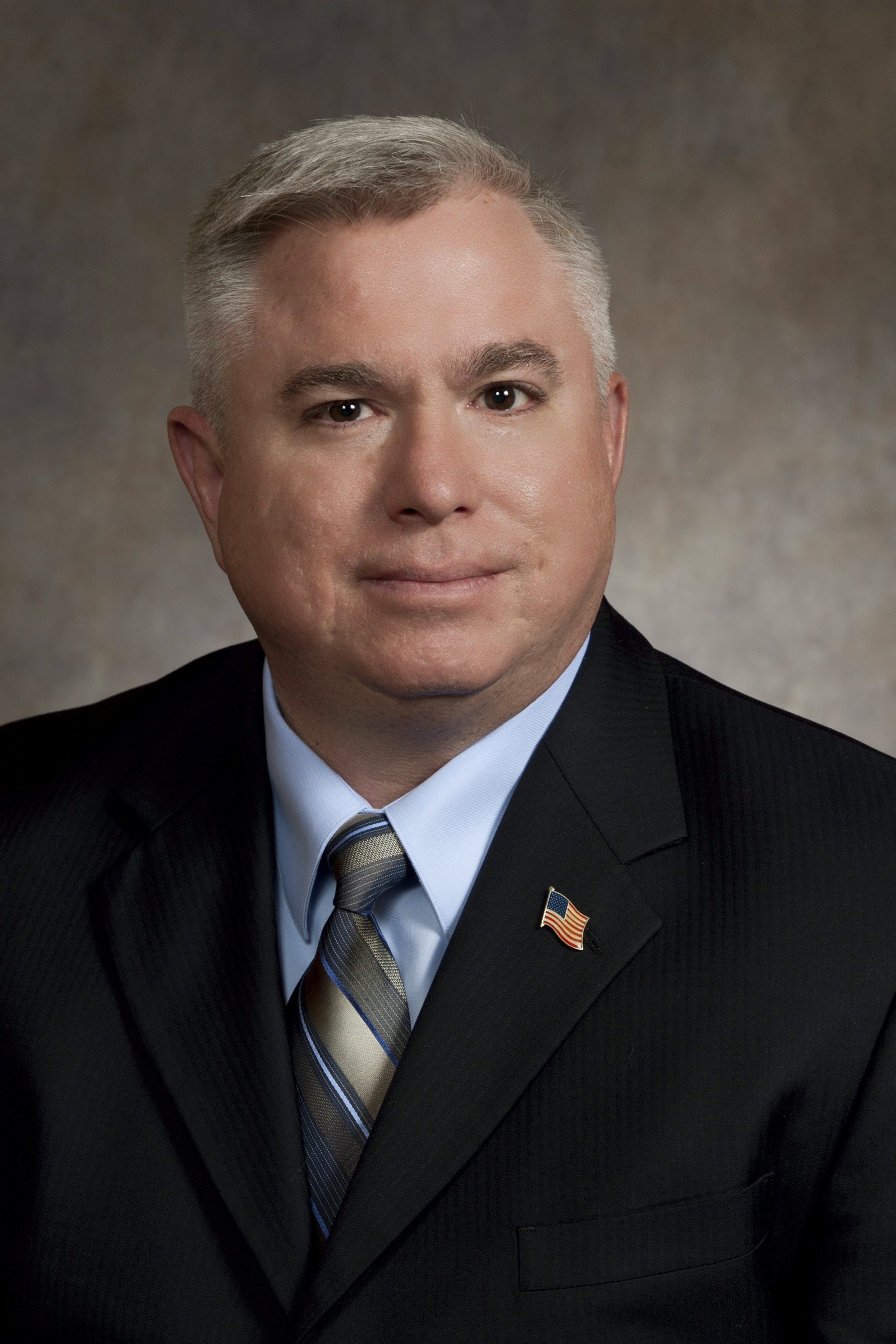
Here’s a quick listing, from their legislative webpages’ (rather than campaign websites’) biographies. The differences in style are evident. I’ve started here because these descriptions are more ordinary, less eye-catching, than what one sees in their campaigns. These are the biographies one writes in a quiet moment, so to speak.

Evan Wynn:

Representative Evan Wynn is a retired Master Sergeant from the U.S. Army. He served in the military for a combined 22 years, first as a Marine, then as a paratrooper in the Army. He was stationed in over 30 countries around the world during his career, including a combat tour in Iraq. He retired in 2006.

His awards include the Legion of Merit, Bronze Star Medal, Meritorious Service Medal with 2 Oak Leaf Clusters, the Army Commendation Medal with 4 Oak Leaf Clusters, the Army Achievement Medal with 8 Oak Leaf Clusters, the Humanitarian Service Medal, the National Defense Service Medal (1 Star), Iraqi Campaign Medal, Global War on Terrorism Service Medal, Parachutist Badge, Air Assault Badge, And the Australian Parachutist Badge.

Representative Wynn is a member of the Veterans of Foreign Wars (the VFW) serving as Post Commander in Whitewater and the 1st District Senior Vice Commander. He is also a member of the American Legion, the 82nd Airborne Division Association, and the Disabled American Veterans Post #39. He also serves as the President of the Whitewater Breakfast Kiwanis club.

He is a member of Faith Community Church in Fort Atkinson, and has been happily married to his wife, Annette, for over 20 years. They have one daughter, Michelle.

Representative Wynn represents the 43rd Assembly District, which covers the City of Whitewater, and most of western rural Rock County. He was first elected this past November and is serving his first term.

In the legislature, Representative Wynn serves on the Assembly Colleges & Universities Committee and Education Committee, and is Vice Chair of the Veterans & Military Affairs Committee.

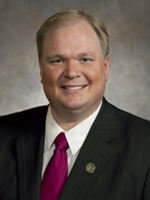
Andy Jorgensen:

Born Berlin, September 10, 1967; married; 3 children. Graduate Omro H.S. 1986; Brown Institute (MN) 1987. Assembly line operator, General Motors, Janesville. Former morning radio personality, assembly line operator, UAW shop steward, General Motors Janesville, worked on family dairy farm. Bd. member: Respite Care Assn. of Wis.;Wis. Literacy Council; Jefferson Co. Local Emergency Planning Council; Jefferson Co. Agribusiness Club. Member: Jefferson Co. Farm Bureau; Trinity Lutheran Church, Fort Atkinson; Fort Atkinson FFA Alumni; Chamber of Commerce. Former member: UAW Local 95; UAW Local CAP; UAW Public Relations Committee (chp.); Cub Scout leader Pack 137; Jefferson Co. Labor Council; Fort Fest, Inc. (chp. of exec. bd.).

Elected to Assembly 2006; reelected since 2008.

Tomorrow: A look at biographical campaign flyers, rather than official biographies, from both candidates. It’s there that one sees, even more than these reference-style biographies, how the candidates want to be seen.

Daily Bread for 10.25.12

Good morning.

Today’s Whitewater forecast calls for a high of seventy-two, with thundershowers in the afternoon.

The Community Development Authority meets today at 5:30 PM, for part of the time in closed session, and thereafter a stated, published return to open session.

On this day in 1881, Pablo Picasso was born:

Pablo Picasso, one of the greatest and most influential artists of the 20th century, is born in Malaga, Spain.

Picasso’s father was a professor of drawing, and he bred his son for a career in academic art. Picasso had his first exhibit at age 13 and later quit art school so he could experiment full-time with modern art styles. He went to Paris for the first time in 1900, and in 1901 was given an exhibition at a gallery on Paris’ rue Lafitte, a street known for its prestigious art galleries. The precocious 19-year-old Spaniard was at the time a relative unknown outside Barcelona, but he had already produced hundreds of paintings. Winning favorable reviews, he stayed in Paris for the rest of the year and later returned to the city to settle permanently.

On this day in 1836, the first legislative session of the Wisconsin territory convened:

1836 – Belmont-Wisconsin Territory 1836 Established
On this date the first legislative session of the Wisconsin territory convened in Belmont, Wisconsin. During this first session, forty-two laws were put in the statute books. At this time, the Territory of Wisconsin included all of present-day Wisconsin, Minnesota, Iowa, and part of the two Dakotas.