FREE WHITEWATER

A Quick Fix for Uncertainty about Contracts

Cities and towns routinely enter into contracts, agreements, memoranda of understanding, etc. Both local legislators and a town’s residents should have a clear, concise idea of these deals’ requirements.

The recent Whitewater Common Council meeting of 9.18.12 shows how many deals there are, and how hard it is to keep track. Considering a deal with our university over use of parking meters or parking permits, Council looked back to see the terms of the agreement: who could decide whether spaces had parking meters or required permits?

Under the agreement, the university had that power, and chose parking meters. They may be inconvenient, but it was within the university’s power to choose them. It’s understandably hard to keep track. There are many deals, and serving on a city council is not a fulltime job.

An easy way to spot and recall provisions like this is to offer a summary of each agreement, of a paragraph or two, that describes the deal’s terms simply: who does what for whom?

Even a complicated agreement should be reduced to a page, perhaps two. Simple agreements might require only a paragraph or so. The summary’s not law, but it is a useful reference before and after an agreement wins approval.

There’s another benefit to a summary-formula like this: it helps concentrate attention on the key parts of a deal. Deals that go bad don’t often go bad because they’re poorly drafted; they go bad because they’re ill-considered. It’s not for lack of draftsmanship, but instead from ill-considered terms, that uncertainty and disappointment often arises.

If one cannot describe a deal simply, then it’s a sign that key requirements (who has the power to make decisions, etc.) haven’t been well considered.

A simple summary helps focus one’s concentration in a world of many such deals, one after another.


Introduction to Waste Digesters: How They Work

Waste digesters take organic refuse (e.g., rotting food, dead animal carcasses, human or animal excrement) and process that waste by composting it into sludge, liquids, carbon dioxide, and methane. The methane (‘biogas’) is sometimes used for fuel, and the sludge and moisture extracted from the composting is spread on the ground or released into the air.

Waste digestion may involve oxygen (aerobic digestion) or may operate without oxygen (anaerobic digestion).

Proponents describe this as a new, green, and clean process. It’s really an old, brown, and filthy one. There’s nothing pristine in this: it’s waste in, waste out.

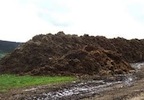
You may have heard it works like this:

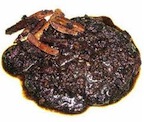
It’s really more like this:

I once heard it described as analogous to human digestion, of those of poor nutrition: filth and junk goes in, and excrement, fluids, and gases come out. That’s a solid analogy.

This principle isn’t new or innovative. Even less-developed peoples, centuries ago, tried anaerobic digestion:

Anaerobic digestion has been used for centuries. During the 10th century BC, bath water was heated by biogas in Assyria. In the 17th century, Jan Baptista Van Helmont learned that flammable gases could evolve from decaying organic matter, and in 1808 Sir Humphrey Davy determined that the anaerobic digestion of cattle manure produced methane. In 1859, a digestion plant was built at a leper colony in Bombay, India.

These peoples hit upon the idea of anaerobic digestion because it was like human and animal digestion: the result mimics defecation, expectoration, urination, and flatulence.

It’s says all one needs to know that experimenters placed their anaerobic digester near a leper colony.

Tomorrow: What Goes into a Digester.

Daily Bread for 9.20.12

Good morning.

It’s a mostly sunny day with a high of sixty-six ahead for Whitewater.

On this day in 1973, millions of Americans watched a tennis match:

On this day in 1973, in a highly publicized “Battle of the Sexes” tennis match, top women’s player Billie Jean King, 29, beats Bobby Riggs, 55, a former No. 1 ranked men’s player. Riggs (1918-1995), a self-proclaimed male chauvinist, had boasted that women were inferior, that they couldn’t handle the pressure of the game and that even at his age he could beat any female player. The match was a huge media event, witnessed in person by over 30,000 spectators at the Houston Astrodome and by another 50 million TV viewers worldwide. King made a Cleopatra-style entrance on a gold litter carried by men dressed as ancient slaves, while Riggs arrived in a rickshaw pulled by female models. Legendary sportscaster Howard Cosell called the match, in which King beat Riggs 6-4, 6-3, 6-3. King’s achievement not only helped legitimize women’s professional tennis and female athletes, but it was seen as a victory for women’s rights in general.

Google’s daily puzzle asks about then-secret messages during the Second World War: ““The long sobs of the violins of autumn” was the first of two secret messages broadcast to the French resistance during WWII. What was the second (in English)?”

An Introduction to Waste Digesters

You may have heard that Whitewater has before her a ‘monumental’ opportunity for the construction of a vast waste digester in the city, and that this prospect is an example of green technology. There have been two local newspaper stories to this effect, but little substance to either (and significant errors in one).

I have a post category dedicated to the proposal, but over the next few days I will write about waste digesters generally. I’ll describe how they work, what goes into them, what comes out of them, and the economics of digesters.

There are other questions, particular to Whitewater, that I will consider in detail another time.

One should be clear about what digesters are truly like, beyond vague claims and airy speculation. An American community should be a place of sound reasoning, open discussion, and good policy. We are an honest, reasonable, technologically-advanced people. No one deserves less than a plain and accurate description.

Tomorrow: How Digesters Work.

The Extraordinary Ordinary

Two recent meetings illustrate the simple, routine workings of government in the city: the 9.10.12 Planning Commission meeting, and the 9.11.12 Common Council session. I have embedded both below. You’ll find, I’d say, nothing extraordinary in either. Instead, it’s just the routine business of city planning, and the preparations for interviewing candidates to be Whitewater’s next city manager.

All cities have planning meetings, and all cites eventually replace hired managers with new ones. It’s sensible that this should be matter-of-fact. Most municipal government events are, and should be treated as, routine. Years of the supposedly grand and the visionary have left us only smaller and short-sighted.

We’re much better off with a politics of the ordinary. If we should develop that routine, we’ll have found the extraordinary in the practice of routine, ordinary government.

Here are recordings of those recent meetings:

Plan Commission Meeting 09/10/2012 from Whitewater Community TV on Vimeo.

Common Council Meeting 09/11/2012 from Whitewater Community TV on Vimeo.

Daily Bread for 9.19.12

Good morning.

Whitewater’s midweek will be sunny and breezy, with a high of seventy-three.

The city’s Zoning Rewrite Steering Committee meets tonight at 6 PM.

From Australia, a film maker caught a rare fire devil, a fiery tornado, on film. Astounding:

On this day in 1832, the Fox and Sauk signed the treaty that ended the Black Hawk War:

1832 – Sauk and Fox cede Iowa Lands
On this date Sauk and Fox Indians signed the treaty ending the Black Hawk War. The treaty demanded that the Sauk cede some six million acres of land that ran the length of the eastern boundary of modern-day Iowa. The Sauk and Fox were given until June 1, 1833 to leave the area and never return to the surrendered lands. Some sources place the date as September 21.[Source: Along the Black Hawk Trail by William F. Stark, p. 160-161]

Google’s daily puzzle asks about ancient Egyptian religion: “Who did the wife of the first monotheist king of Egypt worship?”

Does Mitt Romney Really Want to be President of the United States?

I don’t think so.

All America has seen the surreptitious recording of Romney at a Boca Raton fundraiser, answering donors’ questions, and in one clip opining that almost half of America is a vast, parasitic class.

Some conservative activists think Romney’s right to have said this, but most pundits (regardless of ideology) think it’s a politically destructive observation.

Romney’s wildly wrong about America, of course, and in a way that’s startling. Worse – yes, worse – he professes no feeling for half of his countrymen: “and so job is is not to worry about those people. I’ll never convince them they should take personal responsibility and care for their lives.”

What does this say about Romney? It says he’s better suited to private conversations with those of his ilk than he is in a public role. He’s evidently happier with the private than with the public.

One may have heard Romney speak fifty times, and never heard him speak so comfortably. For those who doubted he had any poise at all, here’s the answer: he’s relaxed in the company of wealthy, often self-made, financiers.

Although neither Romney nor his wife is self-made (his protestations of such notwithstanding), this fundraiser was hardly an old-money gathering; it was not a gathering of coupon-clippers, but of successful, working executives. (Had the attendees been from old families, they would not have been half so receptive to Romney’s message.)

Here was Romney in his element, in a money-man’s version of sitting at the end of a bar and philosophizing. That’s not a bad life, and in his investments, Romney’s created many opportunities for himself and others. There’s nothing wrong — there should be nothing wrong — with that pursuit.

It’s not, however, a life suited to politics. America has had many wealthy politicians, but among those of any success, they have all – I truly think all – shown more understanding of ordinary people than Romney shows. Without that undertanding and empathy, Romney’s useless to his political party, or any political party. (Reagan and Kemp, for example, deeply believed in the talents of people generally.)

There’s much that’s good about a life spent in the boardroom. Romney should have stayed there.

Posted on 9.18.12 at Daily Adams.

Daily Bread for 9.18.12

Good morning.

It’s a slight chance of showers and a high of sixty-one for Whitewater today.

In the afternoon, Whitewater’s Bicycle and Pedestrian Committee meets at 3:45 PM. This evening, Whitewater’s Alcohol Licensing Commission meets at 6:00 PM, with Common Council meeting thereafter at 6:30 PM.

On this day in 1793, an architectural beginning:

George Washington lays the cornerstone to the United States Capitol building, the home of the legislative branch of American government. The building would take nearly a century to complete, as architects came and went, the British set fire to it and it was called into use during the Civil War. Today, the Capitol building, with its famous cast-iron dome and important collection of American art, is part of the Capitol Complex, which includes six Congressional office buildings and three Library of Congress buildings, all developed in the 19th and 20th centuries.

From Google’s daily puzzle, a question for stargazers: “If you live in an area classified as the most polluted on the Bortle Scale, which Messier object is typically visible to the naked eye?”

Daily Bread for 9.17.12

Good morning.

Whitewater’s week begins with showers and a high of seventy-two.

On this day in 1862, Americans fought the bloodiest one-day battle in American history at Antietam Creek:

When fighting began in the foggy dawn hours of September 17, this strategy broke down into a series of uncoordinated advances by Union soldiers under the command of Generals Joseph Hooker, Joseph Mansfield and Edwin Sumner. As savage and bloody combat continued for eight hours across the region, the Confederates were pushed back but not beaten, despite sustaining some 15,000 casualties. At the same time, Union General Ambrose Burnside opened an attack on the Confederate right, capturing the bridge that now bears his name around 1 p.m. Burnside’s break to reorganize his men allowed Confederate reinforcements to arrive, turning back the Union advance there as well.

By the time the sun went down, both armies still held their ground, despite staggering combined casualties–nearly 23,000 of the 100,000 soldiers engaged, including almost 4,000 dead. McClellan’s center never moved forward, leaving a large number of Union troops that did not participate in the battle. On the morning of September 18, both sides gathered their wounded and buried their dead. That night, Lee turned his forces back to Virginia. His retreat gave President Lincoln the moment he had been waiting for to issue the Emancipation Proclamation, a historic document that turned the Union effort in the Civil War into a fight for the abolition of slavery.

From Google’s daily puzzle, a question about a fencing rules: “If you’re holding the heaviest of the three kinds of fencing swords, which part of your opponent’s body is a valid target?”